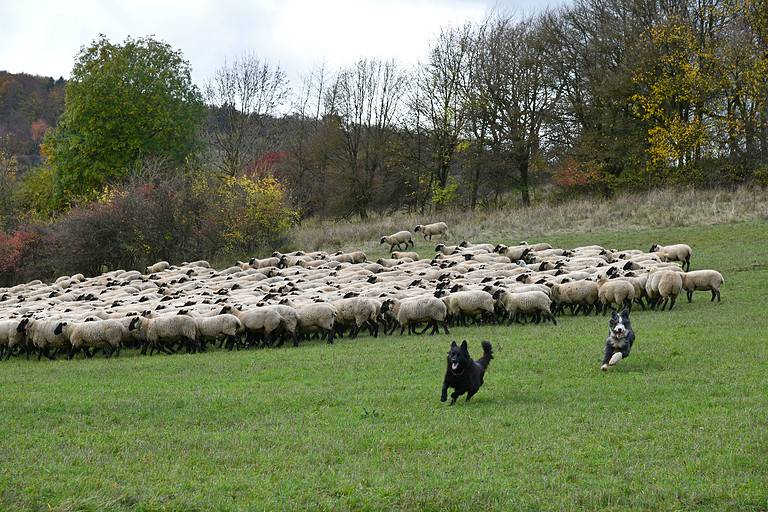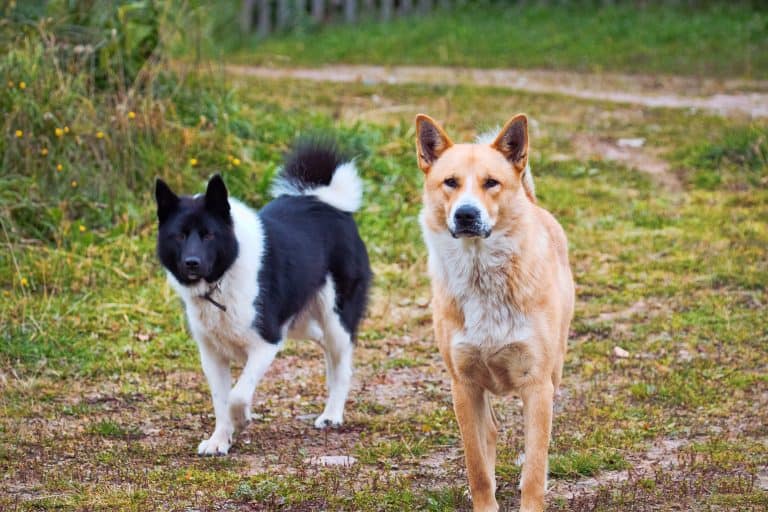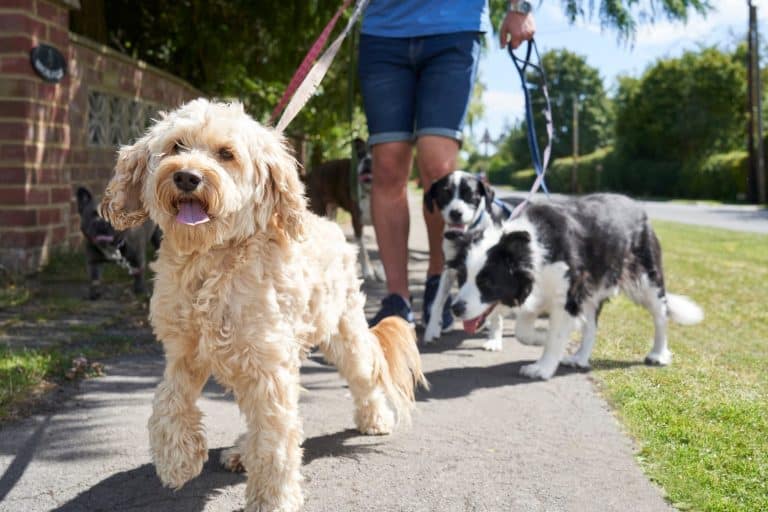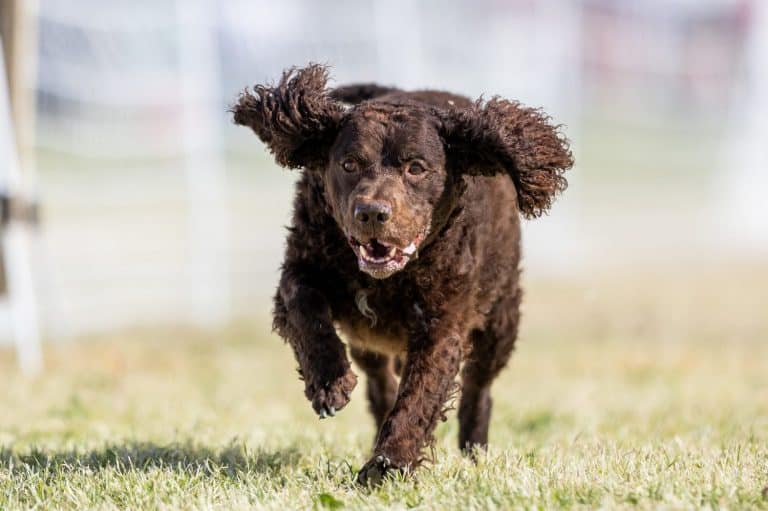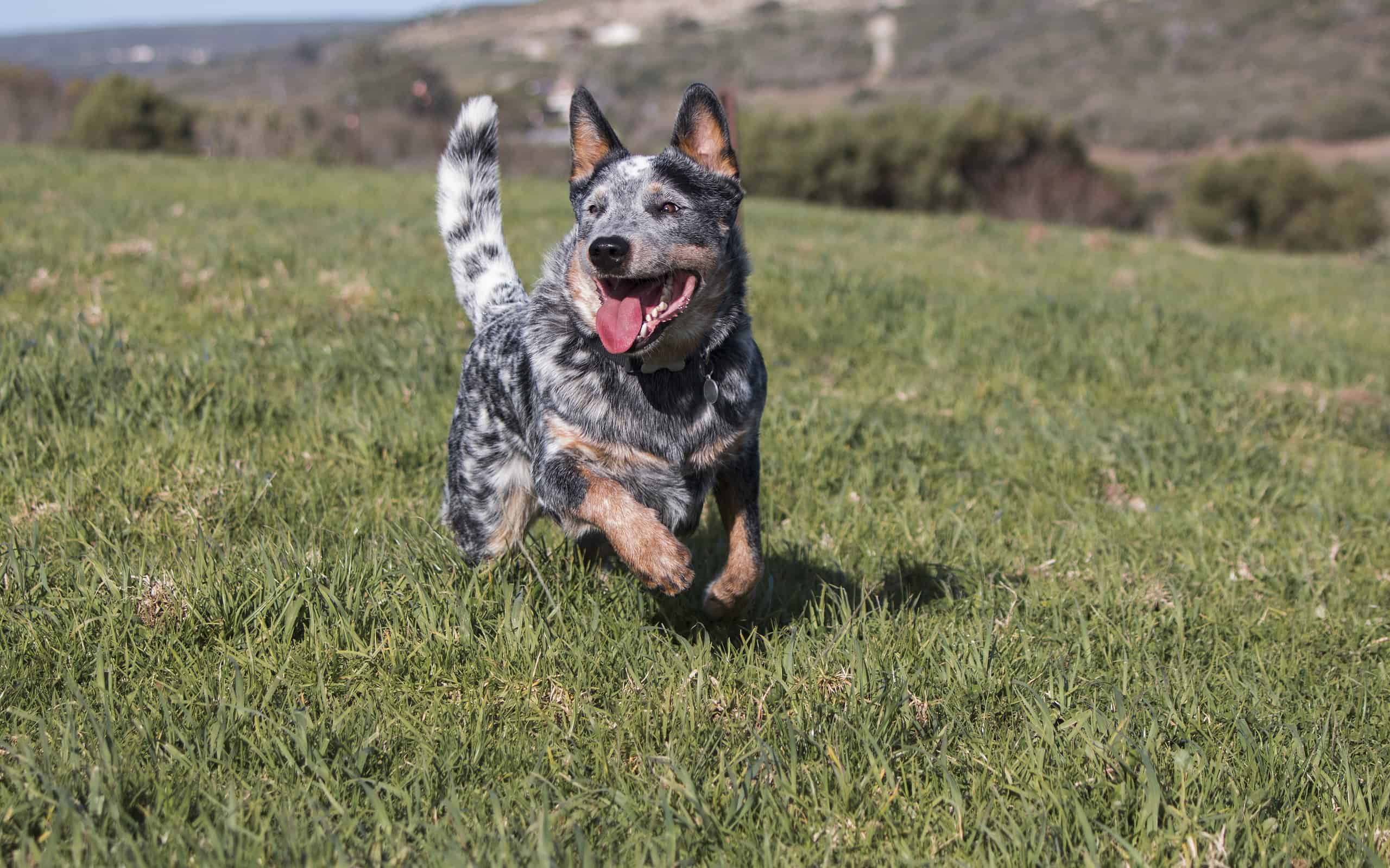

Australian cattle dogs are among the brightest and hardiest working dogs in the world. Bred to serve in demanding environments, these clever dogs have nearly boundless energy and can learn all kinds of commands. The Australian cattle dog, which comes in a variety of colors and patterns, can sell for hundreds or even thousands of dollars. The best of the breed provide invaluable services as herding dogs. But they can make excellent companions as pets, too, if you give them the environment they need. This training guide won’t help you to train your Australian cattle dog to herd livestock. Instead, we’ll focus on helping your dog to live happily as a member of your household, as a beloved family pet.
Typical Australian Cattle Dog Training Timeline
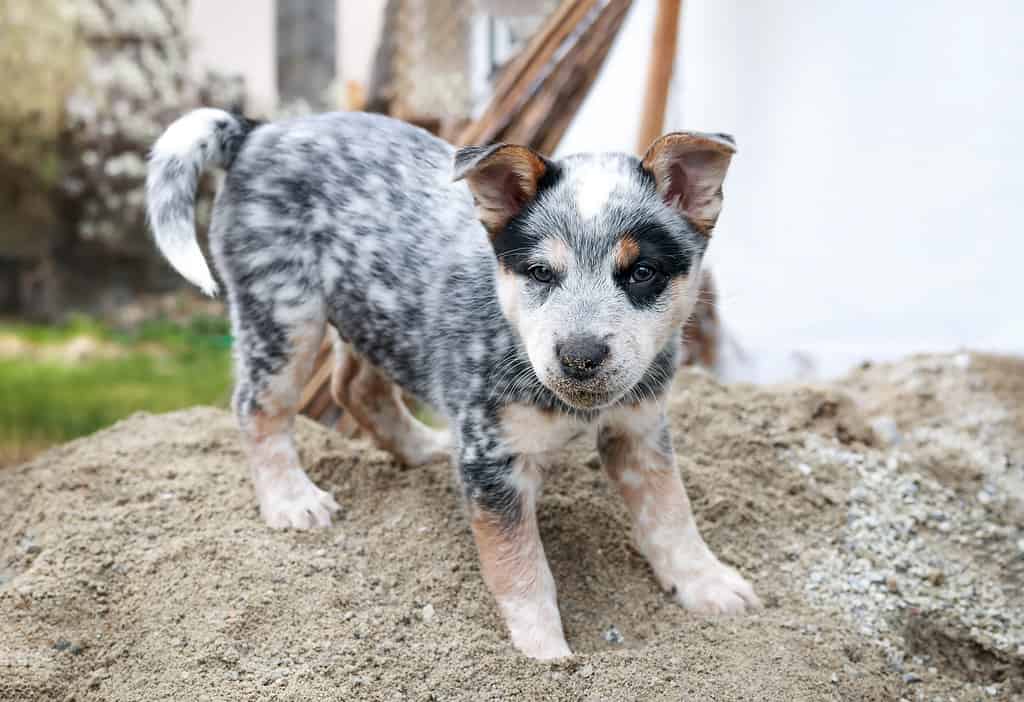
An Australian cattle dog puppy requires plenty of socialization.
©Petra Richli/ via Getty Images
Australian cattle dog puppies, like most breeds, should stay with their mothers until they reach about 8 weeks of age. They will begin learning social cues from their littermates and their mother before they move to their new homes.
From about 8 to 14 weeks, concentrate on continued socialization. Introduce your puppy to lots of different situations, other animals, and people of all types. Remember that they have natural herding tendencies, and may nip at other animals, children, and even adults. Consistently discourage this behavior and reward them for showing restraint.
Begin training your Australian cattle dog puppy from the time you bring it home with simple cues, such as come, sit, stay, and shake. Consistently reward good behavior and introduce new cues as your puppy masters its new skills. You may even consider engaging in agility training as your puppy shows progress. However, make sure to hold off on jumping skills until it reaches about 12 to 18 months of age. This will help protect the dog’s bones and joints.
Use Positive Reinforcement
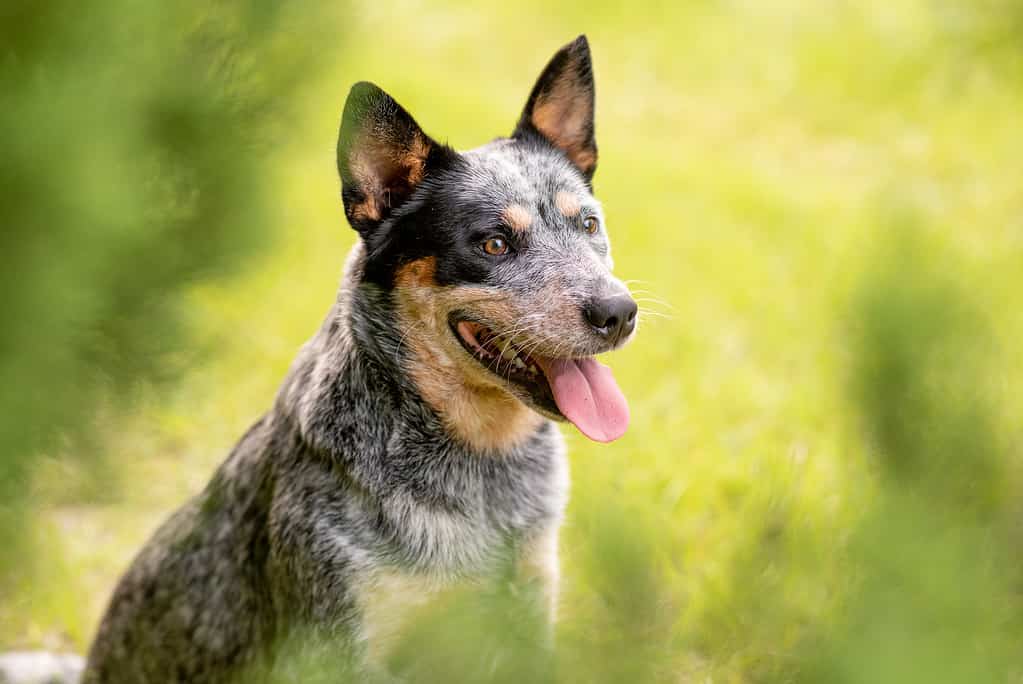
Australian cattle dogs can be easy to train if you use lots of positive reinforcement.
©Tatyana Consaul/ via Getty Images
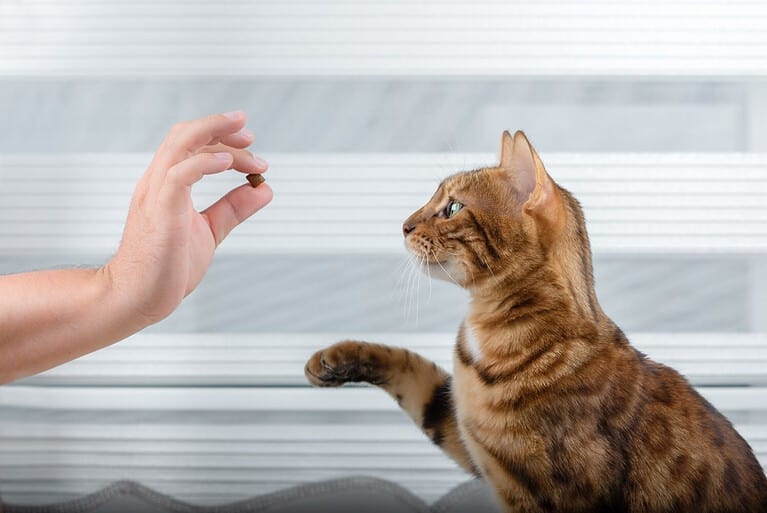
Australian cattle dogs do not respond well to punishment, yelling, or other kinds of negative training techniques. They do, however, usually respond extremely well to positive reinforcement such as praise and certain treats.
One technique many owners employ successfully utilizes the puppy’s favorite kibble. For whatever reason, Australian cattle dogs sometimes reject treats favored by other breeds. But they will work hard for the very same kibble you feed them every day. Knowing this, you should avoid automatic food dispensers and make their meal time a training session whenever possible.
Before putting kibble in your puppy’s bowl, take a handful and use pieces to reward your pet for responding to cues. A successful sit gets a piece of kibble and some praise. A high five gets more kibble and praise. Walking through a hoop gets several pieces of kibble and cheers! After a few minutes of training, reward your pup with the remaining kibble needed to round out the meal.
Avoid Punishment
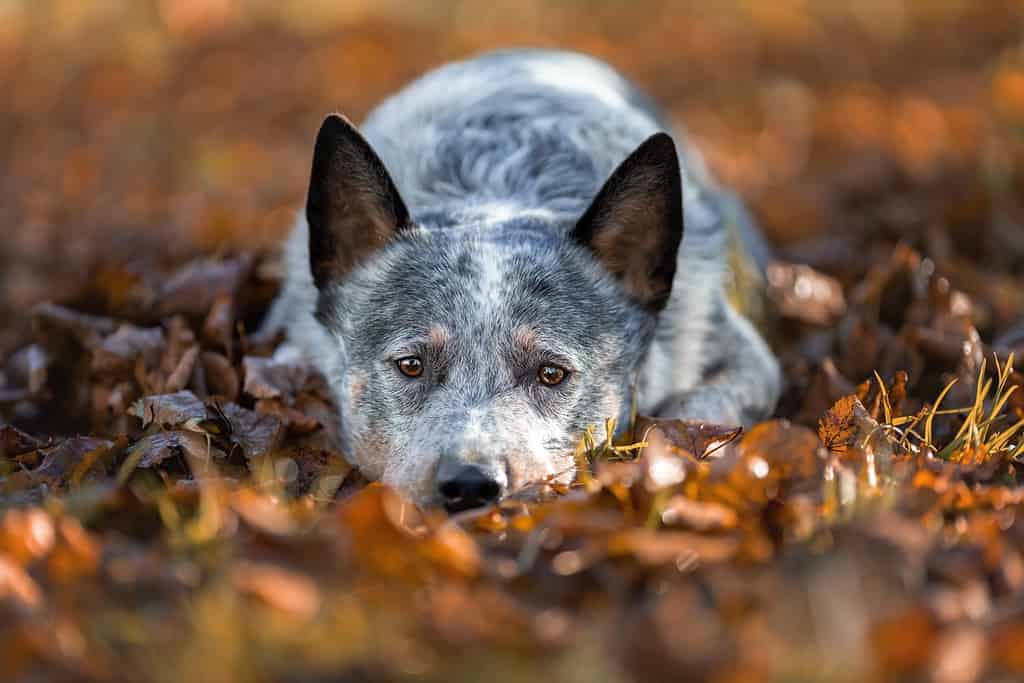
Punishment can break the bond you want to form with your Australian cattle dog.
©Irina Nedikova/Shutterstock.com
Again, you should avoid punishing your Australian cattle dog to try to force it to behave the way you want. Do not routinely yell at your dog, or worse, hit it to make it behave. You want to have a strong bond with your dog, and these behaviors will not help you accomplish that.
One of the biggest deterrents you can successfully use to teach your dog what behavior you find unacceptable is to remove it from your presence. This separation need not last long to be effective. These so-called “Velcro dogs” want to be close to their people, and a short separation that follows an unwanted behavior, such as nipping, can make a very strong impact, especially when used consistently.
Remember Some Behaviors Are Instinctive
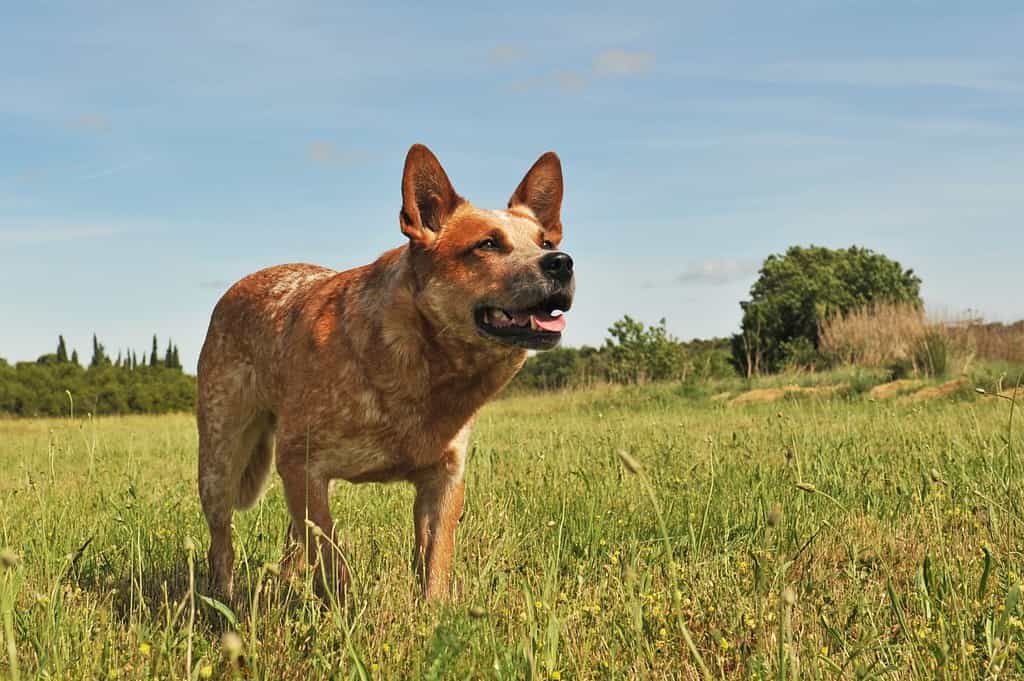
Your Australian cattle dog will likely have strong herding instincts.
©cynoclub/Shutterstock.com
Australian cattle dogs have behaviors that come from generations of breeding. They were designed to herd livestock. The herding instinct simply comes with the breed. So does their talkative nature. If you don’t want a bossy, argumentative dog, consider that this might not be the right breed for you. It can be impossible to train all the instinctive behaviors out of even the best dog.
Accept Your Dog’s Natural Tendencies
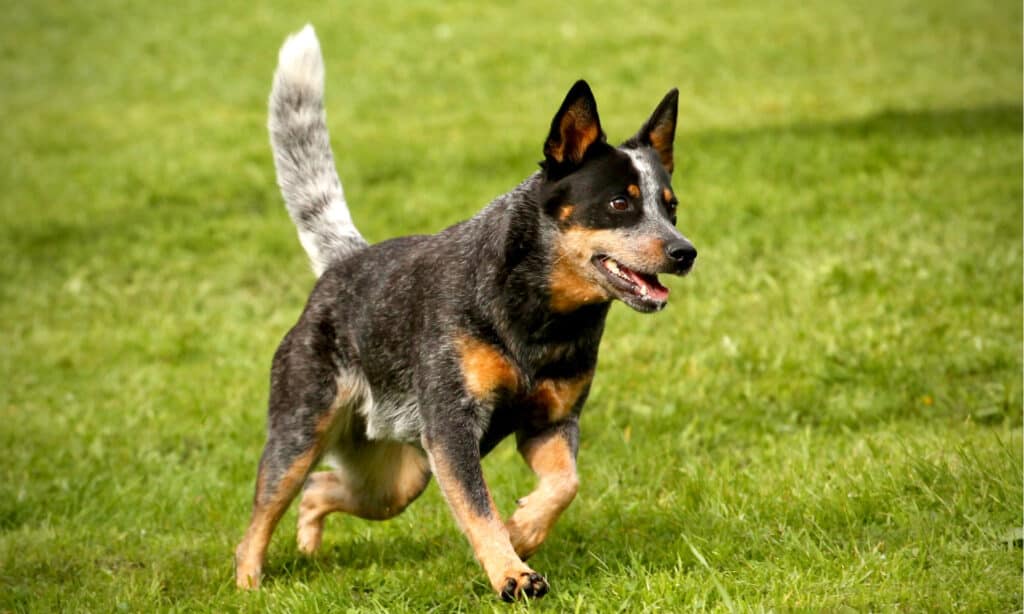
Owning an Australian cattle dog means accepting their high energy level.
©LNbjors/Shutterstock.com
Every dog breed has good traits and not-so-good traits. For instance, one of the best parts of owning an Australian cattle dog, for many people, is their level of energy and excitement. They can seem a lot wilder than other breeds well into adulthood. You must accept that this breed requires a lot of exercise, perhaps hours per day, to burn off their excess energy.
These dogs also get incredibly excited over all sorts of things. They love getting new toys, going to new places, and seeing their favorite people come through the door. Unfortunately, their bladders cannot always contain all their excitement, and nervous peeing can be a problem. If your dog has this natural tendency, it may improve with age, but it may never go away completely.
Consider Crate Training
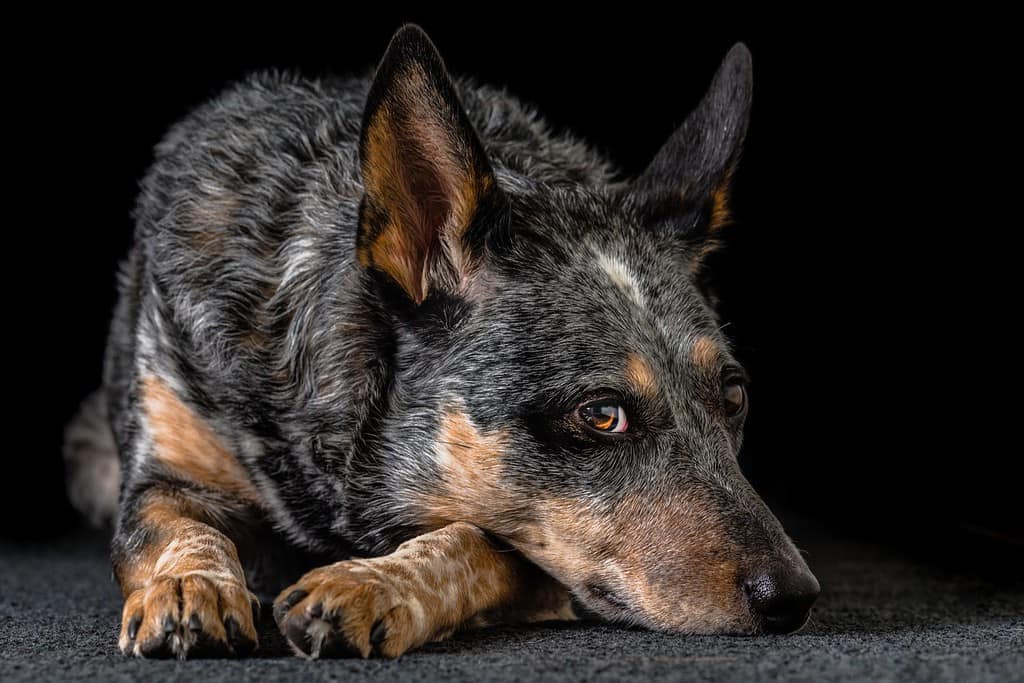
Your Australian cattle dog can be crate trained, as long as the crate is not used as a punishment.
©BGSmith/Shutterstock.com
Australian cattle dogs can suffer from boredom and get destructive if left alone in the house. Ideally, you should probably not get an Australian cattle dog if you plan to leave it alone indoors all day most days. But hardly anyone can stay home 24 hours a day just to keep their pup company. Crate training can help save your belongings and keep your dog out of trouble. But make sure you never use the crate as a punishment. It should be your dog’s safe place, and the crate should probably be close to where you sit when you are at home.