
Quick Take
- Researchers tested whether the "guilty look" actually tracks what dogs do, and the results should change how every dog owner responds to a mess. See the research →
- Guilt, fear, and appeasement look nearly identical, and mistaking one for the others quietly makes your dog's behavior worse over time. Understand the difference →
- There's a specific pattern dogs learn from repeated scolding that turns your homecoming into a source of dread. This can happen even when they haven't done anything wrong. See how dread develops →
- Skipping punishment isn't just the kinder option. Science says it's the only approach that actually fixes the behavior. Get the science-backed fix →
You walk in the door, spot the shredded pillow, and turn to find your dog with ears pinned back, tail tucked, eyes darting away. “You know what you did,” you mutter softly with a smile. It sure looks like guilt. It feels like a confession.
But what if your dog has no idea why you’re upset?
That flinching, cowering, slinking-away routine is one of the most misunderstood moments in dog ownership. And when we misinterpret these signals, we often respond in ways that increase our dogs’ anxiety rather than improve their behavior. How can you tell what that “guilty look” actually means? How can you distinguish guilt from fear or appeasement? There is a practical, science-backed way to handle mishaps without damaging your bond.

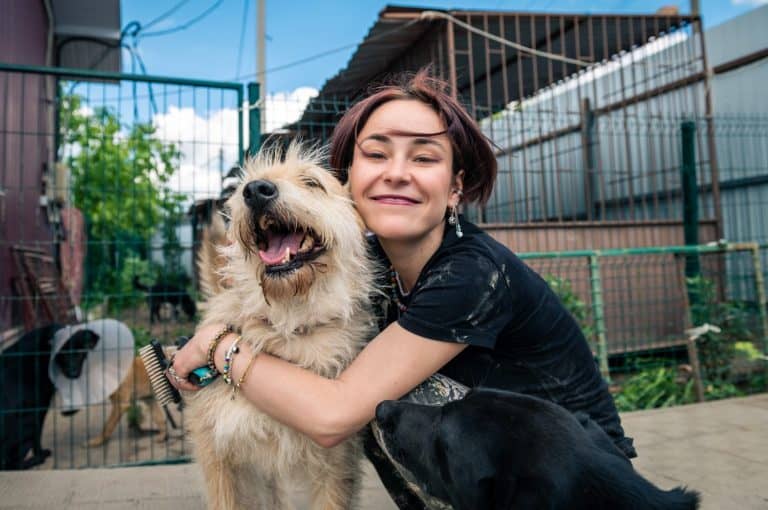
Dr. Victoria Carmella offers a unique perspective and expert commentary on dog behavior.
©Dr. Victoria Carmella, a veterinarian advisor at Pet Honesty, – Original / License
What the “Guilty Look” Really Is
Here’s the uncomfortable truth: your dog probably isn’t feeling guilty at all.
Researchers have tested this directly. In controlled experiments, dogs showed the classic “guilty look” when their owner scolded them — not when they’d actually broken a rule. Dogs who had done nothing wrong still looked “guilty” when their owners acted disappointed. The look tracked the human’s behavior, not the dog’s conscience.
Dr. Victoria Carmella, Veterinary Advisor at Pet Honesty, puts it plainly: “Your dog’s ‘guilty look’ is usually a response to their human’s body language or tone, not an understanding that they did something wrong.”
In other words, your dog is reading you. When you tense up, frown, or change your voice, your dog responds to that shift in your mood. The chewed shoe on the floor is, in their mind, unrelated to your reaction — not a crime they’re confessing to.

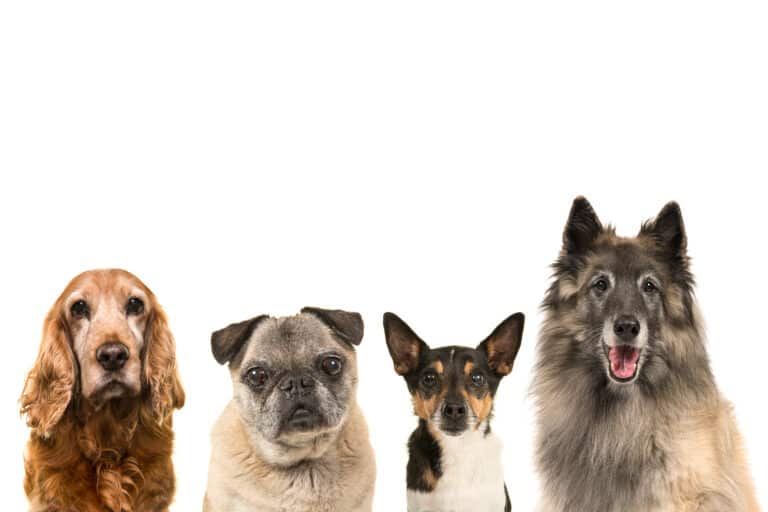
Five beautiful dog breeds, each appearing a little guilty.
©A-Z Animals
Guilt, Fear, and Appeasement Are Not the Same Thing
To respond well, it helps to understand what those body signals actually communicate. Three distinct things are often lumped together under “guilt,” and telling them apart changes everything.
Guilt is a complex emotion that requires understanding that a moral rule was broken in the past and connecting it to consequences. There’s simply no solid evidence that dogs experience it the way we do.
Appeasement is a social peacekeeping behavior. Your dog senses tension and tries to defuse it.
Fear is a stress response to a perceived threat, which sometimes includes your own upset behavior.
As Dr. Carmella explains: “What many people call guilt is usually appeasement — lowered ears, avoiding eye contact, a lowered body, or a tucked tail. Fear can look similar but may also include trembling, freezing, or trying to escape. There’s no research to show that dogs feel ‘guilt’ the way that humans do.”
So, when your dog rolls over or gives you those melting “puppy dog eyes,” it’s not an apology — it’s a plea for calm.
“Avoiding eye contact, slinking away, rolling onto the back, tucked tails, and those famous ‘puppy dog eyes’ are all common appeasement behaviors. They’re a response to the owner’s current mood, not a true ‘guilt’ as we think of it.”
Dr. Victoria Carmella, Veterinary Advisor at Pet Honesty
The takeaway: those signals tell you how your dog feels right now — usually worried and eager to smooth things over — not what they did an hour ago.
The Anticipation of Punishment Problem
There’s a fourth piece to this puzzle, and it’s the one that quietly causes the most harm: anticipation of punishment.
Dogs are excellent at spotting patterns. If coming home has led to scolding a few times, your dog learns to expect trouble the moment you walk in — regardless of what happened while you were gone. The “guilty look” can actually be your dog bracing for a bad experience they’ve come to associate with your return.
This is why misreading the signal matters so much. When we assume guilt, we assume understanding. And when we assume understanding, we reach for discipline.
“If owners think that their dog is guilty, they are more likely to follow up with a punishment,” Dr. Carmella notes. “Since dogs don’t make that connection, they may simply learn that their owner’s return predicts something unpleasant, which can increase anxiety and damage trust.”
Think about what that creates. Your dog doesn’t connect the scolding to the chewed pillow from three hours ago. Instead, they connect it to you coming through the door. Over time, your homecoming — which should be a happy moment — becomes a source of dread. The behavior you wanted to fix doesn’t improve, and your relationship takes a hit.
Why Scolding After the Fact Backfires
Punishment only teaches something useful when it happens at the exact moment of the behavior and the dog can clearly connect the two. Come home to a mess, and that window has long since closed.
Yelling at a mess your dog made earlier accomplishes three unhelpful things:
- It confuses your dog because there’s no clear link between your anger and their earlier action.
- It raises anxiety, which can actually increase stress-driven behaviors like chewing or accidents.
- It erodes trust, teaching your dog to be wary of you rather than confident around you.
A more anxious dog is not a better-behaved dog; often, it’s the opposite.
A Better, Evidence-Based Way to Respond
So what should you do when you walk in and find the trash tipped over or a cushion in pieces? The good news is that the science points to methods that work and strengthen your bond.
Dr. Carmella’s advice is refreshingly practical: “Skip the scolding, as it won’t teach your dog what went wrong. Instead, focus on preventing the behavior through management, enrichment, and supervision. Reward desirable behaviors in real time with positive reinforcement, which is far more effective.”
Here’s how to put that into action.
1. Manage the environment
Set your dog up to succeed by removing temptation. Put shoes in the closet, secure the trash bin, and use baby gates or a crate to limit access when you can’t supervise. If your dog can’t reach the pillow, it stays intact.
2. Add enrichment
A lot of “bad” behavior is really just boredom or pent-up energy looking for an outlet. Offer puzzle feeders, chew toys, sniff walks, and training games. A mentally and physically satisfied dog is far less likely to redecorate your couch.
3. Supervise and redirect
When you’re home, keep an eye out. If your dog reaches for something off-limits, calmly redirect them to an appropriate toy — and praise them the moment they take it. Catching the right choice as it happens is where real learning takes place.
4. Reward the behavior you want, in the moment
Positive reinforcement is the most effective tool you have. Timing is everything: reward your dog for doing the right thing, whether that’s chewing their own toy, settling calmly, or greeting you without jumping. This teaches your dog exactly what earns good things.
The takeaway: prevention plus real-time rewards will always outperform after-the-fact punishment.
What Your Dog Is Really Asking For
Let’s recap. The “guilty look” isn’t a confession — it’s appeasement, fear, or your dog bracing for punishment, driven by your body language and tone rather than any memory of wrongdoing. Assuming guilt leads to scolding, and scolding after the fact only breeds anxiety and mistrust without fixing a thing.
The next time you come home to a mess, take a breath. Skip the lecture; your dog won’t understand it. Instead, manage the space, enrich their day, supervise when you can, and reward the good choices you want to see more of.
Your dog isn’t asking for forgiveness. They’re asking to feel safe with you — and that’s something you can give every single day.