
Quick Take
- Chimpanzees have 32 teeth, with a dental formula of 2/2, 1/1, 2/2, 3/3.
- Their canines are larger and sharper than humans’.
- Chimpanzees are diphyodont and typically obtain a complete permanent set around 13 years of age.
There are two species in the chimpanzee genus: the Common Chimpanzee (Pan troglodytes) and the Bonobo (P. paniscus). The Common Chimpanzee has four recognized subspecies: Western, Nigeria-Cameroon, Central, and Eastern. Humans and chimpanzees are remarkably close relatives, sharing almost all of their DNA, so it is not surprising that chimpanzee teeth are almost the same as those of humans. However, there are some key differences between chimpanzee teeth and human teeth. Continue reading to learn everything you need to know about chimpanzee teeth.
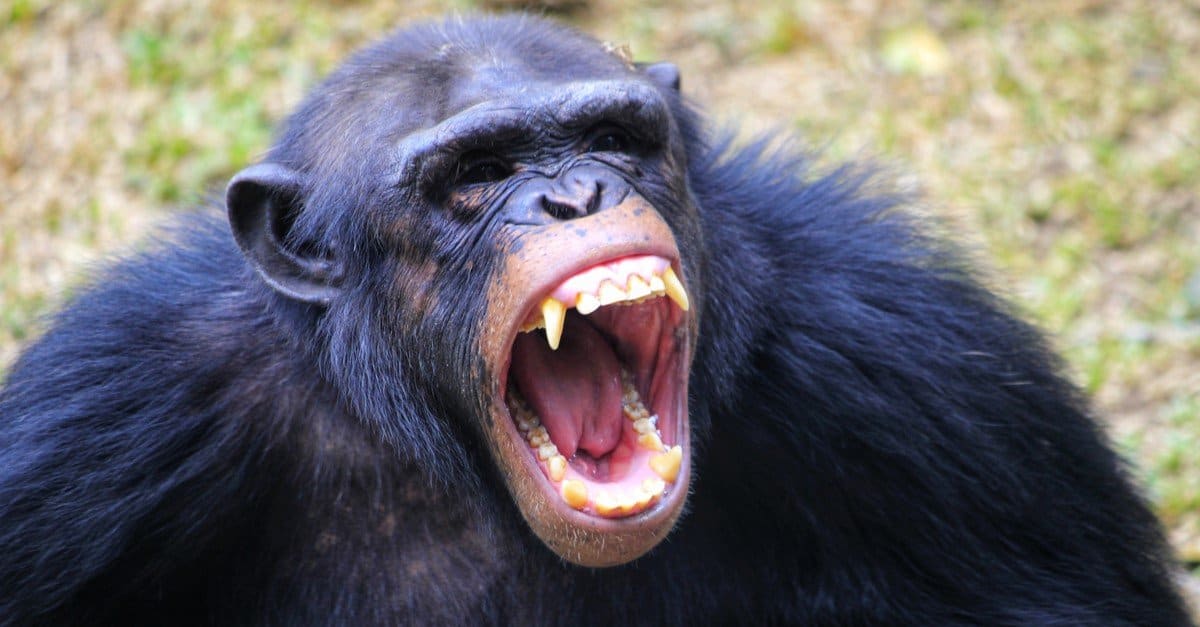
Though chimpanzees have the same dental structure as humans, their canines are bigger and sharper.
©Afandi Teguh Afriyanto/Shutterstock.com
What Kind of Teeth Do Chimpanzees Have?
Chimpanzees have the same dental structure as humans and many other mammals. The only difference is that their canines are bigger and much sharper. Chimpanzees are primates, and primates have a complete set of incisors, canines, premolars, and molars, known as heterodonty.
At the front of a chimpanzee’s mouth are eight incisors, four upper and four lower. These incisors are followed by one canine tooth in each quadrant. Chimpanzees’ canines are long and sharp. A chimp’s canines play several roles, including defense against threats, establishing social dominance, and helping tear tough plant foods like nuts.
Following the canines are the premolars and molars, which chimps use to grind their food.
How Many Teeth Do Chimpanzees Have?
Like most primates, adult chimpanzees have a total of 32 teeth. The 32 teeth are: eight incisors, four canines, eight premolars in the middle of the jaws, and 12 molars at the rear portion of the mouth. The typical dental formula for chimpanzees is: incisors 2/2, canines 1/1, premolars 2/2, and molars 3/3.
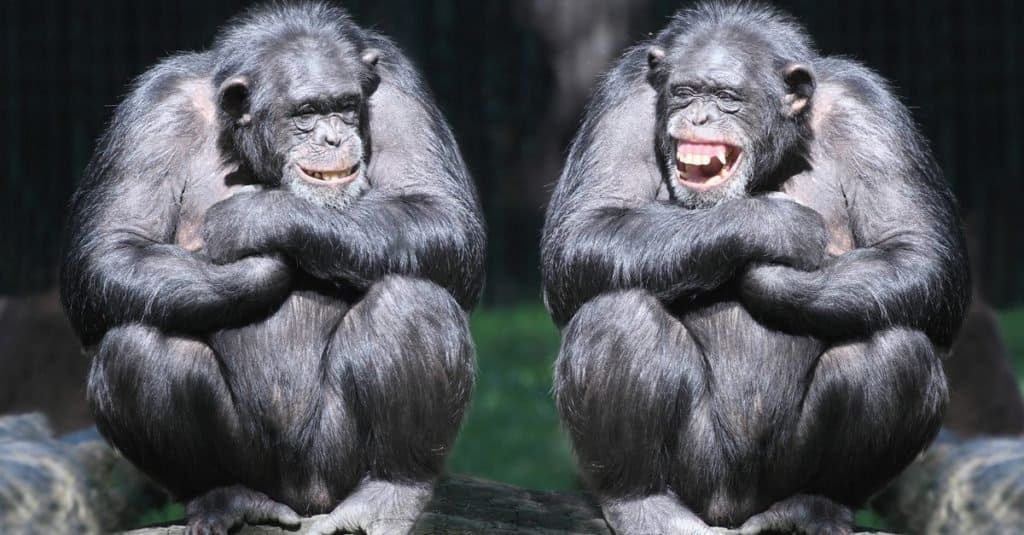
Chimpanzees have 32 teeth.
©Kletr/Shutterstock.com
The numbers represent how many teeth a chimpanzee has in each quadrant of the jaw: top left, top right, bottom left, and bottom right. However, chimpanzees do not possess the full complement of 32 teeth at birth. Like most primates, they have two sets of teeth that grow in one lifetime.
Chimpanzee Deciduous Teeth
Chimpanzees are diphyodont, which means they grow two sets of teeth throughout their life. At birth, chimpanzees may have a few teeth, which are part of their deciduous set, commonly referred to as baby teeth. Chimpanzees have a set of 20 deciduous teeth that start to erupt when the chimpanzee is around 6 months old. They will have a full set by the time they are 18 months old.
These milk teeth fall out and are gradually replaced by permanent teeth as the chimpanzee ages. Chimpanzees typically have a complete set of permanent teeth by around 13 years of age, when their third molars (wisdom teeth) erupt.
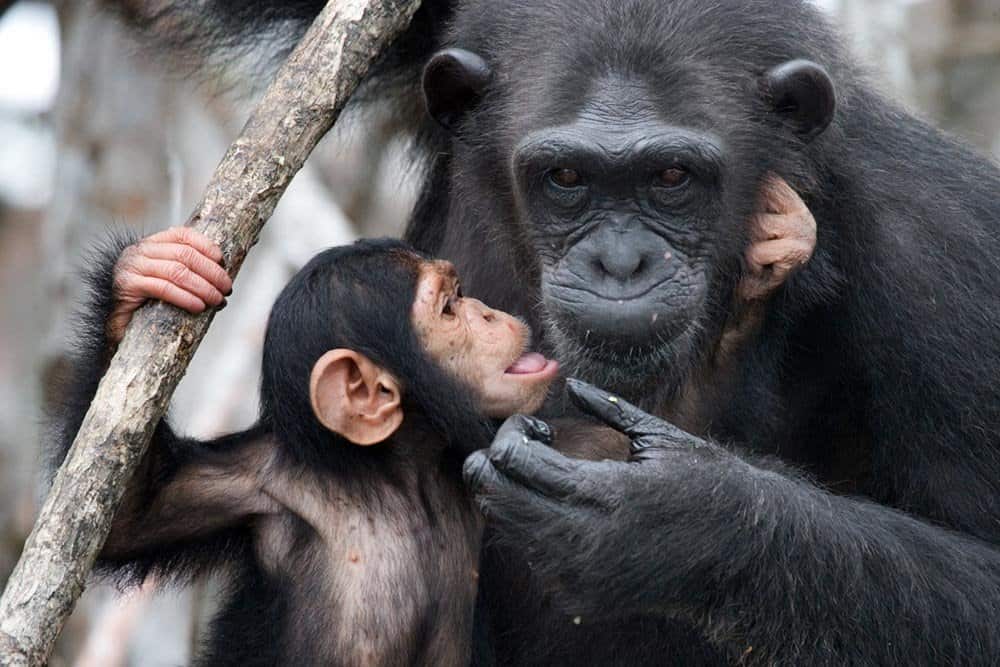
Baby chimpanzees have a set of 20 baby teeth.
©GUDKOV ANDREY/Shutterstock.com
Why Do Chimpanzees Have Sharp, Pointed Teeth?
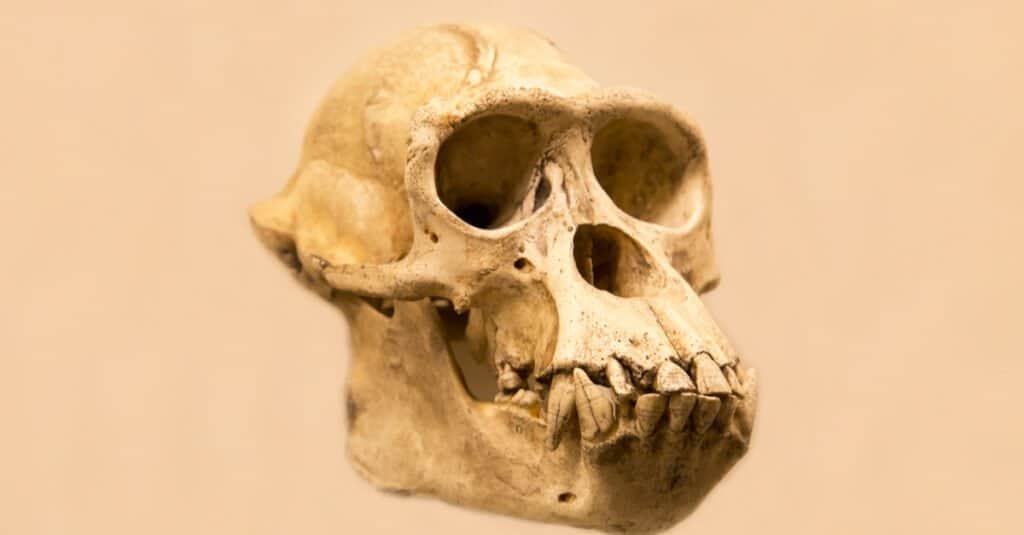
Chimpanzee canines are significantly larger than humans’.
©Victor1153/Shutterstock.com
Although chimpanzees have canines in the same location as humans, theirs are substantially bigger and longer. Chimpanzees are omnivores, meaning they eat both plants and animals. However, their diet consists primarily of fruits and vegetation, supplemented with insects, eggs, and meat from small animals that they hunt cooperatively.
Since these canine teeth aren’t used to chew food, chimpanzees use them as a defense. Their large canines are menacing, and chimpanzees often use them as a warning to other chimpanzees, predators, and even humans.
Do Chimpanzees Bite?
Chimpanzees are generally wary of humans and tend to keep their distance, but they can become aggressive and attack if they feel threatened. Chimpanzees have been observed to target sensitive areas such as the face, hands, feet, and genitals during attacks on humans. Captive chimpanzees are often more likely to attack than chimpanzees in the wild, as they can lose their natural fear of people.