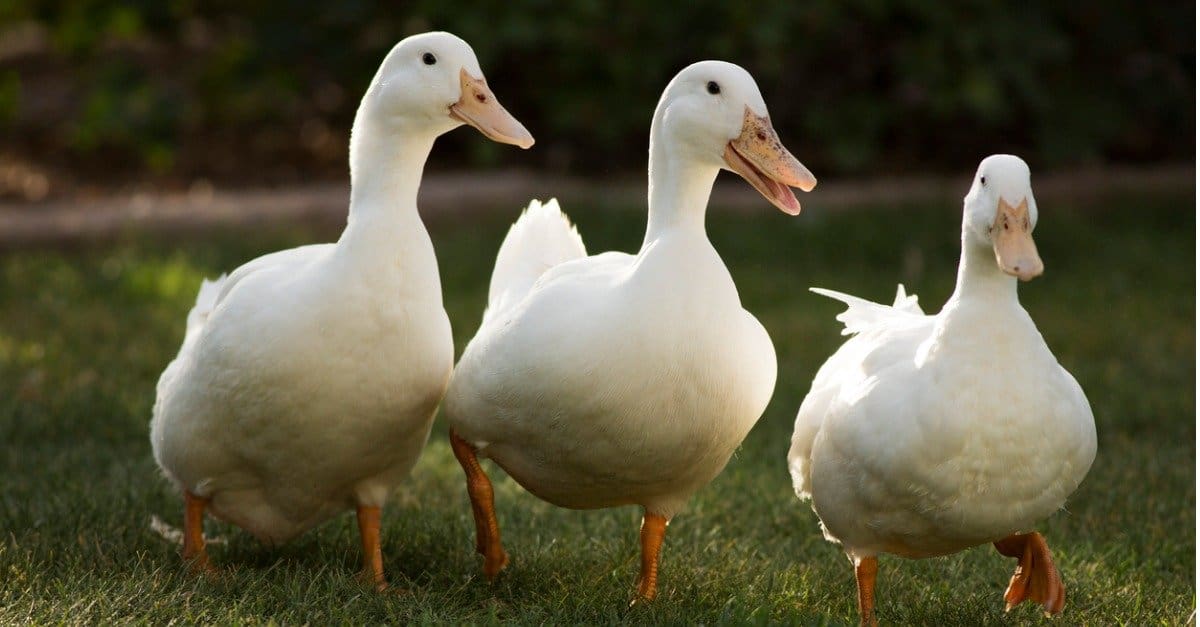

Throughout history, ducks (family Anatidae) have primarily been raised for their meat, eggs, and feathers. They have also been used for pest control, protecting hens, providing high-nitrogen fertilizer, and cleaning up garden plots. Ducks can also make excellent pets for those with large outdoor areas. While most of the native duck species in the United States are rather small, many larger species and breeds were imported from Europe and Asia. Continue reading to learn about the five largest ducks in the United States.
5. Saxony Duck
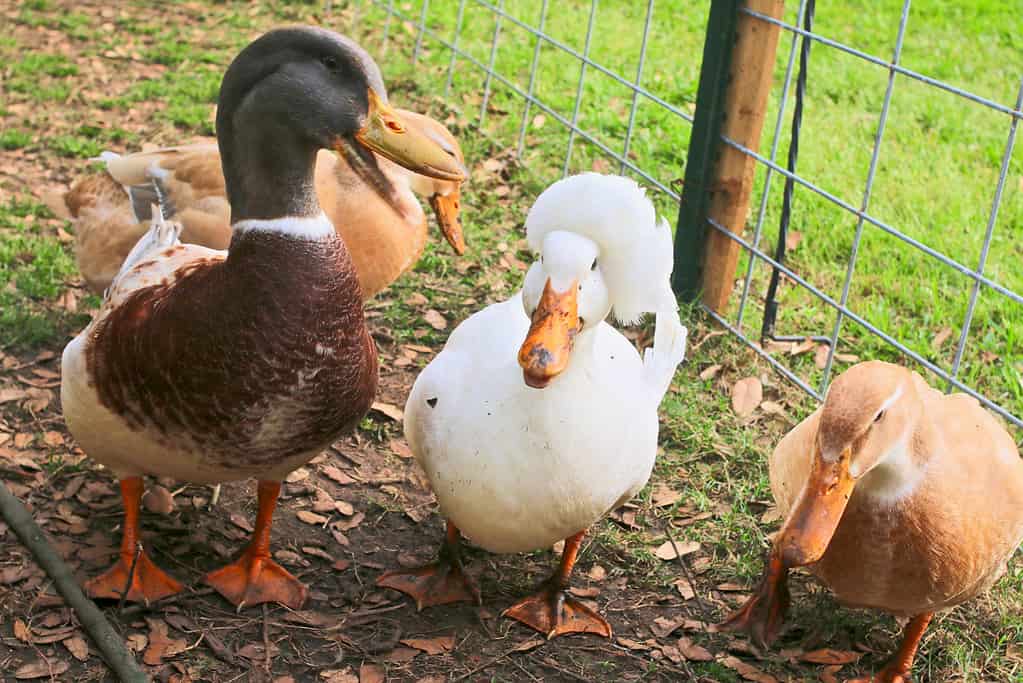
Saxony ducks make soft rasping noises, especially when excited.
©S. Mathews/Shutterstock.com
The Saxony duck weighs 6.5 to 8.5 pounds; they are heavy and muscular, featuring full breasts and oval heads. Drakes are reddish-brown with bluish-gray heads, while hens are a light buff color all over. Both sexes feature yellow bills and orange legs. The breed originated in Germany, resulting from the cross-breeding of German Pekins, Blue Pomeranians, and Rouens. Most of the original stock perished during World War II, but enough survived for the breed to continue and to be officially recognized in 1957.
Saxony ducks were not imported to the United States until 1984. The Livestock Conservancy lists the breed as Threatened in North America. They thrive in grassy and sandy areas with plenty of space to roam and forage. Instead of quacking, they make soft rasping noises, especially when excited.
4. American Pekin Duck
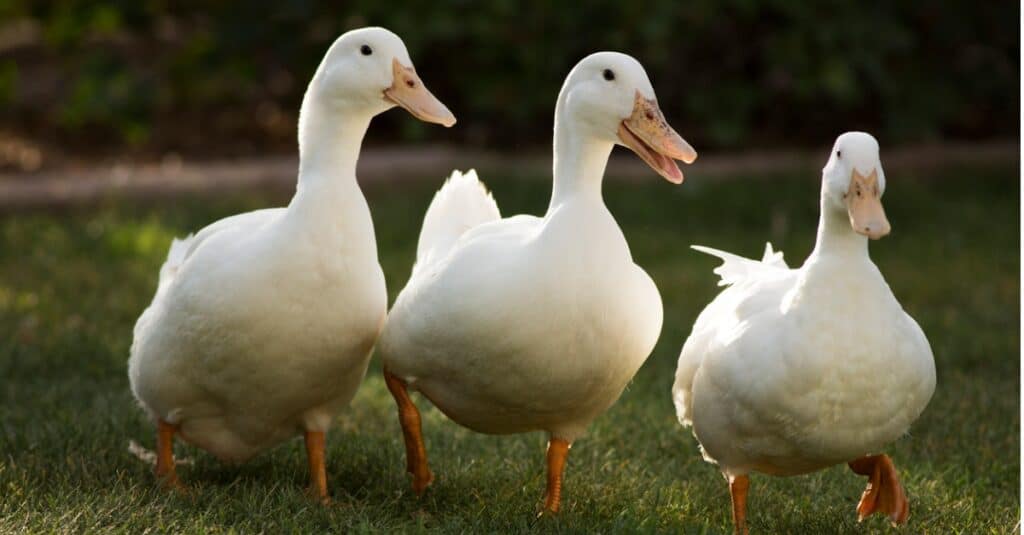
American pekin ducks are an American breed, but they were bred from Chinese ten-pound ducks.
©iStock.com/Maria Jeffs
The American pekin duck weighs 8 to 10 pounds and measures approximately 19.7 inches long. Large and solid, the American pekin features a rectangular-shaped body, a thick neck, and a rounded head. Their plumage is all-white, and their legs, feet, and bills are orange. This species is an American breed, but it was originally bred from Chinese ten-pound ducks during the 19th century. They are common throughout the United States, found on farms, parks, backyards, and ponds.
American pekin ducks are gentle, docile, and known to bond with their humans, as they are easy to train. Some will even give kisses, play games, and snuggle with their humans. However, they can be aggressive toward people they do not know. American pekins are primarily raised for their meat, with over half the ducks raised for slaughter in the United States being American pekins.
3. Aylesbury Duck
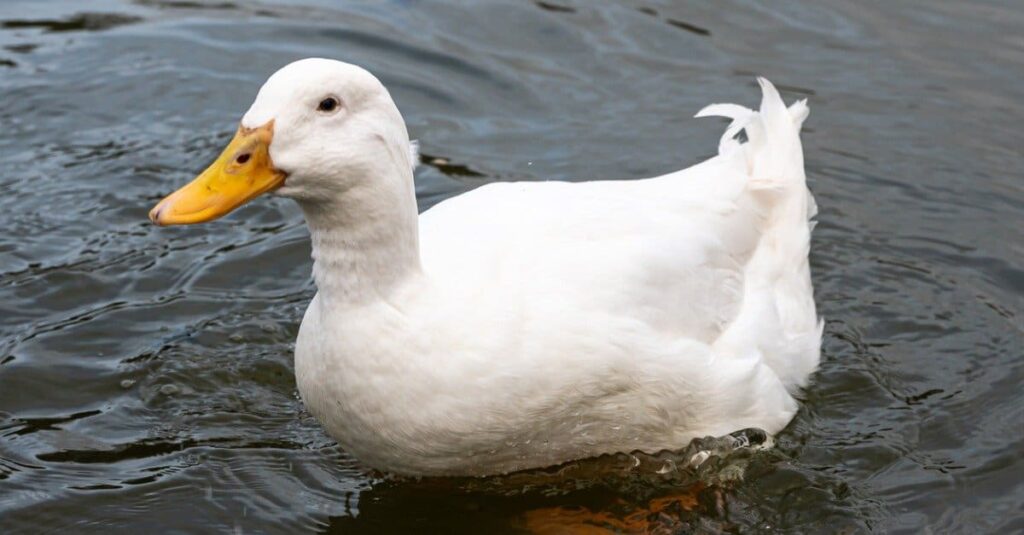
The Aylesbury duck is rare in the United States.
©iStock.com/Andi Edwards
Aylesbury ducks weigh 9 to 10 pounds and have bills that measure 6 to 8 inches long. This hefty bird is prized for its meat and stately appearance. They feature all-white plumage, orange legs, and pink bills. They also have large keels, which are extensions of the breastbone, and their necks are long and swan-like. Aylesbury ducks live around forested swamps, lakes, and streams. They are considered relatively docile, friendly, and easy-going.
Aylesbury ducks were bred from domesticated mallard ducks (Anas platyrhynchos), called common ducks, in England. Selective breeding of white common ducks in the 18th century resulted in the English white, which became a popular breed in Aylesbury. Because of the high demand for white duck feathers as filler for quilts, Aylesbury farmers prioritized maintaining their ducks’ white coloring. Further selective breeding by these farmers for size and color led to the Aylesbury duck of today. Aylesbury ducks were first brought to the United States in 1840; however, they failed to become a popular breed. Consequently, these birds are rare in the United States, and since 2013, the Livestock Conservancy has listed them as Critically Endangered within the United States.
2. Rouen Duck
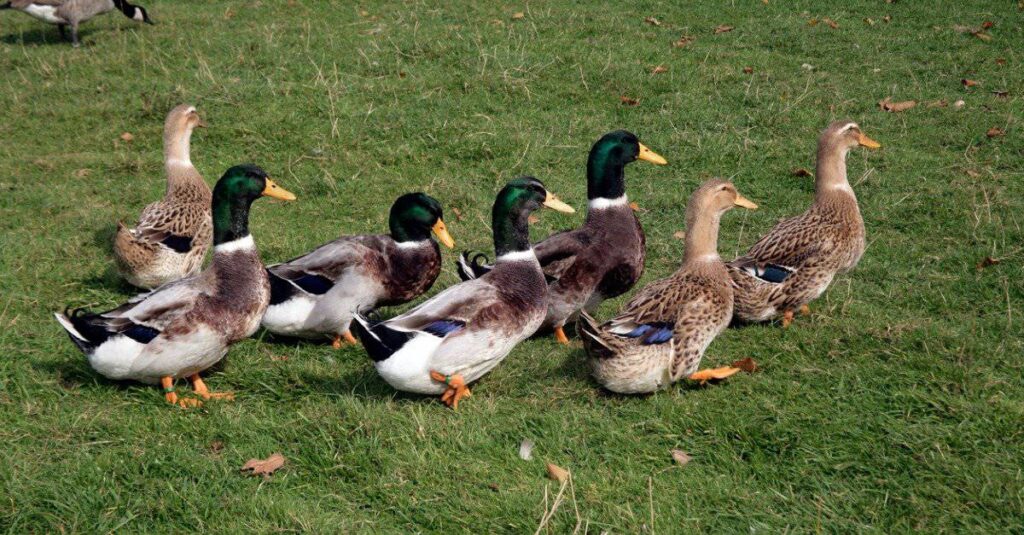
Rouen ducks are almost identical to mallards.
©iStock.com/MikeLane45
The domesticated Rouen duck is a heavyweight breed that weighs 9 to 12 pounds. They were originally bred in Rouen, France, before the 19th century, when they were brought to England and refined into the Rouen of today. Rouens were brought to the United States in 1850. They are primarily raised for their meat or as general-purpose farm ducks and show birds.
Rouen ducks have color patterns that are almost identical to those of mallard ducks. Drakes have green, brown, white, black, and gray plumage, with yellow bills and bright orange legs. Hens are a dull light brown with black and white mottling. Rouen ducks are calm and docile. They are friendly and sociable toward humans and have a relaxed nature. Additionally, they are quiet compared to other breeds.
1. Muscovy Duck

They are easy to identify with their black and white plumage and red faces.
©iStock.com/Orest Lyzhechka
Muscovy ducks (Cairina moschata) are the largest ducks in the United States, weighing up to 15 pounds. On average, these ducks measure 28 to 33 inches long, have a wingspan of 54 to 60 inches, and weigh 8.8 to 15 pounds. Females are typically half the size of males, as this species is sexually dimorphic. Drakes are predominantly black with white and iridescent patches, and hens have a duller plumage, often of white or brown. However, domesticated Muscovies of either sex come in a variety of colors, including black, blue, lavender, chocolate, and white.
This species is native to North and South America, from the Lower Rio Grande Valley of Texas and Mexico south to Argentina and Uruguay. However, the majority of Muscovy ducks in the United States are introduced feral populations. They live on farms and grasslands but are also found in forested swamps and near lakes. Muscovy ducks are friendly and non-aggressive. However, they do not make good pets, as they will resist being picked up or petted. They do not quack like regular ducks; rather, they hiss and huff to communicate.