
Quick Take
- In 2008, the venomous but non-aggressive timber rattlesnake was adopted as the state reptile.
- The 2015 resolution to adopt the northern red salamander as the official state amphibian was proposed by Romney Middle School students taking the West Virginia Studies class.
- The black bear was designated the official West Virginia state animal in 1973.
- The honey bee is the most important insect to West Virginia’s economy.
West Virginia is located in the east-central U.S. in the Appalachian region. Referred to as “the Mountain State,” West Virginia’s landscape is dominated by the high-elevation forests, gorges, hills, and valleys of the Appalachian Mountains. The state is home to a wide variety of wildlife, some of which are officially recognized as symbols of West Virginia. In this article, we’ll take a look at the official state animals of West Virginia and learn more about some of the species that call this state home.
State Reptile: The Rattlesnake
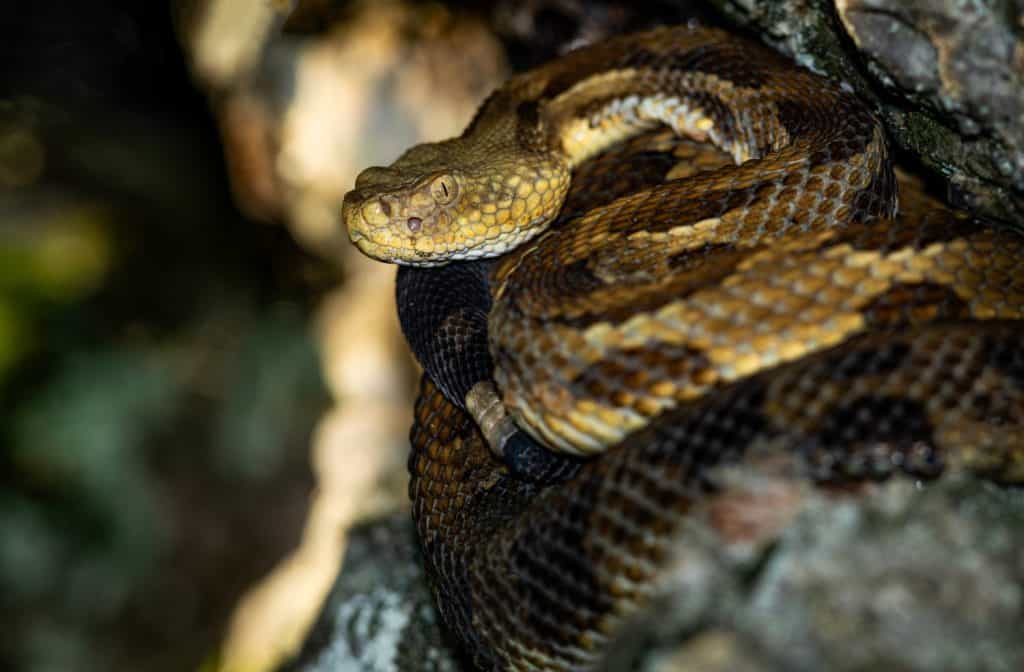
The timber rattlesnake (Crotalus horridus) is the official reptile of West Virginia. In 2008, this rattlesnake was adopted as the state reptile with the passage of Senate Concurrent Resolution No. 28. These snakes play an essential ecological role as important predators in the state, including controlling small mammal populations. Timber rattlesnakes are also protected in West Virginia, so harming or killing them is illegal.
©Mark F Lotterhand/Shutterstock.com
In West Virginia, these snakes are typically shades of brown, black, or yellow, with dark chevrons down their back and along their sides. They are large snakes with stocky bodies, reaching around 4 feet in length. Although timber rattlesnakes are venomous, they are not aggressive and would rather flee from intruders. They tend to be found in rockier or more heavily forested parts of the state. This includes places such as Monongahela National Forest, Kanawha State Forest, and Coopers Rock State Forest.
State Amphibian: The Northern Red Salamander
The northern red salamander (Pseudotriton ruber ruber) is the official amphibian of West Virginia. It was adopted on March 12, 2015, with House Concurrent Resolution No. 31. This resolution was proposed by Romney Middle School students taking the West Virginia Studies class. The salamander’s red color represents the fall foliage of the state tree, the Sugar Maple, as well as the red bandanas worn by miners. The black dots represent the coal mines found across the region. The five toes on the salamander’s back feet are said to represent the state’s fifty-five counties. The four toes on the front feet stand for West Virginia’s eight major rivers.
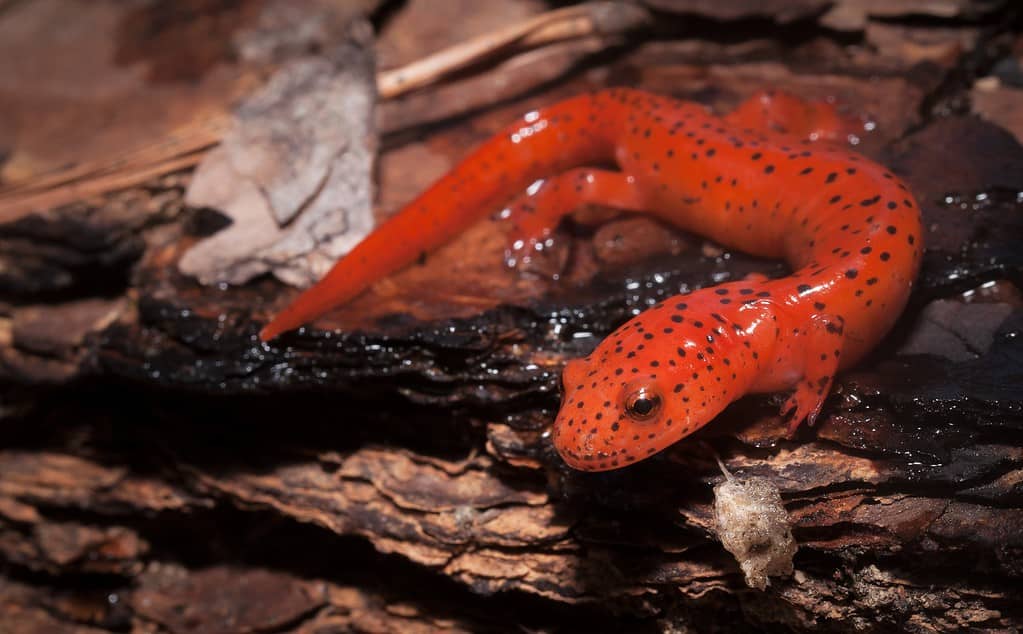
The northern red salamander is an indicator of the health of the state’s ecosystems.
©Mike Wilhelm/Shutterstock.com
The northern red salamander is also noted to be sensitive to disturbances in the ecosystem and is considered an indicator of the area’s health. These salamanders are around 4-7 inches long. They can be found throughout the state in cold, clear, permanent water sources near moist forests. Northern red salamanders frequently hide under stones or logs.
Animal: The Black Bear
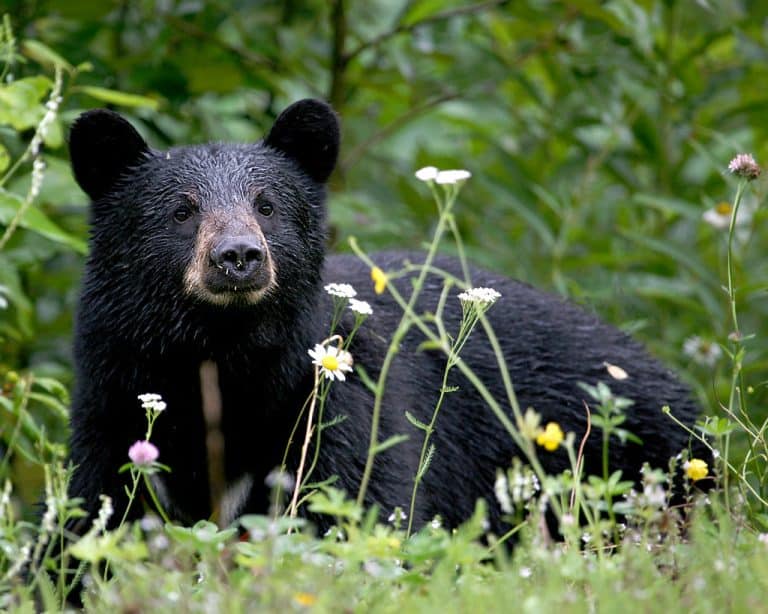
The black bear (Ursus americanus) is the official animal of West Virginia. It was selected after a poll was taken by the Division of Natural Resources in 1954 through 1955. However, the black bear was not officially adopted as the state animal until the Legislature’s approval of House Concurrent Resolution No. 6 in 1973. The timing was likely intended to highlight the need for conservation of black bear populations in the state, which had reached historic lows by the early 1970s.
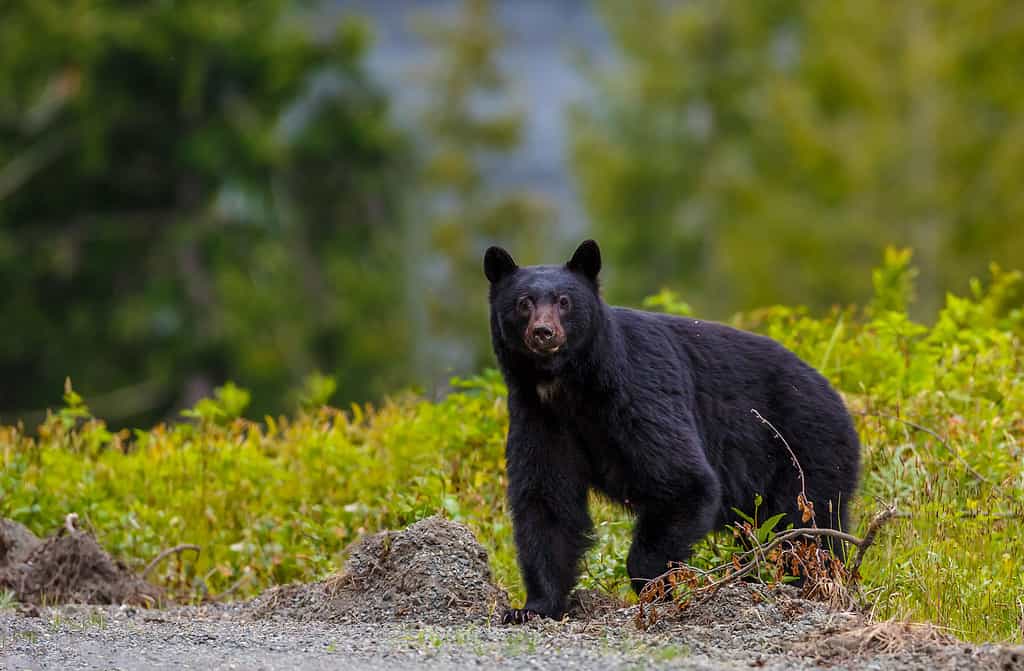
Black bears typically live in forested areas, but they are also regularly found near urban areas in West Virginia.
©Menno Schaefer/Shutterstock.com
Today, black bears can be found throughout the state. Researchers at West Virginia University note that black bears have been harvested in 46 of the state’s 55 counties. Black bears are the most common bears throughout the U.S. They can reach 5 to 6 feet in length and stand up to 3 feet tall at the shoulder. They generally weigh 100-400 pounds. Black bears typically live in forested areas. However, they are regularly found near West Virginia’s major cities, likely to obtain easy access to human and pet food.
State Butterfly: The Monarch Butterfly
The monarch butterfly (Danaus plexippus) is the official butterfly of West Virginia. It was adopted as the official state butterfly with the passage of Senate Concurrent Resolution No. 11 on March 1, 1995. These large, colorful butterflies are recognized by their vivid orange wings, black veins, and white spots. The resolution noted that the monarch butterfly was one of the most beautiful in the region and that it was abundant in West Virginia.
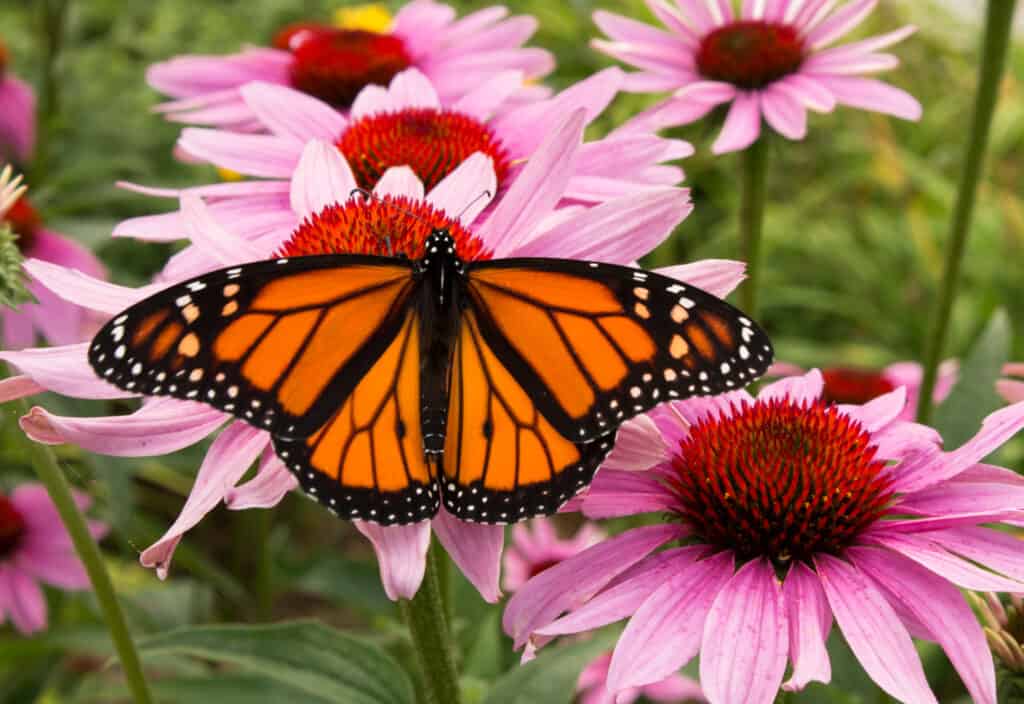
©Media Marketing/Shutterstock.com
Unfortunately, as part of the eastern North American monarch population, West Virginia’s monarch populations have decreased by 90%. The monarch butterfly flies thousands of miles from its breeding grounds in the U.S. and Canada to its wintering grounds in Mexico. They return to the same place in the Sierra Madre Mountains each year. This is how researchers can determine that populations are in decline. Monarchs require milkweed to survive, which can be found in meadows, fields with abundant weeds, and near waterways. They may be seen from May through October, with the highest numbers in late summer and early fall.
State Fish: The Brook Trout
The brook trout (Salvelinus fontinalis) is the official fish of West Virginia. It was officially designated as the state fish during the 1973 Regular Session with the adoption of House Concurrent Resolution 6. The brook trout is the state’s only native trout species.
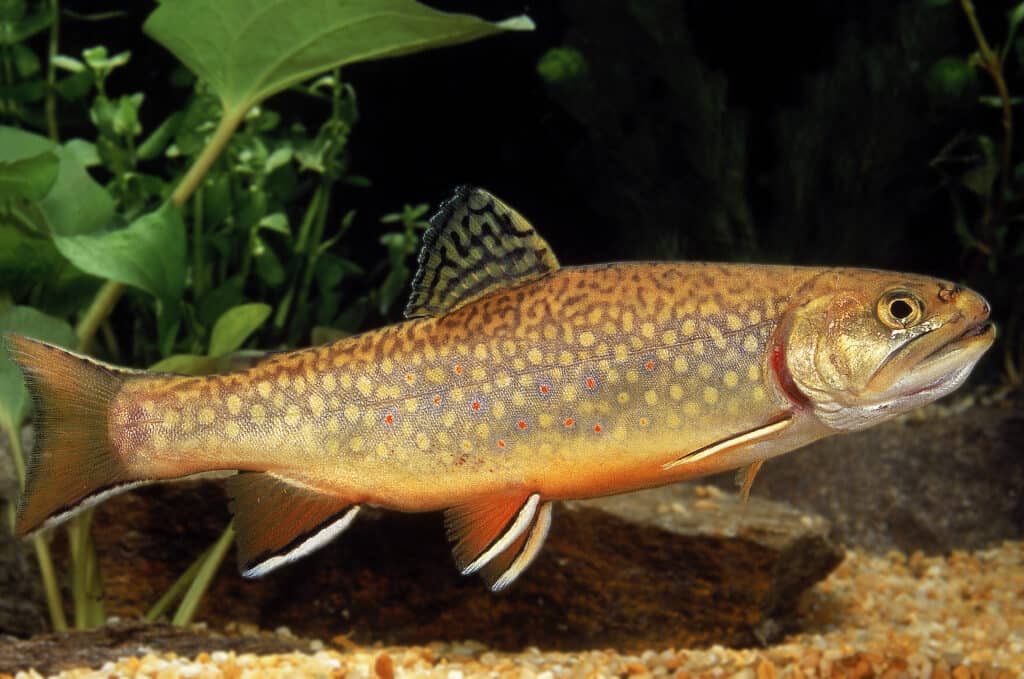
This type of trout is a hardy species that is adaptable to life in the mountain streams of West Virginia.
©Slowmotion GLI/Shutterstock.com
Brook trout are dark brown or olive-green with dark, snake-like markings on the top. They have blue-rimmed red spots on their sides and white edges on their fins. Males also have reddish bellies. The record for the heaviest brook trout in West Virginia is 7.64 pounds. The record for the longest brook trout is 23.50 inches. Brook trout are among the most popular game fish in the state and are well-adapted to West Virginia’s mountain-fed, cold-water streams.
State Insect: The Honey Bee
The honey bee (Apis mellifera) is the official insect of West Virginia. It is well-known for its role in pollination and for producing honey. In fact, the honey bee is more important to West Virginia’s economy than any other insect. It was designated the official state insect through the Legislature’s adoption of Senate Concurrent Resolution No. 9 on March 7, 2002.
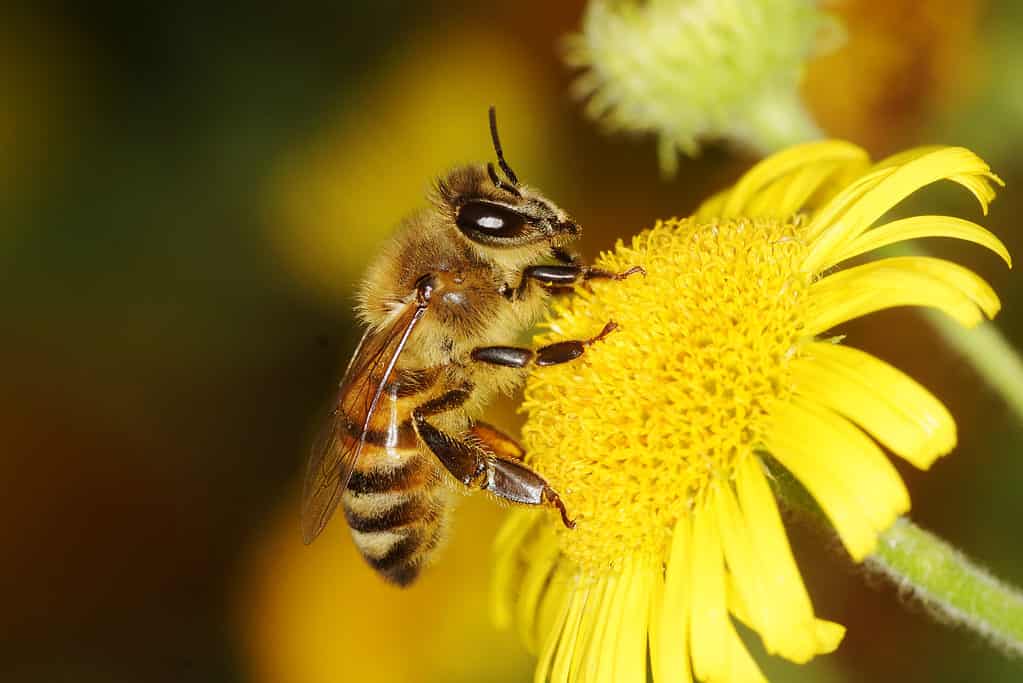
The honey bee is the most important insect to West Virginia’s economy.
©Maciej Olszewski/Shutterstock.com
The honey bee is a fuzzy, dark yellowish-brown to gold insect with dark bands on its abdomen. It is a highly social insect that lives in large colonies of up to thousands of individuals. Some of the major crops pollinated by honey bees in West Virginia include strawberries, apples, blackberries, blueberries, pumpkins, alfalfa, and raspberries.
State Bird: The Northern Cardinal
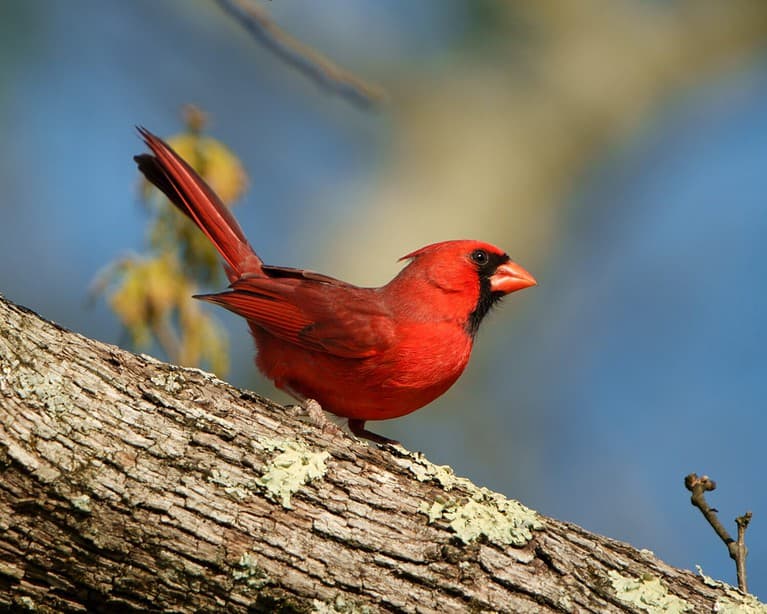
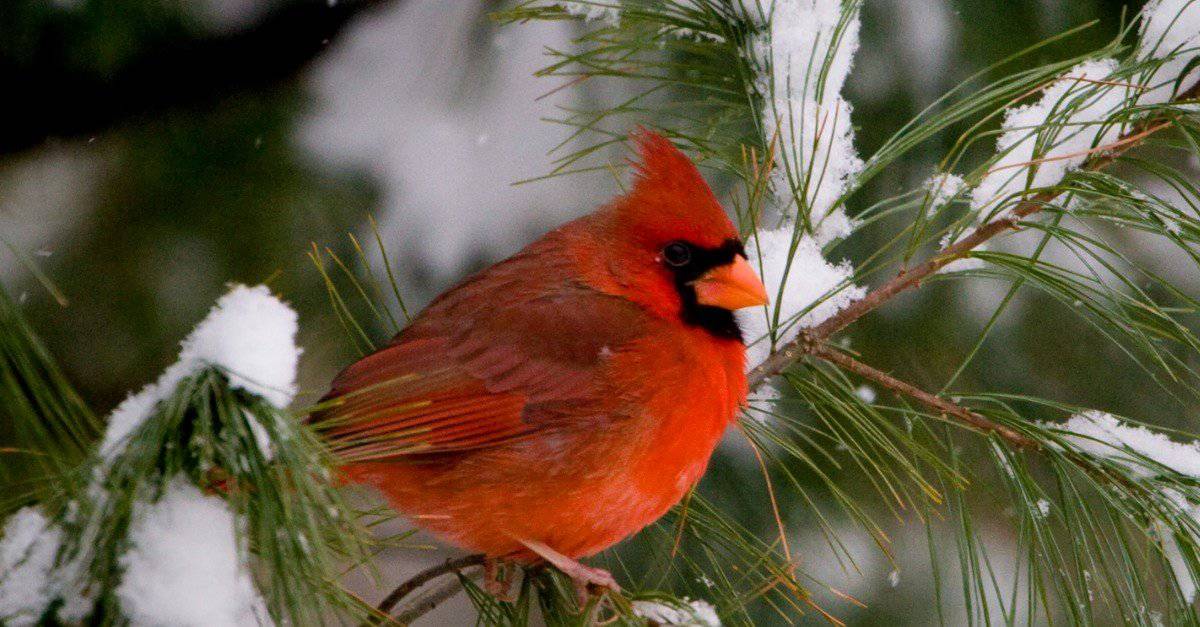
In 1949, the state passed legislation to allow for the designation of an official bird (and tree), which would be decided by a vote. Public school students and civic organizations voted to determine the state bird of West Virginia, and the northern red cardinal (Cardinalis cardinalis) won by a landslide. It was officially adopted with House Resolution 12 on March 7, 1949.
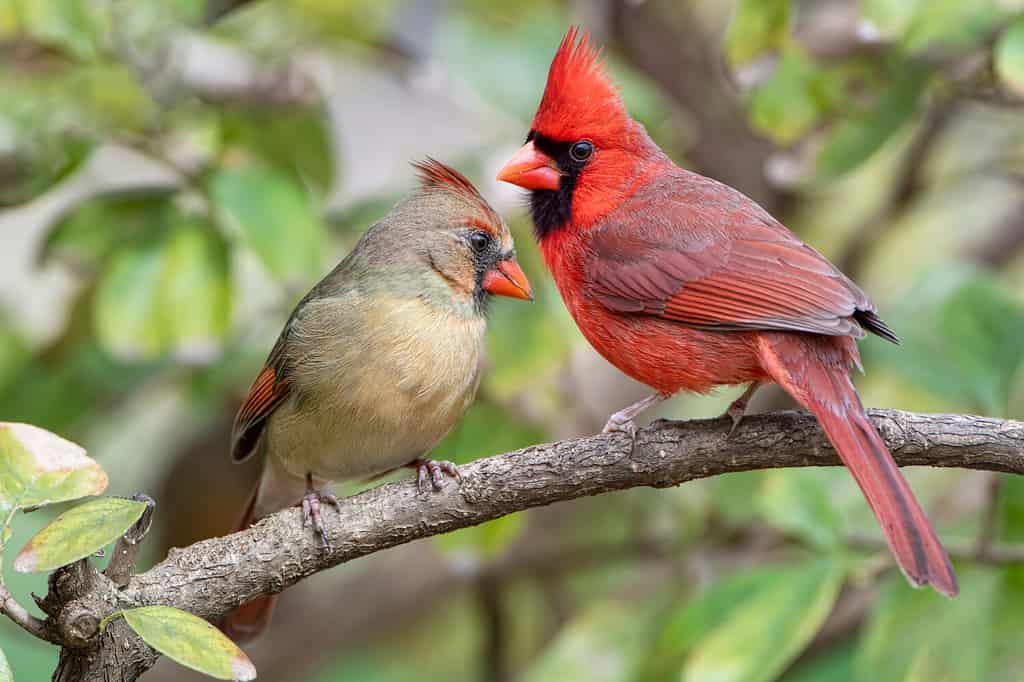
Students and civic organizations voted to adopt the northern cardinal as the official state bird in 1949.
©Bonnie Taylor Barry/Shutterstock.com
These birds are non-migratory, year-round residents of West Virginia. They are easily recognized by the male’s bright red plumage, black face markings, and the crest of feathers on his head. Females are a duller brownish-beige but have flashes of red on their wings, heads, and tails. These birds are commonly seen in backyards, gardens, wooded areas, or other places where there are dense shrubs or thickets for nesting.