
Quick Take
- The northern pike is the state fish, with a 37-pound record catch at Lake Sakakawea in 1968 remaining the ultimate benchmark for state anglers.
- The Nokota horse is reputed to be descended from Chief Sitting Bull’s war ponies.
- The Western Meadowlark was designated the state bird of North Dakota in 1947 due to its prevalence in the region.
- Elementary students proposed the convergent lady beetle as the official state insect due to its valuable role in agriculture.
Located in the Upper Midwest, North Dakota belongs to the Great Plains region. There are many historical and cultural sites in the state, as well as natural beauty, including the badlands of Theodore Roosevelt National Park in western North Dakota. The state is home to animals such as buffalo, moose, elk, deer, and antelopes. Undoubtedly, North Dakota is the perfect destination for those who love the great outdoors. Whether you are a visitor or a permanent resident, you may be curious to learn what unique animals represent the state. Keep reading to discover the four official state animals of North Dakota.
1. Western Meadowlark – State Bird
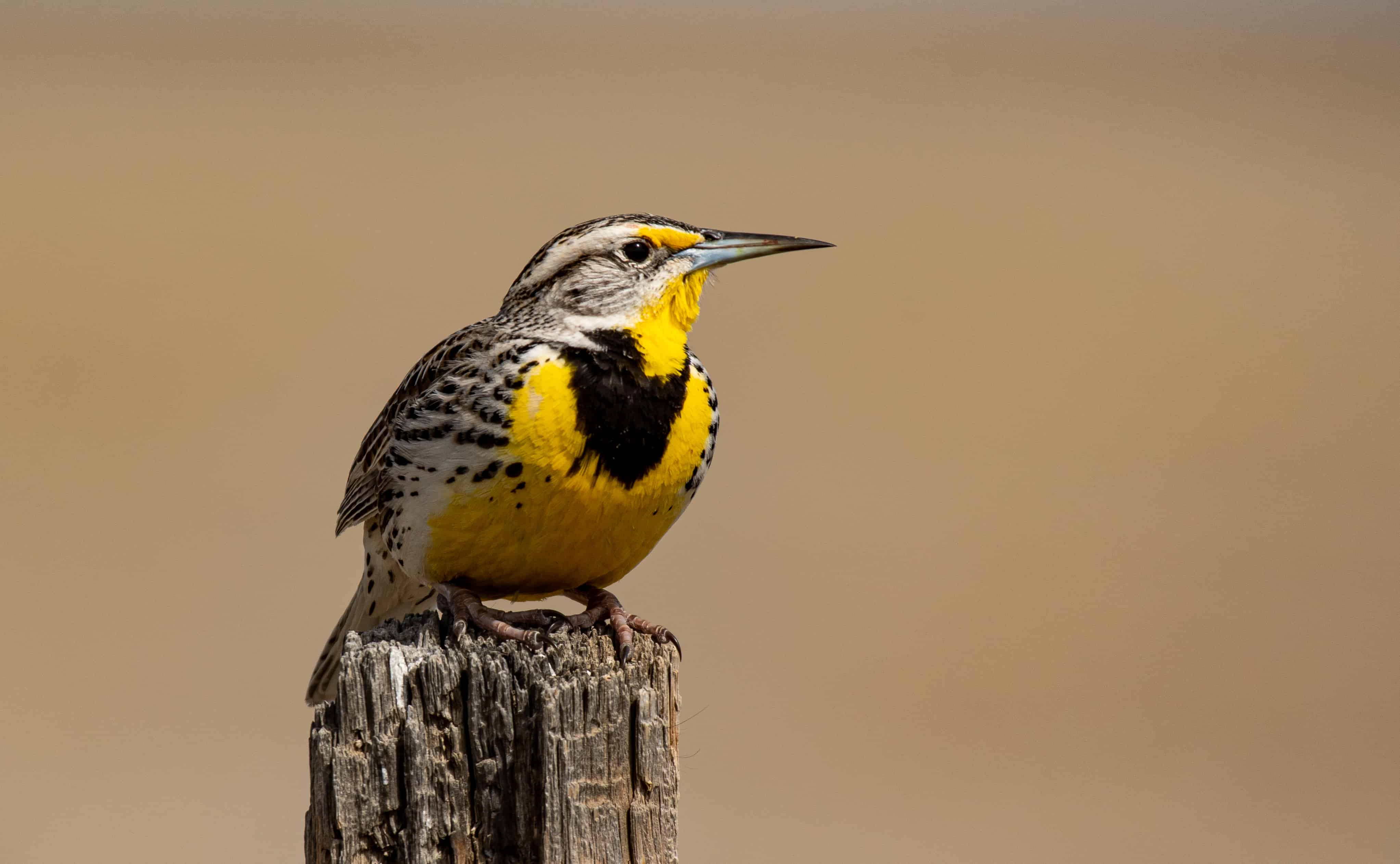
The western meadowlark (Sturnella neglecta) is a chunky, medium-sized songbird belonging to the blackbird family. This bird is native to North America and can be found across the Central U.S. to the West Coast. Along with being the state bird of North Dakota, it is also the state bird of five other states, including Montana, Wyoming, Nebraska, Kansas, and Oregon. North Dakota designated the western meadowlark as one of its state symbols in 1947 due to its prevalence in the region.
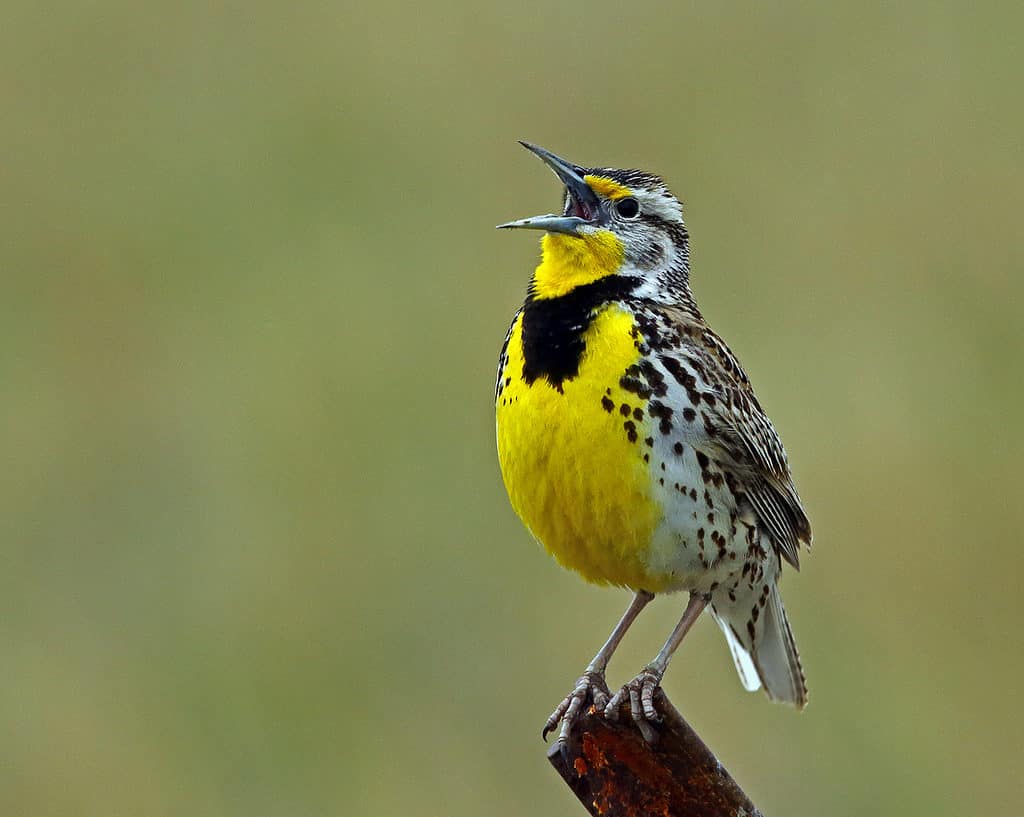
Western meadowlarks belong to the blackbird family.
©iStock.com/photographybyJHWilliams
Western meadowlarks have yellow underparts with a black “V” on their breasts. They have patterned upperparts in shades of brown, black, and buff. These birds have long, slim bills, flat heads, and short tails. They are well-known for their distinctive, flute-like calls. In North Dakota, these birds occur from March through October, with the peak breeding season during the warmer months of the year. They can generally be spotted perched on fence posts or foraging on the ground in open grasslands, prairies, fields, and pastures.
2. Convergent Lady Beetle – State Insect
The convergent lady beetle (Hippodamia convergens) is one of the most common beetles in North America. They have a black head and prothorax with white markings that converge, meaning they point inward toward each other. These beetles have reddish-orange wings with black dots. They inhabit a diverse range of habitats in the U.S., including grasslands, forests, meadows, gardens, and agricultural fields. Convergent lady beetles are found anywhere that plants are infested with aphids, but they also eat mites and scale insects.
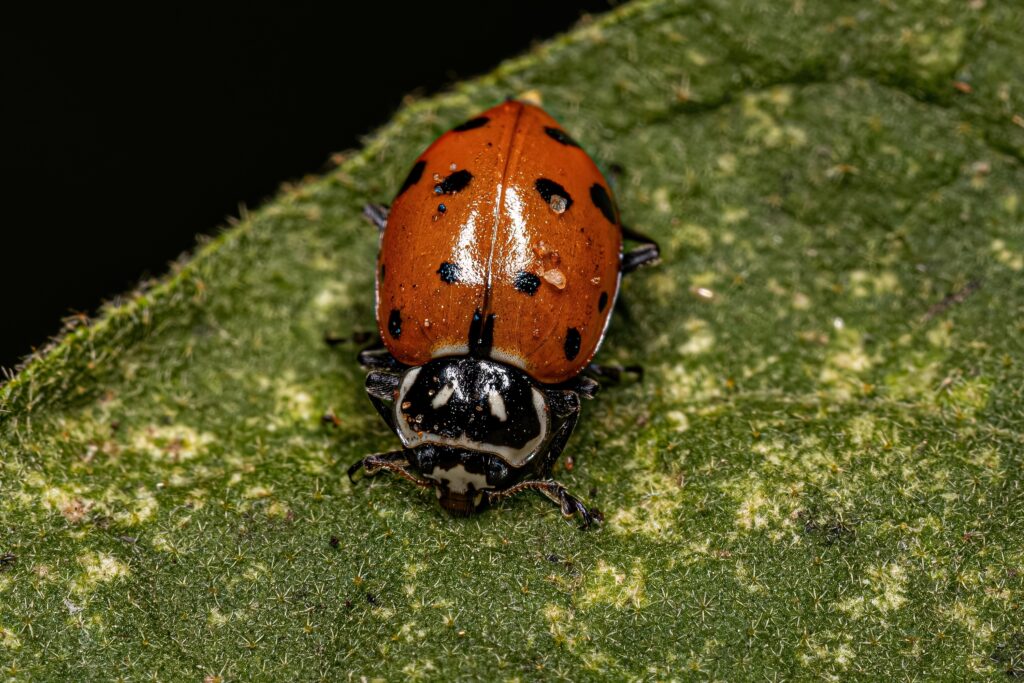
The convergent lady beetle was designated the official North Dakota state insect in 2011.
©Vinicius R. Souza/Shutterstock.com
Convergent lady beetles are considered helpful insects because they eat agricultural pests. They are not harmful to humans, nor do they damage crops. The insect was proposed by students at Kenmare Elementary School. Due to this beetle’s helpfulness in the agricultural industry, it was an easy decision for the Legislative Assembly to designate the convergent lady beetle the official North Dakota state insect in 2011.
3. Northern Pike – State Fish
The northern pike (Esox lucius) is a carnivorous fish native to the brackish and freshwaters of North America and Europe. These elongated fish are olive green to black with pale spots on their sides. They have spiny fins, long, flattened snouts, and large mouths with sharp teeth. The northern pike is somewhat aggressive. This species is an ambush predator that lies in wait before latching onto prey at a remarkable speed. They live in slow-moving streams and shallow areas of lakes and reservoirs.
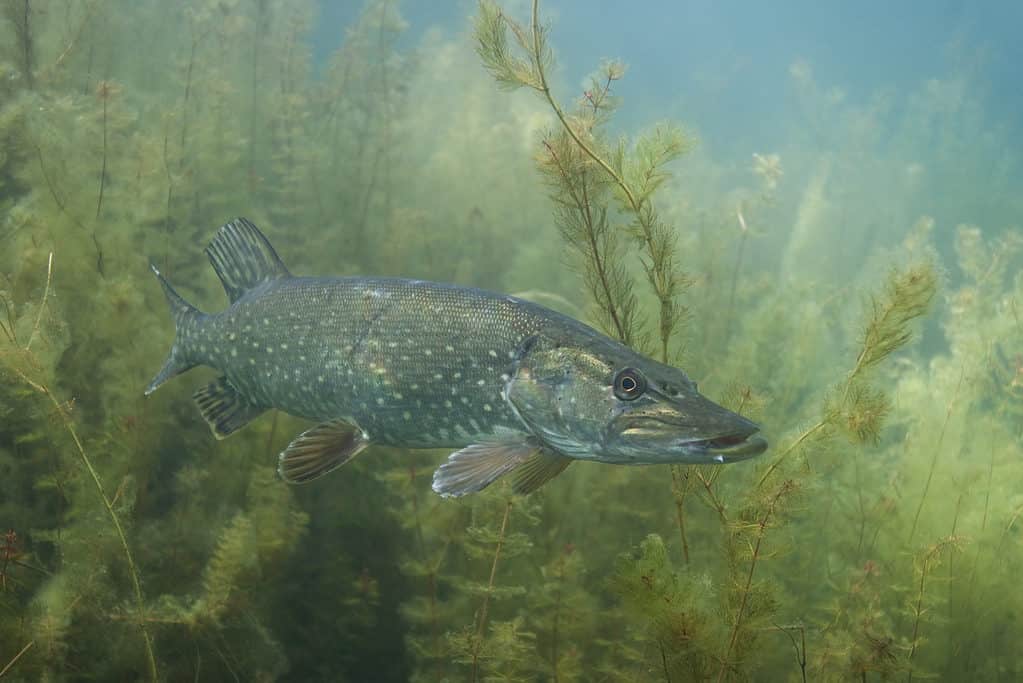
Northern pikes are a favorite game fish for North Dakotan anglers.
©Martin Prochazkacz/Shutterstock.com
Northern pikes are a favorite fish for North Dakotan anglers. In fact, people from all over the country visit the state for pike fishing. Lake Sakakawea is famous for its record-breaking northern pike catch in 1968. The fish weighed a whopping 37 pounds and measured 48 inches long. It’s no wonder the northern pike was named North Dakota’s state fish in 1969.
4. Nokota Horse – Honorary Equine
The Nokota is a breed of wild horses (Equus ferus) native to North Dakota’s Badlands in the southwestern part of the state. They are believed to be the descendants of the war ponies used by the Sioux chief, Sitting Bull. Nokotas are large-boned, angular-framed horses that frequently have blue-roan colored coats, although black and grey are also common. They have low-set tails and often display a unique, ambling gait. Nokota horses typically stand 14.2 to 15 hands (4.7–5 feet).
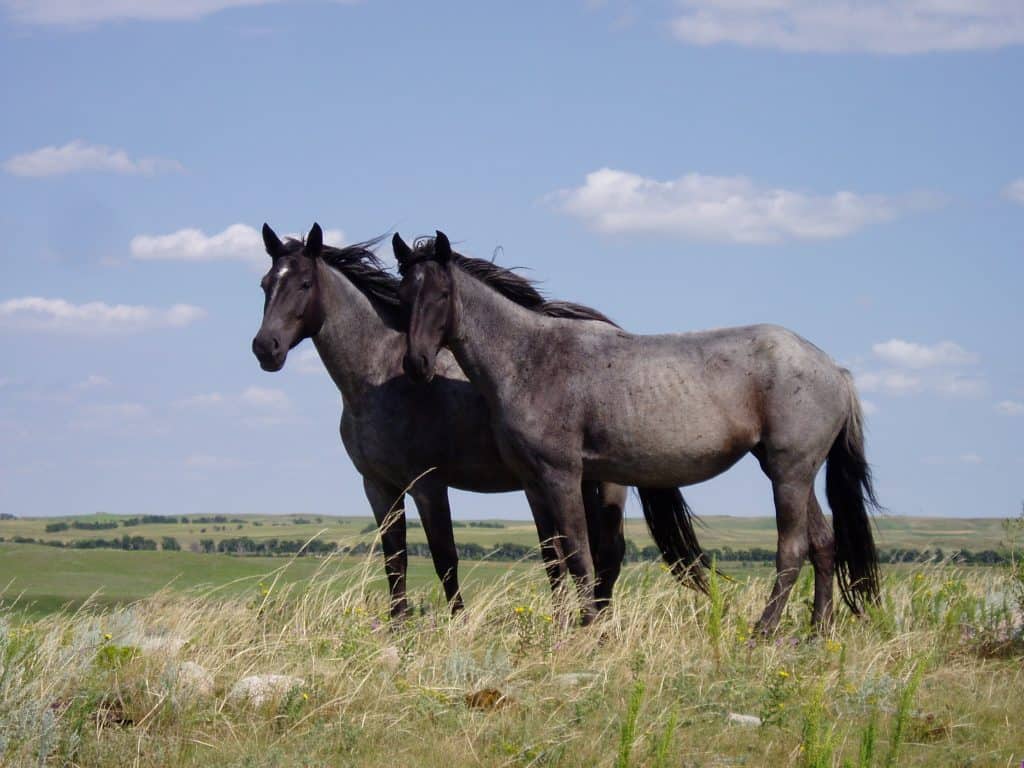
Nokota horses are believed to be descendants of Chief Sitting Bull’s war ponies.
Unfortunately, this breed almost went extinct during the early 20th century when ranchers wanted to reduce livestock grazing. However, the Nokota Horse Conservancy is dedicated to preventing their extinction through responsible breeding and outreach programs. These wild horses hold a special place in the hearts of North Dakotans and were named the honorary equine of the state in 1993. Today, you can still find a few running wild in the Theodore Roosevelt National Park.