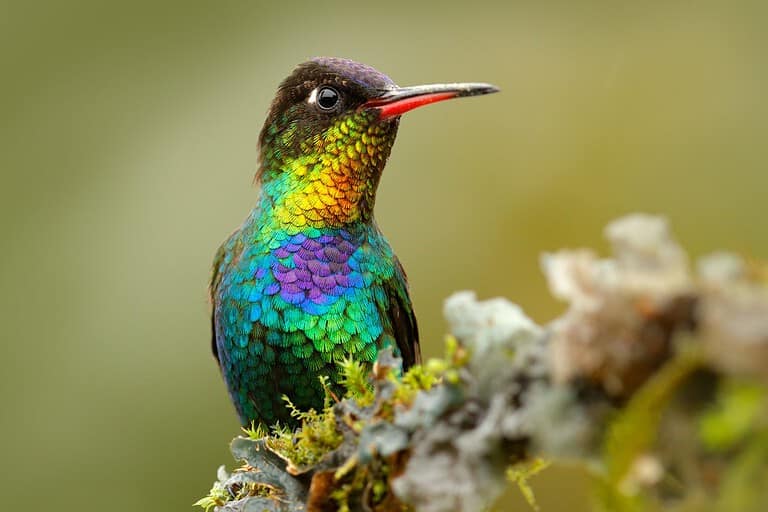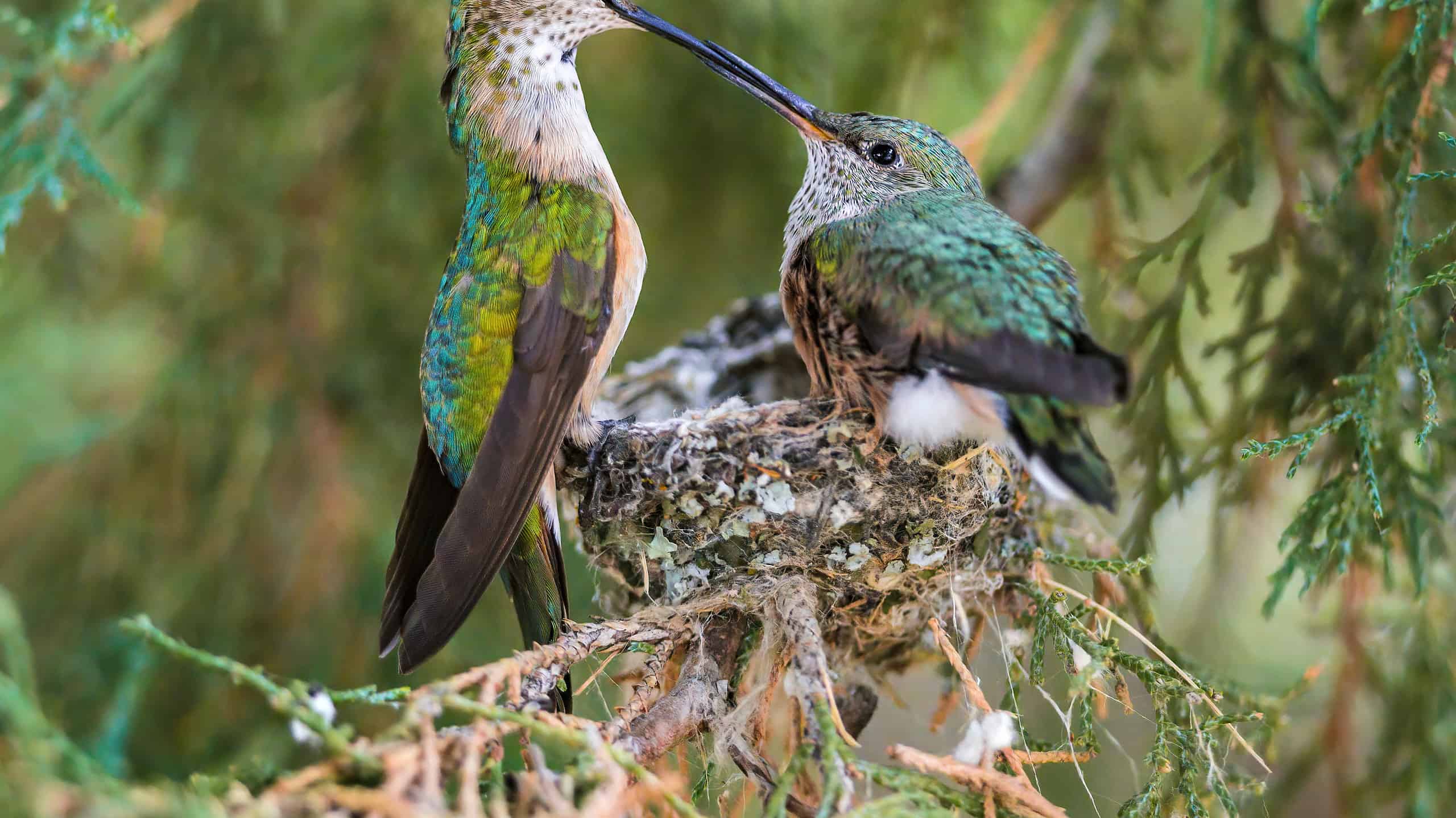

Hummingbirds are relatively rare in the state of South Dakota. There are only two native species that each breed in only small areas of the state. One is the ruby-throated hummingbird (Archilochus colubris), which happens to also be the U.S. and Canada’s only regularly breeding hummingbird species east of the Rocky Mountains. The other is the broad-tailed hummingbird (Selasphorus platycercus), a species that is almost exclusively a “western” hummingbird but is now known to also occasionally nest in the Black Hills region. Read on to find out when and where you may see these flying jewels arrive in and leave the state, where they go, and what other species may sometimes pop in for a visit!
1. Ruby-Throated Hummingbird (Archilochus colubris)
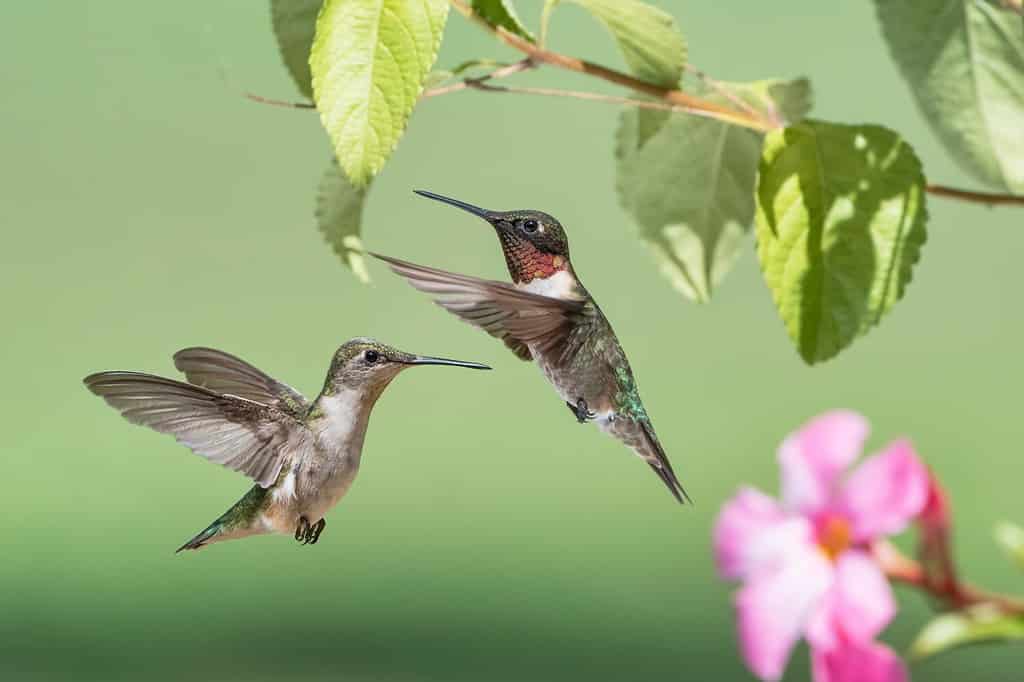
Like other hummingbird species, the female ruby-throated hummingbird is duller in color and lacks the bright throat patch.
©Bonnie Taylor Barry/Shutterstock.com
For those in the U.S. and southern Canada east of the Rocky Mountains, this is almost always the only hummingbird you will ever see. This is because it is the only truly native breeding hummingbird species in the entire region. Like other hummingbird species, they are strongly dimorphic, with males sporting more colorful plumage that includes an iridescent red throat patch called a gorget.
When Do Ruby-Throated Hummingbirds Arrive in South Dakota?
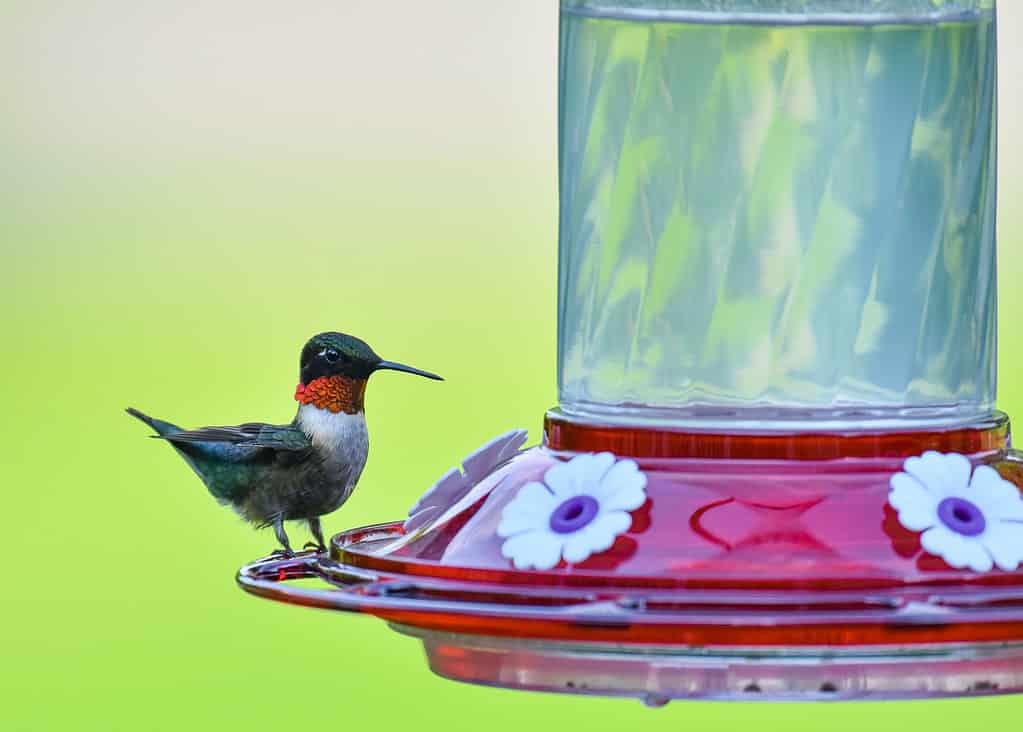
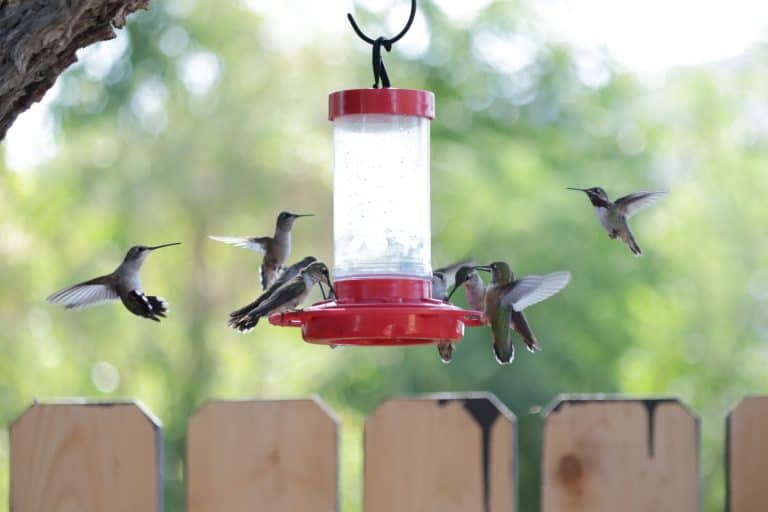
Putting up a hummingbird feeder during spring migration season is a great way to coax ruby-throated hummingbirds to stay in South Dakota and breed!
©Christine Balleau/iStock via Getty Images
Ruby-throated hummingbirds are not year-round residents of South Dakota Rather, they arrive during the annual spring migration season. They also are rare to see in the western half of the state. This is because only the eastern half falls within their usual migration path. Furthermore, only the far eastern end falls into the edge of their usual breeding range.
What this means is that while many will just be passing through as they migrate as far north as southern Canada, others in the easternmost part of the state may stick around and make South Dakota their home for the breeding season. Males usually arrive first to claim breeding territories at the start of May. Females will then arrive soon after to choose mates and nest. If you want to entice these migrating hummingbirds into making your home theirs for the season, you can attract them by planting their favorite nectar flowers and putting up nectar feeders!
When Do Ruby-Throated Hummingbirds Leave South Dakota?
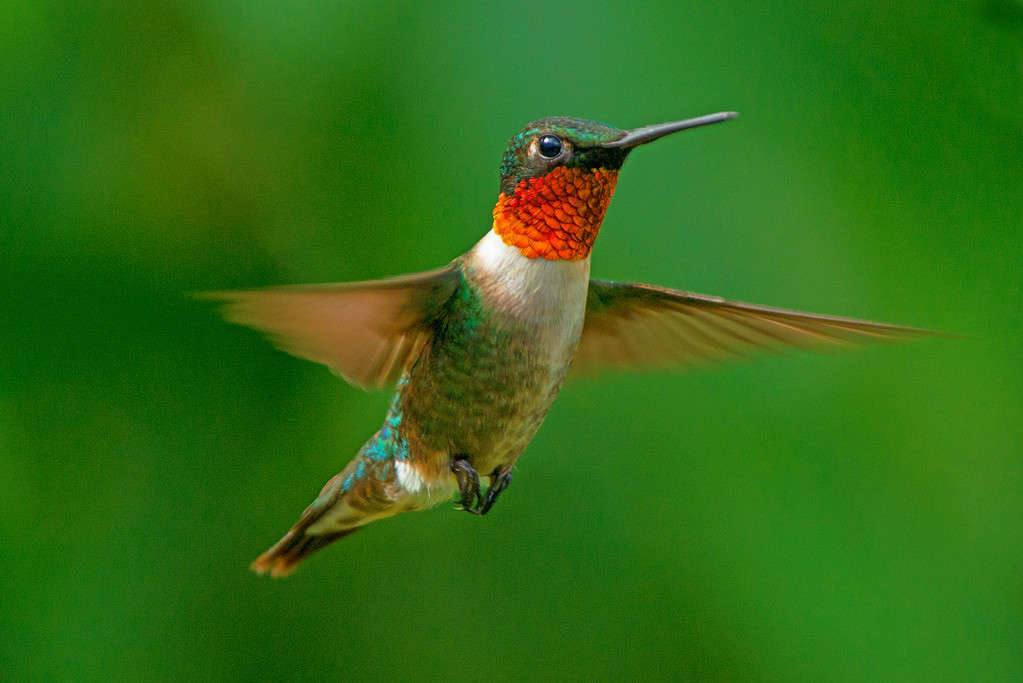
Just as adult males are usually first to arrive in spring, they are often the first to leave in fall.
©CarolinaBirdman/iStock via Getty Images
After breeding and raising their young through the summer, ruby-throated hummingbirds will reverse their path during the fall migration season. During this time, birds who stayed to breed (and their young!) will rejoin others traveling back down from further north. Adult males usually begin leaving first in late August, with most hummingbirds gone from the state by the end of September.
Where Do Ruby-Throated Hummingbirds Go After Leaving South Dakota?
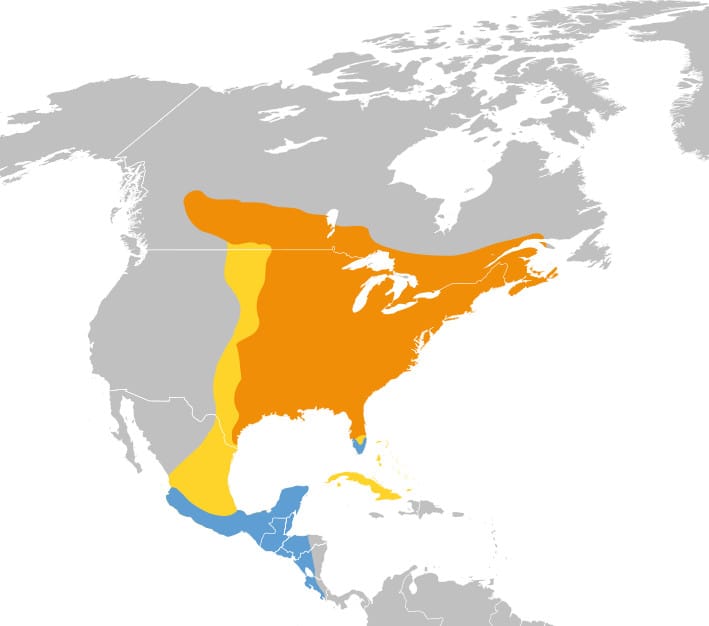
This map illustrates the range of the ruby-throated hummingbird. Orange represents its breeding range, yellow its extended migration range, and blue its overwintering range.
Ruby-throated hummingbirds migrate south to overwintering grounds in Florida, Mexico, and Central America. While many migrating through South Dakota may continue on an overland route, others on a more eastern path will make an incredible journey across the Gulf of Mexico in a single super-powered nonstop flight!
2. Broad-Tailed Hummingbird (Selasphorus platycercus)
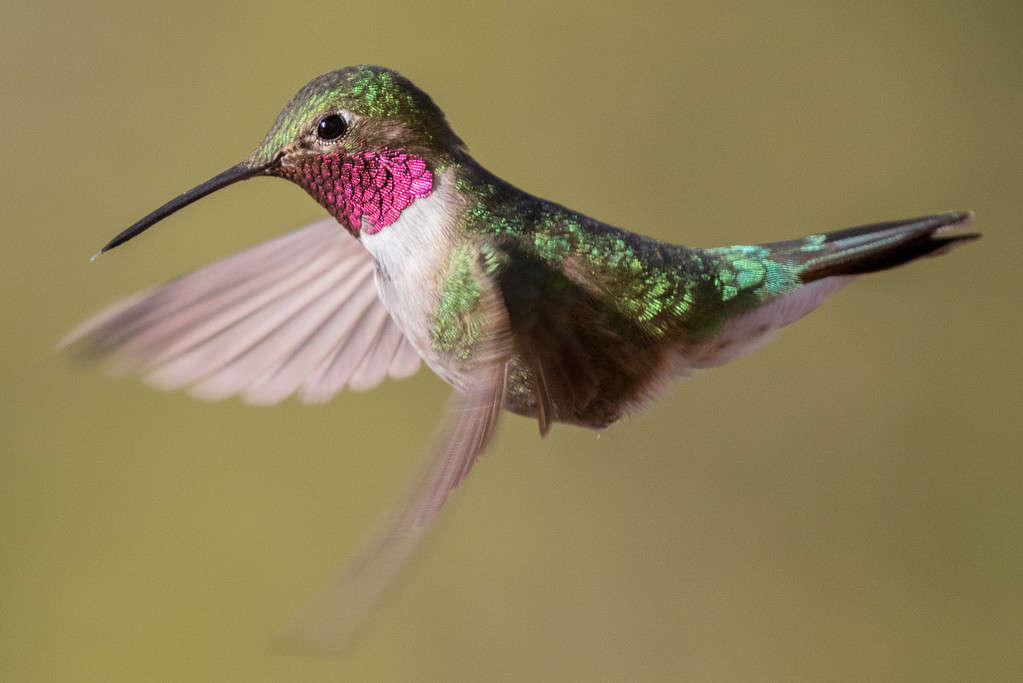
While the broad-billed hummingbird looks similar to the ruby-throated hummingbird, the male’s gorget usually appears more rose-colored.
©David Kish/iStock via Getty Images
This species is generally restricted to the Black Hills region of South Dakota, where its status as a native breeding species was only recently re-established. While there were historic records of it once breeding here back in the late 19th century, it wasn’t until the 2010s that nesting was again recorded. They are still considered only occasional breeders in the state, though, with the closest established breeding populations next door in Wyoming. However, they may also show up as a visiting vagrant (see “Do Other Hummingbirds Visit South Dakota Too?” below).
When Do Broad-Tailed Hummingbirds Arrive In and Leave South Dakota, and Where Else Do They Go?
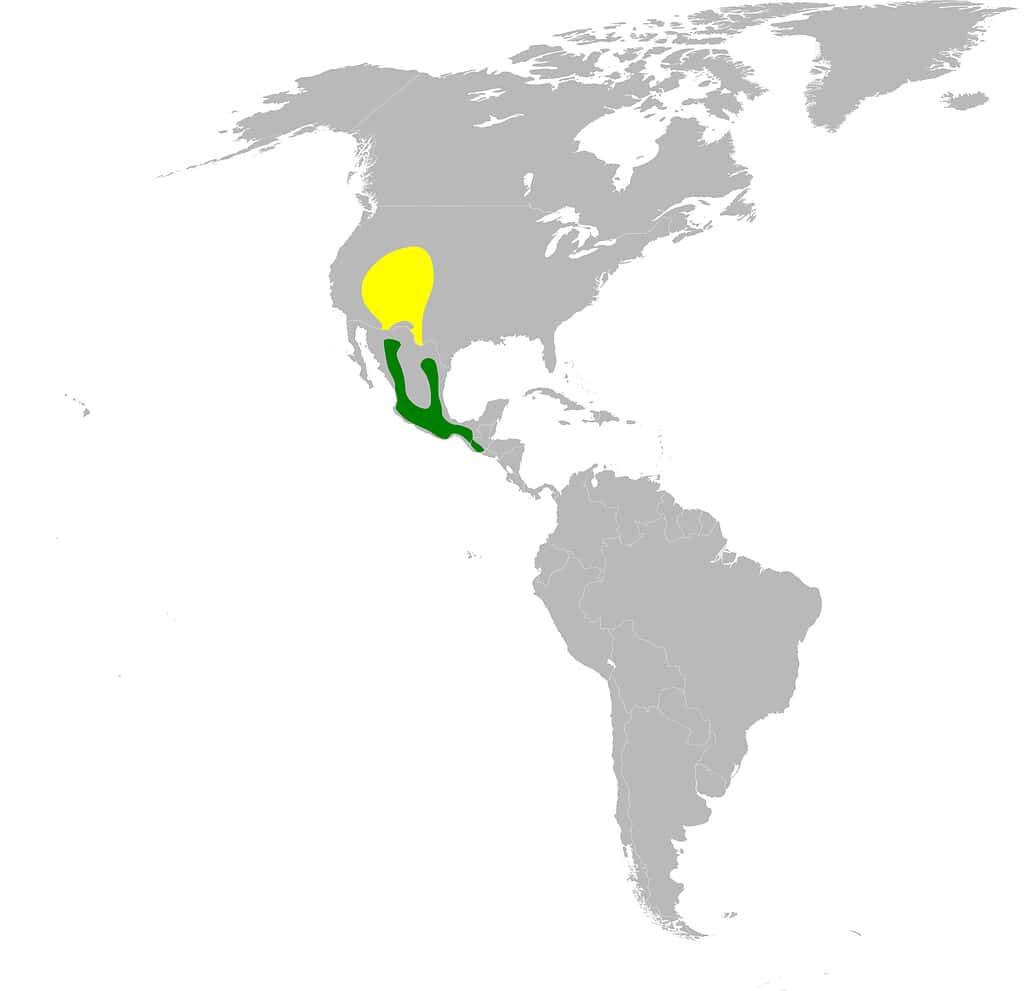
This map illustrates the range of the broad-tailed hummingbird. Yellow represents its usual breeding-only range and green represents its year-round range.
This species has both populations that are year-round residents in Mexico and Guatemala, and populations that migrate north into the Western U.S. to breed. Those are the ones that may show up in South Dakota, and once breeding season ends, they will migrate back down to their southern range to overwinter. You should therefore on the lookout for this rare South Dakota hummingbird between May through September.
Do Other Hummingbirds Visit South Dakota Too?
While the ruby-throated hummingbird and broad-tailed hummingbird are South Dakota’s only official native species, other species from western and southern North America and Central America occasionally pop up in the state as “vagrants.” These are individuals from species whose natural ranges aren’t normally in the state but who somehow turn up anyway. They may have been blown in by storms, gotten thrown off course during migration, hitchhiked on vehicles or cargo, or otherwise just managed to break new ground for their species! At least six such vagrant species have been recorded in South Dakota in recent decades.
1. Rufous Hummingbird (Selasphorus rufus)
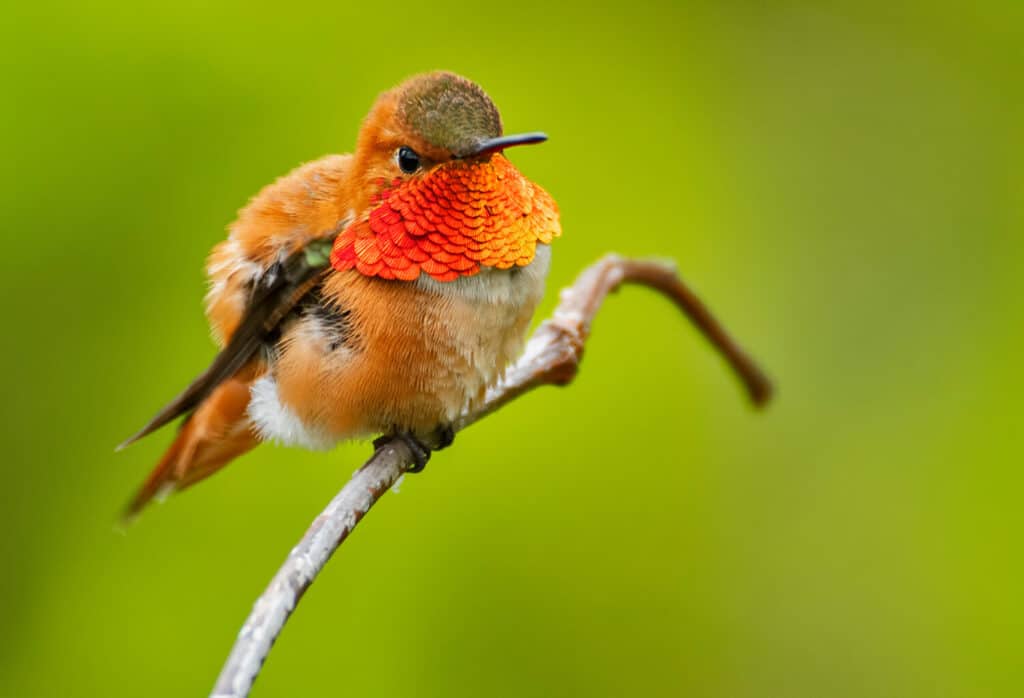
The male rufous hummingbird distinguishes itself from the ruby-throated hummingbird by its brilliant orange coloration.
©punkbirdr/Shutterstock.com
While this hummingbird is native to western North America, it appears as a vagrant east of the Rockies more frequently than any other western species. It is not uncommon for them to occasionally disperse into the Midwestern U.S., including South Dakota. They will most likely turn up as a special visitor to the state between July and October.
2. Calliope Hummingbird (Selasphorus calliope)
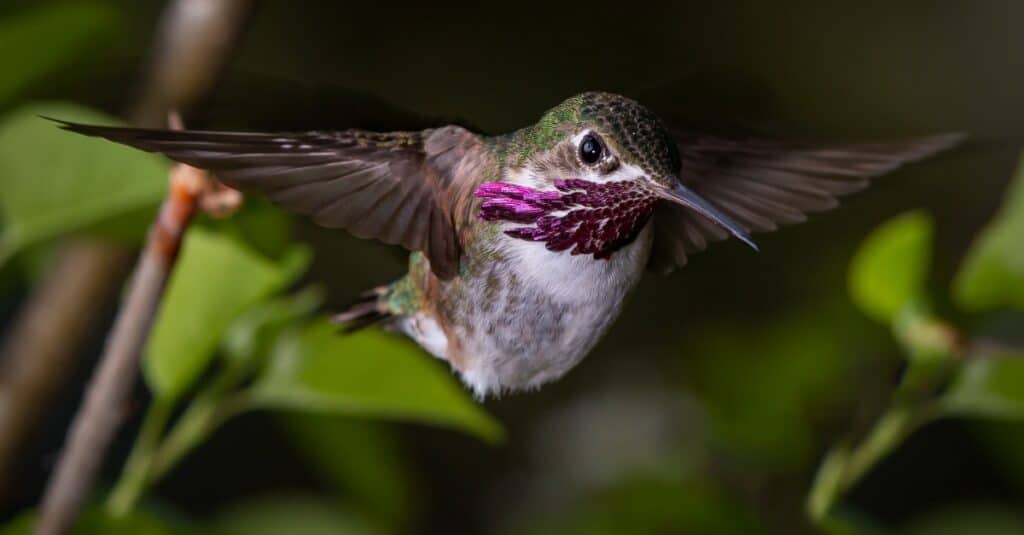
The male calliope hummingbird has a magenta-rayed gorget.
©iStock.com/McBenjamen
This is the smallest bird in the United States and another western hummingbird species that ocassionally strays into South Dakota. They are most likely to turn up as a special visitor to the state between July and October.
3. Black-Chinned Hummingbird (Archilochus alexandri)
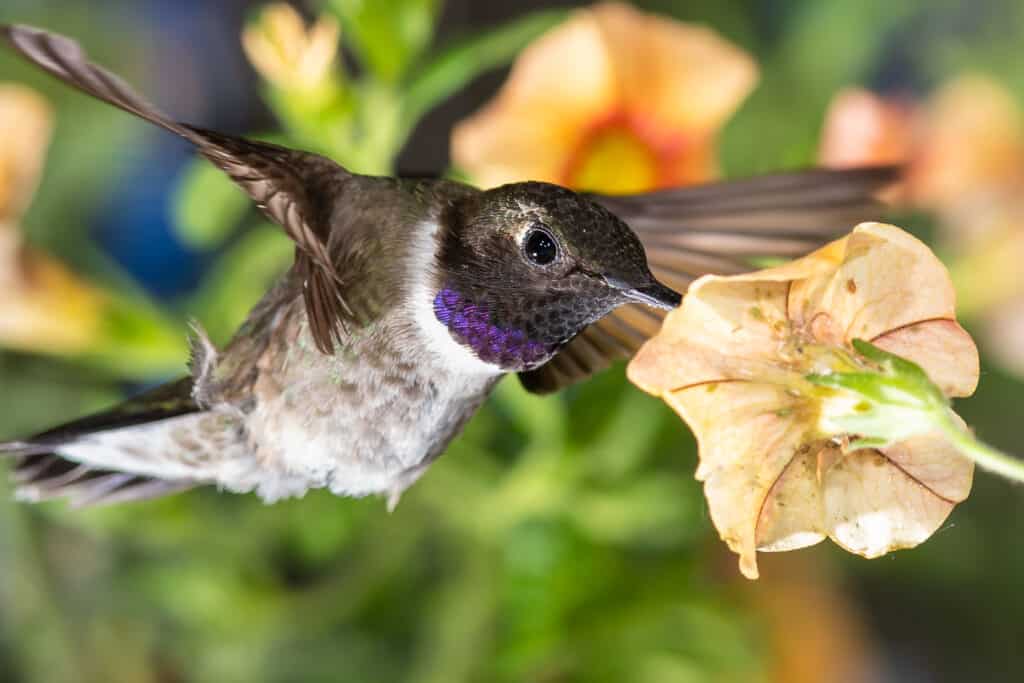
The male “black-chinned” hummingbird sports a beautiful deep purple gorget too.
©rck_953/Shutterstock.com
This is another western hummingbird species that occasionally shows up in South Dakota. It is most likely to turn up as a special visitor to the state between May and August.
4. Anna’s Hummingbird (Calypta anna)
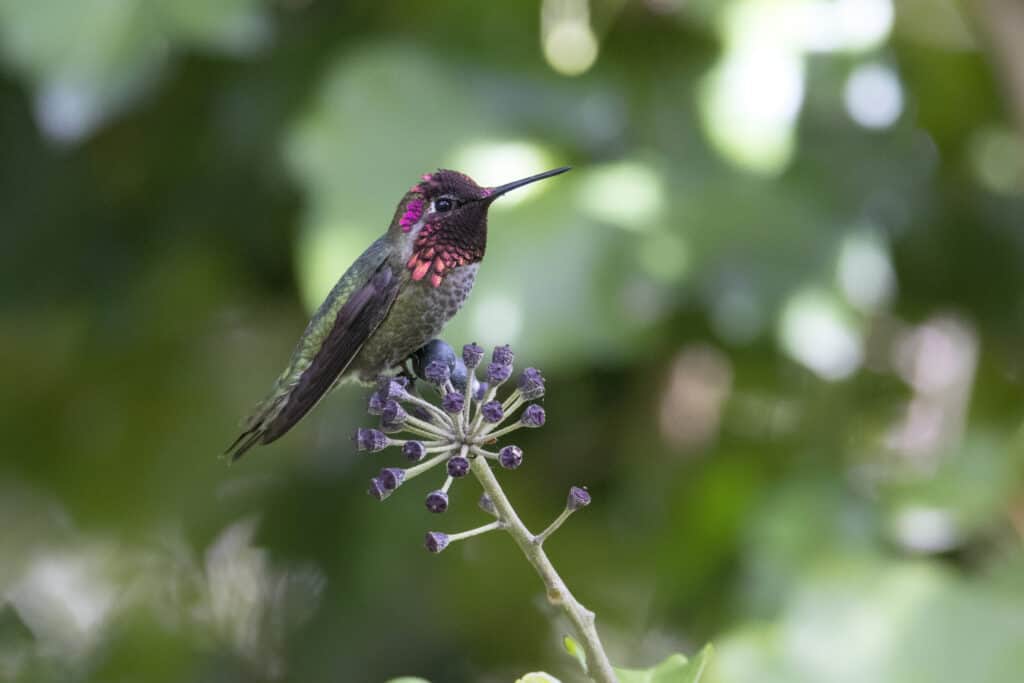
The male Anna’s hummingbird sets itself apart from the other similarly-colored species with an iridescent reddish-pink cap to match its scarf.
©Devonyu /Shutterstock.com
This is an even rarer western species visitor to South Dakota. The state has only recorded it twice, once in September 2013 and again in November 2018.
5. Costa’s Hummingbird (Calypte costae)
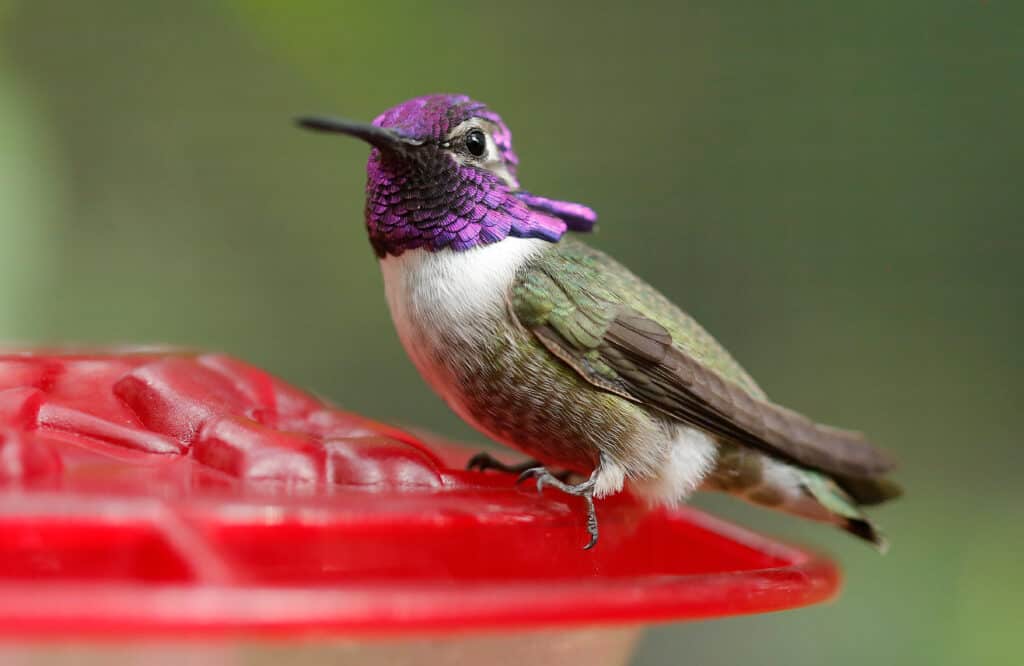
The male Costa’s hummingbird stands out with its vibrant violet head.
©Rick Scuteri/Shutterstock.com
This exceptionally rare visitor to South Dakota is native to the Southwestern U.S. and western Mexico. It has only ever been recorded once in the state, back in October 2016.
6. Rivoli’s Hummingbird
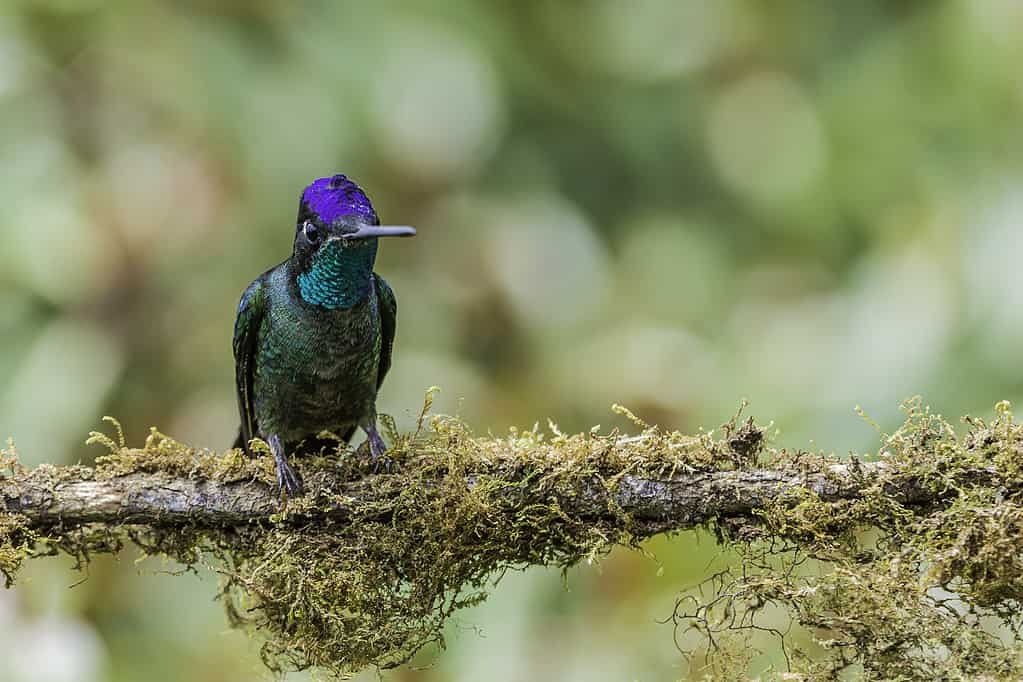
This male Rivoli’s hummingbird sparkles in shades of metallic green and blue with a pretty purple crown.
©Gerald Corsi/iStock via Getty Images
This species is native to the Southwestern U.S., Mexico, and Central America. It is also known as the magnificent hummingbird, and it is indeed a magnificently rare visitor to North Dakota. Its first-ever appearance in the state was only just recorded in September 2022. Will it appear again in 2023?
Conclusion
Hummingbirds are a rare sight in South Dakota, with just two species each native to only portions of the state. The ruby-throated hummingbird arrives in the state’s eastern half during spring migration season, usually at the end of April into May. While many will continue further north, others in the extreme east of the state will stay to breed. They will leave again for autumn migration from late August through September, making their way south to their overwintering grounds. Meanwhile, the broad-tailed hummingbird only occasionally breeds in the Black Hills region, although it may also appear as a vagrant visitor elsewhere in the state. There are also at least six other hummingbird species that, while not native to the state, have been recorded as rare visitors. If you want to make whatever hummingbirds show up in your area feel welcome, be sure to provide them with a hummingbird-friendly habitat!