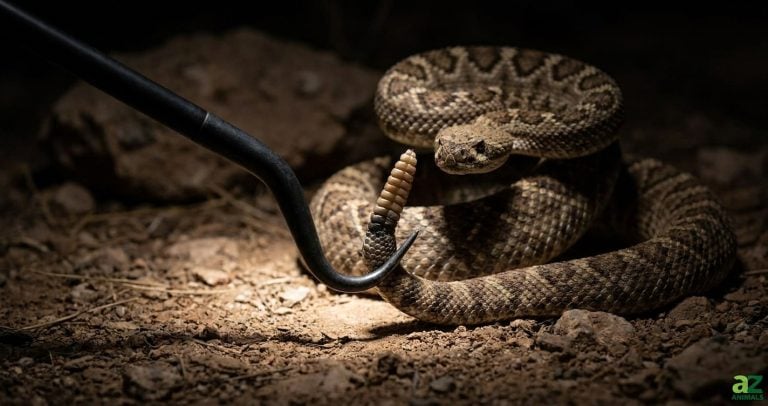

Quick Take
- Most hikers are completely wrong about the time of day they're most likely to cross paths with a Montana rattlesnake. See peak activity times →
- Prairie rattlesnakes are labeled solitary, but there is one time of year when hundreds of them gather in the same spot. Learn about den gatherings →
- If you're bitten, one instinctive reaction most people reach for actually accelerates how fast the venom spreads. Avoid these bite mistakes →
- Two subtle stripe patterns on a rattlesnake's head are your fastest way to ID one before you're too close, though most people overlook them entirely. Spot the head stripe patterns →
The prairie rattlesnake (Crotalus viridis) is the only rattlesnake found in Montana. It is found throughout the state, except in and around Glacier National Park. Prairie rattlesnakes prefer dry, rocky habitats, tall grass prairies, ponderosa pine forests, and mixed-grass coniferous forests, near slow-moving rivers and streams. As ectothermic reptiles, prairie rattlesnakes rely on their external environment to regulate their body temperature, which is why prairie rattlesnakes in Montana can be found basking in the sunlight of southern-facing rocky slopes. Continue reading to discover when prairie rattlesnakes are most active in Montana.
When do Rattlesnakes Emerge in Montana?
Prairie rattlesnakes emerge in Montana in late March through early April, depending on the weather. After they have spent the winter brumating (which is similar to hibernating in mammals), as the temperature rises, these snakes emerge from their dens in search of food and a mate.
Although prairie rattlesnakes are a solitary species, they tend to brumate in groups, sometimes numbering in the hundreds. Upon awakening in early spring, prairie rattlesnakes stay near the den for a few weeks to bask in the sun as they shed and mate.
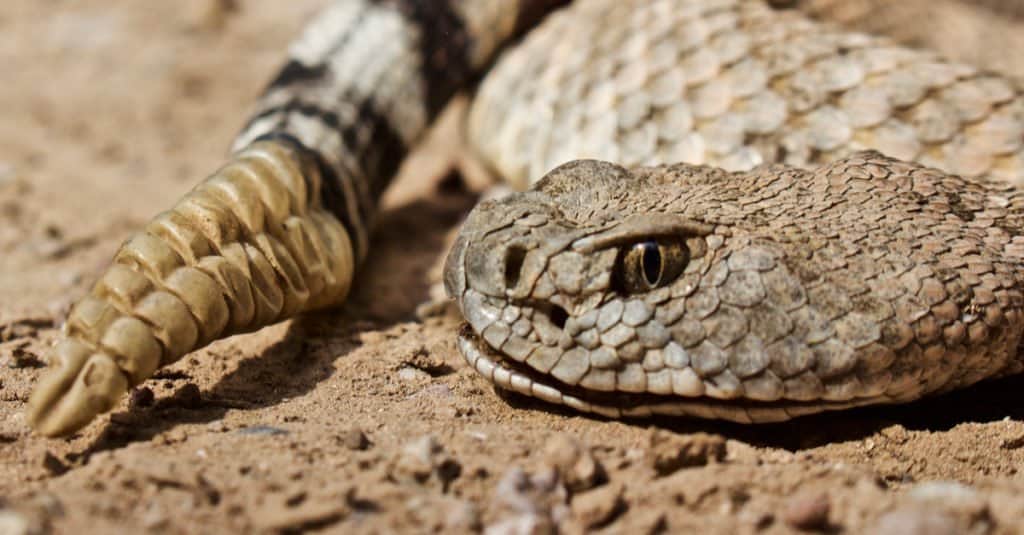
Prairie rattlesnakes need warmth, so they wait for spring to emerge from brumation.
©DMartin09/Shutterstock.com
Once temperatures warm up sufficiently, prairie rattlesnakes leave the den area in search of prey and summer habitats. They may travel up to several miles from their den during the summer, though most typically remain within a mile or two. Once the temperature begins to drop, prairie rattlesnakes return to the same den they left in the spring.
What Time of Day Are Montana Rattlesnakes Active?
Rattlesnakes are crepuscular, which means that they are highly active during twilight hours around dawn and dusk. This behavior is driven by temperature management and prey availability.
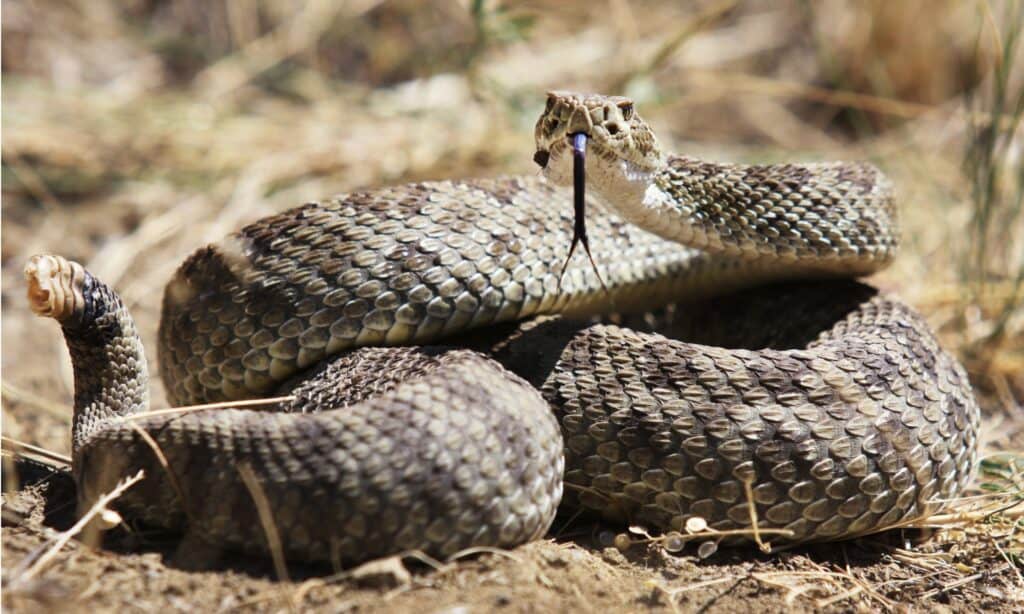
Prairie rattlesnakes are also called western rattlesnakes.
©iStock.com/HRossD
Dawn and dusk are ideal times because the air is comfortable and the ground retains just enough residual heat. These times also coincide with peak activity for their prey, such as small mammals like mice, rats, voles, and pocket gophers.
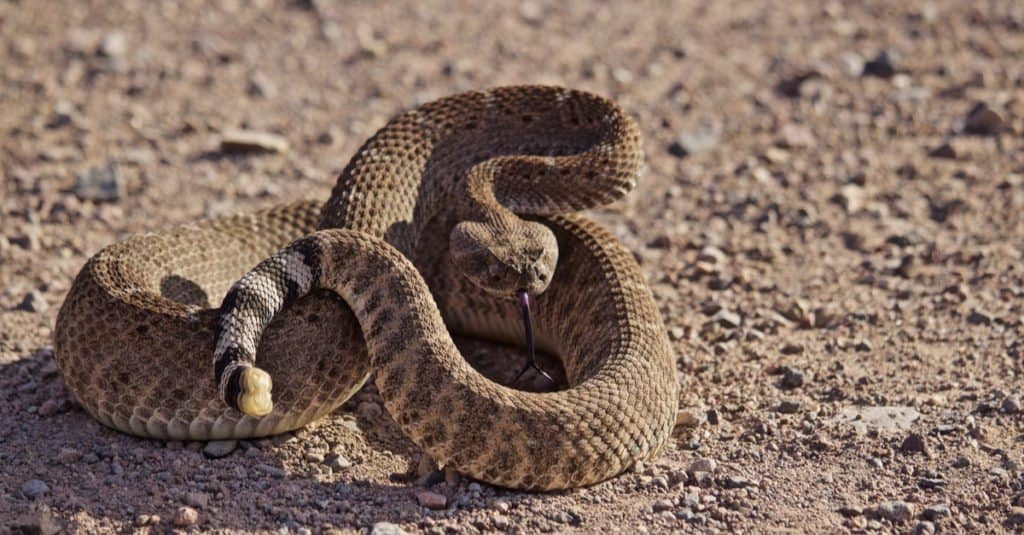
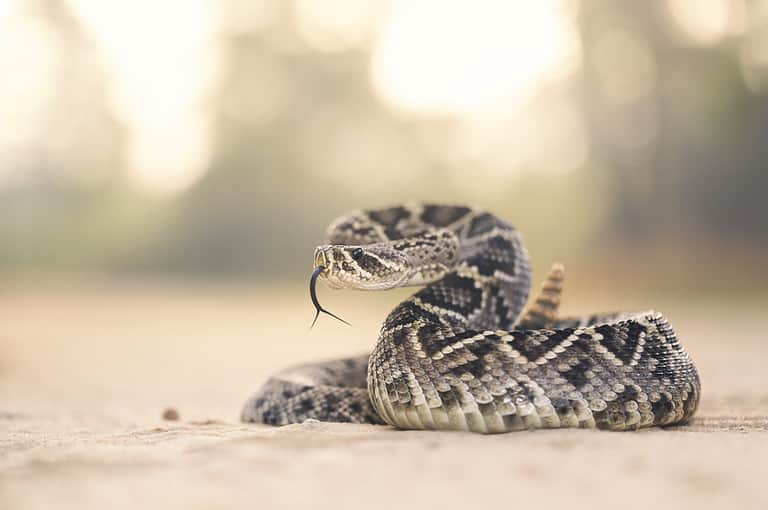
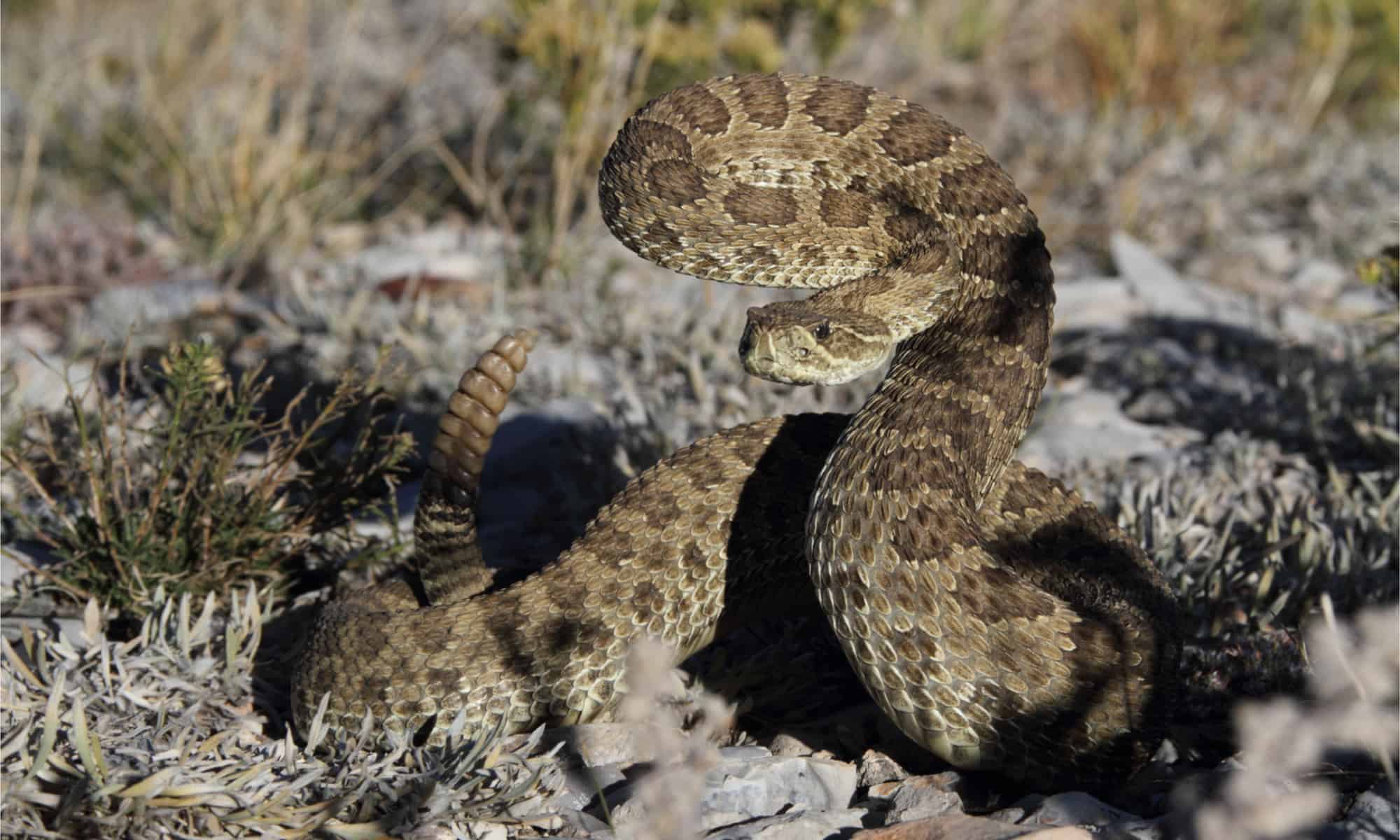
Prairie rattlers come in several shades, though the spade-shaped head and patterns help identify them anyway.
©DMartin09/Shutterstock.com
How to Identify a Prairie Rattlesnake
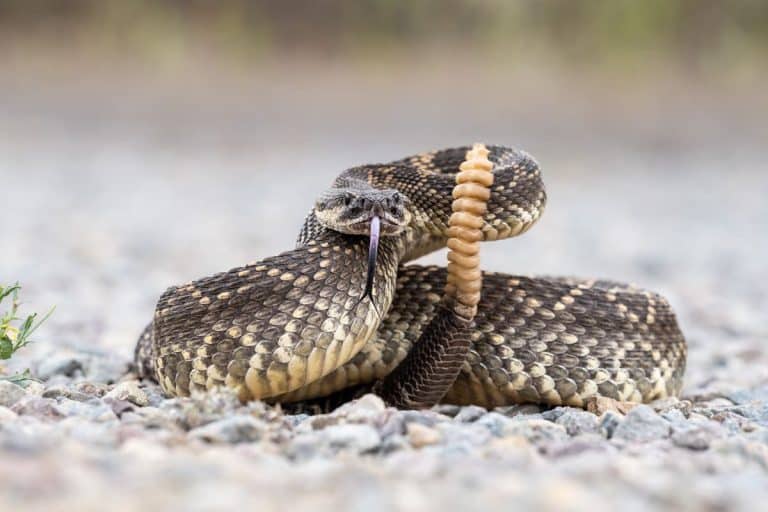
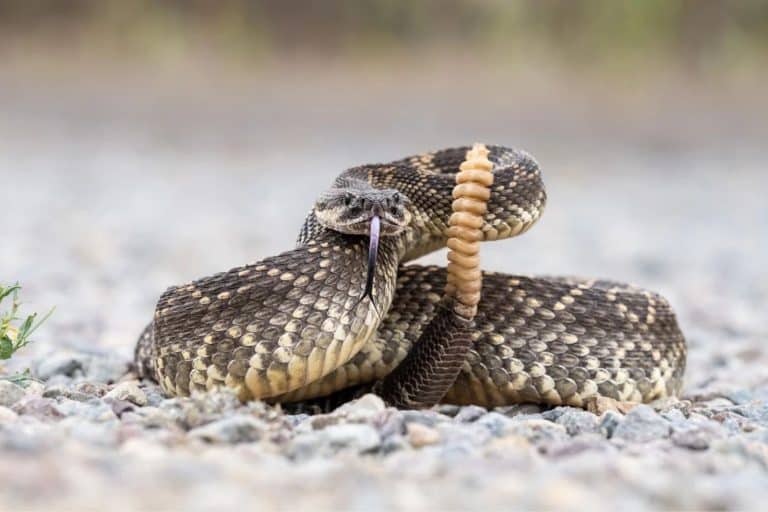
Prairie rattlesnakes are between three and five feet long and have a triangular-shaped head with two pale white stripes: one running between the eye and nostril, and another extending from behind the eye down the neck. They have dark brown or black blotches running down the center of their back. These blotches often have lighter borders and merge into rings or bands as they reach the tail, which ends in a segmented rattle.
What to Do if You Encounter a Prairie Rattlesnake.
If you encounter a prairie rattlesnake, back away slowly and calmly. Do not approach the snake under any circumstances. Remain alert while you hike. Stick to designated trails, looking ahead to make sure you’re not coming upon a snake.
Look for snakes before climbing on and around rocks, fallen logs, and in tall grass. Step on rocks and logs instead of stepping over them. Rattlesnakes often rest behind or near these objects.
Wear protective shoes with closed toes that extend above the ankle, as well as loose-fitting, long pants with a tight weave when hiking.
If you spot a snake, maintain a minimum distance of five to 10 feet. Keep pets safe by having them leashed at all times.
What to Do if You Are Bitten by a Prairie Rattlesnake
The venom of a prairie rattlesnake can be deadly if the bite is not properly treated. If you are bitten, remain calm and move slowly. Never run as exertion expedites venom absorption.
If possible, immobilize the bite area, keeping the wound lower than the heart. Use a splint or sling and apply loose pressure without cutting off circulation. Remove any jewelry or clothing that restricts the area as it swells.
Seek immediate medical care. If possible, call the emergency room to notify them of your impending arrival.
What NOT to Do if You are Bitten by a Prairie Rattlesnake
If you are bitten by a prairie rattlesnake:
- Do not use ice, heat, or a tourniquet on the bite.
- Do not attempt to extract the venom.
- Do not attempt to capture the snake.
- Do not consume any alcohol.