
Quick Take
- Where a sea turtle lays her eggs determines something surprising about every hatchling in the nest.
- Hatchlings navigating to the ocean face a man-made threat so pervasive that monitors call certain beach lights 'stadiums,' and it is quietly killing turtles in a way most beachgoers never notice.
- Debra Allen raised the money, offered to pay the utility bills, and still couldn't get the lights changed. The reason reveals an uncomfortable truth about wildlife protection laws in North Carolina.
- Relocating a sea turtle nest sounds like a rescue, but monitors do it reluctantly, and the reason why exposes a hidden risk most people wouldn't anticipate.
Debra Allen spends her days and nights year-round along the coastline of Ocean Isle Beach, a small seaside barrier island on the southern Atlantic coastline in Brunswick County, North Carolina. As Island Coordinator for the Ocean Isle Beach Sea Turtle Protection Organization (OIBSTPO), a non-profit tasked with the protection and conservation of sea turtles in the area, Allen and her team, along with seasonal volunteers, have become guardians of the beach. They patrol day and night, mark and protect nests from predators, and educate visitors who spend their beach days near nesting sites.
“Think of this beach as Mother Nature’s nursery,” says Allen. “She has all kinds of babies here. She has bird babies, fish babies, and turtle babies. Nobody would keep your nursery at home that dirty, and you’d be upset if somebody came into your house and threw trash in your nursery, so don’t do it to Mother Nature’s nursery. Take your trash with you.”
Part of a monitor’s job requires quiet observation and human management. For Allen, who moved to Ocean Isle Beach in 2010, a typical day can include surveying the beach day and night, spotting tracks, identifying species, logging nest data, conducting DNA testing to better track nesting behaviors, managing the beach by asking visitors to remove furniture and fill in holes in the sand (which can trap hatchlings and female turtles), and enforcing additional beachfront regulations.
To date, her team has also removed more than 215 tons of trash from the beaches.
As the day starts, the OIBSTPO beach patrol gets on the beach and drives the entire seven-mile stretch of Ocean Isle Beach to the east end, looking for any evidence that a mother turtle has come ashore to lay her eggs. Then, they drive to the west end and the community center, where the team prepares for the day’s nesting activities.
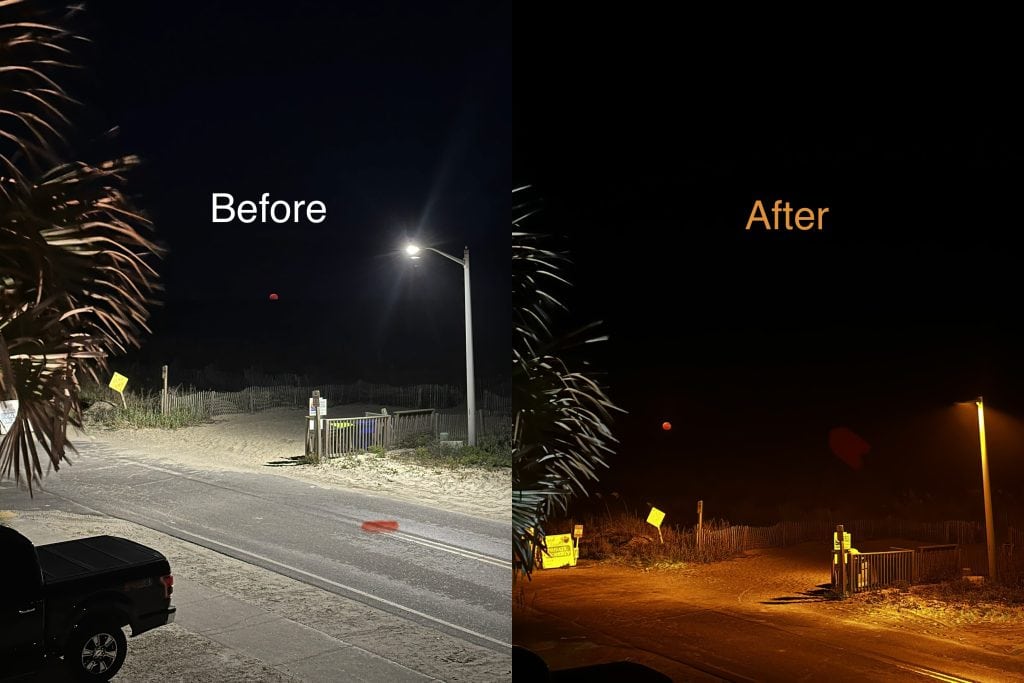
Ocean Isle Beach Sea Turtle Protection Organization (OIBSTPO) is working to switch out oceanfront streetlights with more hatchling-friendly lights like true amber or phosphor-converted amber LED lights.
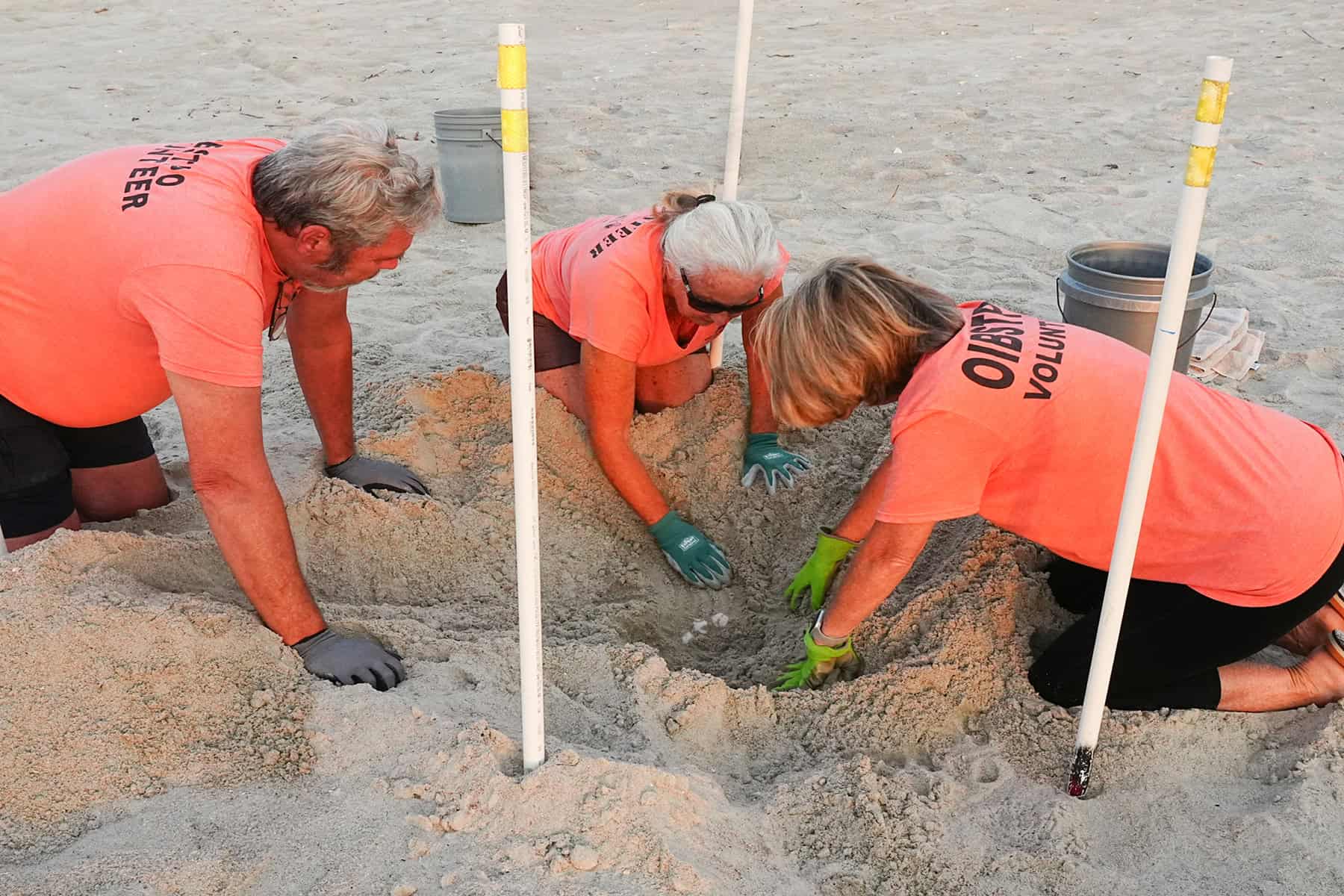
“We want to be as natural as possible,” says Allen. “Erosion has been really bad on the south-facing beaches this year, so we’ve had to move more nests than we wanted to. It’s a high flood area, which will result in lost nests, so we’ve had to move two nests.”
For nearly a decade, Debra Allen has been working to get county street lights along Ocean Isle Beach in North Carolina switched out to amber lights, which are safer for sea turtles during hatchling migration.
If nests are relocated, they are protected from predators like raccoons, coyotes, or red foxes that dig up nesting areas. To close off the nests from danger, a three-foot square of wire is buried around the egg chamber, and a six-foot mesh cover is placed over it, creating a cage-like barrier.
The nesting period can last anywhere from 45 to 70 days before hatching, depending on when they were laid. Eggs laid earlier in the season, such as in May, may take longer to hatch due to cooler temperatures in the egg chamber, which slow the turtles’ development. As temperatures rise, hotter weather produces more female sea turtles, which tend to emerge sooner. Nests from late June and July have shorter incubation periods.
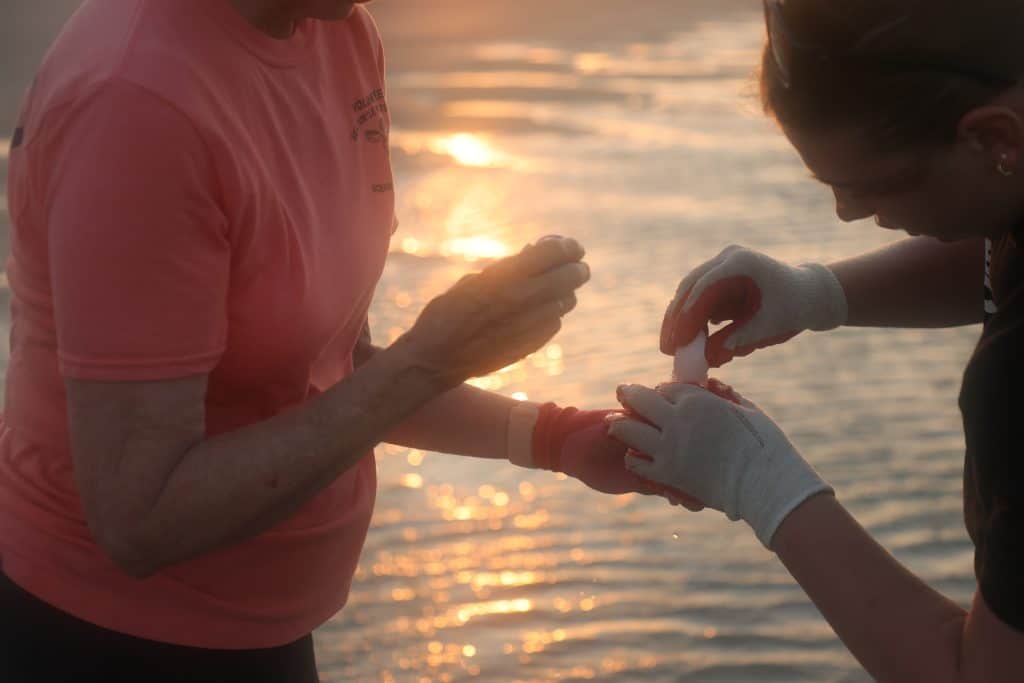
A typical day for a sea turtle monitor can include surveying the beach day and night, spotting tracks, identifying species, logging nest data, and conducting DNA testing to track nesting behaviors better.
The location of the nest also determines the sex of the hatchlings. “If it’s closer to the tideline, the nest will be cooler and produce more males,” says Allen. “If it’s in the dunes, the warmer temperature will result in more females.”
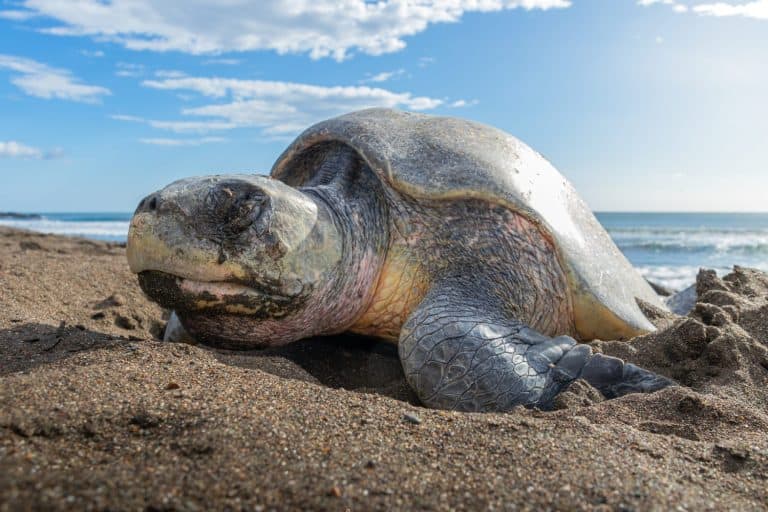
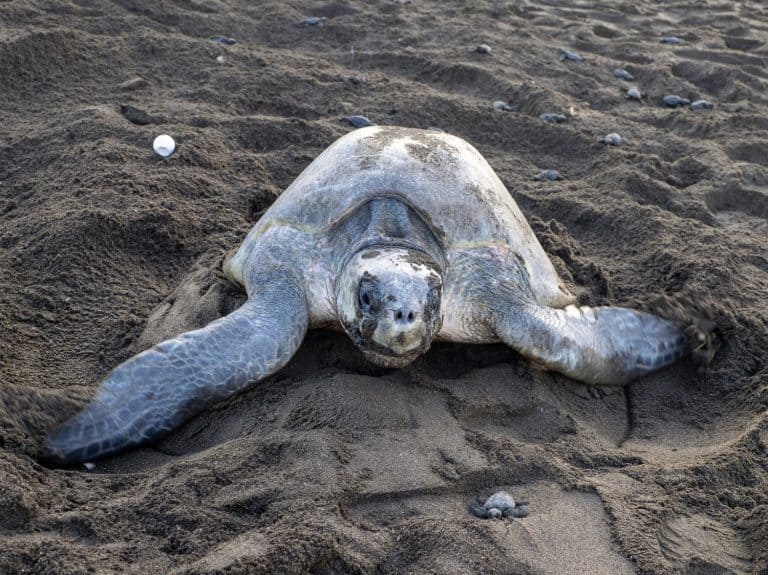
The loggerhead is the most common nesting turtle in the area, and some leatherbacks have recently been identified in the region. Both the loggerhead and leatherback sea turtles are classified as Vulnerable on the IUCN Red List of Threatened Species. Allen has also noticed a significant decline in the population of the Kemp’s Ridley, one of the most critically endangered sea turtles. This species is primarily found in the Gulf of Mexico and migrates along the East Coast of the United States. Globally, there are an estimated 7,000 to 9,000 nesting female Kemp’s Ridley sea turtles, according to the Sea Turtle Conservancy.
A smaller turtle weighing around 100 pounds, the Kemp’s Ridley is especially vulnerable to predators like sharks in the ocean. Often, a dead turtle that has been bitten by a shark and bled out will wash ashore, says Allen.
You’d be upset if somebody came into your house and threw trash in your nursery, so don’t do it to Mother Nature’s nursery. Take your trash with you.
Debra Allen, Island Coordinator for the Ocean Isle Beach Sea Turtle Protection Organization
Along Ocean Isle Beach, one of the greatest challenges for Allen has been her work to switch out the street lights along the beachfront to softer amber lighting. As the permit holder for North Carolina wildlife since 2018, Allen’s main focus has been getting the counties to change the lighting along the beachfront.
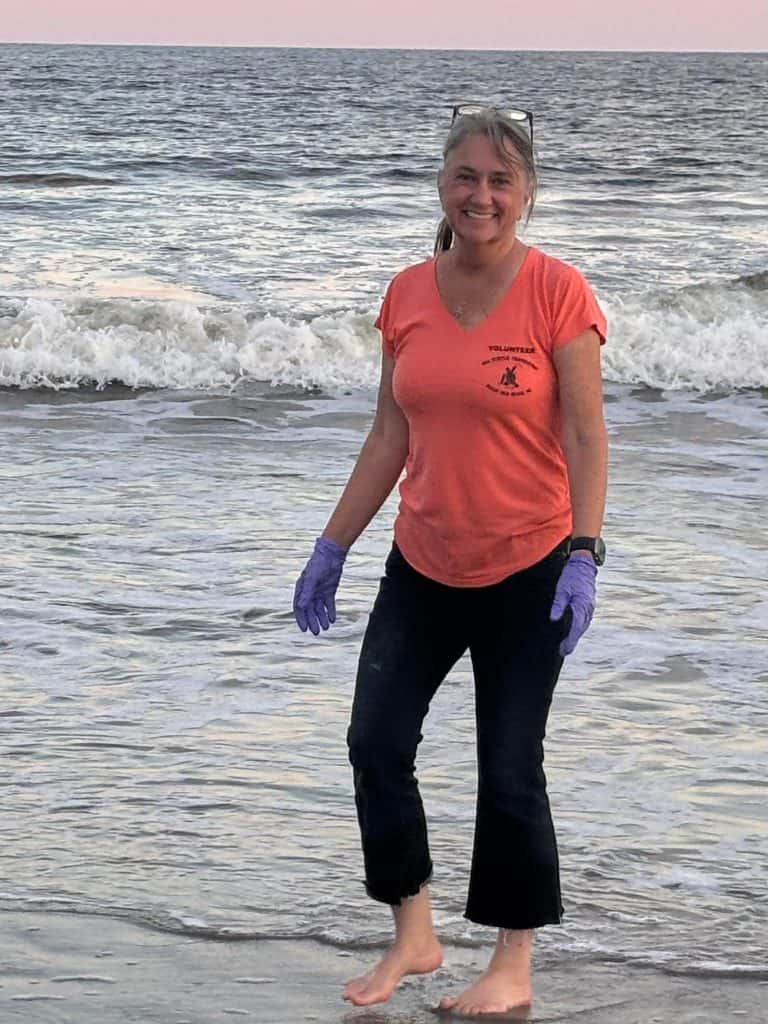
Deb Allen, Island Coordinator at the Ocean Isle Beach Sea Turtle Protection Organization in North Carolina, continues to work to replace the brighter street lamp posts along the beachfront.
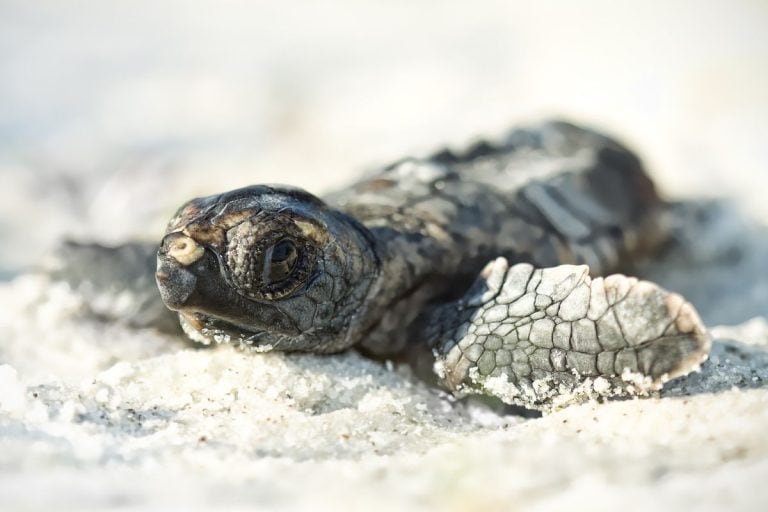
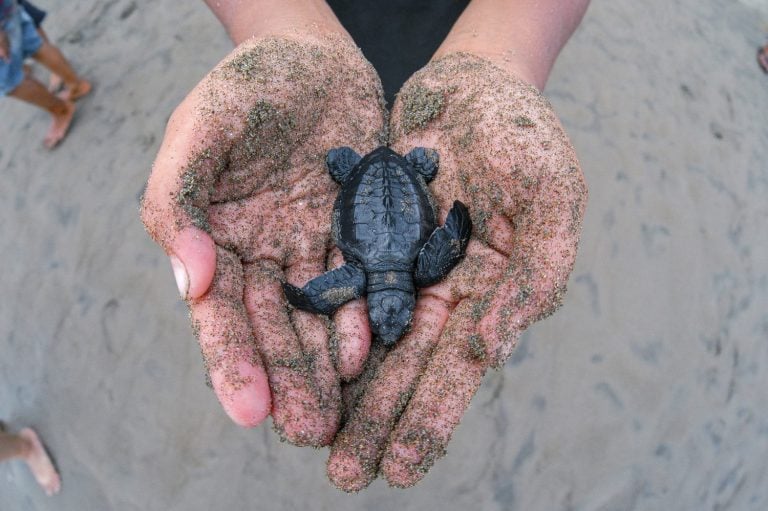
“When they come out of the nest, those babies are looking to the natural light in the sky, the horizon, the moon, the stars, to navigate to their ocean home,” says Allen. “All of a sudden their eye catches that house or some extreme light, and they make an immediate U-turn. They often see the street lights and go towards them, thinking that’s the way home, and will die of dehydration, be caught by predators, get stepped on, or get run over by cars.”
Allen has been raising funds to replace the brighter white lights in street lamp posts with more hatchling-friendly lights, including true amber or phosphor-converted amber LED lights, which are less disruptive than white or blue lights.
“It doesn’t matter to local officials, and it doesn’t matter to county officials, because the North Carolina legislature has not enforced or created laws to protect these endangered sea turtles,” says Allen. Initially, when Allen and her team first raised the money, they provided free amber fixtures to oceanfront property owners, but this did not reduce the brightness of the white streetlights.
When they approached the town, the first response was that there was no budget to change the lights. “We would have to raise taxes for that to happen, so we raised the money for the streetlights and also agreed to pay for the increase in the utility bill for the town to change them out,” continues Allen. “It’s just not that important to elected officials to put their money where their mouth is. The towns have to pay for the streetlights and the increased utility bills, so it’s not getting done.”
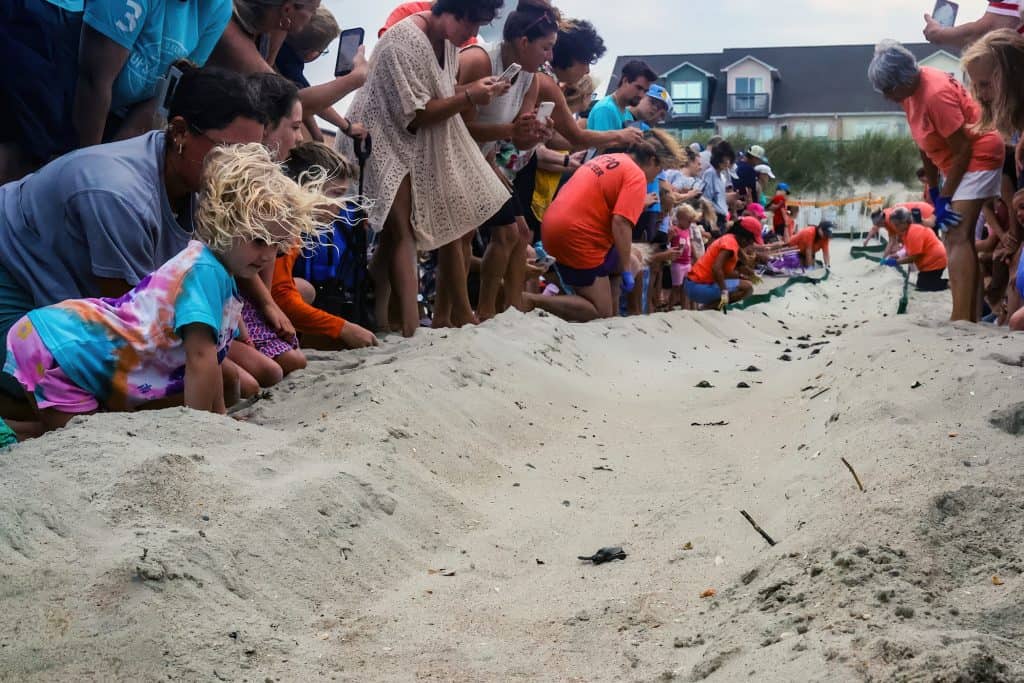
Visitors watching protected hatchlings on Ocean Isle Beach.
So far, Allen and the OIBSTPO team’s efforts are beginning to pay off, with eight of the nine identified streetlights replaced on the east end of Ocean Isle Beach. Allen says they used to call four specific lights the “stadium” since they were considerably brighter than the others.
“It’s one of the biggest man-made problems,” says Allen, who adds that there are even more obstacles threatening their conservation efforts, including the use of more bulkheads, concrete walls, and interlocking sandbags along the beach, which block sea turtles from getting to their nesting habitat.
“It’s such a simple thing, and studies even show that white lights are not good for humans,” adds Allen. “I know this change is just good for everyone, including migratory shorebirds. All kinds of lives might benefit from this. And then humans will benefit from it as well.”
Now, Allen hopes that North Carolina’s House Bill 1053, which was referred to committee in 2024 but did not advance, will be reintroduced. The bill focuses on safeguarding endangered sea turtles during nesting season, including lighting restrictions and the use of more turtle-friendly lighting. OIBSTPO currently has a petition on change.org to help get the law passed, and Allen is also sending a letter to the North Carolina legislature and Governor Josh Stein, referencing the lighting and hardened structures along the beachfront. “It’s time that they stop making all these accommodations for oceanfront properties and ignoring wildlife,” says Allen.
“Artificial light is the number one challenge to sea turtles’ survival,” she says. “It’s a man-made thing, so man can fix it. If we don’t fix this, we’re not going to see the recovery of the species.”