
Quick Take
- You can tell Sapphire Gem males from females the moment they hatch, and the method involves no guesswork whatsoever. See how to tell them apart →
- Sapphire Gems are marketed as cold-hardy, but there's one physical trait that makes them surprisingly vulnerable every winter. See the frostbite risk →
- These hens start laying earlier than most backyard breeds, and their annual egg output will likely reset your expectations. See their laying timeline →
- Sapphire Gems seem like the perfect urban backyard bird, but there's one condition that changes the answer entirely. Check urban suitability →
Sapphire Gem chickens (Gallus gallus domesticus) are a popular breed for backyard flocks. Prized for their stunning blue-gray plumage, calm temperaments, and prolific egg-laying abilities, they are considered an excellent choice for beginners as well as seasoned pros. Sapphire Gem chickens are known for being calm and friendly, making them a splendid choice for families with small children. They are a hardy breed that tolerates both extreme heat and cold. Continue reading to discover everything you need to know about Sapphire Gem chickens and whether it’s the right breed for you.
What do Sapphire Gem Chickens Look Like?
Sapphire Gem chickens are a mass-produced hybrid, commonly believed to be a cross between Blue and Barred Plymouth Rock chickens, though exact parentage may vary by hatchery. On average, Sapphire Gem hens weigh about six pounds, while roosters are slightly heavier at seven pounds. They are considered medium-sized chickens. Sapphire Gem roosters have large, bright red combs, while hens have smaller, duller red combs.
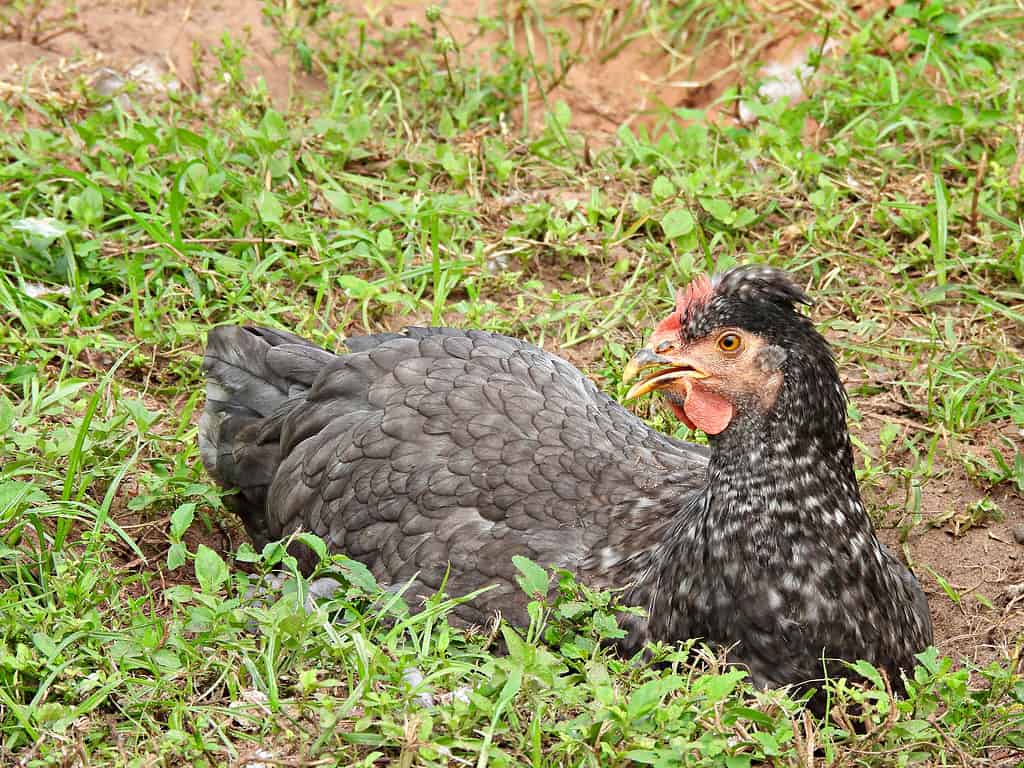
Sapphire gems have lavender to blue coloration.
©passion4nature/ via Getty Images
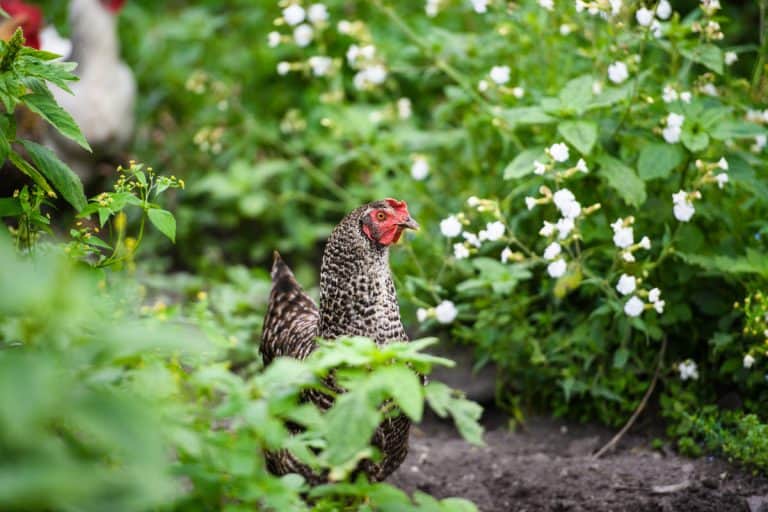
Although commercial poultry producers refer to their feathers as lavender, the Sapphire Gem chicken’s plumage ranges from a dusty gray to a dark charcoal color, often featuring darker gray lacing on their feathers.
Upon hatching, male chicks typically have a patch of white on their heads or wings, while female chicks are usually solid gray. This difference can be attributed to the fact that Sapphire Gems are a sex-linked hybrid breed.
Adult Sapphire Gem roosters do not look like Sapphire Gem hens. Roosters are a much lighter, silvery-gray color and have distinct white spots or barring patches on their heads and wings, while females are a darker, uniform solid slate-gray.
When do Sapphire Gem Hens Begin to Lay?
Because they are a hybrid breed developed for egg production, Sapphire Gem hens mature earlier than many standard chicken breeds. Sapphire Gem hens will begin laying eggs between 16 and 20 weeks of age, with some maturing as early as 15 weeks or as late as 24 weeks. Once they reach maturity, Sapphire Gem hens will produce between 260 and 290 medium to large brown eggs annually.
The average lifespan for Sapphire Gem chickens is five to ten years. This wide range depends on factors such as quality of life, nutrition, and protection from predators and accidents.
Are Sapphire Gem Chickens Easy to Manage?
Not only are Sapphire Gem hens prolific egg layers, but these birds also have an abundance of personality and character. Sapphire Gem chickens are generally charming, friendly, and curious. They love to explore their surroundings and spend time with their humans.
Sapphire Gem chickens are also highly adaptable and get along well with other breeds as well as with others of their own breed. They are highly social, so they should never be kept as solo birds. They also thrive with frequent human interaction.
How Noisy are Sapphire Gems?
Sapphire Gems are not particularly loud birds. They’re generally calm as well, which means they aren’t often rattled and rarely squawk. Because of this, they are a dandy breed for urban and suburban flocks. However, keep only hens if you need to keep things quieter, as Sapphire Gem roosters do crow.
Do Sapphire Gem Chickens Have Many Health Issues?
Sapphire gems are healthy, hardy birds with fewer health issues than many other chicken breeds.
These chickens should have a balanced diet, plenty of fresh water, and ample socialization. They also need enough space to move around to keep active and a safe place for shelter and sleep. However, these hardy birds may still face health issues on occasion.
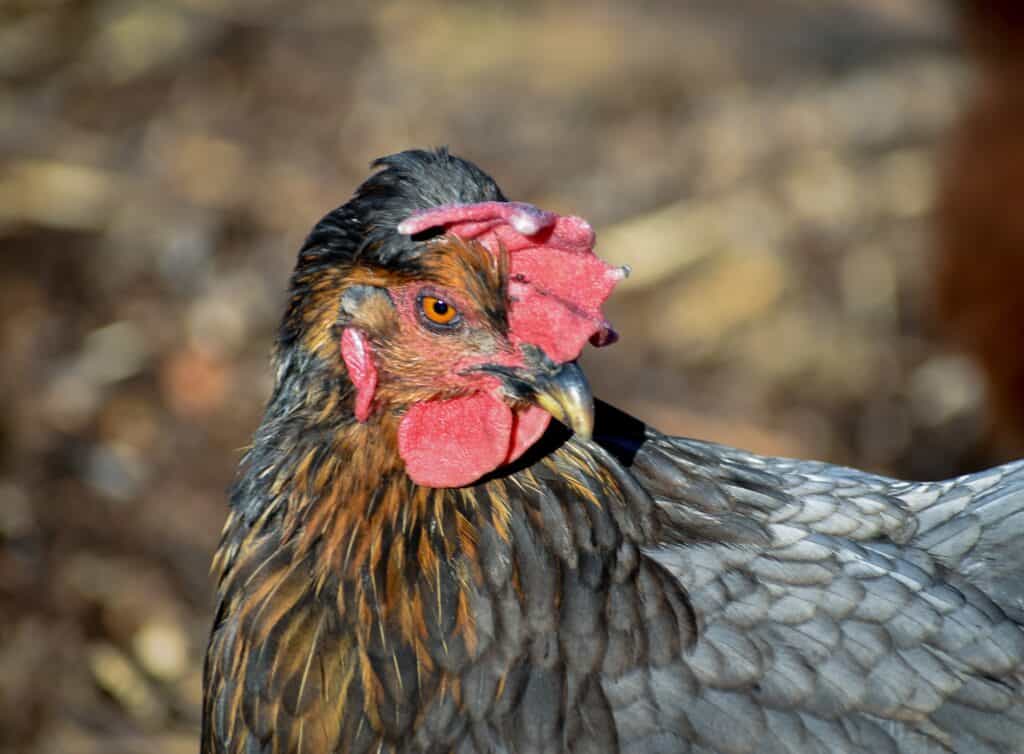
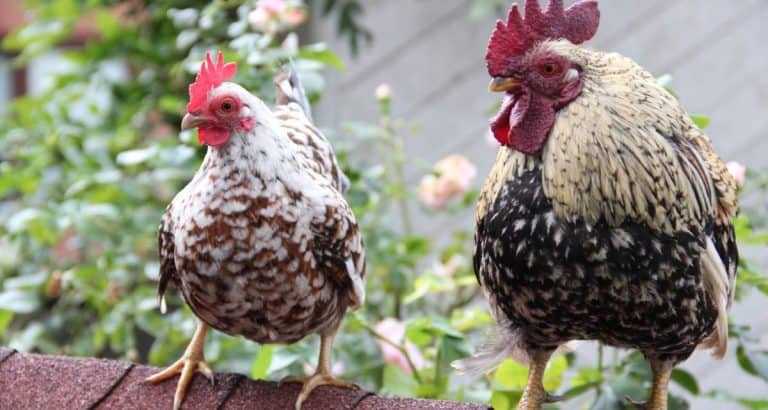
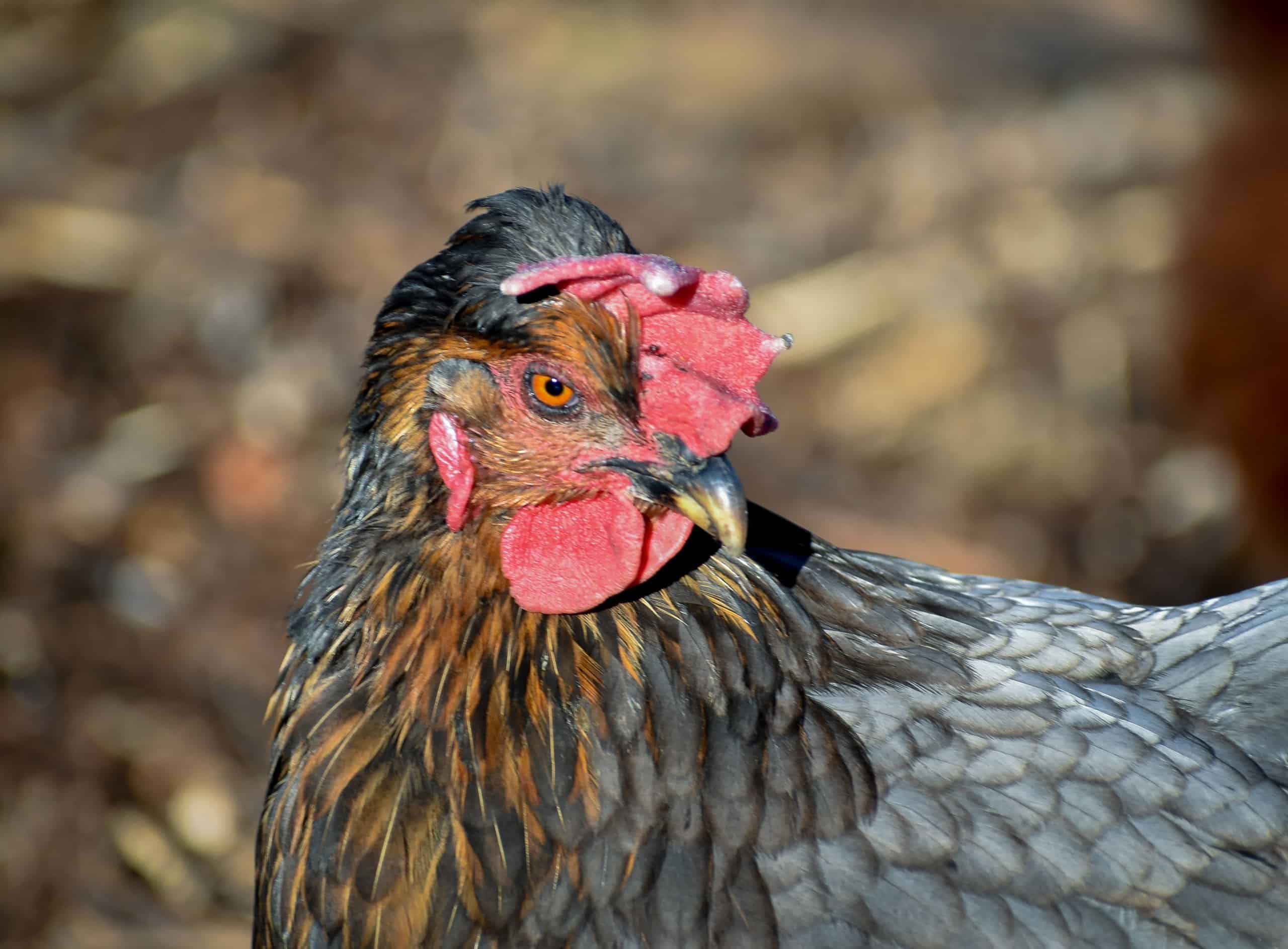
Sapphire gems have large, floppy combs that need protection from frostbite in winter.
©NPF Photography/Shutterstock.com
Sapphire Gem chickens, like other breeds, are prone to lice, parasites, and worms. However, preventive care can help eliminate or at least reduce these issues. If you notice any signs of these pests in your birds, immediately separate the affected bird(s) from the rest of the flock. The best way to prevent these pests is to keep your chicken coop clean and regularly provide fresh, healthy food and water.
In cooler months, you also need to make sure your birds are kept warm to protect their combs from frostbite. Applying petroleum jelly can also help prevent combs from becoming chapped and dry during winter.
What Should I Feed My Sapphire Gem Chickens?
Sapphire Gem chickens benefit from a balanced, high-quality diet to support their rapid growth and egg production, similar to other high-production breeds. Feed chicks a starter diet that contains 18% to 24% protein. Once hens reach laying age, switch them to a high-protein adult layer feed for optimal health.
Sapphire Gem Chicken Coop Setup
Each Sapphire Gem chicken in a flock requires eight square feet of space for optimal comfort and health, allowing the birds to scratch and move about with ease. Adjacent to the coop should be a large enclosed area in which the flock can forage and frolic, while the coop itself should have secure and plentiful roosts for nesting and laying.
Sapphire Gem Eggs
The Sapphire Gem hens lay medium-to-large brown eggs. They are abundant layers whose eggs have durable shells and are highly regarded for their rich flavor.
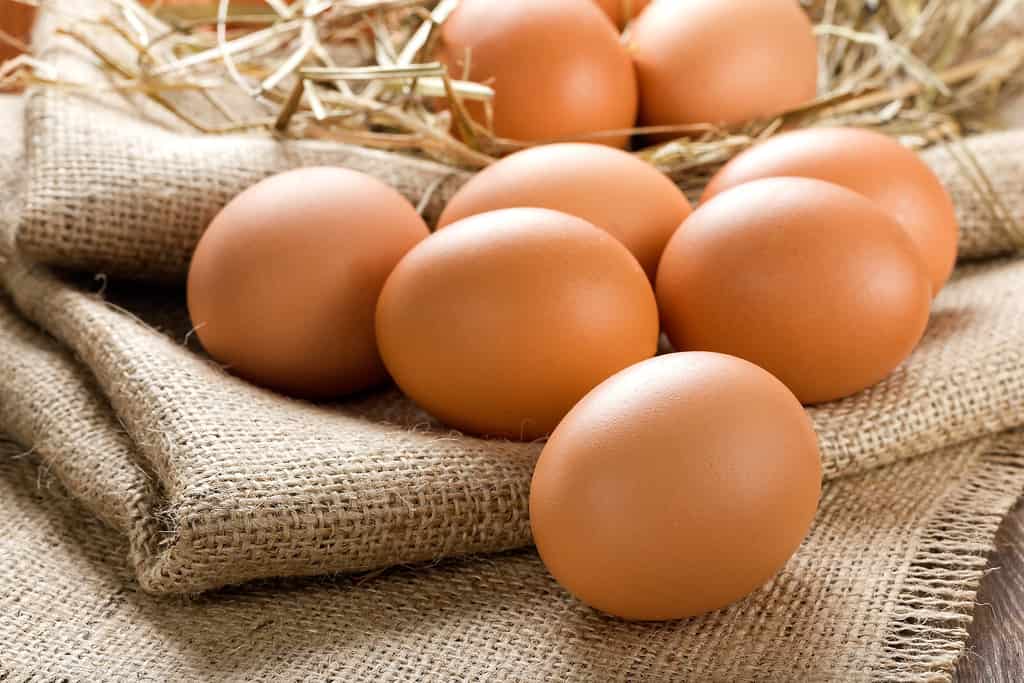
On average, Sapphire Gem hens produce five eggs per week.
©Sea Wave/Shutterstock.com