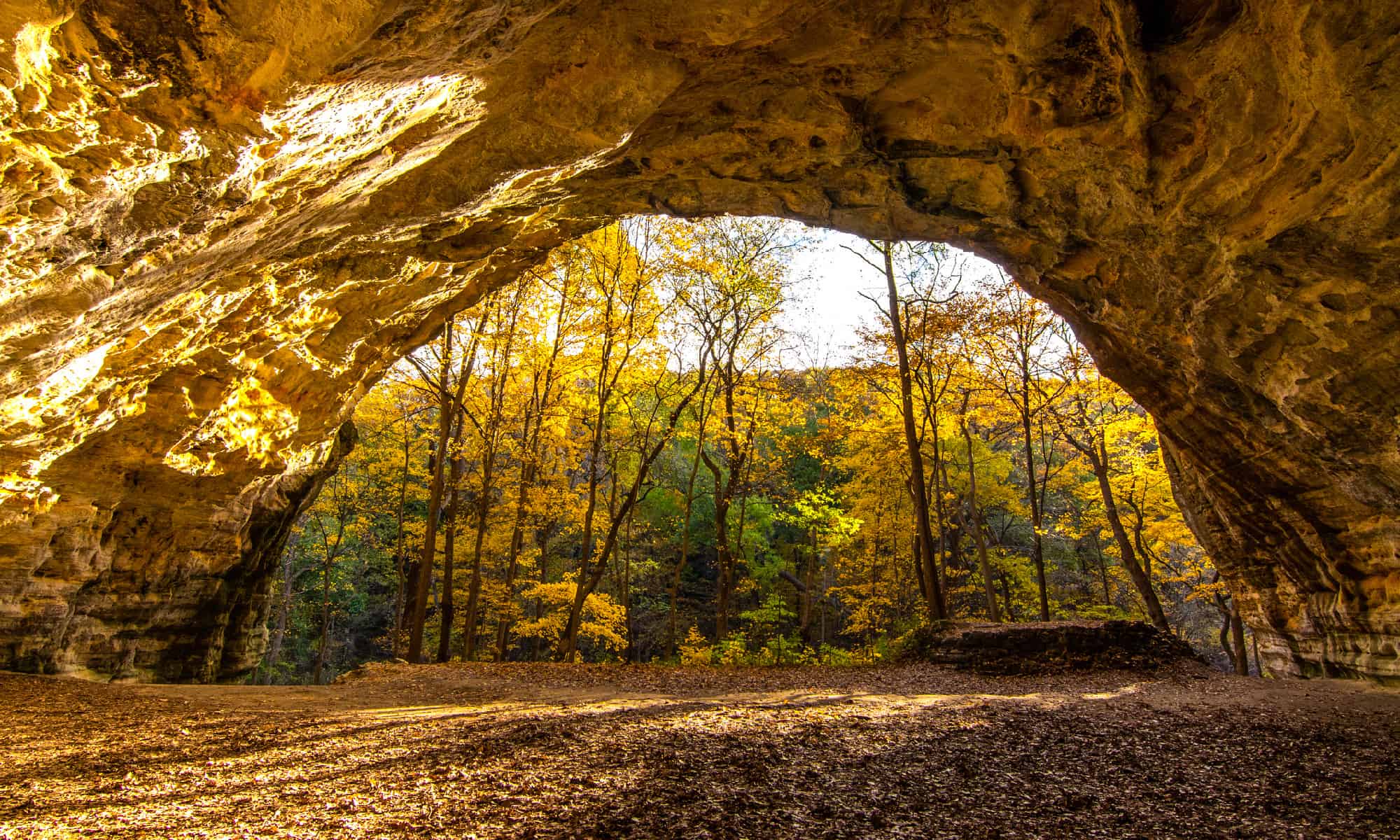

Starved Rock State Park in LaSalle County, Illinois, is famous for its dramatic sandstone canyons, 13 miles of hiking trails, seasonal waterfalls, and sweeping views along the Illinois River. It’s only two hours southwest of Chicago, so unsurprisingly, it ranks as Illinois’ most-visited state park, drawing upwards of 2.4 million visitors annually as of 2024. The park has diverse habitats that support a remarkable array of wildlife, giving animal lovers plenty of reasons to keep their cameras and binoculars close. Here are some of the more memorable species you might encounter there.
American Beaver (Castor canadensis)
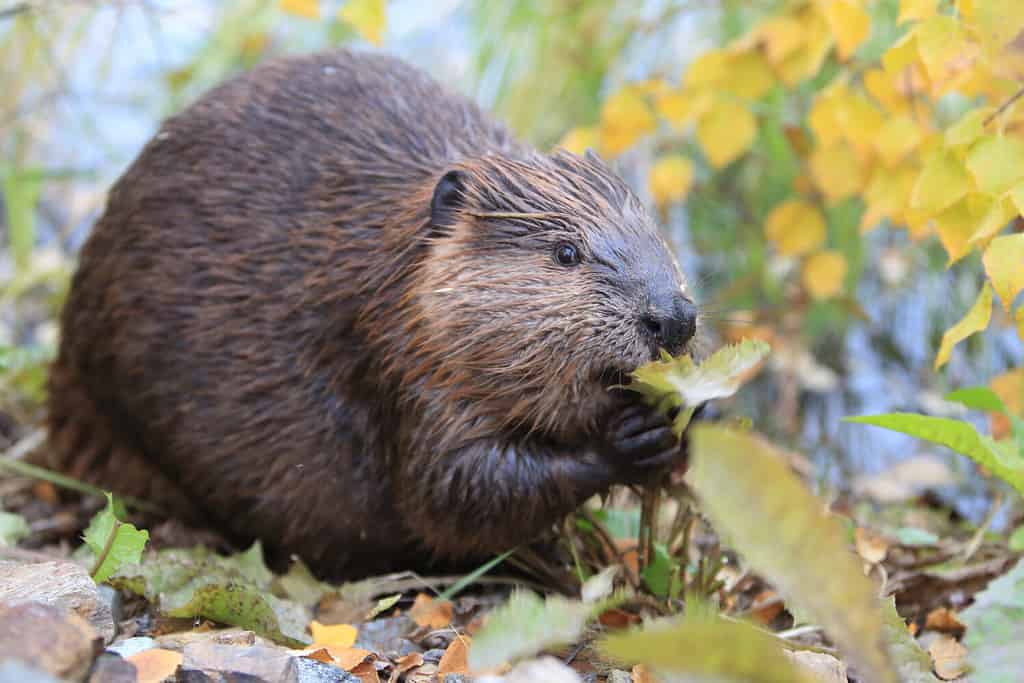
American Beaver (Castor canadensis)
©Frank Fichtmueller/Shutterstock.com
Beavers are one of the park’s keystone species, shaping the flow of creeks and side channels along the Illinois River. It’s a little hard to spot them during the day, but the signs of their activity are everywhere—freshly gnawed stumps, felled saplings, and neatly peeled branches left by the water’s edge. Beavers build lodges and dams that create ponds and wetlands, which benefit many other species. The best time to see them is in the quiet evening hours. If they hear you approaching, you might hear the echoing slap of their flat tails on the water, which is how they warn each other of danger.
Bald Eagle (Haliaeetus leucocephalus)
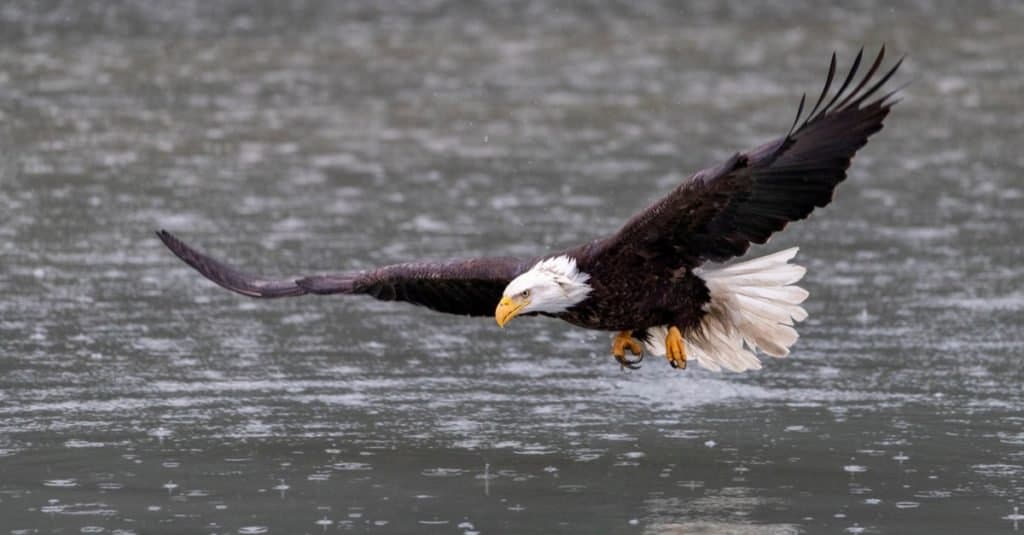
Bald Eagle (Haliaeetus leucocephalus)
©Dennis W Donohue/Shutterstock.com
Starved Rock is one of the Midwest’s top bald eagle sites, especially in winter when dozens gather near the dam to fish in open water. From December to March, viewing areas with scopes draw birders hoping to get a memorable view of these enormous raptors. Sadly, they were once nearly wiped out by habitat loss and pesticide use. However, strenuous conservation efforts have helped them make a strong comeback, making them one of conservation’s greatest success stories.
Gray Catbird (Dumetella carolinensis)
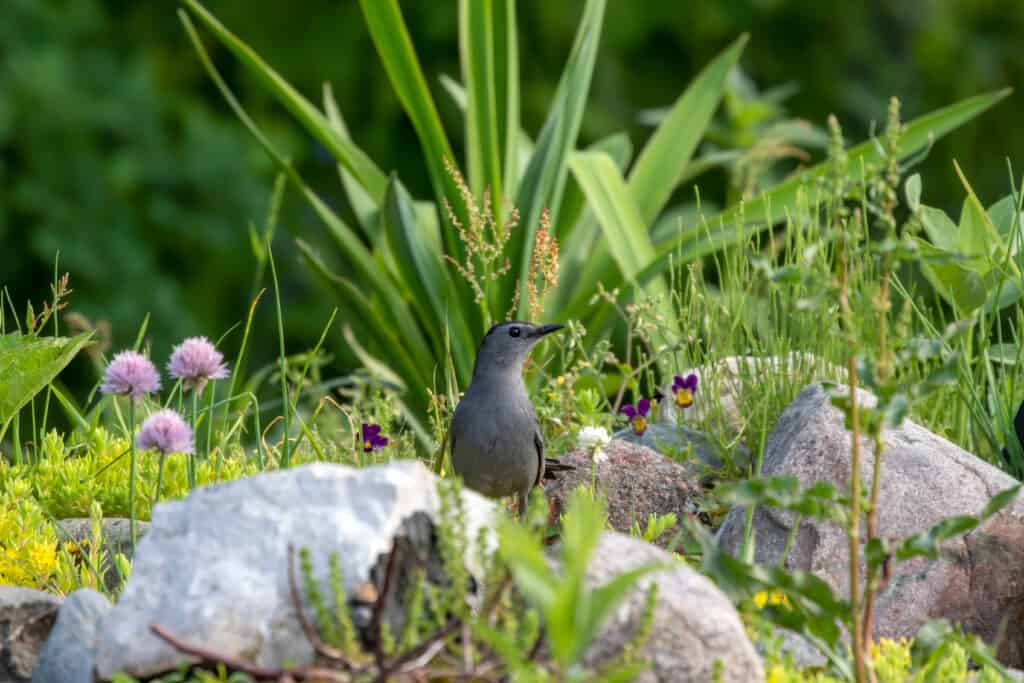
Gray Catbirds (Dumetella carolinensis)
©Karel Bock/Shutterstock.com
The gray catbird makes a distinctive “mewing” call and is also an uncannily accurate mimic. Found in brushy woodland edges and canyons, catbirds weave other birds’ songs into their own, creating a varied, surprising chorus. Their plumage is slate-gray with a black cape, not as flashy as some birds, but their vocal range makes them a welcome find for bird lovers.
Rusty-Patched Bumblebee (Bombus affinis)
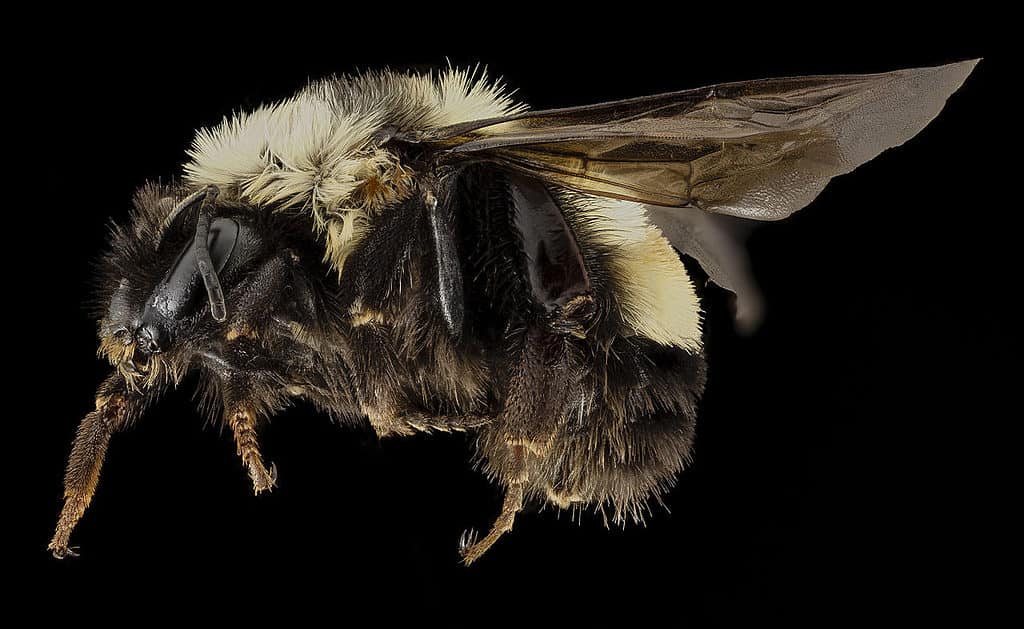
Rusty-Patched Bumblebee (Bombus affinis)
©USGS Bee Inventory and Monitoring Lab from Beltsville, Maryland, USA / public domain – Original / License
The meadows and prairies of Starved Rock support the endangered rusty-patched bumblebee. This species was once common across the Midwest but now survives only in scattered populations. This decline is due to pesticide use, habitat fragmentation, urban development, and behavioral and genetic issues. Visitors may spot it buzzing among wildflowers from late April to September. Alongside monarch butterflies and dragonflies, these insects maintain the park’s ecological health by pollinating plants and feeding other wildlife.
Eastern Gray Squirrel (Sciurus carolinensis) and Fox Squirrel (Sciurus niger)
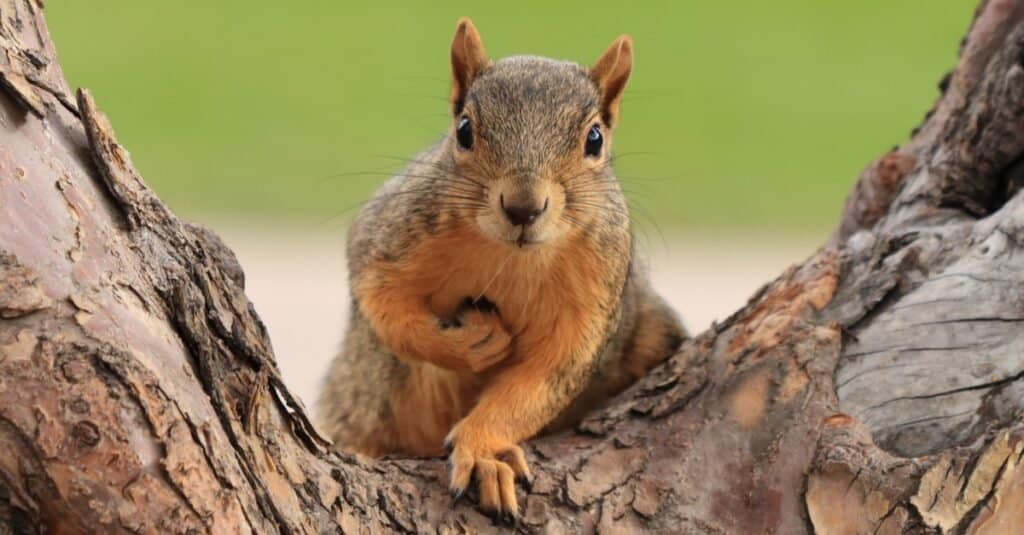
Fox Squirrel (Sciurus niger)
©Vaclav Matous/Shutterstock.com
No one visits Starved Rock without countless sightings of busy squirrels. Eastern gray squirrels dominate wooded areas and picnic groves, often scampering boldly around visitors in search of handouts. Fox squirrels, larger and more reddish-brown, prefer forest edges and open groves. Both are active year-round, gathering acorns, raiding bird feeders, and chasing one another through tree branches. Their populations thrive in the park’s hardwood forests, where oak and hickory trees provide ample food. Squirrels play important roles in the ecosystem by burying acorns for the winter and then forgetting where they buried them. As a result, many of these acorns sprout into trees in the spring, meaning the squirrels are inadvertently planting the forests that will support future generations.
White-Tailed Deer (Odocoileus virginianus)
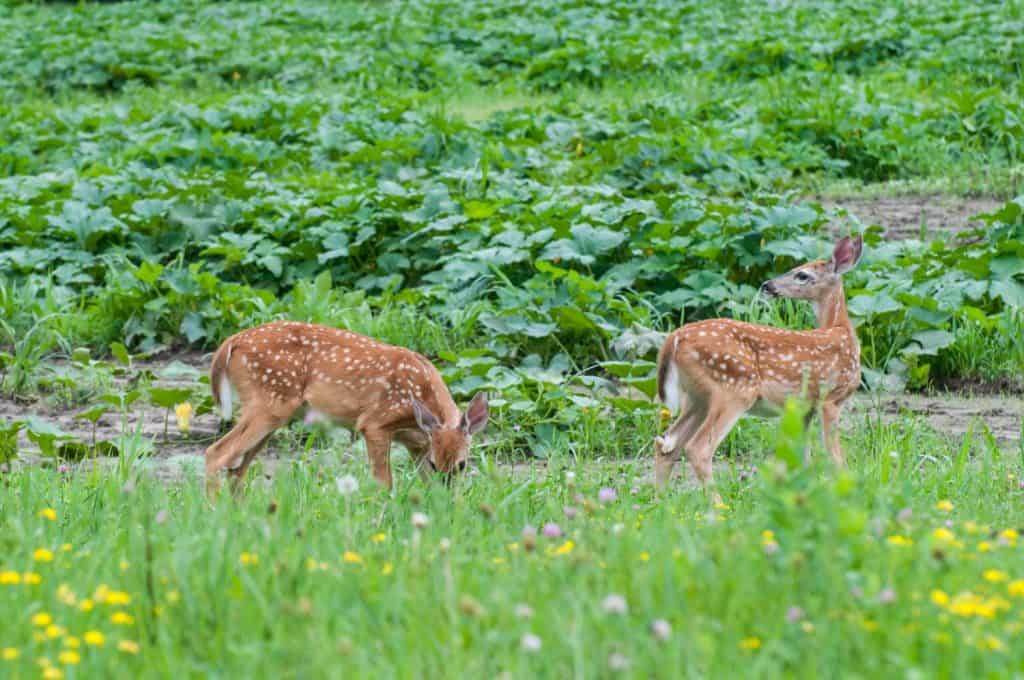
White-Tailed Deer (Odocoileus virginianus)
©Michael Siluk/Shutterstock.com
White-tailed deer are the most frequently seen large mammal at Starved Rock, often grazing in meadows, moving through forests, or crossing roads at dusk. Their graceful movements make them a favorite for photographers, and fawns with spotted coats appear in early summer. Tracks are easy to find in canyon mud or along riverbanks. Because deer are most active at dawn and dusk, hikers are most likely to spot them during these cooler hours.
Red Fox (Vulpes vulpes) and Gray Fox (Urocyon cinereoargenteus)
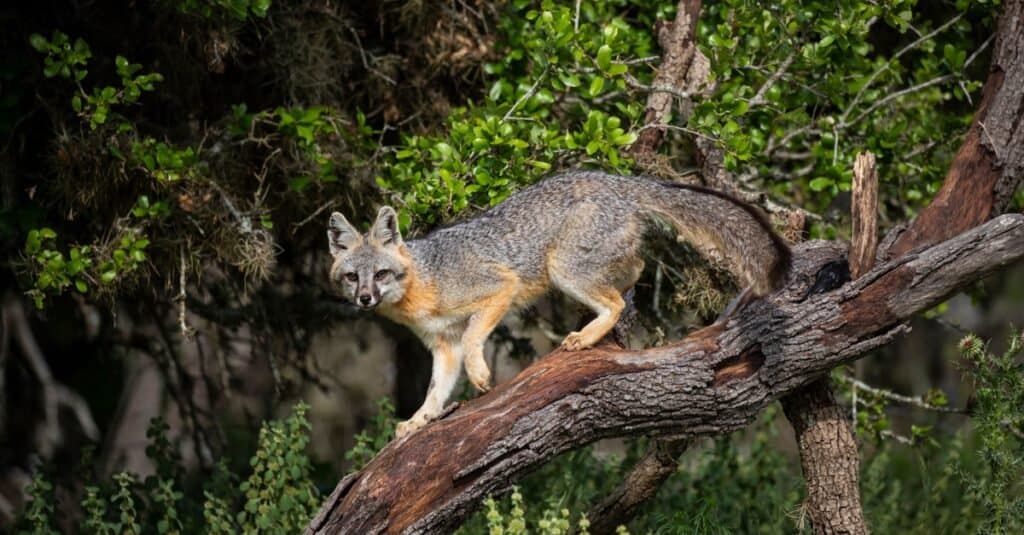
Gray Fox (Urocyon cinereoargenteus)
©Danita Delimont/Shutterstock.com
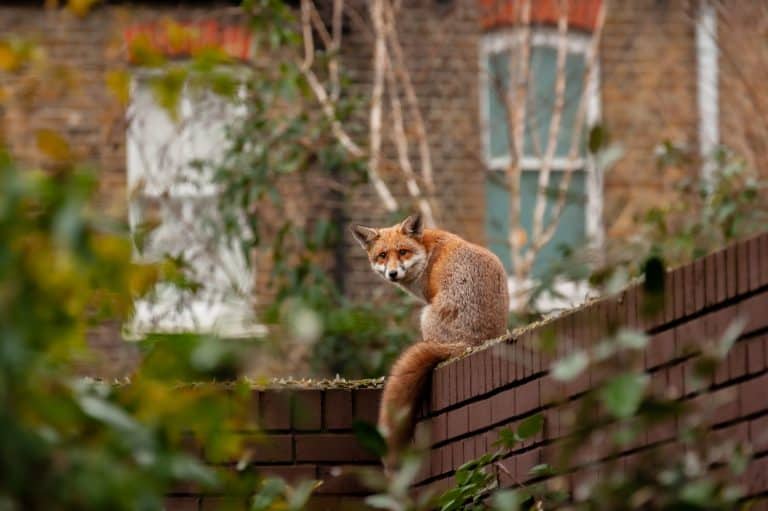
Starved Rock is home to two fox species, though they are far more elusive than the common squirrel or deer. The red fox, with its rusty coat and white-tipped tail, favors open meadows and forest edges, where it hunts mice, rabbits, and birds. The gray fox is smaller, more secretive, and remarkable for its ability to climb trees to escape predators or search for food. Spotting either species is uncommon, but hikers on quiet trails at dawn or dusk sometimes glimpse one darting across a clearing.
Black Rat Snake (Pantherophis obsoletus)
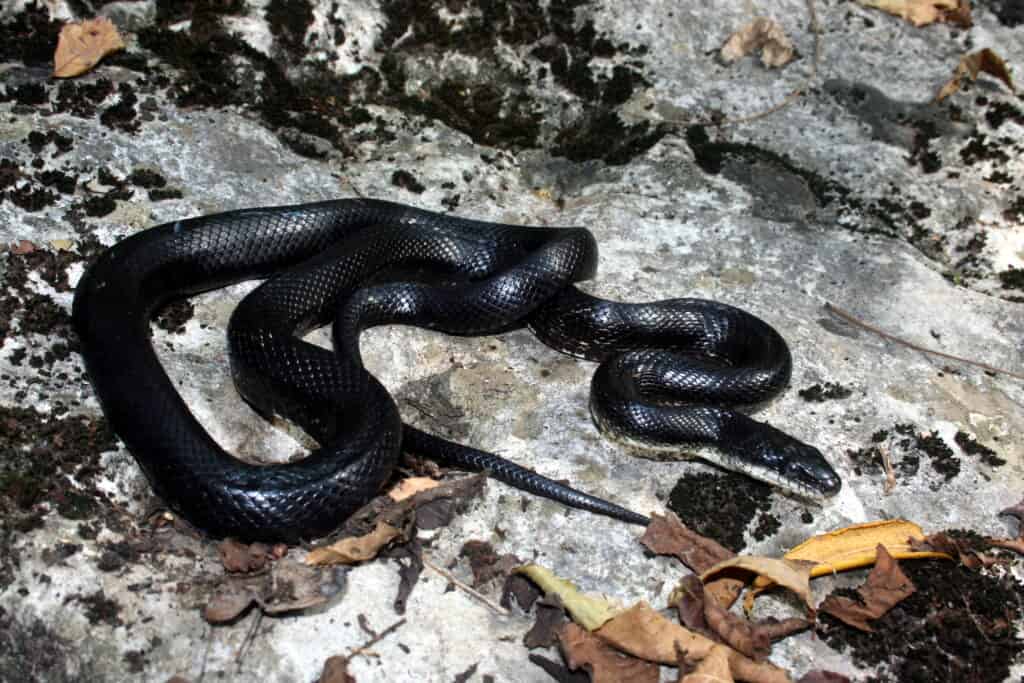
Black Rat Snake (Pantherophis obsoletus)
©Psychotic Nature/Shutterstock.com
The black rat snake (Pantherophis obsoletus) is the park’s largest snake species, sometimes exceeding six feet in length, yet completely nonvenomous and highly beneficial. It hunts rodents, birds, and even eggs, helping to regulate populations that might otherwise overrun the ecosystem. Smaller species such as the brown snake (Storeria dekayi) slip quietly through leaf litter in damp woods, feeding on slugs and insects. Though often feared or misunderstood, snakes are shy and usually retreat when encountered.
Chipmunk (Tamias striatus)
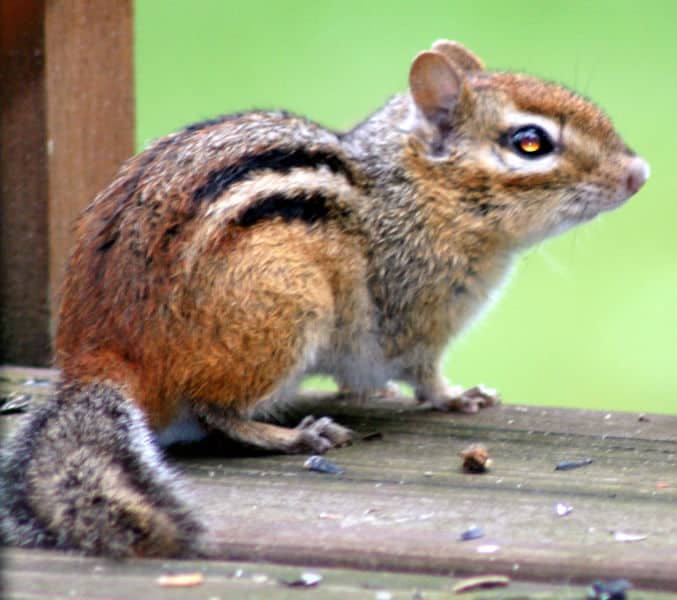
Chipmunk (Tamias striatus)
©R. A. Nonenmacher, CC BY-SA 3.0, via Wikimedia Commons – Original / License
Tiny but lively, chipmunks bring energy to Starved Rock’s undergrowth. These striped rodents scurry along trails, dart into rock crevices, and stuff their cheek pouches with seeds. They are most active in spring and fall, when gathering food for winter storage is a constant task. Chipmunks prefer edges between forests and open areas, where shrubs provide cover. Their chattering calls often alert visitors to their presence before the chipmunks are seen. Although small, chipmunks play an outsized role in spreading seeds and feeding predators such as hawks, foxes, and snakes.
Eastern Cottontail Rabbit (Sylvilagus floridanus)

Eastern Cottontail Rabbit (Sylvilagus floridanus)
©Mircea Costina/Shutterstock.com
The eastern cottontail rabbit is a familiar sight in grassy openings, meadows, and woodland borders. Best seen in the early morning or at twilight, rabbits often freeze when approached, relying on camouflage to avoid predators. Their distinctive white tails flash as they bound away through the brush. Rabbits feed on grasses, herbs, and twigs. Their high reproductive rate ensures a steady population despite predation. Spotting one nibbling in the early light of day adds to the peaceful atmosphere of the park’s meadows.
American White Pelican (Pelecanus erythrorhynchos)
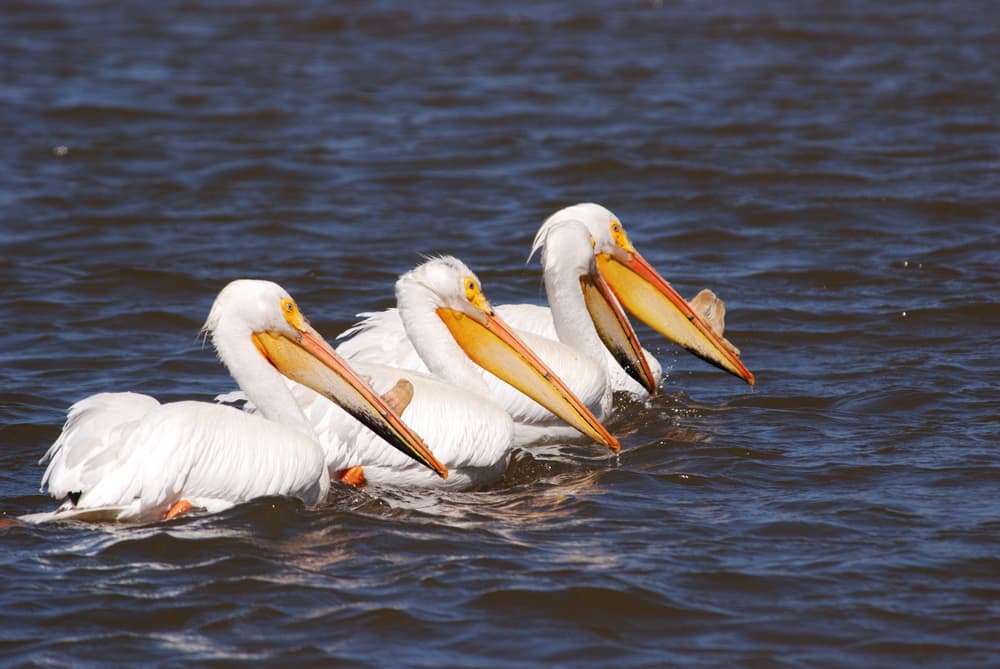
American White Pelican (Pelecanus erythrorhynchos)
©TFoxFoto/Shutterstock.com
Among the largest birds to pass through Starved Rock, white pelicans arrive in flocks during spring and fall migration. From March through November, thousands gather on the Illinois River, gliding in synchronized formations and dipping their pouched bills for fish. Their broad wings and cooperative fishing tactics make them easy to spot from river overlooks. Pelicans are highly social, often floating together in rafts on the water.
Wild Turkey (Meleagris gallopavo)
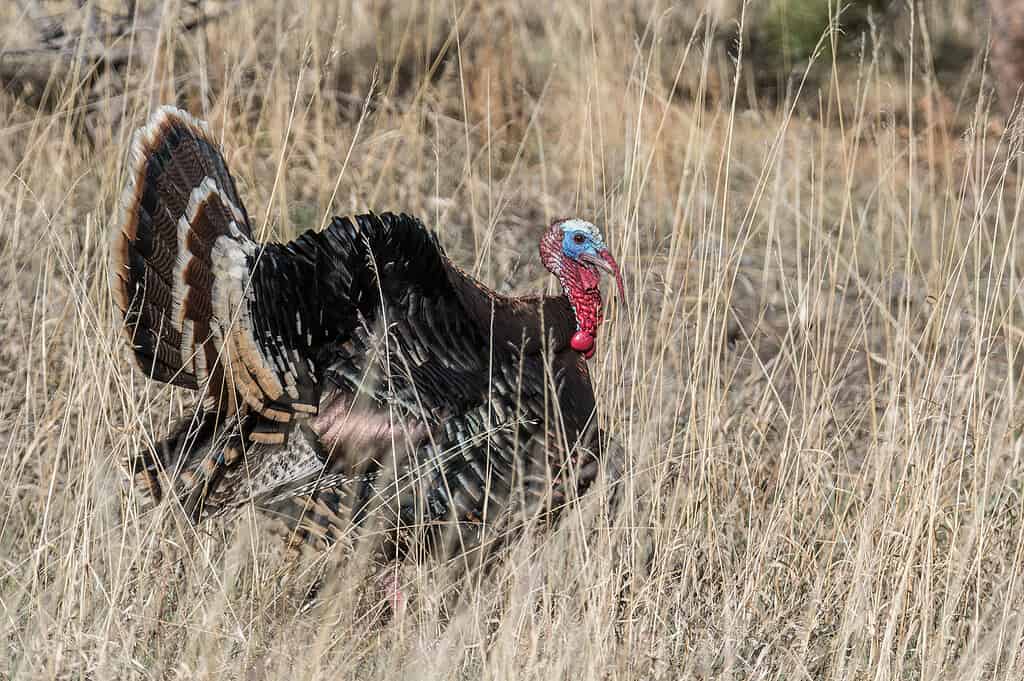
Wild Turkey (Meleagris gallopavo)
©Wichyanan Limparungpatthanakij/iStock via Getty Images
Wild turkeys roam the forests of Starved Rock in impressive numbers. These large birds forage for acorns, seeds, and insects across the park. In spring, males put on dramatic displays, puffing out feathers, fanning tails, and gobbling loudly to attract hens. During summer, hens lead flocks of chicks through meadows and along trails. Once nearly eliminated from Illinois, turkeys have rebounded thanks to conservation, and today they are a regular sight in the park’s woodlands.
Northern Cardinal (Cardinalis cardinalis)
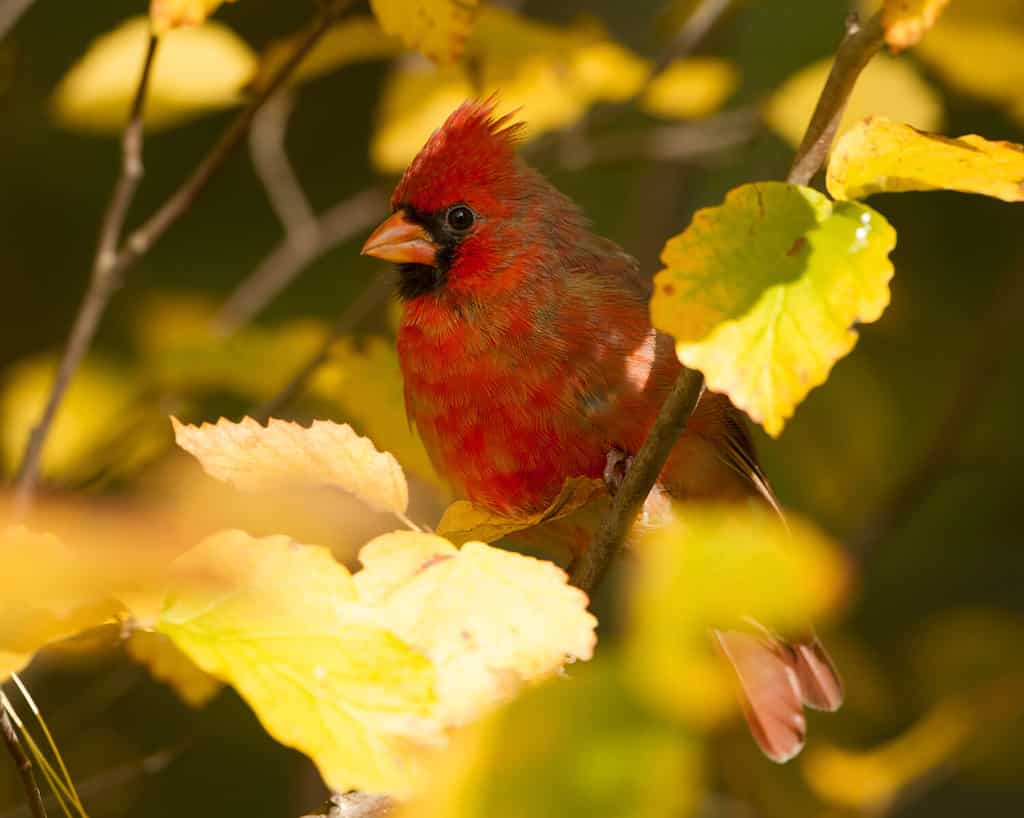
Northern Cardinal (Cardinalis cardinalis)
©Brian Lasenby/Shutterstock.com
The cardinal is one of the park’s most beloved birds, its brilliant red plumage and melodic song a familiar presence throughout the year. Cardinals thrive in forested areas, edges, and picnic groves, often perching in plain view. Males are easily recognized by their vibrant color, while females display softer shades of brown and orange. Their whistles carry far, especially in spring.
North American River Otter (Lontra canadensis)
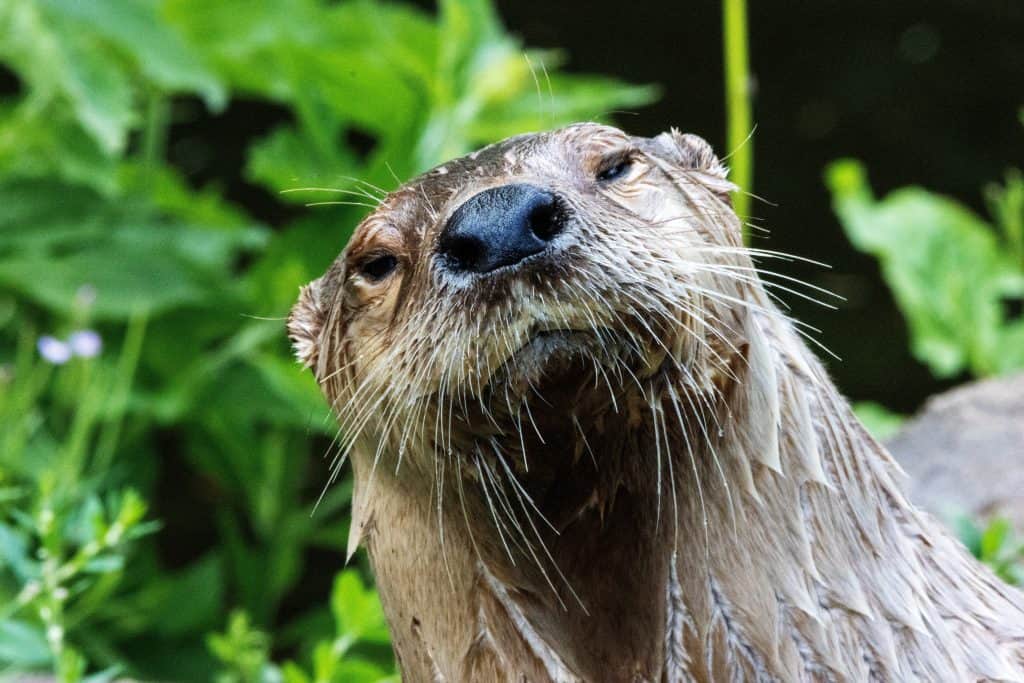
North American River Otter (Lontra canadensis)
©Ian Peter Morton/Shutterstock.com
Once nearly absent from Illinois, river otters have made a strong comeback, thanks to conservation and cleaner waterways. Sleek and playful, otters are among the park’s most entertaining animals, though sightings are rare due to their shy habits. They can occasionally be spotted gliding through the Illinois River or sliding down muddy banks in winter snow. Early morning along sloughs and side channels offers the best chance for a lucky encounter. Their presence is a sign of healthy fish populations, as otters rely on abundant prey. Families of otters sometimes leave tracks in mud or snow, so even without seeing one, visitors may notice their trail.
Great Blue Heron (Ardea herodias)
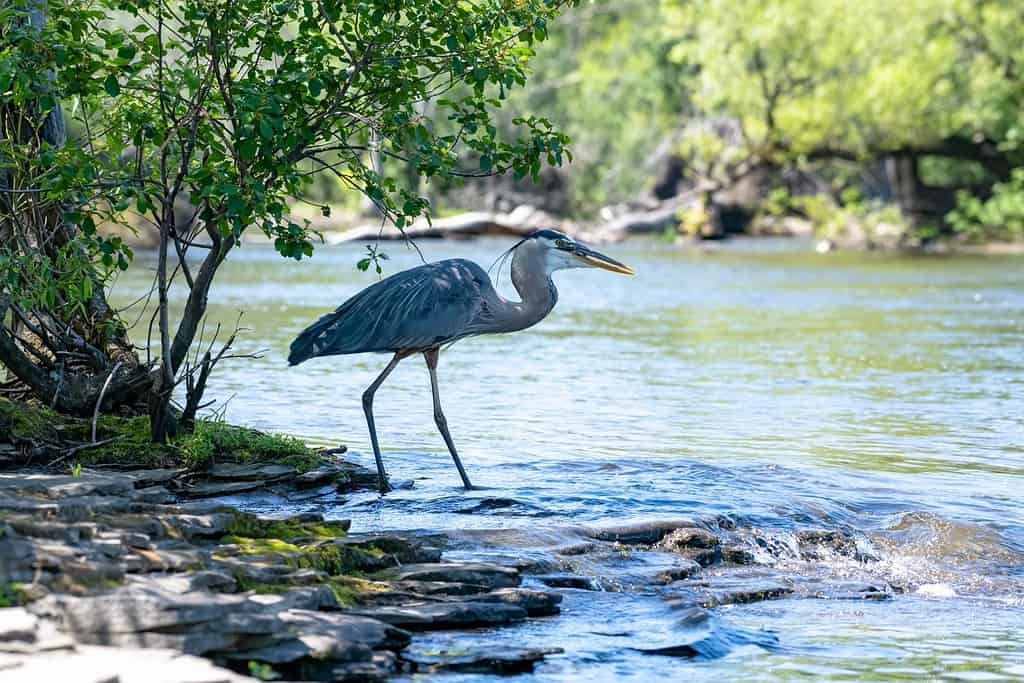
Great Blue Heron (Ardea herodias)
©Karen Hogan/Shutterstock.com
Standing nearly four feet tall with a wingspan of up to six feet, the Great Blue Heron stalks the riverbanks and wetlands in slow, deliberate steps, waiting for the perfect moment to spear a fish with its sharp bill. Herons are most often seen wading in the shallows of the Illinois River or perched silently on logs and rocks, blending easily into the scenery despite their size. Colonies of great blue herons, called rookeries, can be found in riverside trees where dozens of pairs nest each spring.
Common Snapping Turtle (Chelydra serpentina)
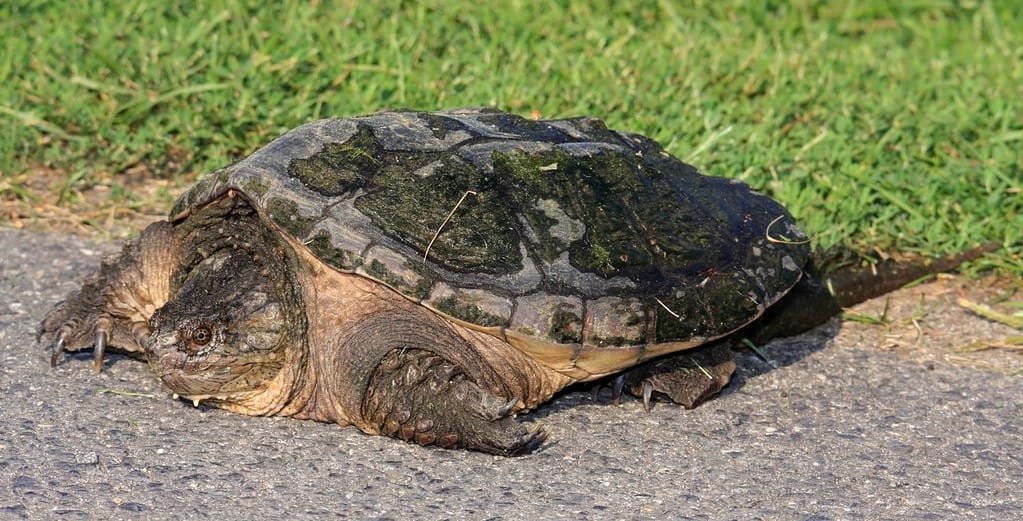
Common Snapping Turtle (Chelydra serpentina)
©Joseph M. Arseneau/Shutterstock.com
Turtles are a fixture of Starved Rock’s ponds and backwaters. The painted turtle is most abundant, basking on logs and rocks, but the larger snapping turtle is the one most visitors remember. With their powerful jaws and prehistoric appearance, snapping turtles command respect. Occasionally, the rare Blanding’s turtle (Emydoidea blandingii) may also be spotted, a conservation highlight. Warm spring and summer days are best for turtle watching.
Wildlife for Every Season
Starved Rock State Park offers wildlife encounters in every season. Patient hikers and careful observers are rewarded with sightings of common species and, with some luck, even rare and endangered ones. Keep a respectful distance, bring binoculars or a camera, and enjoy the chance to experience one of Illinois’ richest natural sanctuaries.