
Quick Take
- Flamingos have laid eggs in the Venetian Lagoon, yet something has stopped every single clutch from hatching. See the failed clutches →
- Scientists use flamingos as a living test, and what the birds' behavior in Venice reveals about the lagoon's recovery is hard to ignore. Explore the indicator evidence →
- Venice was never supposed to have flamingos, and yet something triggered their arrival two decades ago that has nothing to do with migration patterns. Discover their unexpected arrival →
- Three specific conditions stand between 24,000 wintering flamingos and a permanent Venice colony, none of which the lagoon has yet met. See the conditions needed →
Wetlands projects are being implemented around the world to combat climate change. Restoring these habitats has the welcome side effect of increasing biodiversity. Countries are seeing the return of animals that had dwindling populations or had disappeared completely. From the sarus crane in India to the water buffalo in the Netherlands, species are making a comeback.
Some countries are even seeing an influx of non-native species. Italy is one example, with Venice’s flamboyant flamingos finding sanctuary in restored Italian wetlands. As the number of European flamingos wintering in Italy continues to increase each year, it may only be a matter of time before Italy becomes a permanent home for flamingos.
Flamingos Find Refuge in Venetian Lagoon
Flamingos have never called Italy home. Therefore, imagine the surprise of those living in Venice when the bright pink birds began to appear over two decades ago.
The European flamingos were initially seen as an oddity. A rare occurrence, even. But year after year, the birds returned, calling the Venetian Lagoon their winter home.
At the time that the flamingos began to make their presence known in Venice, the Venetian Lagoon was undergoing restoration. Reversing decades of dredging, erosion, and infrastructure growth made for a massive undertaking. However, recovery efforts are paying off, and the Venetian Lagoon is returning to its former status as a biodiverse habitat—perhaps even surpassing it.
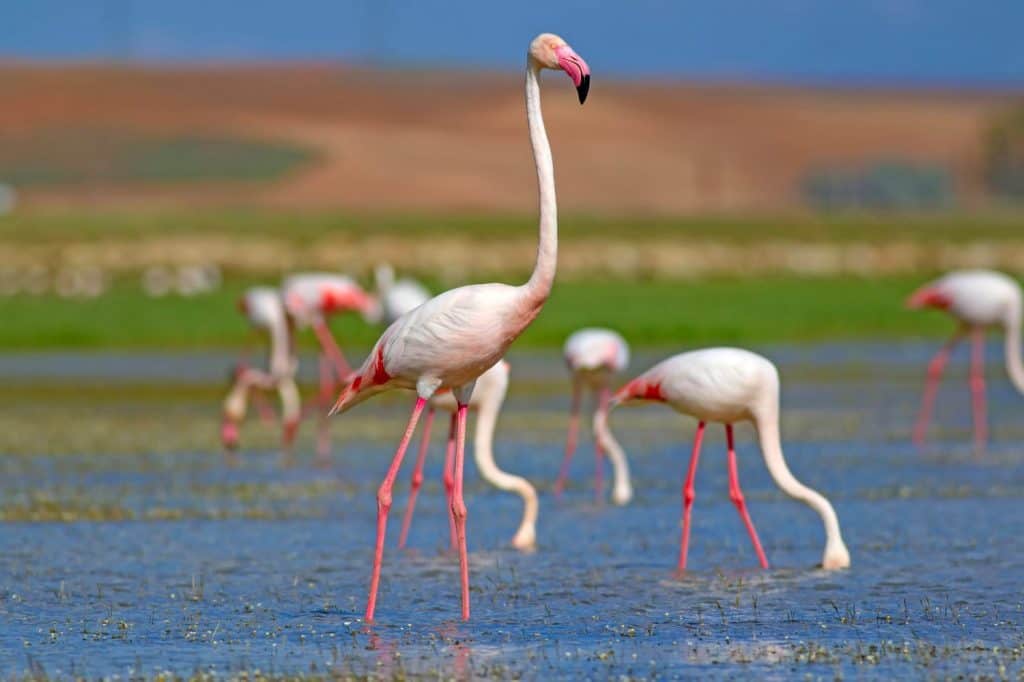
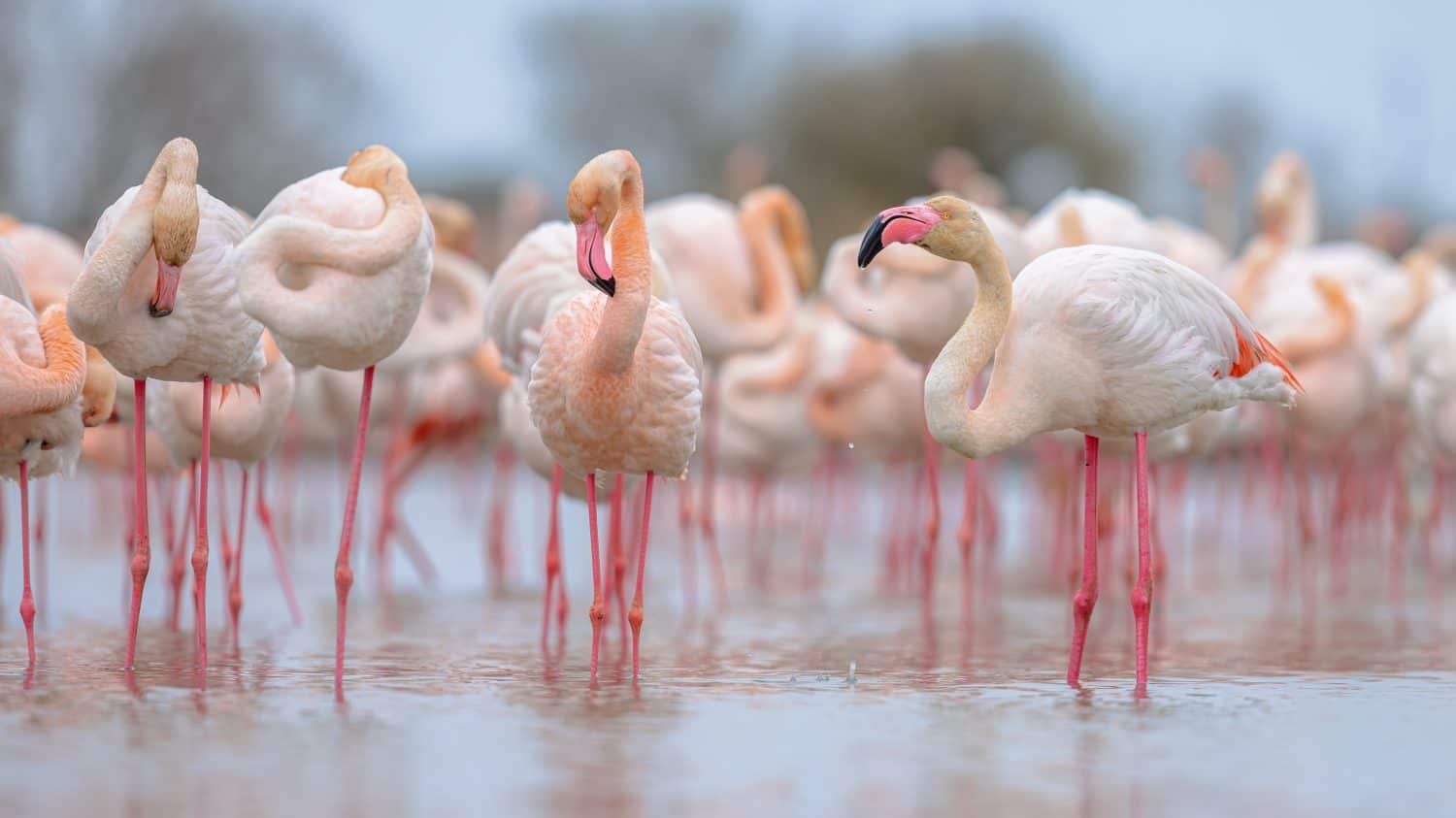
European flamingos have made the Venetian Lagoon their winter home.
©Greens and Blues/Shutterstock.com
The salt marsh that the Venetian Lagoon has become is “one of the most important wintering spots in [the flamingos’] entire habitat range,” ornithologist Alessandro Sartori explained to the Associated Press, with more flamingos returning each year. The lagoon is now competing with traditional nesting locations in France and Spain, attracting thousands of flamingos. While the two countries have larger populations than Italy, with their wintering populations of flamingos, there may come a time when Venice is the preferred habitat for nesting flamingos.
The Venetian Lagoon has much more restoration to undergo before it returns to its original 200 square miles of wetlands, half of which were salt marsh. Once restoration is complete, the lagoon will not only capture carbon dioxide but also provide a stable habitat for flamingos, a species once foreign to Italy.
Flamingos Have Proven Their Status as an Indicator Species
Flamingos are an indicator species. This is because flamingos are highly sensitive to changes in their ecosystem. The birds thrive in healthy habitats but decline when environmental conditions deteriorate.
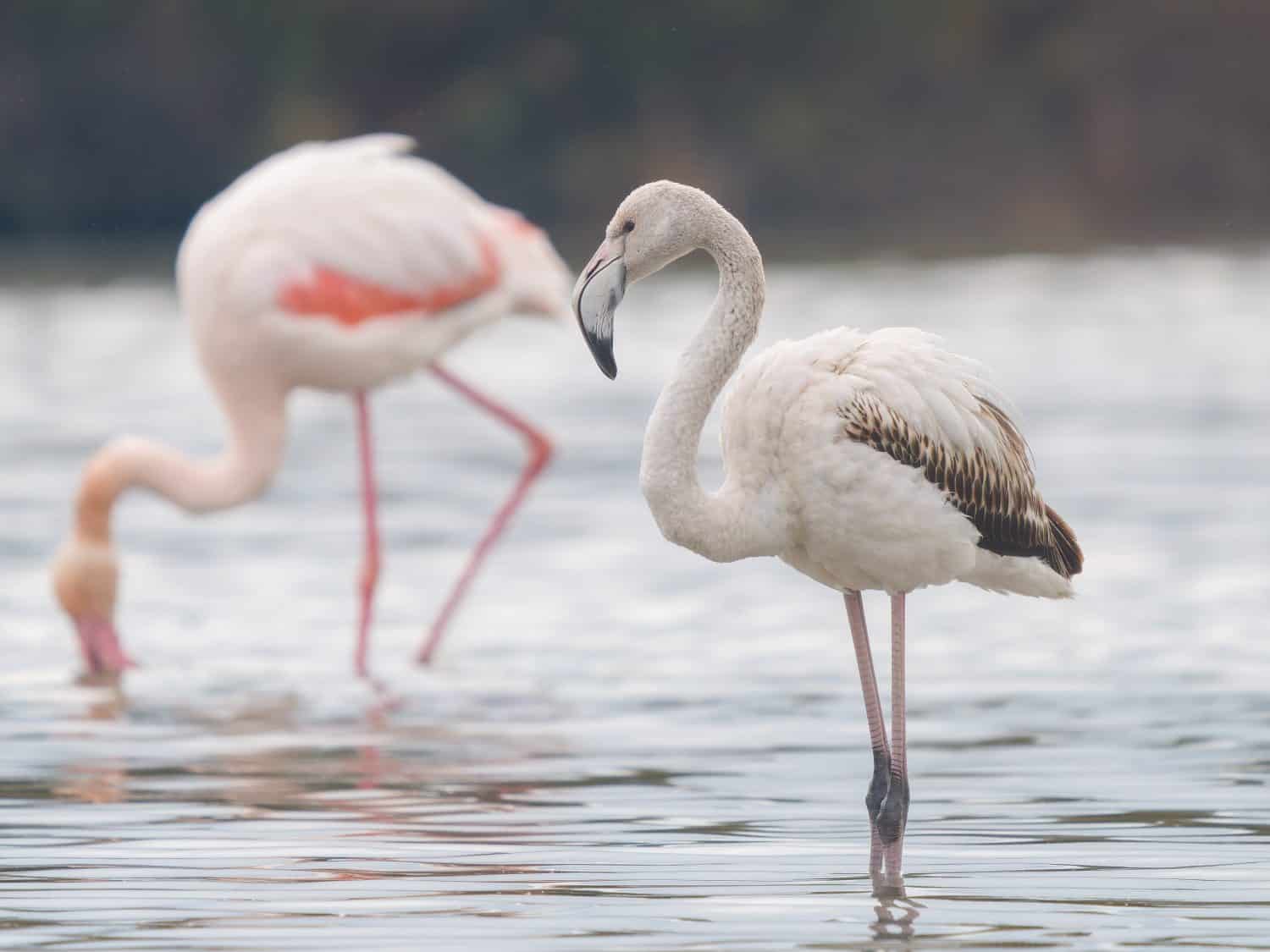
European flamingos have specific requirements to remain and thrive in aquatic habitats.
©Colombe Photographie/Shutterstock.com
Requirements that flamingos need to thrive in their habitat include:
- Wetland waters filled with invertebrates and algae
- Consistent water levels
- Large wetland territory
- No human disturbance
- No pollution in the environment
- Ample sedimentation to successfully hunt
With flamingos not only returning each winter to the Venetian Lagoon but also coming back in larger numbers each year, it is a good sign that the habitat is healthy. The hard work to restore the wetlands over the past quarter-century is paying off, as evidenced by the flamingos.
Has Nesting Been Successful at the Venetian Lagoon?
A clear indication that flamingos could be sustained in the Venetian Lagoon would be evidence of nesting in the wetlands. Over the years, nests have been spotted, but no eggs have successfully hatched.
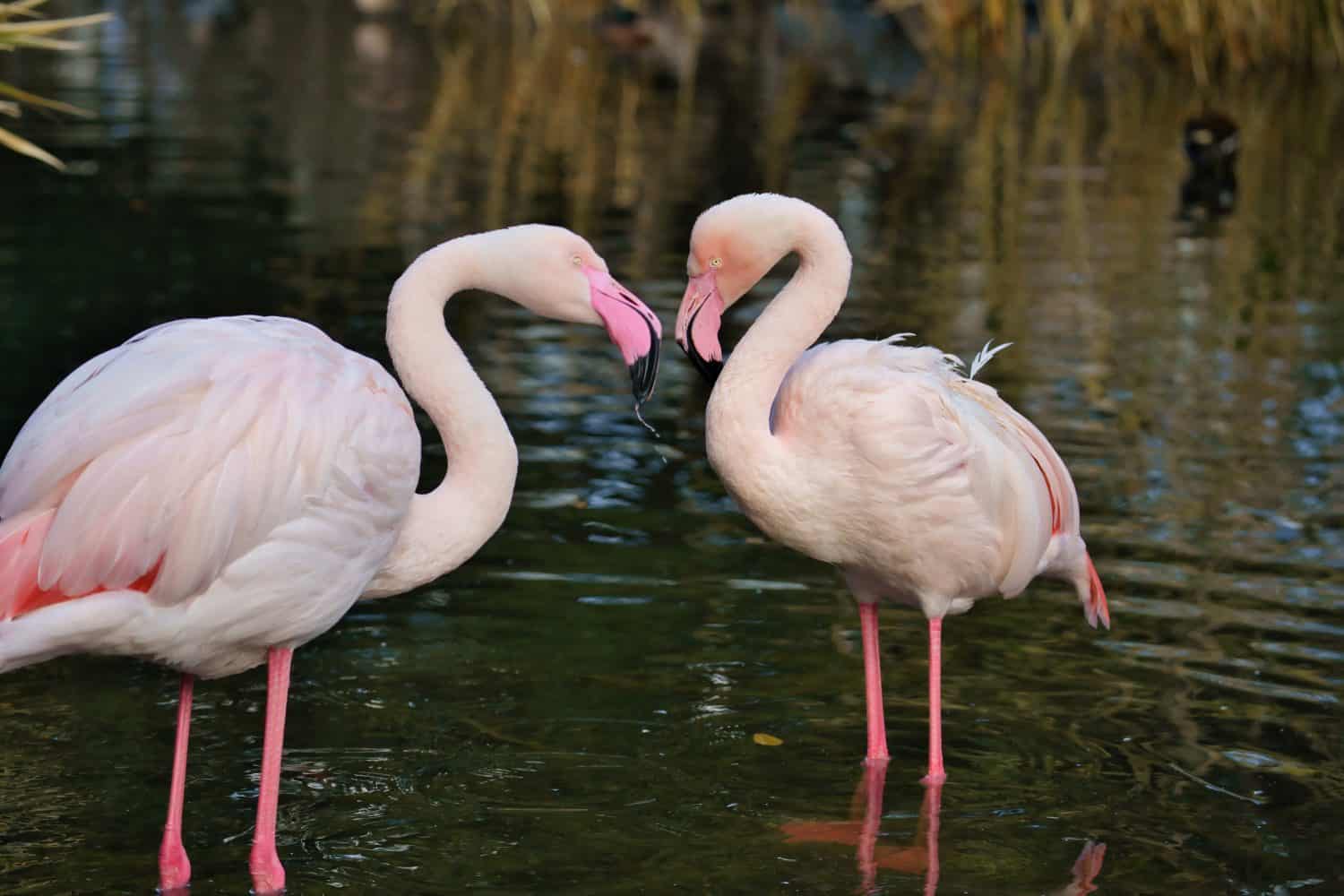
Despite the increase in the flamingo population, there have not been any nesting spots located at the Venetian Lagoon since 2013.
©Kowshi .L/Shutterstock.com
In 2008 and 2013, nesting in the northern portion of the lagoon looked promising. In both of these years, eggs were laid. Unfortunately, hatchlings never came to fruition. There were setbacks during those years, including a devastating hailstorm. The storm was so intense that many birds were killed and eggs were destroyed.
It has been over a decade since the last nest was observed in the Venetian Lagoon. However, hope has not been lost for nesting to occur in the future.
Flamingo Populations Increase in Venice Each Winter
It was no coincidence that flamingos started to appear in the Venetian Lagoon in the early 2000s. This was the same time that restoration efforts on the wetlands kicked into high gear, and real progress was made. As each year passes, the wetlands become healthier than the year prior. With this improved health comes greater biodiversity and a stronger incentive for flamingos to return.
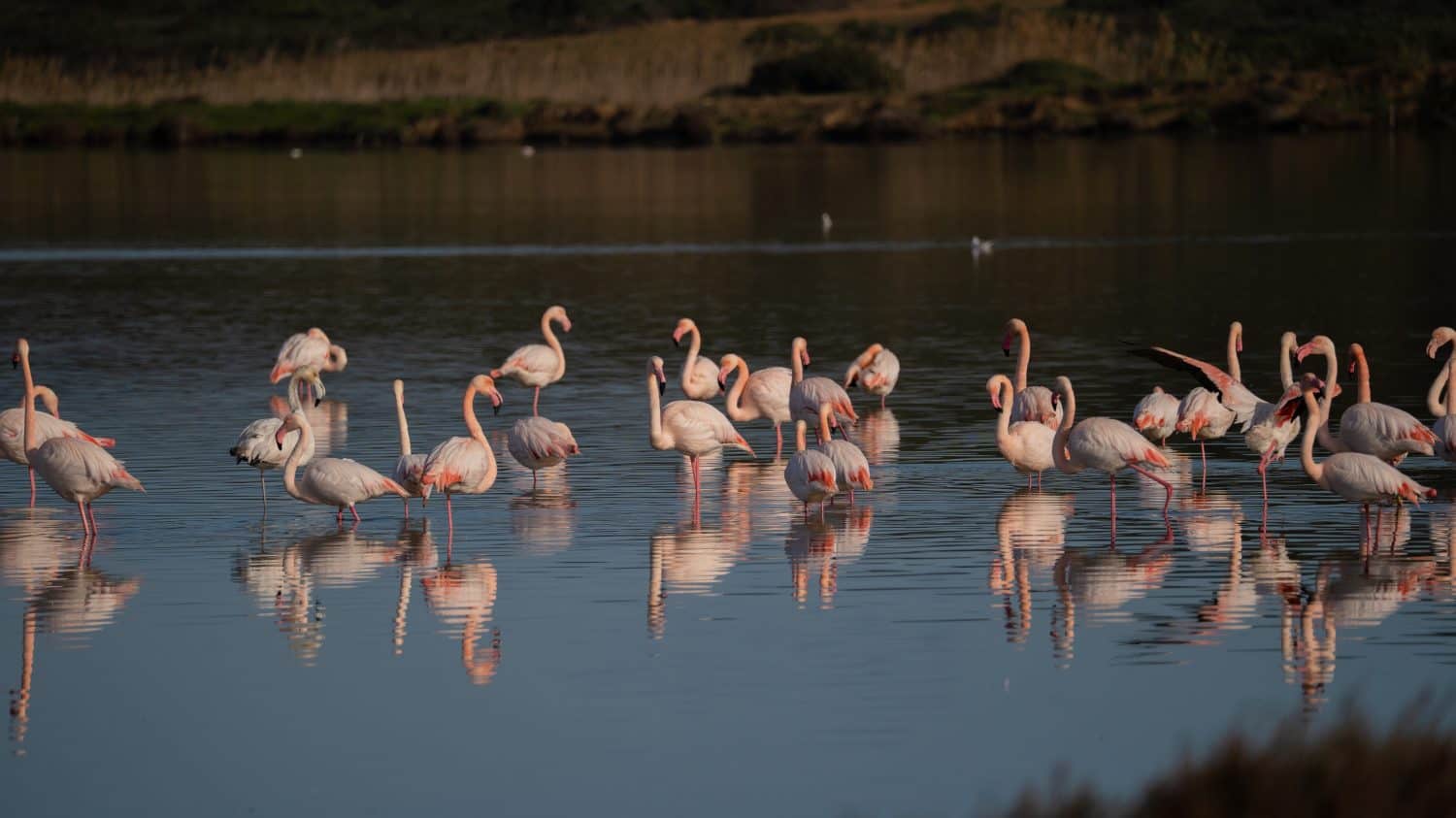
24,000 flamingos wintered at the Venetian Lagoon in 2025.
©ivan canavera/Shutterstock.com
Beginning in the early 2000s, flamingos were infrequent visitors to the northern part of the lagoon. Steadily, numbers grew. So much so that by 2024, there were 18,000 flamingos in the wetlands. The following year, the population increased to 24,000.
The majority of flamingos still choose to spend their time in the northern lagoon, with 90% of the population wintering there. However, a smaller population has begun moving southward. This indicates that recovery efforts are working, as up to 400 flamingos have been spotted in the southern lagoon at a time over the past few years.
What the Recovery of the Venetian Lagoon Ecosystem Could Mean for Flamingos
Given that the flamingo population only continues to increase in Venice each winter, it is a sign that the flamingos are thriving. Part of why they are doing so well is the recovery of the Venetian Lagoon ecosystem.
Currently, the marshy region of Venice does not support flamingos year-round. However, the wetlands continue to recover and expand. As a result, there is a real possibility that flamingos could eventually become a permanent presence.
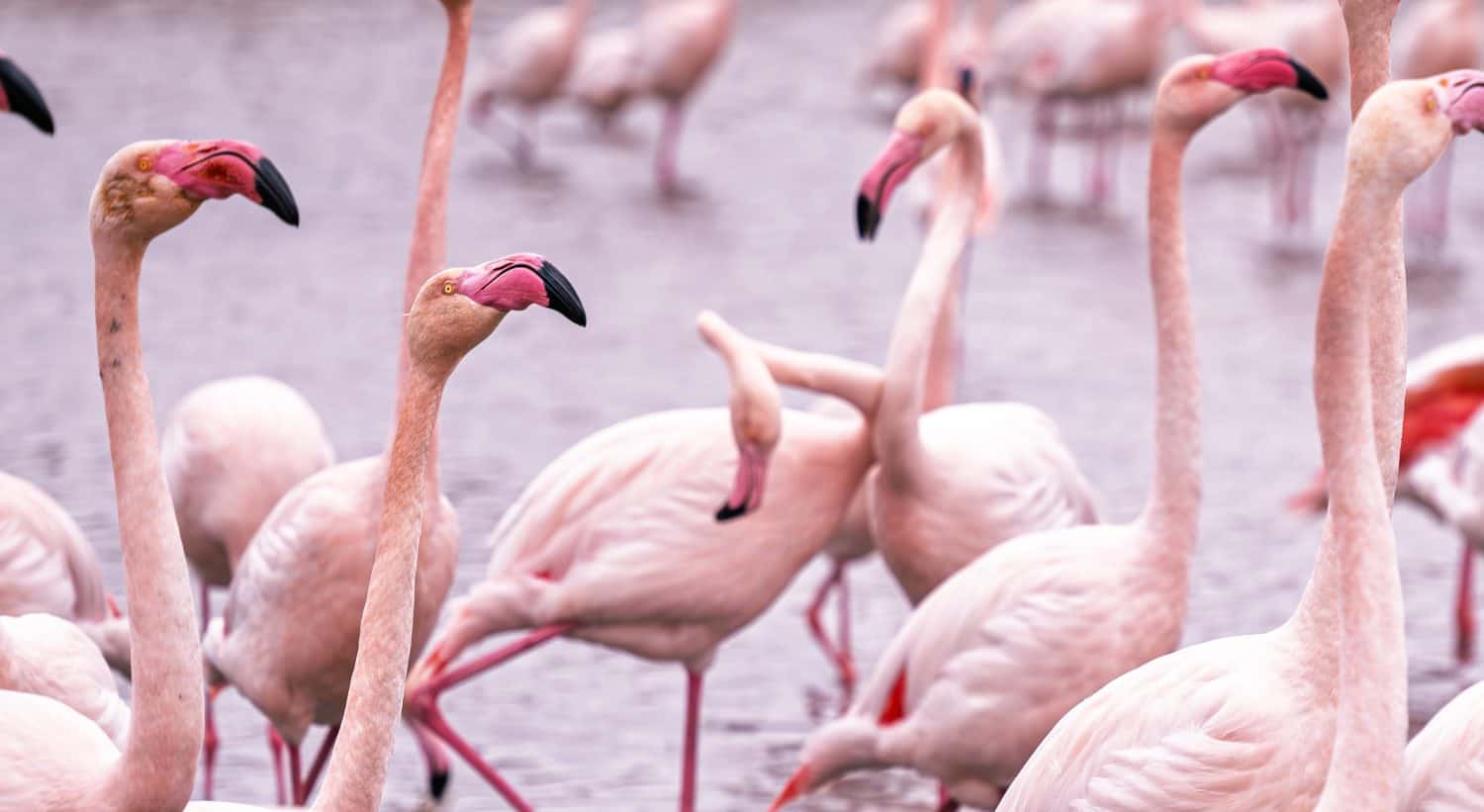
As the Venetian Lagoon continues to be restored, there is the possibility for the flamingos to call Venice home.
©Bruno M Photographie/Shutterstock.com
For flamingos to be a consistent presence in Venice, certain conditions would need to be met. Those conditions include:
- Larger habitat for flamingos to successfully nest
- Year-round food supply
- Decreased human disturbance
As the Venetian Lagoon continues to recover and become more biodiverse after decades of destruction, it may prove hospitable to flamingos on a permanent basis. This change will not happen overnight; it will take time. But with perseverance, complete restoration of the wetlands is possible.