
Quick Take
- A Great Pyrenees puppy's coat can look nothing like its adult coat, and most owners are surprised by how quickly the change happens. See how coats change →
- Shaving a Great Pyrenees to cool it down in summer does not help. It actually causes lasting damage. Understand the double coat →
- One coat color permanently bars a Great Pyrenees from AKC recognition as a purebred, with absolutely no exceptions allowed. See the disqualifying color →
- The rarest standard coat color isn't the one most people would name first. Discover the rarest color →
The Great Pyrenees is a large livestock guard dog originally bred to protect flocks from wolves and bears in the Pyrenees Mountains spanning France and Spain. Renowned for their calm, independent nature, these gentle giants were declared the Royal Dog of France by King Louis XIV. The breed first came to the U.S. in 1824, but did not become firmly established until the 1930s, when a Massachusetts socialite imported a breeding pair and championed their recognition with the American Kennel Club (AKC) in 1933. Because of their patient and affectionate nature, they have become popular household pets, although they remain highly sought after by farmers, ranchers, and homesteaders across the U.S. to protect sheep, goats, and poultry from predators like coyotes and wolves. So, what color coats do these gentle guard dogs have? Continue reading to learn about Great Pyrenees coat colors from the most common to the rarest.
Are All Great Pyrenees White? AKC-Standard Coat Colors
The Great Pyrenees possesses a thick, weather-resistant double coat consisting of a dense, woolly undercoat for insulation and a long, coarse outer coat that naturally repels water and dirt. This dual-layer system acts as natural climate control, keeping the dog warm during freezing winters and protecting its skin from heat, sunburn, and insects during the summer. Because this specialized coat regulates their body temperature so efficiently, experts strongly advise against shaving a Great Pyrenees, as doing so permanently disrupts their ability to stay cool and ruins the fur’s protective texture.
The AKC breed standard states that a Great Pyrenees must have a white or principally white coat. However, they are not required to be entirely solid white, and their coats can feature markings in the following specific colors: badger (a mix of gray, tan, and sometimes a small amount of black hairs, but not solid black). Black markings or solid black coats are not accepted by the AKC breed standard, and dogs with such markings are not eligible for competition as purebreds.
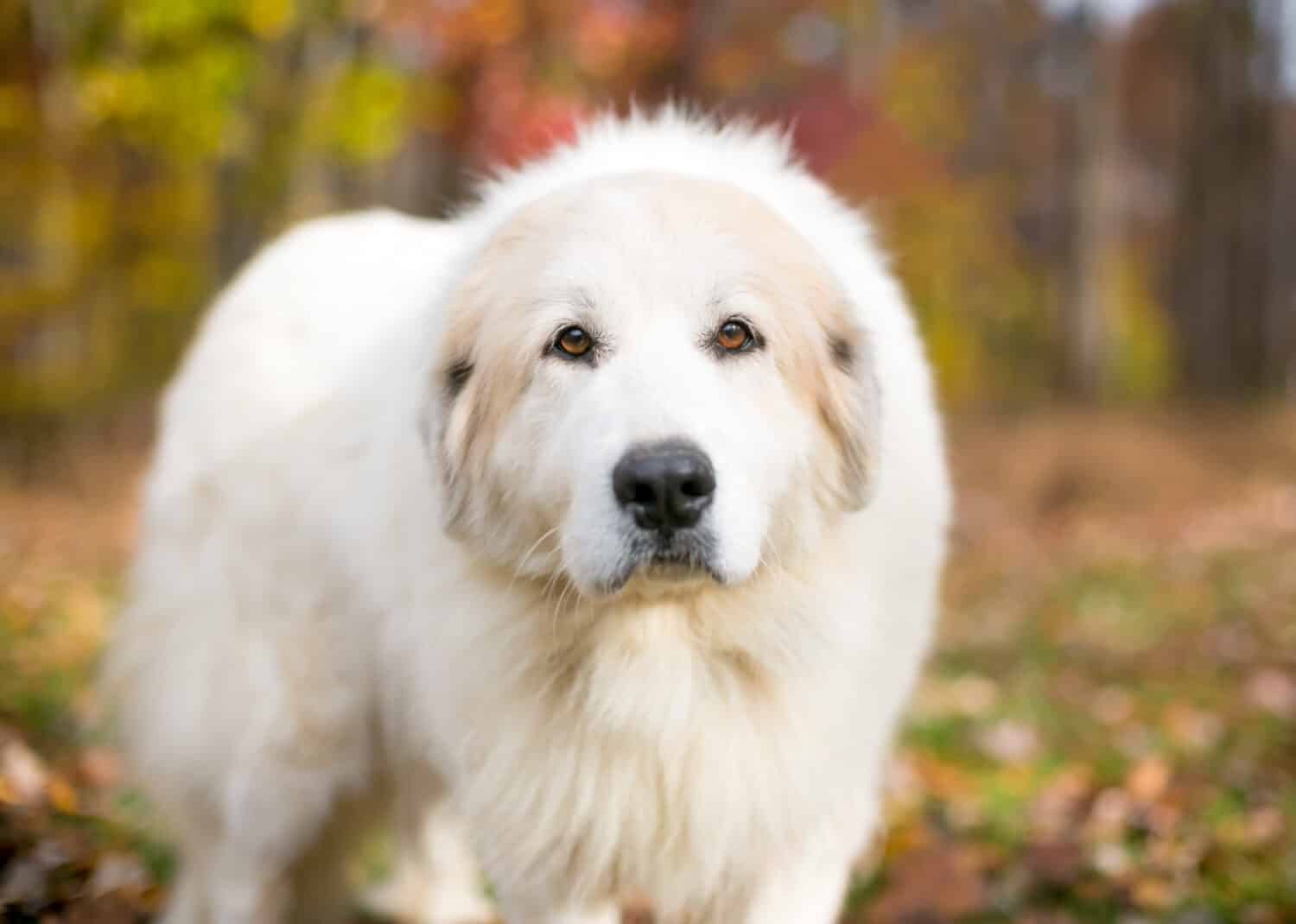
Dark pigmentation on their nose, lips, and eye rims is a strict requirement of the breed.
©iStock.com/JZHunt
Solid White
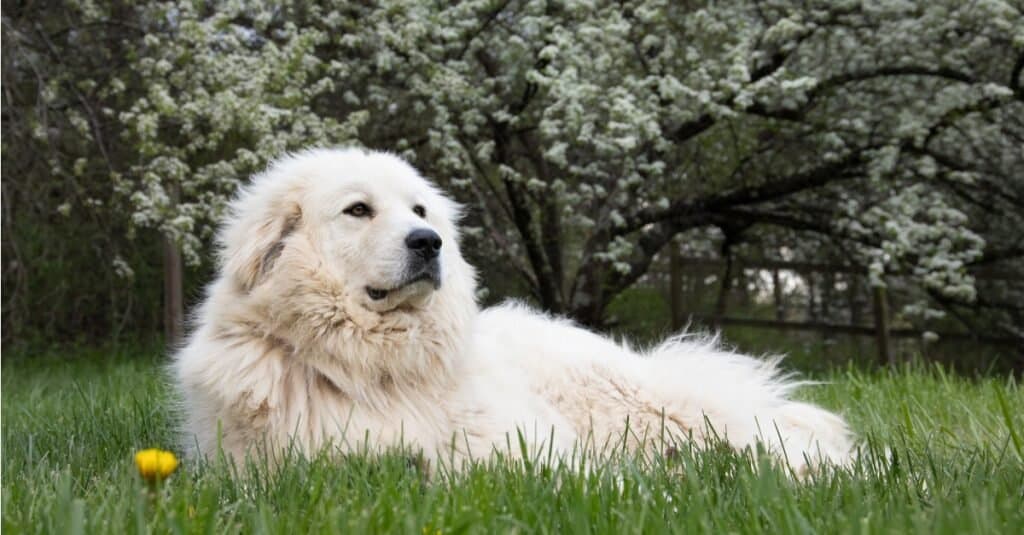
Solid white is the signature, standard coat color for the Great Pyrenees, a trait historically used to blend in with livestock and distinguish them from predators. While some puppies are born with badger, tan, or gray markings, these patches typically fade to white by adulthood.
White with Badger
Badger markings, traditionally called blaireau in French, are unique coat patches that consist of a specific blend of white, gray, brown, and black hairs. Instead of being a single solid shade, each hair follicle often contains multiple banded colors. The coat gets its name from the salt-and-pepper, multi-toned appearance of a wild European badger.
White with Tan
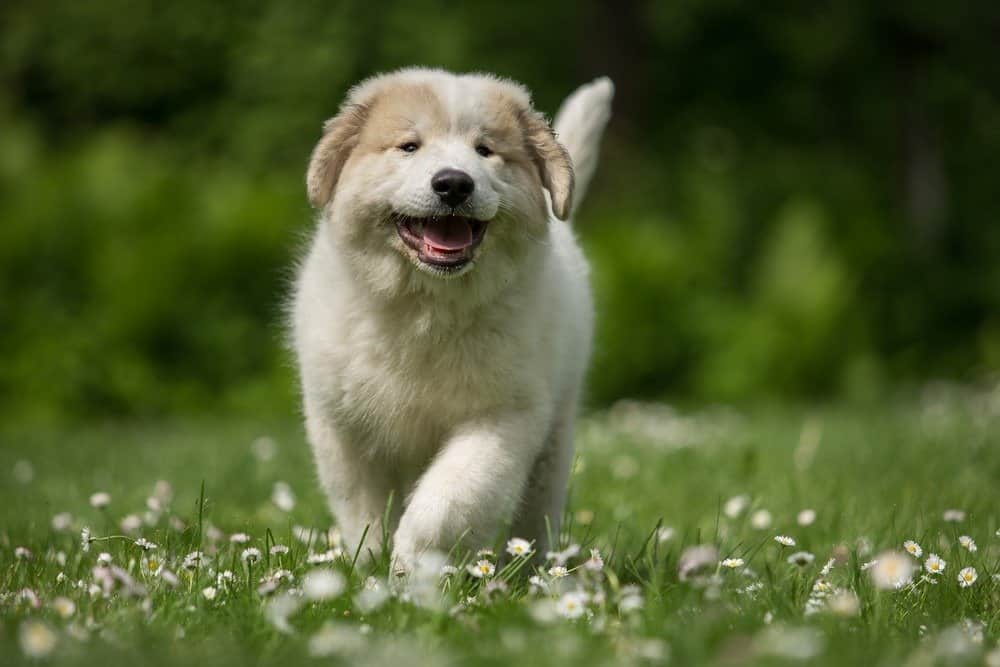
Markings are typically found on the Pyr’s body, face, and ears.
©DTeibe Photography/Shutterstock.com
Tan markings can range from a light lemon color to a dark brown. As with all markings, a face mask is common, as are patches throughout the rest of the body.
The AKC breed standard allows for tan markings in varying shades, but does not specifically mention orange, although some breeders may refer to lighter or more orange-toned markings as tan.
White with Reddish-Brown Markings
Reddish-brown markings can range in color from light to dark. Many puppies are born with darker markings (like badger or red) that tend to fade or lighten to a faint tan as the dog matures into adulthood. However, the richer red-brown and wolf-gray shades are known to retain their color quite well into adulthood.
White with Gray Markings
Gray shading typically manifests as a mask covering the face, patches over the ears, at the base of the tail, or as rare small spots on the body. While gray markings on puppies are initially quite dark and striking, they usually fade as the dog matures and lighten significantly, leaving the adult dog with subtle silver tips or soft gray edges around the ears and tail.
White with Badger Markings
This is the rarest standard coat color. Dogs will have mostly white coats with badger markings, often on the face and throughout the coat.
It’s common for the badger markings to become lighter or even fade to white as the dog ages.
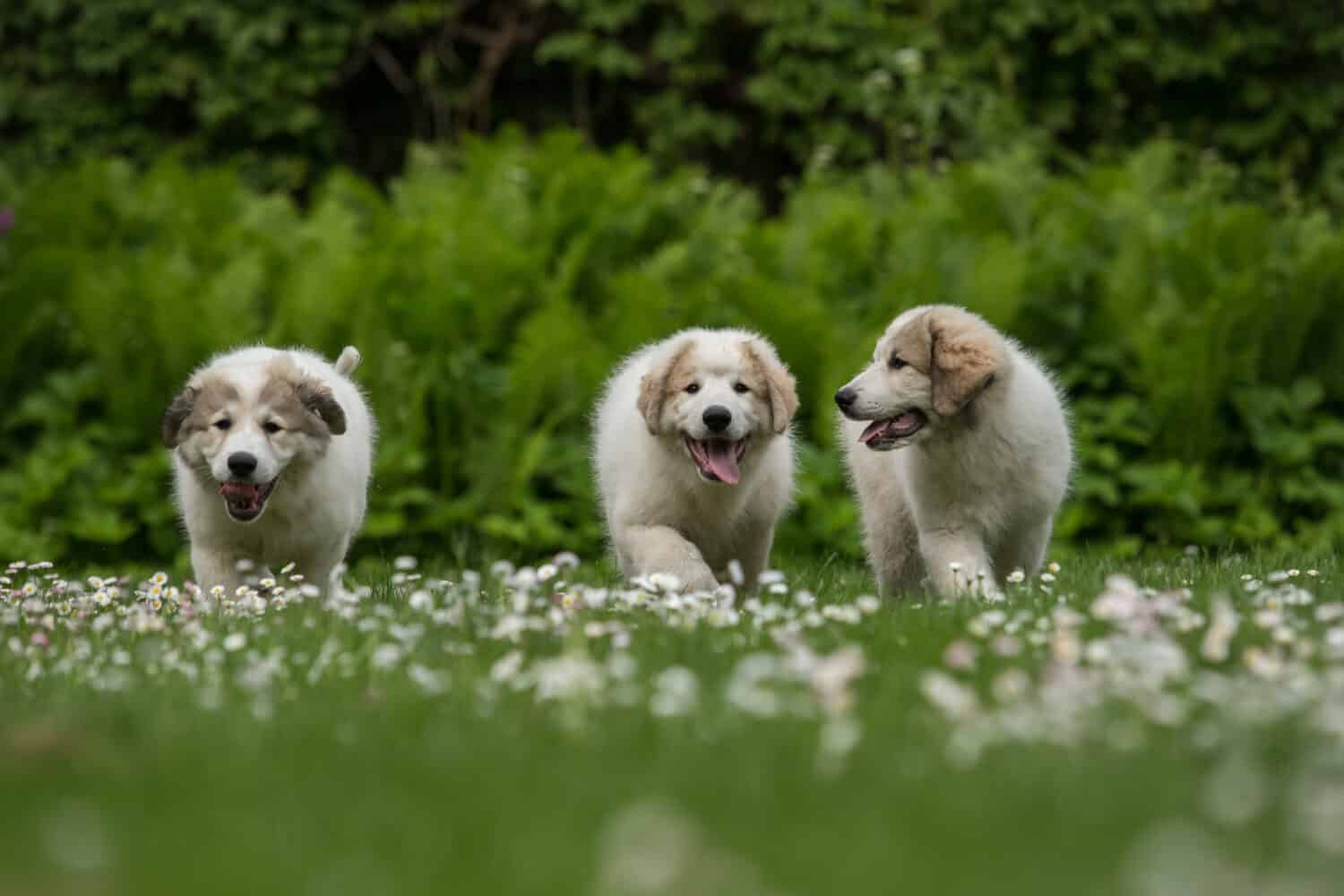
Badger markings are gray, tan, and sometimes black.
©DTeibe Photography/Shutterstock.com
White with Black Markings
According to the AKC and breed clubs, purebred Great Pyrenees should not have black markings or solid black coats. Dogs with such markings are generally considered to be mixed breeds or the result of crossbreeding with other livestock guardian breeds.
Do Great Pyrenees Dogs Change Color?
A Great Pyrenees’ coat color may change as it grows. Most markings commonly fade by around seven months of age. It’s rare to see an adult Great Pyrenees with dark markings.
If coat color is important to you, ask your breeder to see adult dogs from their line. They can show you photos of what the dogs looked like as puppies, and what they look like now. The parent dogs can also give you an indication of what your puppy may look like as an adult.
However, don’t shop with breeders who are too invested in coat color–health and temperament should always come first.