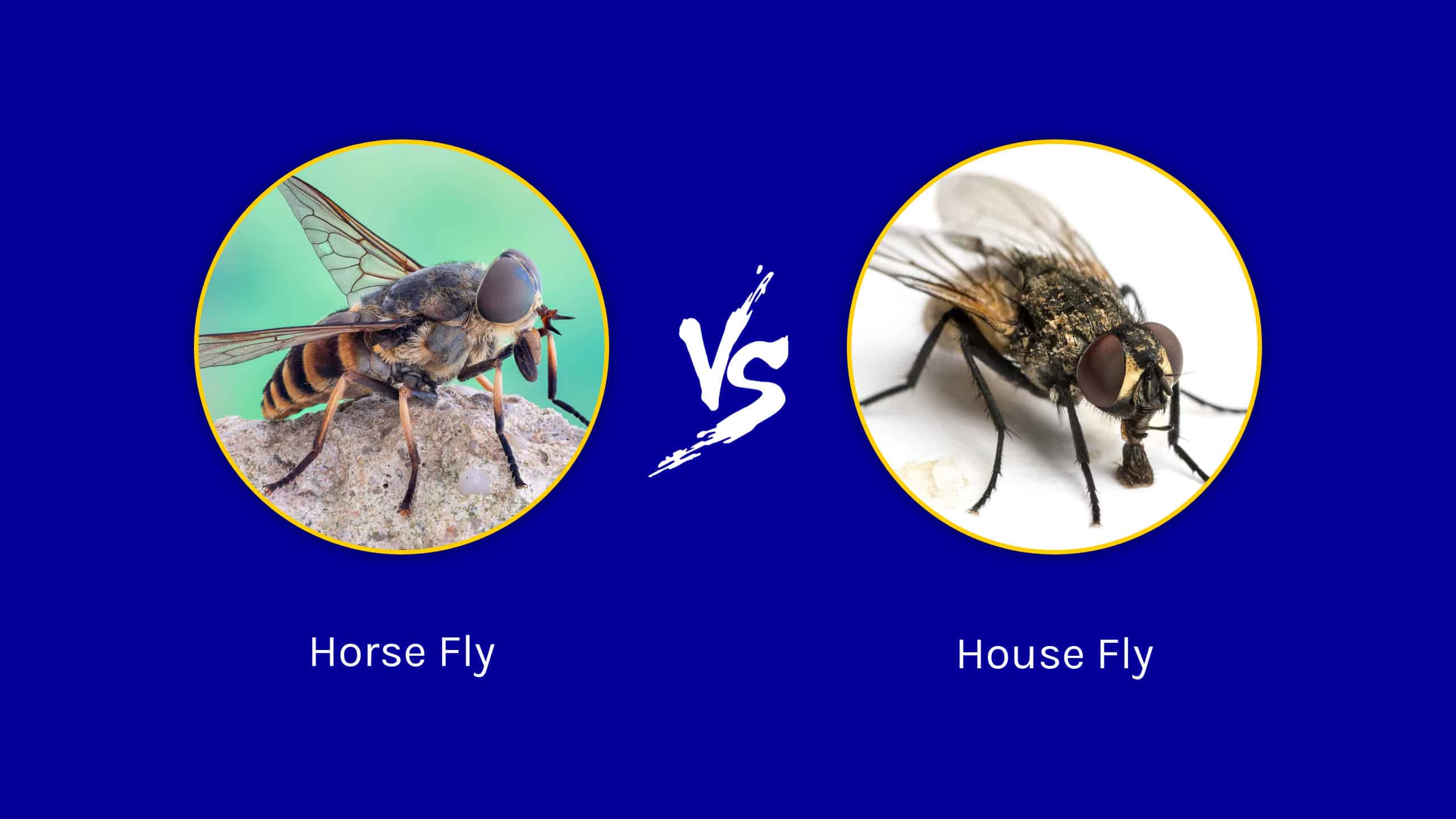

Horse flies (Tabanidae) and house flies (Musca domestica) are true flies in the order Diptera, which includes insects such as mosquitoes, midges, gnats, and fruit flies. These insects are characterized by their single pair of functional wings and club-shaped halteres, a modified second pair of wings that function as sensory flight stabilizers and aid balance. Both horse flies and house flies undergo a life cycle of egg, larva (maggot), pupa, and adult. However, these two common pests differ significantly. Continue reading to discover the key differences between a horse fly and a house fly.
Horse Fly
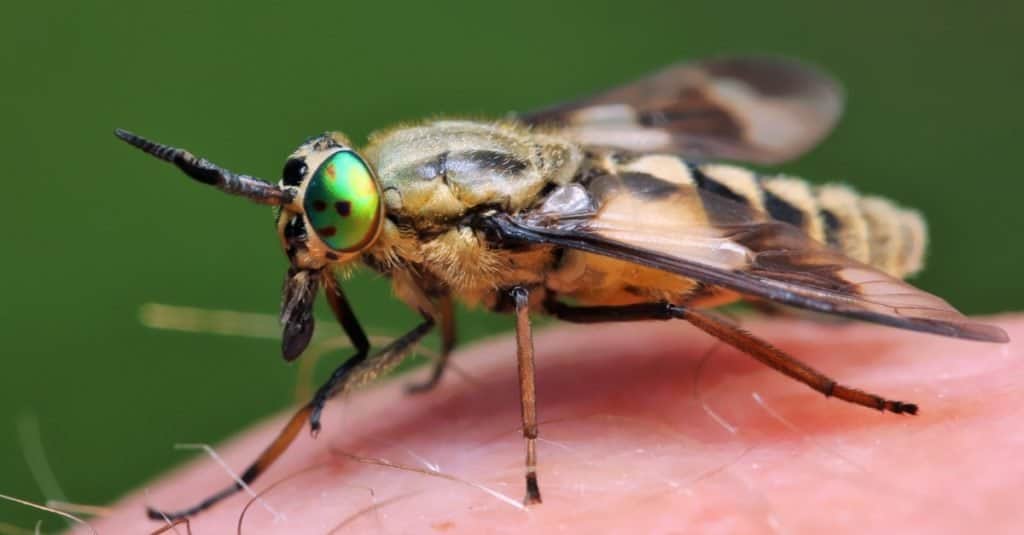
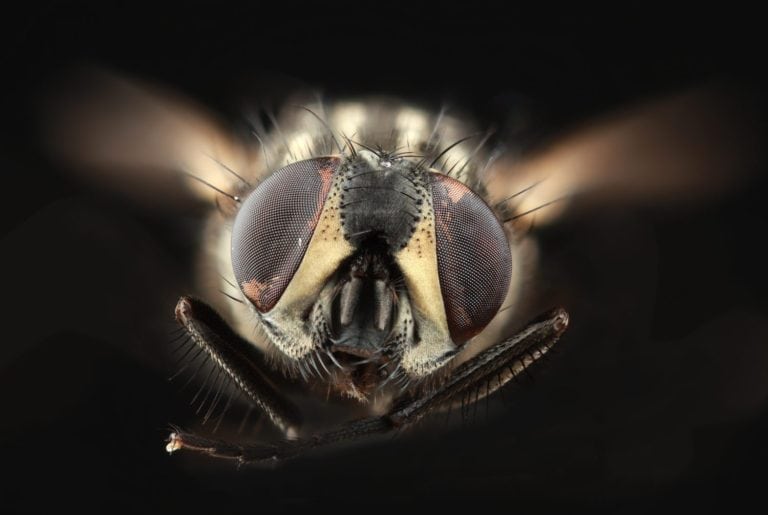
A horse fly has two large, separated compound eyes and sometimes three simple ocelli (small eyes) on its head, though these are less prominent.
©Achkin/Shutterstock.com
Horse flies are stout, large flies known for their big compound eyes. They are aggressive pests that are between 0.25 and 1.25 inches long. Some species, like the American horse fly (Tabanus americanus), are even larger.
Female horse flies require blood from a host to produce eggs, which is essential for their reproduction. Hosts can include horses and cows. However, they may also choose to feed on humans or pets.
Female horse flies have sharp, serrated mandibles that they use to cut through the skin and suck blood. This causes a sudden, intense pain that has been described as a burning or stabbing sensation. The pain typically lasts for several minutes to hours after the bite. In some cases, it can also cause swelling, redness, and itching. Male horse flies don’t bite and feed on a diet of plant sap and nectar.
Although the entire life cycle from egg to adult can take one to three years, an adult horse fly typically lives for 30 to 60 days.
Horse flies are found in a variety of different environments, including wooded areas and along streams. These flies zip about quickly and are known mechanical vectors for several animal diseases, including tularemia and anthrax, though transmission to humans is rare compared to other vectors such as ticks.
House Fly
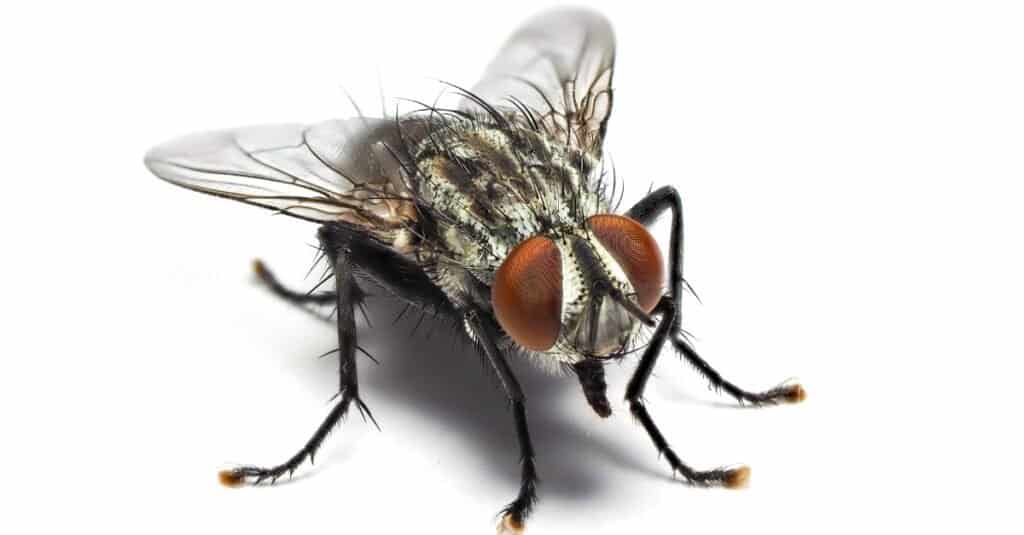
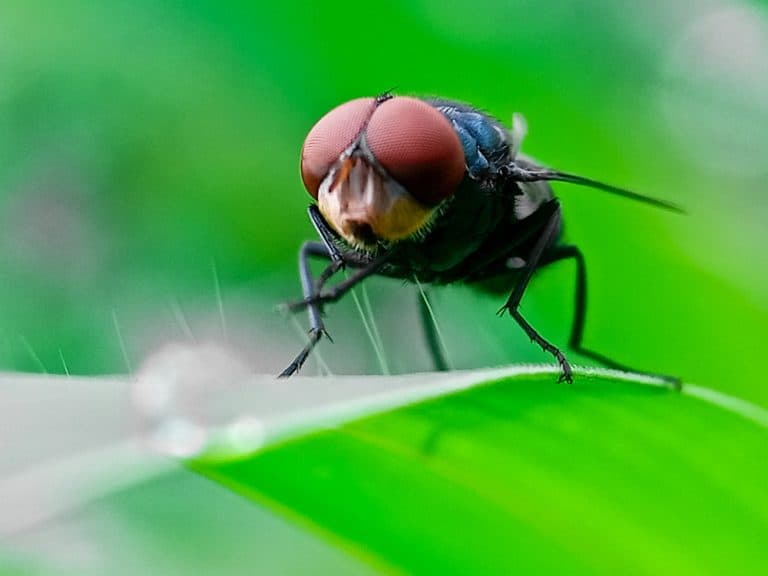
A house fly has a total of five eyes: two large, multifaceted compound eyes that provide a wide field of vision and detect movement, and three smaller, simple eyes that are sensitive to changes in light.
©iStock.com/Pattra Jayasvasti
House flies are approximately 0.25 inches long, and females are typically larger than males. They are dull, grayish-black, with four dark stripes on their thorax and two clear wings. House flies are attracted to human food and animal feces and are considered pests because they can transmit diseases by contaminating food and surfaces.
House flies do not bite. They feed by sponging up liquids with their soft mouthparts and lack teeth or a stinger. However, they can transmit diseases and bacteria from the garbage and sewage they land on, potentially making humans or pets sick.
The lifespan of an adult house fly is 15 to 30 days, although this can vary significantly based on temperature, food availability, and other environmental factors. The house fly’s full life cycle, from egg to adult, can be completed in as little as 7 to 10 days under optimal conditions, but can take up to two months in less favorable circumstances.
Horse Fly vs. House Fly: 5 Key Differences
| Horse Fly | House Fly | |
|---|---|---|
| Size | 0.25-1.25 inches | 0.25 inches |
| Diet | Males: nectar and pollen Females: blood from mammals | Houseflies eat liquid and semi-liquid substances, such as rotting food, garbage, fecal matter, and other decaying organic matter. |
| Behavior | Aggressive biters | Active during the day (diurnal) and rest at night |
| Appearance | Solid wings and brightly colored eyes | Dull gray with four dark stripes |
| Life Span | 30 to 60 days | 15 to 30 days |