
Quick Take
- Bombardier beetles defend themselves by spraying boiling, toxic chemicals up to 212°F at predators.
- They can survive being eaten and force predators like toads to spit them out.
- Their explosive spray is created by mixing chemicals in a specialized abdominal chamber.
- These beetles can aim their attack and fire rapid bursts—up to 500 per second—for precision defense.
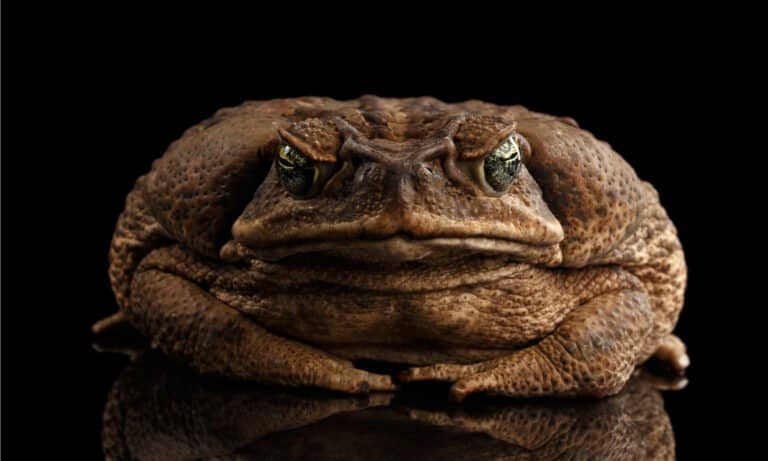
The unfortunate frog or toad that accidentally mistakes a bombardier beetle for a tasty snack will find itself sorry. This unique beetle has the remarkable ability to spew a boiling-hot acid at its enemies. It will even release this deadly substance after it’s been gobbled up and is inside the mouth of the predator. You can watch this beetle in action on a YouTube short from BBC Earth as the harmful liquid causes a toad to spit the insect out of its mouth, completely unharmed.
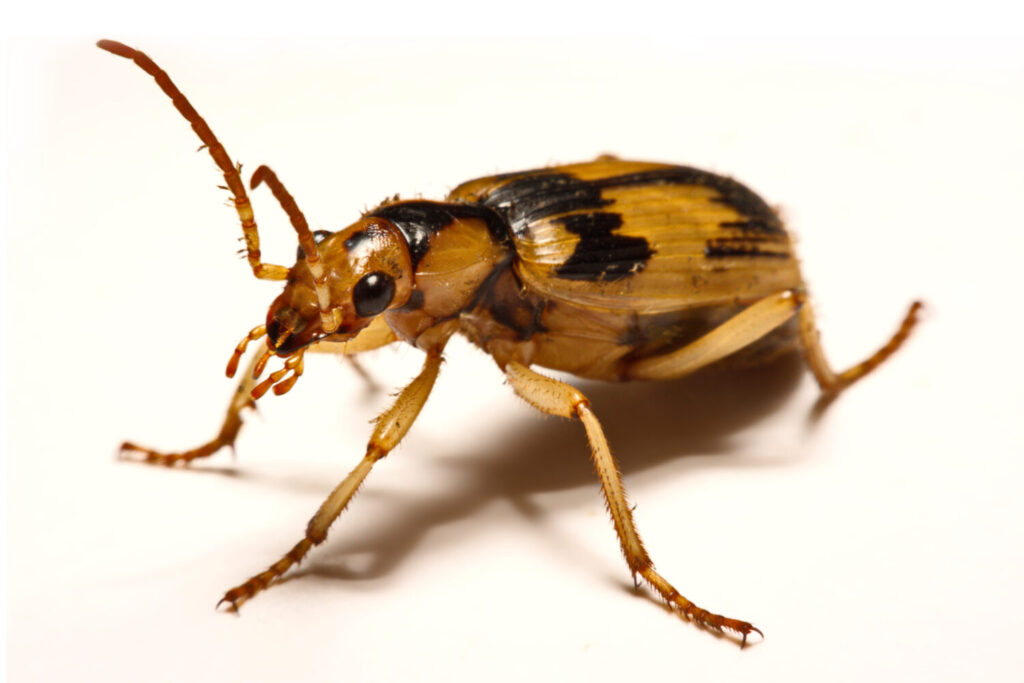
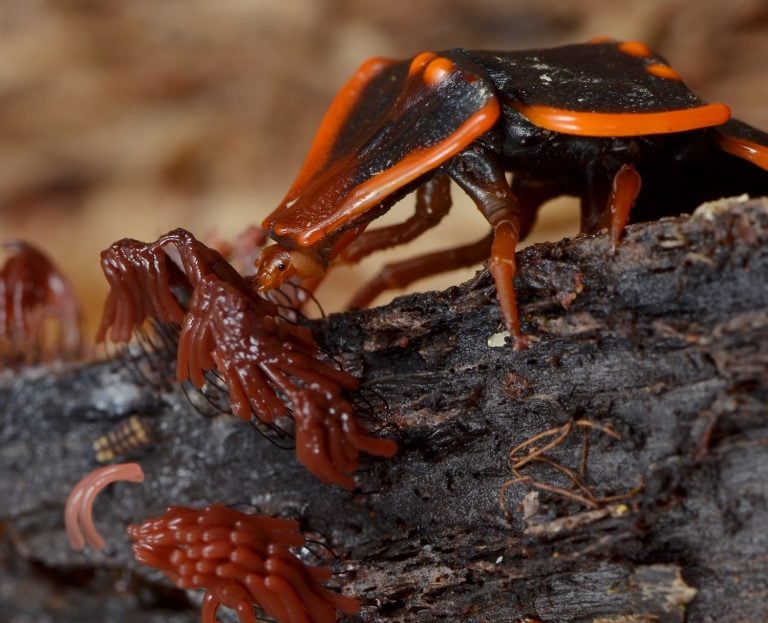
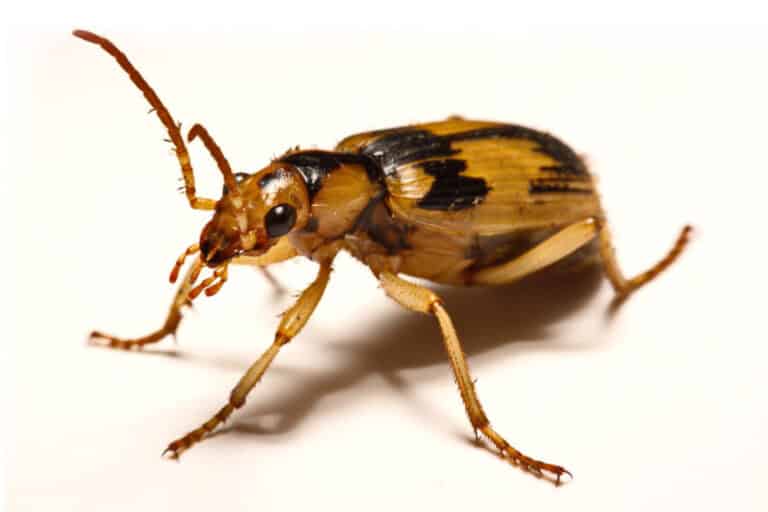
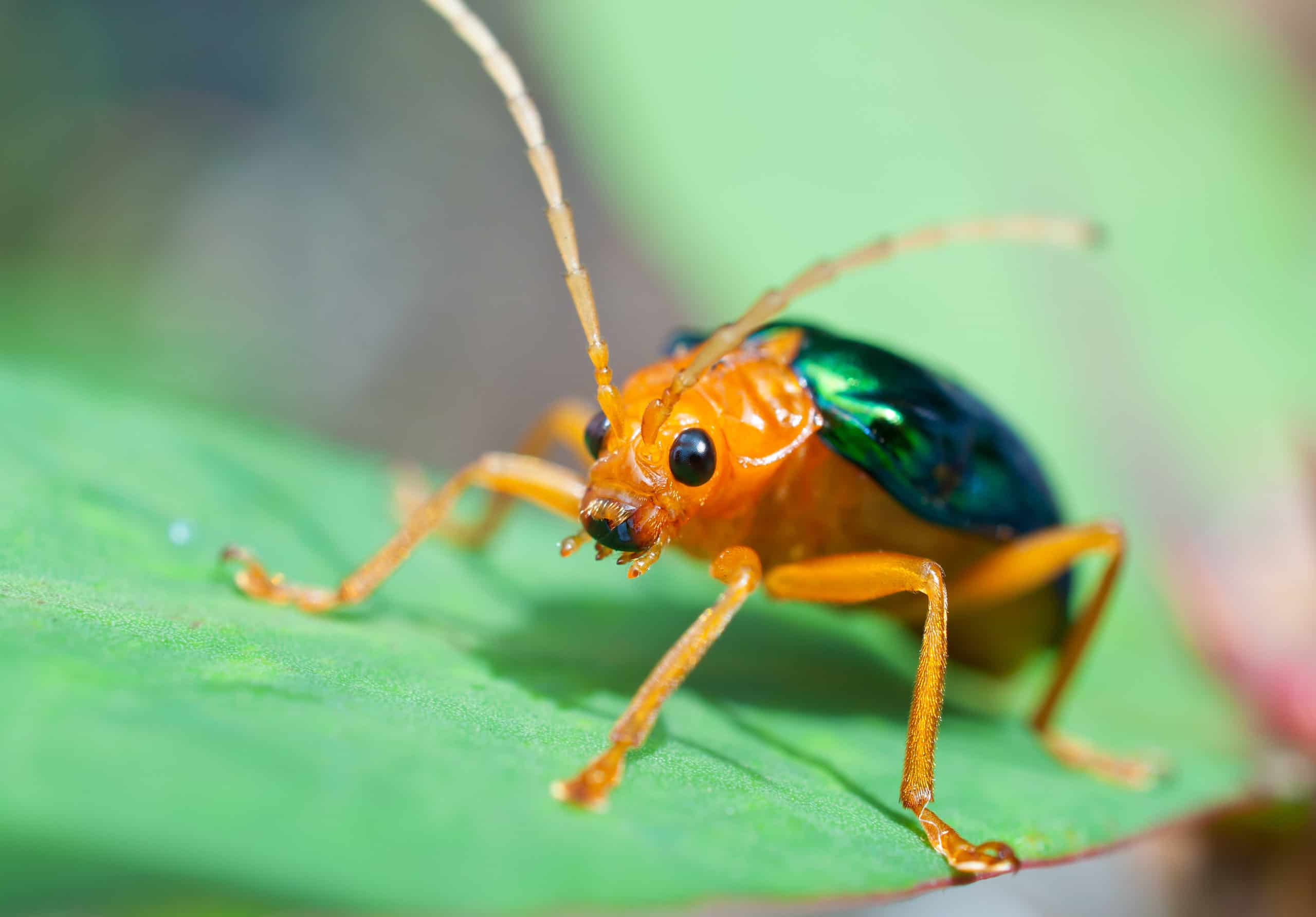
Bombardier beetles have developed a fascinating defense mechanism.
©KASIRA SUDA/Shutterstock.com
What is a Bombardier Beetle?
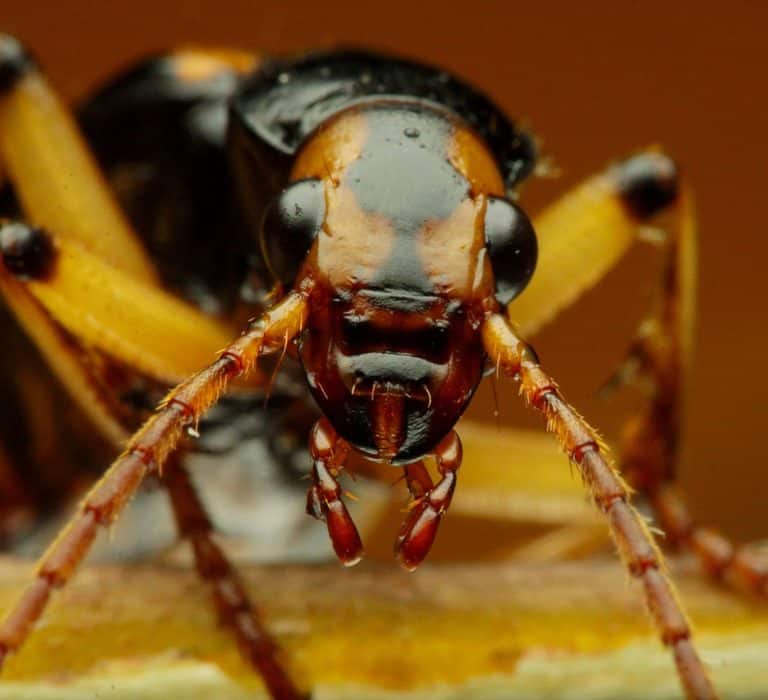
Bombardier beetles are ground beetles in the subfamilies called Brachininae and Paussinae. There are over 500 different species of bombardier beetles worldwide, and over 40 species are found in the U.S. Bombardier beetles typically live in cool climates within grasslands or forests and near streams and lakes in the Western U.S., including California. These small insects (most are around 1/2″ long or less) are nocturnal and hide under rocks and logs during the day.
Many species of bombardier beetles can fly, but their wings stay tucked underneath hard protective shells and must be unfurled first. Although they can’t flee quickly from predators by flying away, they have a different, and deadly, defense mechanism.
Boiling Acid: A Deadly Defense
When a bombardier beetle is threatened, it will release a stinging liquid from its rear end. The substance can emerge as a slow and steady stream or in rapid bursts. This noxious chemical weapon kills small insects and harms larger predators such as frogs. The emissions are irritating to the predator’s eyes and respiratory system, temporarily incapacitating them, and giving the beetle plenty of time to flee the danger.
How does it work?
The chemical emissions are a combination of hydroquinone and hydrogen peroxide. Bombardier beetles have two specialized storage chambers in their abdomen: one chamber stores hydroquinone, and the other stores hydrogen peroxide. When the beetle feels danger and releases the chemicals, the substances pass through valves in its body and into a special chamber where the chemicals combine with an enzyme that causes a reaction. Next, the beetle releases its caustic substance, which creates expanding gases that also give off heat. With an audible pop or buzzing sound, the concoction is released at temperatures up to 212 degrees Fahrenheit!
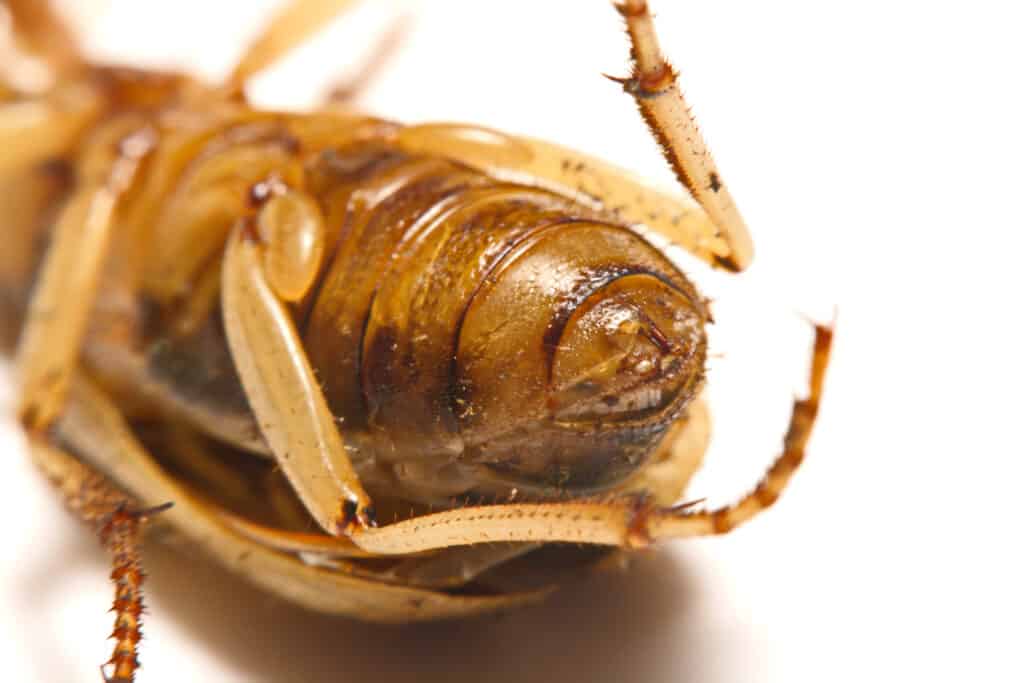
Bombardier beetles eject a corrosive chemical spray from their abdomens when they are threatened.
©KASIRA SUDA/Shutterstock.com
The beetles do more than merely release the chemicals into the air; they rotate their abdomens up to 270 degrees, pointing and aiming with remarkable accuracy. Bombardier beetles have been observed to open and close their valves repeatedly and rapidly, up to 500 bursts in one second. With precision and speed, the beetle fires its weapon at any oncoming predator, giving itself the perfect defense.
One study found that bombardier beetles escaped alive after being eaten by toads 43% of the time. Even more fascinating, the beetles that survived stayed inside the toad’s stomach anywhere from 12 to 107 minutes! Scientists speculate that the beetles may have developed an evolutionary ability to survive the toad’s gastric juices.
Charles Darwin’s Unfortunate Encounter with a Bombardier Beetle
Naturalist Charles Darwin described an encounter he had with a bombardier beetle in a letter to a fellow naturalist, Leonard Jenyns. In the letter, Darwin said, “I must tell you what happened to me on the banks of the Cam in my early entomological days; under a piece of bark I found two carabi (I forget which) and caught one in each hand, when lo and behold I saw a sacred Panagaeus cruxmajor; I could not bear to give up either of my Carabi, and to lose Panagaeus was out of the question, so that in despair I gently seized one of the Carabi between my teeth, when to my unspeakable disgust & pain the little inconsiderate beast squirted his acid down my throat and I lost both Carabi and Panagaeus!“
What Do Bombardier Beetles Eat?
The beetles are carnivorous predators, mainly eating small insects. They are opportunistic feeders and also act as scavengers. Like other scavengers, they help recycle nutrients in the ecosystem by eating decomposing vegetation.
The Life Cycle of the Bombardier Beetle
Bombardier beetles mate during the spring and summer when the male deposits his sperm package into the female’s reproductive tract. The females lay fertilized eggs in decaying vegetation where their larvae hatch. The larvae undergo several molts before reaching the pupal stage. They emerge from this stage with their adult features, including wings.