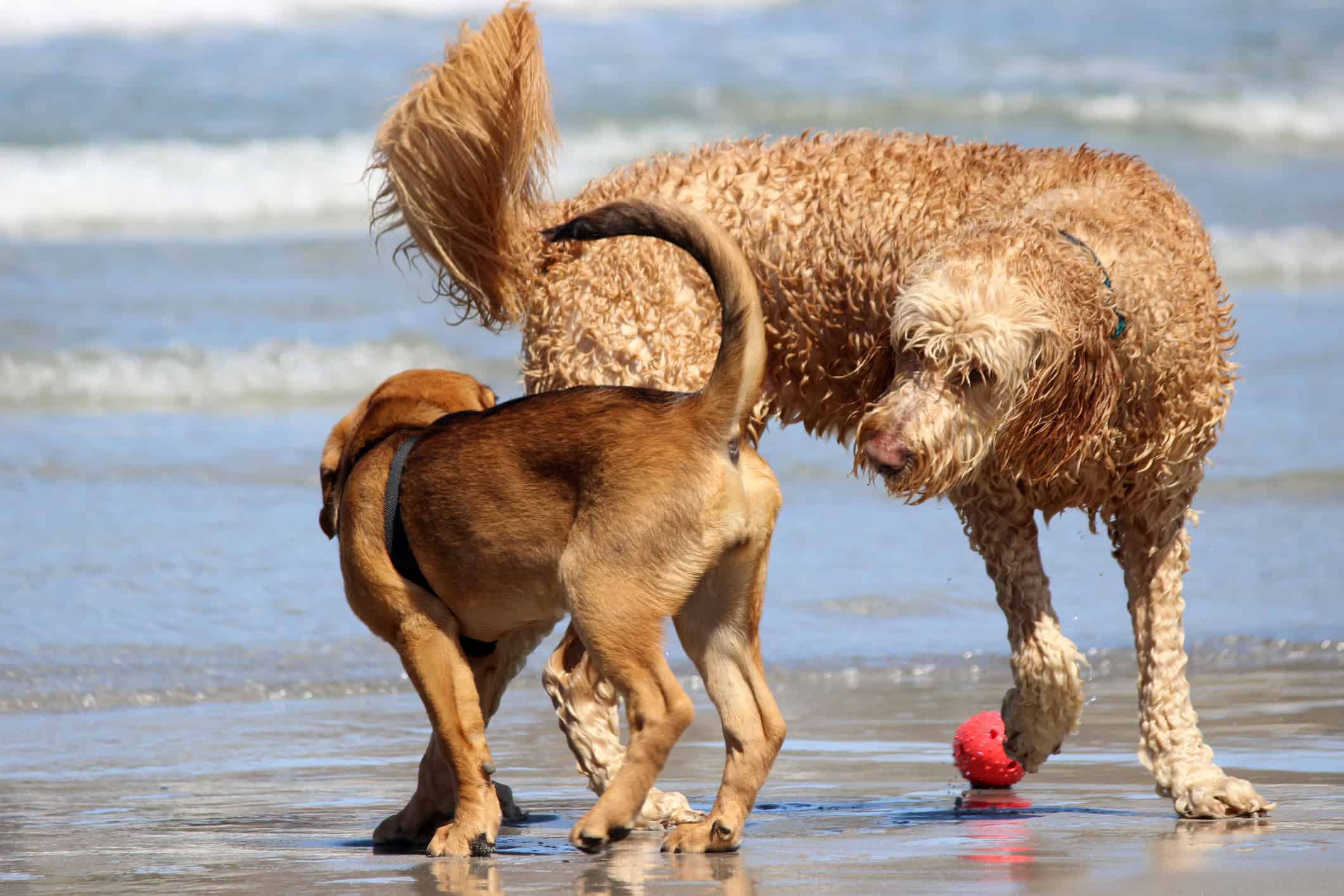

Chances are, your dog makes it obvious when they are telling you something. Perhaps they stand by the door, a signal to go potty. Or they stare at you intently while you’re eating in hopes that you’ll give up a table scrap. You may know what your dog is communicating to you. But have you ever wondered how dogs communicate with each other to explain their needs and feelings? Humans primarily connect verbally. But dogs use multiple methods to communicate with each other that go beyond barks and whines. They rely heavily on visual and behavioral cues to get their message across.
Visual Communication
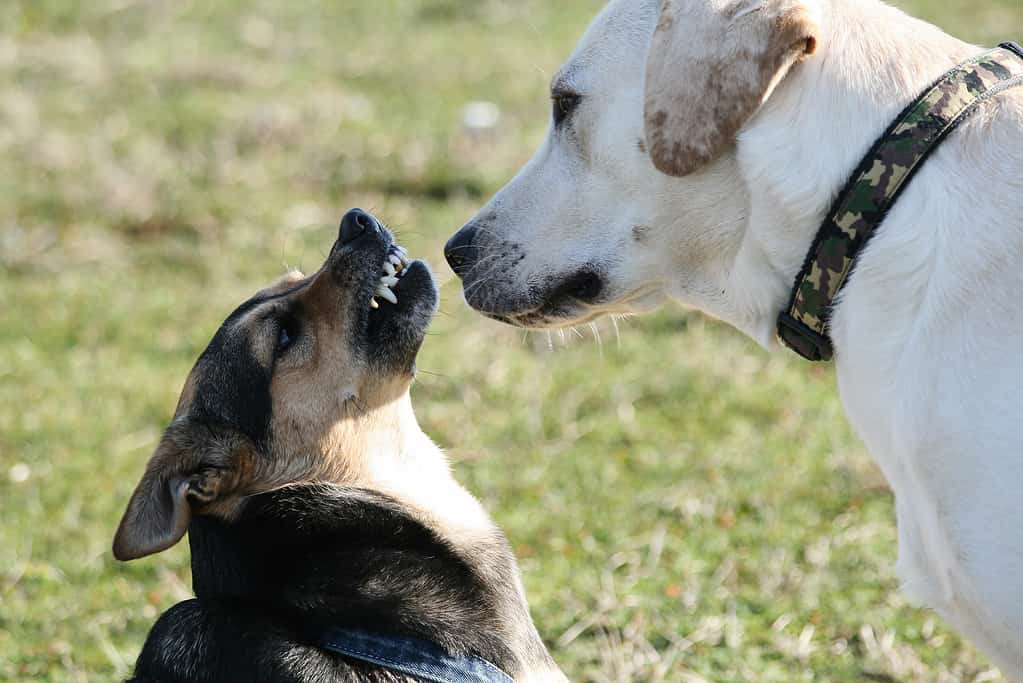
This dog’s wrinkled muzzle and front teeth on display show it needs some space from the other dog.
©Davide Zanin/iStock via Getty Images
Dogs use their facial expressions, mouth position, and even body posture to express themselves. These are some common examples.
Slightly Open Mouth: A calm, happy dog usually has a slightly open mouth with corners upturned. It looks like they’re smiling. Additionally, a dog that’s in a relaxed state has normal-sized eyes, neither opened too wide nor squinty. Ears and tail are in a neutral position, not too rigid, high, or low.
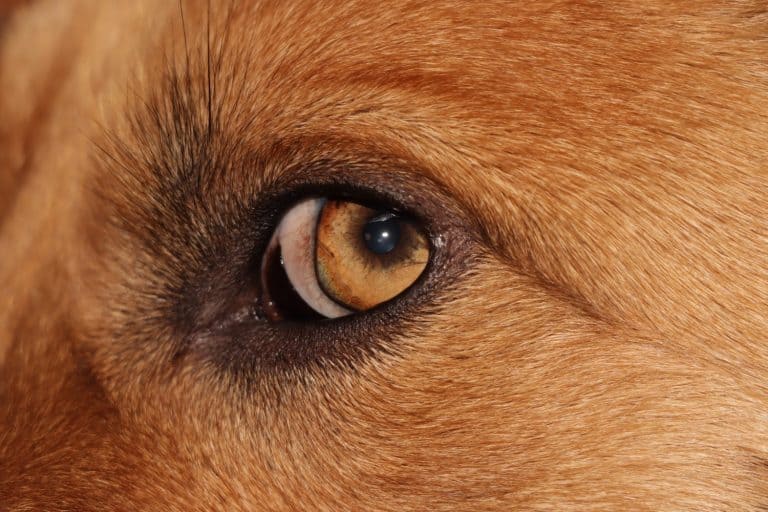
Whale Eye: You may have heard of “whale eye”, where the whites of a dog’s eyes show prominently. This is often an indication of anxiousness or fear. A dog with eyes like this is uncomfortable. They’ll also usually have their lips and ears pulled back. The dog’s head and neck may hang a little lower, almost like they’re cowering. They are trying to make themselves look smaller to avoid the situation that is scaring them.
Stiff Body: A dog who is acting aggressively will freeze their body. They will display their front teeth and wrinkle the top of their muzzle. Additionally, the hair on their necks may stick up, and their ears may either be flat on their head or sticking straight up. They may stare down the subject of their aggression.
Tightly Tucked Tail: A tail that’s held tucked under the dog’s stomach is a signal that the dog is uncomfortable with the situation. They are feeling stressed when in this position.
Behavioral Communication

This dog demonstrates a play bow, commonly performed as an invitation to have fun with another dog.
©iStock.com/MirasWonderland
Dogs use their bodies to convey a number of different messages. Here are some of the more well-known communication signals you might notice dogs doing with other dogs.
Yawning: This doesn’t just mean your pup is tired. When they yawn around other dogs, it’s a sign they are feeling a bit stressed out or anxious. They also can be showing another dog a passive signal. If the other dog is particularly intense, yawning is a way to show they want to avoid conflict.
Licking Lips: Of course, a dog may lick its lips after eating something yummy, but with another dog, chances are he’s uncomfortable. He is likely trying to appease the other dog.
Wagging Tail: It’s amazing how many things a wagging tail means. The tail is a language all in itself and can be quite complex. In general, a happy, calm dog wags in a relaxed, circular manner. A tail that’s wagging very fast shows overarousal and excitement. The dog also might be tense, so watch out as it’s possible a fight may ensue. When a dog’s tail is very low and wagging slowly, it’s a sign of submission or nervousness.
The direction that the dog’s tail wags may also mean different things. Recent research suggests that when a dog’s tail wags more to the right, it is generally a sign of happiness or relaxation, while wags that are more to the left may indicate nervousness or unease.
Play Bow: You’ve probably seen a dog bowing to another dog with their butt in the air and front paws down. This is a clear invitation to the other dog to play. It also may be a way to say “I’m sorry” if the dog was playing a little bit too rough for the other dog’s liking.
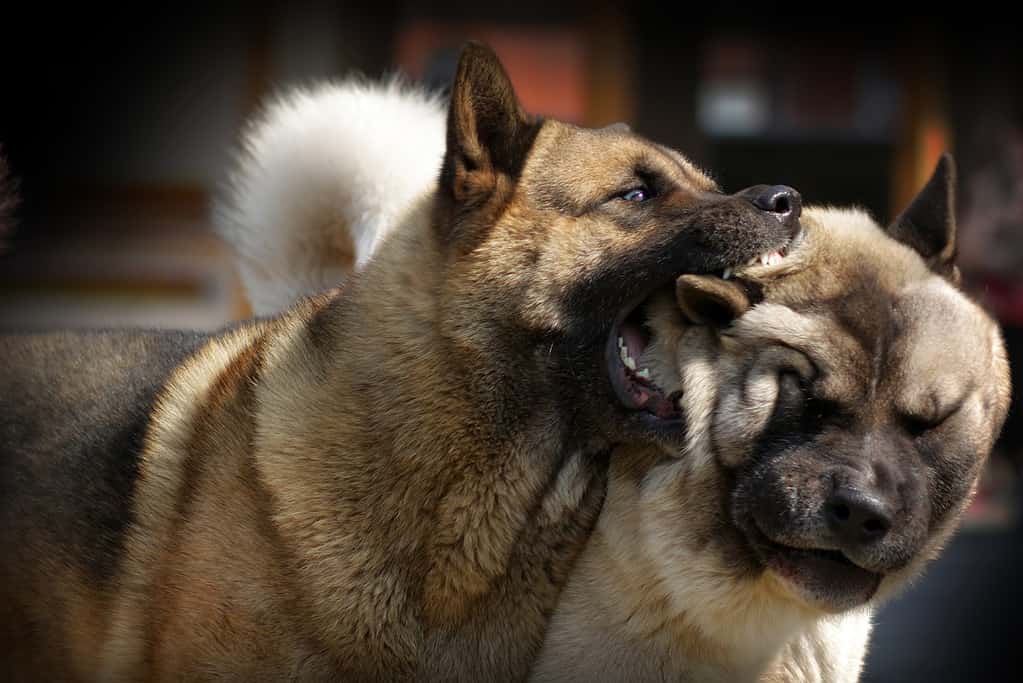
This dog is biting his friend in play — notice how his face and ears don’t look particularly tense or tight, a sign of aggressiveness.
©Garosha/iStock via Getty Images
Biting: When a dog nips another dog around the ankles, or even gently bites each other’s faces, it’s a sign of play. It’s typical for dogs who are familiar with each other to socialize and have fun this way.
Rolling on Back: When a dog rolls on its back in front of another dog, they are showing that they aren’t a threat. It’s a sign of submission and that they aren’t going to do anything to the other dog.
Sniffing: Dogs sniffing each other is much more complex than just saying “hi” to each other. When they sniff, they learn details about the other dog. The smells emanating from another dog’s nose or rear end give out pertinent information, such as the dog’s health, personality, and even what they had to eat that day.
Verbal Communication
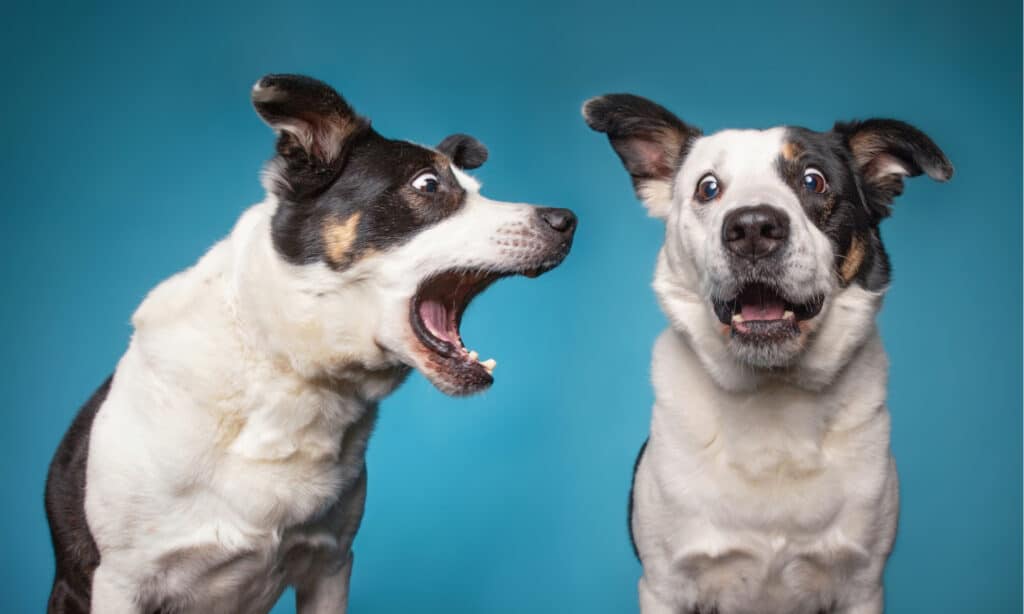
This Border Collie is likely barking at his friend in an invitation to play.
©Annette Shaff/Shutterstock.com
Dogs understand various messages in barks from other dogs. They know the difference between the noises. Barks can have different contexts in different scenarios. Even the pitch can mean something. These are some examples.
High Bark: An intentionally high-pitched bark is an invitation to play. It’s the dog saying to another dog that they are happy and friendly, and would like to have some fun. Frequent high-pitched barks indicate excitement.
Low-Pitched Growl: This is a sign to both humans and animals to steer clear. The dog may either be scared, hurt or just want to be left alone. A series of frequent deep barks may also mean the same thing: stay away.