
Quick Take
- A tiny ant outvenoms bees and snakes, and the reason why has everything to do with what the venom specifically evolved to target. See how the venom evolved →
- The venom's chemistry is deceptively simple, yet it does something to your nervous system that keeps you in pain far longer than you'd expect. Explore the venom's chemistry →
- Getting stung once is often just the beginning. A built-in alarm system makes a single sting far more dangerous than it sounds. Understand the sting risk →
- Where on your body you're stung matters more than you think, and one common assumption about tougher skin could actually work in your favor. Check sting severity factors →
What the Maricopa harvester ant lacks in size, it makes up for in toxic venom. These tiny creatures pack a huge punch when it comes to venom potency. In this article, we will explain why Maricopa harvester ants surpass some larger venom-producing animals, such as bees and snakes, in venom potency. We will also discuss why you should avoid being stung by a Maricopa harvester ant and what steps to take if you are.
All About Maricopa Harvester Ants
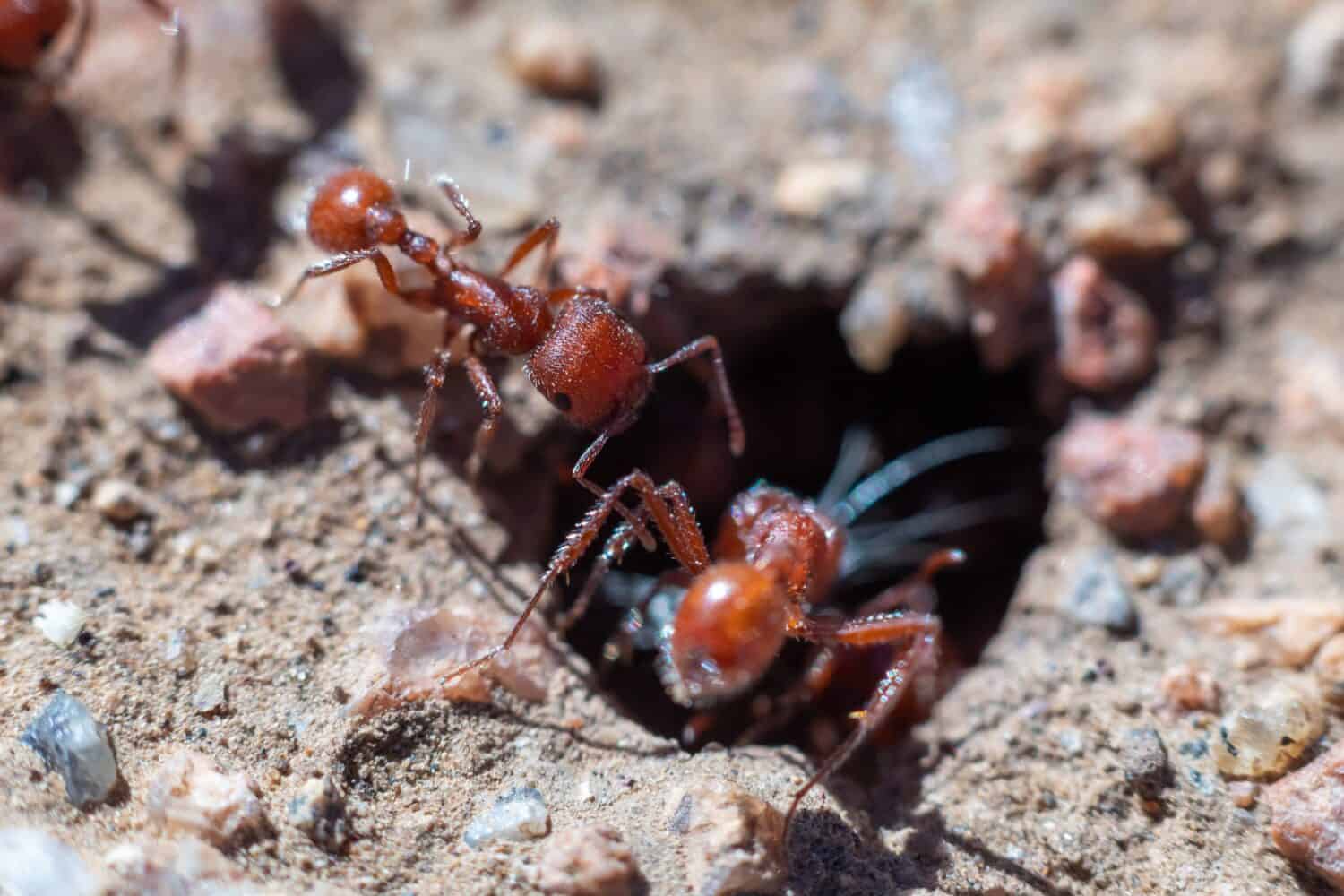
The Maricopa harvester ant (Pogonomyrmex Maricopa) is a common species of harvester ant. They are found in several US states, especially Arizona, but also in California, Colorado, and Texas. In Mexico, they are found in several regions, including Chihuahua and Durango. It’s one of the few ant species that can nest in loose sand, and some of their nests are exceptionally large, reaching several feet in depth. These ants forage as individuals for seeds and dead insects.
What is in Harvester Ant Venom?
Harvester ants have an impressive defining feature – their ability to produce a potent venom. The Maricopa harvester ant is an extreme example of this and has perfected the art of defensive venom chemistry. This ability is primarily used for defense rather than hunting prey, although it may occasionally assist in capturing insects.
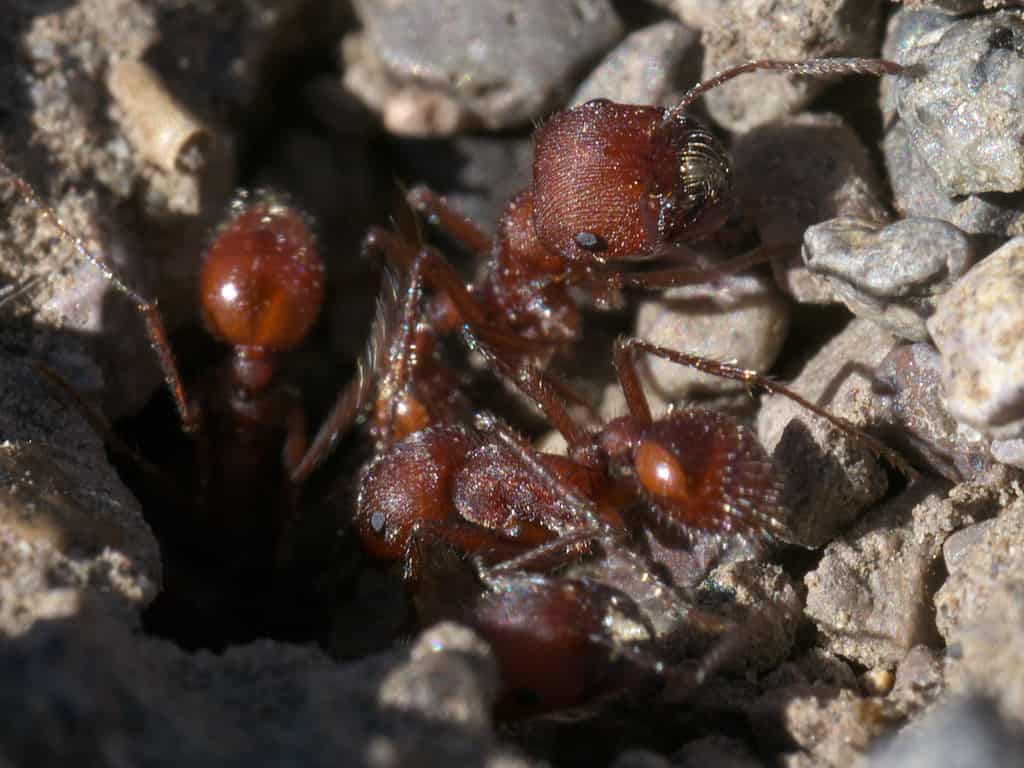
Harvester ants use venom mainly for defense.
The venom is produced by adult female workers only and is considered among the most lethal insect venoms to mammals ever tested, based on studies primarily in mice.
Detailed analysis of the venom has shown that it contains both proteins and enzymes, but that the major active components are peptides. Even though the chemical composition of the venom is relatively simple, it causes intense and long-lasting pain. The peptides are hydrophobic, cysteine-free, and work by targeting mammalian voltage-gated sodium (NaV) channels. These channels are part of the cell communication system and play an essential role in stimulating electrically excitable cells such as neurons (nerve cells). The venom makes them easier to excite and inhibits channel inactivation.
Interestingly, the toxins seem to have evolved specifically to deter vertebrates. That may explain why they are so painful for humans!
How to Treat a Harvester Ant Sting
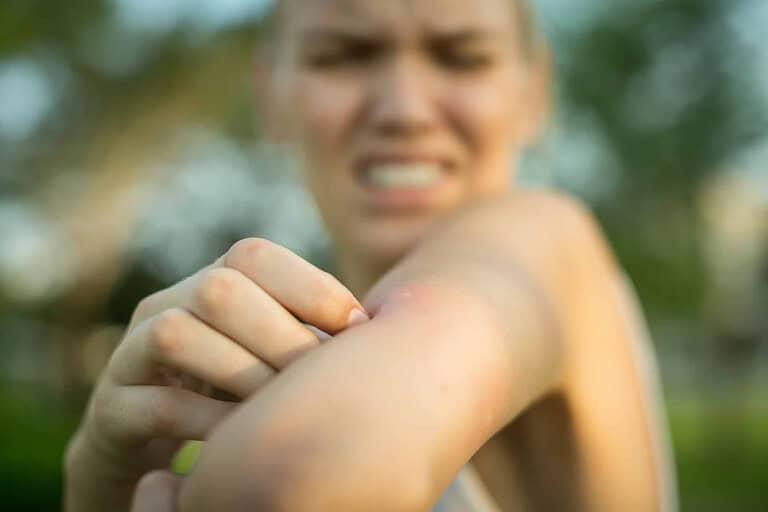
The pain caused by a harvester ant sting will depend on the venom load and where on your body you are stung. These ants find it hard to sting through tough skin, so if you have callused fingers or heels, they may not be able to get their sting through. If they sting you on a sensitive area, however, it can be excruciating. The pain typically peaks within 20 to 30 minutes but can persist for several hours. You may also experience redness, swelling, goosebumps, and sweating. Harvester ant venom can spread through lymphatic vessels and potentially cause serious medical complications. Additionally, when an ant stings, it releases a pheromone message that attracts other ants, which may also rush to the area and begin stinging. Multiple stings are common.
If the person who has been stung is very young, very old, has a health condition, or has allergies, seek medical help immediately. Otherwise, you can treat the sting yourself by washing the wound with soap and water.
Next, apply a topical cream containing antihistamines, corticosteroids, benzocaine, or menthol. You can also use a pain reliever if needed. Some people suffer severe allergic reactions, so seek medical attention if there are any signs of this. The signs can include sneezing, wheezing, hives, nausea, vomiting, diarrhea, difficulty breathing, chest tightness, and itching or swelling of the eyes, lips, or other areas of the face.