
Ants may not be the biggest insects in the world, but they sure can create an aggravating bite on the bottom of your foot or invade your backyard space, seemingly overnight. For most, the ant types in North Carolina are all the same—aggravating and invasive.
Ants are invasive in more ways than one. When food is left out, ants seem to zero in on it like a laser, regardless of where the food is. If it’s in your house, they will create a trail of ants from the crack of a window to the other side of the living room. They’ll find food in your car, making their way up your tires and through the seals on the door.
If you are big on lawn maintenance, you know how aggravating ants can be. They seem to be able to generate massive ant mounds all over the yard, and they are very expedient at it. There are a lot of ant types in North Carolina, but there are roughly seven that you should be concerned about each year.
1. Odorous House Ants
With a preference for home invasion and the foul odor they happily emit if you step on them, you can’t win with odorous house ants.
©Dhe Tong/Shutterstock.com
Odorous house ants are the kinds of ants that get you no matter what you do. Not only do they have a preference for home invasions, but they also emit a foul odor when stepped on. In other words, it’s a good idea to come up with another form of pest control.
These ants are generally dark brown to completely black and grow to no more than 1/8″. They have long legs, and each antenna has 12 segmentations. The smell from their inner fluids is said to resemble blue cheese or a variety of rotten fruits.
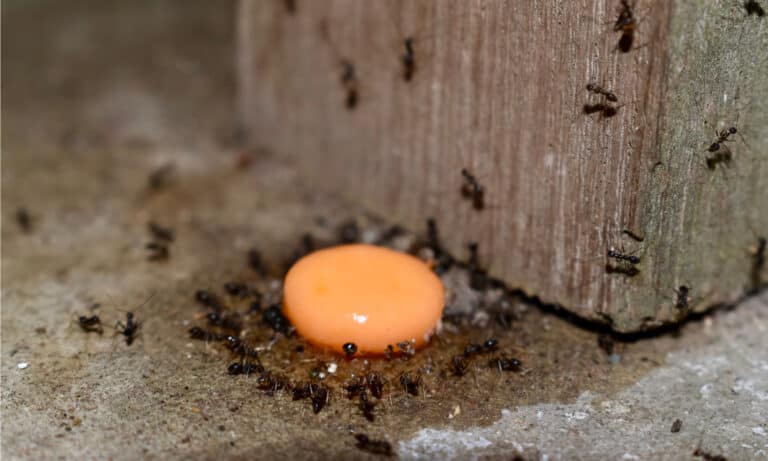
Sugar is their weakness. Although they will line up for just about any kind of food left out on the table, they will go crazy for sugar or anything with sugar in it. Within the home, they tend to build their nests inside the walls, in the attic, or beneath loose flooring. Odorous ants typically come out in the spring and summer months.
2. Carpenter Ants
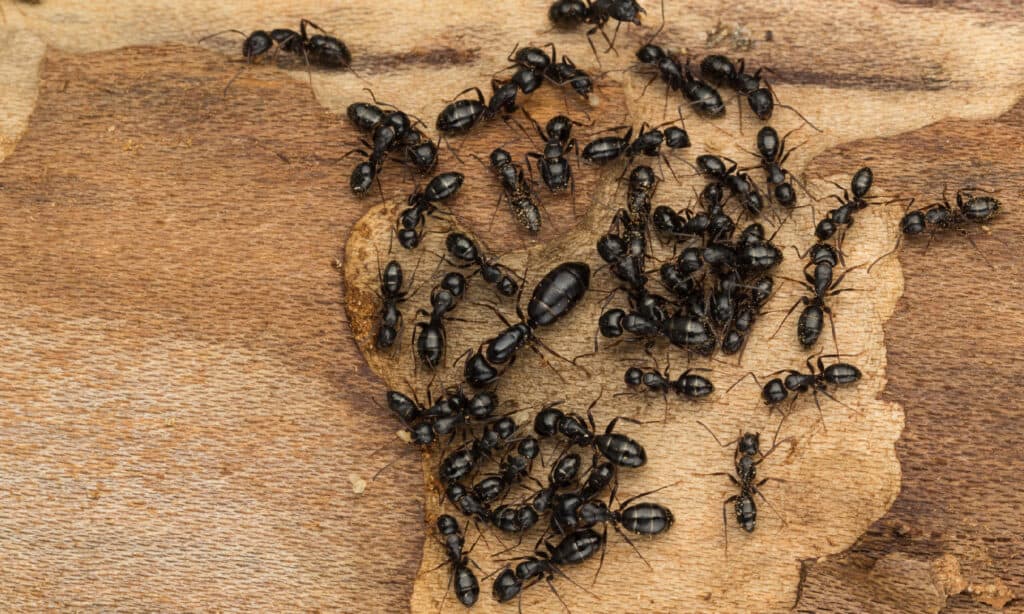
Since they establish satellite nests around a central, primary nest, carpenter ants can be quite a nuisance.
©iStock.com/DianaLynne
Carpenter ants are one of the largest ant types in North Carolina. They’re also some of the most destructive. An adult carpenter ant will grow to anywhere between 3/8″ and 1/2″ long. The worker carpenter ant is often completely black, with a very narrow petiole separating the abdomen from the thorax.
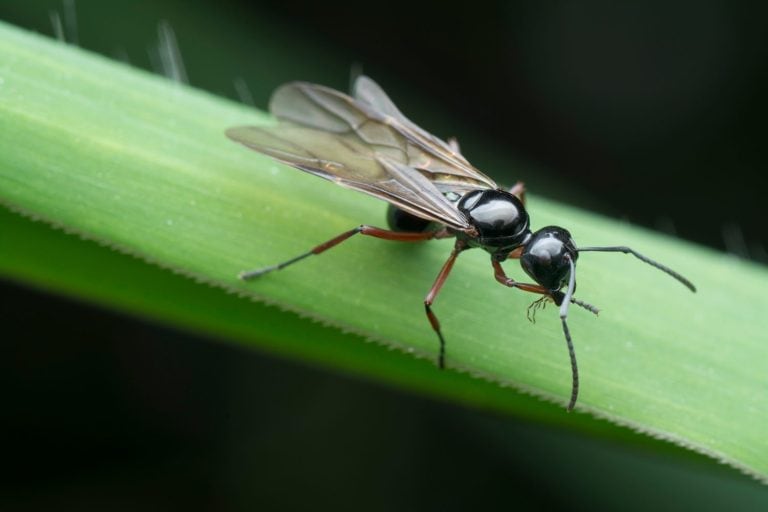
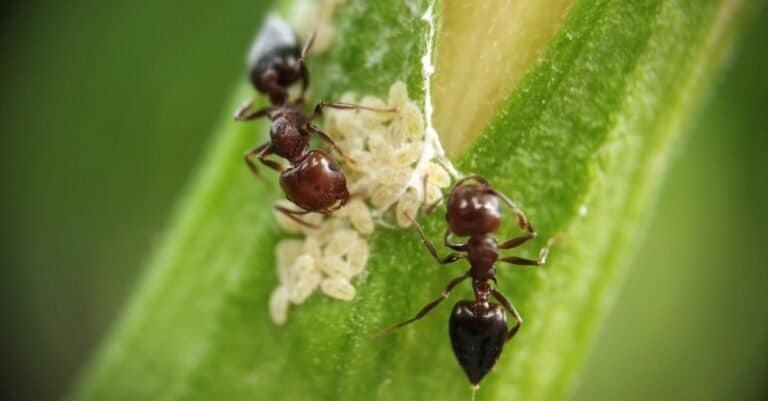
Winged females are larger than the workers and have translucent wings nearly the size of their bodies. Any source of protein or sugar will draw a carpenter ant into the area. Without human food, they feed on the liquids produced by aphids and a variety of other insects.
They are mostly nocturnal, though their feeding habits are subject to change according to circumstance. Carpenter ants are also known for establishing multiple, satellite nests around a central, primary nest. They mostly consume wood, which makes carpenter ants nearly as destructive as termites. Carpenter ants show up in March and April and usually stick around until late September.
3. Pavement Ants
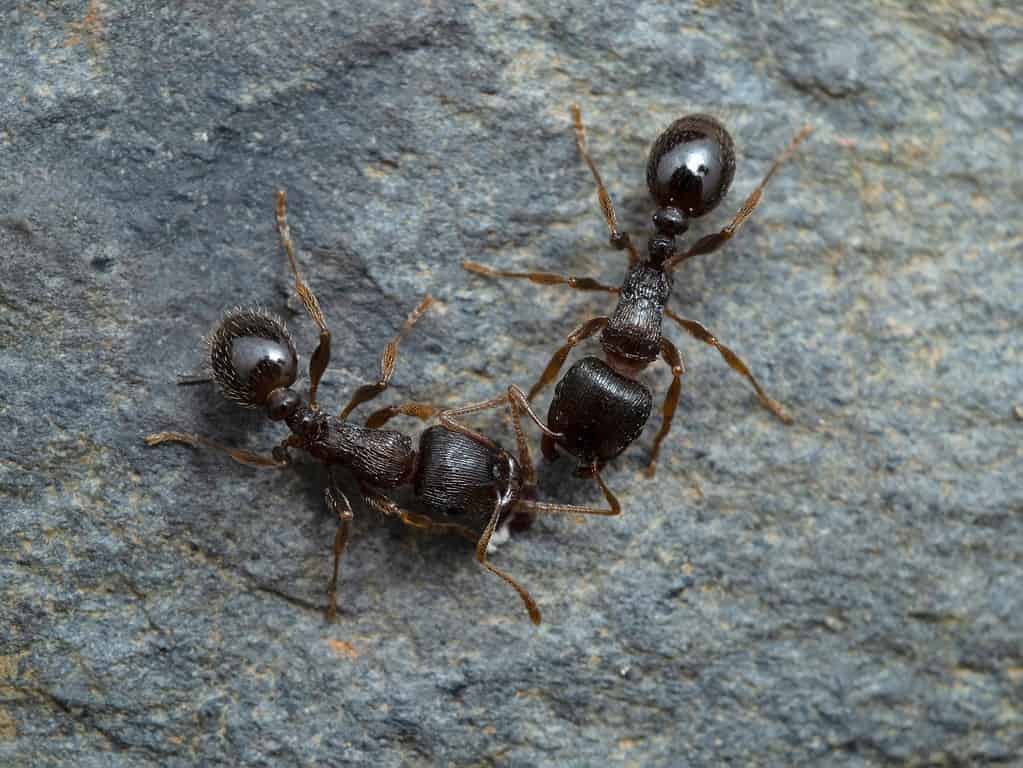
While they eat dead insects, sugary foods, meat, and bread are not beyond the pavement ants’ palate.
©Ernie Cooper/Shutterstock.com
Pavement ants are very small, dark brown, glossy, and have slightly hairy bodies. Their head is attached to the thorax with a very narrow section, and the thorax looks like it runs right into the abdomen. Pavement ants consume other, dead insects but are more than happy to go after sugary foods, meats, or bread.
As their name implies, pavement ants prefer to nest in the cracks of brick walls, concrete walls, or the cracks within concrete flooring. They’ll also nest inside the walls, barring any nearby brick or stone. Outside, they build their nests under rocks or in the cracks on sidewalks or other pavement.
Fortunately, pavement ants aren’t nearly as destructive as carpenter ants. However, they will quickly spoil any food you accidentally leave out. They’re quick to sniff out sugary foods and protein and will find their way to it quickly. For the most part, pavement ants are springtime ants. However, they can come out at any time of the year if warmth is nearby.
4. Argentine Ants
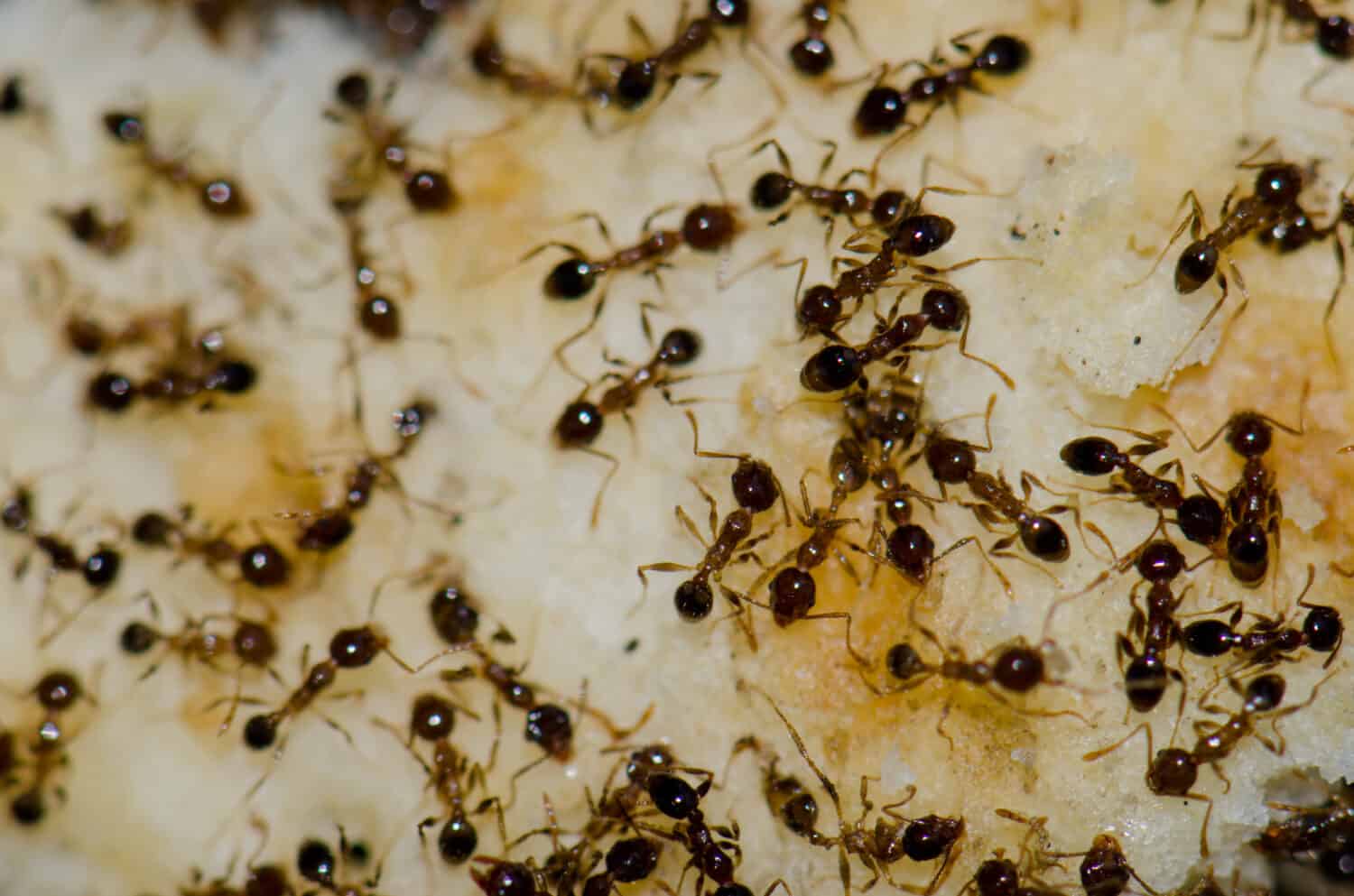
As one of the more notorious ant species in North Carolina, Argentine ants can be quite the thorn to residents of the Tar Heel State.
©Victor Suarez Naranjo/Shutterstock.com
Argentine ants, upon close inspection, highly resemble the form or shape of a typical wasp. They’re very dark to standard brown, with a glossy sheen. They have one of the most narrow waists of all the ants on this list, with a large abdomen and a head shaped like a popcorn kernel. They’re certainly the most notorious of the ant types in North Carolina.
They are also very invasive species. They will sniff out food quickly, though they don’t necessarily have a preference for one food over the other. Once they sniff out the food, they will line up in very extensive trails. For instance, they are known for running long trails from outside, up a tree, across a rooftop, through a bedroom window, and across the floor.
Argentine ants seek out water or moist and humid areas where they can build their nests in a safe and protected environment. Because of this, once an infestation is spotted, it’s often too late to tackle it in a DIY pest control operation. Argentines are active all year but they only enter homes in the winter, returning to their outside nests in the late spring.
5. Fire Ants
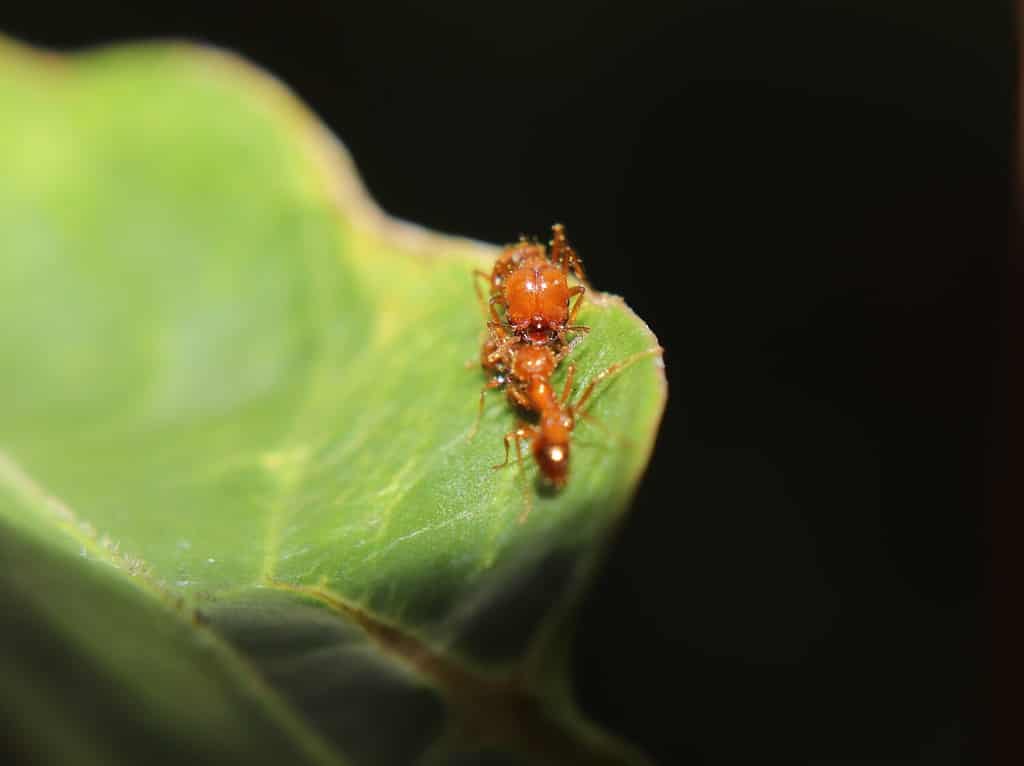
As recognizable as fire ants are, you’ll know when you encounter one.
©Dalzon/Shutterstock.com
One of the most instantly recognizable and infamous of the ant kingdom is the humble fire ant. They are reddish, but it’s light red and semi-translucent towards the head. The abdomen is generally darker, and reddish-brown. They have long legs and tiny, yellow bands wrapping around the perimeter of the abdomen.
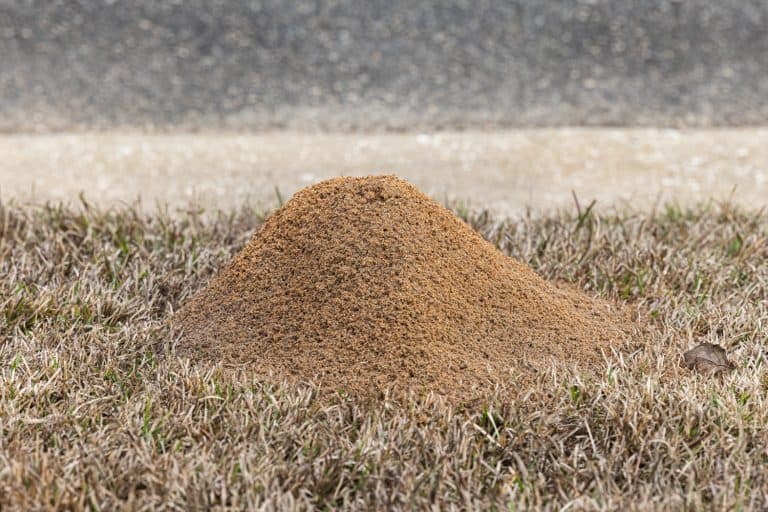
Fire ants build “mound” nests that are usually flat, rather than the pyramid structures most people are familiar with. However, though their nests are flat, they are huge, with most of the chambers (including the queen’s chamber) existing underground.
Fire ants don’t bite as some ants do. Instead, they have stingers. Of all the ant types in North Carolina, fire ants are probably the most irritating. Once they get on the skin, they are usually in numbers, resulting in multiple stings. Plus, the stings are often in the worst places, such as between the toes. Fire ants are warm-weather ants, arriving in the late spring and remaining until the end of September.
6. Acrobat Ants
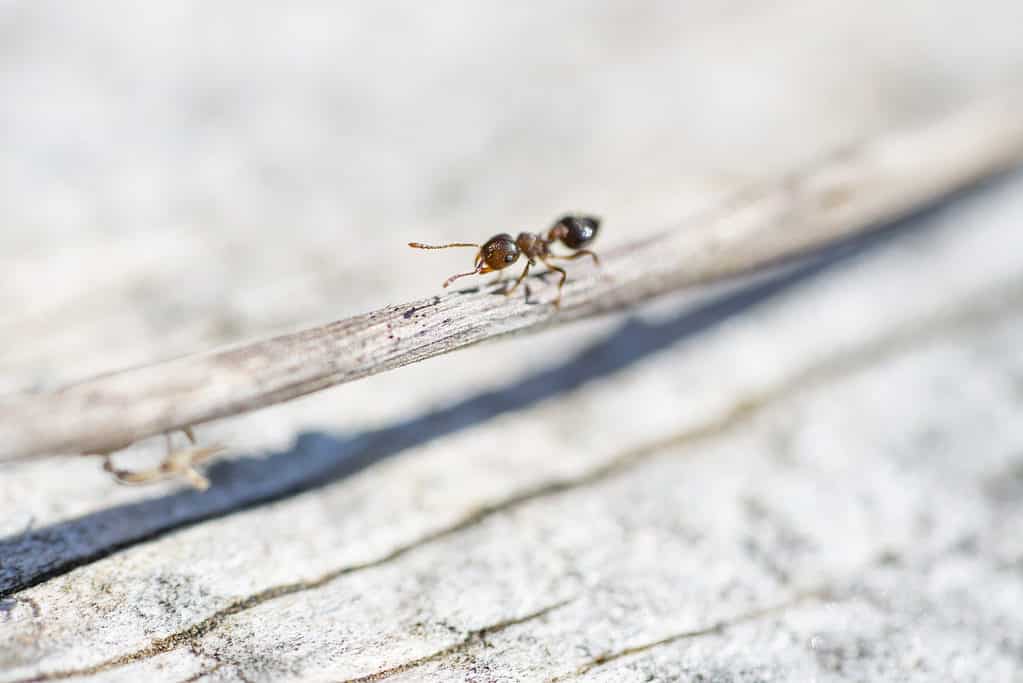
If you live on a waterfront property in North Carolina, you’re probably familiar with acrobat ants.
©iStock.com/ErikAgar
Probably one of the more interesting names for this particular species, acrobat ants are known for their preference for watery areas, such as rivers, creeks, lakes, swamps, and backyard pools. Those on waterfront property will probably have to deal with these at some point or another.
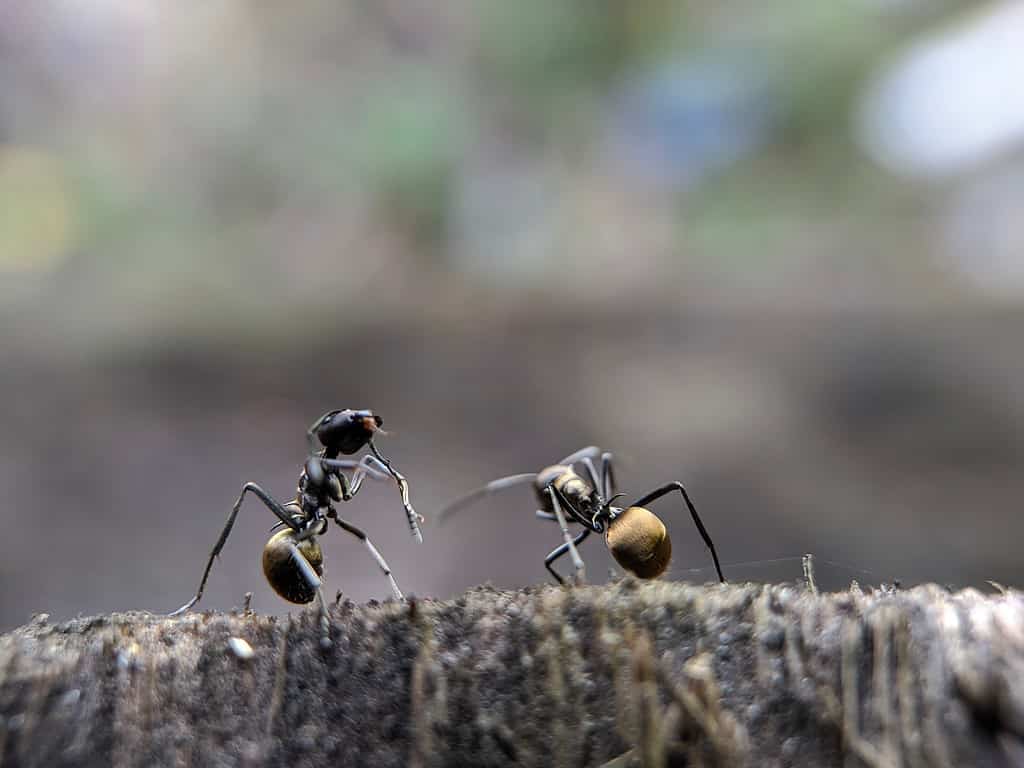
They get their name for their acrobatic ability to stick their abdomens straight up and over their heads. They mostly do this as a warning sign, whenever they feel like they are in danger. Also, they are the only ant types in North Carolina that exhibit this kind of behavior.
Acrobat ants are typically both light and dark brown, with the darker shade reserved for the abdomen. They also have very tiny, nearly microscopic white patterns splashed about on their bodies. They can be invasive, but they don’t generally go out of their way to bite unless their nest is stepped on or otherwise disturbed. Acrobat ants follow the same pattern as Carpenters, arriving in the spring and fading away in late September.
7. Big-Headed Ants
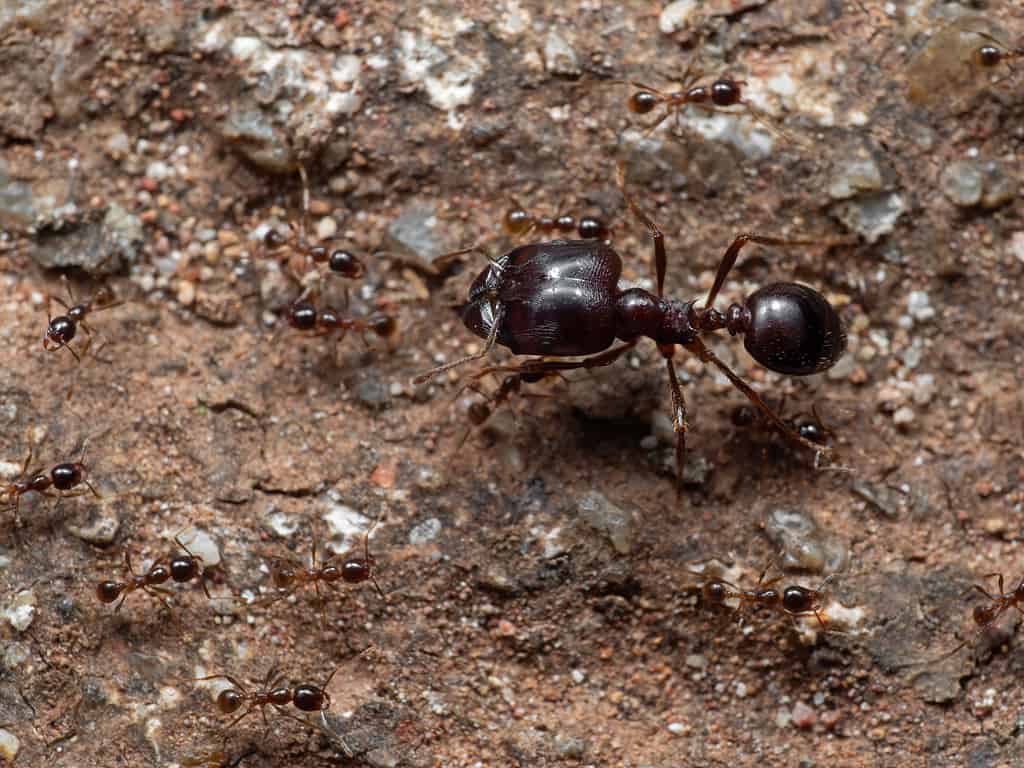
True to their name, big-headed ants have, particularly big heads, but in the literal sense, not the metaphorical one.
©Cherdchai Chaivimol/Shutterstock.com
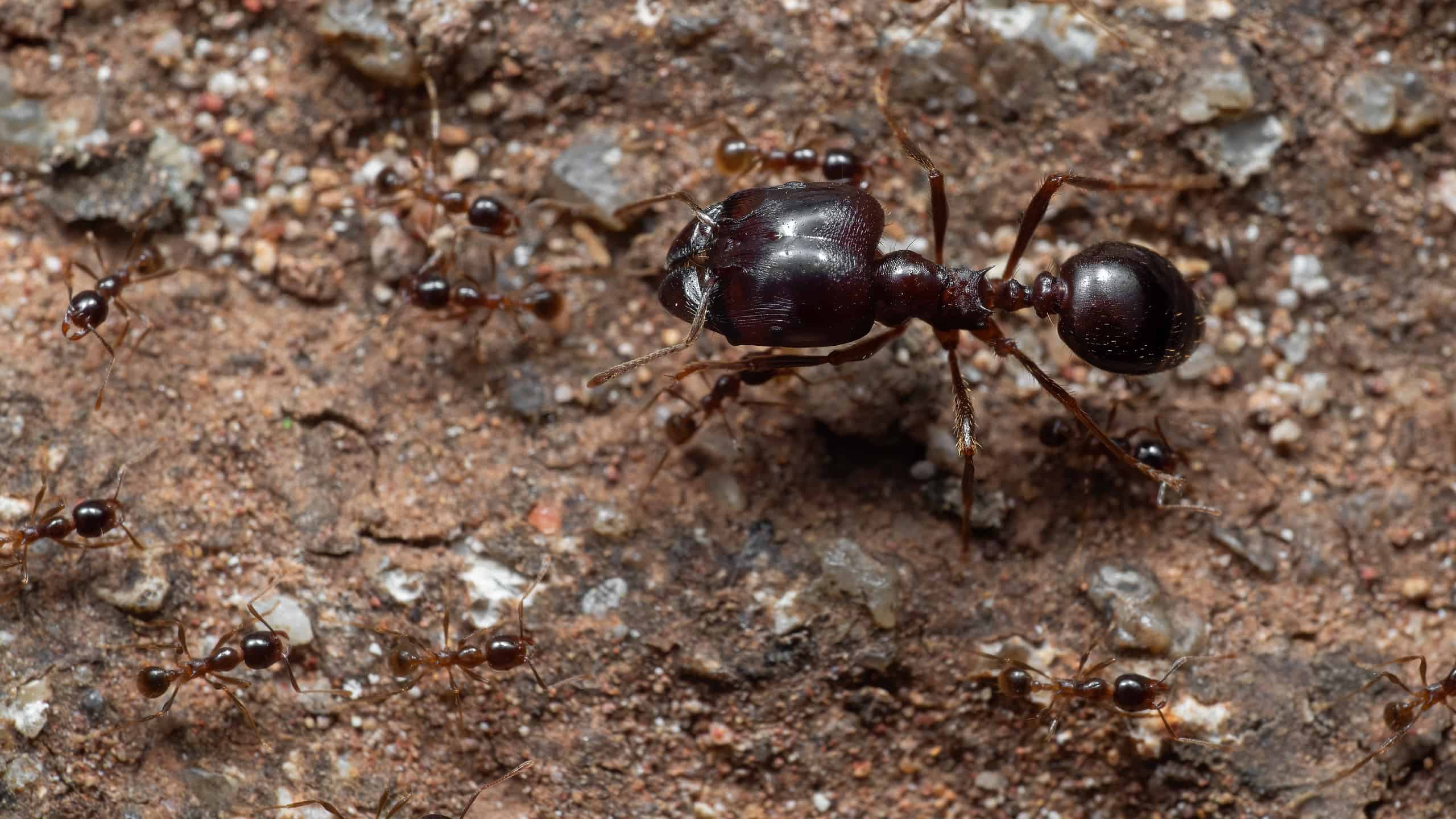
As their name implies, big-headed ants have huge heads, nearly double the size of their abdomen. For this reason, it’s often difficult to tell if they are coming or going. They are mostly standard brown, with visible black bands around their smaller abdomens.
They will happily form a trail running through your living room, to the kitchen, and up to your kitchen tabletop if you leave any food laying around. Due to the size of their heads, the leaders have very large jaws, and their bites are sometimes painful because of it.
Their colonies are divided into major ants, minor ants, and queens. Minor ants are in charge of bringing food into the colony and ensuring the major ants, queens, and juveniles are well-fed. Major ants, the ones with big jaws, are responsible for defending the colony and the queen. Big-headed ants are incredibly invasive, reproducing all year round, which means they can enter the home at any time.
Final Thoughts on Ant Types in North Carolina
There you have it, seven ant types in North Carolina that you should be aware of, especially as the weather warms each year. Of course, the big-headed ants are the lone exception to the season rules of most ant behaviors.
So long as you know what kind of ants you’re dealing with, you know when to start your first ant farm or call the local pest control company. Either way, most ants are generally harmless. It’s the very invasive and destructive species, such as carpenter ants and big-headed ants that you have to worry about.