No creature embodies the idea that “it takes a village” quite like ants. Using chemical signals and other ephemeral communication methods like antennal codes, ants can work together to build or destroy on a collective level. Fire ants, the spicier variation of this insect, work together to survive even the wettest conditions. In this YouTube video, fire ants band their bodies together to make a raft and survive a flood.
It’s a remarkable feat; the fire ants sense rising water and quickly form a raft out of their bodies to safely ferry their queen and the rest of the colony to safety. But how do these ants manage such a feat? Let’s explore these remarkable insects and their ship-building ability.
Fire Ant Background

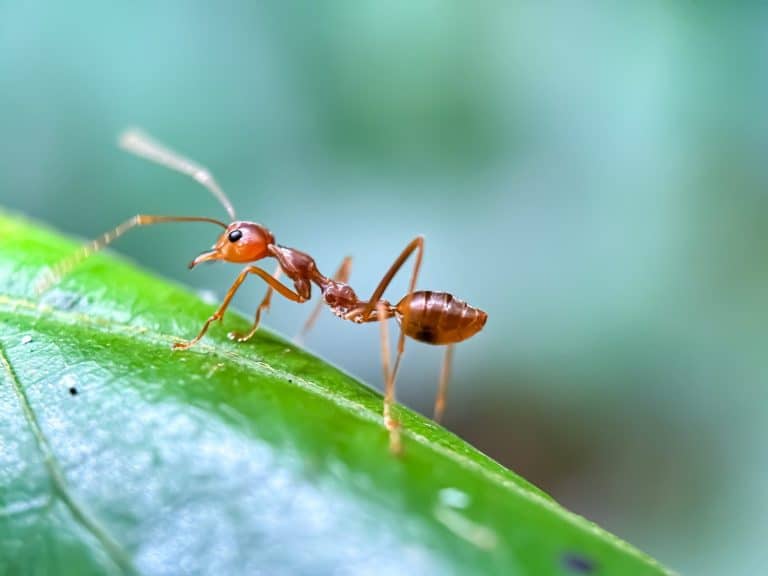
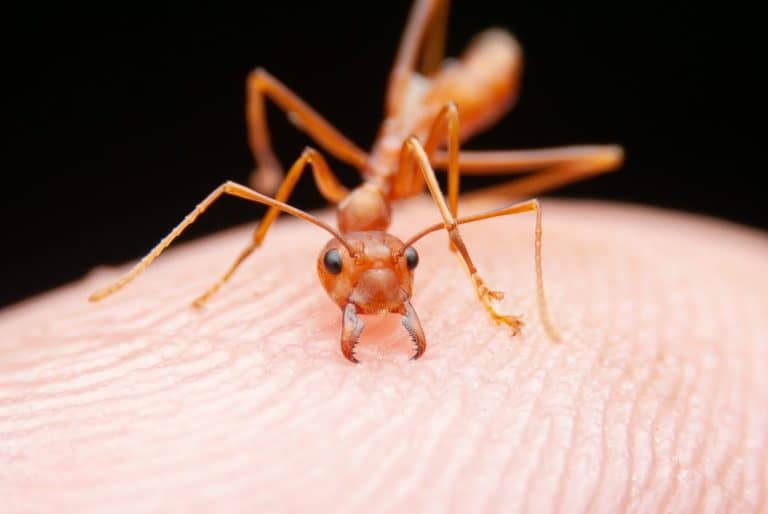
Fire ants sting and inject a toxic alkaloid venom that feels like being burned.
©Dafi Yasin Addafi/Shutterstock.com
The name fire ant is something of a general term. It describes several species of ants in the Solenopsis genus, which includes over 200 other ant species. Fire ants, also called red ants, are originally from South America but have spread as far north as southern Virginia and Tennessee. Wherever they go, they build large mounds in open areas.
They aren’t picky about food, either. They feed on plants, seeds, and other insects. If small animals like lizards get in their way, they will kill them. Whereas other ants bite and spray acid onto the open wound, fire ants sting from their abdomen and inject solenopsin, a toxic alkaloid venom. They got their name from the burning sensation people feel when they are stung by one.
Like mercenaries of the natural world, fire ants are hardy, resilient, and vicious. They’ve become an invasive species thanks to their tendency to push away native species from their local habitat. These creatures are known to invade the nests of various native bee species, robbing them of their contents.
A Rising Tide

When the water rises, fire ants build living rafts out of their bodies and transport their colony to safety.
©Jennifer White Maxwell/Shutterstock.com
As seen in this remarkable YouTube video, fire ants sense rising water and act fast. Without a moment’s notice, the individual fire ants come together and begin building a raft out of their bodies. Using chemical signals, the fire ants know exactly what to do. They enter the rising water and craft a hull, then a bridge, to ferry the colony across.
Within minutes, the entire colony has become a throbbing, pulsating mass of floating insects. Certain ants transport the large queen and her larvae to the middle of the makeshift boat to keep them protected. Others, remarkably, steer the living raft with their bodies like a rudder. Even the unfortunate ants underwater at the bottom of the boat are safe, thanks to pockets of breathable air. The colony can survive on its stored energy reserves for several days while afloat. Once the ants find dry land, they dismantle their raft and begin building a new mound.
During Hurricane Harvey in 2017, people spotted these makeshift ant rafts floating along the surface of the floodwater. Some of these clumps had as many as 100,000 ants. Thanks to their waxy, buoyant bodies and strategic teamwork, fire ants can survive rain, sleet, or snow. As this YouTube video shows, fire ants are real survivors. Just don’t get bitten by one, because it will burn.