Quick Take
- Scientists spent years searching for a fish that locals had four different names for and knew exactly where to find. Meet the locals who knew →
- The original proof this fish even existed was destroyed in World War II, making its rediscovery far more complicated than anyone expected. How the record was lost →
- A fisherwoman using a traditional hand net accomplished overnight what a global lost-species program couldn't do in decades. Helen Asu's catch →
- Male spinach pipefish have a reproductive trick that makes seahorses look ordinary, and scientists still don't fully understand the species. Discover the strange biology →
Is an animal really lost if scientists don’t see it for four decades? That question was answered recently when a spinach pipefish, a close relative of the seahorse, was found by a local fisher in Papua New Guinea.
The rare pipefish, Microphis spinachioides, was last recorded by scientists in the 1980s, according to the New Guinea Binatang Research Centre. It is believed to exist only in a single waterway system—the Sepik River—which runs more than 680 miles through tributaries, lakes, forests, and wetlands on the remote island.
But thanks to cooperation between researchers from the center and local populations, the “lost” pipefish was rediscovered. Here’s how it happened, and why the collaboration was so important.
Continue reading
A Species Not Recorded Since 1985
The spinach pipefish was last recorded by scientists in the mid-1980s. Long considered a “lost” species, the pipefish was included on one of the 10 most-wanted lists in the Search for Lost Fishes initiative, a joint program between SHOAL and Re:wild, launched in 2021. The program is part of the IUCN-SSC Freshwater Fish Specialist Group.
The group defines a “lost” species as one that hasn’t been formally recorded by scientists for at least 10 years, but also has not been declared extinct. It also focuses on freshwater fish. The spinach pipefish met all those criteria and joined more than 300 other fish species on the list.
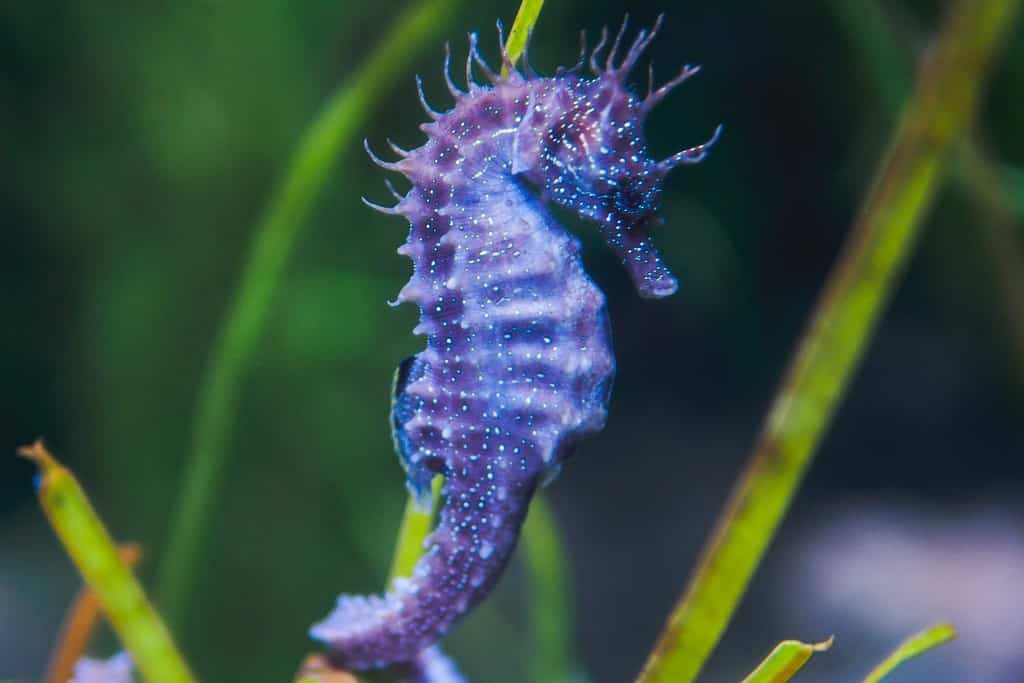
Spinach pipefish are distant relatives of seahorses.
©paulzhuk/Shutterstock.com
Finding the fish has never been easy, which may explain why scientists haven’t seen one in more than 40 years. The terrain around the Sepik River is remote and hard to reach. In fact, it is only accessible by boat or canoe. Additionally, the fish’s original museum specimen, known as a “holotype,” was destroyed during World War II at the Hamburg museum where it was kept.
Little is known about the fish. The IUCN lists the species’ status as “data deficient.” This means there just isn’t enough information available to determine whether it is at risk or considered safe. Researchers and conservationists simply don’t know.
Local Knowledge Holds the Key
Even if scientists didn’t see the fish, the locals knew it was there. They even had special names for it – Karuweng, Inap, Karuwena, and Sako, depending on the village. They could also describe in detail the specific vegetated riverbank habitat where the pipefish is most likely to be found.
It wasn’t until two researchers, Jerrica Agebigo and Roger Maikel of the New Guinea Binatang Research Center, embarked on a two-week research trip that the researchers learned where local communities encountered the fish. The pair traveled around 700 miles up and down the Sepik, surveying the river and checking market fish catches for signs of the species. During their trip, the researchers also spoke with villagers along the route and showed them pictures of the elusive fish. These interactions were key to solving the mystery.
“Every community welcomed us warmly and shared remarkable knowledge about their river. It is a place where scientific research depends heavily on collaboration with local people,” Agebigo told Discover Wildlife.
One Net Turns a Fish From Lost to Found
One of the women the pair talked to was Helen Asu, a fisherwoman from Imbando village. She fishes with a traditional handheld net called an umber to catch freshwater prawns. She recognized the pipefish from the photos the researchers shared and said she would look for it during her fishing expeditions.

The research was conducted along the rugged Sepik River, in a location only accessible by boat or canoe.
©Parrotfish Journey/Shutterstock.com
The very next morning, Asu caught two spinach pipefish in her net. The researchers photographed the catch and sent the images to Australian ichthyologist Gerald Allen, who first confirmed the spinach pipefish’s existence in the Sepik in the 1980s. He quickly verified that the newly caught pipefish were the same species.
“Without her knowledge, initiative, and willingness to assist, the rediscovery may not have been possible,” Agebigo told Discover Wildlife.
A Strange Seahorse Relative
Although the spinach pipefish is related to the seahorse, the two look vastly different. While most pipefish live in salt water, this species inhabits only freshwater.
Like seahorses, however, it is the male spinach pipefish that carries and gives birth to the young. The female lays eggs on the male’s tail, where he carries and incubates them for weeks in a pouch. The male can hold as many as 150 embryos at a time.
As for the typical size of a spinach pipefish, scientists can’t be sure. Based on the few images and specimens seen, they estimate these pipefish are up to around six inches long. However, nothing has been confirmed.
Why Does Finding Lost Species Matter?
For researchers and conservationists, rediscovering a lost species is a win for more than just that species.
“It makes my heart sing to hear that the spinach pipefish has been recorded anew,” marine biologist Amanda Vincent, who chairs an expert group on seahorses, pipefishes, and seadragons for the International Union for Conservation of Nature, told Yale Environment360. “To learn that the spinach pipefish still exists gives us hope that other ‘lost’ species are out there, too.”
It’s also important for freshwater fish species in general. A 2026 United Nations-backed study found that migratory freshwater fish populations have dropped by roughly 81 percent since 1970. Villagers interviewed during the expedition in which the pipefish was rediscovered confirmed declines in native fish populations. They attribute it to mining and logging in the region.
This kind of collaboration between scientists and local populations may be the most effective way to rediscover other “lost” species around the world.