
Quick Take
- This gentle dad hides a rule-breaking past that got him pulled from the wild.
- Wolf dads do far more than you'd expect, and the pups' first weeks reveal how.
- A species once nearly wiped out grew from a startlingly small starting group.
- Some captive-born pups get a surprising second home in the wild. Find out how it works and why it matters.
When most people picture a wolf, they imagine a powerful predator hunting through the wilderness or howling beneath the moon. They probably don’t picture a patient father lying in the grass while two tiny pups climb around his face. But that’s exactly what happens in this charming footage from the Wolf Conservation Center in New York.
Meet Lighthawk, an endangered Mexican gray wolf and experienced father who appears to be enjoying a little downtime. Unfortunately for him, his energetic youngsters have other plans. The two pups wobble around beside him, nudge against his chin, and eventually settle down nearby. Through it all, Lighthawk remains remarkably relaxed, apparently willing to let the little troublemakers have their fun.
The interaction is adorable, but there’s something more interesting happening here than a couple of cute pups playing with their dad. Wolves have surprisingly close family relationships, and fathers play an important role in raising their young. Watch the clip now to see Lighthawk spending some quality time with his pups, then learn why this endangered family’s story matters.
Watch Two Mexican Wolf Pups Spend Time With Dad
There’s something wonderfully familiar about this scene. Lighthawk is stretched out in the grass, seemingly content to rest, while his pups are busy investigating everything around them. That includes their father’s face. One youngster moves close to his muzzle while the other joins the activity, and eventually the little wolves settle beside him.
Rather than getting up and walking away, Lighthawk stays put. He watches the youngsters and eventually lowers his head to rest. Apparently, even wolf dads have to surrender a little personal space when the kids are around.
Are Wolf Fathers Really This Involved With Their Pups?
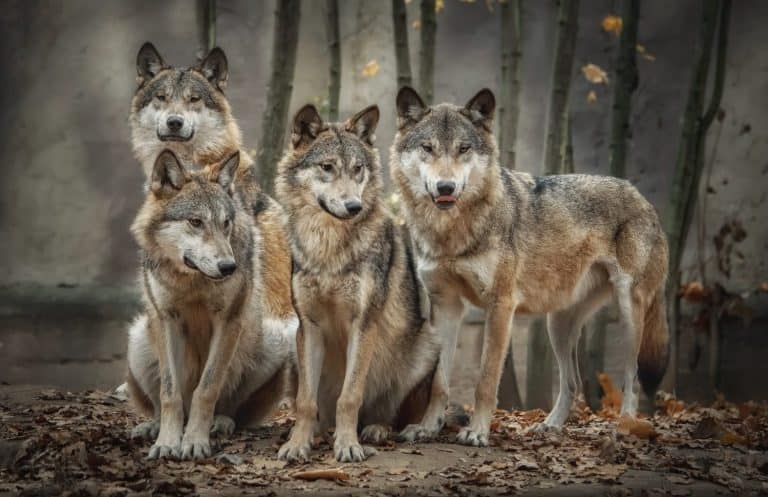
They certainly can be. Unlike many mammals, wolves raise their young within close-knit family groups where both parents have important responsibilities. A typical wolf pack consists of a breeding pair and their offspring, sometimes including youngsters from several generations. The adults work together to protect the family and provide food, while older siblings may also help care for the newest arrivals.
When wolf pups are born, they’re blind, helpless, and completely dependent on their mother for nursing and warmth. During those early weeks, their father and other pack members help by bringing food to the mother. As the pups grow and begin exploring beyond the den, they gradually become more involved in everyday pack life. Playing, communicating, and interacting with adult wolves are all part of their development.
That’s what makes footage like this so interesting. We usually see wolves portrayed as fierce hunters, but their family lives involve plenty of patience, cooperation, and social interaction. Lighthawk’s relaxed behavior around his youngsters offers a glimpse of that quieter side.
Meet Lighthawk and Trumpet, Two Endangered Mexican Wolves
Lighthawk has an interesting story of his own. Born in the wild around April 2015, he lived in Arizona’s Apache-Sitgreaves National Forests as part of the Hawks Nest Pack. Following conflicts involving livestock, wildlife managers removed him from the wild in 2016. He arrived at the Wolf Conservation Center in South Salem, New York, the following year.
That’s where he was paired with Trumpet, a female Mexican gray wolf born at the center in 2016. The two became first-time parents on April 30, 2018, welcoming three pups: two males and a female. They went on to produce additional litters, including five pups in 2019 and three in 2022. The center also documented another litter born to Trumpet in April 2025.
Their family is part of an important conservation breeding program. Mexican gray wolves, sometimes called lobos, are a rare and endangered subspecies of the gray wolf. Their numbers declined dramatically during the 20th century because of hunting, trapping, poisoning, and conflicts with livestock. By the late 1970s, they had nearly disappeared from the wild.

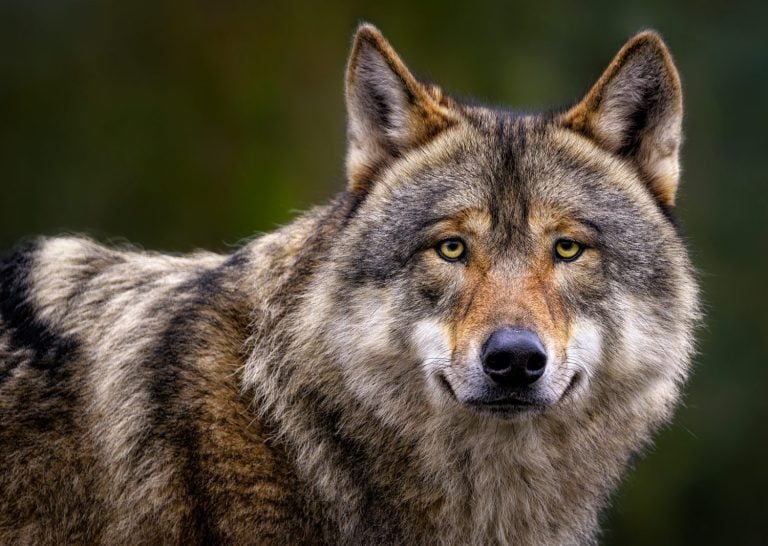
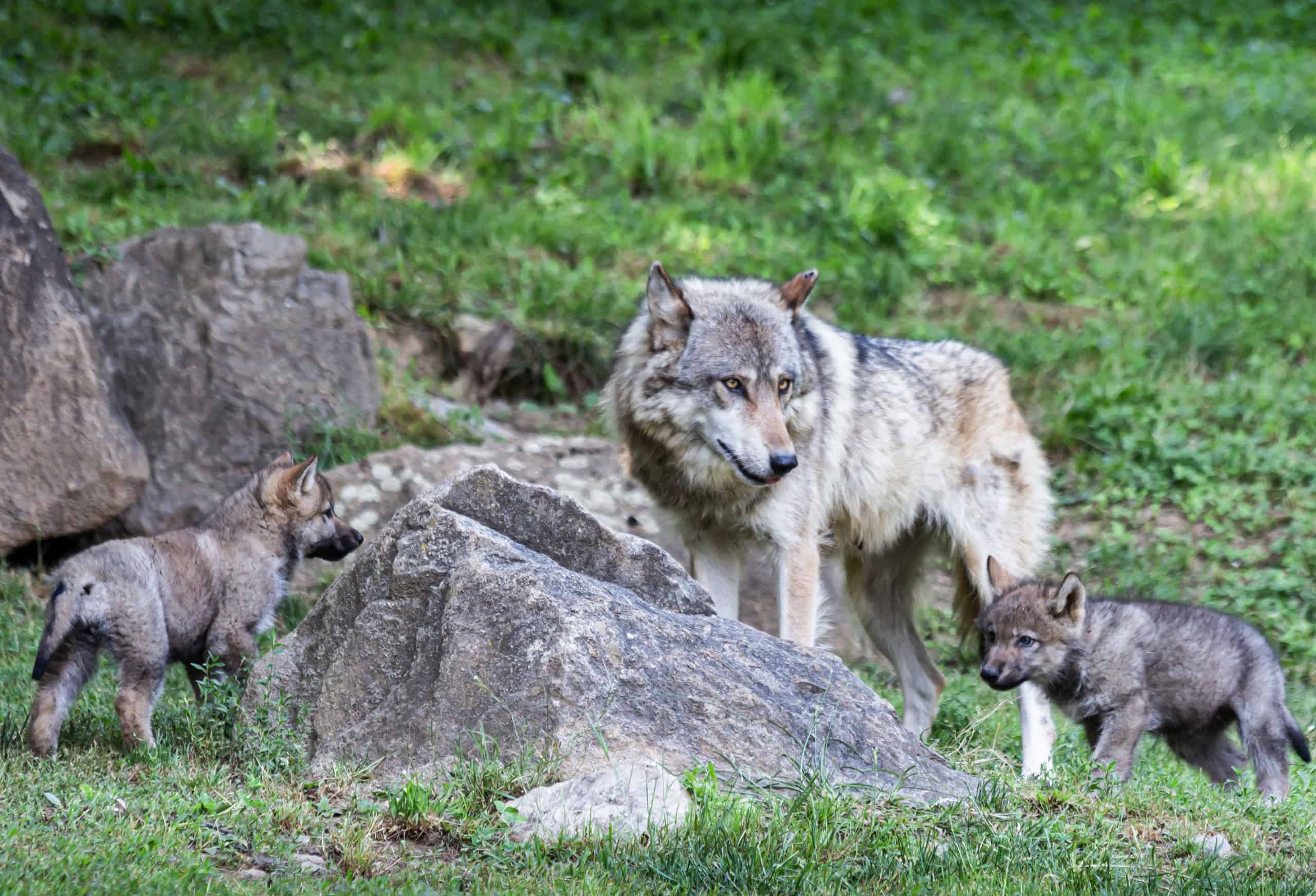
Wolf families typically include a breeding pair and their offspring, with both parents contributing to the care of their young.
©Armelle LL/Shutterstock.com
How Are Mexican Gray Wolves Recovering in the Wild?
By the time conservationists began their intensive recovery efforts, the Mexican wolf’s future was hanging by a thread. The modern recovery population descended from just seven founding wolves, creating a serious challenge for maintaining genetic diversity. A coordinated breeding program helped save the subspecies, and captive-born Mexican wolves were first reintroduced to the wild in Arizona in 1998.
There has been encouraging progress. According to the annual population count released in February 2026, at least 319 Mexican wolves were living in the wild across Arizona and New Mexico at the end of 2025, up from 286 the previous year. That’s a significant improvement from the days when the subspecies had effectively disappeared from the American wilderness. However, genetic diversity and human-caused mortality remain major challenges to its long-term recovery.
319
Mexican wolves living in the wild across Arizona and New Mexico
- End of 2024
- 286
- End of 2025
- 319
- Change
- up 12%
Organizations such as the Wolf Conservation Center support that recovery by maintaining genetically important breeding populations. Some pups born in managed care facilities can even be placed into the dens of wild wolf families, where they are raised alongside wild-born pups. This process, called cross-fostering, helps introduce valuable genetic diversity into the recovering population.
For Lighthawk and his playful youngsters, none of that complicated conservation work is visible in their afternoon together. They’re simply behaving like a wolf family. But the quiet moment captured on camera is also a reminder of how much effort has gone into giving animals like these a future.