
Quick Take
- A four-week-old wolf pup can barely walk steadily, yet it's already practicing one of nature's most powerful communication tools. The reason why starts earlier than most people expect.
- The moon has nothing to do with why wolves howl. The real reason is far more strategic.
- The pup appears completely alone on camera, but researchers know exactly why assuming it's lost would be a mistake.
- Trail cameras in Minnesota are catching wild wolves doing something researchers almost never expected to document.
A four-week-old wolf pup is barely a month into life, yet one of the most recognizable sounds in the animal kingdom is already beginning to emerge. A remote wildlife camera in northern Minnesota captured this tiny pup lifting its head and practicing an unmistakable little howl.
The footage comes from the Greater Voyageurs Ecosystem, where researchers study the lives of wild wolves using trail cameras, GPS collars, and other field methods. What sounds like an adorable little “awoo” is actually an early version of a communication system the pup may eventually use to keep track of family members across miles of wilderness.
Quick Take
- The wolf pup in the footage was estimated to be only about four weeks old.
- Wolf pups begin making early attempts at howling when they are still very young.
- Wolves do not howl at the moon. Howling is primarily a form of long-distance communication.
- Remote cameras help researchers observe parts of wolf family life that would otherwise be extremely difficult to see.
A 4-Week-Old Wolf Is Already Finding Its Voice
The footage was captured in the Greater Voyageurs Ecosystem of northern Minnesota. According to information associated with the original footage, the young wolf was only about four weeks old when the camera recorded it.
The pup stands near the camera, looks around, raises its head, and lets out several small howls. It may sound tentative compared with the deep, powerful calls of an adult wolf, but that makes the footage even more interesting. We are watching an important wolf behavior beginning to develop at a remarkably young age.
Why Wolf Pups Start Howling So Young
Wolf pups do not wait until adulthood to begin developing the sounds their pack uses to communicate. Very young pups squeak, whine, growl, bark, and eventually begin making early attempts at howling. By around four weeks old, their senses and mobility are developing rapidly, and pups begin spending more time exploring the area around their den.
Those first howls do not necessarily sound anything like the long, powerful calls associated with adult wolves. A pup’s early vocalizations can be much shorter and higher-pitched. With time, however, those little calls develop into one of the wolf’s most useful methods of communicating over long distances.
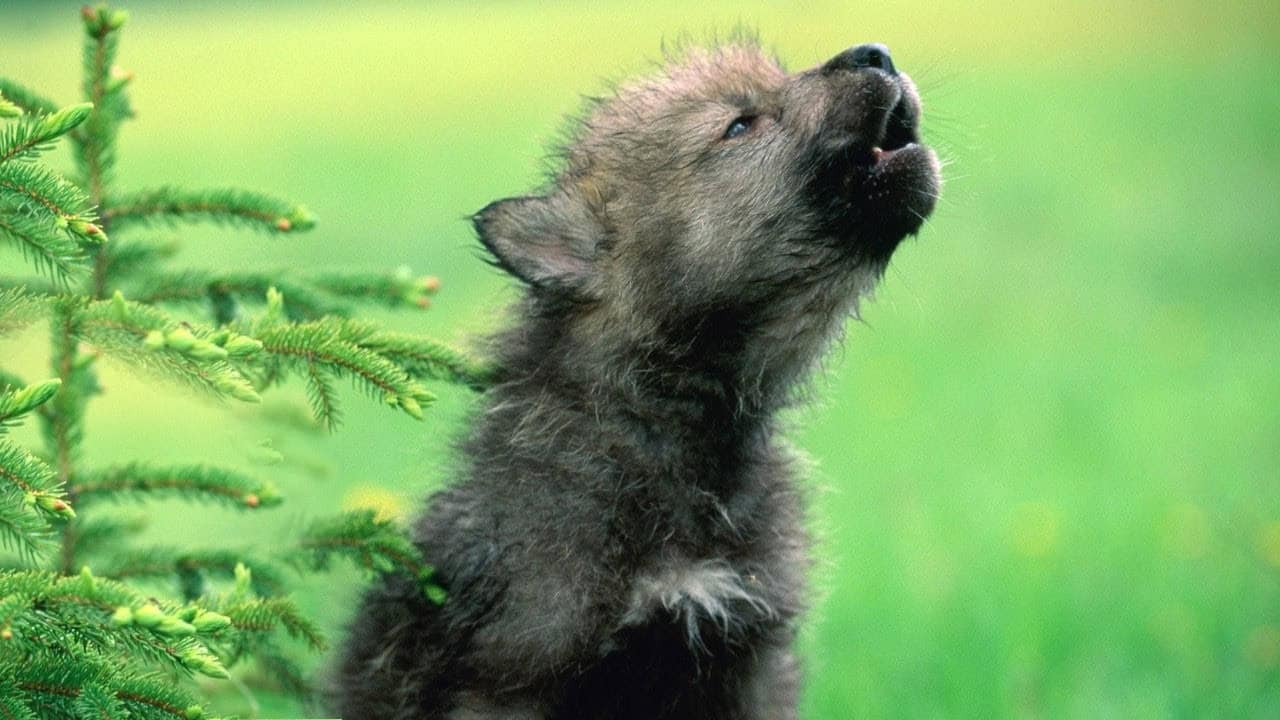
Wolf pups begin developing the vocalizations used by adult wolves while they are still only weeks old.
©iStock.com/slowmotiongli
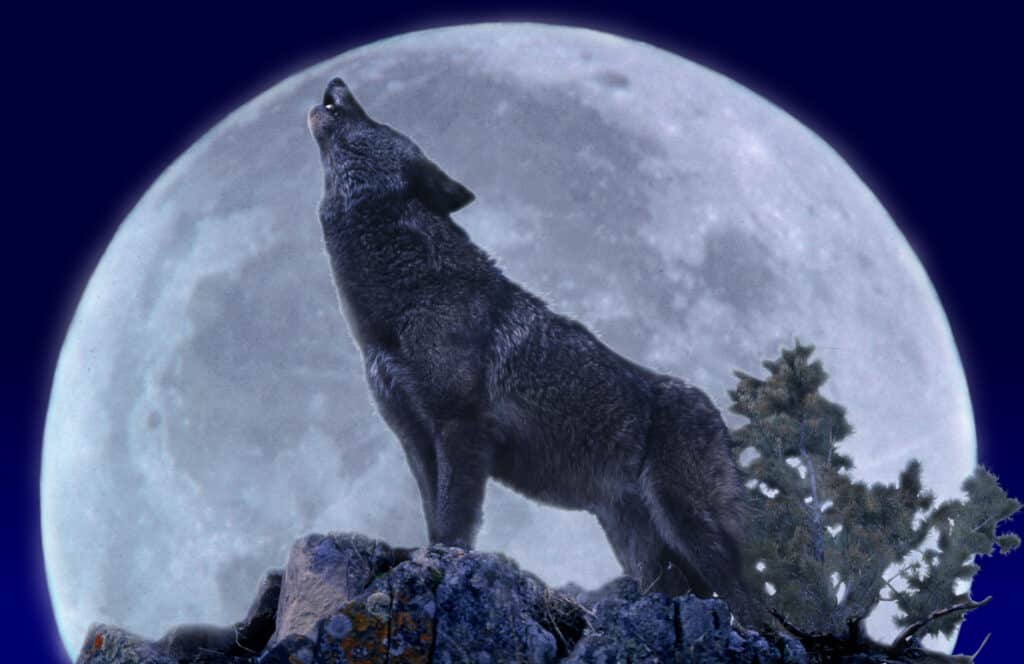
The Pup Isn’t Howling at the Moon
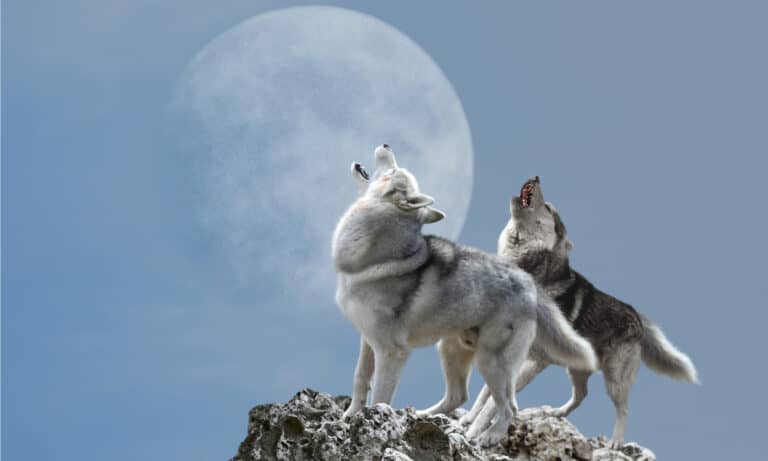
The image of a wolf throwing its head back beneath a full moon is one of the most familiar scenes in wildlife art and movies. Wolves certainly howl at night, but the moon is not what causes the behavior.
According to the Smithsonian’s National Zoo, wolves use howling for several forms of social communication. A howl can help rally pack members, maintain contact with wolves that are separated, coordinate activity, or advertise that a territory is already occupied.
Under favorable conditions, a wolf’s howl can carry for several miles. That makes it particularly useful for an animal that may spend time far from other members of its family while traveling through large territories.
Why Young Wolves Stay Close to Family
At four weeks old, a wolf pup still has a tremendous amount of growing and learning ahead of it. Wolf packs are generally family groups built around a breeding pair and their offspring from one or more years. Young pups depend heavily on the adults around them for food and protection while gradually learning how to behave within the pack.
That is also why there is no reason to assume the pup in this video is lost simply because it appears alone on camera. Trail cameras capture only a small slice of what is happening around them. Other wolves could easily be nearby but outside the camera’s narrow field of view.
As the pup grows, howling will become increasingly useful for keeping in contact with those family members. Eventually, some young wolves will disperse from their birth packs and travel considerable distances while searching for mates and territories of their own.
Trail Cameras Are Revealing a Hidden Side of Wolf Life
The Greater Voyageurs Ecosystem includes Voyageurs National Park and surrounding areas of northern Minnesota. Researchers with the Voyageurs Wolf Project study wolves throughout this landscape, with particular attention paid to aspects of their summer ecology that can be difficult to observe directly.
That research includes questions about where wolves establish dens, how many pups are born, how young wolves survive, what adult wolves hunt during summer, and how packs move through the landscape. Thick vegetation can make directly watching wild wolves extremely difficult, which is where remote cameras become especially useful.
Those cameras occasionally capture much more than basic population data. Researchers working in the region have documented wolves pursuing unusual prey, eating wild berries, catching fish, caring for pups, and displaying behaviors that people rarely get a chance to witness firsthand.
A Small Howl With a Big Purpose
For now, the little howl in this footage sounds a long way from the powerful call of a full-grown wolf. Give the pup some time. The tiny animal practicing outside its den is beginning to develop a skill that could eventually help it communicate with family members across a vast stretch of Minnesota wilderness.
That makes the clip more than an adorable wildlife moment. It offers a brief look at one of the world’s most recognizable animal behaviors while that behavior is still taking shape.