Quick Take
- These wolves aren't wild, and the reason they're this comfortable near humans is stranger than you'd expect. See why they're safe →
- There's a specific type of accommodation where you can legally sleep just feet from a wolf pack, and it's probably not what most people picture. Discover the wolf chalets →
- Wolves don't actually howl at the moon, so what are they really communicating, and why might you hear it in the middle of the night? Hear why wolves howl →
- A wolf pack looks like a group of rivals competing for dominance, yet the social structure holding them together is far more surprising. Explore pack social structure →
Imagine waking up in a cozy cabin, looking out the window, and finding yourself face-to-face with a pack of wolves. That’s exactly the kind of experience captured in this remarkable video from Quebec, Canada. Several wolves wander through the snow just beyond an enormous glass window, seemingly unbothered by the people watching from inside. One even pauses for a closer look. It might seem like an unusually close encounter with wild predators, but there’s a fascinating explanation for why these wolves are so comfortable approaching the cabin, and it’s all part of a unique wildlife experience.
Watch These Wolves Walk Right Past a Cabin Window
View this post on InstagramA post shared by Christine & Sarah MacLean (@wellnesstravelled)
Where Was This Incredible Wolf Encounter Filmed?
The footage was shared by Wellness Travelled, an Instagram account highlighting unusual accommodations and travel experiences. The wolves are residents of Parc Omega, a wildlife park near Montebello, Quebec, roughly an hour east of Ottawa.
Spread across approximately 2,200 acres, Parc Omega features a variety of North American wildlife, including wolves, elk, bears, and bison. The park is especially well known for its unusual overnight accommodations, which allow guests to observe animals from a much closer perspective than they might experience during a traditional wildlife park visit.
Among those accommodations are specialized wolf chalets and lodges featuring enormous windows overlooking designated wolf habitats. Guests can relax indoors while observing the animals walking, resting, interacting, and occasionally investigating the area immediately outside the glass.
And while the scene might look like an ordinary cabin surrounded by wandering wild wolves, these animals are living in managed habitats within the park. Visitors aren’t simply leaving their doors unlocked in wolf territory. The accommodations are specifically designed to allow close observation while keeping people and animals safely separated.
Why Are the Wolves Walking Together?
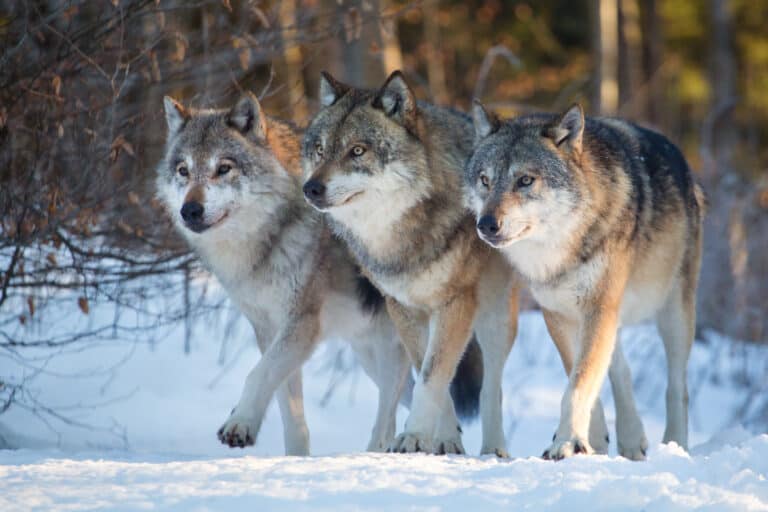
There’s another interesting detail in the footage. Rather than moving independently, several of the wolves travel through the snow together. That behavior reflects one of the most important aspects of wolf biology: their highly social family structure.
Wolves are among the most social members of the canine family. In the wild, they typically live in packs consisting of a breeding pair and their offspring from one or more years. These family groups travel together, defend territories, care for their young, and cooperate when hunting large prey.
According to the National Park Service, wolves commonly travel considerable distances while searching for food or patrolling their territory. They also communicate through body language, scent marking, vocalizations, and other behaviors that help maintain relationships within the pack.
Of course, the wolves at Parc Omega aren’t roaming through an unrestricted wilderness. Their movements occur within managed habitats, and we can’t determine exactly what motivated the animals to pass the window in this particular video. Still, walking together is perfectly consistent with their naturally social behavior.
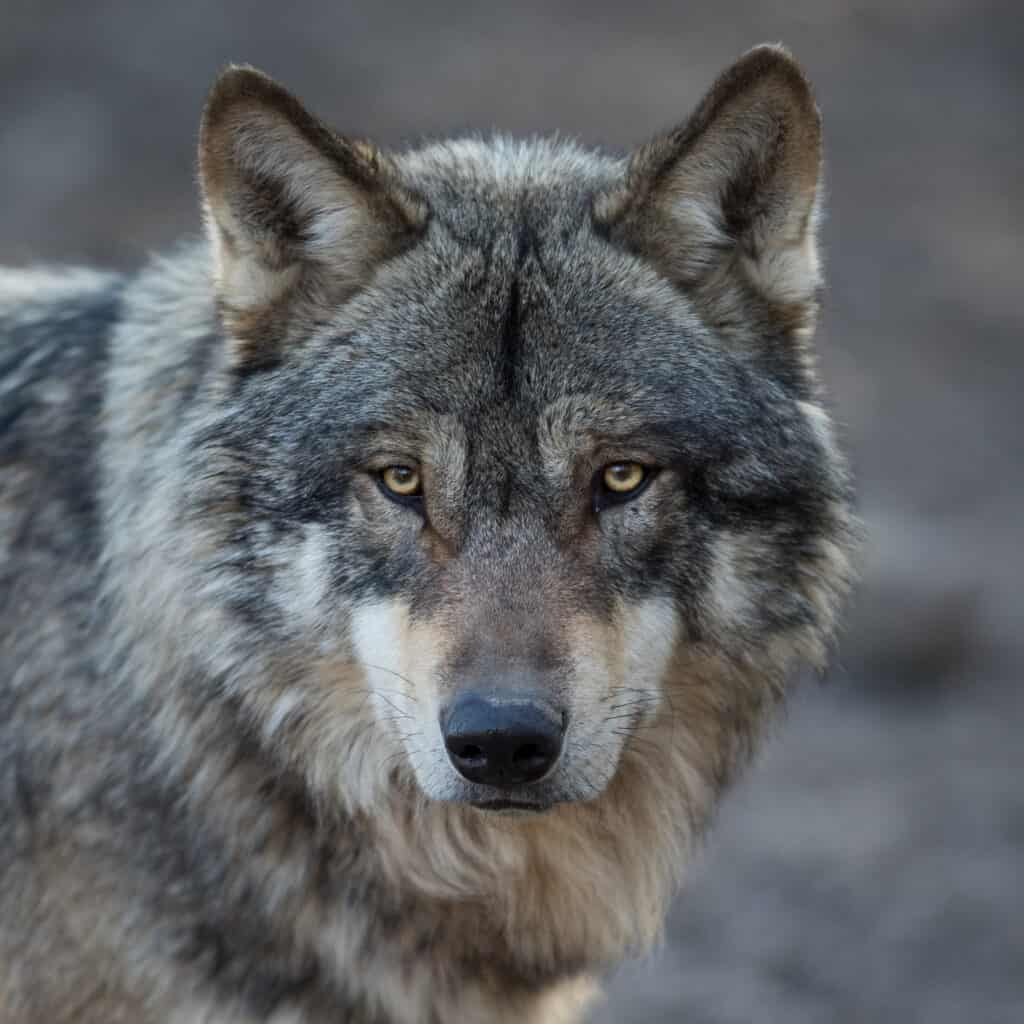
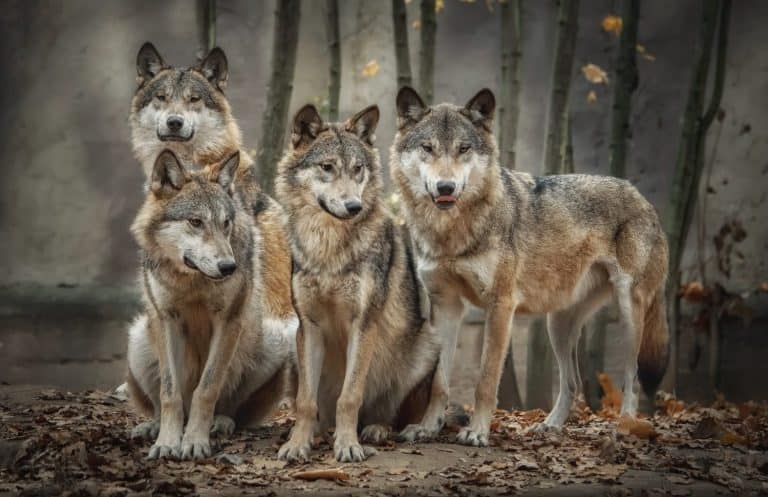
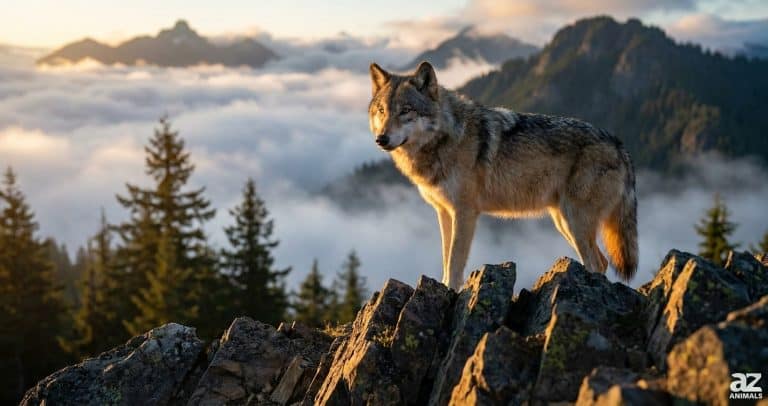
Gray wolves are highly social animals that communicate through vocalizations, body language, and scent marking.
©AB Photographie/Shutterstock.com
How Many Wolves Typically Live in a Pack?
While a handful of wolves appear in this video, wild packs can vary considerably in size. The Smithsonian’s National Zoo reports that wolf packs commonly contain around five to eight individuals, although much larger groups have occasionally been documented.
Most packs function as extended families rather than collections of unrelated animals competing for control. The breeding adults are generally the parents of the younger members, and older offspring often help care for new pups. This cooperation allows wolves to tackle challenges that would be much more difficult for a solitary animal.
These family relationships also explain why wolves maintain such complex communication systems. A howl can help scattered pack members locate each other, while subtle movements of the ears, tail, and body can communicate everything from playfulness to tension.
Eventually, many young wolves leave their family groups to find new territories and potential mates. Some travel hundreds of miles before establishing families of their own.
Why Do Wolves Howl at Night?
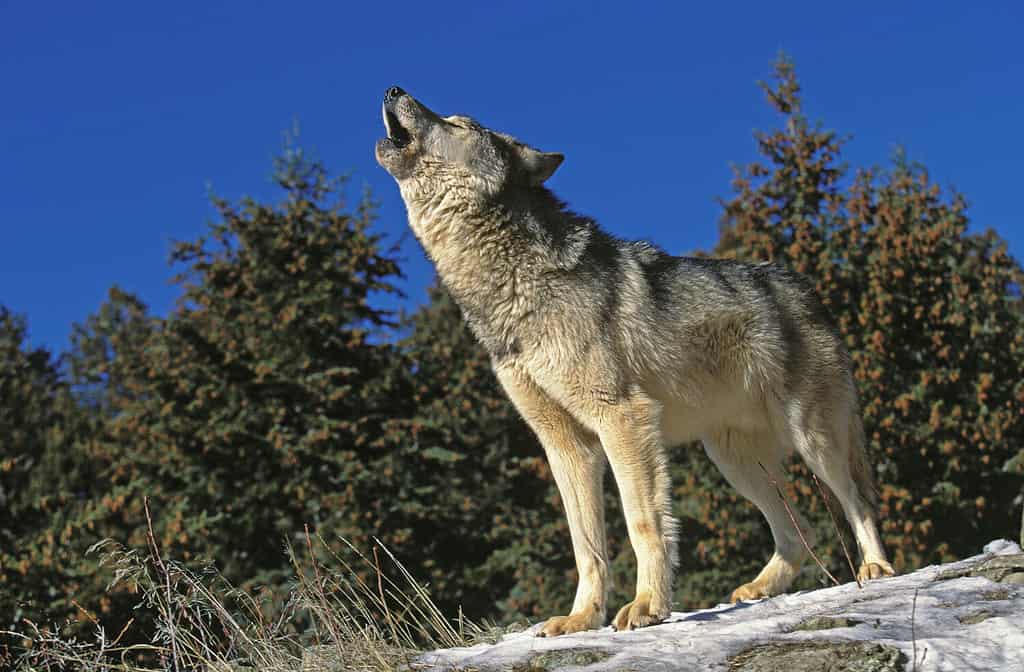
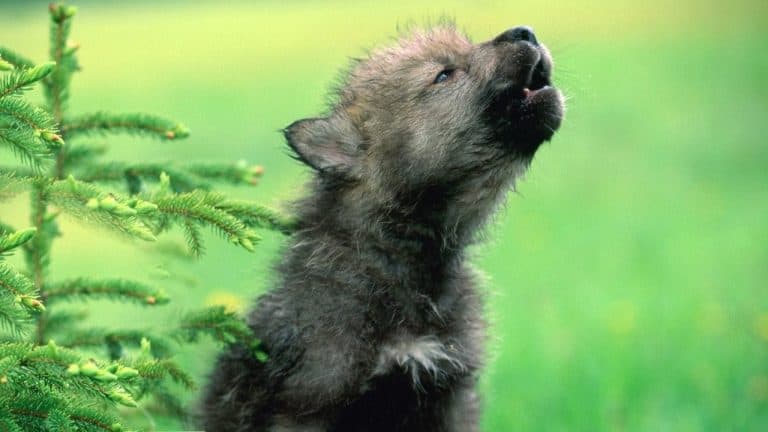
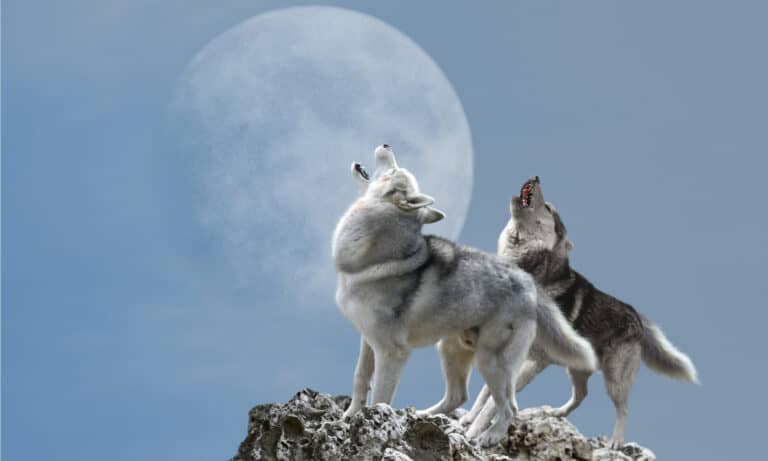
Wolves use howling to communicate with pack members and signal their presence to other wolves.
©slowmotiongli/Shutterstock.com
One of the most memorable parts of staying near wolves may have nothing to do with seeing them. Visitors might also hear their distinctive howls, especially during the evening or early morning hours.
Despite their reputation in movies and folklore, wolves don’t howl at the moon. According to the National Park Service, howling serves several practical purposes, including locating separated pack members, communicating before or after hunts, and warning neighboring packs away from occupied territory.
Wolves often become particularly vocal during the breeding season and periods when pups are being raised. Their howls can travel considerable distances, allowing communication across areas where dense forests or uneven terrain make visual contact difficult.
For guests staying at Parc Omega, hearing a chorus of howls is certainly possible, although the animals aren’t performing on a schedule. Whether they decide to vocalize during a particular stay is entirely up to them.
Are These Wolves Dangerous to Visitors?
Wolves are powerful predators, and even animals accustomed to human activity should never be treated like domesticated dogs. However, Parc Omega’s accommodations are designed to provide a close wildlife-viewing experience without requiring guests to enter the wolves’ habitats.
The park offers several types of wolf accommodations, including lodges and chalets with large panoramic windows. Visitors can watch the animals from inside while physical barriers keep the wolves separated from guest areas.
That distinction is important. Wolves in the wild generally avoid people, and approaching or feeding them can create dangerous situations for both humans and animals. Anyone visiting a wildlife park should follow the facility’s safety instructions and never attempt to interact with predators outside designated activities.
Here, the protected viewing arrangement makes it possible to appreciate the wolves’ natural appearance and social interactions without unnecessarily disturbing them. What looks like a surprising encounter through the window is actually the experience these unusual accommodations were built to provide.
Where Is Parc Omega Located?
Parc Omega is located at 399 Route 323 North in Montebello, Quebec, Canada. The wildlife park is situated in the Outaouais region between Ottawa and Montreal and welcomes visitors throughout the year.
Along with its overnight accommodations, Parc Omega offers a 12-kilometer driving route where visitors can observe a variety of North American animals. Its wolf accommodations provide a different experience, allowing guests to spend an extended period observing the animals rather than catching only a brief glimpse during a daytime visit.