
Quick Take
- Sea lions typically have 34 teeth.
- Naturally occurring dark-colored bacteria give sea lion teeth their black color.
- Sharp conical molars and premolars are used to grip prey rather than grind it, as sea lions do not chew before swallowing.
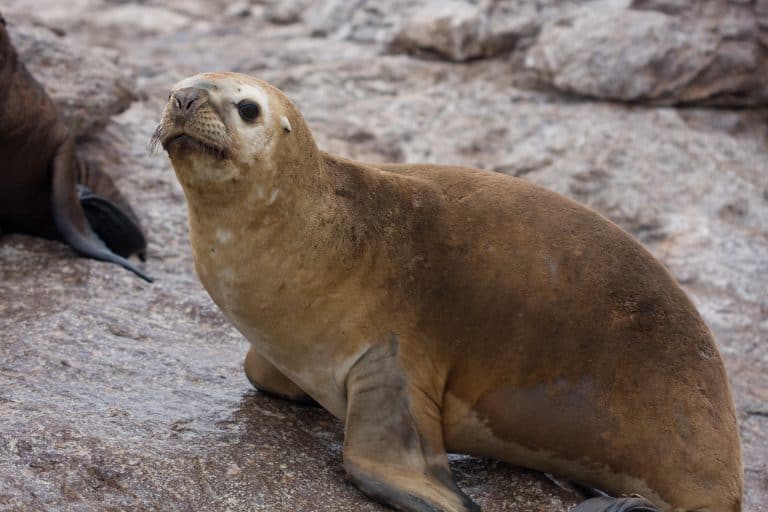
Sea lions are caniforms belonging to the parvorder Pinnipedia. There are seven species of sea lion across five different genera. The six extant species are the Australian sea lion (Neophoca cinerea), the California sea lion (Zalophus californianus), the Galápagos sea lion (Zalophus wollebaeki), the New Zealand sea lion (Phocarctos hookeri), the South American sea lion (Otaria flavescens, formerly Otaria byronia), and Steller’s sea lion (Eumetopias jubatus). The Japanese sea lion (Zalophus japonicus) was declared extinct in the 1970s. As of December 2025, the Australian, Galápagos, and New Zealand sea lions are all listed as Endangered by the IUCN. All sea lions are carnivores that use their sharp teeth and strong jaws to prey on a variety of marine animals. Continue reading to learn everything you need to know about the teeth of these semi-aquatic apex predators.
How Many Teeth Do Sea Lions Have?
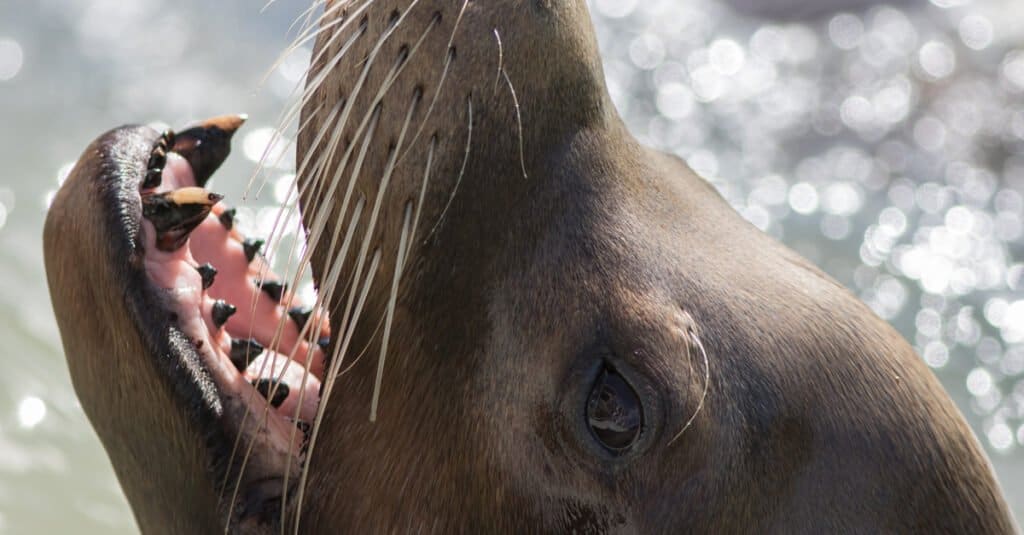
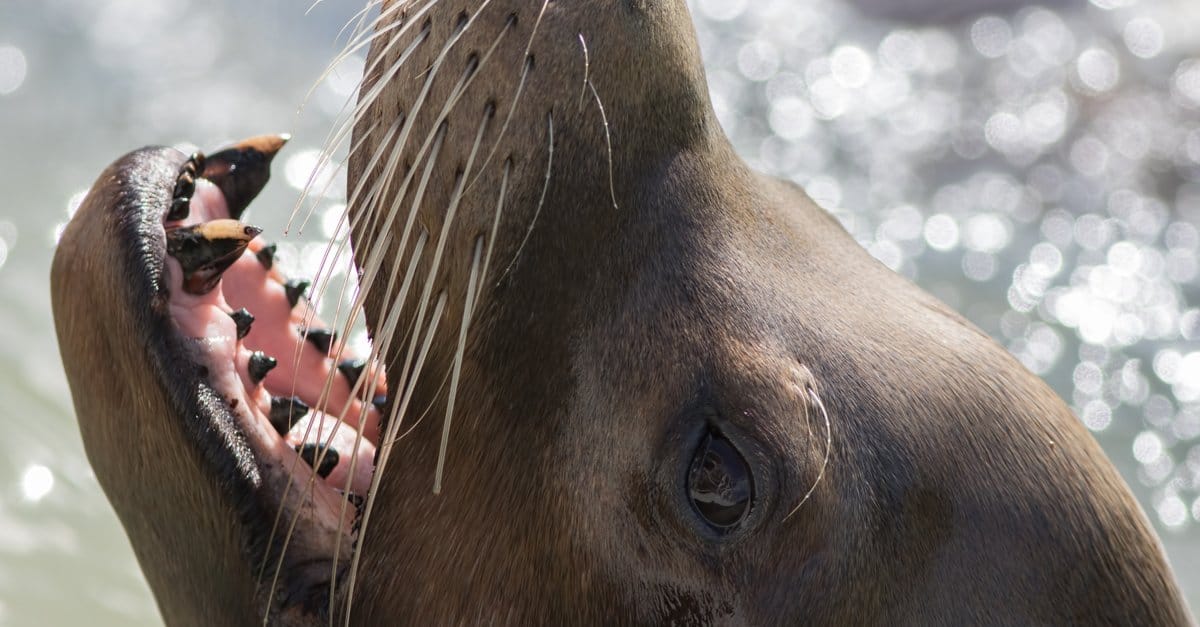
Sea lions have 32 to 34 teeth.
©Ian Dyball/Shutterstock.com
Sea lions typically have 34 permanent teeth. On each side, the upper jaw has 3 incisors, 1 canine, 4 premolars, and 1 molar. The first two incisors are short and separated into two cusps by a deep cleft. The third upper incisor is large, sharp, conical, and larger than the upper canine. On each side of the lower jaw, there are 2 incisors, 1 canine, 4 premolars, and 1 molar. This gives the typical sea lion a total of 10 incisors, 4 canines, 16 premolars, and 4 molars. Their molars and premolars are also sharp and conical. This adaptation better enables sea lions to grasp their prey.
Functionality
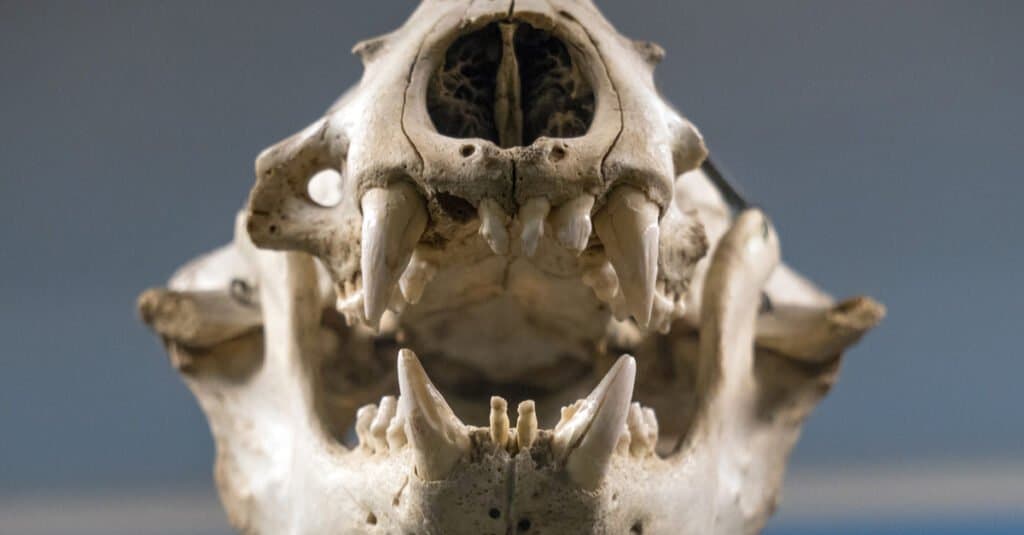
Like most carnivores, sea lions have sharp teeth.
©Andrea Izzotti/Shutterstock.com
A sea lion’s teeth are incredibly sharp. The canines and incisors are used for piercing and tearing apart their prey. The molars and premolars are used to grip prey rather than grind it, as sea lions do not chew before swallowing. These sharp, conical molars and premolars give sea lions a better grasp on their slippery, aquatic prey. Sea lions prey on various marine animals depending on species and location. Primary prey for sea lions includes salmon, herring, anchovies, rockfish, squid, octopus, crab, and clams. Larger species, such as Steller’s sea lion, have been documented preying on seals and sea otters, though this is rare.
Why Do Sea Lions Have Black Teeth?
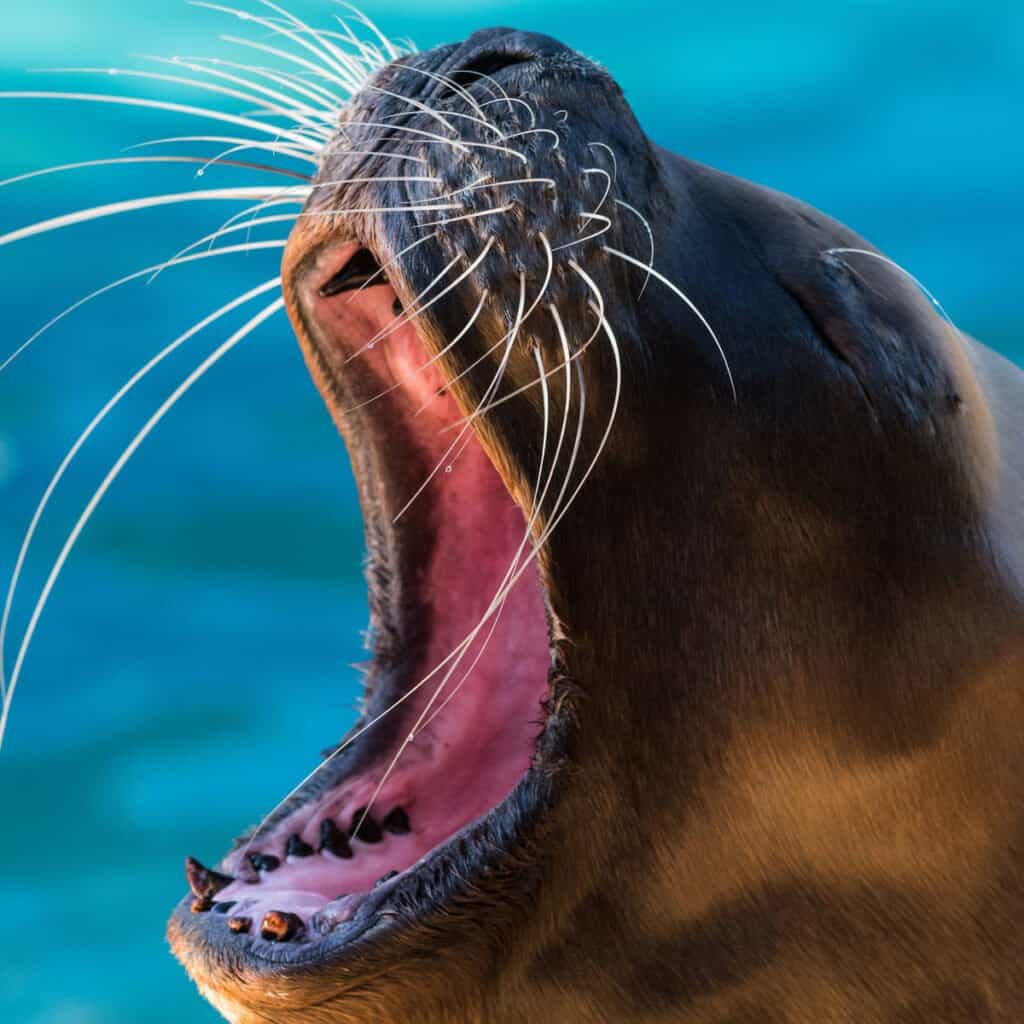
Naturally occurring dark-colored bacteria give sea lion teeth their black color.
©Marcos del Mazo/Shutterstock.com
For sea lions, black teeth are an indicator of good health. Sea lion pups are born with white teeth. Then, as they age, a natural protective layer forms. This protective layer is comprised of dietary enzymes from fish and healthy dark-colored bacteria. Sea lion teeth lack biological enamel, so this black layer is essential to the sea lion’s oral and overall health.