
Quick Take
- Great white shark jaws work nothing like yours, and that difference is precisely what makes them so deadly. See how the jaws work →
- Their bite registers a force most people can't visualize, and the number is hard to believe. Discover the bite force →
- Most shark attacks on humans aren't what they seem, and understanding the real reason behind them changes how terrifying great whites actually are. Understand shark attack reasons →
- A slow-motion camera captured something about a great white's strike that's nearly impossible to see in real time. Watch the strike mechanics →
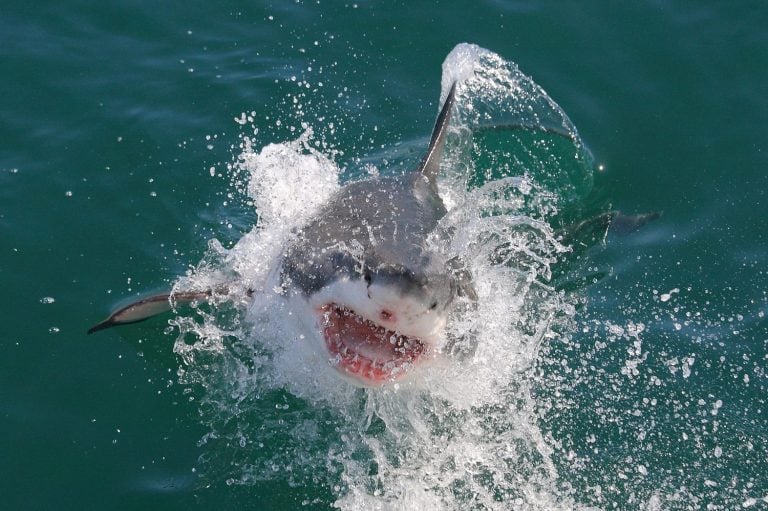
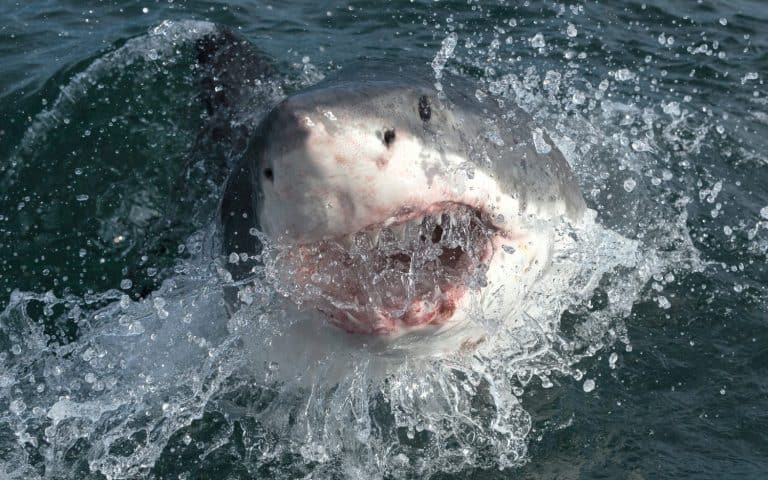
Great white sharks are some of the most fearsome animals in nature. Their sharp teeth and quick speed make them ferocious hunters. One of their best traits for catching prey is their wide jaws. This YouTube Short by @GoPro shows a slow-motion video of a great white shark trying to catch a lure, and its massive jaw is terrifying. Read on to learn more.
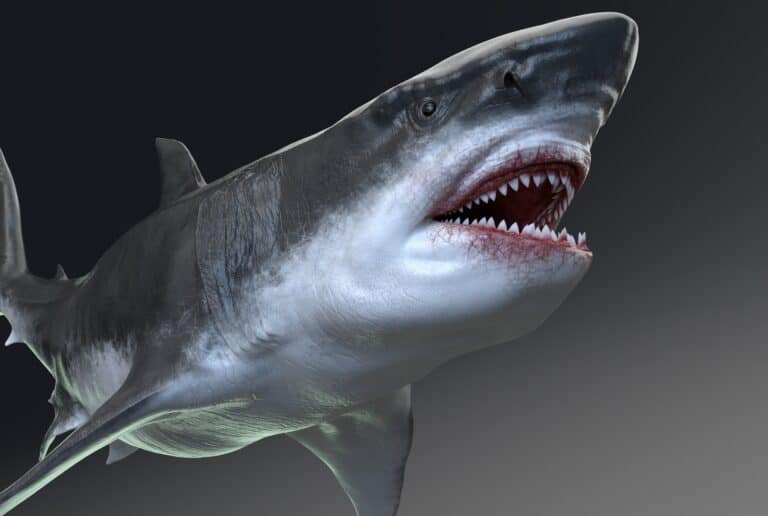
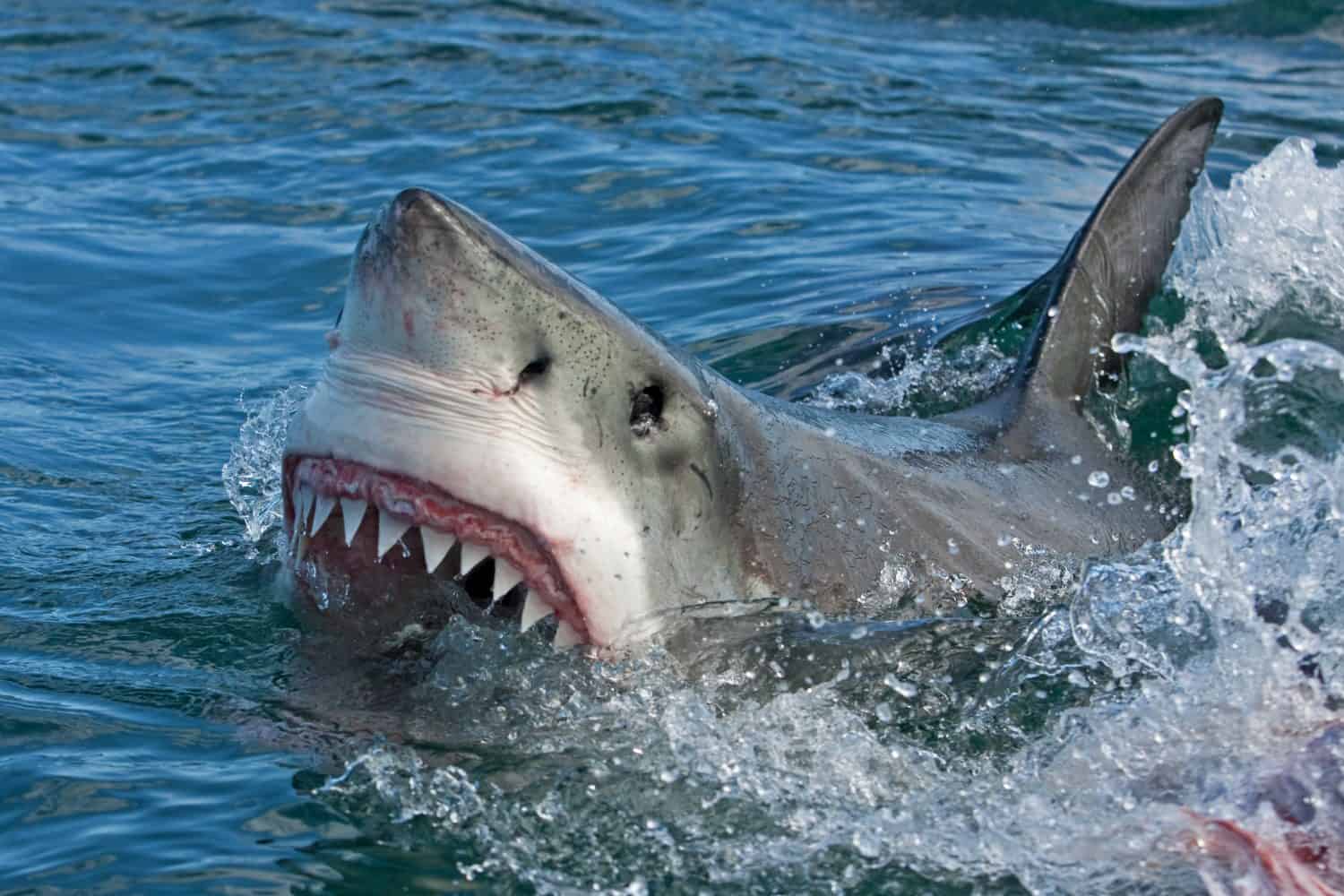
Great white sharks have hundreds of teeth lining different rows and will lose and replace hundreds of thousands over their life.
©Sergey Uryadnikov/Shutterstock.com
About the Great White Shark
Great white sharks inhabit temperate waters throughout the world. They are most commonly found in the waters around South Africa, Japan, New Zealand, the northeastern United States, and California. Despite their preference for temperatures around 55 to 75 degrees, they regularly travel thousands of miles across the open ocean. Great white sharks are among the largest predatory fish alive. Males grow to about 11 to 15 feet, while females grow to around 15 to 18 feet! An average adult can also weigh anywhere between 1,500 and 4,000 pounds, and to get to this size, they need to be excellent hunters. Thanks to their remarkable biology, such as their sharp teeth and massive jaws, they are among the most effective hunters in the ocean.
Great White Shark Jaws
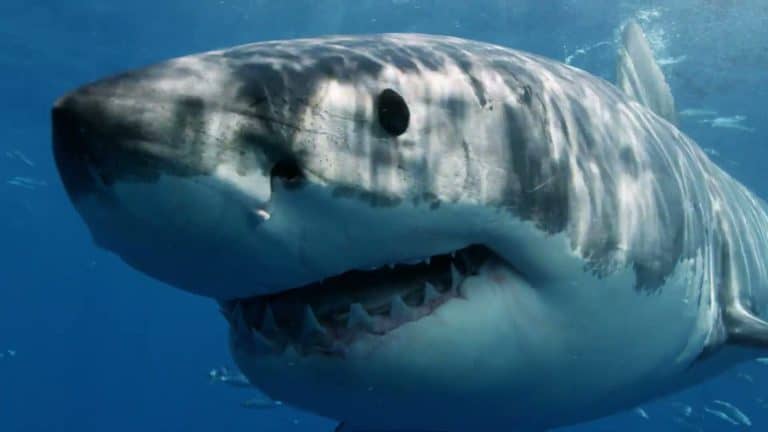
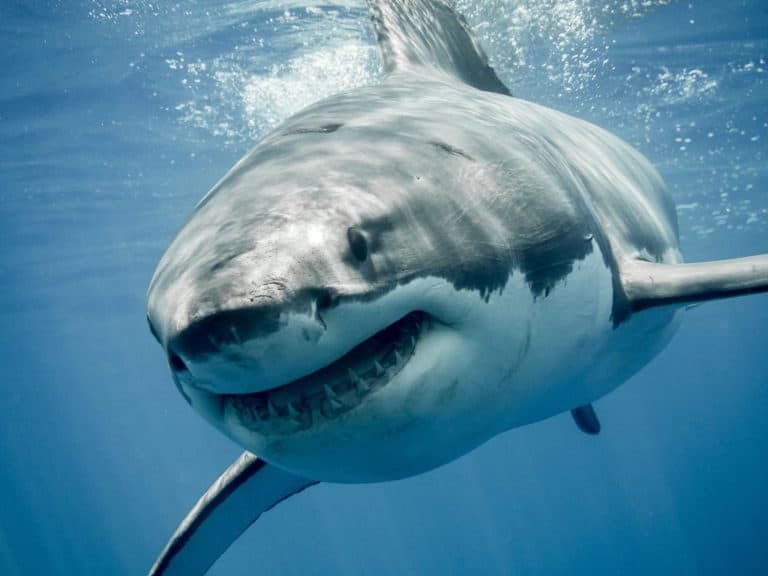
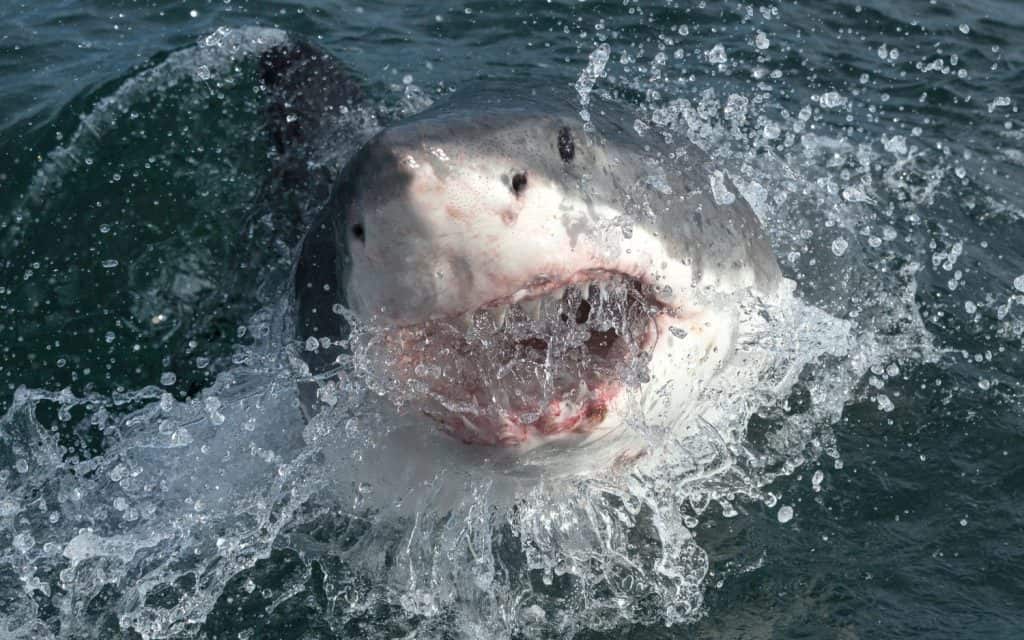
The mouths of great white sharks function like powerful weapons. An adult can open its jaw about four feet wide because its jaw structure is different from that of humans. Human jaws are attached to the skull, which limits their movement. In contrast, as seen in the video above, a great white shark’s jaw is not directly attached to its skull, allowing it to protrude forward during a bite. This lets them bite massive prey. With such a powerful bite, they can grasp prey with a force of about 18,000 newtons, one of the strongest bite forces in the world.
With roughly 300 teeth lining several rows, each razor-sharp, they can slice through thick skin, blubber, and muscle. This helps them when hunting seals, dolphins, and sea lions. While all of these traits are terrifying, great white sharks do not normally hunt humans. Some incidents involving great white sharks may occur because the shark misidentifies a human as another animal, though the scientific community has not reached a consensus on this explanation. More often than not, they are simply curious about humans, as demonstrated by their interactions with divers in cages. So, while they may be terrifying, great white sharks are extremely interesting.