
Quick Take
- A poison dart frog's deadly toxicity is not something it's born with. It actually comes from a surprising source hiding in its diet. Discover the dietary source →
- Captive poison dart frogs share the same vivid colors as their wild cousins, though the similarity ends there. See why captive frogs differ →
- These frogs don't actually use their poison to hunt, so what is it really for? Find out the real purpose →
- One species feeds its tadpoles something that would seem to harm them, yet this substance turns out to be critical to their survival. Learn about tadpole feeding →
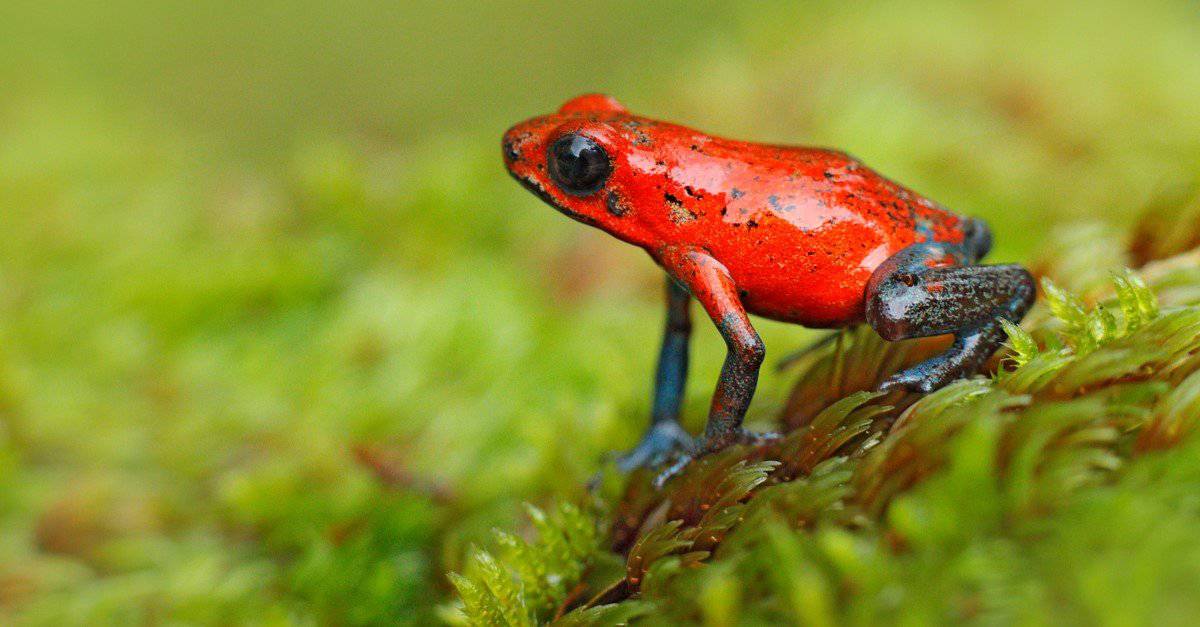
Poison dart frogs (family Dendrobatidae) are small, vividly colored amphibians native to the humid rainforests of Central and South America. There are over 170 different species, each with its own unique coloring and habitat. Poison dart frogs live in warm, humid environments, including in the rainforests of Central and South America. Poison dart frogs derive their intense toxicity from their specialized diet in the wild. Continue reading to discover everything you need to know about what poison dart frogs eat and how their diet influences their toxicity.
What do Poison Dart Frogs Eat?
Poison dart frogs eat ants, termites, and other small insects. Poison dart frogs have diets similar to those of other frogs. They are generally very small, and their dietary preferences reflect this. Their most common foods are ants and termites, but much about their diet remains unknown.
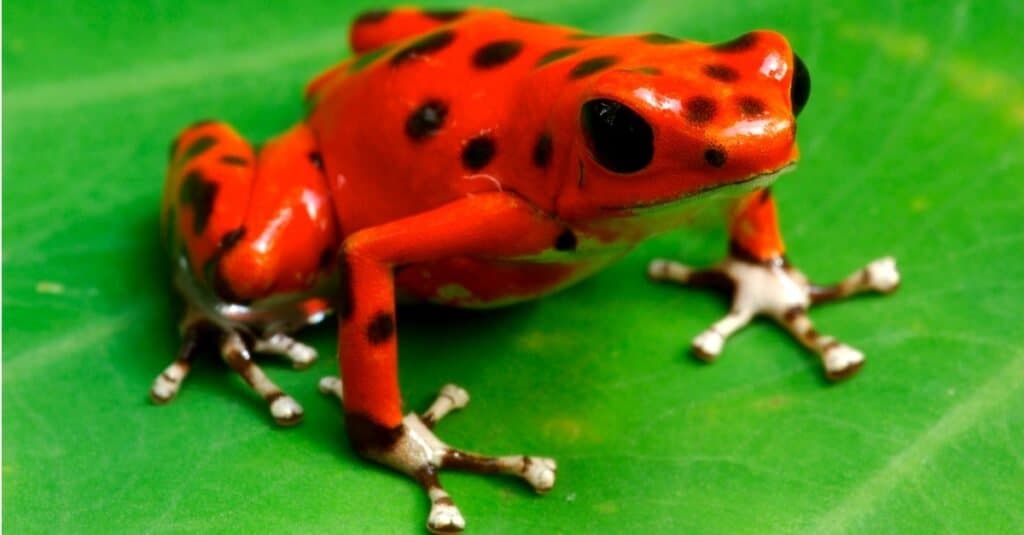
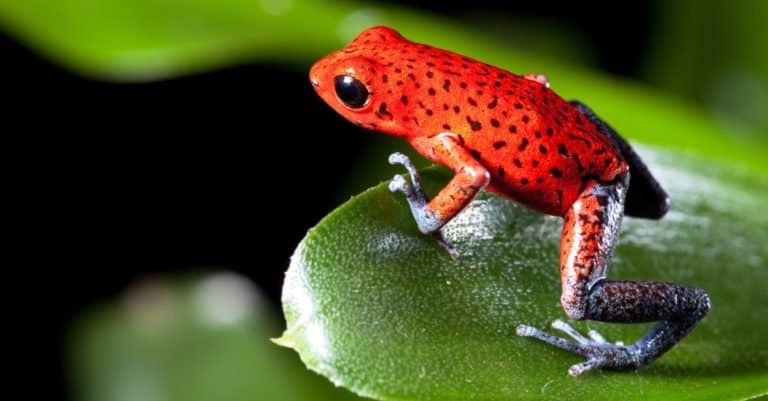
Poison dart frogs are some of the most colorful amphibians on the planet.
©iStock.com/NTCo
Poison dart frogs vary in toxicity, depending on the species. Scientists believe that this is due to their diet, which consists of insects that are high in alkaloids. Alkaloids are chemicals present in plants that can have mental and physical effects on humans; examples include caffeine, cocaine, morphine, and DMT. Plants use these chemicals as a way to defend against predators, but some insects have adapted to be able to eat them. Poison dart frogs convert the chemicals from these insects into their own protective toxins. Captive poison dart frogs, which do not consume highly alkaloid insects, do not develop this toxicity, giving credence to the theory.
When poison dart frogs are tadpoles, they are known to eat algae, insect larvae, and natural detritus. Certain species will also eat other tadpoles. The strawberry poison dart frog (Oophaga pumilio) deposits unfertilized eggs to feed its tadpoles, a behavior known as obligate egg-feeding. The mother visits the tadpoles every few days to deposit nutrient-rich, poisonous eggs, which not only help the tadpoles grow but also allow them to develop their own toxins.
Foods poison dart frogs will eat include:
- ants
- termites
- alkaloid-rich arthropods
- crickets
- bean beetles
- fruit flies
- worms
How do Poison Dart Frogs Hunt?
Poison dart frogs hunt much like other frogs hunt – with their tongues.
Frogs, on average, have tongues that are one-third the length of their body. When they snap it out, they can catch insects on the sticky mucous-covered end, and pull it back into their mouths. These retractable tongues are how many species catch their food, but the specifics of their predatory tactics mostly depend on the specific species.
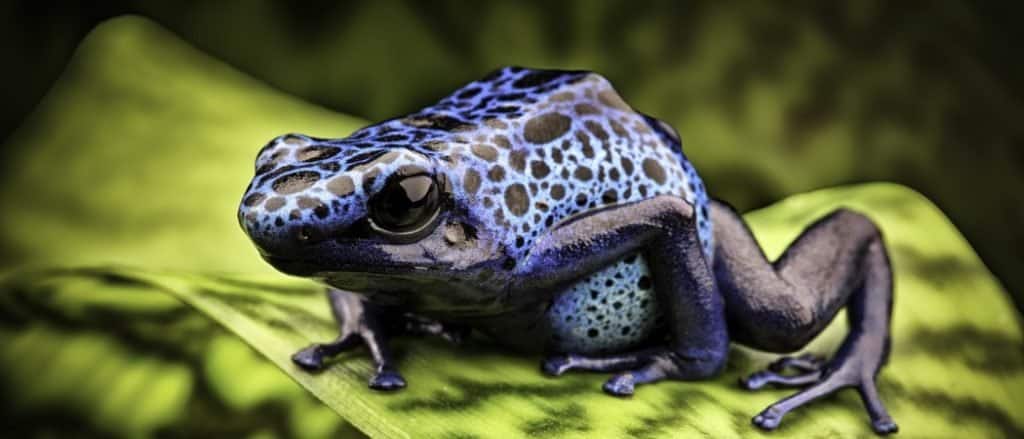
Frogs hunt using their long and sticky tongues, snatching up their prey in 0.07 seconds.
©Dirk Ercken/Shutterstock.com
Do Poison Dart Frogs Poison Their Prey?
Poison dart frogs do not use their toxins to subdue prey; instead, their toxins serve as a defense against predators. When a potential predator sees how brightly colored the frogs are, they generally steer clear and want nothing to do with the dangerous little animals. In fact, the most dangerous of all poison frogs is the golden poison dart frog (Phyllobates terribilis). A single golden poison dart frog has enough poison to kill ten full-grown men.
Because of their lethal toxicity, toxins from the golden poison dart frog were used by the Emberá people of Colombia to tip the darts of their blowguns, which gave the frogs their name.
Where do Poison Dart Frogs Live?
Poison dart frogs are common throughout Central and South America. Generally, they prefer humid, tropical environments, especially rainforests. They are found in Bolivia, Costa Rica, Brazil, Colombia, Ecuador, Venezuela, Suriname, French Guiana, Peru, Panama, Guyana, Nicaragua, and Hawaii (although they aren’t native).
Wherever there is moisture and water, poison dart frogs are likely to be present. They also inhabit high-altitude tropics, freshwater marshes, lakes, and swamps across much of the South American continent.
They generally live on the ground but may also inhabit trees and can be found up to 30 feet high, depending on the species.
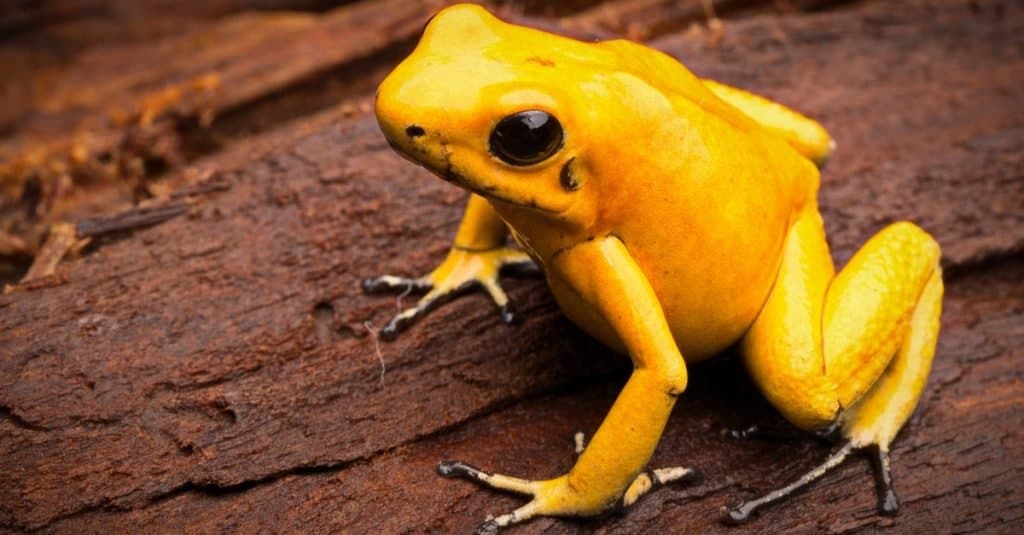
Poison dart frogs get their toxins from alkaloid-rich insects in their diet.
©Dirk Ercken/Shutterstock.com
What do I Feed My Pet Poison Dart Frog?
Poison dart frogs, when kept as pets, aren’t toxic when fed a pet-store diet. The exact food depends on the species, but common insects include crickets, bean beetles, and fruit flies. Owners may dust their food with vitamin and mineral supplements to ensure a more balanced diet.
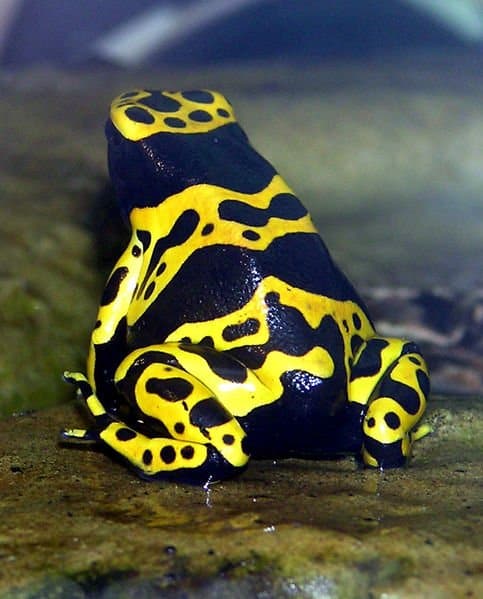
Captive poison dart frogs are harmless.
©Arpingstone, Public domain, via Wikimedia Commons – Original / License