Quick Take
- Rolling without an axle should be physically impossible, but this tiny snake has somehow solved a locomotion problem that stumped researchers. See the discovery →
- The snake's head does something unexpected while its body cartwheels, and without that action, the whole escape would end in self-injury. How the head stays stable →
- Its cartwheeling speed relative to its body size defies what you'd expect from one of the world's smallest snakes. Check the rolling speed →
- Cartwheeling isn't even this snake's first choice. There's a reason it rarely gets studied, and it has everything to do with what it does when no one's threatening it. Why it's rarely studied →
When snakes feel threatened, they typically retreat from danger by slithering away. However, dwarf reedsnakes take a different approach to escaping would-be predators. Instead of slithering, these snakes cartwheel away at high speeds, leaving predators behind in a cloud of dust.
Dwarf Reedsnakes Cartwheel to Escape Predators
Each snake species has defensive strategies to protect itself from predators. These include camouflage, displaying bright colors to warn of danger, shaking rattles, emitting a musk, or even mimicking dangerous species. The goal is to retreat from a threat unscathed.

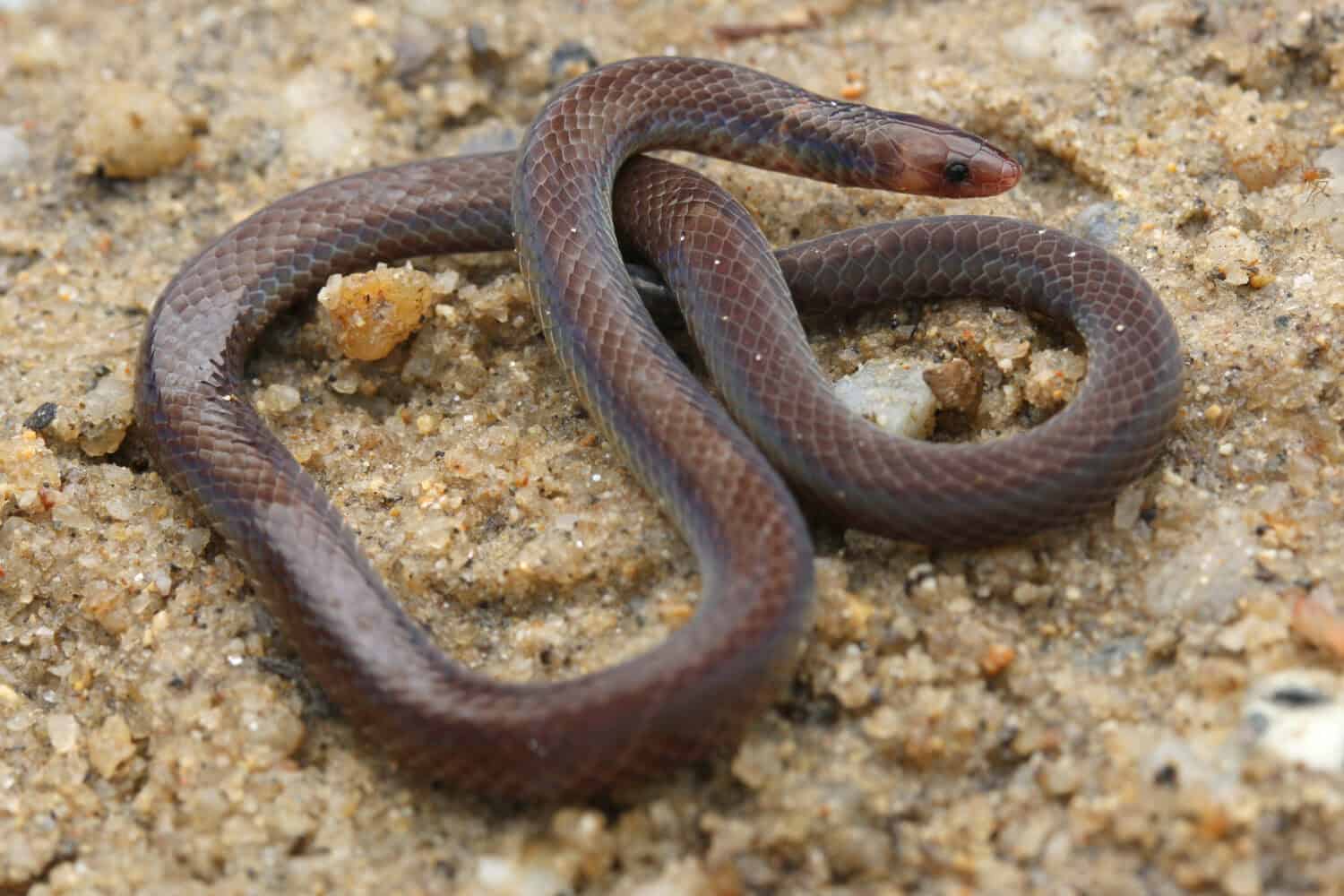
Dwarf reedsnakes contort their bodies to roll away from danger.
©Mohamad alias/Shutterstock.com
According to a new study published in Current Biology by researchers at Toho University, the dwarf reedsnake uses its unique gymnastic prowess to escape danger. When threatened, the snake can cartwheel away at high speed.
To accomplish this feat, the dwarf reedsnake does not simply curl into a tight ball and roll away. Instead, it uses a series of movements that rotate the body from left to right, forming a loose circle and cartwheeling rapidly away from danger.
How Dwarf Reedsnakes Roll
Researchers already knew that dwarf reedsnakes could roll away from danger. What was unclear was how much control the snakes had over their forward momentum, or if they had any at all.
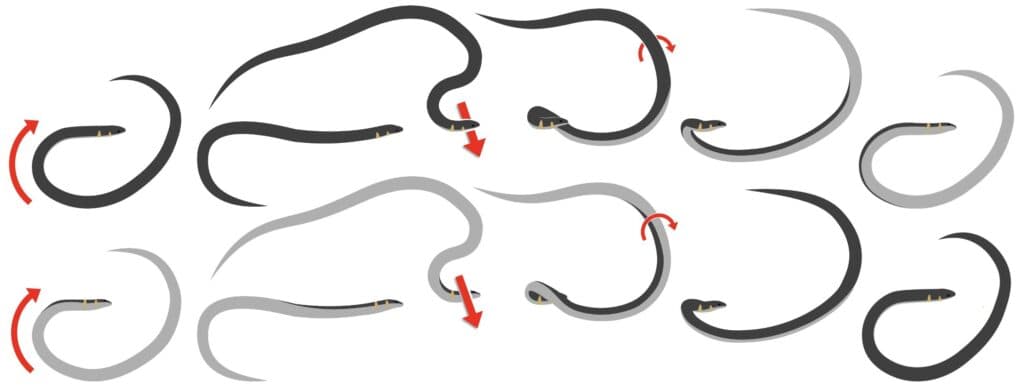
Dwarf reedsnake bodies use different locomotive compartments to maintain forward momentum, known as a “stroke.”
©Vince Adam/Shutterstock.com
Using video cameras from various angles, researchers captured how the snakes positioned themselves while rolling. According to the study, their bodies break into different locomotive parts. When one portion of the body contacts the ground, another arched portion swings forward to maintain momentum. The researchers dubbed this movement a “stroke.”
Much like a canoe oar, the body shifts weight from left to right to propel the snake forward and keep it moving in a straight line. This allows locomotion despite not having a rotating axle.
The Dwarf Reedsnake Keeps Its Head Stable While It Rolls
The biggest question researchers had was exactly how the dwarf reedsnake navigates while cartwheeling. It turns out the snake’s body rotates rapidly while its head stays stable.
©phys.org / Kanon Tanaka (illustration), Yosuke Kojima – Original
According to the study, the snake’s head does not rotate with the rest of its body. Instead, the head stays aligned with the direction of movement. This, the researchers believe, helps the snake to remain in control of their body’s momentum, especially at higher speeds.
The dwarf reedsnake’s ability to perform separate body functions is the only reason it can stay so stable while cartwheeling. If it tucked its head in with the rest of its body, it would lose control of locomotion. Instead of winding up safely away from danger, the snake could seriously injure itself. The snake would become even more vulnerable to predators, rendering itself defenseless and unable to flee.
How Fast Can the Dwarf Reedsnake Roll?
Dwarf reedsnakes are between 4.3 inches and 11.0 inches long. Despite their small size, their method of escape is quite efficient.
Researchers recorded the snakes cartwheeling from multiple angles. This helped to determine the velocity the snakes reached when rolling. The research team was shocked at the speeds with which the snakes traveled. Dwarf reedsnakes were capable of rolling between 3.8 mph and 8.3 mph.

Dwarf reedsnakes can roll up to 8.3 miles per hour.
©Pepew Fegley/Shutterstock.com
The snakes retreated from danger four times faster than they could slither. Even more unbelievable, they reached these speeds on the track the researchers provided for the study, which was only 7.9 inches wide. This shows just how much control the dwarf reedsnakes have when rolling, a fact that wholly surprised researchers.
Why So Litte is Known About the Dwarf Reedsnake
Although studies described the dwarf reedsnake’s rolling capability long before the most recent one was published, these snakes are rarely studied because their behavior makes them difficult to locate.
Dwarf reedsnakes are burrowing snakes. Given a choice, they prefer to burrow away from danger rather than roll away from it. These snakes are typically found in burrows or under rocks, piles of leaves, or logs.
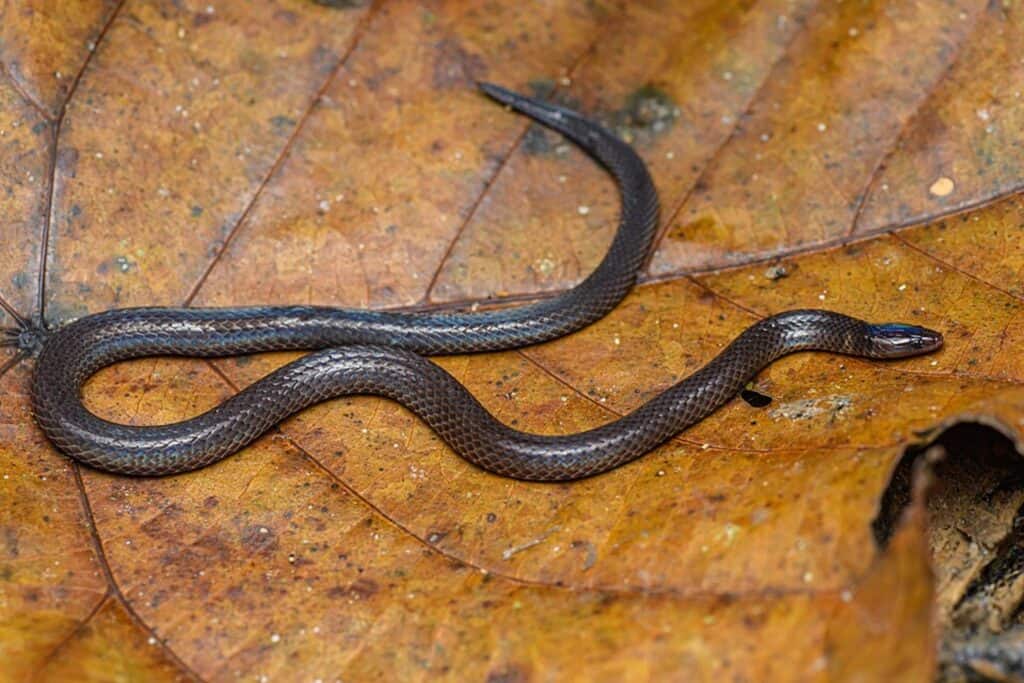
Dwarf reedsnakes are nocturnal and burrowing snakes, making them hard to locate and study.
©Rushen, CC BY-SA 2.0 , via Wikimedia Commons – Original / License
Additionally, dwarf reedsnakes are nocturnal. This makes finding the small snakes even more challenging. But this also benefits the snakes, which are ambush hunters, meaning they wait until prey comes within striking distance to attack. Dwarf reedsnake victims, including small reptiles, amphibians, or invertebrates, do not even know they are in danger until it is too late.