
Quick Take
- The guide made one specific choice that kept the elephant from charging, and it was the opposite of what most people would have done. See the charge analysis →
- Elephant ears can signal aggression, curiosity, or something else entirely, and experts say most observers read them wrong. How experts read body language →
- When the elephant stopped inches from the guide's face, the two were nearly eye-to-eye. The size comparison explains why that detail is so hard to believe. See just how massive elephants are →
- Elephants process the world through senses humans rarely account for, and that may be exactly why this encounter ended the way it did. Why the elephant approached →
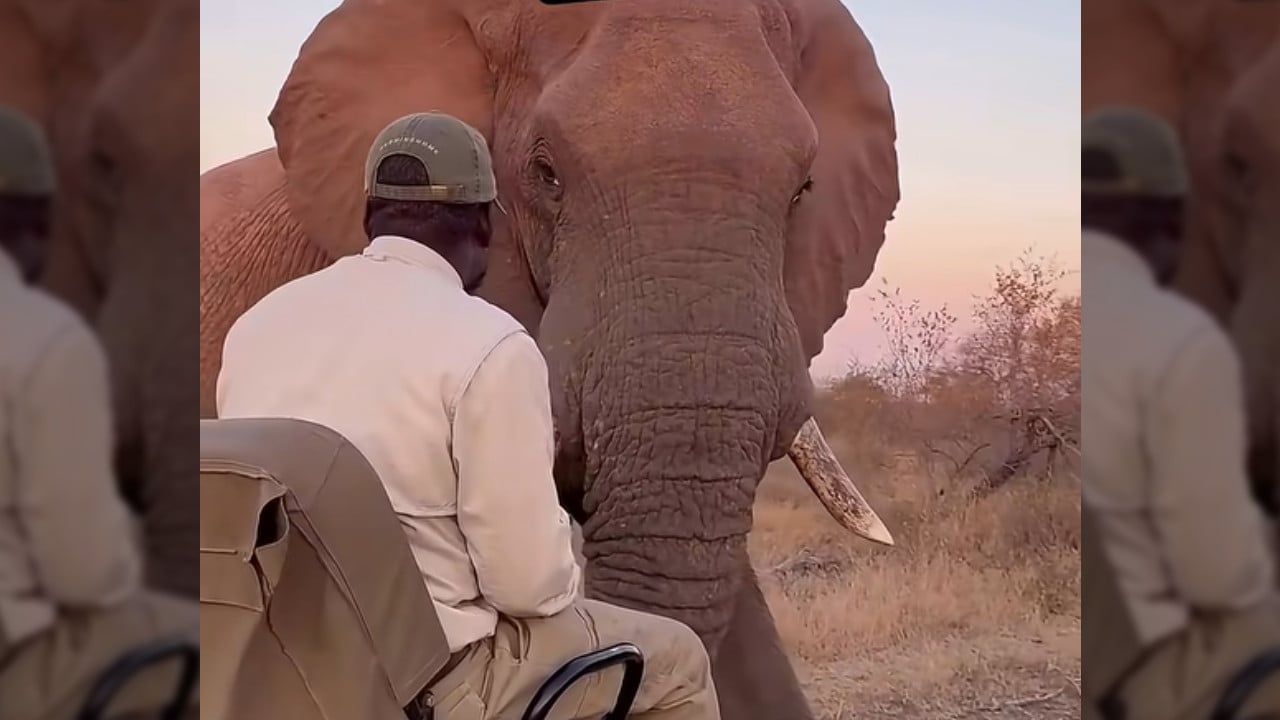
Some safari encounters unfold through binoculars. This is not one of them. In the remarkable video below, a huge African elephant approaches an open vehicle head-on while a guide sits in the exposed seat at the front. Within seconds, the animal’s face fills the frame. Its tusks pass on either side of the guide, and the two are suddenly looking at each other from only a few feet away.
The guide does not jump, shout, or make any abrupt move. He simply stays seated while the elephant pauses in front of him. After several long seconds, the giant turns, walks alongside the vehicle, and continues into the brush. It is a master class in remaining composed when the largest land animal on Earth decides to inspect your seat.
Watch the Incredible Face-to-Face Encounter Below!
Why Did the Elephant Get So Close?
The short answer is that only the elephant knows. The reel does not identify the exact location or explain what happened before the recording began, so it would be a mistake to assign the animal a precise motive. It may have been following a familiar path, investigating the vehicle, or simply deciding whether the people in front of it mattered.
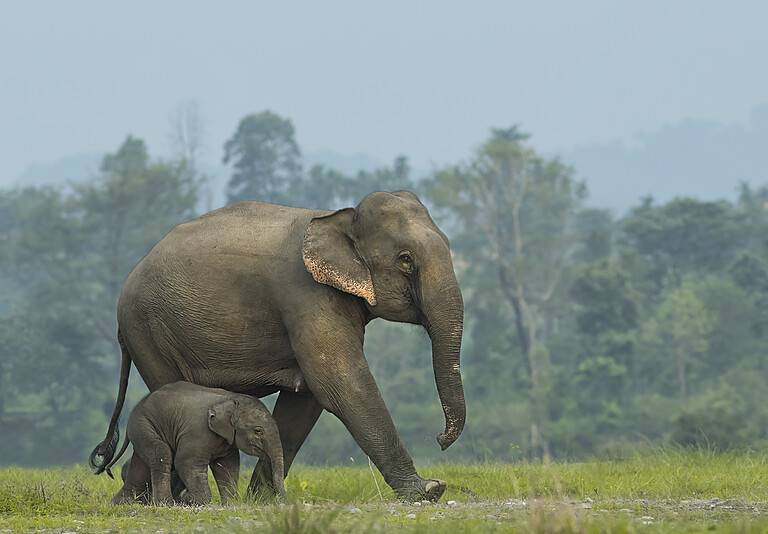
Elephants experience their surroundings differently from humans. According to Elephants for Africa, they rely heavily on smell and hearing, often more than vision. Their trunks can sample scents in the air and collect an enormous amount of information about nearby animals, people, water, and food. A vehicle that looks motionless to us may still be full of interesting smells and sounds to an elephant.
What makes the footage so compelling is the lack of obvious panic on either side. The elephant advances slowly, stops, and then moves past. The guide stays quiet and avoids turning the moment into a confrontation. That does not make the encounter safe or predictable. It means the elephant chose to end it peacefully.
Was the Elephant About to Charge?
Nothing visible in the 23-second clip confirms a charge. The elephant does not suddenly sprint, toss its trunk, kick up dust, or shake its head. Its ears are visible and partly extended, but that feature alone is not enough to label the approach aggressive. Elephants also move their ears to cool themselves, listen, and communicate.
ElephantVoices explains that elephants signal with their entire bodies. Head height, ear position, trunk movement, stance, feet, and tail can all matter, and those signals must be read together and in context. A threatening elephant may stand tall and spread its ears to look larger, while other forms of excitement, vigilance, or social communication can produce some of the same individual movements.
That nuance is important here. The footage captures a calm ending, not proof that close approaches are harmless. Wild elephants are immensely powerful and can change direction or intent quickly. Safari visitors should never attempt to recreate the moment and should always follow the instructions of trained guides.
How Large Can African Elephants Grow?
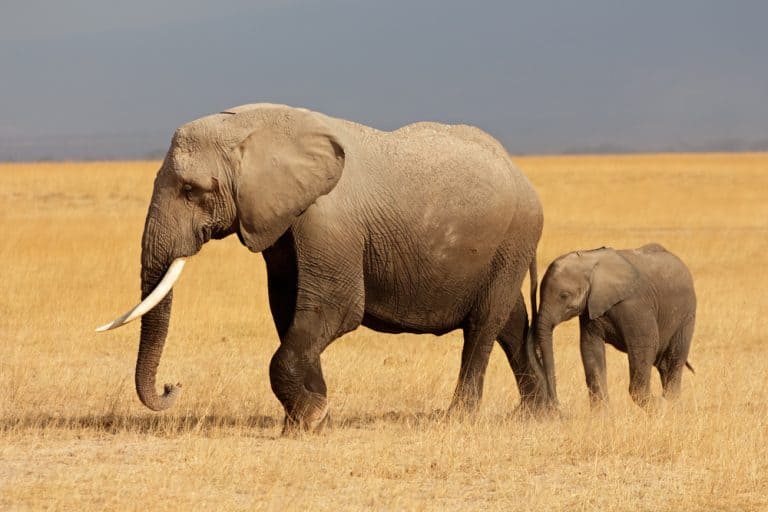
The elephant in the video appears to be an African savanna elephant, based on its enormous fan-shaped ears, tusks, body size, and the open bush setting. The original post does not identify the animal or filming location, so that identification should be considered visual rather than confirmed.
African savanna elephants are the largest living land animals. The San Diego Zoo Wildlife Alliance reports that adult males average roughly 10 to 10.5 feet tall at the shoulder and can weigh 12,000 to 15,000 pounds. Females average about eight feet tall and can weigh up to 8,000 pounds. Both sexes may grow visible tusks.
Those measurements are difficult to appreciate until an elephant stands beside a person. Here, the guide’s chair puts his head unusually high above the vehicle, yet the elephant still looks him almost directly in the eye. For a few unforgettable seconds, there is no zoom lens and no safe-looking gap—only a seated guide, a silent elephant, and an extraordinary amount of mutual attention.