
Quick Take
- A mouthpart twice your body length sounds like a liability, yet for this ancient insect, it was the only reason it could eat at all. Meet this ancient insect →
- The Noo-Noo didn't just pierce trees. It also came equipped with a built-in anchoring system that modern insects don't have. See the anchoring system →
- A children's TV character inspired this prehistoric insect's scientific name, and the reason why is more fitting than you'd expect. Discover the naming origin →
- Its highly specialized survival tool may be the very reason it vanished from Earth entirely. Explore its likely extinction →
Insects have a variety of mouthparts used to consume the different nutrients they need to survive. These mouthparts are small enough that they do not interfere with daily life, or they can be tucked or rolled away until needed.
The same may not have been true for a 99-million-year-old insect that had mouthparts twice its body length. This raises the question of whether the mouthparts needed to be this long or were, instead, for show.
The Cretodorus noonoo Had a Mouthpart Twice Its Body Length
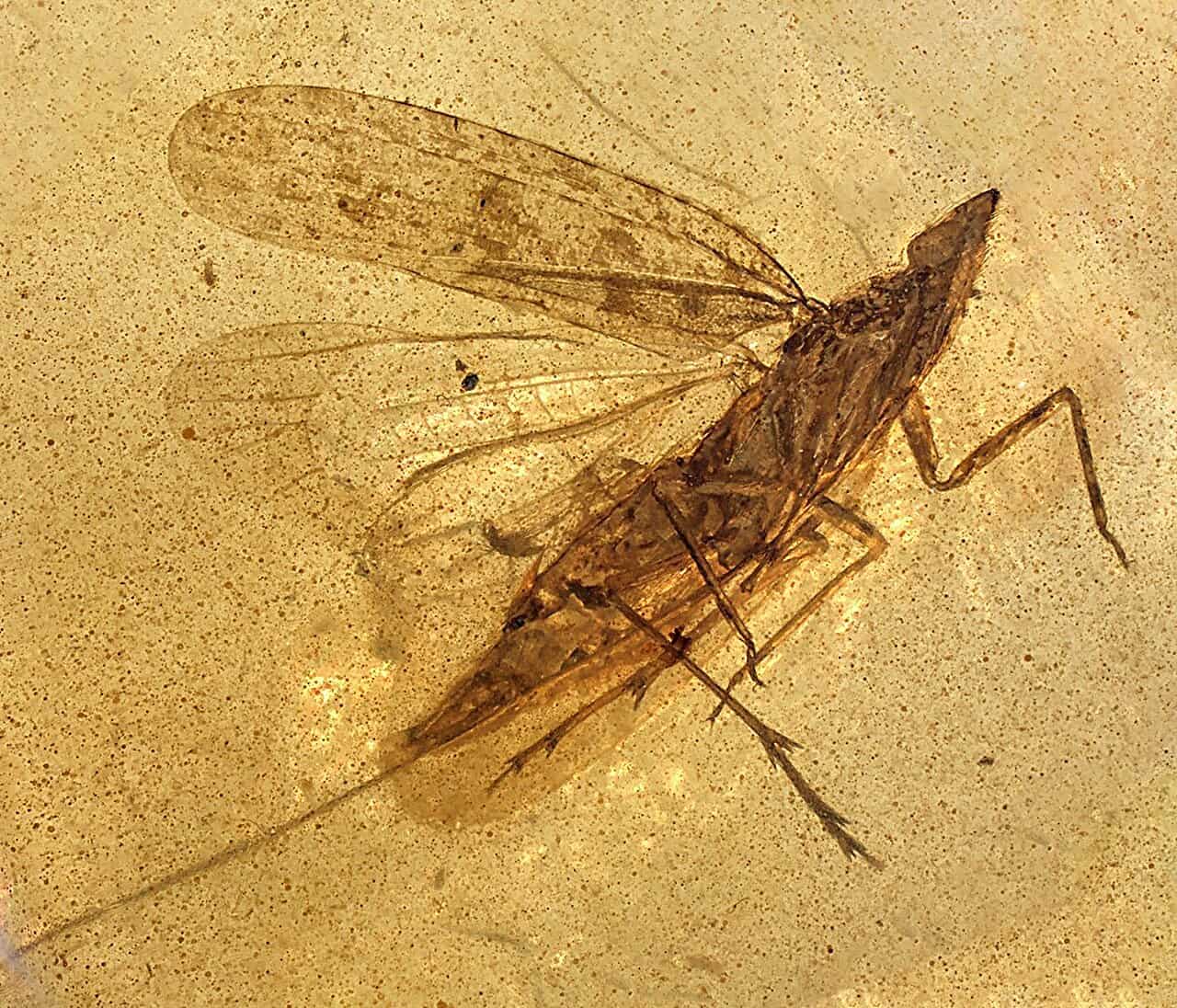
Creatures that lived during the dinosaur era were truly unique. One such individual, the Cretodorus noonoo, or the Noo-Noo, was recently discovered. While several planthoppers lived during this period, the Noo-Noo stood out for its extremely long mouthpiece.
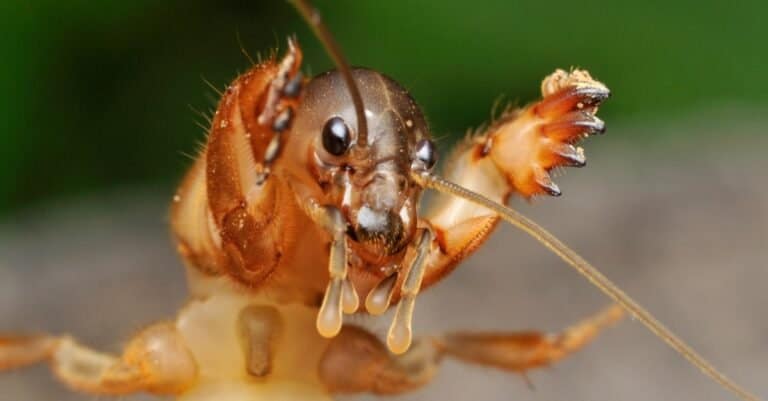
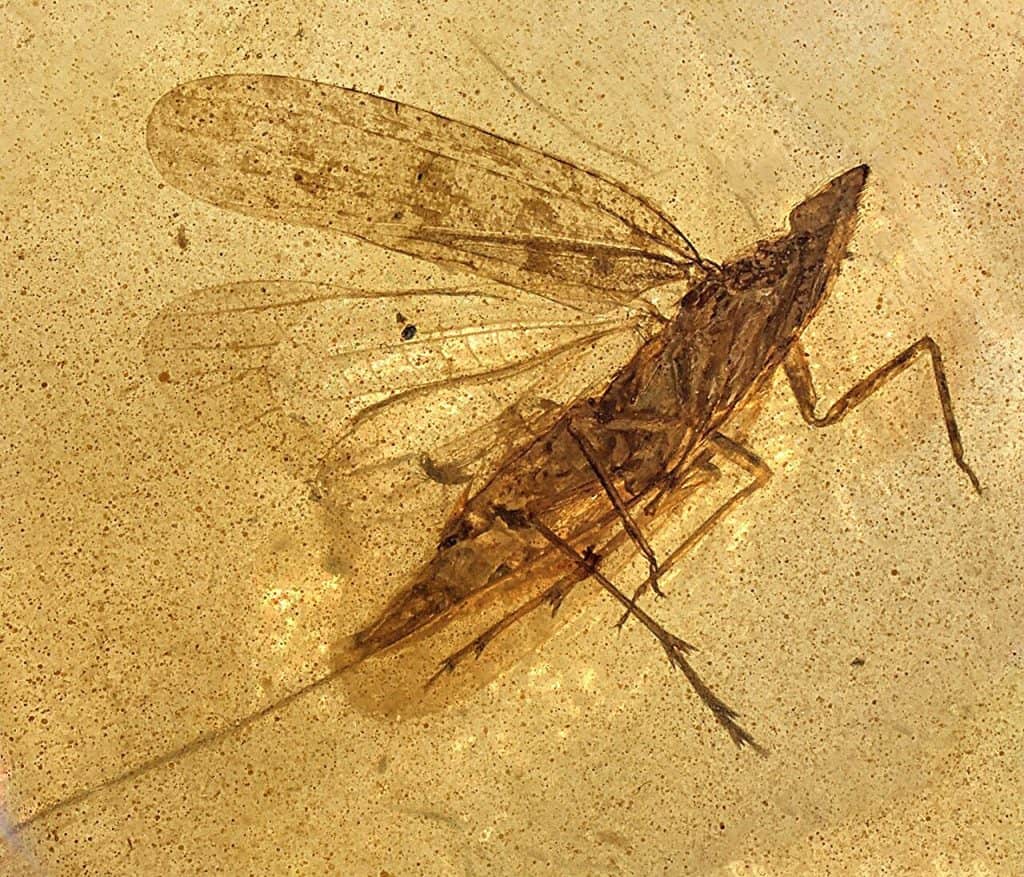
The Cretodorus noonoo had a mouthpart twice as long as its body.
© phys.org / Dolev Fabrikant – Original
According to a new study published in Insects, conducted by Dolev Fabrikant and Dr. Leonidas-Romanos Davranoglou of the School of Zoology, Wise Faculty of Life Sciences, The Steinhardt Museum of Natural History and New Environmental School at Tel Aviv University, as well as collaboration from Dr. Yanzhe Fu of the Nanjing Institute of Geology and Paleontology of the Chinese Academy of Sciences, the Noo-Noo lived 99 million years ago. The planthopper was from the family Neazoniidae, of which no relatives exist today.
Noo-Noo was discovered encapsulated in amber. Researchers found 13 specimens in Myanmar, all with mouthparts twice as long as their bodies. The mouthparts were covered with transverse folds that helped the mouthparts maneuver into cracks and crevices without compressing. This was necessary so that the Noo-Noo could receive the sustenance it needed.
What Was the Noo-Noo’s Mouthpart Used For?
Several species have elongated mouthparts today. They include butterflies, moths, aphids, female mosquitoes, cicadas, and other leafhoppers. Although not nearly as long as the Noo-Noo’s mouthparts, they all serve the same function, which is to eat.
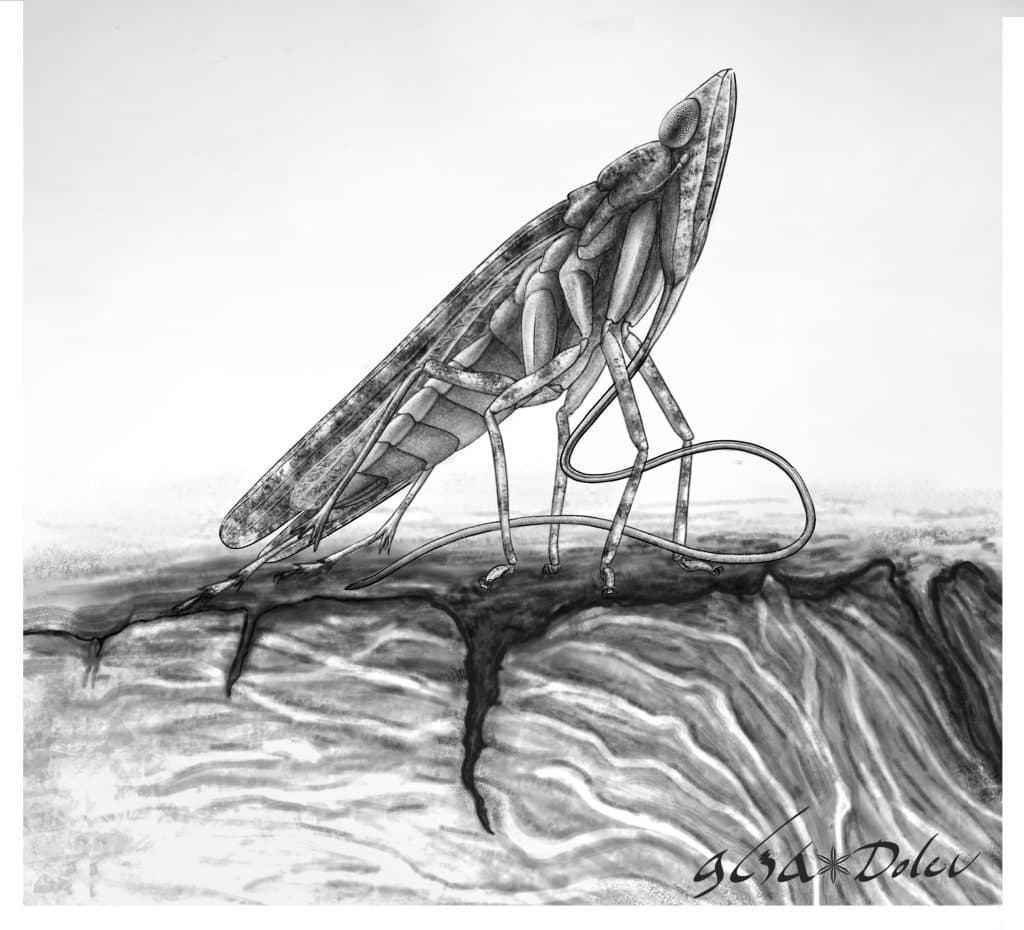
The Noo-Noo’s extraordinary mouthparts were used to drill into trees and suck out sap. According to the study, the mouthparts pointed backward and were used to both pierce the tree and access sap.
More interestingly still, the mouthparts had a built-in anchoring system. As the Noo-Noo sucked sap from the tree, two grooved lobes expanded as it continued drilling into the wood. This ensured the Noo-Noo would not fall from the tree while eating, only loosening its grip as it retracted its mouthparts from the tree.
Why the Noo-Noo’s Mouthpart Was So Long
The Noo-Noo’s mouthpart was twice as long as its body. Based on today’s insects with similar structures, such as butterflies that can unroll their long tongue or proboscis, it seems unnecessary to have a mouthpart that long. However, taking a closer look at the trees that the Noo-Noo targeted gave researchers clues as to why such a long mouthpart was essential to the species’ survival.
According to the study, trees in the Cretaceous period were commonly victims of forest fires. To better protect themselves, the trees grew thick layers of bark. Consequently, the bark may burn, but the tree would survive.
The Noo-Noo used its long mouthparts to suck sap from trees.
© phys.org / Dolev Fabrikant – Original
To get to the sap beneath the bark, the Noo-Noo needed a long mouthpart. It also needed a flexible mouthpart that could bend seamlessly as it reached the living portion of the tree containing sap. Researchers proved this via high-resolution micro-computed tomography reconstruction.
The long mouthpiece could snake through the cracks and crevices of thick tree bark, allowing the Noo-Noo to reach the sap it depended on for energy and life.
How Did the Noo-Noo Get Its Name?
If the name Noo-Noo sounds vaguely familiar, it might be due to its pop culture reference.
Noo-Noo is the Teletubbies’ pet vacuum cleaner from the series of the same name. The character is a small vacuum cleaner with a long hose, big eyes, and a pink light at the rear. The species recently discovered in amber is named after Noo-Noo because both have a long hose, or trunk-like appendage.
While the fictional Noo-Noo sucked up some of the Teletubbies’ favorite items with its hose from time to time, the real Noo-Noo’s mouthpart was used to consume sap from trees.
Why the Noo-Noo May Have Gone Extinct
No specific or catastrophic reason explains why the Noo-Noo went extinct. Instead, experts believe several contributing factors led to the insect’s extinction.

The Chicxulub asteroid that struck Yucatan, Mexico, is likely a large contributor to what ended the existence of the Noo-Noo.
©Elenarts/Shutterstock.com
The most compelling reasons as to why the Noo-Noo went extinct after the Cretaceous–Paleogene event include:
- The specialized feeding mouthpiece no longer accessed food sources
- Mass extinction event caused by the massive asteroid strike that significantly altered the landscape of the planet, including forests and plant-based ecosystems that the insect relied on
- Unstable habitat for feeding and shelter
- Competition with other insects and predators
Today, no living planthoppers share a mouthpart similar to that of the Noo-Noo. Whether this is because the mouthparts are no longer needed due to changes in tree bark thickness is unknown. What is known is that the creatures that lived during the Cretaceous Period were unique indeed.