
Quick Take
- A forgotten photograph sat ignored for years before it accidentally cracked open one of Africa's most surprising primate discoveries. See how photos sparked the find →
- This monkey lived among humans for generations, yet almost none of the locals even knew it existed. Scientists had no idea at all. Discover the hidden primate →
- Its genetics reveal a split from its closest relative so ancient it rewrites what scientists thought they knew about colobus monkey evolution. Explore the genetic evidence →
- Scientists are racing to protect the Likweli from a threat that could erase it before the world even agrees it needs saving. Learn about the extinction threat →
Deep in the rainforests of the Democratic Republic of Congo (DRC), a unique monkey has been hiding in plain sight. Some locals knew it was there, but scientists had never documented it—until now.
A new study published in PLOS One reveals a new species of monkey and sounds the alarm on the risks facing this newly identified species.
What Did Researchers Discover?
An international team of scientists and researchers from Florida Atlantic University, Yale University, the City University of New York, Lukuru Wildlife Research Foundation, and the Lomami National Park made the discovery in a remote part of east-central DRC.
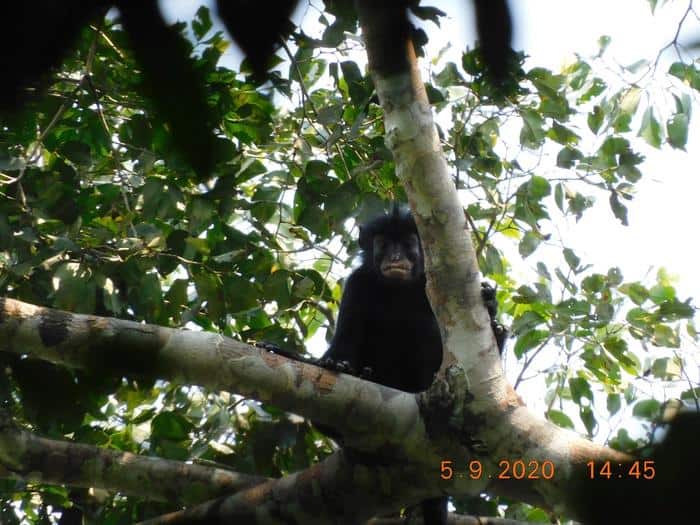
The team was exploring the area between the Lomami and Congo (Lualaba) Rivers, considered one of Central Africa’s most biologically significant regions. They were prompted to head to this specific area by a photo taken by a park ranger nearly a decade earlier. It identified an unusual primate hiding among the leafy tree canopy.
However, this was not the first time the species had been observed. In 2008, a conservationist accidentally captured a shadowy image of the monkey while photographing other wildlife. That initial photo was forgotten until a second image was taken years later. The two images together prompted a team to investigate the region further.
What they found was a monkey unlike any other known in the region. Even many locals weren’t aware of the small primate. A survey of 52 villages in the region revealed that only eight knew the animal existed.
Meet the New Monkey Species
The new species, with glossy black fur, a long sweeping tail, and a unique orange-cream patch around its mouth and nose, looks unlike any other colobus monkey native to the region. It is also smaller than other related monkeys, weighing about 15 pounds. The Likweli has long black facial hair, large folded ears, and white markings on its rump.
Scientists named the new find Colobus congoensis, but the monkey is known by its more common name Likweli, a local word that means “branch shaker.”
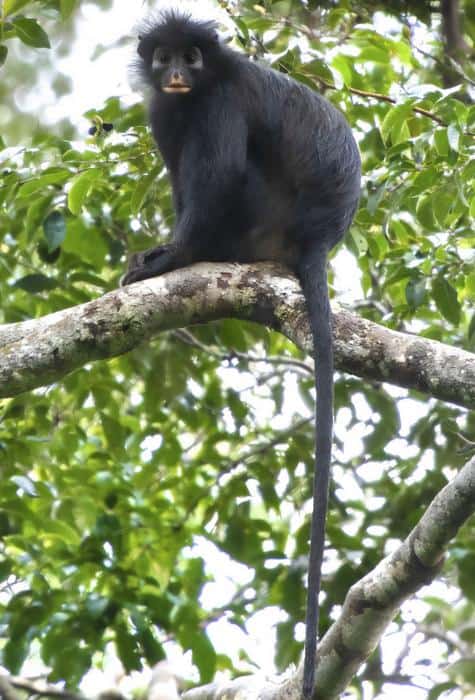
The newly discovered monkey species, called a Likweli, has a distinctive orange-cream color around its mouth.
“This discovery is both exciting and deeply personal, highlighting the extraordinary biodiversity of my homeland and how much remains undocumented,” said Junior Amboko, co-corresponding author, a Ph.D. student in the Department of Biological Sciences in FAU’s Charles E. Schmidt College of Science and a National Geographic Explorer in the press release announcing the find.
“I was honored to name the species ‘Colobus congoensis,’ recognizing the Congo Basin’s remarkable natural heritage and, we believe, marking the first primate named after the Democratic Republic of Congo itself – underscoring both its global importance and local pride.”
How Did Scientists Confirm It Was a New Species?
Between 2018 and 2022, the research team logged 114 field sightings of the monkey across nearly 1,700 square kilometers (660 square miles) of the species’ range. The team used three different lines of evidence to determine the species was, in fact, something new.
Genetics identified that it split from its closest relative, the black colobus, around 4 to 5 million years ago. This represents the deepest split discovered so far among colobus monkeys, according to the Yale News.
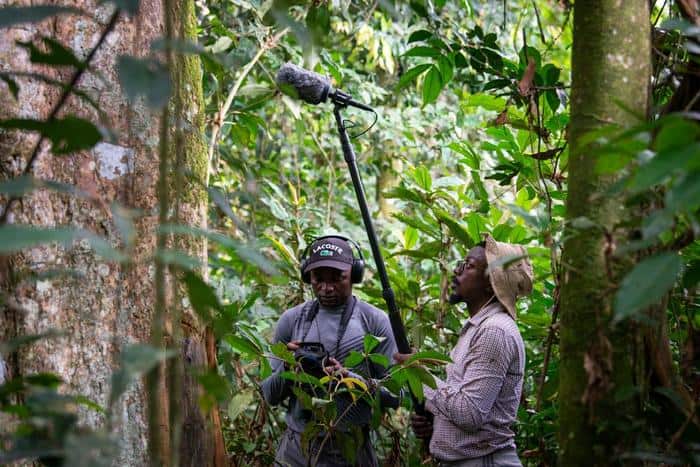
Junior Amboko (left) and Mardoché B. Koko, two members of the research team, working in the field in the Lomami National Park.
But before the species could be confirmed as new, researchers needed to formally establish the anatomical differences.
To do that, the researchers also studied measurements of the monkey’s body, skull, and teeth to identify differences. Then they compared the species’ calls to further differentiate it from other colobus monkeys and other monkey species found in the region.
“We compared the skulls and pelts of C. congoensis with other species of African colobines, which underscored how unique this new species is,” said Julia L. Arenson, Ph.D., co-author and a postdoctoral associate at the Yale Institute for Biospheric Studies in the press release. She had a very large collection of skeletal data related to her Ph.D. thesis on colobus monkeys. “At the same time, despite being much smaller in body size, we also demonstrated it shares features of the teeth, skull and face with Colobus to the exclusion of other African colobines.”
Her research colleague further explained the identification process and how the team applied it.
A New Species Already at Risk
The monkey’s secretive behavior is partly due to its limited range. However, being newly identified does not guarantee its safety.
Its small population size, combined with increasing hunting pressure and rapid habitat loss, is putting the newly discovered species at risk of extinction. The research team is already recommending that the IUCN add the Likweli to its Red List for endangered species.
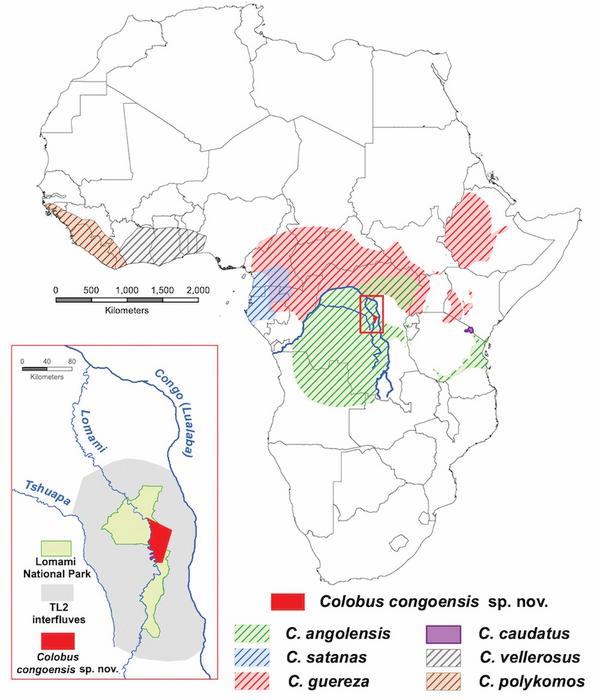
The region where the new species was identified.
Most of the monkey’s exclusive habitat lies within the Lomami National Park. This makes preserving and protecting the region an even higher priority. So far, the IUCN has not made the designation, but the researchers remain hopeful. Still, they caution that rapid ecological changes can erase species before they are discovered.
“The discovery of Colobus congoensis is both a scientific triumph and a sobering reminder that some of Earth’s rarest creatures may vanish before the world even knows they exist,” said Detwiler.