
Quick Take
- Before measuring noise pollution's impact, scientists needed to know exactly what seals can hear, and the method they used to test it is surprisingly clever. See how they tested hearing →
- Long-nosed fur seals are reclaiming their old territories, but those coastlines look very different now. That turns out to be a bigger problem than it sounds. Learn about their return →
- The Australian sea lion is endangered for reasons most people already know, though one emerging threat is only now being quantified for the first time. Explore the threats they face →
- Australia's shift to renewable coastal energy sounds like good news for wildlife, yet pinnipeds may face an unexpected consequence of the green transition. Discover the hidden cost →
Human activity affects wildlife in myriad ways, ranging from air pollution and light pollution to plastic waste. But what about noise pollution? This has been more challenging to measure because, before you can accurately assess the impact of sound on an animal, you need to know what they can hear. New research was conducted by Curtin University and Taronga Conservation Society Australia to establish what Australian sea lions and long-nosed fur seals can hear. Importantly, this research related to airborne sounds specifically.
Why Study Long-Nosed Fur Seals?
Long-nosed fur seals (Arctocephalus forsteri) are also known as New Zealand fur seals. They are endemic to southern Australia and New Zealand but were hunted to the verge of extinction after the arrival of European settlers. However, thanks to legal protection, their numbers have recovered through most of their range. These seals dive for fish, with the females focusing on continental shelves, while the males dive deeper and stay under longer.
Because they live along the coast, the seals are susceptible to disturbance from both land and sea. As their population expands, they are starting to move into their former territories. The problem is that many of these areas are now used by humans.
Why Study Australian Sea Lions?
The Australian sea lion (Neophoca cinerea) is an endangered species with a population size of only around 12,000. Their current range is from southwestern Western Australia to South Australia. Both the number of breeding colonies and their geographic range are in decline. Threats to their future include entanglement in fishing gear, illegal killing, pollution, and disease. However, experts are now also concerned about the impact of coastal and offshore development (urbanization, shipping and ports, and offshore energy). These can lead to habitat loss but also to direct disturbance.
Hearing in Pinnipeds
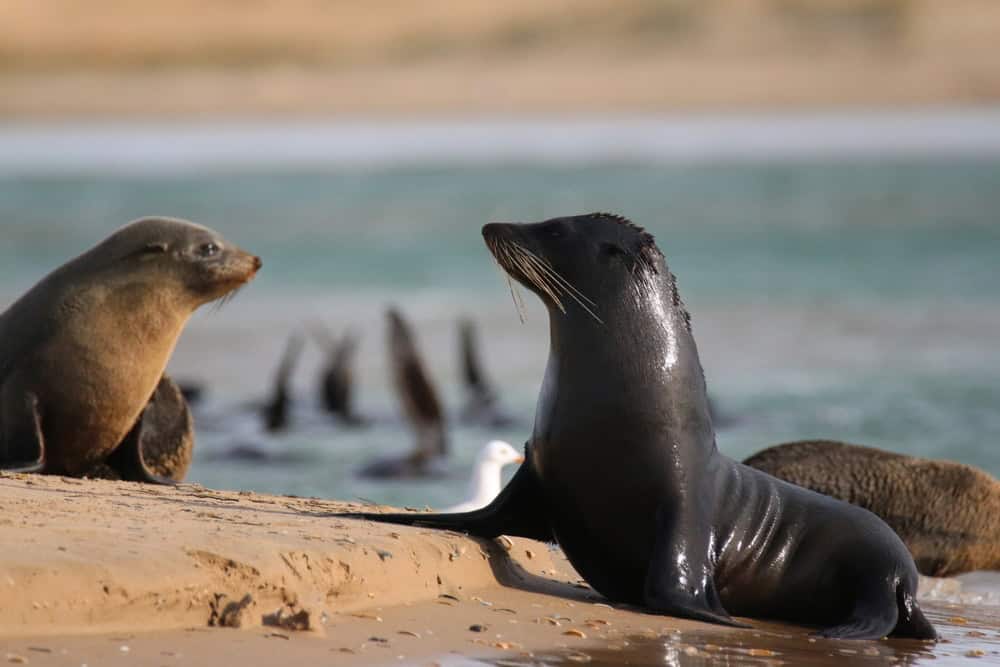
Both long-nosed fur seals and Australian sea lions are pinnipeds (carnivorous, fin-footed, semiaquatic, mostly marine mammals). Hearing is a critical sense for them. They use it for communicating, navigating, and detecting prey. Also, they use it for environmental awareness and detecting when predators are approaching them. Because they live in both air and water, they must be able to detect sounds in both media.

Pinnipeds need to be able to hear in water and air.
©Sergey Uryadnikov/Shutterstock.com
It’s not easy to test what these creatures can hear, but scientists have devised a clever method. The tests took place at the former aquarium at Taronga Zoo, Sydney, NSW, Australia, in May and June 2026. The doors and windows were sound-proofed, and an anechoic chamber was constructed inside. This was built with noise-controlled walls arranged in a pentagon. CCTC was installed to monitor the animal’s behavior, and a loudspeaker was used to generate the noises.
Two adult female Australian sea lions and an adult male (Bondi) and an adult female (Eve) long-nosed fur seal were trained to participate in the hearing tests. The animals learned to respond to sounds by pressing a paddle when they heard a tone. Their reward was a fish!
What Sounds Can Seals and Sea Lions Hear in Air?
The fur seals showed peak sensitivity at 3.2 kHz, with thresholds of 7 and 12 dB re 20 µPa. This is the frequency range of seal communication calls. The younger female seal had the greatest high-frequency sensitivity. These results mean that the seals would be able to hear cars, trains, airplanes, boats, ships, and industry when they are hauled out on land.
The frequencies of best sensitivity were lower in the two Australian sea lions than in other sea lion species. They were also most sensitive to sounds around 3.2 kilohertz. Both sea lions missed the higher-frequency sounds. This may be due to age-related hearing loss in one of the sea lions, or to equipment calibration.
Why This Matters So Much
The importance of noise pollution in pinniped conservation is not limited to sound traveling through water. Across Australia, the ‘Blue Economy’ is rapidly altering coastal habitats. Traditional industries such as commercial fishing, shipping, and petroleum production are still there. Now, however, they are being joined by offshore renewable energy projects that require coastal, shore-based infrastructure. These include ports and transformer substations. As the renewable projects develop, operate, and are eventually decommissioned, they subject the environment to physical alteration, pollution, and noise.
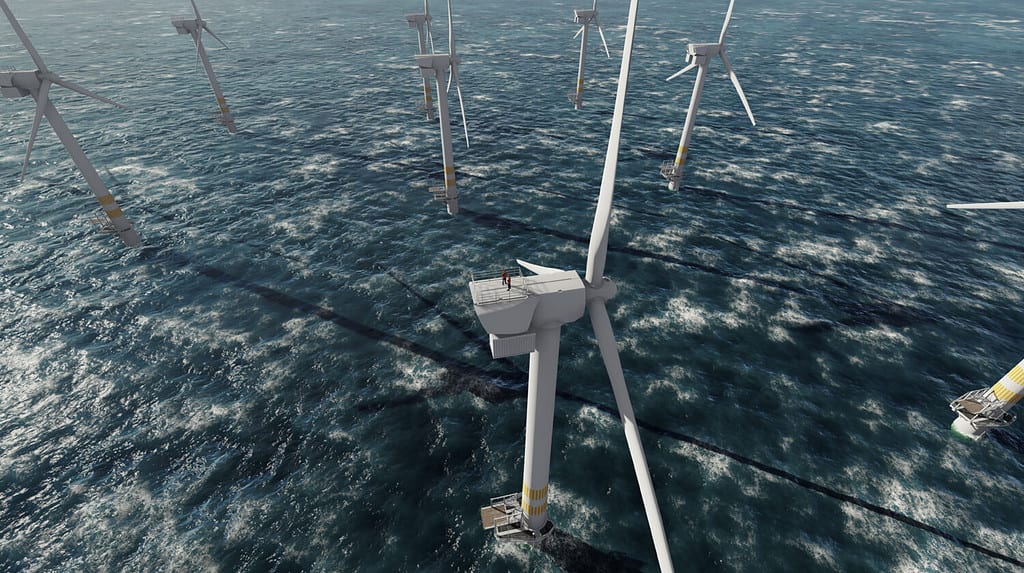
Offshore energy production requires onshore infrastructure.
©dragancfm/Shutterstock.com
We are only just beginning to appreciate the effect that noise pollution has on wildlife. It potentially affects very wide areas and animals at all stages of their lives and development. Seals and sea lions depend on hearing for courtship, competition, mother–pup recognition, and foraging. In previous studies, motorboat noise has been shown to change the posture, vigilance, and aggression in Australian fur seals. For the Blue Economy to be truly sustainable, we must understand and manage the effects of airborne and waterborne noise on animals.