
Quick Take
- A lush, green forest can be just as ecologically dead as a barren wasteland, and Cambodia's jungles are a striking example of exactly how that happens. See how forests go silent →
- Releasing tigers into the wild is actually the easy part. What conservationists must do first is far more complicated than most people realize. Explore what comes before release →
- Why are Bengal tigers being chosen for the reintroduction, given that they are not Cambodia's own native species? The answer is more sobering than you'd expect. Why Bengal tigers, not locals →
- Cambodia's forests have been recovering for decades, yet wildlife officials say the ecosystem still isn't ready. One key piece remains missing. Discover the missing piece →
Tigers once roamed the Cambodian countryside in abundance. As early as the 1990s, hundreds of Indochinese tigers inhabited the Eastern Plains and the Cardamom Mountains. However, hunting and poaching devastated their populations, and today, no wild tigers remain in the country. India and Cambodia have ambitious plans to bring wild tigers back to Cardamom National Park (CNP) in southwestern Cambodia. But a recent review found the number of prey animals in the park will not support predators as large as tigers. The target date has been pushed back from 2025 to 2028. Before conservationists can restore an apex predator, they must restore the ecosystem that feeds it.
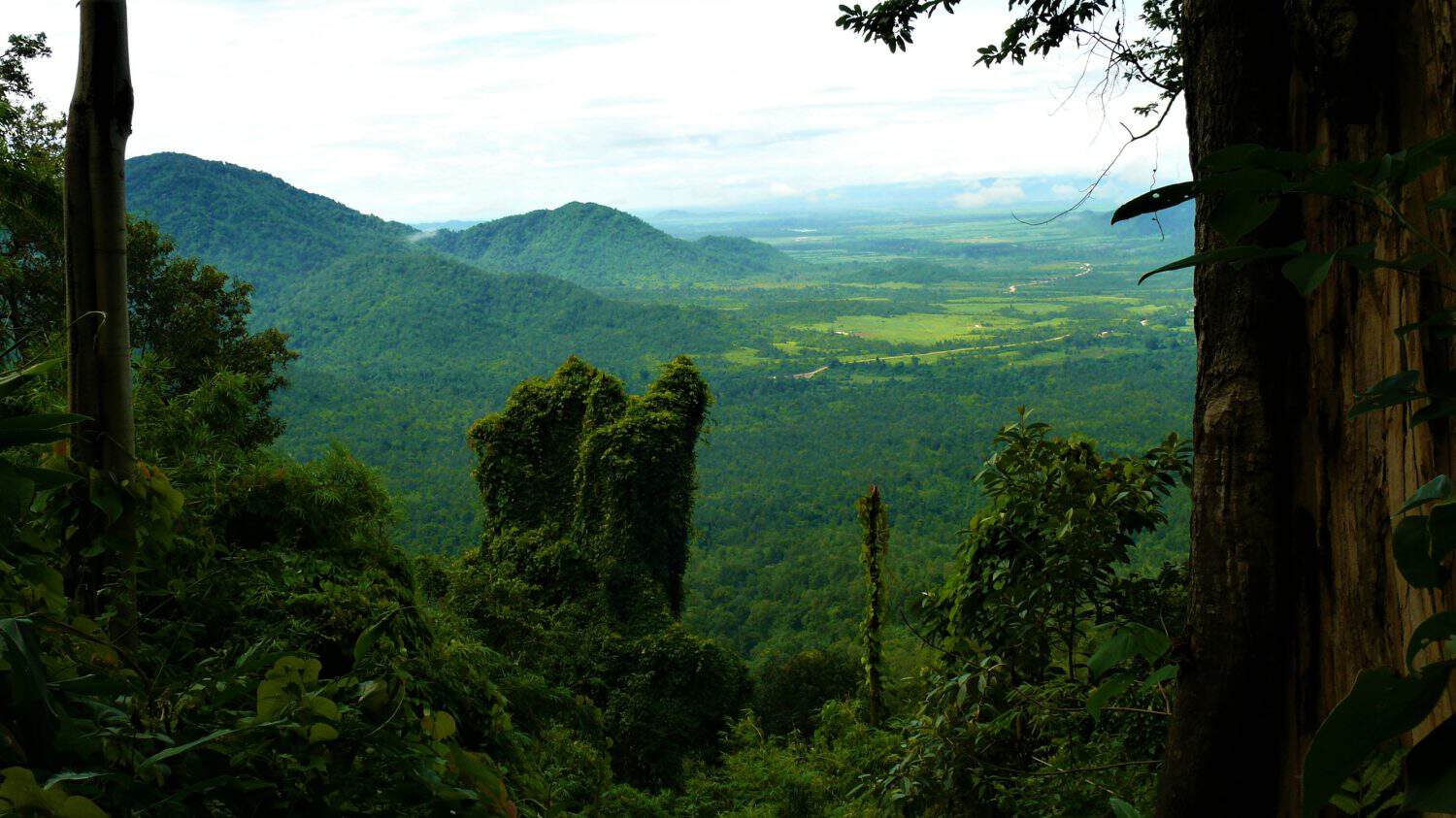
The Cardamom Mountain Range is a biodiverse hotspot in in southwest Cambodia and eastern Thailand.
©Robert Bociaga/Shutterstock.com
What Happened to the Tigers of Cambodia?
The plan to return wild tigers to Cambodia involves releasing six Bengal tigers (two males and four females) from India into the Cardamom National Park. The two countries signed a Memorandum of Understanding in 2023 to work towards tiger reintroduction in Cambodia. The last time a wild tiger was photographed in Cambodia was 2007, and tigers were declared extinct in the area in 2016.
Critically endangered Indochinese tigers are native to Cambodia, but only around 220 remain in the world. Because Indochinese tigers are nearing extinction, conservationists chose Bengal tigers to reinhabit the Cardamom Mountains. Indochinese tigers faced habitat destruction and were hunted and illegally poached to near extinction. The animals they ate as prey were also hunted and poached.
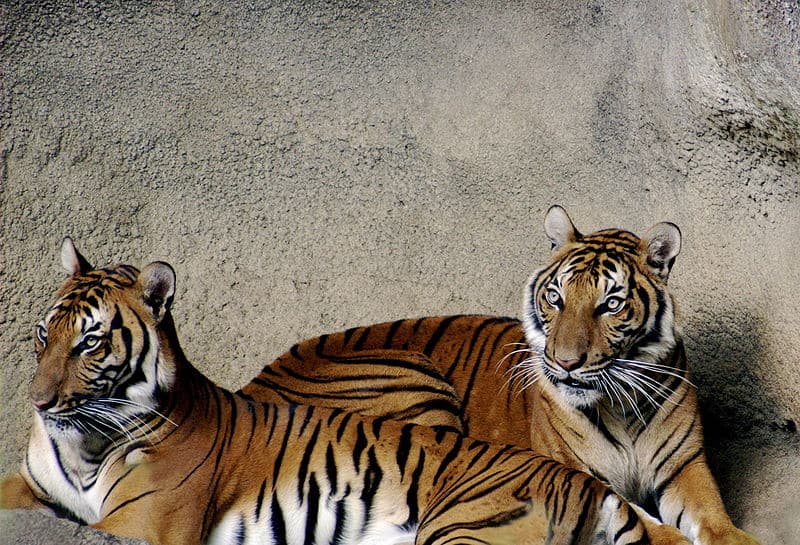
Indochinese tigers are a little bit smaller than Bengal tigers.
©Kabir Bakie / Creative Commons – Original
The snare traps used by poachers to catch other animals indiscriminately injured and killed tigers as well. Once the prey animals began to disappear, the tigers didn’t have enough food to survive or feed their cubs. The Cardamom Mountains fell silent. “Empty forest syndrome” is when an ecosystem appears to be lush, green, and thriving, but the animals that once filled it are gone, leaving the forest eerily quiet.
Tigers Need More Than Forest to Survive
Cambodia’s forests are no longer abundant with the animals the tigers eat, such as wild pigs and sambar deer. Cambodian and Indian officials announced that a recent assessment revealed it impossible to sustain a population of apex predators long-term at the current prey numbers.
When conservationists consider reintroducing large predators to the wild, they must consider the health of the entire ecosystem. The report said that the current landscape could sustain three to four wild tigers. As the tiger population grows, the tigers would face starvation.
A 2020 study found a 24% probability that prey numbers were sufficient to support 25 adult tigers, while there was a much higher probability that the landscape could support only a small number. According to the study, “significant prey recovery” is necessary before tigers can be reintroduced.
Rebuilding the Food Web Involves Protecting Prey from Poachers
Reintroducing tigers to Cambodia requires more complex planning than simply releasing tigers from India into the mountains. Herbivores and other mammals support predators. The first step in reintroducing predators requires rebuilding the food web.
Cambodia has been working on anti-snaring and wildlife protection efforts to help the animal population rebound. These protections will help both the tigers and the prey animals they survive on. The efforts will also help the Cambodian government be ready to protect the tigers when they arrive by patrolling wildlife areas, tracking poachers, and prosecuting wildlife crime.
Measuring the Prey Base and Preparing the Landscape
India and Cambodia have been keeping track of prey numbers through camera traps. Phan Channa, Deputy Director of the Department of Northern Tonle Sap Terrestrial Protected Area Conservation, told the New Indian Express the reason for the delay in the tiger release program is mainly due to prey availability in the area. “The failure to expand the prey base in Cardamom National Park as per NTCA expectations is one of the key reasons for extending the deadline,” he said.
Multiple organizations are involved in reintroducing tigers to Cambodia. In June 2026, India held a tiger-reintroduction workshop that specifically addressed prey augmentation, habitat restoration, and landscape connectivity. According to the New India Express, WWF, Conservation International, Wildlife Alliance, and IUCN are collaborating with Cambodia to help them prepare the landscape for future wild tigers.
The Cardamoms Are a Promising but Challenging Home

Malayan sun bears live in the Cardamom Mountains.
©Molly NZ/Shutterstock.com
Ecosystems of the Cardamom Mountains suffered greatly during and after the Cambodian Civil War. The rich, diverse environment was exploited through logging, poaching, and unsustainable agricultural practices. Beginning in the early 2000’s, the Cambodian government has been collaborating with international conservation groups to protect and rehabilitate the land.
The Southern Cardamom National Park was established in 2016. Many endangered species live within its borders, including elephants, gibbons, clouded leopards, and sun bears.
Though it’s an expensive and long-term commitment to reintroduce tigers to the area, there are many benefits. The return of these once-native predators would help maintain the balance of the herbivore population, provide a boost to the tourism industry, and offer a successful reintroduction model for other countries.