Quick Take
- It has 18 arm-like appendages, none of which it uses to move. So what actually propels it? Discover how it moves →
- Its bizarre shape isn't just for show. Those floppy 'arms' hide a surprisingly nasty secret weapon. See the hidden weapon →
- This caterpillar is hiding in plain sight across eastern North America, and most people who see one mistake it for something else entirely. Meet this hidden species →
- Its movement looks nothing like a caterpillar's, and the mechanics underneath its body are unlike almost any other insect. Explore the movement mechanics →
Despite their bizarre appearance, monkey slug caterpillars are hard to spot. They are widespread in eastern North America, but sightings are rare. These alien-looking insects feed on the undersides of leaves and are experts at camouflage. Even if you happen to glimpse one, you may think you are seeing an old spider molt or a decaying leaf. The fascinating video above reveals that these little caterpillars not only have a peculiar appearance, but also an unusual way of moving.

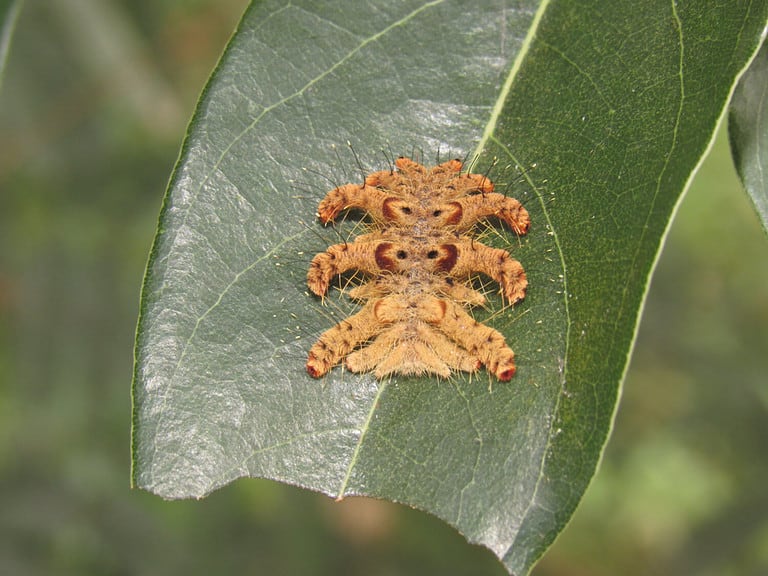
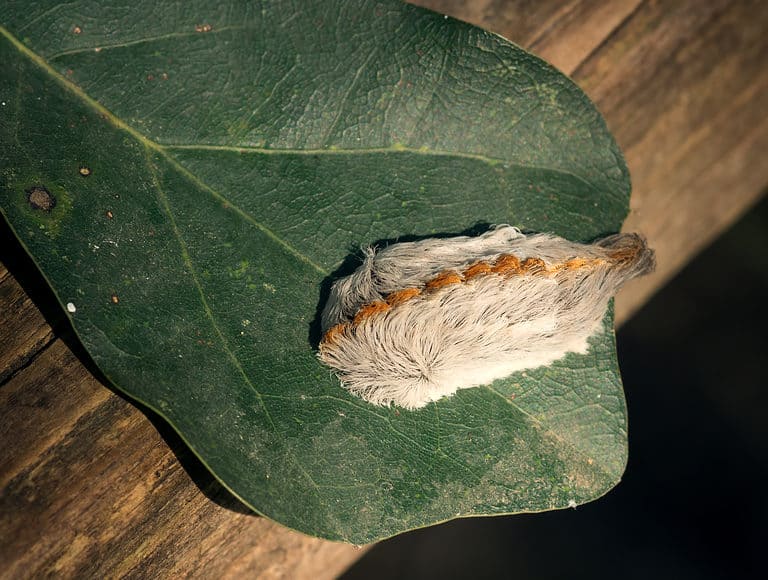
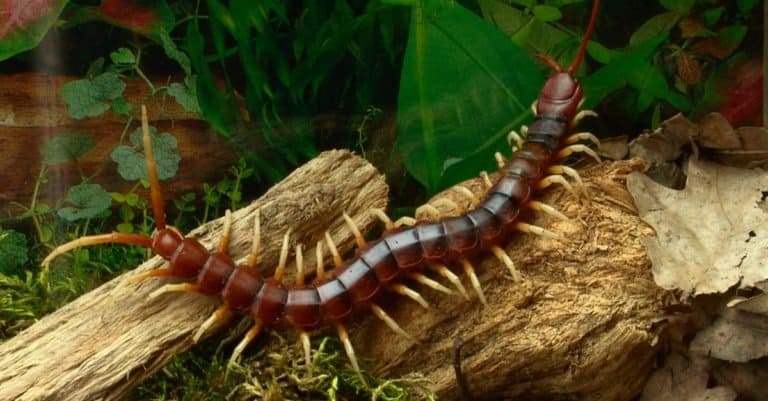
The monkey slug caterpillar has nine pairs of appendages that give it a peculiar appearance.
©Fabio Ara/Shutterstock.com
Meet the Monkey Slug Caterpillar
The monkey slug, also known as the hag moth caterpillar (Phobetron pithecium), is found in eastern North America from Canada to the Gulf Coast and as far west as the Great Plains. The moth is in the slug caterpillar family, Limacodidae. As an adult, the hag moth is nondescript and brown with a wingspan of about one inch.
The larva of the hag moth, however, is different. Monkey slug caterpillars have fuzzy bodies with nine pairs of appendages. The appendages look somewhat like hairy starfish arms, but the caterpillar doesn’t use them for walking. Instead, it moves in a creeping manner, using suction cup-like structures hidden under its body. Monkey slug caterpillars have heads that are tucked completely underneath their bodies, making it impossible to see them from above.
Monkey Slug Caterpillars Have a Strong Defense
Caterpillars are a common food for birds and other small animals. Many caterpillars have developed various defensive strategies for survival. The monkey slug caterpillar has long fuzzy hairs on its “arms” that cover hollow spines. When they break off, the spines release a toxin that can deter predators and may cause burning, itching, or irritation in humans.
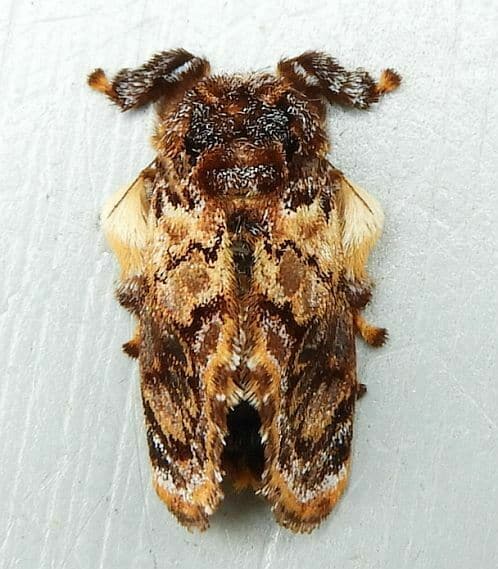
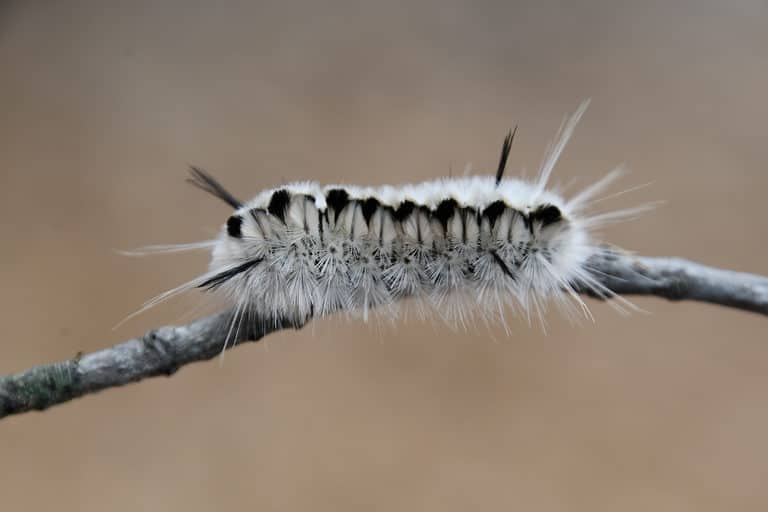
The hag moth is the adult version of the monkey slug caterpillar.
©jimeckert49, CC BY 4.0, via Wikimedia Commons – Original / License
Another defense of this peculiar caterpillar is its nine pairs of arm-like appendages. These appendages curve and twist, giving it the appearance of a hairy spider that many predators avoid. The appendages can also detach when grabbed by a predator, giving the caterpillar a chance to flee to safety.
The Secret to Their Sluglike Movement
Most caterpillars have six true thoracic legs at the front and 10 fleshy abdominal prolegs towards their middle and back. But monkey slug caterpillars have six greatly reduced true legs under their body.
Where a caterpillar’s prolegs would normally be, a monkey slug caterpillar has a series of sucker-like structures that help them glide along surfaces in a rolling, slug-like motion. Their true legs help them grip the surface of leaves.
As they walk along surfaces, they leave behind a thin, sticky, silk-containing substance beneath them. Scientists believe this substance may help them stick to the underside of leaves without falling.
How the Monkey Slug’s Strange Shape Fits Its Movement
The caterpillar’s unusual silhouette with its arm-like projections is misleading. Its movement comes from reduced legs, sucker-like structures, and its coordinated wave movement. Although this little unusual caterpillar can be mistaken for a spider, its movement looks much more like that of a slug.