
Quick Take
- A caterpillar that hunts like a mantis sounds impossible, yet one Hawaiian lineage does exactly that, and the reason why has nothing to do with the caterpillars themselves. Discover the Hawaiian hunters →
- Its strike is too fast for the naked eye to follow, but the trigger mechanism behind it is even stranger than the speed. See the strike mechanism →
- The same reflex that makes these caterpillars deadly hunters may have started as something else entirely. Explore the reflex origins →
- Lepidoptera spent hundreds of millions of years as strict herbivores, and yet something broke that pattern in Hawaii and nowhere else on Earth. Understand the broken pattern →
Eupithecia isn’t a rare genus; it consists of more than 1,000 moth species found on every inhabited continent. Their caterpillars, for the most part, eat plants and plants only…unless they happen to live in Hawaii.
In the Hawaiian Islands, a lineage of Eupithecia caterpillars have evolved to hunt and kill other insects, making them the only known ambush predators in the entire Lepidoptera order, which contains approximately 160,000 species of moths and butterflies.
How did these caterpillars evolve to consume other insects, and, more importantly, why? Here’s what to know about these endemic caterpillars, and why they evolved to be carnivores.
Do Predatory Caterpillars Exist?
Predatory caterpillars were not previously considered possible; caterpillars eat leaves, not flesh. This all changed when a biologist named Steven Montgomery discovered the unique caterpillars in Hawaii in 1972.
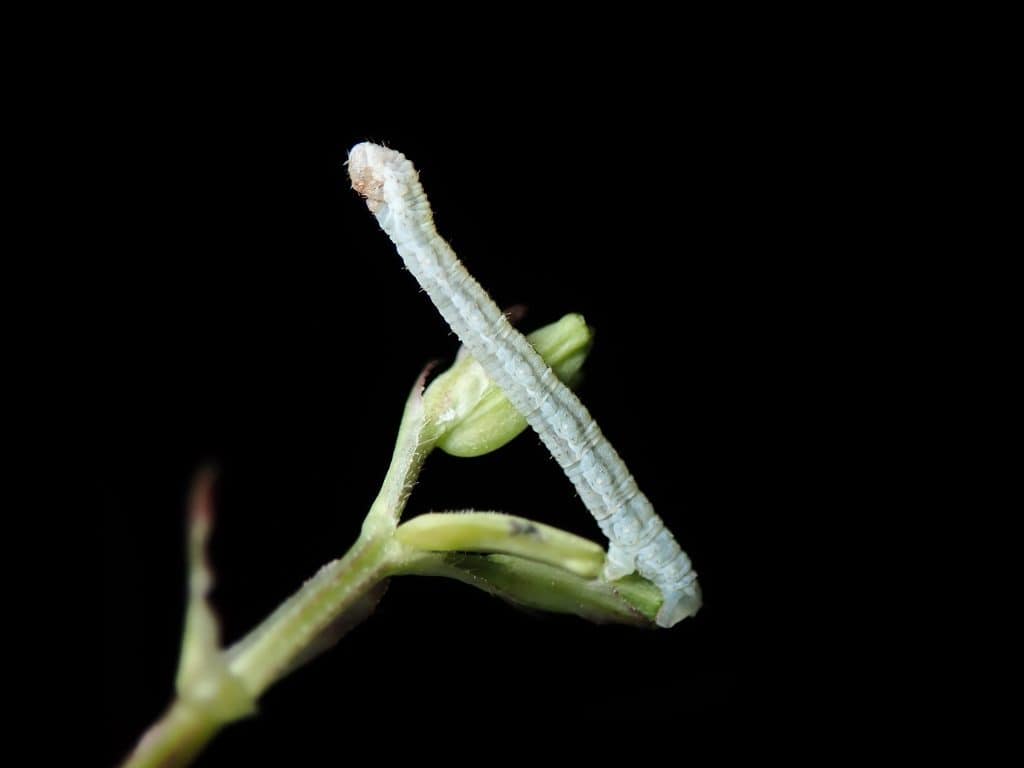
There are multiple carnivorous caterpillar species in Hawaii, and Hawaii alone.
©DJTaylor/Shutterstock.com
Since Montgomery’s discovery, researchers have identified at least 18 carnivorous Eupithecia species native and endemic to the Hawaiian Islands, found across all the major islands in wet forests and shrublands. At least six Hawaiian species are exclusively carnivorous, and only one or two Hawaiian species are known to feed predominantly on plant matter. They hunt, much like praying mantises and spiders.
As moths, these species show none of this behavior; they feed like typical moths, consuming flowers and plant matter. The predatory nature of these moths exists only during the larval stage, which means the caterpillars and the moths they become are different animals, from an ecological perspective.
What’s even odder: most Eupithecia species found elsewhere in the world are exclusively herbivores. The carnivorous behavior is specific to Hawaii. A reconstruction published in Entomological Society of America confirmed that the predatory Hawaiian species form a single evolutionary group derived from herbivorous ancestors.
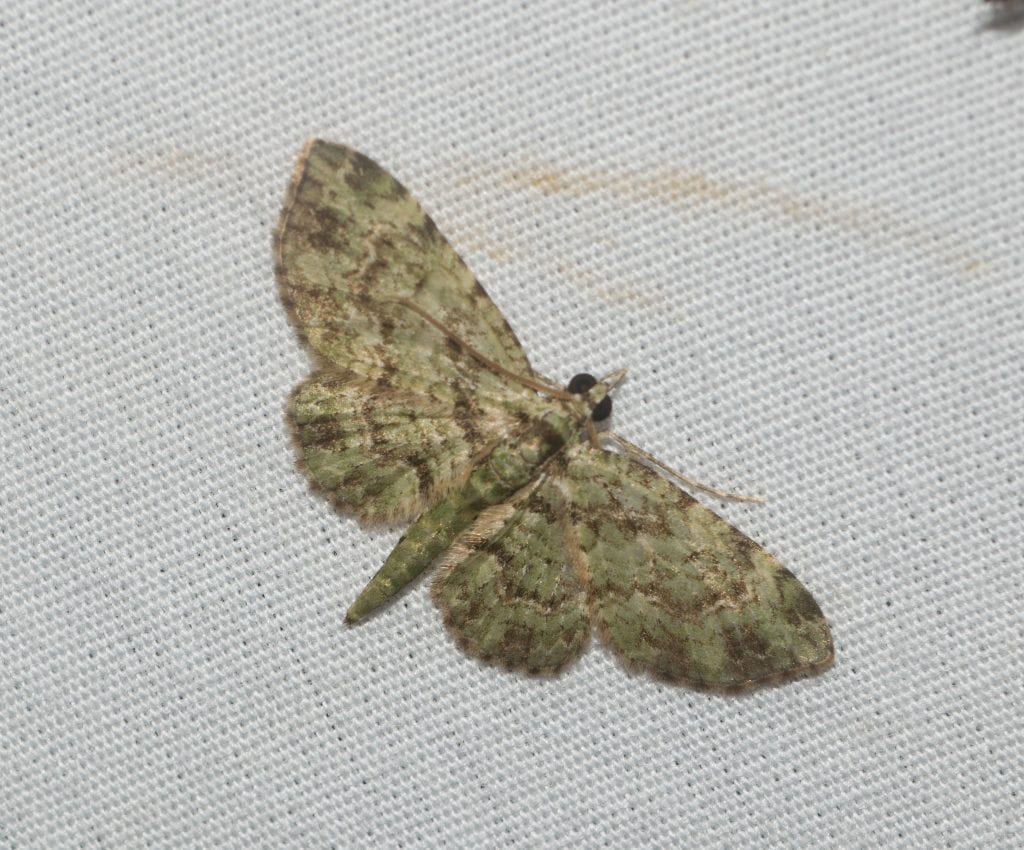
The carnivorous species present in Hawaii adapted to fill a blank spot in the Islands’ early ecosystem.
©"Eupithecia orichloris" by Kevin Faccenda is licensed under BY 4.0. – Original / License
This means carnivory evolved in this lineage, only in Hawaii, and the behavior spread into multiple species afterward.
How These Caterpillars Hunt Their Prey
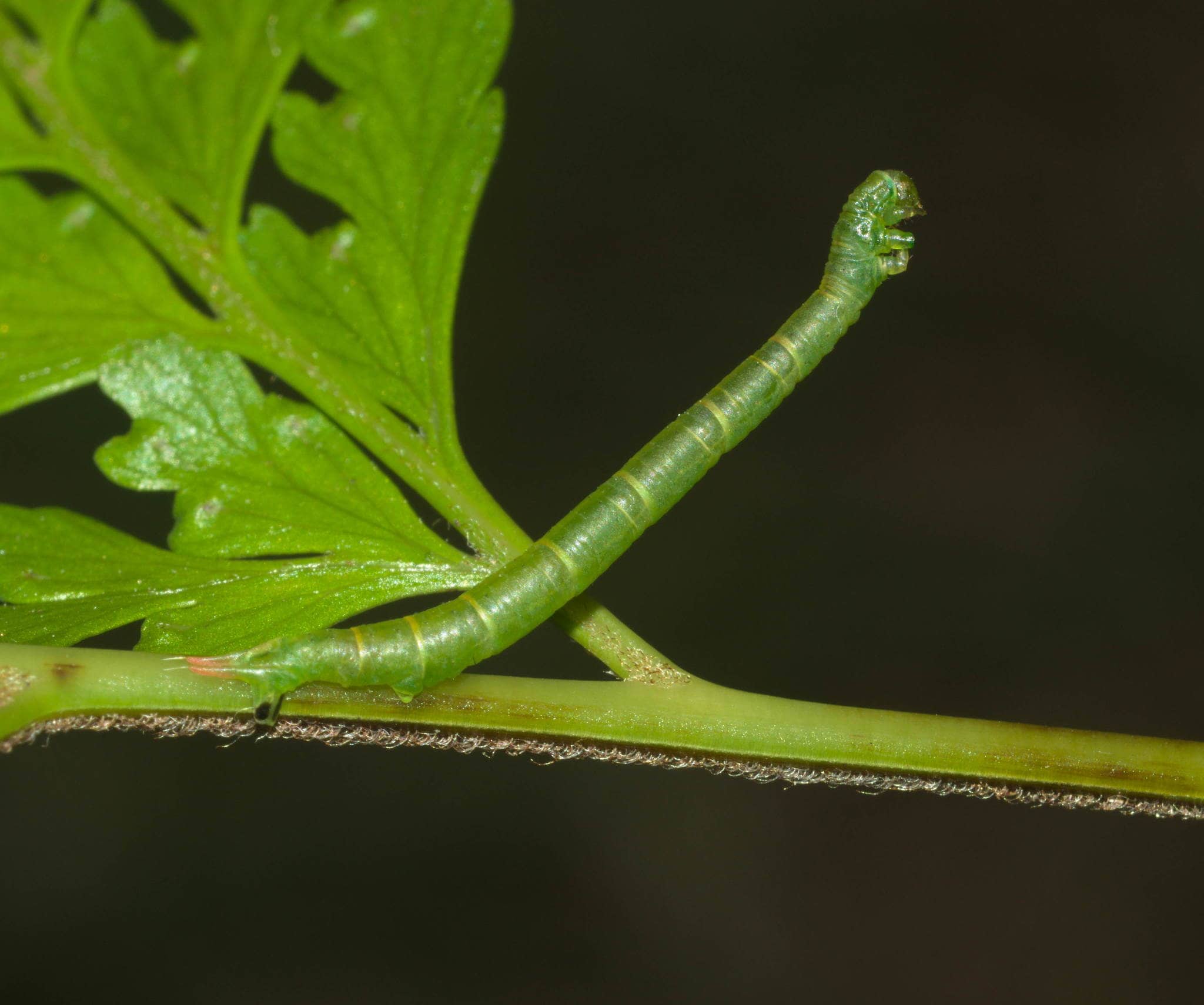
A hunting Eupithecia caterpillar, including the sticklike Eupithecia staurophragma, lies in wait first, staying completely still on a surface that matches its overall appearance and coloration. They are masters of disguise, like most predators.
According to Hawaii Forest and Trail, the caterpillar anchors its rear prolegs to its chosen surface and extends its body outward, waiting for an insect. When its prey makes contact with the hairs on the caterpillar’s abdomen, the caterpillar whips the front of its body backward along its own axis in a strike so fast it is difficult to follow with the naked eye. The front legs, which have evolved enlarged, sharp claws, seize the prey on contact.
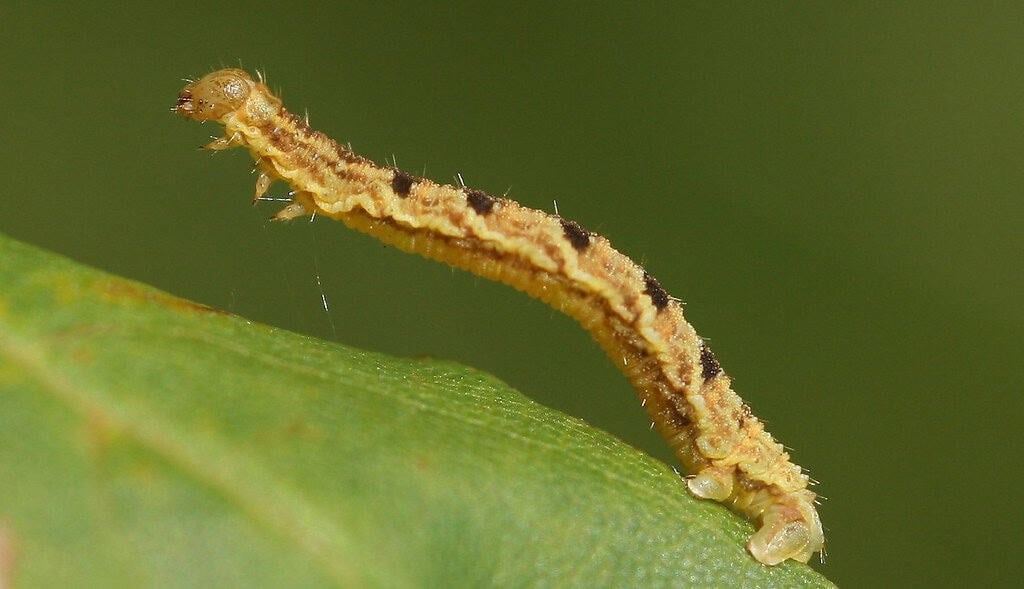
These carnivorous caterpillars pretend to be sticks to leaves to lure unsuspecting prey closer.
©"Golden-rod Pug moth (Eupithecia virgaureata) caterpillar" by Deanster1983 who's on and off is licensed under BY-ND 2.0. – Original / License
Laboratory and field studies confirm that all larval instars are fully carnivorous; the hunting behavior is not something these caterpillars grow into or learn. The preferred food for these carnivorous caterpillar species include fruit flies, larger flies, spiders, and other arthropods.
Why Do Carnivorous Caterpillars Exist Only in Hawaii?
When it comes to reasons why this wild change in behavior has occurred only in Hawaii, geography plays a major role. The Hawaiian archipelago is the most geographically remote island chain on Earth; when the ancestral Eupithecia moth arrived and established a population there, it found an environment missing the insect predators that occupy similar ecological roles elsewhere. So, it decided to stretch its legs, so to speak.
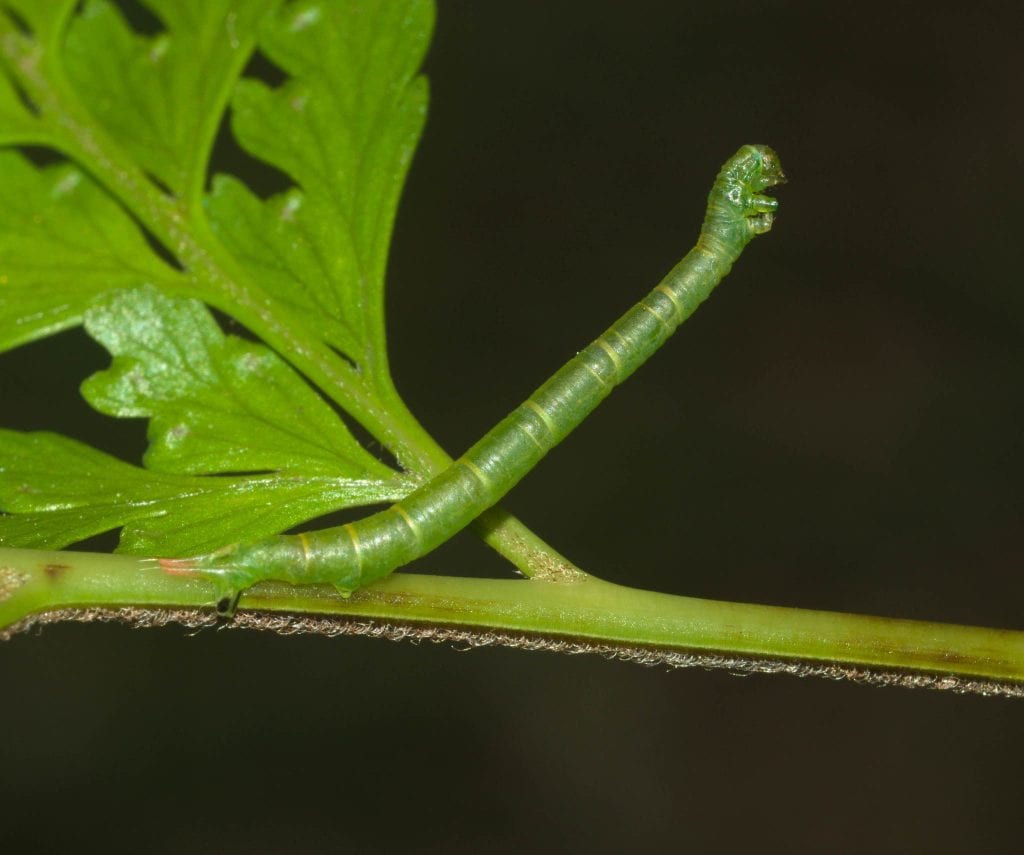
With little competition, many of Hawaii’s caterpillar species decided to become carnivorous to survive.
©"Eupithecia orichloris" by Kevin Faccenda is licensed under BY 4.0. – Original / License
Praying mantises, for instance, do not occur naturally in Hawaii; ground beetles and predatory wasps were also comparatively absent. The ecological niche for small, sit-and-wait arthropod predators was simply open, and these caterpillars took it. The caterpillars that could exploit insect prey had access to a food resource with no competition, and this advantage compounded over centuries of breeding and evolution.
Research theorizes there may also have been a preadaptation at work. Montgomery observed that some Hawaiian Eupithecia species that still feed on flowers, particularly Metrosideros flowers, display a snapping reflex when disturbed, which appears to be a defensive behavior. However, the reflex could easily translate to attacking prey rather than simple defense.
Why These Carnivorous Caterpillars Are So Fascinating
Predatory caterpillars rarely exist anywhere else on Earth, save Hawaii. As Science magazine noted in an article about a related Hawaiian caterpillar discovery, predatory caterpillars globally comprise less than 0.13% of the nearly 200,000 moth and butterfly species.
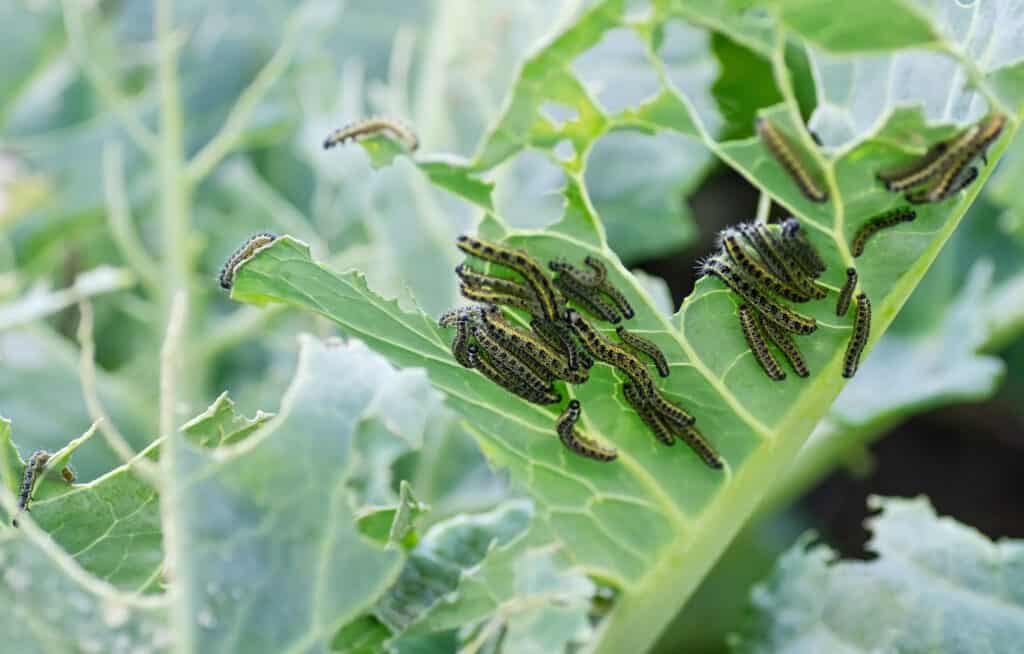
Caterpillars found around the rest of the world tend to be herbivores, but not the ones in Hawaii.
©Elena_Gr/Shutterstock.com
Lepidoptera evolved as herbivores and have remained herbivores, across hundreds of millions of years. The shift to carnivorous behavior, especially within a single genus producing at least 18 hunter species from a single colonization event, makes the Hawaiian Eupithecia lineage one of the more striking cases of adaptation in insect history.