
Caterpillars look cute, like little fuzzy toys. But an up-close look at their “fur” will reveal that many species have spines at the tips of their hairs. When an animal brushes against the caterpillar’s hairs, the spines break off as a defense mechanism against predators. If the spines embed in your skin, you may experience pain that is either immediate or gradually increases over time. Worse still, some of the spiny hairs are hollow and connected to venom sacs. When the spine pierces your skin, venom is injected, which can cause irritation or worse. In this article, learn about which North American caterpillars have the most powerful defenses. Unless you’re a fan of pain, blistering skin, and even nausea, you’d best avoid touching them.
Toxic animals often come with warning labels. Many stinging caterpillars are brightly colored, an adaptation called “aposematic coloring” that is thought to have evolved as a warning. Ideally, a caterpillar warns a predator off before they make contact to avoid the inherent risks of the predator injuring the caterpillar in an attack. Losing its spines leaves a caterpillar vulnerable to other predators while it expends energy to regrow them. If you come across colorful caterpillars, view their showy appearance as a “Back off!” message. Also, stinging caterpillars transform into moths, which don’t sting.
Puss Caterpillar (Megalopyge opercularis)
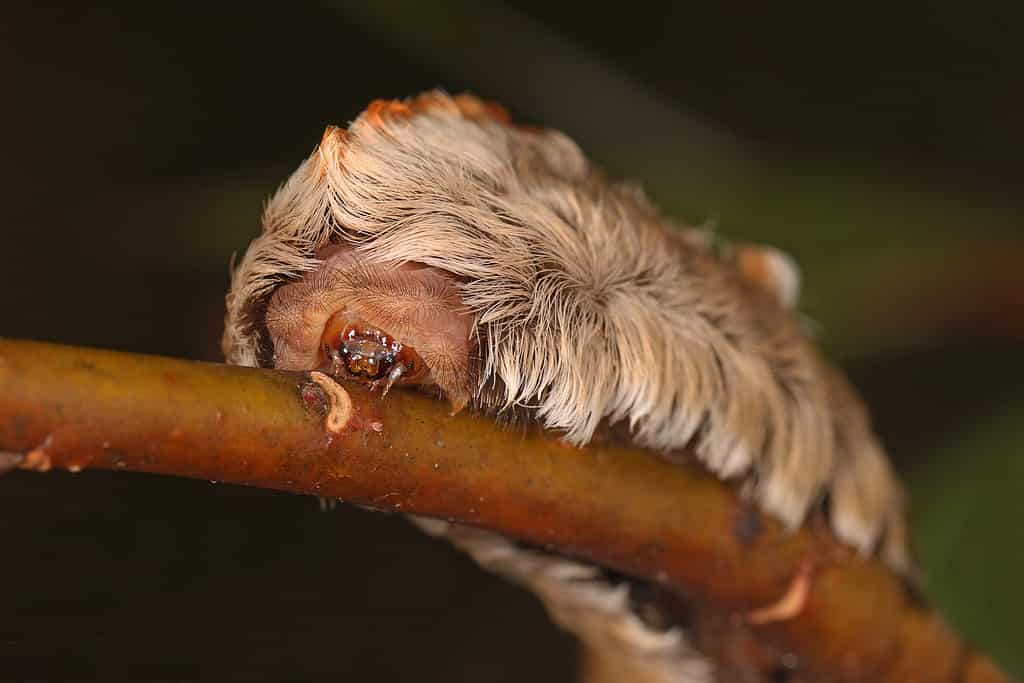
Discover the caterpillar that looks like dog hair but sports venom that stings like a knife wound!
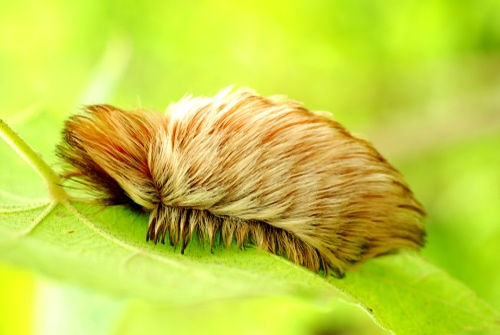
Unfortunately, not all stinging caterpillars are colorful. One of the most venomous caterpillars—the “puss caterpillar”—is a bland, tannish to yellowish color. It looks like a little tear-drop-shaped patch of fur shed by a dog. But, concealed under its soft hairs are stiff, venomous spines that cause severe irritation. If you get stung by a puss caterpillar, you can expect extreme pain, swelling, and a litany of other symptoms, which can include nausea, itching, fever, headache, breathing and vision problems, and numbness. Watch out for puss caterpillars on oaks, elms, maples, sycamores, hackberries, apples, and other broad-leafed trees from the southeastern U.S. southward to Central and South America. The caterpillars tend to hang out to feed in groups.
The sensation of getting stung by a puss caterpillar has been likened to touching hot coals or experiencing blunt force trauma, like getting smacked with a baseball bat. A Facebook user who accidentally touched one in her garden this past summer described how she landed in the emergency room with “the feeling of a broken hand for 14 hours and pain all the way to my armpit and chest.” A 2023 study published in the Proceedings of the National Academy of Sciences uncovered the biochemistry behind the damaging effects of puss caterpillar stings. The researchers found that the venom literally punches holes in cells, a tactic also used by disease-causing bacteria like E. coli. Upon closer examination, they discovered bacterial toxins in the venom. “It’s similar to the mechanism of box jellyfish venom – and as we’ve now found – caterpillar venom too,” said study author Dr Andrew Walker in a press release.
Flannel Moth Caterpillars (Family Megalopygidae)
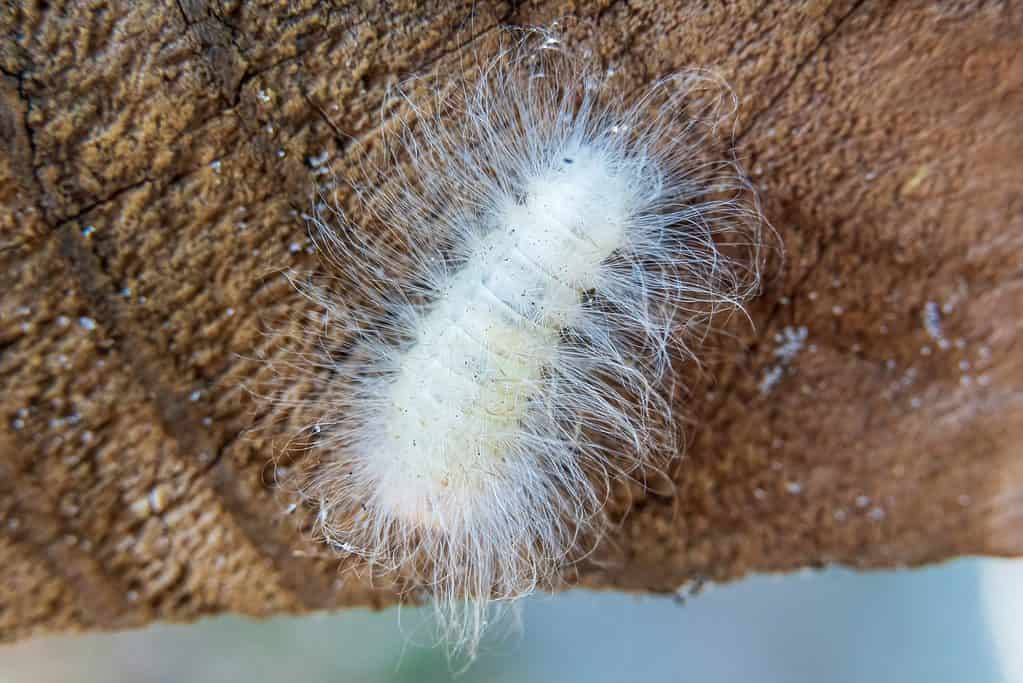
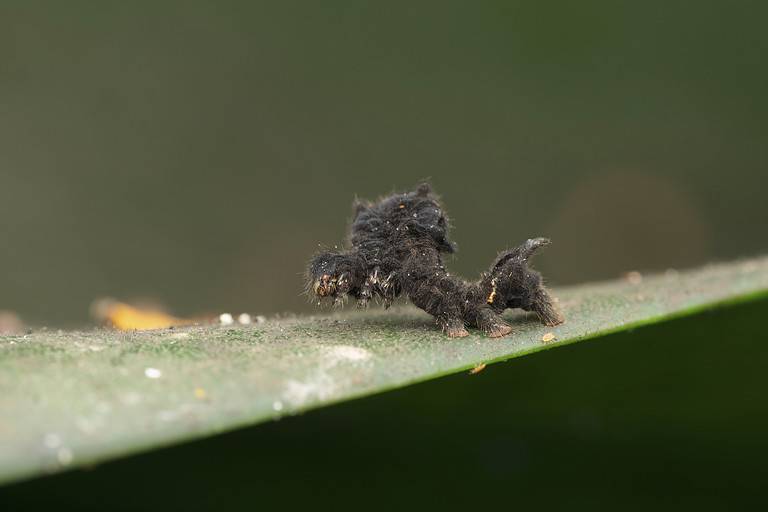
A black-waved flannel moth caterpillar looks like the end of a Q-tip.
©Sunshower Shots/Shutterstock.com
Unfortunately for humans, puss caterpillars have close relatives—other caterpillar species—that are nearly as toxic. Three other North American species in the same family of “flannel moths” can deliver venom-fueled stings:
The black-waved flannel moth caterpillar (Megalopyge crispata) is in the same genus as the puss caterpillar and looks a lot like it—resembling a patch of fur—except with black wavy lines along its sides, black-tipped legs, and fewer trailing tail hairs. Their stings can cause skin rashes and headaches, but are not known to cause the life-threatening symptoms of puss caterpillar stings. These fuzzy larvae favor the leaves of oak trees, but they will also feed on sassafras, plum, and willow trees.
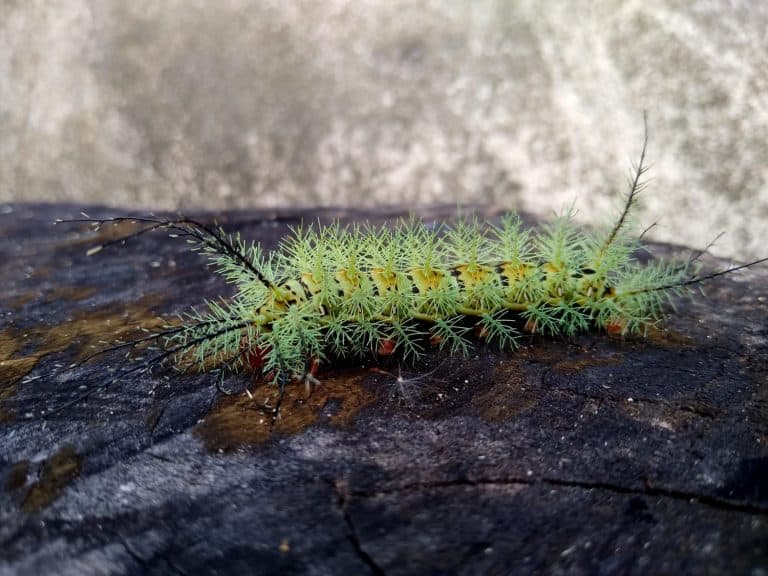
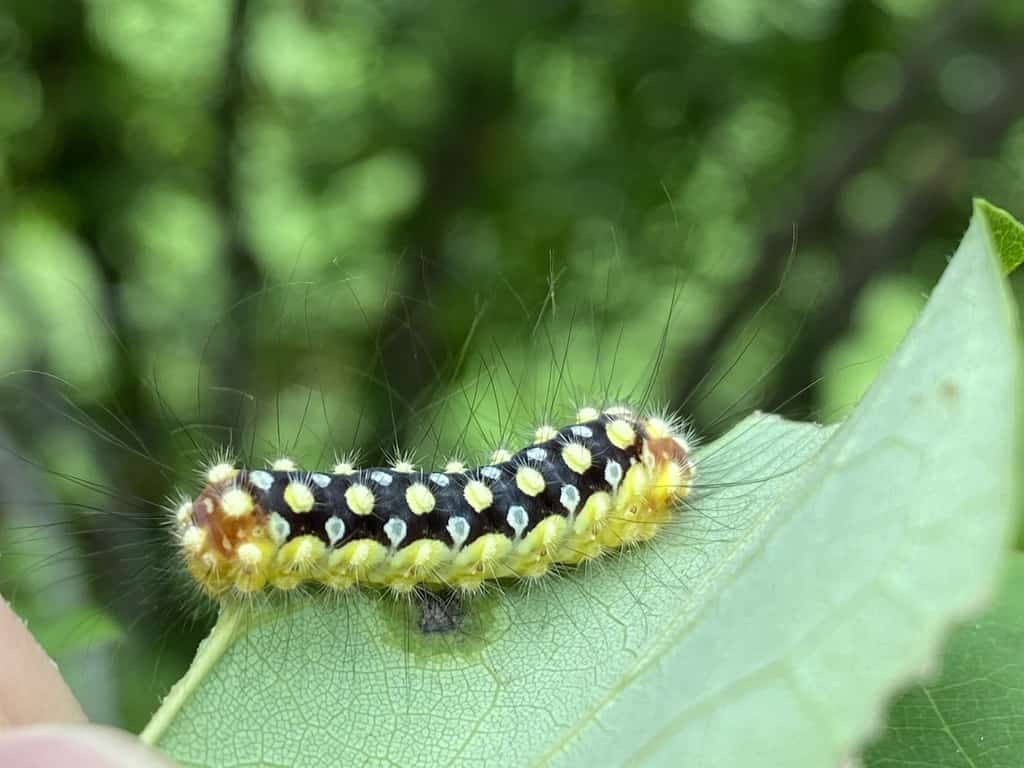
The white flannel moth caterpillar (Norape cretata) is also called the “hackberry leafslug” because this species favors hackberry trees but will also feed on redbuds, beech trees, mimosas, and others, depending on what’s available in the eastern U.S., southward into South America. Look for the black larvae with rows of yellow spots down their backs, each spot sporting long yellow hairs (harmless) and short venomous spines at the base. The venom is painful and blistering, although it is not known to cause extreme reactions that require a visit to the ER, like puss caterpillar stings. A 2022 case study published in the Wilderness & Environmental Medicine reported a painful rash that lasted for a day.
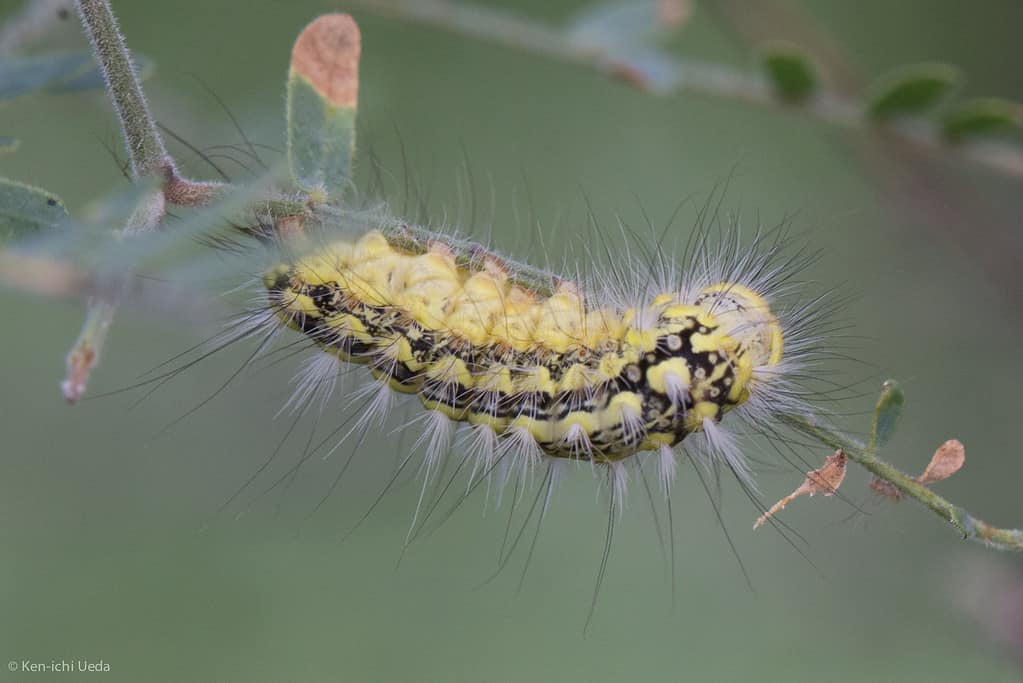
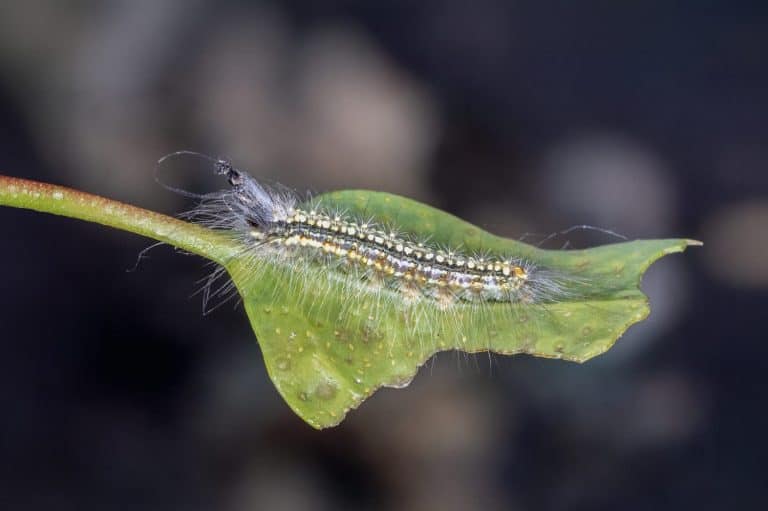
The mesquite stinger moth caterpillar is like the white flannel moth’s counterpart in the West.
The similar mesquite stinger moth caterpillar (Norape tener), in the same genus as the white flannel moth caterpillar, has rows of larger yellow spots bordered by black lines. But it lives in the southwestern U.S., including New Mexico and Arizona, into Mexico. As its name conveys, this caterpillar feeds on mesquite, as well as other arid desert plants like acacia and paloverde.
Slug Moth Caterpillars (Family Limacodidae)
Another group of caterpillars that deliver painful stings is the “slug moth caterpillars,” which have such tiny legs that they appear to glide like slugs. In caterpillars of this family, the “prolegs” (a set of appendages on their abdomens) are actually little suckers that help them stick to leaves. It’s a diverse family, with more than 1800 species described worldwide. Missouri alone has 20 species. Slug moth caterpillars range in appearance from smooth and green to bumpy, ridged, or hairy, but even without stinging spines may cause allergic reactions. Some hairs, although not equipped with venom, are barbed such that they embed in your skin, provoking itchy rashes.
Saddleback Caterpillar (Acharia stimulea)
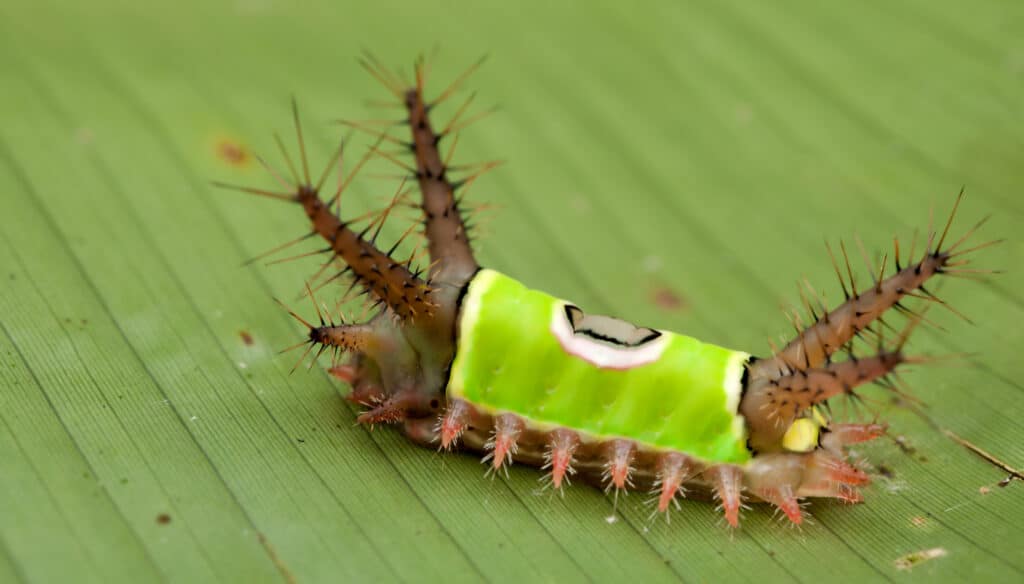
This venomous saddleback caterpillar is a species native to North America and Mexico.
©Hagit Berkovich/Shutterstock.com
The most famous slug moth caterpillar is the saddleback caterpillar, a bright green inch-long caterpillar found on crops like apples, corn, and beans, as well as on oak trees and ornamental flowering plants. It’s got a brown head and tail, each with two fleshy stalks armed with brown bristles that can deliver a dangerous sting. You can recognize it by the distinct saddle-shaped purplish-brown patch interrupting the green on its back. Its sting will cause intense burning and itching. After the sting site turns red and develops welts, tissue damage may occur that requires medical attention. Steer clear of this beautiful caterpillar, which ranges from the East Coast west to the middle of the U.S. (from Michigan southward to Texas).
Hag Moth Caterpillar (Phobetron pithecium)
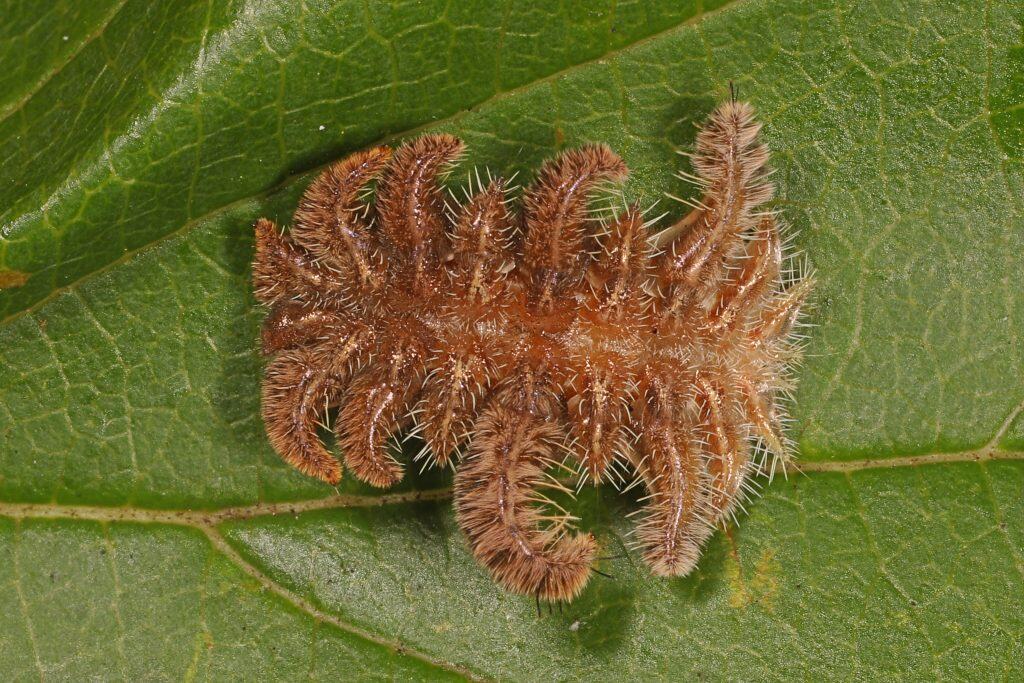
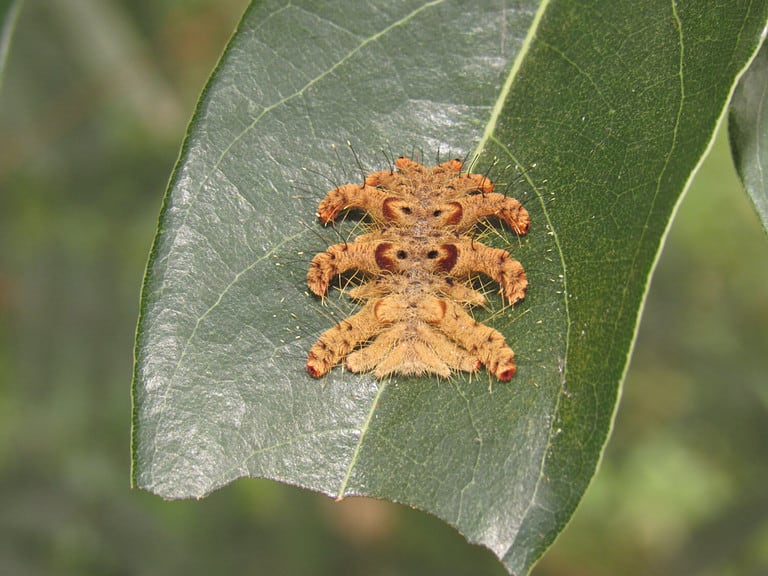
The hag moth caterpillar, also called the “monkey slug” caterpillar, would make an odd-looking monkey.
©Some rights reserved by Judy Gallagher – Original / License
Another slug moth caterpillar to be avoided is the “hag moth caterpillar,” also called “monkey slug” for its hairy brown appearance. Nine pairs of fleshy appendages (hiding the real legs under its body) of various lengths, sticking out at odd angles, make it look more like a fuzzy starfish than a monkey. Hag moth caterpillars are presumably adapted to camouflage as crumpled dead leaves, and their extra appendages serve as decoys that may break off during a predator attack, saving the more vital body parts.
Monkey slug caterpillars are found in deciduous forests and shrubby fields in the eastern U.S. They feed on many plant species, including sassafras, dogwood, hickory, rose, persimmon, and alder. Nine pairs of spines sticking up from their backs are loaded with toxins. Its sting may cause burning, itching, and redness, but it is not known to send people to the emergency room unless they have an allergic reaction.
Spiny Oak Slug Caterpillar (Euclea delphinii)

The spiny oak slug caterpillar has an unmistakable look with 2-4 pairs of red spots.
©Michael S. Moncrief/Shutterstock.com
These caterpillars, named for their tendency to feed on oak trees, may also be found on cherries, beeches, chestnuts, willows, bayberries, and others. Their yellow-greenish bodies have a dark brown stripe along the back, flanked by a few pairs of red dots. Rows of fleshy yellow-greenish lobes along each side of their bodies are armed with numerous spines. Their stings are reported to be painful, causing itching and burning, and, in some cases, more severe reactions. Be cautious, as spiny oak slug caterpillars tend to hang out on the undersides of leaves, where they are harder to see.
Stinging Rose Caterpillar (Parasa indetermina)
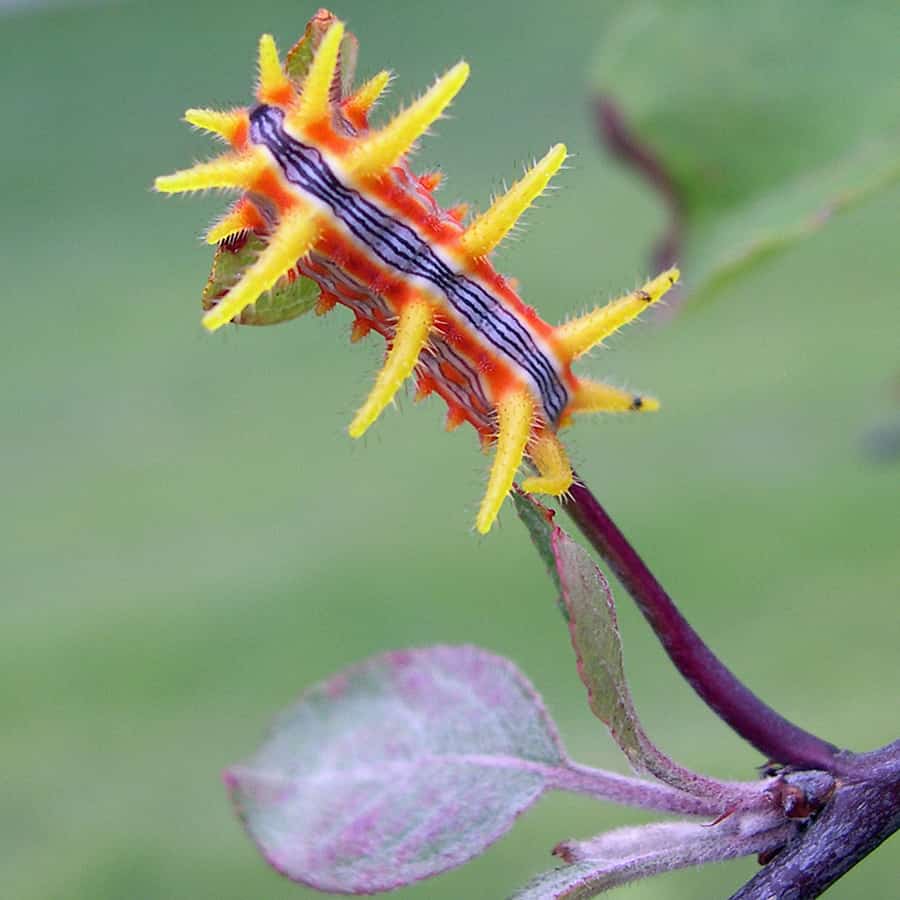
You could imagine that the stinging rose moth caterpillar was painted in neon with a fine-tipped brush.
This bright yellow caterpillar with red and black markings can deliver a nasty sting, an example where its colors provide a warning signal. Each of its seven pairs of fleshy horns is covered with stinging hairs. Symptoms from the stings last from hours to days. Watch out for stinging rose caterpillars not only on rose plants, but also on dogwoods, maples, cherries, oaks, apples, paw paws, bayberries, and a range of other common eastern forest trees and shrubs. Its stinging potential was recognized as early as 1913, when a USDA Bureau of Entomology paper reported that “At the bases of these spines are glands which secrete an irritating fluid similar in its effect to that of nettles.” So, the stings are not likely to be debilitating unless you have an allergic reaction, but they are still painful.
Other Slug Moth Caterpillars
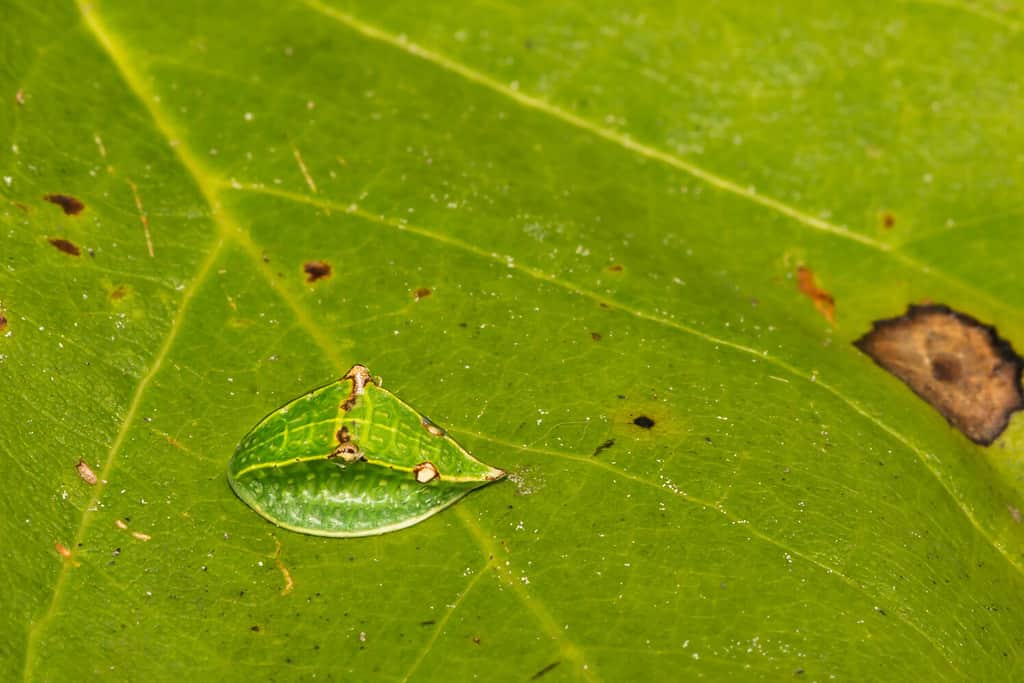
The diminutive skiff moth caterpillar is well-camouflaged on leaves.
©Jay Ondreicka/Shutterstock.com
Other slug moth caterpillars have more limited defenses, causing less severe reactions. While some wield spines, the venom is either weak or absent. In North America, these include various genera such as:
- Smaller parasa (Parasa chloris)
- Spun glass slug (Isochaetes beutenmuelleri)
- Crowned slug (Isa textula)
- Skiff moth caterpillar (Prolimacodes badia)
- Yellow-shouldered slug (Lithacodes fasciola)
Giant Silkworm Caterpillars (Family Saturniidae)
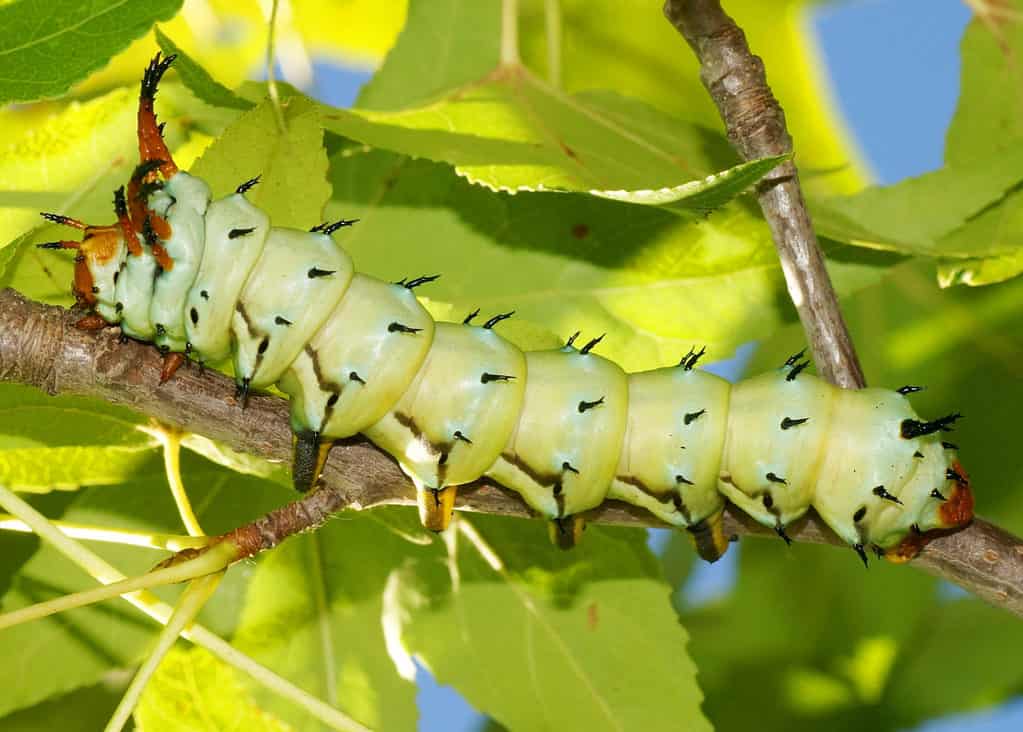
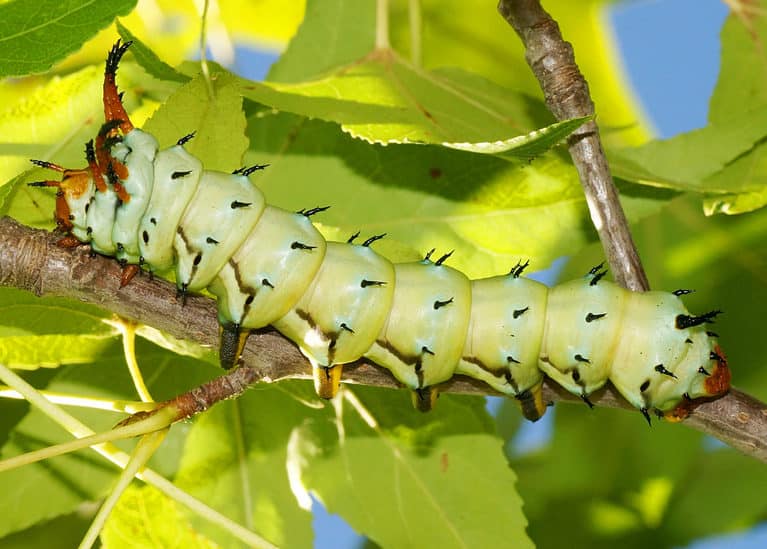
The average hickory horned devil is dramatic at nearly 6 inches long, but it is not venomous.
©Matt Jeppson/Shutterstock.com
This family of moths includes many caterpillars that are not venomous, but to a novice eye, it can be hard to distinguish them from the venomous ones. The hickory horned devil (Citheronia regalis), for example, has masses of scary-looking spines, but they’re not armed with venom. Other species of giant silkworm caterpillars, including the buck moth caterpillar and the io moth caterpillar, can deliver painful stings.
Buck Moth Caterpillar (Hemileuca maia)
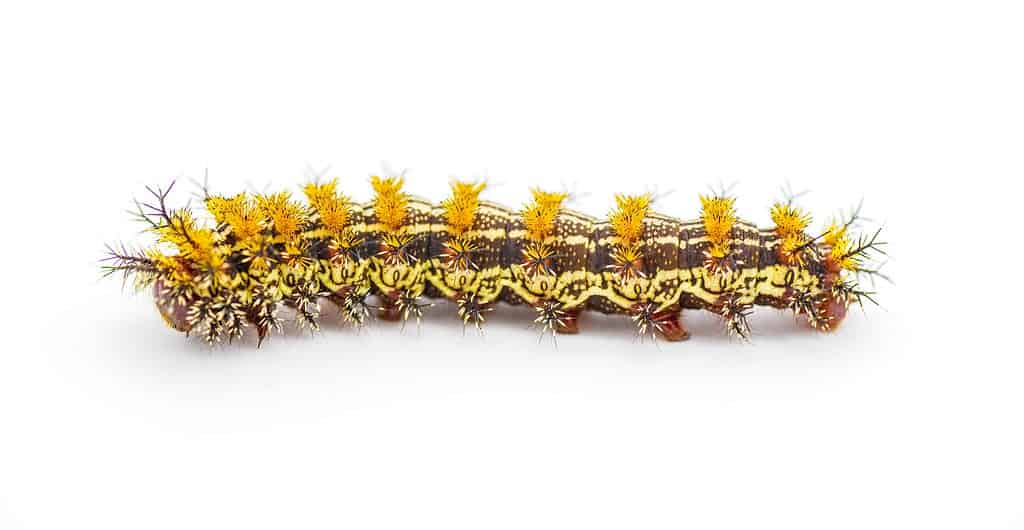
The black skin indicates a dark variation of Hemileuca maia, or “buck moth” caterpillar.
©Chase D'animulls/Shutterstock.com
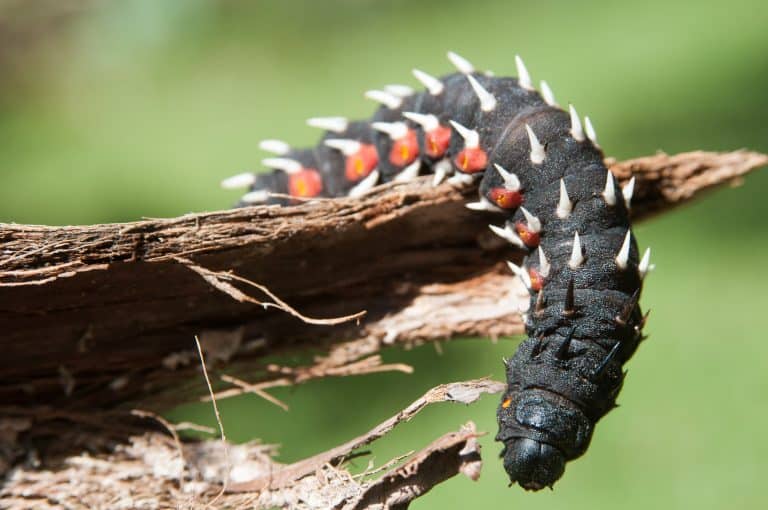
The buck moth caterpillar (Hemileuca maia) has two forms: a light, whitish body and a dark, blackish body with hordes of tiny white spots. They are big, reaching a maximum size of 2.5 inches. Look for them on oak and willow trees from Maine to Florida. Three rows of multibranched spines make them well-defended, delivering painful stings that cause swelling and redness from internal bleeding around the puncture spots. These symptoms tend to resolve in 1-7 days. A study published in the American Journal of Tropical Medicine and Hygiene equates the severity of buck moth caterpillar stings to the stings of saddleback caterpillars, although with a lower risk of severe reactions.
Io Moth Caterpillar (Automeris io)
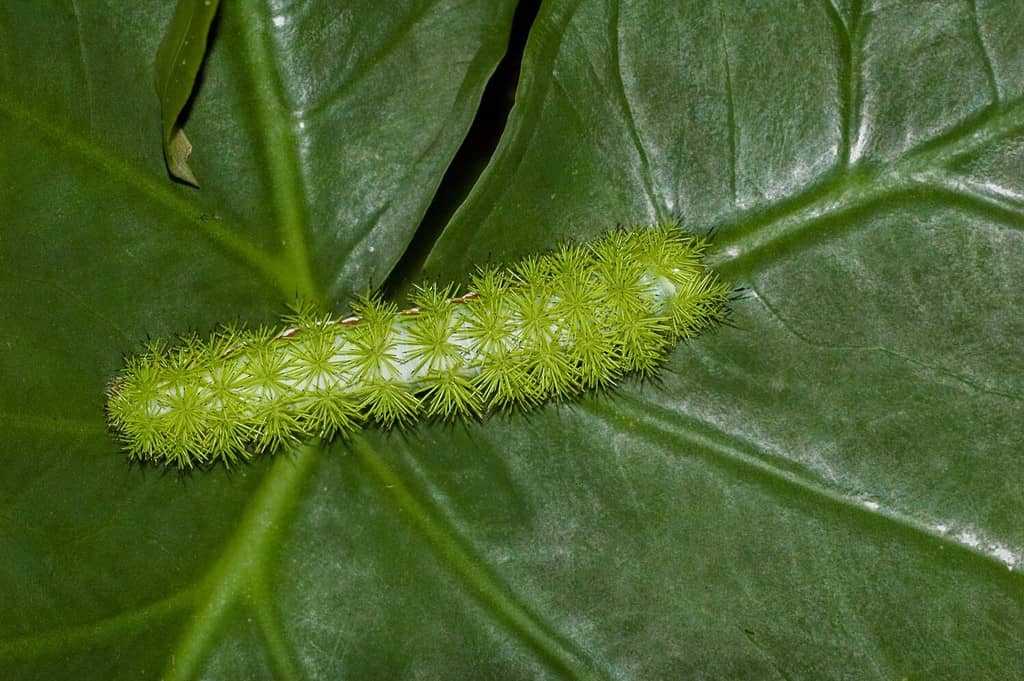
You can see the white and red stripes peeking out on the far side of this io moth caterpillar.
©Donna Bollenbach/Shutterstock.com
The io moth caterpillar (Automeris io) is lime green with distinct white and red stripes along its sides. Yellow or green spines with black tips protrude from a row of fleshy spots on its back. Its sting is likely to itch and burn for most of a day, but is unlikely to cause other problems unless you have an allergic reaction. Watch out for io moth caterpillars on elms, maples, willows, wisteria, and hibiscus plants in the eastern U.S., with their range extending as far west as the “dry line” that divides states from North Dakota to Texas.
Other Giant Silkworm Caterpillar Species
Of the approximately 68 species of North American moths in the Saturniidae family, many lack venom. Luna moth caterpillars (Actias luna), for example, have little tubercles and hairs on their otherwise smooth green skin. But luna moth caterpillars, thankfully, don’t sting, given their impressive size of up to 3 inches long. Some of their close relatives, like the western sheep moth caterpillar (Hemileuca eglanterina), are equipped with spines that can irritate even in the absence of venom. Experts advise avoiding contact with all Hemileuca caterpillars, given the diversity in the potency of their defense reactions.
White-Marked Tussock Moth Caterpillars (Family Erebidae)
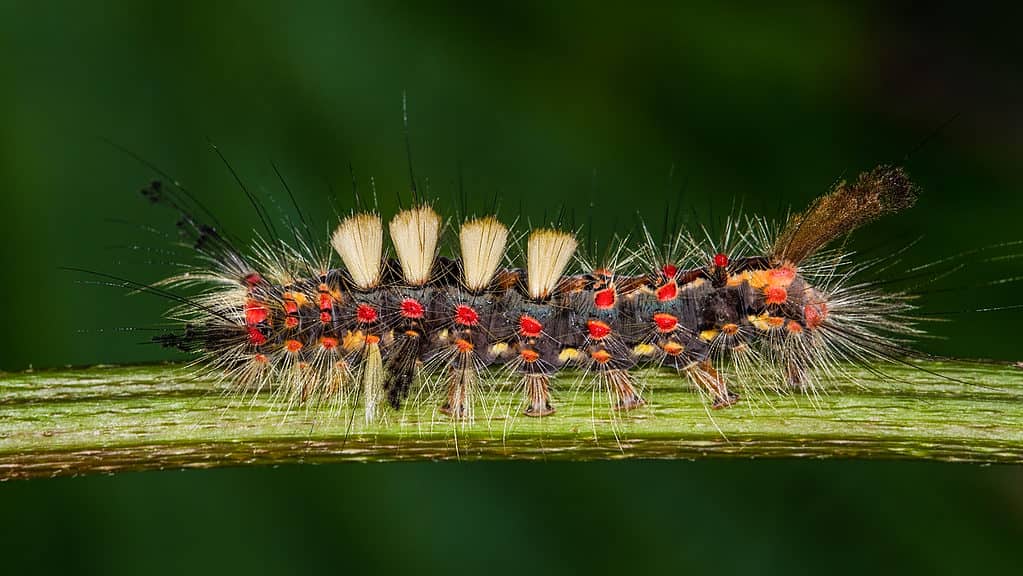
White-marked tussock caterpillars, such as this O. antigua, are hard to miss with their bright coloration.
©thatmacroguy/Shutterstock.com
Another family of caterpillars to avoid is the group that includes three species of white-marked tussock moths: Orgyia spp. Their dramatic-looking caterpillars have sparse but long, fluffy hairs, which are harmless. Below them, however, are clumps of bristles with venom-loaded barbs that can lodge in your skin. As described by toxicologist Dr. Jason Hack in an article, “once they have poked into your skin or landed in your eyes, [the barbs] break off and travel deep into your tissues in a linear fashion, resisting withdrawal once embedded.” He points out that caterpillar hairs getting into people’s eyes is surprisingly common, presumably from rubbing their eyes. The embedded hairs cause an inflammatory reaction in the eyes that will require treatment by an ophthalmologist.
Burnets and Smoky Moth Caterpillars (Family Zygaenidae)
Some other families of moths have venomous caterpillars, but with less potent effects. Burnets and smoky moth caterpillars, for example, have mild venom. University of Florida entomologist Donald Hall reported that when he (intentionally) pressed a full-grown Florida species (Neoprocris floridana) against his wrist, the burning and itching only lasted about an hour, leaving just a reddened patch of skin as a reminder of the sting.
Avoiding Caterpillar Stings
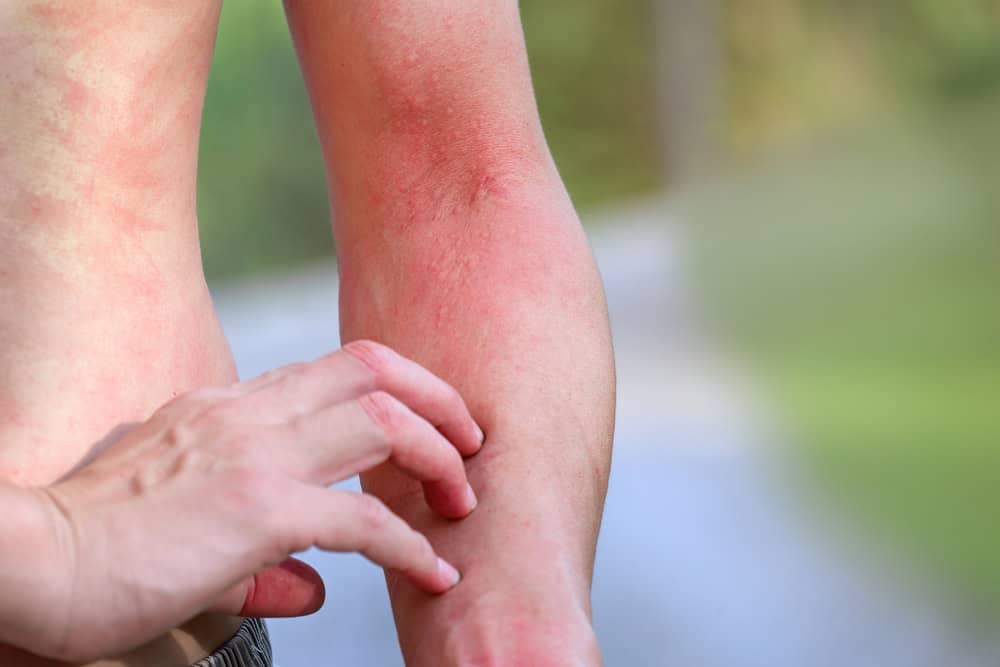
Itchy rashes from caterpillar stings can be treated as described below.
©Jes2u.photo/Shutterstock.com
Obviously, the best avoidance strategy is to abstain from picking them up. Even so, people get stung when they brush against vegetation while hiking or gardening. If a caterpillar comes into contact with your skin, your instinct may be to quickly brush it off. However, doing so can cause more barbed or stinging hairs to break off and become embedded in your skin. Use a stick or tweezers to remove it gently.
If you get stung, experts advise that you wash it off with soap as soon as possible to get rid of any loose hairs and poison. Let it air-dry, then apply sticky tape (like duct tape) to your skin. Pull it off to remove any spines that have become embedded, and repeat as needed. Then, apply ice to soothe the pain. The same sorts of salves you would use for other insect stings, like calamine lotion or a baking soda poultice, can provide relief from the itching and burning of a caterpillar sting. But don’t hesitate to seek medical attention if the pain is intolerable, you have any respiratory symptoms, or you think you have stinging hairs lodged in sensitive places like your eyes.