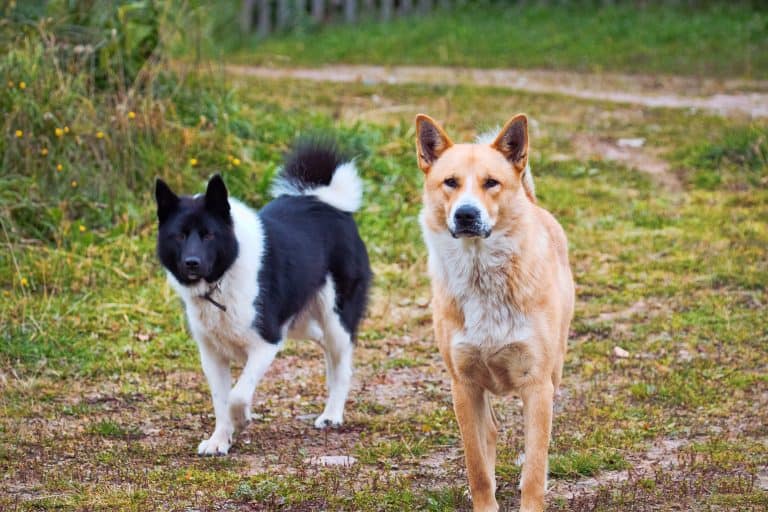

The beautiful, affectionate, and intelligent border collie, a workaholic from the herding breed group, makes a great pet for an active family. They’re loyal, constantly ready for adventure, and will play at the drop of a hat.
As wonderful as these dogs are, they need training for a well-adjusted, well-socialized life. Though training remains a necessity, border collies boast exceptional adaptability and trainability, making an owner’s job much easier. One of the advantages of border collies is they are a breed that takes to training very young.
In this comprehensive guide, discover the best tips for training your border collie, some common questions owners often ask when embarking on the training experience, and more.
A Timeline for Training Your Border Collie

As border collies age, they gain muscle and can train for agility competitions.
©Julia Zavalishina/Shutterstock.com
Chances are you’ll get to bring your border collie puppy home between their eighth and ninth week of life. From this age on, you’re able to start training your border collie! Here’s a general breakdown of what their bodies and minds are ready for during their first year of life.
Month 1: You won’t have your border collie yet, but your breeder and your puppy’s mom are most likely teaching them the ropes of how to be a dog. That includes how to be fed, where to go potty, and how to interact with their littermates.
Month 2: At the end of this month, you’ll have your border collie puppy! When you get them home, you can immediately start working on potty training. You’ll also want to work on establishing their name and recognition of it.
Month 3: Your training can start in earnest this month! Pick a few basic commands and training lessons to work on. The most common commands include sit, stay, and/or heel. Lessons might center around continued potty training, walking on a leash, and crate training. You can also introduce “nose work,” or tasks your border collie can accomplish with their nose.
Month 4: Border collie parents who want to compete with their dogs in agility contests can start pre-agility training in the dog’s fourth month of life. Stay away from high-impact training until your collie’s joints develop more but training like touching a target is an easy enough start.
By sixteen weeks old, your border collie has the land of the land — they know their yard, their family, their home, and their furry siblings (if you’re in a multiple-animal household). They should consistently respond to basic commands and have the proclivity to learn more advanced ones, like come or drop it.
Month 5: Obedience and trick training can continue during month five. Your collie may still have a few accidents in the house, especially if they get excited easily. If you’re crate training, they should be more comfortable with their crate and know the command word to go in. This is also a good month to start the “husbandry” training of getting your pup comfortable with being brushed, having their nails trimmed, and brushing their teeth.
Month 6: By now, your border collie should be reliably potty trained. They have probably lost all, or close to all of their baby teeth as well, so reinforcing basic commands like no and leave it, as well as redirection, might provide your furniture or hands some relief from gnawing.
Month 7: Depending on where you live, you may be able to enroll your border collie in organized pre-agility training once they’re seven months old. This will include skills like jumping, crawling, and weaving.
Month 8: At this point, your border collie should know the basic commands to keep them safe, so now it’s time to focus on some commands that will bring them joy and excitement. Teach fetch, work on leash training, and play recall games to make training time functional and fun for both of you.
Months 9 through 11: Much of your training now is repetition. You can also vary the commands you teach with a series of actions or “jobs” for your border collie to do. For example, take it allows your collie to investigate something, look to you for approval, wait for their release word, and “fetch” something. Similarly, the command watch me combines sitting and targeting while ignoring external stimuli.
Month 12: You can start agility training with your pup now, as their bodies are mostly matured at this point and high-impact skills practice won’t deter their joints from developing naturally.
Remember to consult your veterinarian or a trusted canine behaviorist for questions about your border collie’s development.
Are Border Collies Easy to Train?

Border collies have the intelligence and stamina for training — but they need short training sessions to grow their knowledge base.
©sonsart/Shutterstock.com
Yes and no.
By American Kennel Club’s standards, border collies are among the most trainable dogs. And their intelligence provides the grounds for border collies to learn many things quickly! However, the energy of a border collie can easily distract them — or foster feelings of boredom in particularly long training sessions. Border collie owners may agree these dogs are smart enough to train quickly, but you need to put in constant effort and patience to ensure the lessons stick.
As a way to keep your border collie engaged, train in shorter sessions instead of a marathon lesson. That means a few 10- to 20-minute lessons throughout the day instead of one hour-long “lecture” at the beginning of the day.
A content border collie is a more trainable border collie. If your border collie puppy’s needs are met — meaning they’re well fed, socialized, have enough sleep, and have a trusting bond with you — they’ll be more apt to listen to your commands.
How to Train a Border Collie Not To Bite
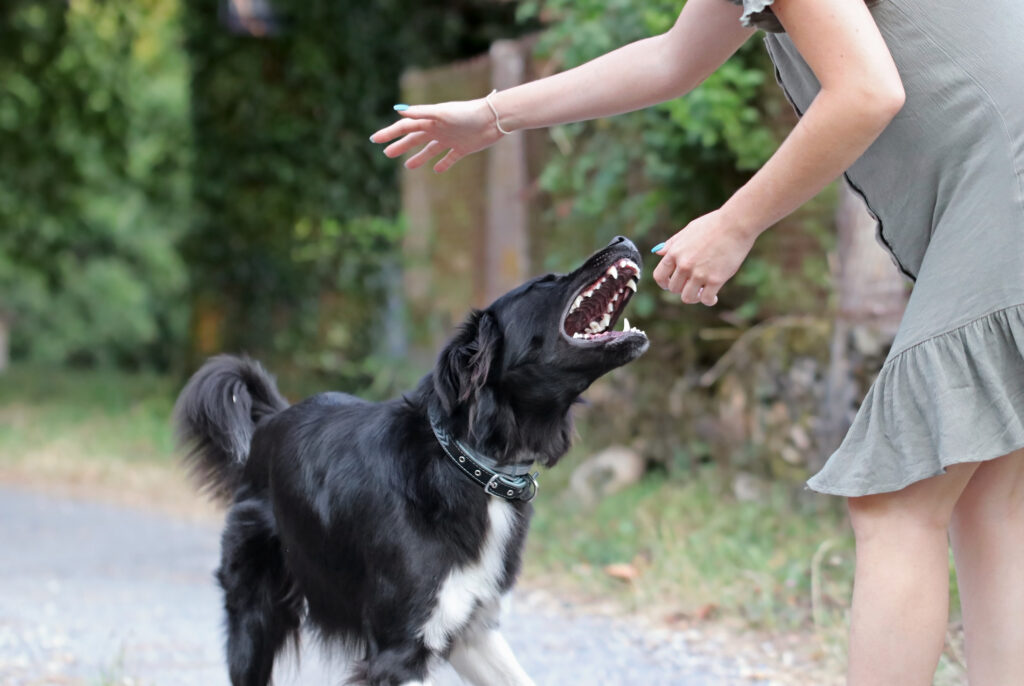
You can help your border collie avoid developing aggressive biting tendencies with consistent bite inhibition training as a puppy.
©Fercast/Shutterstock.com
Biting is a part of puppyhood for any breed. Biting is a natural action — especially for the energetic border collie — because they’re herders who learned to capture with their teeth. It’s also a natural excitement behavior. Take away the exciting stimulus or activity, and you’ll dissuade your pup from biting.
- When playing and your border collie bites, immediately stop playing.
- Either take toys away or place your border collie in their crate without something to do or play with and leave the room.
- Return after five or 10 minutes.
- Repeat the series of events every time your dog bites.
To avoid developing biting habits, don’t play tug-of-war or wrestle with them until you’re confident they have control over their urges to bite. And, if bites turn from playful to aggressive, examine why your border collie responded with aggression. Consult your veterinarian on the best next steps for aggressiveness.
How to Train a Border Collie To Not Run Away
Border collies are natural herders. When they see something (or someone) they like, they want to herd them. Or at the very least, greet them.
If you’re training your border collie to live off leash, the command to not run away can make a literal life-or-death difference. This training takes a lot of patience, practice, and positive reinforcement.
Before you start, secure a contained space outside to work on off-leash training without distractions. Most of the time, this is a fenced front or back yard, or a dog park early in the morning. Your collie also needs to reliably answer to the commands sit, stay, and leave it.
Working slowly to ensure your pup understands each step, practice stay in the presence of exciting stimuli, like a dropped treat or slightly-ajar door. Reinforce each success with treats and positive praise and break from training after 10 to 20 minutes. Before long, your border collie should understand how to stay and focus on you rather than an exciting stimulus unless they’re released with a word to check it out for themselves.
Make sure your dog is always secure — like on leash — during drills like this to ensure safety if they fail the command.
How to Train Your Border Collie in 7 Steps
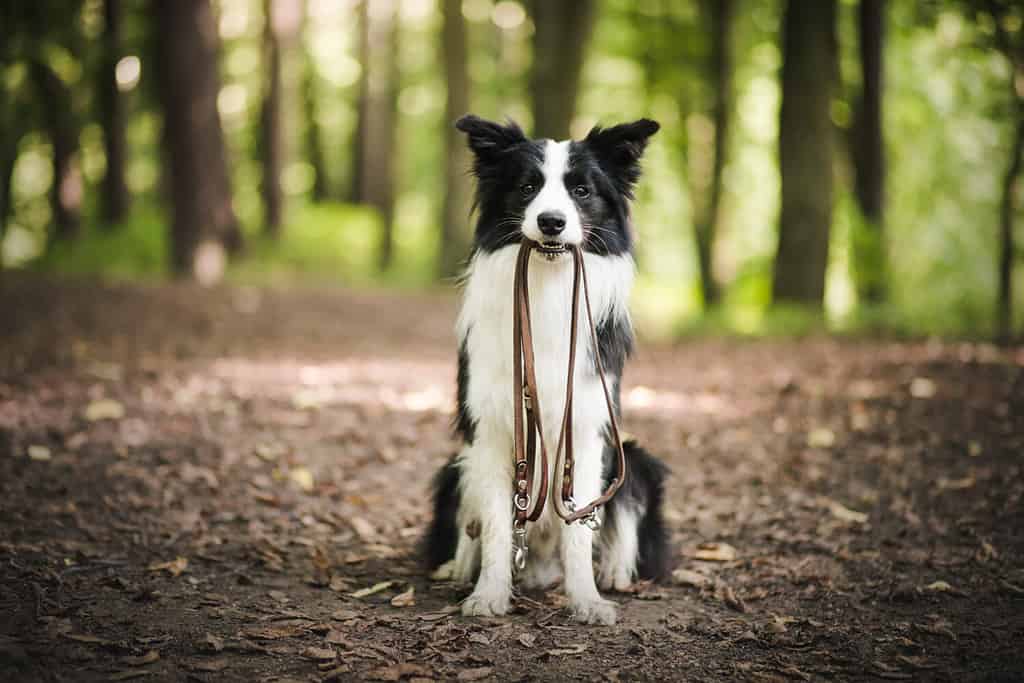
One of the most important tenets of training your border collie is establishing a reliable, respect-driven relationship.
©xkunclova/Shutterstock.com
Training a border collie comes down to positive reinforcement, consistency, and clear instruction. Follow the steps below to create a sturdy training foundation for your border collie.
- Create a trusting, loving relationship with your dog based on mutual respect.
- Establish a safe training area that keeps your border collie safe as they try and fail.
- Start with basic commands and reinforce them until they’re second nature.
- Use treats (or another positive reward if they’re not food-motivated) to encourage good behavior.
- Engineer interactions so your border collie doesn’t fail twice in a row.
- Take breaks in between short training sessions.
- Use consistent, clear language and a patient tone.
These steps build an environment that fosters learning and growth rather than fear or confusion. Training ultimately comes down to the owner, not the dog, and consistency helps to build both of your confidences.
What Commands to Teach Your Border Collie
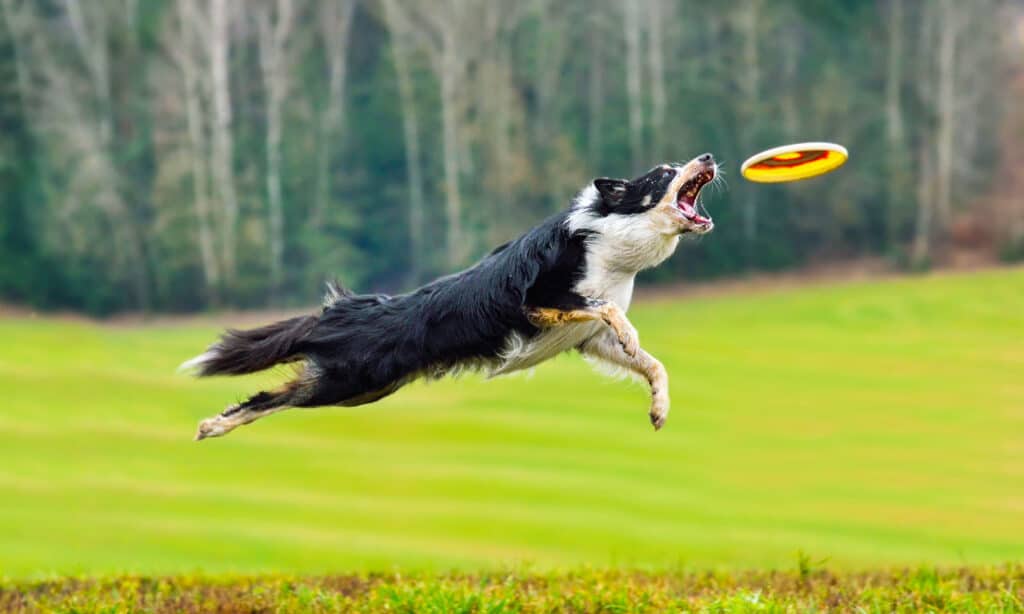
Border collies can learn dozens of complex commands.
©iStock.com/eAlisa
The commands to teach your border collie will depend on the type of lifestyle you want them to have. Some of the common commands include obedience, tricks, and location-specific commands.
Obedience commands
Obedience commands run the gamut of lay down to speak and everything in between. Border collies should learn the basic obedience commands of sit, stay, and come before graduating to the following:
- Down.
- Wait.
- Watch me (or look at me).
- Drop/drop it.
- Leave it.
- No.
- Lap.
- Lie down.
- Bark/ speak.
- Heel.
Obedience commands focus on maintaining manners and proper public etiquette to keep the owner, the dog, and strangers safe.
Tricks
Border collies have the intelligence to learn interesting tricks and commands. Some border collies have learned to dance with their owners, ride a skateboard, ring bells, stack balls, catch balls, and much more.
If you’re curious about just how many tricks a border collie can learn, check out Mr. Biscuit. He knows hundreds of human words and tricks.
Location-specific commands
Establishing location-specific commands will help your border collie know where they need to be — or at the very least, where you expect them to be. Some common location-specific commands include:
- Bed/bedroom.
- Crate (or your equivalent).
- Inside.
- Outside.
- Car.
- House.
Border collies can learn location-specific commands more easily if there’s something physical tying the location to their brain. Crate training reinforces that good things happen in the crate if your pup gets treats or a frozen Kong every time they go in. Similarly, snuggly pups will look forward to “bed” or “bedroom” if they sleep on your bed with you and get pets before falling asleep.
How Long Does it Take To Teach a Border Collie to Herd?
Today’s farmers and homesteaders may adopt a border collie for the express purpose of their breed — herding. Border collies can herd cattle, goats, chickens, sheep, and most other animals you’d have on a farm.
It might sound counterintuitive to train a herding breed to herd, but the training focuses on command of when and where to herd rather than the act of herding. Teaching herding to a border collie will vary in length by individual dog but you can expect to spend at least a few weeks practicing with them.
When teaching a border collie to herd, keep them on a leash at first and work on establishing command words. Your pup will need to know where they should be in relation to the herd, how he should interact with members of the herd, and the final destination of the herd they’re moving toward.
10 Tips for Training Your Border Collie

Border collies need variety, consistency, and rewards when training.
©LSphotoCZ/Shutterstock.com
Training border collies is both a challenging undertaking and an exciting opportunity for a once-in-a-lifetime relationship. Border collies love to learn, have an eager work attitude, and will do anything to spend more time with the people they love. When you’re training your border collie, consider the following tips.
AZ Animals also spoke to Tommy Wylde, a professional dog trainer breeder with close to two decades of experience, and founder of Floofmania, for an expert’s opinion on training tips for border collies.
1. Vary Your Training
Border collies can become bored quickly. They also need frequent breaks from training so they don’t get frustrated or lose interest in learning a new skill.
“To keep a border collie focused, engage their minds with interactive tasks,” said Wylde. “Try providing regular physical exercise, and use positive reinforcement techniques.”
2. Find What Motivates Them
Not all border collies are food-motivated dogs. Some enjoy walks, rides in the car, snuggles, or pets. Remain acutely aware of how your border collie responds to rewards and capitalize on the one or two they seem to enjoy the most.
3. Use Positive Reinforcement
In addition to obedient intelligence, border collies are emotionally intelligent animals. While training can become frustrating, avoid using any negative reinforcement — this only breaks the relationship you’ve established and teaches your pup to fear you or a punishment.
4. Be Consist
Because border collies have a hyperactive mind and thirst for adventure, distraction is a real threat to progress. Wylde suggests consistency and patience over everything.
“Always maintain consistency, be patient, and establish clear boundaries, as border collies thrive on structure and routine,” he asserted.
5. Meet Their Needs
Border collies are great pets for active families because of their need to play constantly. Young children can keep border collies entertained when parents need to get house chores done — and the entire family can go on weekend adventures together. Without meeting these activity needs, as well as providing healthy meals and deep sleep, your border collie will trust you less. As such, they’ll be less inclined to listen until their needs are met.
6. Socialize Well
Because border collies have a ton of energy, they can be a lot for other dogs or humans. Socialization early ensures your border collie knows the proper puppy etiquette, including where and when to sniff, invitations to play, and red flags that signal when to back off. This socialization also helps teach bite inhibition.
7. Work Together
Training remains a two-way street. A relationship built on compassion, mutual respect, and love works in tandem toward a common goal. You’re partners, not master and servant.
“Building a strong bond through consistent training, mental stimulation, and physical activity is essential for a well-behaved and happy border collie,” Wylde added to the point.
8. Allow for Curiosity
Collies remain curious creatures, so create space for them on walks or in free play time to explore their world with their noses. Dogs can’t conceptualize the vastness of the world, so learning as they explore their own microcosm is a great way to encourage curiosity and creative problem-solving.
9. Keep Them Active
A surefire way to create a disobedient and destructive border collie is to fail to keep them active. Border collies need to roam, have a job, and move their muscles. Avoid cooping up a border collie for more than a few hours inside.
10. Provide Lots of Love
Border collies are affectionate creatures that will lick, jump, snuggle, and face-nudge their way into a family’s heart. Giving affection when asked for it remains an important part of providing for your border collie’s needs.
6 Common Mistakes When Training Border Collies
No one is perfect, and chances are that you’ll make at least a few mistakes along the path of training your border collie. Discover some of the most common mistakes owners and trainers tend to make, and how to avoid making them in the future.
- Letting your dog off leash before recall is perfect.
- Yelling, scolding, yanking on, or striking your dog in the heat of a moment.
- Giving murky directions.
- Failing to provide enough mental and physical stimulation throughout the day.
- Forcing a long period of training onto your border collie.
- Forgetting to reward a behavior.
- Assuming one practice session was enough for your border collie to learn the behavior.
For the most part, these mistakes don’t have lasting consequences. The first mistake, however — letting your border collie off-leash before they’ve mastered recall — is potentially life-threatening. Unless they’re in a fenced yard or contained space, your border collie may pursue the external stimuli until they catch it, which can lead to running into a busy street, catching a dangerous animal, or getting lost. Make certain your border collie will respond and come back to you before going off-leash consistently.
What Not To Do When Training Your Border Collie
While mistakes happen, a few actions and responses exist that you should strive to never do to or around your border collie.
The first: punishment. While we’re all human and the odd interaction will create a visceral reaction that results in yelling, that’s a mistake. A habit is using punishment as a means to train your border collie, and you should avoid it at all costs.
“Never resort to punishment-based training methods, as it can lead to fear and aggression in this sensitive breed (but don’t use those techniques on any breeds, really),” asserted Wylde.
Don’t over-exercise your border collie, either. They’ll play long after other breeds stop, but border collies get tired, too. Give your pup the time for rest or you might risk physical injury or a breakdown of trust in your relationship.
Lastly, never give up on your border collie. You’re going to be frustrated some days. Some days you may feel too tired to reinforce a behavior. Other times, it will feel like you just don’t understand each other. This is why it’s so important to build that solid relationship — when the going gets tough, you need to be able to lean on each other over everything else.