
You are bound to cross paths with one type of centipede or another at any given time, since they inhabit most areas of the world. Defying their common name, centipedes do not have 100 legs, but some will have more and some will have fewer, depending on the species. The number of leg pairs they have is always odd — just one interesting fact about this animal. A variety of species of centipedes exist, some with different colors, some large, and some small. Despite a common misconception, centipedes are not insects. Instead, they are arthropods, and there are more than 3,000 species of them in the world.
To help you learn more about them, we have compiled a list of eight different centipede species, with fascinating things to know about each one. Most centipedes are known for their long bodies and a large number of legs, but some species differ. Living mostly in moist, dark habitats, some species can even find their way into your home. Let’s go over some of the most fascinating centipede species living across the world.
1. Feather Tail Centipede (Alipes grandidieri)
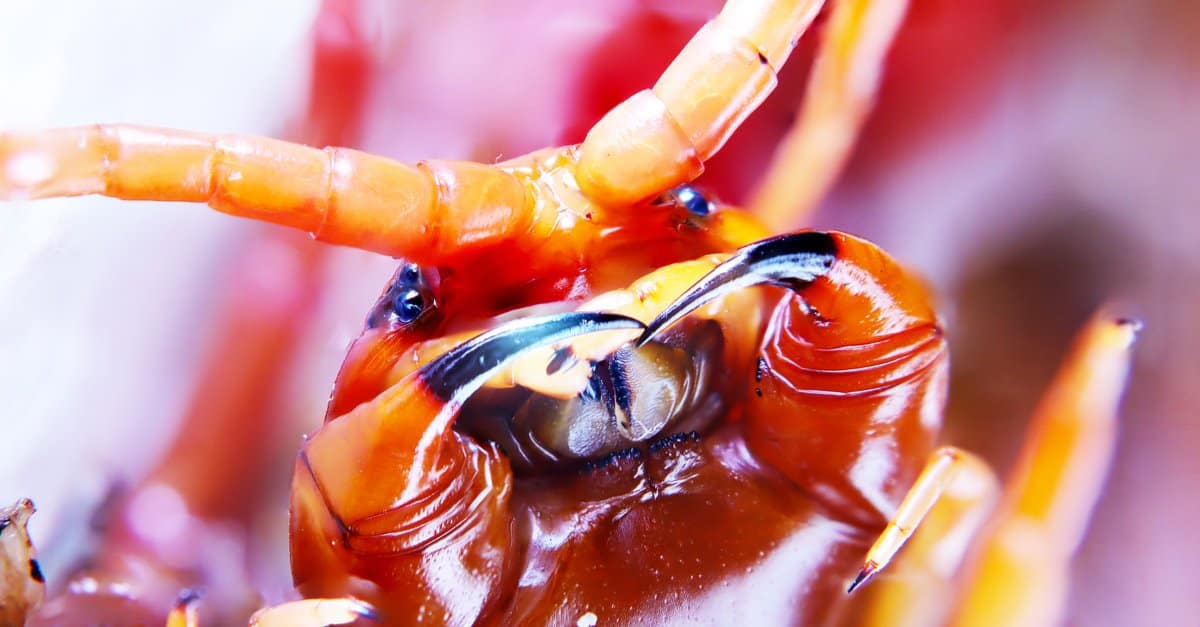
The feather-tail centipede is a species of giant centipede, known for its feather-like legs at the end of its tail. Native to Africa, they live in the regions of Kenya, Tanzania, and Uganda. This centipede averages around four to six inches long. Its body is black and segmented, with bright orange legs. Its back legs are brightly colored and look like wings. The feather-tail centipede is one of the only species with this type of wing on its legs, but it cannot fly.
When disturbed, this species will shake its tail and create a hissing sound, similar to a venomous snake. Their sting is extremely painful and can cause a fever and swelling. Still, they are not deadly and are kept as pets for their colorful legs. They feed on roaches, spiders, and insects, and occasionally find their way into homes within their native range. While not the largest centipede species, they are one of the most elegant.
2. House Centipede (Scutigera coleoptrata)
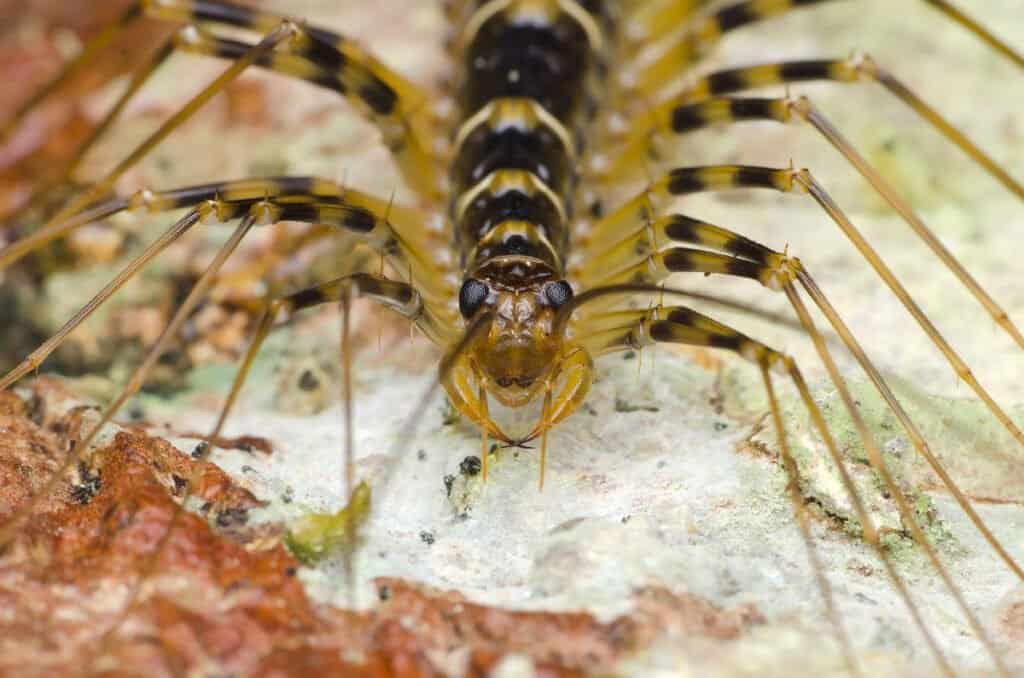
The house centipede is one of the most common types.
©zaidi razak/Shutterstock.com
House centipedes are small and thin. Their legs are long and surround their body, making them look bigger. Including their legs, they reach only about three to four inches in length. They are yellowish gray and covered in dark stripes.
House centipedes are insectivores and are attracted to the insects in your homes. Believed to be native to the Mediterranean region, they have managed to make their home in houses across the globe. Active mostly at night, you may find this type of centipede running across your living room looking for prey. Their prey includes unwanted creatures like bed bugs, fleas, and spiders. Therefore, they are often seen as natural pest control for homes.
Usually harmless, this centipede is capable of biting. Bites are rare, but they will bite when provoked. Itching, nausea, and swelling are some of the symptoms, but they don’t occur all the time.
3. Amazonian Giant Centipede (Scolopendra gigantea)
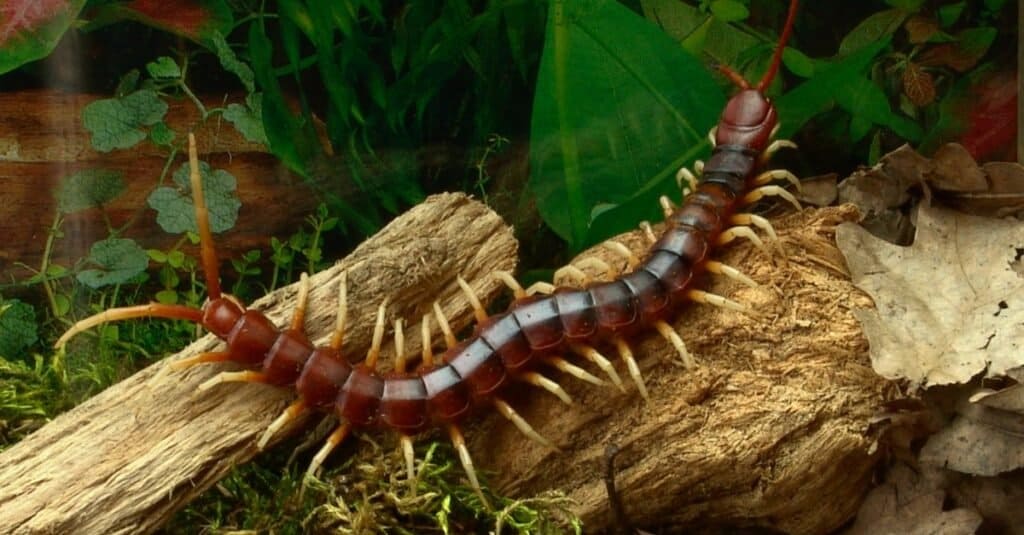
The Amazonian giant centipede can reach more than one foot long.
©skifbook/Shutterstock.com
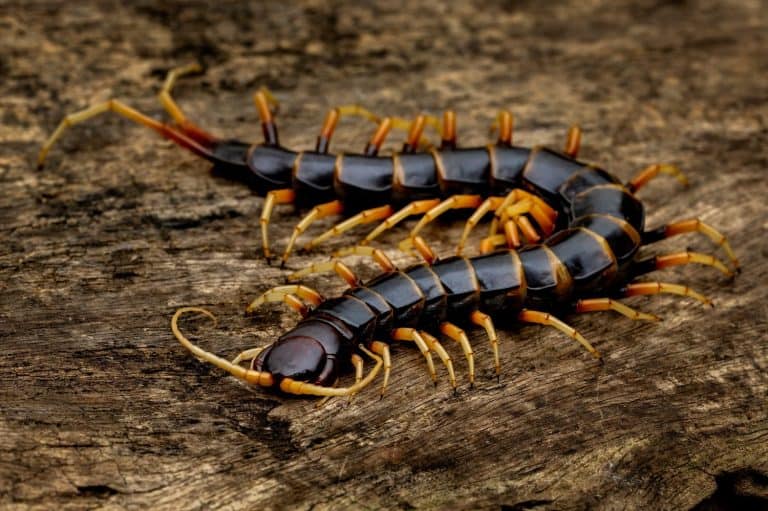
The Amazonian giant centipede, also known as the Peruvian giant yellow-legged centipede, is the largest species of centipede in the world. This giant averages around 10 inches, but is capable of growing larger than one foot. On average, they have around 21 to 23 pairs of legs. Their body is maroon red and supported by large yellow legs.
This type of centipede is native to the Amazonian jungles of South America, but is kept as a pet around the globe. However, they have also been introduced to areas such as Mexico, Honduras, and Puerto Rico. They are carnivorous, feeding on smaller animals like mice, birds, bats, lizards, scorpions, tarantulas, and insects. Like other species, a bite from this centipede is extremely painful, but not usually deadly. Only one death from this species has been documented. Their large-sized fangs and bright colors make them a unique pet to keep.
4. Tiger Centipede (Scolopendra polymorpha)
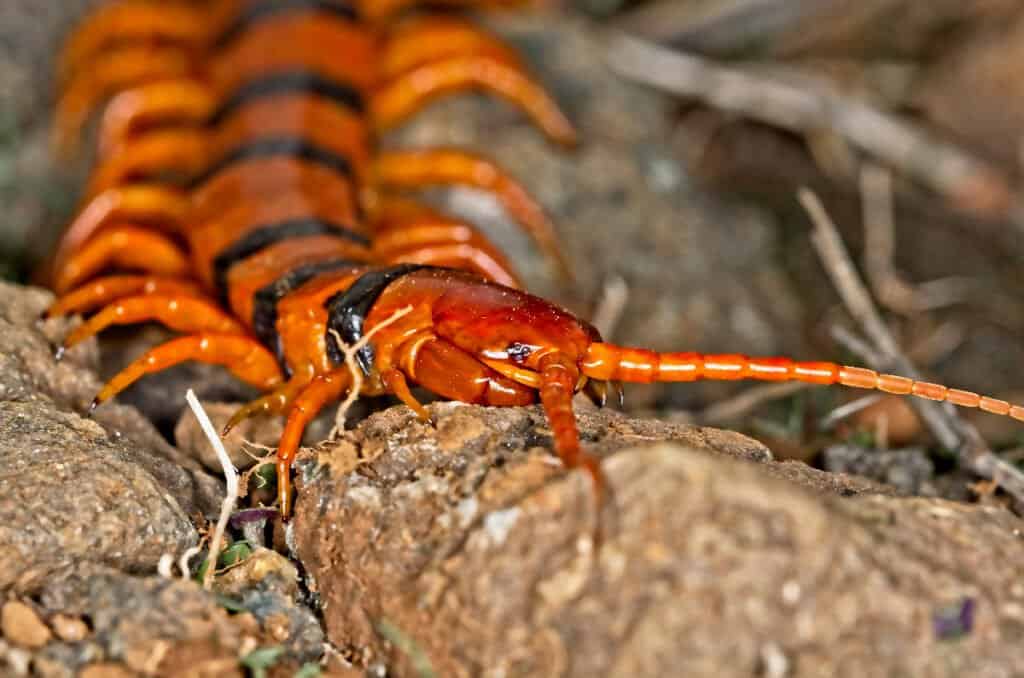
The tiger centipede is named for the dark bands down their dorsal plates.
©ananth-tp/Shutterstock.com
The tiger centipede inhabits desert regions. This centipede can be found in the southwestern region of the United States as well as northern Mexico. They live under debris and in dark areas during the day before coming out at night. They are named for their dark bands going down their dorsal plates, and can come in multiple colors. Tiger centipedes have tan or orange bodies, with a brown, red, or orangish head. Their legs are yellow, and certain centipedes of this species in California have blue coloring, like the Tanzanian blue ring centipede. Tiger centipedes are four to seven inches long and are large enough to produce a painful bite.
5. Aquatic Centipede (Scolopendra cataracta)
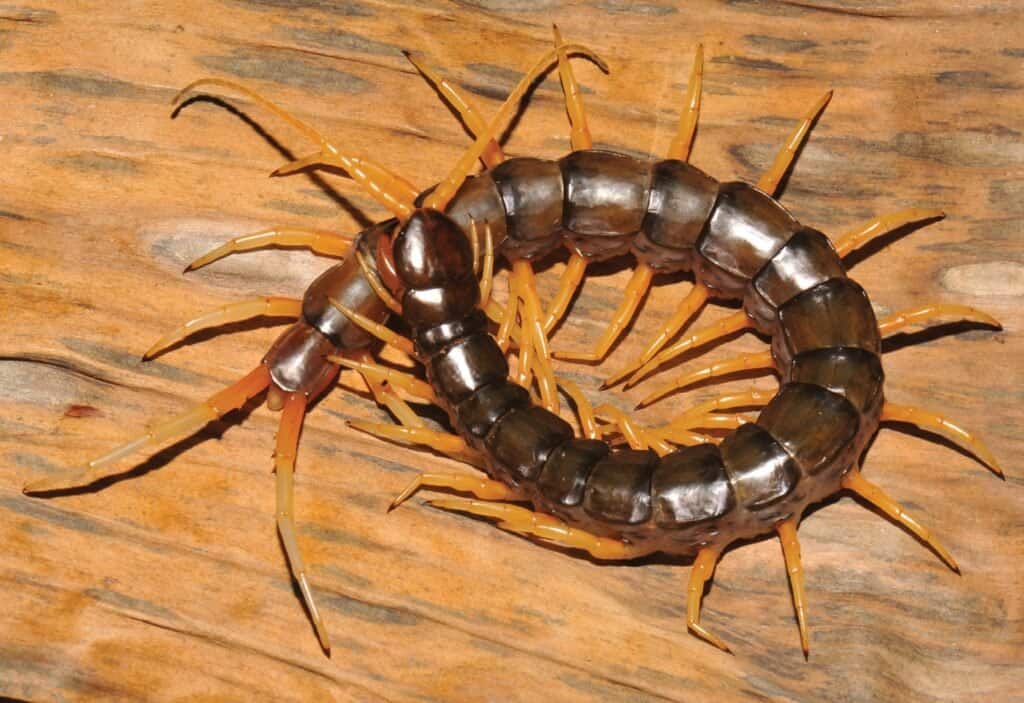
The aquatic centipede is a strong swimmer.
©Warut Siriwut, Gregory D. Edgecombe, Chirasak Sutcharit, Piyoros Tongkerd, Somsak Panha; crop by EdChem / Creative Commons – Original / License
The aquatic centipede is a species of giant centipede found in Thailand, Laos, and Vietnam. They are capable of growing up to seven inches long and have a greenish-black coloring. Plenty of centipede species can swim, and the aquatic centipede relies on water in its habitat to survive. At night, they will hunt and swim in water with eel-like movement. They also use water to escape from natural predators. Their body is hydrophobic, which helps water roll off when they leave the water. Like other centipede species, they are also venomous and are capable of delivering a powerful bite.
6. Giant Red-Headed Centipede (Scolopendra heros)
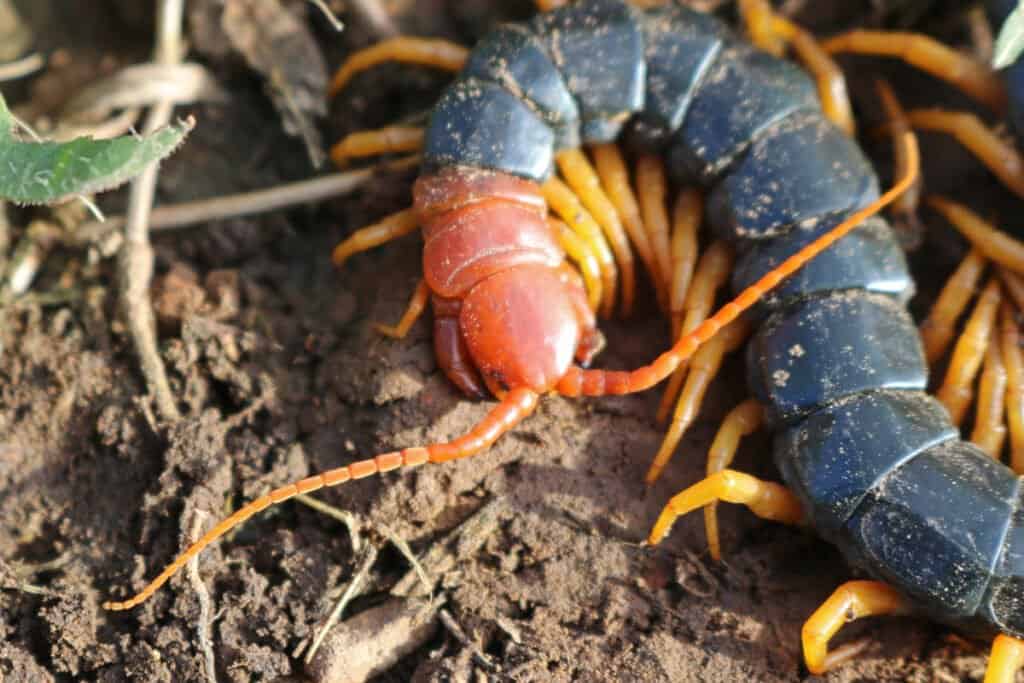
The giant red-headed centipede can reach eight inches long.
©Creeping Things/Shutterstock.com
As their name suggests, the giant red-headed centipede is pretty large. In fact, they are the largest centipedes in North America and can reach eight inches long, although the average is 6.5 inches. These centipedes live in northern Mexico and the southern region of the US. Their appearance can vary slightly, but they typically have a red head and a black body. They inhabit both rocky woodland areas and arid desert regions. As such, they are also commonly called the giant desert centipede. They are nocturnal animals and prey on a variety of insects, small rodents, reptiles, and amphibians.
7. Tanzanian Blue Ring Centipede (Ethmostigmus rubripes)
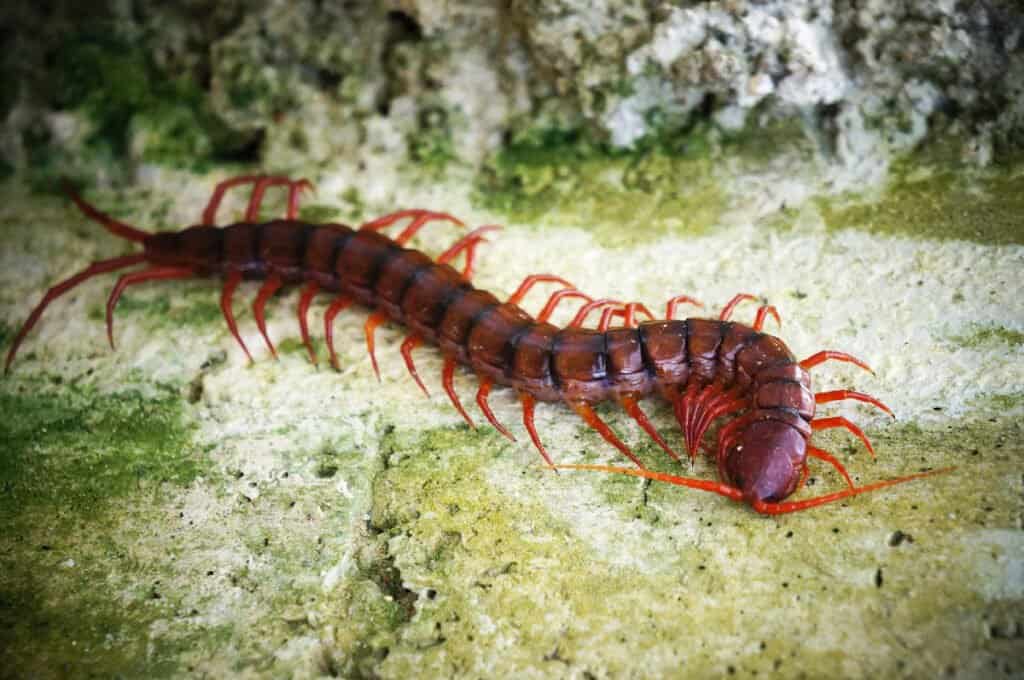
The Tanzanian blue ring centipede is around seven inches long.
©attem/Shutterstock.com
Tanzanian blue ring centipedes are named for their blue coloring. Their body is blue-green, with light blue coloring on their legs. They are not the largest of centipede species, but can grow up to seven inches. In Tanzania, the Congo, and Sudan, they can be found in savanna habitats. They are a burrowing species and will bury themselves in sandy soils, under rocks, logs, and other dark places, although they may venture into other areas searching for food, such as small insects and earthworms.
8. Hoffman’s Dwarf Centipede (Nannarrup hoffmani)
The smallest centipede in the world is Hoffman’s dwarf centipede, which was discovered in New York’s Central Park in 2002. These tiny centipedes are named after Dr. Richard L Hoffman, who discovered them. Incredibly, these centipedes are only 0.4 inches long, but still have 82 legs. They are typically found in the leaf litter, where they prey on small insects and spiders.
With the 3,000 species of centipedes in the world, scientists believe there to be at least 8,000 total species, some undiscovered. The Hoffman’s dwarf centipede is just one example of the new species to be discovered as time goes on.