
Quick Take
- Birds are directly descended from dinosaurs and once had teeth.
- Birds have adapted to life without teeth.
- Instead of teeth, birds have tomia and/or lamellae.
All present-day birds are the direct descendants of a group of dinosaurs called theropods, including Tyrannosaurus rex and Velociraptor. Birds are the only lineage that survived the mass extinction event. Many ancient birds had teeth, though they varied from sharp dinosaur-like teeth to bony projections in later forms. Modern birds have lost all of their teeth, which provides them with the evolutionary advantages of lighter weight and faster development. Instead of teeth, birds have beaks to help them peck, scoop, catch, and eat their food. While most birds eat only insects, seeds, and fruits, birds of prey feed on larger animals, such as young mammals, rodents, and even snakes. One might wonder how toothless birds can eat larger prey despite their lack of teeth. Continue reading to discover how birds use specialized techniques and anatomical features to eat large meals without having any teeth.
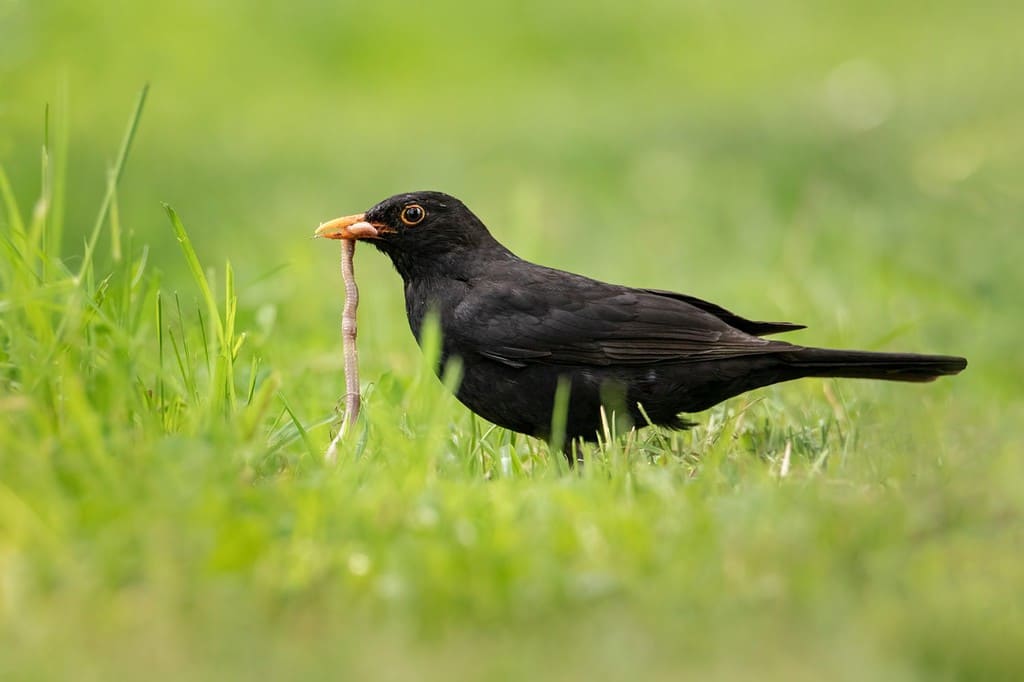
A bird’s beak is crucial to its survival.
©Catleesi/Shutterstock.com
Do Birds Have Teeth?
Birds do not have teeth. Instead, they have beaks or bills, which are used for building nests, feeding young, grooming feathers, and defense. Birds use their beaks to peck food, pick it up, and angle it for easier swallowing.
Although they don’t have teeth, a bird’s beak is lined with serrated ridges or tomia (cartilaginous projections) that act like teeth, helping them grip slippery food like fish, vegetation, or insects, or crush seeds, depending on the species.
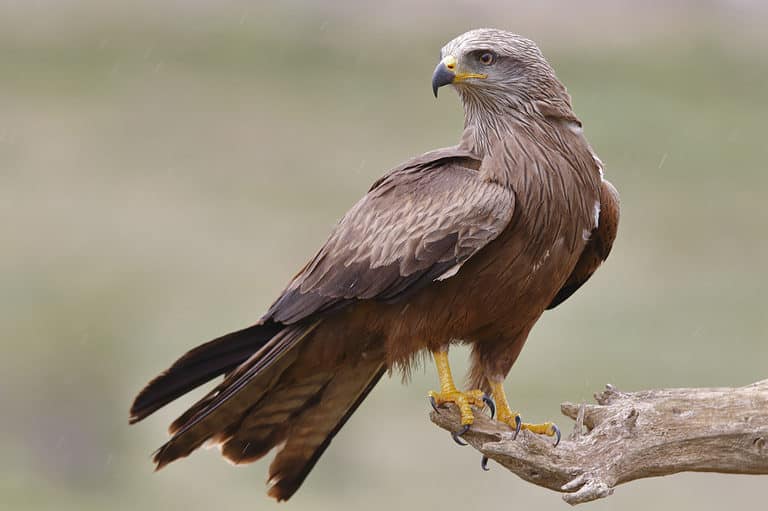
Tomia are tooth-like serrations, often on the cutting edge (tomial edge) of the beak, used for tearing flesh or holding prey. Large birds of prey have highly specialized tomia (tomium, singular). Most raptors have these very sharp edges along the front edges of the beak, allowing them to tear flesh effectively after capturing prey with their talons.
Falcons, Kites, and Shrikes have a tomial tooth, a sharp, triangular projection on the upper mandible that fits into a corresponding notch on the lower mandible, used like scissors to quickly sever the neck vertebrae of prey.
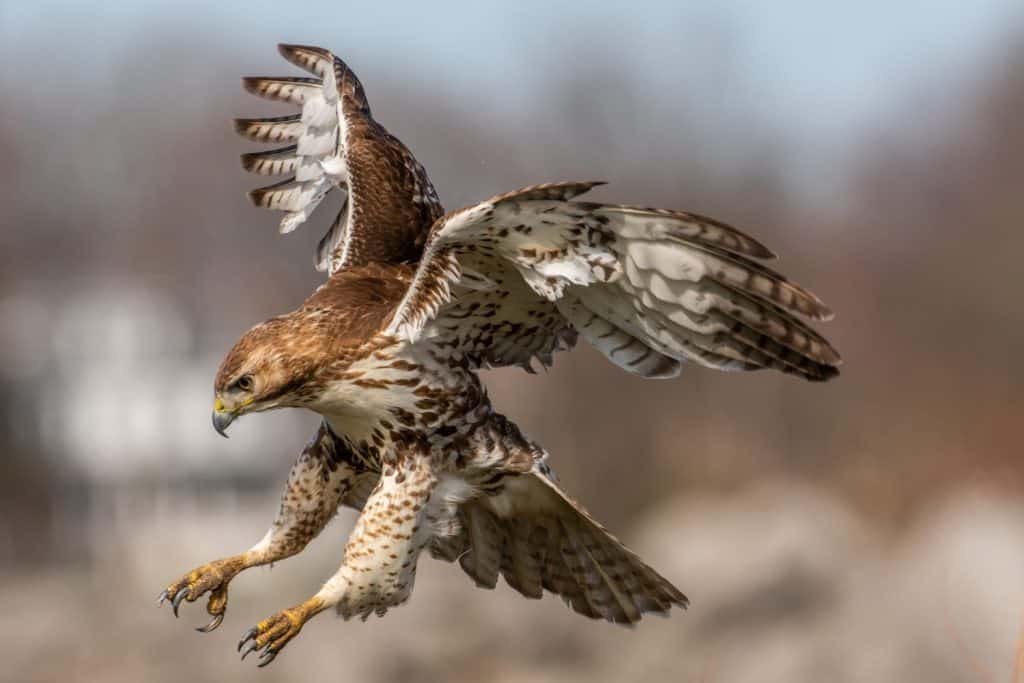
Raptors, like this red-tailed hawk, have specialized tomia that help them secure and consume their prey.
©David Brace/Shutterstock.com
Hawks and eagles have tomial hooks. These sharp hooks on the beak edges, along with powerful talons, help tear apart prey.
Aquatic birds may have both tomia and lamellae, structures of the beak that often coexist. Lamellae (lamella, singular) are comb-like keratin ridges lining the inside of bills, especially in waterfowl such as ducks, geese, and flamingos. They function as a sieve to filter tiny food (seeds, insects, algae) from water or mud while expelling non-food items.

Flamingos have lamellae to help them filter food out of water.
©HunsaBKK/Shutterstock.com
Hatchlings have an egg tooth, a tiny yet sharp structure at the edge of the baby bird’s beak that helps them break through the eggshell when hatching. However, this egg tooth will fall out a few days after hatching.
How Do Bird Beaks Work?
Birds use their beaks for a variety of tasks, including building nests, hunting, catching and eating food, drinking, self-defense, and protecting their nests or young.
Preening is an essential grooming behavior in which birds use their beaks to clean, align, and waterproof their feathers by removing debris and spreading oil to waterproof feathers, keep them supple, and repel dirt and parasites.
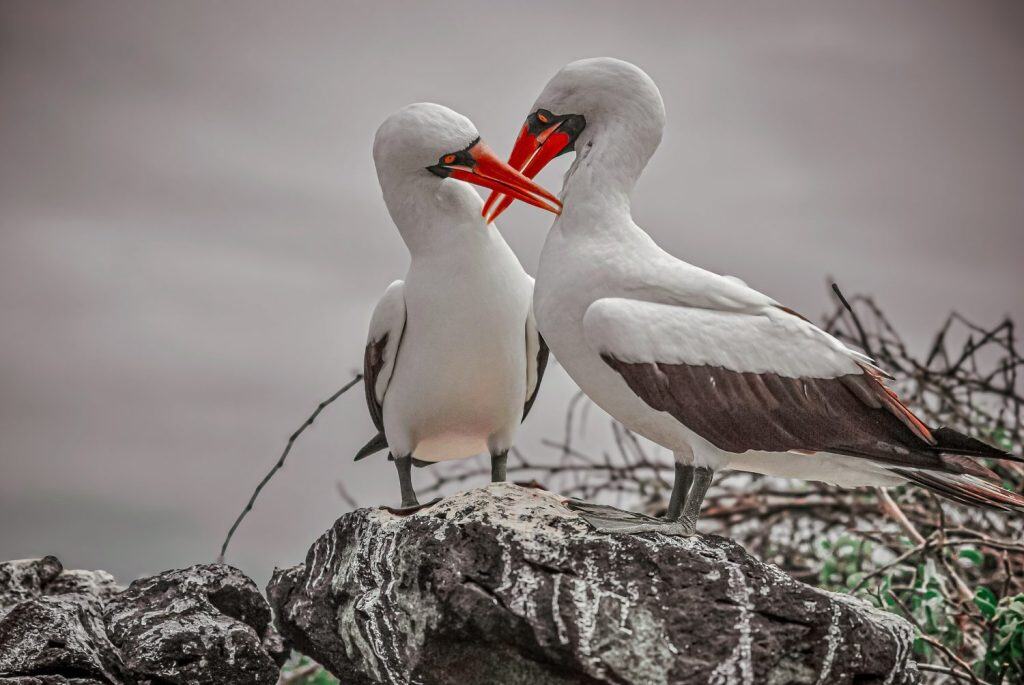
Birds use their beaks for a variety of activities, including preening, a form of grooming.
©LifeOnEarth01/Shutterstock.com
A bird’s beak is composed of keratin, the same protein from which human fingernails and hair are made. Keratin is tough and durable, but even when the keratin wears down, a new layer forms, helping the beak remain sharp.
Do Birds Have Tongues?
All birds have tongues, which often possess more specialized features than those of most mammals. Some bird species (woodpeckers, hummingbirds) have tongues that are even longer than their beaks, allowing them to extend their tongues far beyond their beaks. Some birds, such as hummingbirds, have tongues with bifurcated (split) tips adapted for nectar feeding.
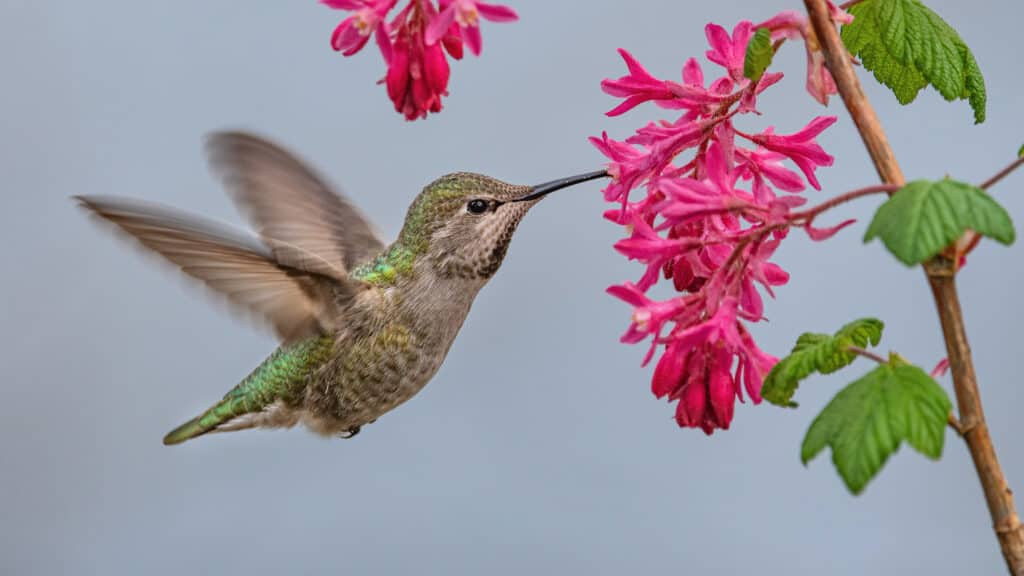
An Anna’s Hummingbird uses its long beak and tongue to extract nectar from flowers.
©Mason Maron /Shutterstock.com
Many birds, especially birds of prey (eagles, ospreys, herons) and some insectivores (such as pileated woodpeckers), have backward-facing barbs or spines (papillae) on their tongues to grip slippery prey like fish or insects and to facilitate the movement of food to their throats, as they can’t chew.