Quick Take
- The bite itself isn't what makes you sick. Something you eat hours later is.
- Why does a burger at dinner send people to the ER at midnight?
- Hundreds of thousands may be affected, yet most never learn why they get sick.
- Misidentifying one tick could delay your care. Can you spot the look-alike?
It seems far-fetched that a single tick bite can make a person allergic to burgers and steak. However, it is entirely possible. A lone star tick can alter a person’s diet forever, with many never realizing the cause of their allergy.
A Bite from the Lone Star Tick Can Make People Allergic to Red Meat
Meat and dairy are staples of many Americans’ diets. However, this can all change in an instant if bitten by the wrong tick.
The concern with tick bites is the risk of contracting Lyme disease. However, Lyme disease is not the only disease ticks can pass to people. Lone star ticks, which are arachnids, can transmit alpha-gal syndrome, a tick-borne allergy that can literally stop people from being able to consume red meat, dairy, or other mammalian products again. For allergic individuals, eating these foods triggers an allergic reaction that can cause anaphylaxis.
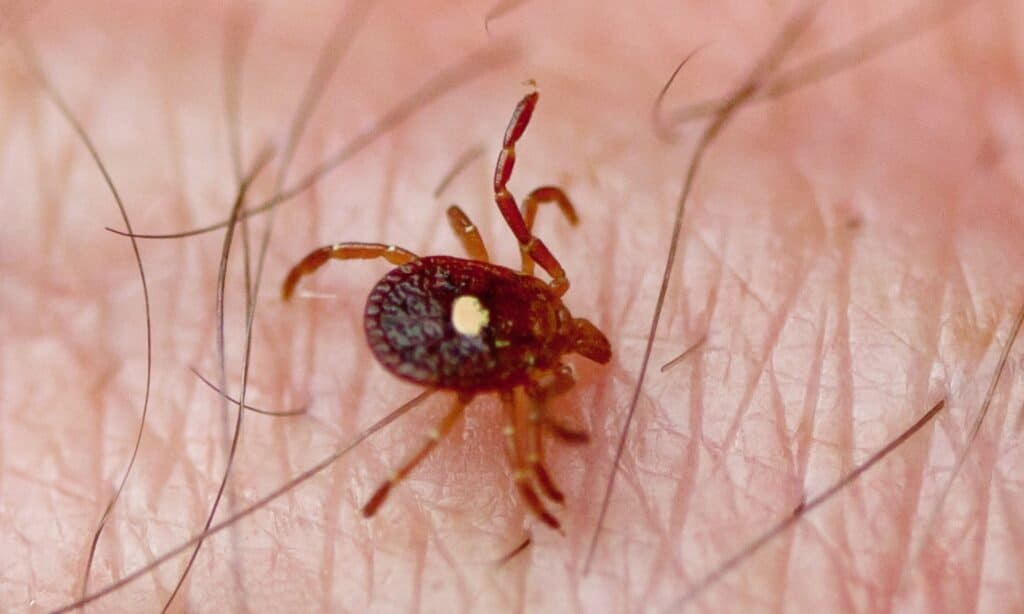
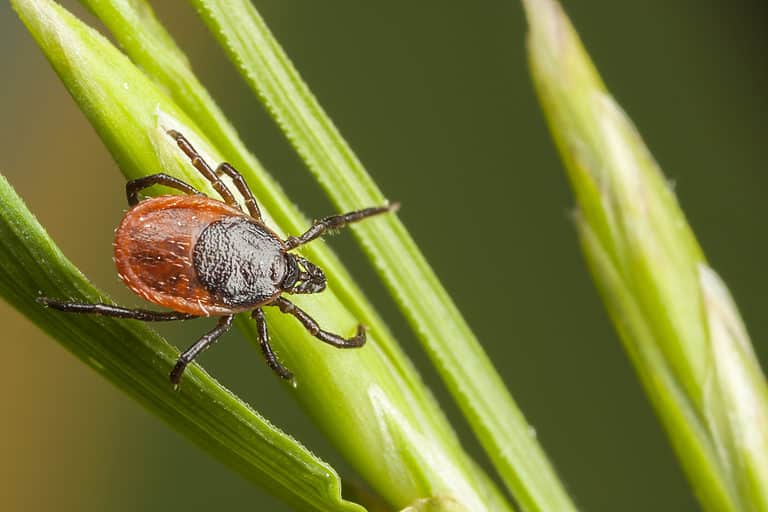
Lone Star tick bites can lead to red meat allergies.
©iStock.com/epantha
That said, not everyone bitten by a lone star tick develops alpha-gal syndrome.
Additionally, blacklegged ticks, best known for transmitting Lyme disease, can also transmit alpha-gal. However, they only contribute to a small percentage of cases (approximately 10%), with lone star ticks accounting for the majority of known cases.
What Causes the Allergy to Red Meat?
Alpha-gal syndrome isn’t an infection. It’s an allergy to a sugar molecule called galactose-alpha-1,3-galactose, or alpha-gal for short. Most mammals, including cows, pigs, and deer, carry alpha-gal in their bodies. Humans don’t.
Scientists believe the problem starts when a tick feeds. Ticks can pick up alpha-gal from the mammals they bite, and when they later bite a person, their saliva can carry it into the skin. Researchers think other compounds in tick saliva push the immune system to treat alpha-gal as a threat. In some people, the bite prompts the body to start making a type of antibody called immunoglobulin E (IgE) that targets alpha-gal.
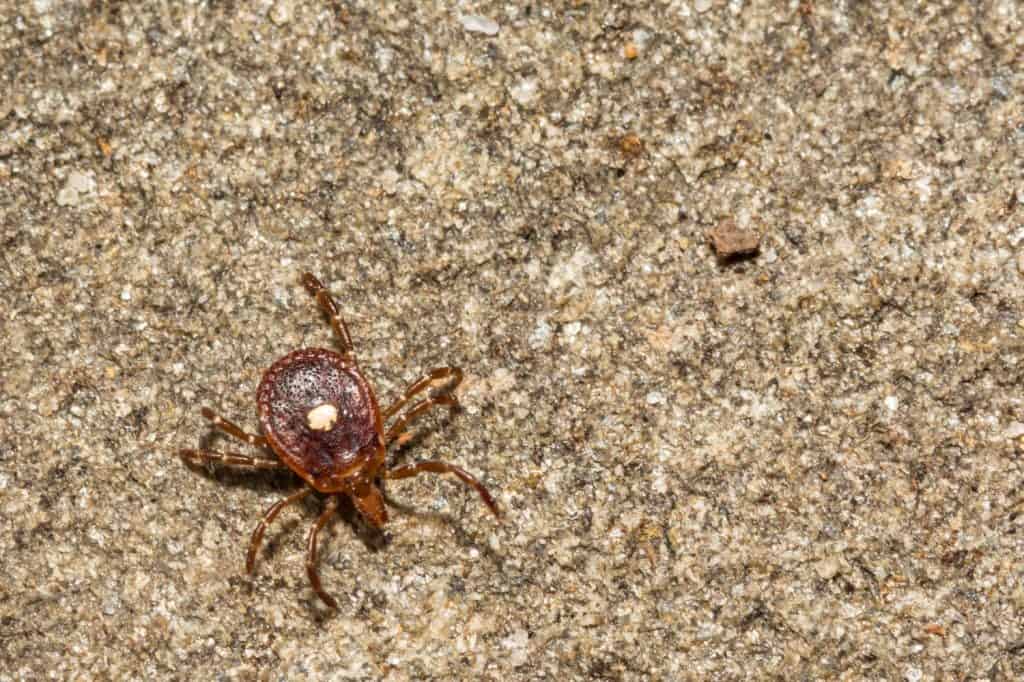
Lone Star tick bites inject saliva containing alpha-gal into the wound. The next time the body consumes the carbohydrate, it treats it like a foreign substance and triggers an allergic reaction.
©Jay Ondreicka/Shutterstock.com
The bite itself doesn’t cause the food reaction. That comes later. Once someone has these antibodies, eating red meat or another mammal product delivers a new dose of alpha-gal. The antibodies latch onto it, signaling immune cells called mast cells to release histamine and other chemicals. Those chemicals cause the symptoms, which can range from hives to life-threatening anaphylaxis.
Scientists still don’t fully understand how a tick bite sets off this response, or why only some bite victims develop the allergy.
Why is Apha-Gal Syndrome So Hard to Diagnose?
Unlike other food allergies, alpha-gal syndrome is difficult to diagnose. The reaction is triggered by a carbohydrate in meat or dairy, not the protein. As a result, it is not easy to link red meat or mammalian products to the allergy.
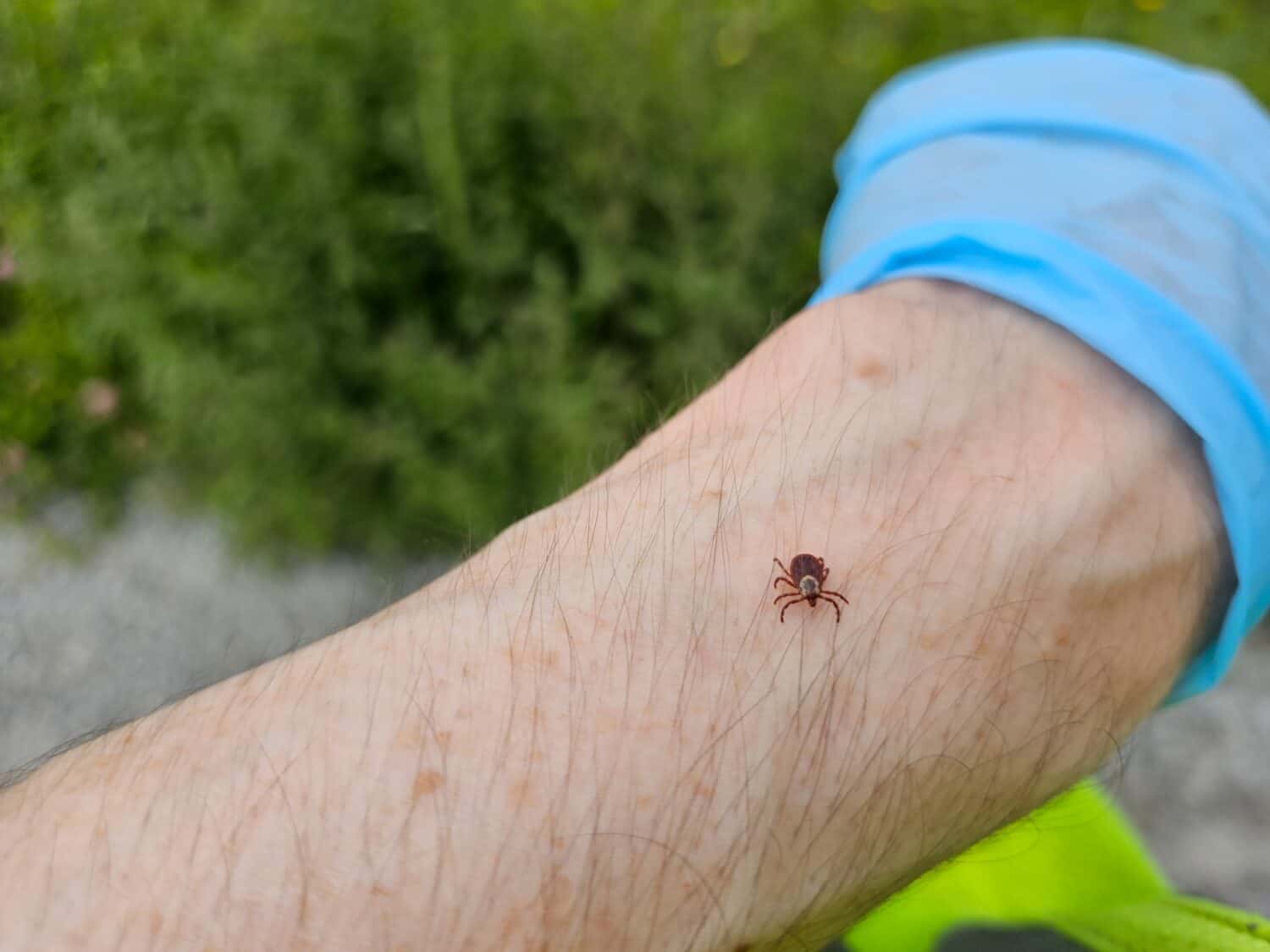
Alpha-gal is hard to diagnose because allergic reactions can take two to six hours to occur.
©Patrick Hatt/Shutterstock.com
Further complicating diagnosis is the fact that consuming red meat or dairy may not cause the same reaction every time. Some foods in the mammalian product category may not even cause an allergic reaction at all.
Perhaps the most challenging aspect of diagnosing the condition is that symptoms don’t appear until two to six hours after a meal. The delay is due to alpha-gal molecules attaching to fat, which takes longer to digest. The latest statistics show that while 110,000 were identified as having alpha-gal syndrome between 2010 and 2022, it is estimated that 450,000 people may actually be affected. Many people with the allergy may attribute their reactions to stomach upset.
Signs and Symptoms of Alpha-Gal Syndrome
Those who have contracted alpha-gal syndrome will have onset symptoms within two to six hours of consuming red meat or dairy. However, symptoms will vary from person to person.
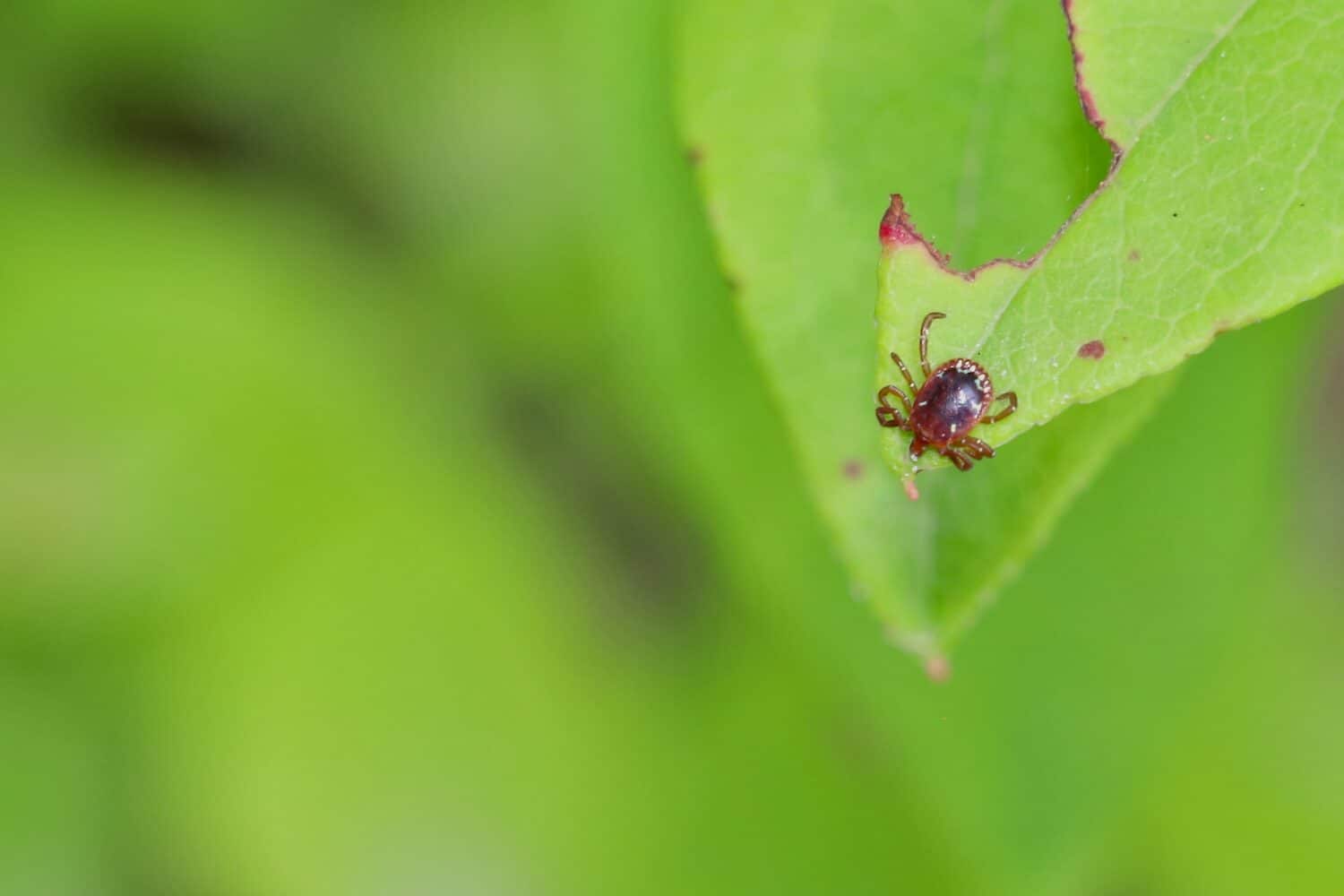
Symptoms of alpha-gal range from hives and vomiting to anaphylaxis.
©Ron Maxwell/Shutterstock.com
The most common symptoms of alpha-gal syndrome include:
- Hives or rash
- Swelling of throat, face, lips, or eyelids
- Nausea and vomiting
- Diarrhea
- Stomach pain
- Shortness of breath
- Wheezing
- Dizziness
- Fainting
- Weak pulse
- Anaphylaxis
For those with alpha-gal, the severity of the allergic reaction determines if they must follow a diet free of red meat or dairy. Healthcare professionals will make that call, as well as decide whether to prescribe epinephrine for accidental consumption of these foods.
How to Identify Lone Star Ticks
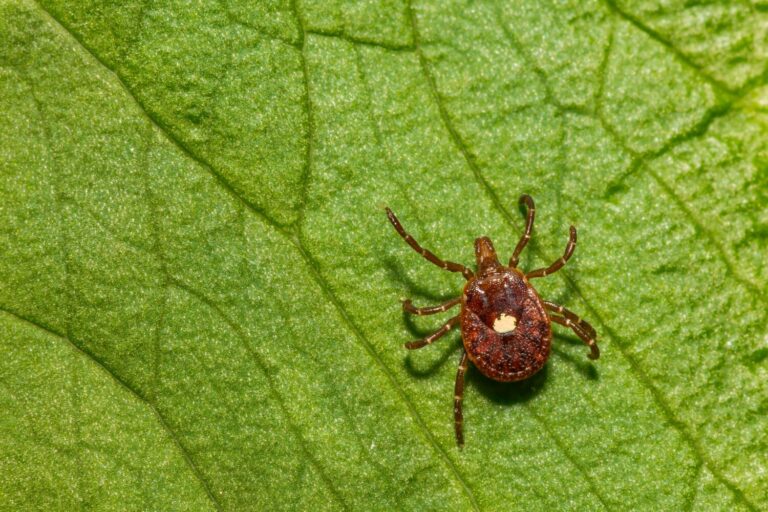
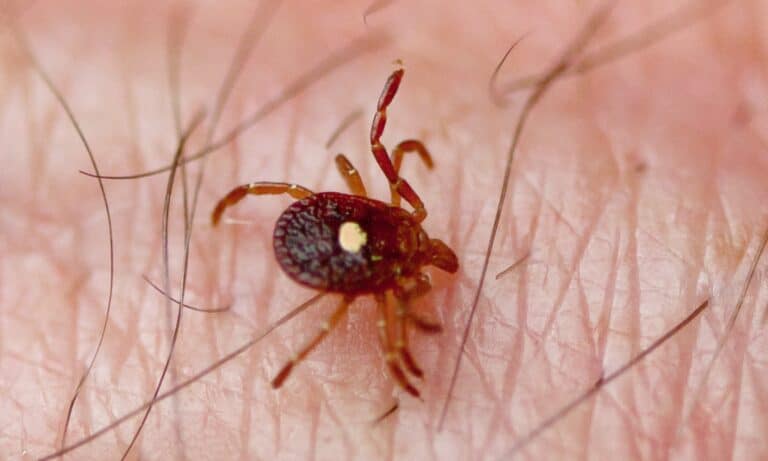
Identifying a female lone star tick is simple. They are reddish-brown and have a white dot (the “lone star”) on their back, or scutum. However, identifying males is a bit trickier.
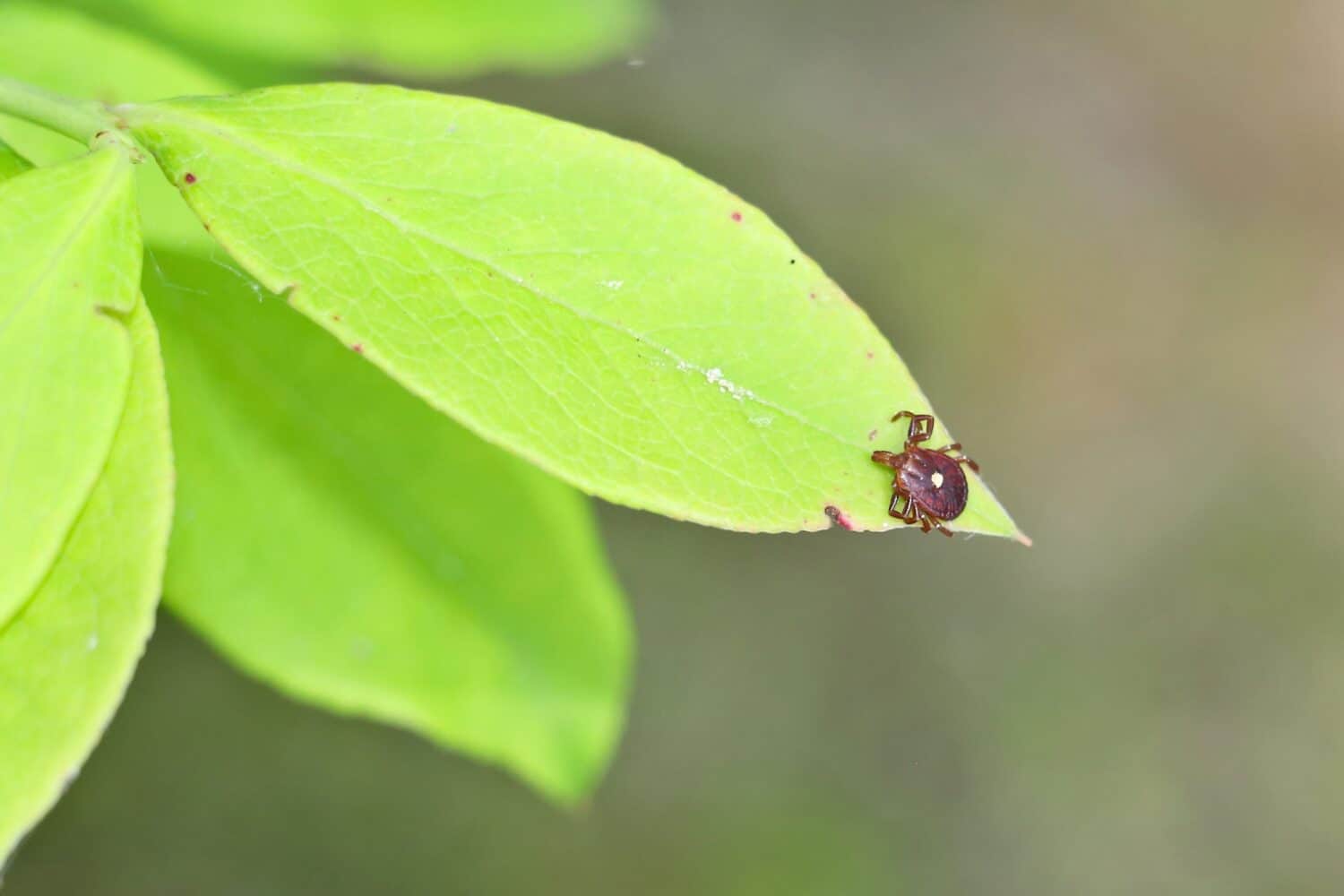
Lone star ticks are most often identified by the white circle on their back.
©Ron Maxwell/Shutterstock.com
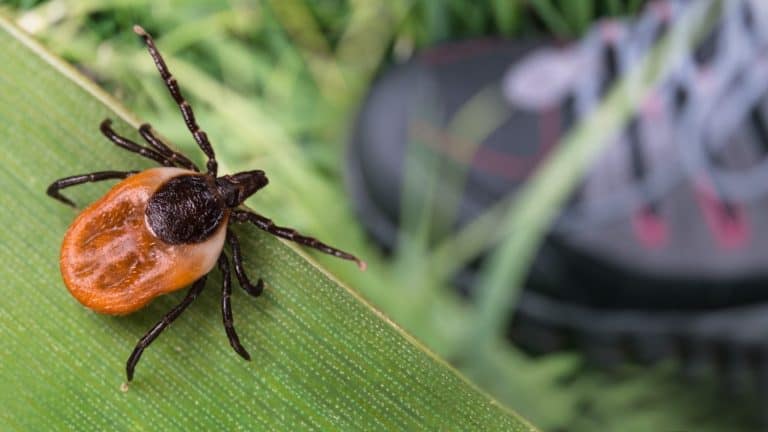
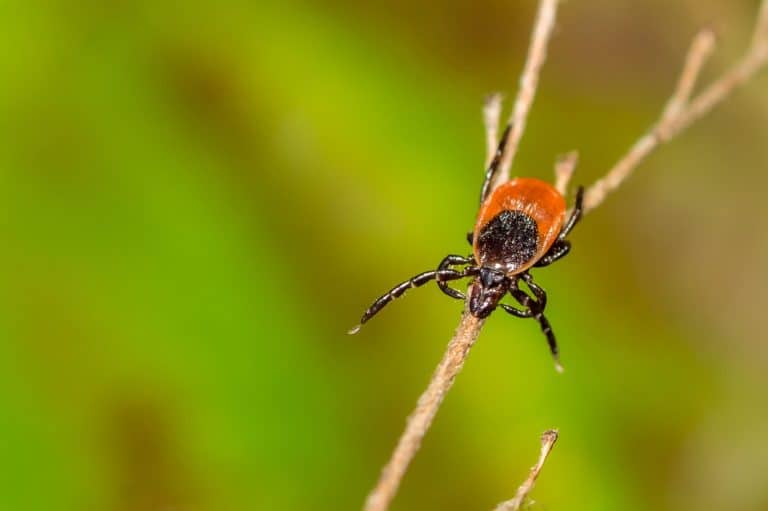
Male lone star ticks at first blush look very similar to blacklegged ticks. Unlike females, the males do not have a spot on their scutum. Instead, they have a light-colored line around the scutum. As a result, people often misidentify males as blacklegged ticks.
The problem with misidentification is that the concern becomes Lyme disease rather than alpha-gal syndrome. Because lone star ticks do not carry Lyme disease, test results will come back negative. But without proper identification, alpha-gal may not be tested for, delaying care for those with the allergy.
Current Range of Lone Star Ticks
The current range of lone star ticks is more widespread than it was historically. Consequently, more people have the potential to come into contact with the ticks than in decades past.
Today, the tick has established populations in 1,139 counties across 33 states. According to the CDC, these states are mostly in the Midwest, South, Southeast, and parts of the West and Northeast. However, just because an established population has not been noted does not mean lone star ticks are absent from a particular state.

Climate change and the conservation of white-tailed deer have led to the territory expansion of Lone Star ticks.
©GrafxOne/Shutterstock.com
These ticks have moved far beyond the southeastern and eastern U.S. for two reasons. The first is climate change. Winters no longer get cold enough in many states to make the ticks go dormant or die off for several months. This means that tick populations continue to grow year-round.
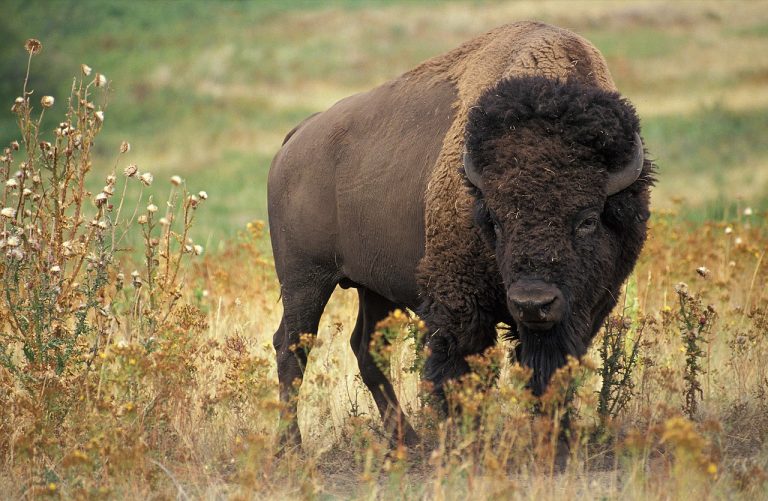
Secondly, white-tailed deer populations have recovered over the past several decades thanks to conservation efforts implemented in the 1940s. One female lone star tick is capable of laying 5,870 eggs after one deer “blood meal.” With thousands of ticks potentially living on one deer, feeding and being transported throughout habitats, it is easy to see how quickly they can establish themselves in a new environment.
Lone star ticks are not going to go away. Therefore, if living in deer country or spending time in the great outdoors, the rule of thumb is to check armpits, the backs of the knees, the scalp, behind the ears, and the rest of the body for ticks. If any are found, remove them immediately. Also check pets for ticks. This is the best way to protect against alpha-gal syndrome and other tick-related diseases that are becoming more prevalent today.