The order Pinnipedia includes three families: the walrus (Odobenidae), the earless seals (Phocidae), and the eared seals (Otariidae). Although both the walrus and the elephant seal (an earless seal) are pinnipeds, there are five key differences between these two mammoth sea creatures. These distinctions cover their physical characteristics, diet, social behaviors, reproduction and lifespan, and global distribution. Continue reading to discover what sets these two species apart.
Physical Characteristics
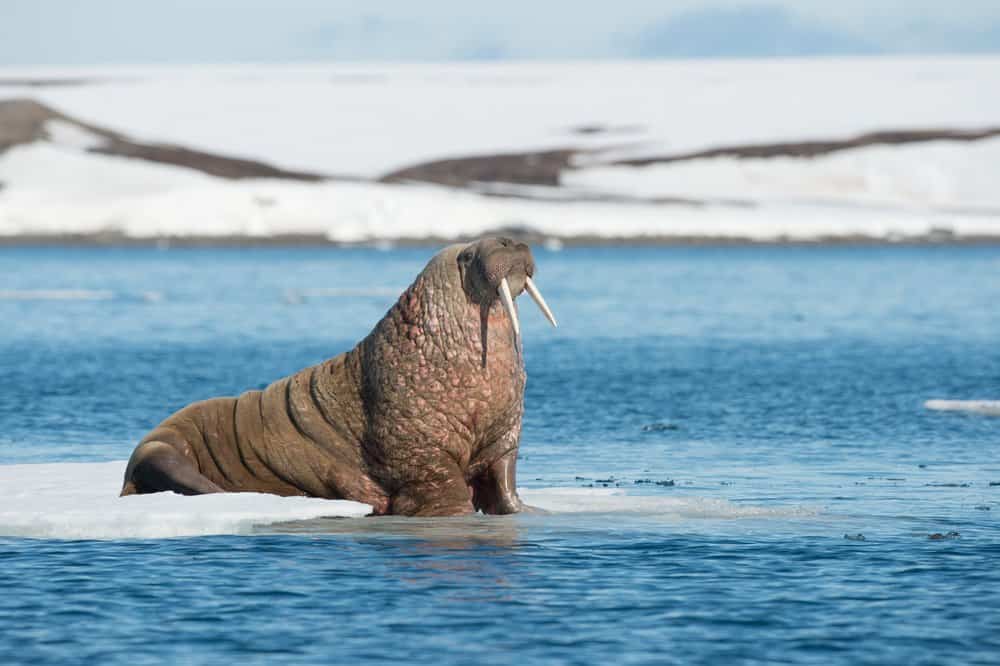
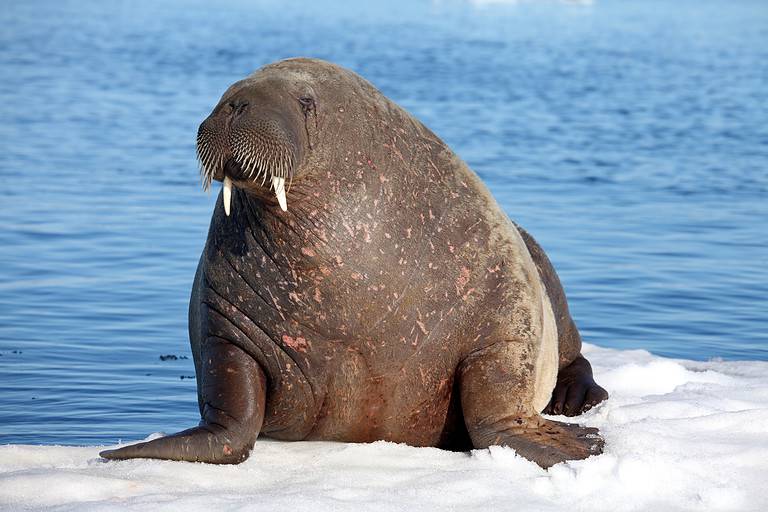
Elephant seals do not have tusks, while walruses do.
©Inge Jansen/Shutterstock.com
Differences in their physical appearance immediately distinguish the walrus from the elephant seal.
Although both of these creatures are extremely large, elephant seals are significantly larger than walruses. Walruses range from 7 to 12 feet long and weigh between 800 and 4,000 pounds, while male elephant seals can reach up to 20 feet in length and weigh as much as 8,800 pounds, although females are smaller
Walruses are covered in tough skin with sparse, coarse hair, while a thin layer of brown or gray fur covers the body of the elephant seal.
One of the more noticeable differences between these two creatures is the presence of tusks. Elephant seals do not have tusks, while walruses always do. Both walruses and elephant seals have whiskers, but the whiskers on a walrus are much more defined.
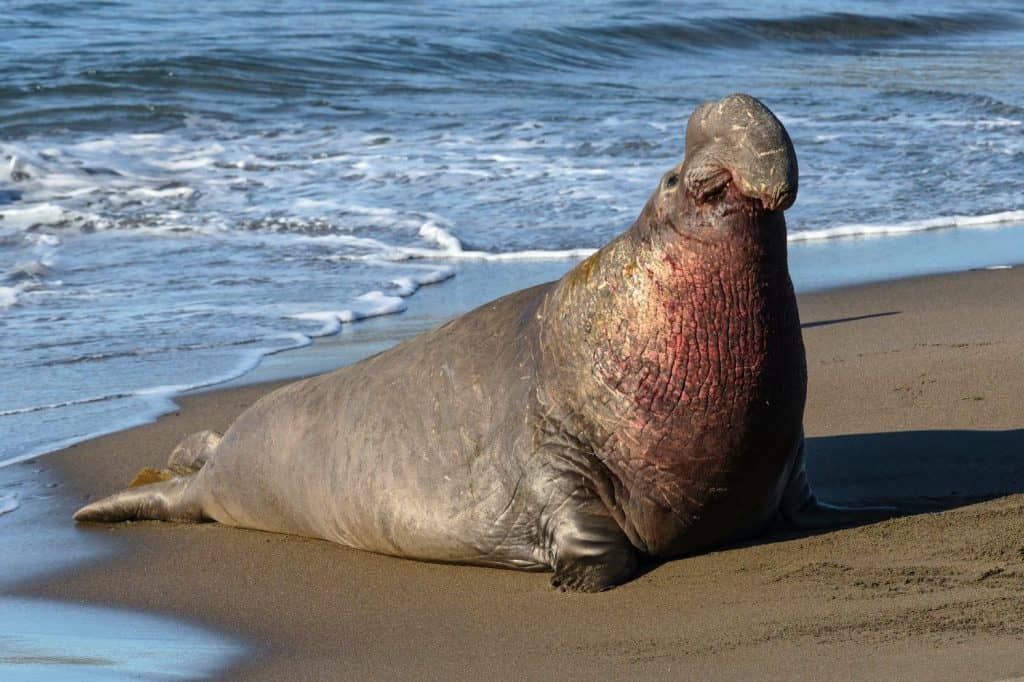
Mature male elephant seals have a long, flexible nose that resembles an elephant’s trunk.
©David Osborn/Shutterstock.com
Another notable difference is found in the noses of these two marine mammals. The elephant seal’s nose, known as a proboscis, is a large, flexible, inflatable appendage found on mature males that resembles an elephant’s trunk. A walrus does not have a proboscis. Walruses have a flat, broad snout. The most prominent features of its snout area are its whiskers, known as vibrissae, and its tusks.
Both of these creatures are much better suited for life in the water than on land. Elephant seals are incapable of using their back flippers. As such, they drag their bodies along using only their front flippers. Walruses, however, have control of their back flippers, which they use to propel themselves on land.
Diet
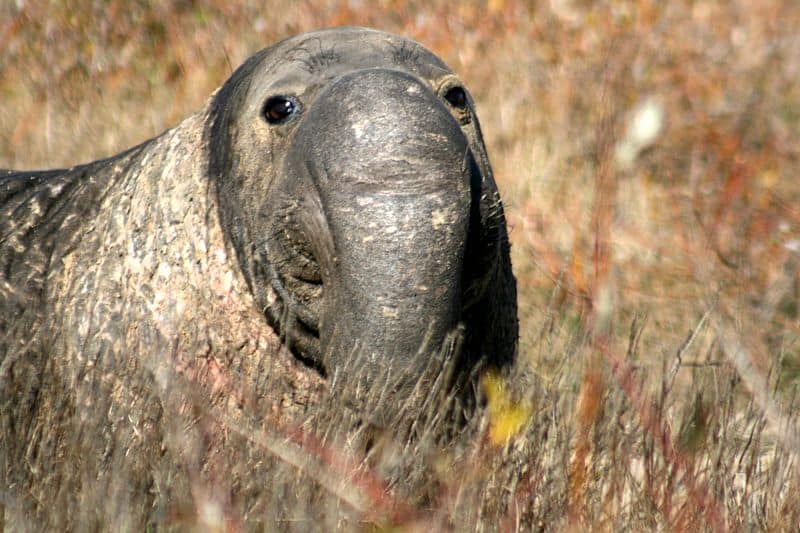
Male Northern Elephant Seal
©Brocken Inaglory / Creative Commons – Original
A walrus’s diet primarily consists of soft invertebrates found on the seafloor, such as clams, snails, worms, and sea cucumbers. They use their sensitive whiskers to locate prey and then create suction with their tongues to pull the soft parts out of their shells. Walruses typically find prey in shallow waters, usually between 30–250 feet deep.
An elephant seal’s diet consists mainly of squid, fish, and small sharks, along with other prey like rays, skates, and octopus. Elephant seals are opportunistic carnivores that hunt in the deep ocean, regularly diving to depths of 1,000 to 2,500 feet, and occasionally exceeding 5,000 feet in search of prey.
Distribution
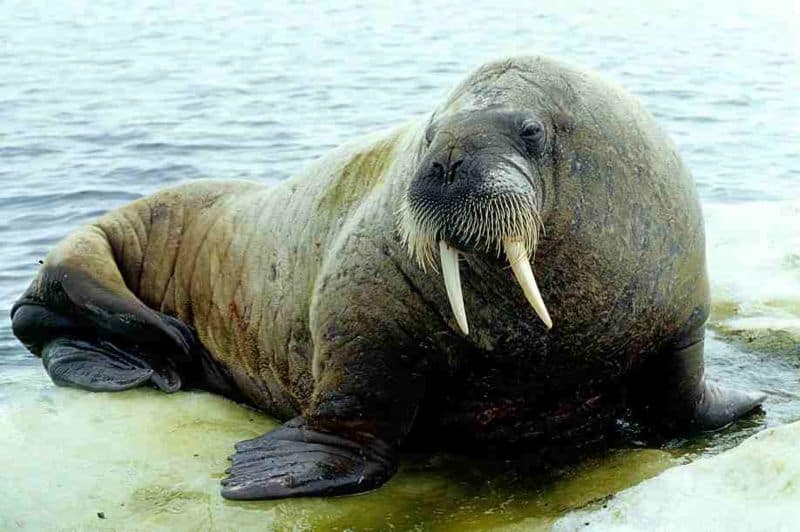
Walruses live in the frigid seas of the Arctic Circle, while elephant seals are distributed globally in a variety of habitats.
©Ansgar Walk / Creative Commons – Original
Another difference between the walrus and the elephant seal is their geographic distribution. Walruses live in the frigid seas of the Arctic Circle, while elephant seals are found in specific regions: Northern elephant seals in the Eastern and Central North Pacific, and Southern elephant seals are distributed throughout sub-Antarctic and Antarctic waters.
Social Behavior

Walruses are highly social animals.
©Jiri Soural/Shutterstock.com
Walruses are highly social animals that congregate in large herds on land or ice for resting, socializing, and reproduction. They exhibit distinct social structures, with males and females often forming separate herds and maintaining a hierarchy based on age, size, and tusk length. Social behaviors include close physical contact for warmth, complex vocalizations for communication, and aggressive displays or fights using tusks for dominance, especially between males during the mating season.
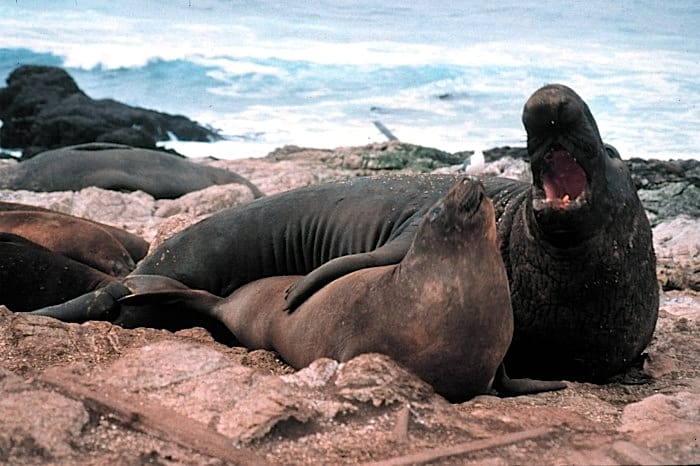
Elephant seals are largely solitary except during their breeding season. They are highly social only when they temporarily haul out on land, such as during the molting season, which runs from approximately April to August, during which they come ashore to shed their fur and the top layer of their skin in a process called a catastrophic molt. The molting season is staggered, with adult females and juveniles molting in the spring, followed by adult males in late summer..
Lifespan/Reproduction
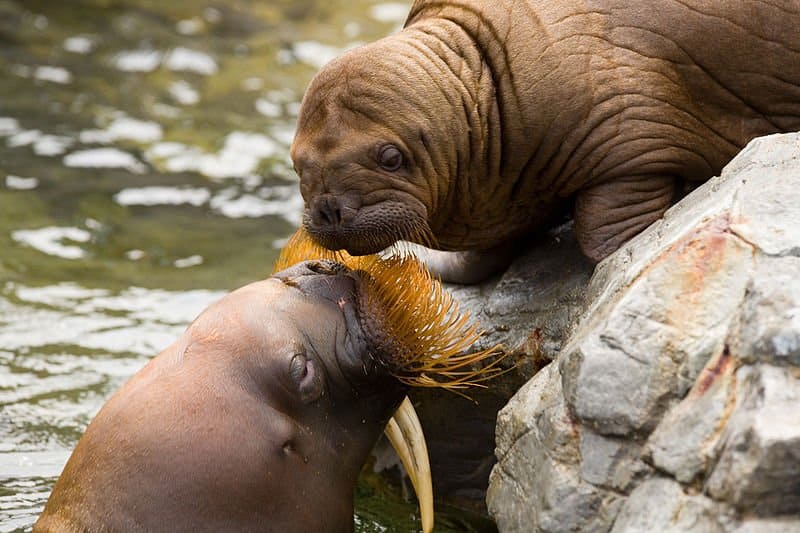
Walruses live significantly longer than elephant seals.
There is a significant difference between the lifespan of a walrus and that of an elephant seal. Due to their immense size, both species have very few natural predators. The average lifespan of an elephant seal in the wild is about 9 to 12 years for Northern elephant seals and 20 to 22 years for Southern elephant seals, while walruses typically live up to 40 years.
The main predators for walruses are humans, while elephant seals are frequently attacked by killer whales (Orcinus orca) and great white sharks (Carcharodon carcharias).
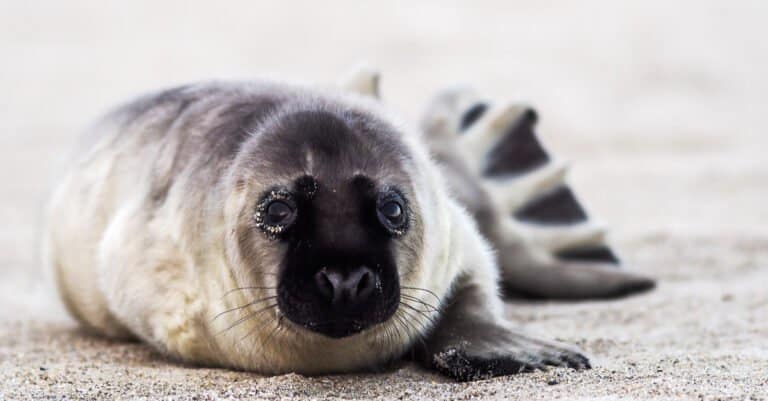
A female elephant seal has a gestation period of about 7-8 months, but with delayed implantation, the total time from mating to birth is about 11 months. A female walrus has a gestation period of about 15-16 months, including delayed implantation. Another factor that affects their survival is the walrus mother-calf bond. Calves stay with their mothers for two to three years, which likely contributes to higher calf survival rates and the species’ overall longevity. In contrast, female elephant seals wean their pups after one month and then leave them to fend for themselves.