Are dolphins and porpoises just different words for the same kinds of animals? Are bison and buffalo okay to use interchangeably? Are there really any differences between frogs and toads? Rabbits and hares?
In some cases, the same animal may have many different common names that vary depending on where you live. For instance, a mountain lion, puma, cougar, and catamount are all of the same animal, Panthera concolor. On the other hand, you may have heard people call the Virginia opossum in North America a “‘possum,” but possums are a whole suite of different species.
This article clears up the confusion surrounding the most mixed-up groups of animals, pointing out how you can tell the difference, with experts weighing in on key features.
Dolphins and Porpoises
Are dolphins and porpoises two words for the same kind of animals? People often use these terms interchangeably, but to do so is incorrect.
Dolphins and porpoises are both toothed whales belonging to the order Cetacea, but members of different families, making them genetically distinct groups of animals.
Dr. Christine Brodsky, Assistant Professor of Urban Ecology at the University of Missouri, who has taught mammalogy for over a decade, says, “Most of the differences between dolphins and porpoises have to do with size and shape. Dolphins tend to be slightly larger with a sleeker and leaner appearance, while porpoises have more of a rounded, thicker body overall.”

Dr. Christine Brodsky is an Assistant Professor of Urban Ecology at the University of Missouri and has taught mammalogy for over a decade.
©Christine Brodsky
The sleeker and leaner appearance of dolphins is notable in their face when compared to a porpoise. They have elongated and distinct “beaks” or snouts, while porpoises have an overall more rounded face. While porpoises look thicker, they are smaller and typically weigh much less than dolphins.

Dolphins, like this bottlenose dolphin, have a much more elongated snout and overall sleeker look compared to porpoises.
©Tetsuo Arada/Shutterstock.com
Other differences between these two groups of marine mammals include teeth and dorsal fin shapes. Dolphin teeth take on a cone-like appearance, while porpoise teeth look like spades. The dolphin’s dorsal fin is hooked or curved, whereas the porpoise’s dorsal fin is triangular.
There are also ecological and behavioral differences between dolphins and porpoises. There are more species of dolphins, and their range is more widespread. Dolphins tend to live in tropical and temperate climates, while porpoises are typically found in colder areas and closer to the coast.

Porpoises, like this vaquita, have shorter snouts than dolphins. They have a more rounded face.
©Vynkdeepi666 / CC BY 4.0 / via Wikimedia Commons – Original / License
Behaviorally, dolphins are known for being talkative. They use squeaks, clicks, and chirps to communicate with one another. Dolphins are much more social and curious about humans than porpoises. When being observed by humans, porpoises are quieter and tend to avoid people. Their behavior is more solitary, and if they are in groups, those groups are smaller than dolphin pods.
Alligators and Crocodiles
Alligators and crocodiles are large, semiaquatic carnivorous reptiles that have been around since the era of the dinosaurs. You’ll find them both lying on the banks alongside rivers and other wetland areas, basking in the sun and waiting for prey to walk or swim by. Both belonging to the order Crocodilia, these animals have remained largely unchanged for millions of years. Despite being around for a long time, they are commonly confused with one another because they look so similar. Once you know what to look for, though, you’ll see there are subtle differences between these two groups of animals.
Dr. Thomas Luhring, a herpetologist and Assistant Professor at Wichita State University, says, “There is a taxonomic distinction between the groups.” While both groups belong to the order Crocodilia, once you get to the family level, “Alligators belong in the Alligatoridae, along with caimans, while crocodiles are in the family of true crocodiles, Crocodylidae.”

Dr. Thomas Luhring is a herpetologist and Assistant Professor at Wichita State University.
©Dr. Thomas Luhring
Crocodile species can be up to twice as heavy and long as alligators, but this difference is only apparent when comparing individuals of the same age and sex side by side.
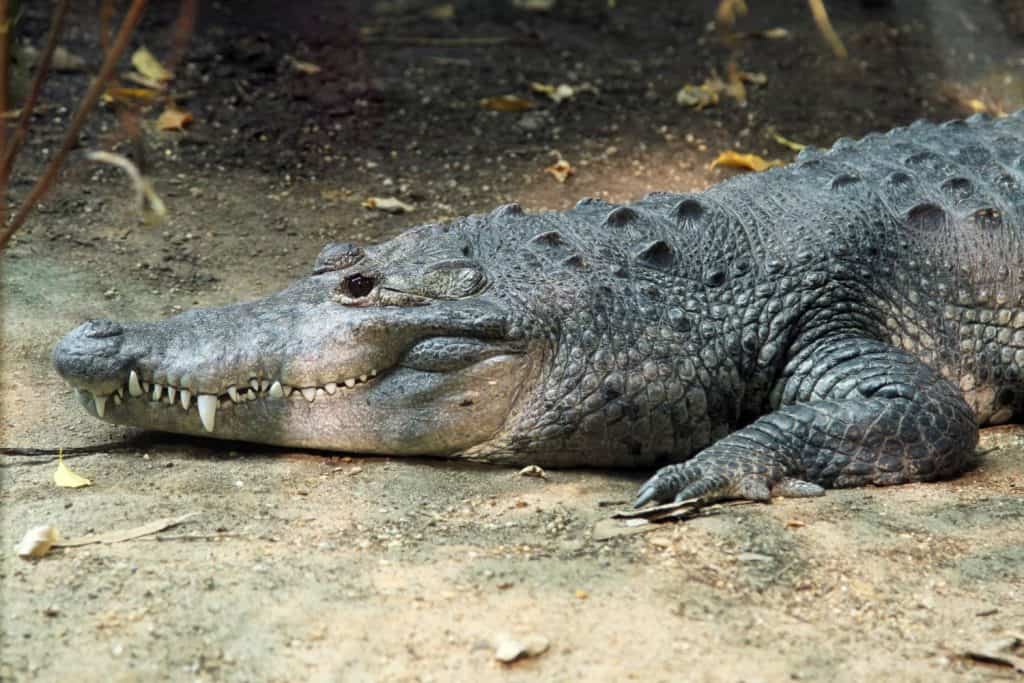
When crocodiles close their mouth, you can see that their fourth tooth sits outside their mouth and points upward, as in this Morelet’s crocodile.
©Michal Sloviak/Shutterstock.com
Crocodiles and alligators are found in different areas of the world and usually in different habitats, although there is some overlap. Alligators are usually in freshwater habitats closer to the shore in North America and China, while crocodiles are typically associated with saltwater areas and live in Central America, Africa, Asia, and Australia. Luhring says, “In the United States, we only have crocodiles in far Southern Florida.” Crocodiles have evolved glands on their tongues to excrete any excess salt that they may accumulate from their salty environment.
Both alligators and crocodiles show teeth on the outside of their jaws when their mouths are closed, but for alligators, you can only see their top teeth overhanging. Luhring explains, “Crocodiles have a tooth that sticks out and upward. It’s the fourth tooth. There’s a groove in their jaw, and the tooth actually fits in, so it kind of locks into place.” Alligators beat crocodiles when it comes to the number of teeth, as they have 80, whereas crocodiles have 66.
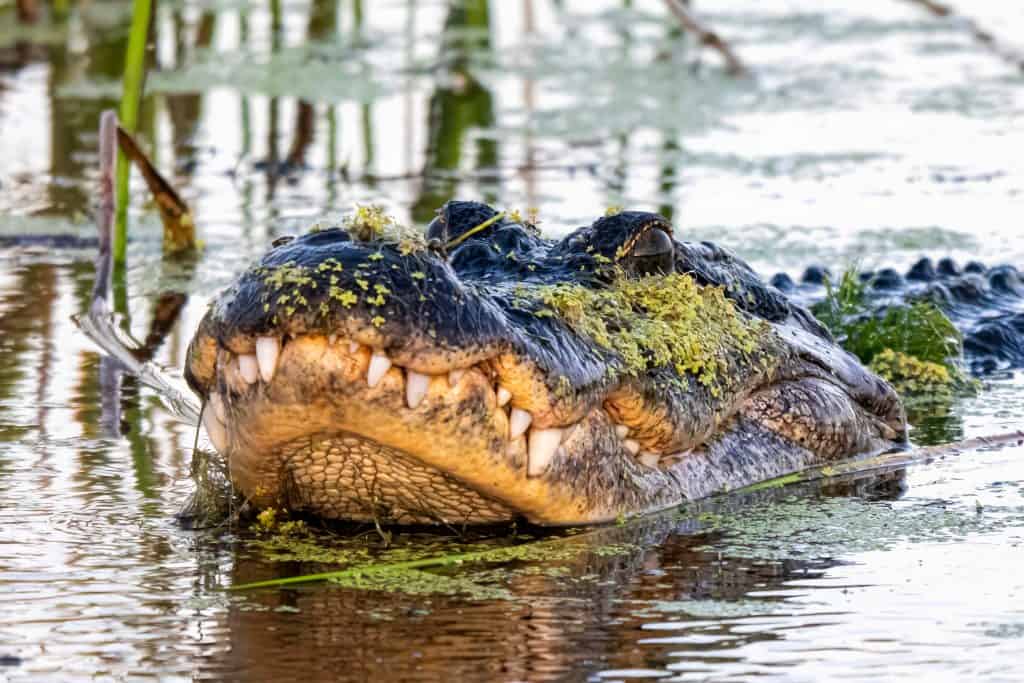
You can see teeth when alligators close their mouths, as in this American alligator, but only the top teeth.
©Christopher J Barger/Shutterstock.com
There are also differences in the snout shape and size. Luhring adds, “Crocodiles have a longer and thinner snout, while alligators have a broader and shorter snout.” The snout of alligators is shaped more like the letter U, while crocodile snouts are more pointed like the letter V.
Rabbits and Hares
Rabbits and hares both belong to the order Lagomorpha, but they belong to different genera, making them genetically distinct. Rabbits are more diverse as their species spread across 10 different genera, while true hares are all placed in one genus, Lepus.
Despite the placement of these two groups of lagomorphs into different genera, the common names for some species within each group don’t follow the rules and can be misleading. For example, the single genus that includes hares includes some species with the common name jackrabbit. There are other species with hare in their common name that are not in Lepus, and are therefore not considered true hares.
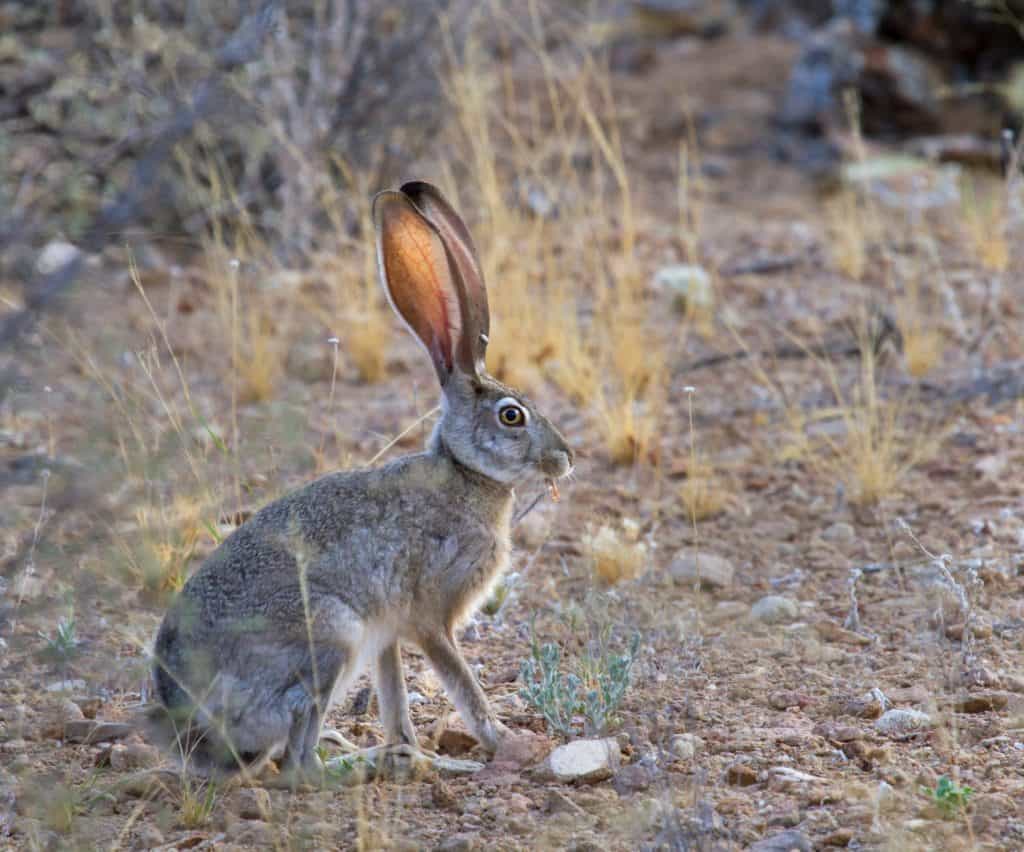
Hares are more lanky in appearance compared to rabbits. This species is named the black-tailed jackrabbit, but is actually a hare and also called the American desert hare.
©Natalia Kuzmina/Shutterstock.com
Despite these confusing common names, there are key differences between rabbits and hares that you can use to tell them apart aside from genetics. The easiest way to tell the difference between the two groups of lagomorphs is by their size. Brodsky says, “Hares are much more lanky in appearance and tend to be larger. They are double the size compared to rabbits, depending on the species, and with tall ears. Rabbits tend to be smaller all around: smaller bodies, ears, and feet.”
Brodsky uses another tip from physical appearance to tell them apart, especially when she is looking at images from camera traps. “Hares tend to have these black tips on the tops of their ears. They’re really easy to identify in photos,” she says.
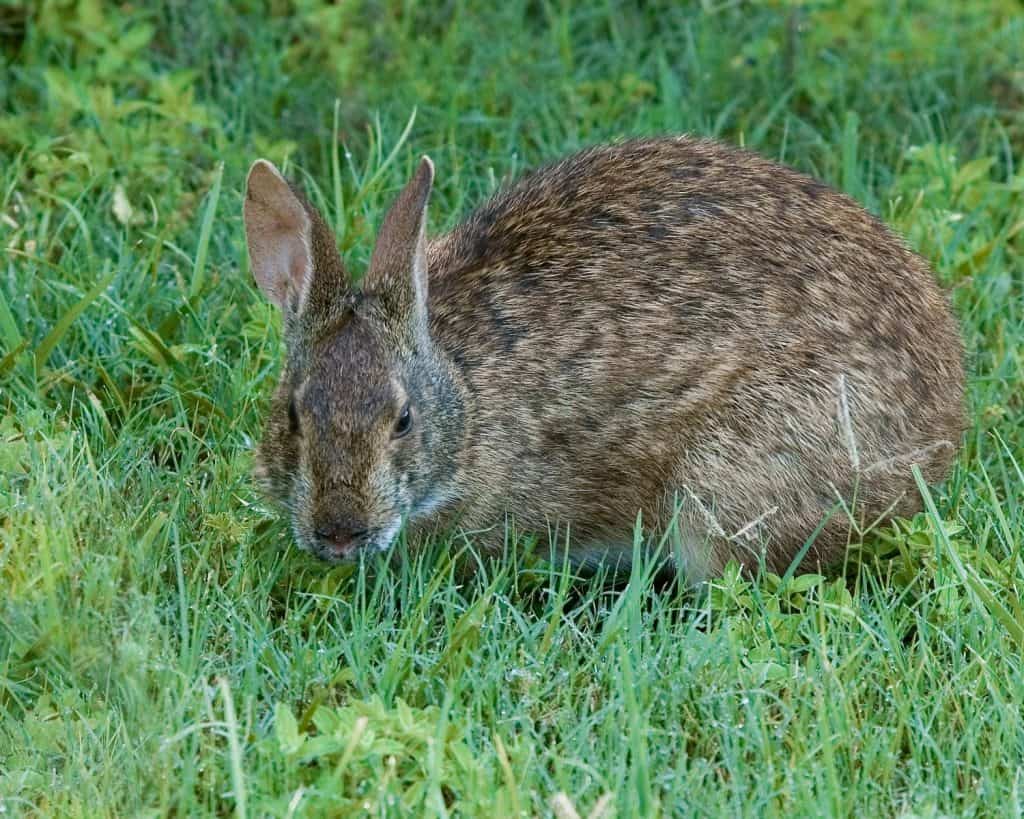
Rabbits, like this Florida marsh rabbit, are smaller and more rotund than hares.
©Donna Bollenbach/Shutterstock.com
Rabbits and hares also have some ecological and behavioral differences. The larger and lankier hares tend to live in more open areas like deserts or prairies, and have their young in simple nests on the ground. The more rotund rabbits typically live in forested or shrubby areas, making homes in burrows underground or in shallow nests in the soil. Because hares do not have underground burrows as escape routes, they’ve evolved to use speed to thwart predation, while rabbits escape by seeking refuge in their burrows or nests. Even baby hares are born “ready” with their eyes fully open and intact fur so that they can escape if needed.
Frogs and Toads
Have you encountered a small amphibian that jumps, but are not sure whether it’s a frog or a toad? Here’s how to tell these two groups of animals apart. The first thing to know is that toads are actually a type of frog. Therefore, if you see a toad, it is a frog. That being said, there are differences between what we call frogs and toads. While all toads are frogs, not all frogs are toads.
Upon first glance, it might seem that the big differences between frogs and toads are whether they are aquatic or not. While this is generally true, this is not always the case. Luhring says, “People generally think of them as like aquatic versus terrestrial. But it’s not necessarily true because a wood frog is more terrestrial. There are a lot of frogs that are primarily spending most of their life on land, and they only come back to water to breed.”
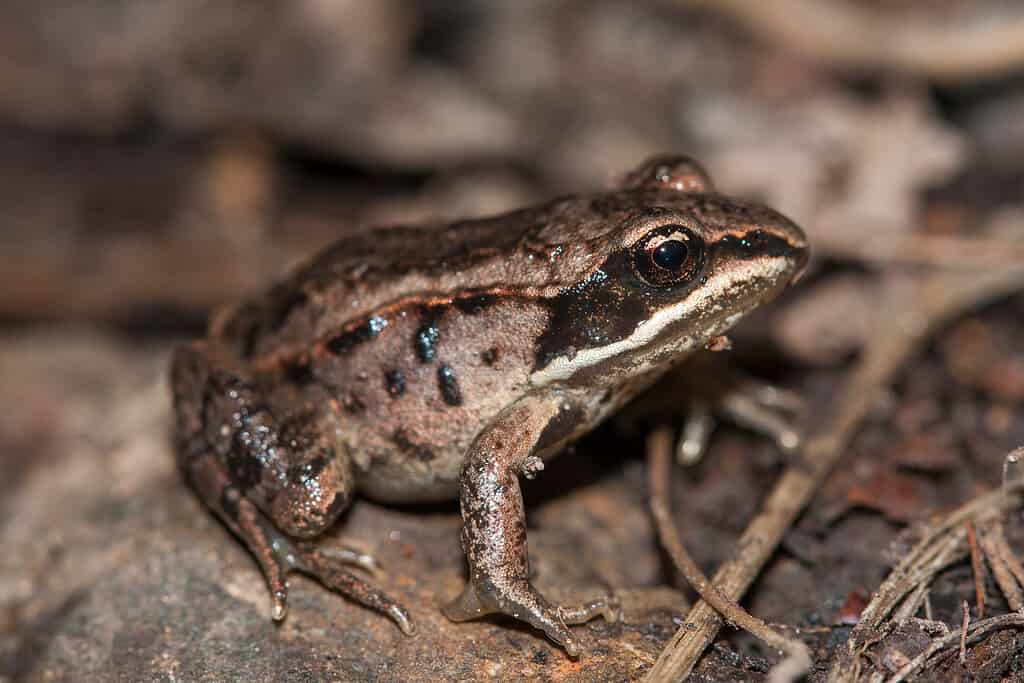
Wood frogs are true frogs, but they are more terrestrial than other frog species. Frogs have strong hind legs that allow them to jump far.
©Viktor Loki/Shutterstock.com
“There are also a lot of frogs that stay mostly in the water and never really leave it, like most of your true frogs. For example, bullfrogs tend to be highly associated and stay mostly in water. True frogs belong to the family Ranidae,” Luhring goes on to say. One of the biggest differences between these frogs and toads is that they have strong hind legs that allow them to jump far.
If frogs, even true frogs, can be terrestrial, can toads be mostly aquatic as adults? Luhring explains, “In North America, most of the animals that we would call toads would be more associated with terrestrial movements. They have thicker skin with bumpy ‘pieces’ all over their back. People call them warts, but they’re not really warts; they are actually glands that toads use to secrete a poison through their specialized mucus glands. They’re able to create these toxic substances that make them really distasteful.”
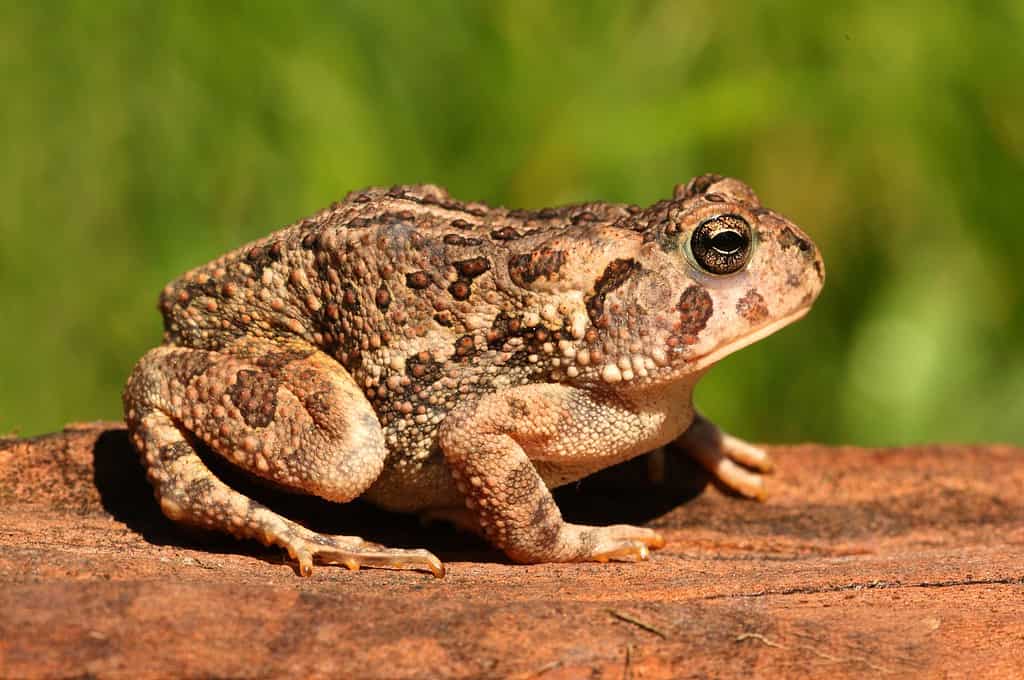
Toads, like this Fowler’s toad, are a kind of frog. They have thicker skin with bumps and do not jump as far as frogs.
©Steve Byland/ via Getty Images
Toads, which primarily belong to the family Bufonidae, are frogs that have shorter hind legs and can’t jump as powerfully as true frogs. Behaviorally, when started or threatened, toads may sit a moment before hopping, while frogs are much more likely to jump far if you were to approach.
Sea lions tend to be much louder and more gregarious than seals.
Dr. Christine Brodsky, Assistant Professor of Urban Ecology at the University of Missouri
Seals and Sea Lions
Seals and sea lions are both semi-aquatic carnivores that, together with the walruses, make up the mammalian clade known as pinnipeds. These marine mammals look similar, but there are notable differences between them when you know where to look.
When most people think of seals or sea lions, chances are, they aren’t thinking of their ears as a distinguishing feature. In fact, most people might not even think of them as having ears because they are so inconspicuous and small. Though the ears of both seals and sea lions aren’t big like an elephant’s or tall like a hare’s, the ears of these two groups of animals are one of the key characteristics used to tell these two groups apart.
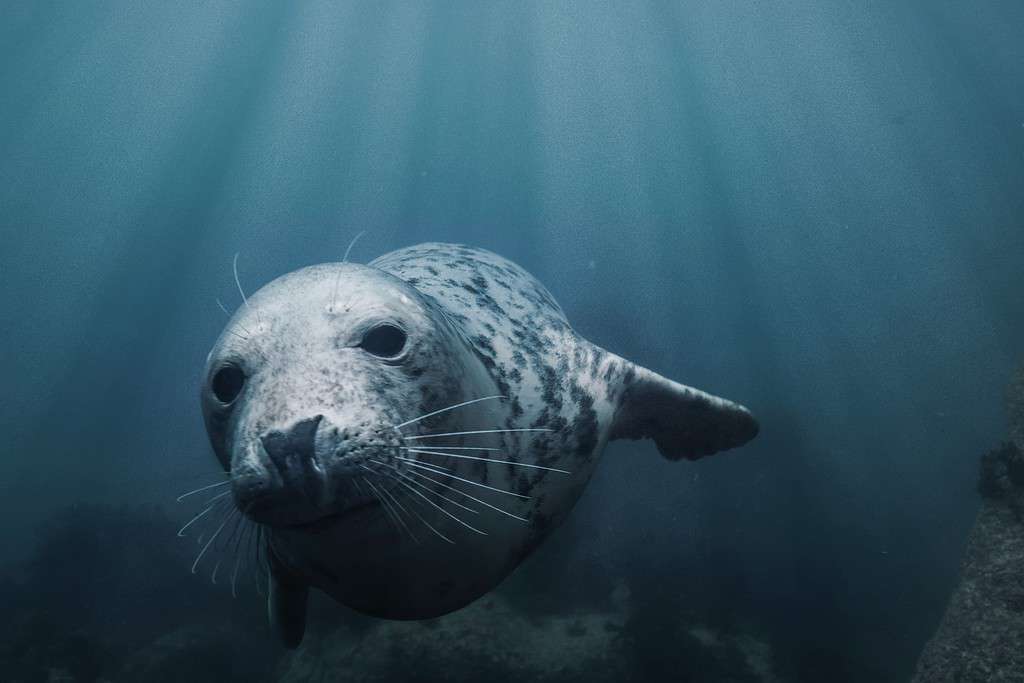
Seals, like this grey seal, lack external ear flaps.
©Wirestock/ via Getty Images
Seals have ears, but they don’t have any external features that make their ears easily visible. Brodsky explains, “Seals lack external fleshy flaps around the ear. They are just flat on their ear.” Sea lions, on the other hand, will have flaps, akin to a floppy dog ear, but much smaller. True seals simply have holes as ears.
It’s worth noting that just like the rabbits and hares, not all of the common names of seals follow the rules. Fur seals, animals that are relatives of sea lions, do have flaps despite having “seal” in their name.
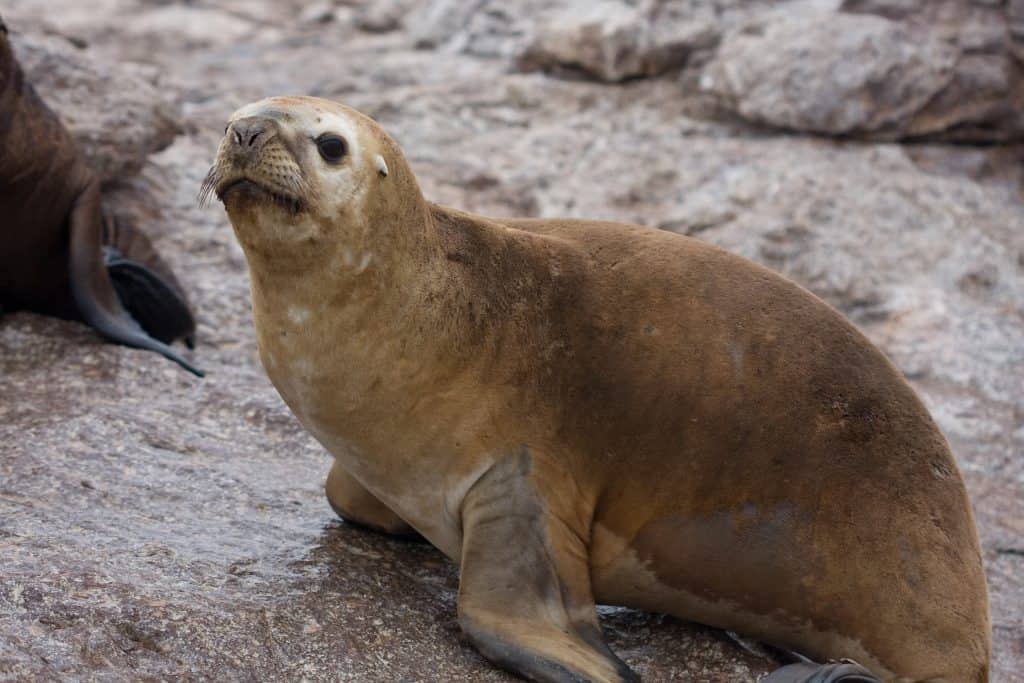
Seal lions, like this South American sea lion, have small flaps around their ears.
Another distinguishing feature between these groups of marine mammals is their hind legs. For seals, Brodsky says, “Their hind leg kind of points away from the body, and to move, they kind of hop and scoot on their belly. When they’re on land, they have this banana pose, so they have a crescent-like shape to their body.” Although seals spend some time on land, this body morphology makes seals more adapted to life in the water, where they live out most of their lives and tend to be more solitary.
Brodsky continues on, “Sea lions have an easier time ‘walking around on the ground’ because their legs kind of rotate under their body.” You can find sea lions in groups of up to 1,500 individuals together on land. Behaviorally, she says, “Sea lions tend to be much louder and more gregarious than seals”.
Alpacas and Llamas
Alpacas and llamas have a lot in common because they are closely related. Both being different species within the camel family, Camelidae, and domesticated by humans in the Andes Mountains region of South America, they are tall animals with long necks, pointy ears, and have been used by humans for hundreds of years for carrying goods, guarding livestock from predators, and in textile production.
One of the biggest differences is that llamas are much bigger. They are taller and can weigh twice as much as alpacas. Because of this, they are often used as pack animals, carrying up to 120 lbs. Llamas are also more likely to be used to guard livestock from animals like coyotes and stray dogs.
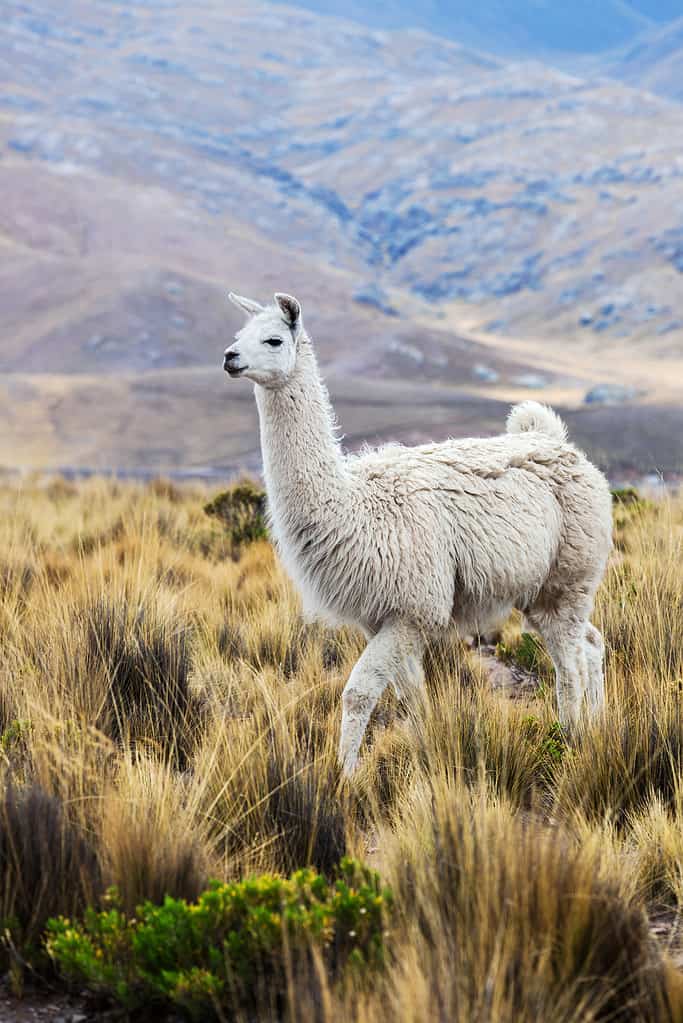
Llamas are larger than alpacas with longer snouts and banana-shaped ears.
©Terex/ via Getty Images
Alpacas, on the other hand, are typically used in clothing and textile production. Their fur is softer and warmer than a llama’s, which is coarser and more wiry. There are also notable differences in their faces. Llama snouts are longer, and they have banana-shaped ears. Alpaca ears are shaped more like pears, and they have shorter, more “pinched” faces.
If you put your middle and ring fingers on your thumb and extend your fingers, that long-looking face is a llama. But if you were to like scoot your fingers back and bend your knuckles, that would be an alpaca.
Dr. Christine Brodsky
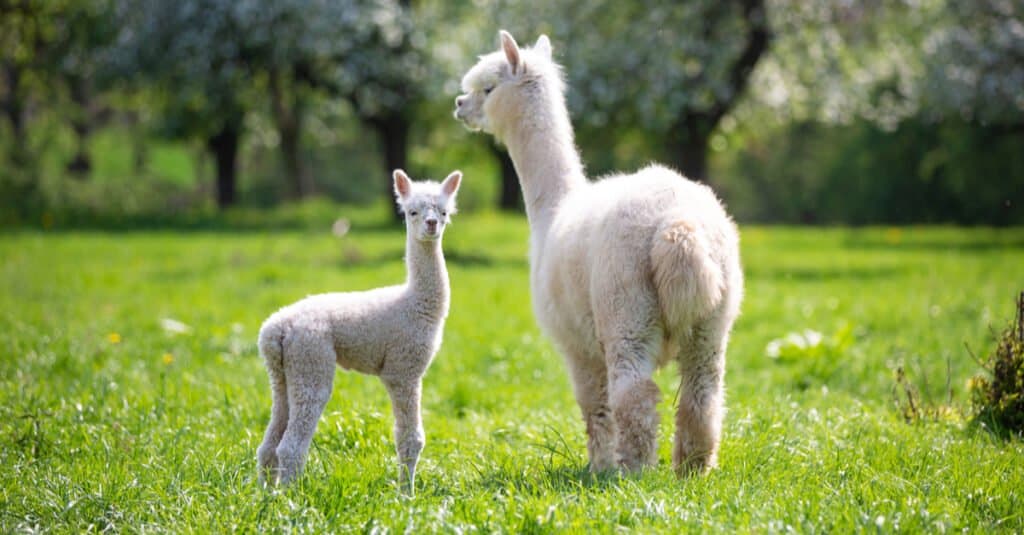
Alpacas are smaller than llamas and have more “pinched” faces.
©fotorince/Shutterstock.com
When explaining the difference between these two animals, Brodsky shares a personal story. “My mom was born in Peru, so when we went there, we went to a bunch of places with both llamas and alpacas, and the farmers would show me the difference,” she says. “If you put your middle and ring fingers on your thumb and extend your fingers, that long-looking face is a llama. But if you were to like scoot your fingers back and bend your knuckles, that would be an alpaca.”
Opossums and Possums
Possum may sound like just a faster way to say opossum, and many people do say ‘possum in this way when they are referring to an opossum, but in reality, this is incorrect. Possums and opossums represent different groups of animals, each comprising a variety of species. Both opossums and possums are marsupials—mammals that use pouches for the primary development of their young rather than placentas—but they live in different parts of the world.
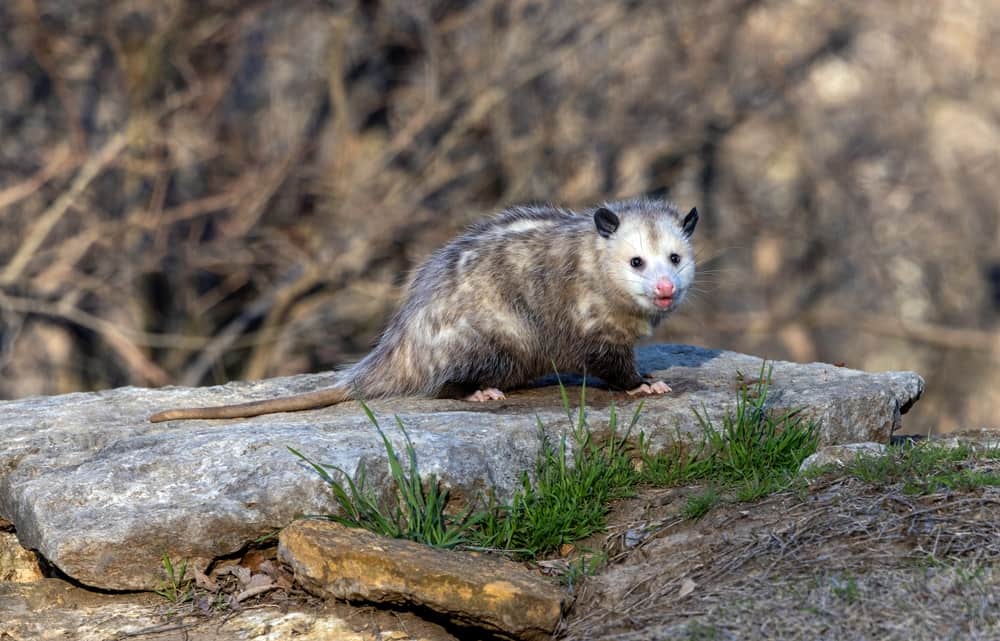
The Virginia opossum is the only marsupial in the United States. They are grayish in color with a hairless tail.
©Bert B/Shutterstock.com
Brodsky explains, “Opossums are from the Americas. We have one species of opossum in North America, the Virginia opossum. They have a prehensile tail to grasp things with and tend to have longer faces and generally a grayish body. When you get down into Central and South America, there is a more diverse group of species.”
She goes on to say, “Possums are a species that are native to Australia and New Guinea. They vary much more wildly in terms of their coloration.”
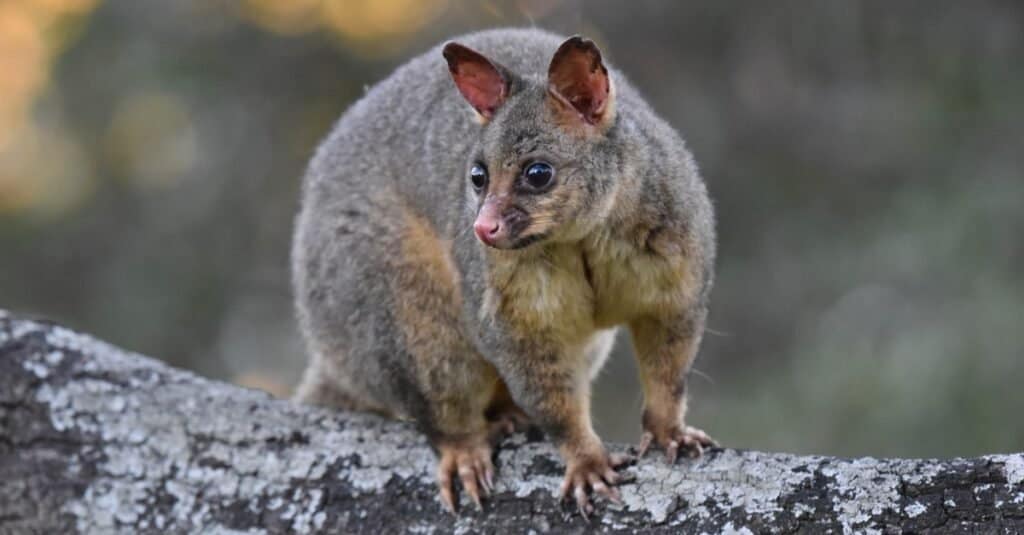
Possums, like this common brushtail possum, are native to Australia and New Guinea, while opossums live in the Americas.
©Timothy Christianto/Shutterstock.com
There are also differences between opossums and possums in their tails and diets. Opossum tails are scaly and mostly without hair, like a mouse or rat tail, while possum tails have hair. Possums are herbivores, while opossums are omnivores and will include meat in their diet in addition to plant matter.
Turtles and Tortoises
Just like with frogs and toads, where all toads are frogs, but not all frogs are toads, tortoises are a type of turtle. That is, all tortoises are turtles, but not all turtles are tortoises. Tortoises are a family of turtles called Testudinidae.
Also, like frogs and toads, a lot of people think that the main difference between turtles and tortoises is the amount of water in their environment. Turtles are thought to be more aquatic and live mostly in water with flatter shells that allow them to swim better, while tortoises are mostly terrestrial with rounded, more domed shells. This is mostly true, but as in most things in nature, there are species that break the rule. For instance, box turtles are found primarily on land and have a rounded shell, but they are turtles. The pancake tortoise is called so because its shell is flat like a pancake and unlike the domed shell that most tortoises have. The differences between turtles and tortoises run deeper.
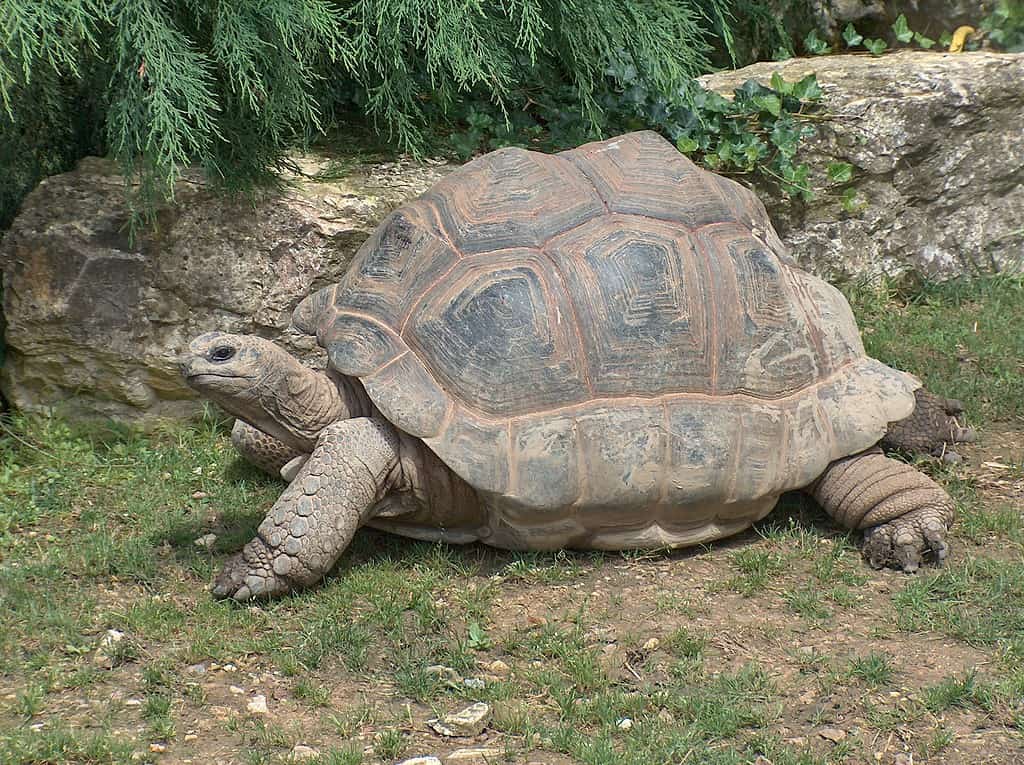
Tortoises, like this Aldabra giant tortoise, have elephantine feet because their toenails resemble an elephant’s.
©Yotcmdr, Public domain, via Wikimedia Commons – Original / License
“ The biggest thing that is kind of easy for most people to distinguish is that tortoises have elephantine feet. If you look at their feet, they don’t have big toenails like claws that stick out,” Luhring explains. “They have flat toenails that look kind of like an elephant’s toenails.” Their legs are also more rounded and stout, which allows them to carry their weight on land.
Turtles, on the other hand, have slimmer legs and more webbed feet that allow them to both walk on land and swim well. Sea turtles, which are fully aquatic, have even evolved flippers instead of feet.

Turtles, like this South American river turtle, tend to be more aquatic and have toenails that stick out compared to tortoises.
©PATRICK GLAUME/Shutterstock.com
Another difference is that turtles tend to be omnivorous, eating both plants and animals, as they can move faster in the water and therefore hunt, while tortoises, being slower on land, are herbivorous.
Moose and Elk
Moose and elk are both hooved mammals that are members of the deer family, Cervidae, and therefore have a lot in common. They are large brown herbivores commonly found grazing or browsing various kinds of vegetation such as grasses, leaves, tree barks, and twigs, to name a few. Both species live in the northern hemisphere, although elk are not in Europe.
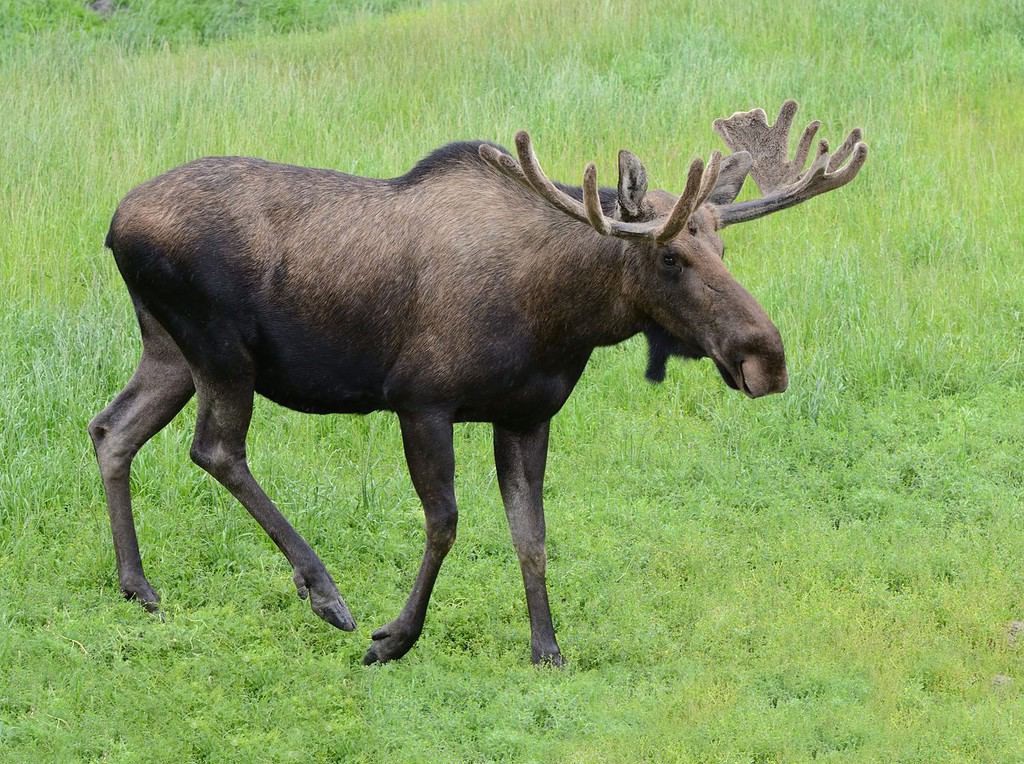
Moose are the largest deer, and they have antlers called palmates. They look like the palm of your hand.
©Michal_K/Shutterstock.com
It’s really easy to confuse moose and elk because, depending on where you live, an elk may actually be a moose. How can this be? In North America, people call the species Alces alces a moose, while in Eurasia, people call this same species elk. The scientific name of the species that North Americans consider to be an elk is Cervus canadensis, also called a wapiti. This is why scientific names, which are unique names given to specific species and recognized worldwide by the scientific community, are so important. A single species can have multiple common names, or different species can have the same common name in different parts of the world.
To differentiate between the North American moose (Alces alces) and elk (Cervus canadensis), it’s easiest to start by looking at the antlers. Like all deer except for caribou, only males have antlers. Moose antlers differ from other deer species in that they are thicker and more filled between the antlers, almost creating a more solid and webbed appearance. Brodsky explains, “Moose are huge animals with broad antlers called palmates. These antlers look like the palm of your hand.”
Elk antlers look more similar to other deer species, such as the white-tailed or mule deer, two species widespread throughout much of the United States, although elk antlers are much larger and heavier than those deer species. Compared to the antlers of moose, elk antlers are thinner near their points and not filled in.
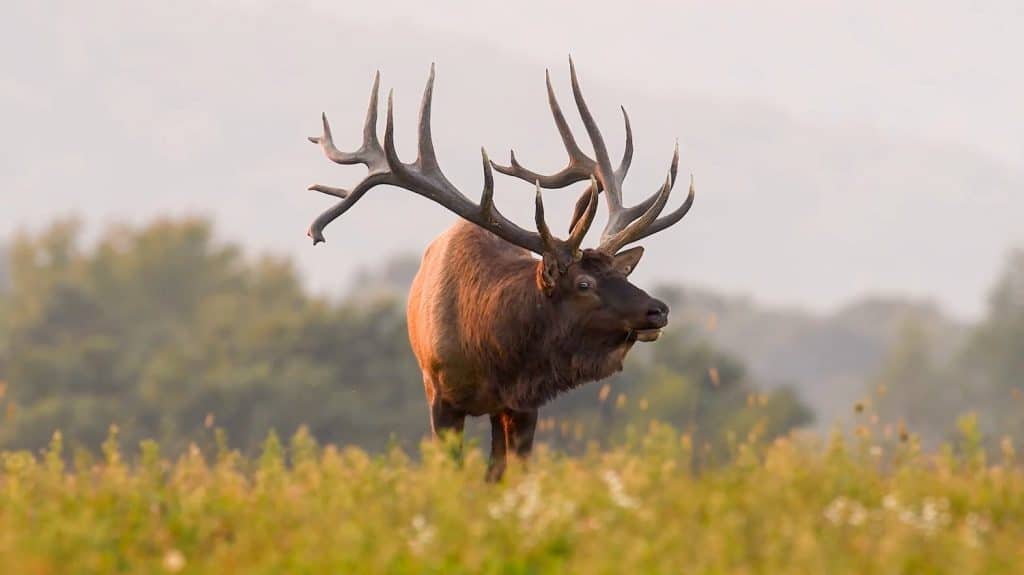
Elk are also large members of the deer family, but their antlers are thinner than moose.
©Swaroop Pixs/Shutterstock.com
As with most other deer species, after the rut, or the deer mating season, males drop their antlers, making it more difficult to tell the difference between elk and moose. And if you are looking at a female elk or moose, you cannot use antlers to tell them apart. But there are more characteristics you can look at to separate these two cervid species.
Overall, moose are much larger than elk and can weigh twice as much. In fact, moose are the largest of all of the living deer species. Moose tend to have broader snouts, more like a horse, whereas elk tend to have more slender faces. Brodsky notes, “Moose have a really bulbous nose that kind of sticks out, whereas elk have more narrow snouts and overall are generally smaller, leaner, and are more deer-like in appearance. Male elk also have this dark mane on their heads.”
Finally, moose have a distinct, large flap of skin that hangs below their chin and before their neck. This is called a dewlap.
Hornets and Wasps
Wasps and hornets are both insects in the order Hymenoptera, which also includes bees and ants. They are flying insects with compound eyes, and most species have a narrow “waist,” although sawflies, also a type of wasp, don’t. Hornets are simply a kind of wasp.
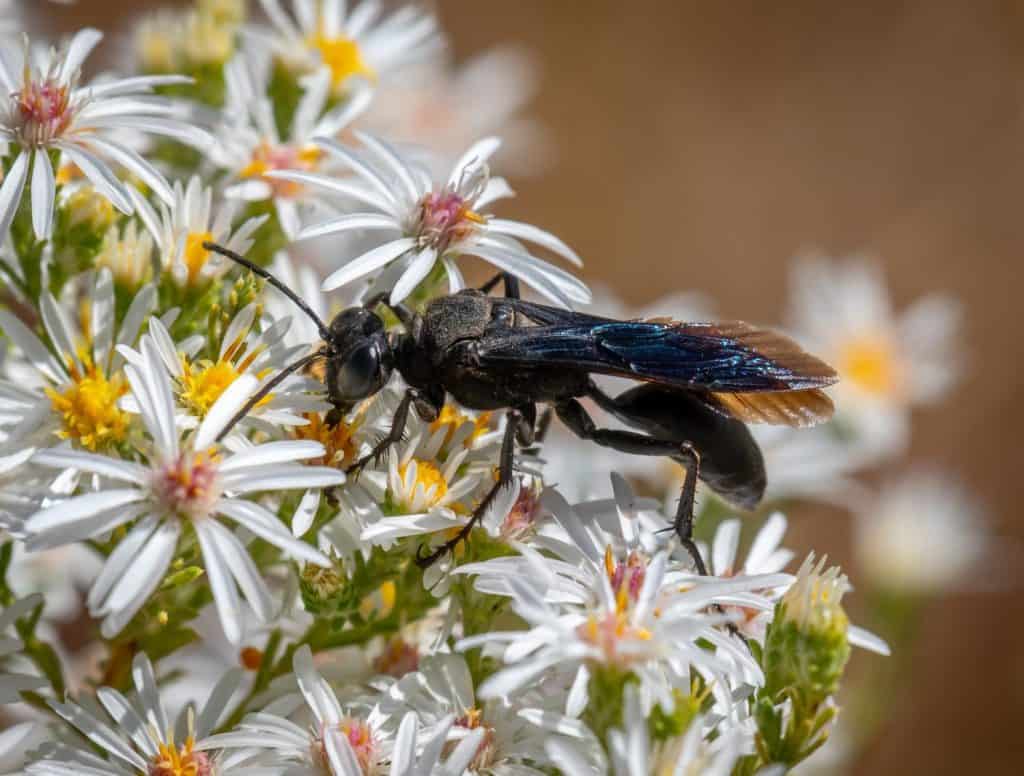
Most wasps, like this great black digger wasp, have a thin “waist.”
©Gerald A. DeBoer/Shutterstock.com
Although wasps get a bad reputation because they can sting, they are an incredibly specious and diverse group of pollinators of over 100,000 species that are important for our ecosystems. For instance, there are approximately 1,000 species of fig trees that can only be pollinated by specific kinds of wasps. Wasps only sting in self-defense.
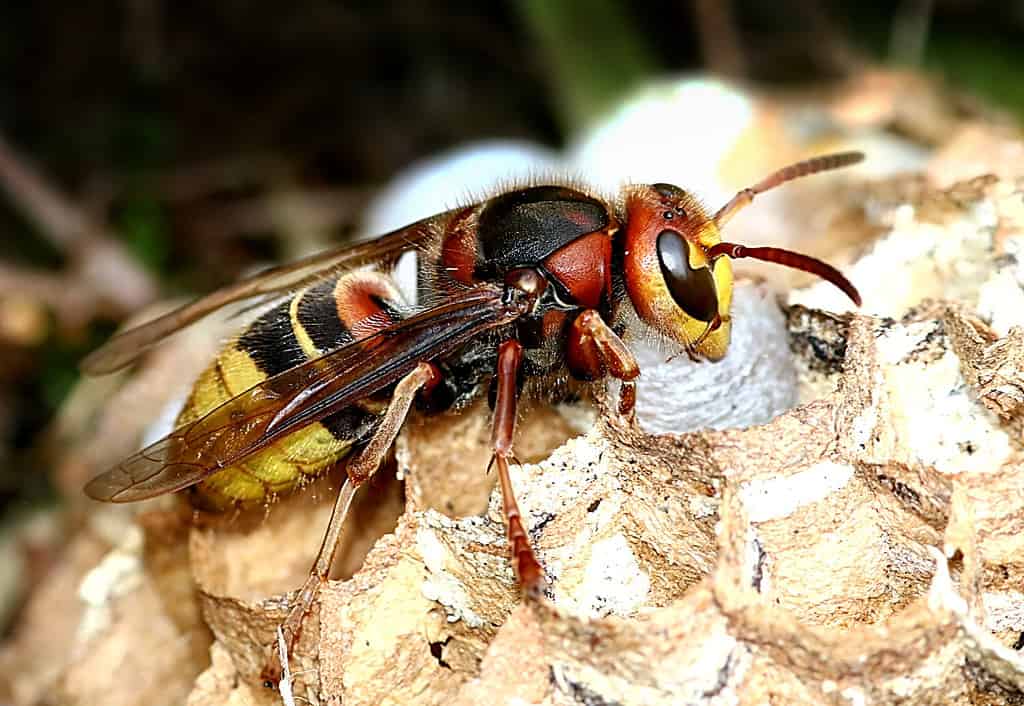
Hornets, like this European hornet, are a kind of wasp that are chubbier in appearance.
©Ger Bosma Photos/Shutterstock.com
Hornets are a member of the wasp that look rounder and chubbier when compared to most other wasp species. It’s worth noting that some insects with the common name hornet are not actually hornets. For instance, the bald-faced hornet is actually a yellowjacket wasp.
Bison and Buffalo
It’s not uncommon in North America for people to call bison buffalo. In fact, people use the words interchangeably quite frequently, but this is technically incorrect as bison and buffalo are two different groups of species.
Bison and buffalo are both large, social, and stocky herding ungulates (hooved mammals) of relatively the same size, with brown fur and curved horns. There are two extant species of bison: the American bison, native to North America, and the European bison, native to Europe. The two species of buffalo are the cape buffalo, which lives in Africa, and the water buffalo, which is from Asia. In addition to geographic differences, there are morphological characteristics that are unique and make these species pretty easy to tell apart once you know what to look for.
“The key feature between bison and buffalo is that bison have this humped-back shape appearance and really thick hair because they’re found in slightly cooler climates compared to buffalo,” Brodsky says. Buffaloes are typically found in warmer areas within Africa and Asia, and their coats are less dense and thinner by comparison
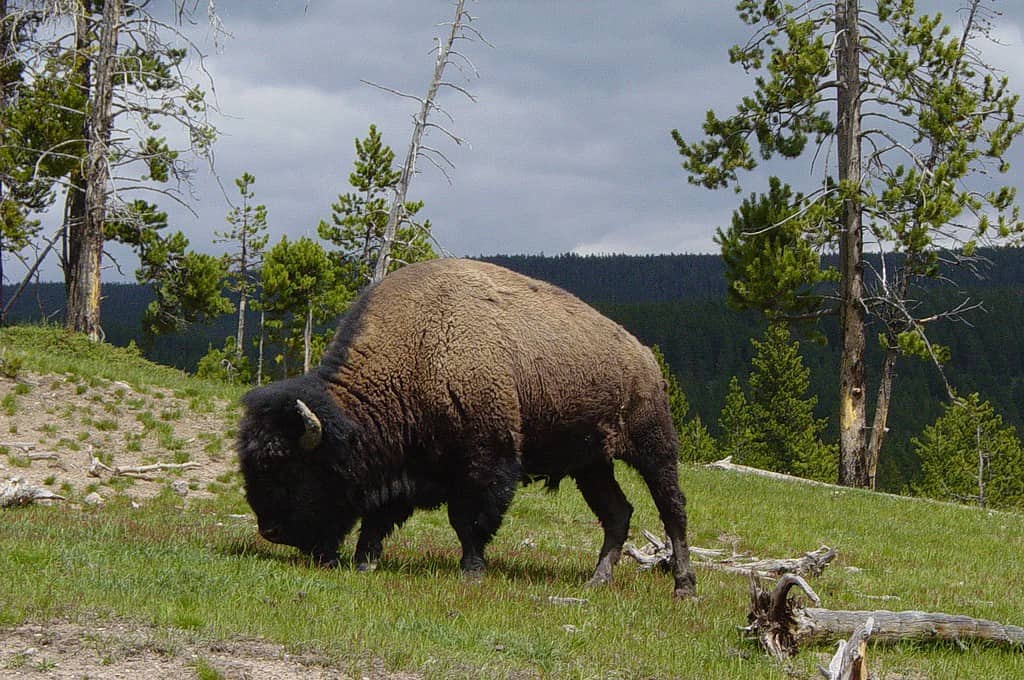
Bison have a large hump on their shoulders that differentiates them from the buffalo species.
©Daniel Mayer, CC BY-SA 3.0, via Wikimedia Commons – Original / License
Bison and buffalo both have horns, but bison horns appear tiny compared to a buffalo’s, and point more upward. Brodsky says, “Buffalo have massive horns that can span up to six feet.” Cape buffalo even have horns that cover the top of their head, making them look like they are wearing a helmet.
Brodsky adds, “Buffalo are more cow-like in appearance. They have thinner hair and an overall body shape similar to a cow.” You can see this cow-like appearance in both their face and bodies. Buffalo have elongated snouts, and although they are a heavy and stocky animal, they are much slimmer in the shoulders.
When looking at the profile of a bison, its snout points downward, and overall, the profile is flat with a more domed head. They have fur hanging below their chin like a beard, a bulkier face, and their head hangs lower, with their hump being higher than their head. A buffalo may also hold their head lower than their shoulders, but they lack the large shoulder hump that bison have.
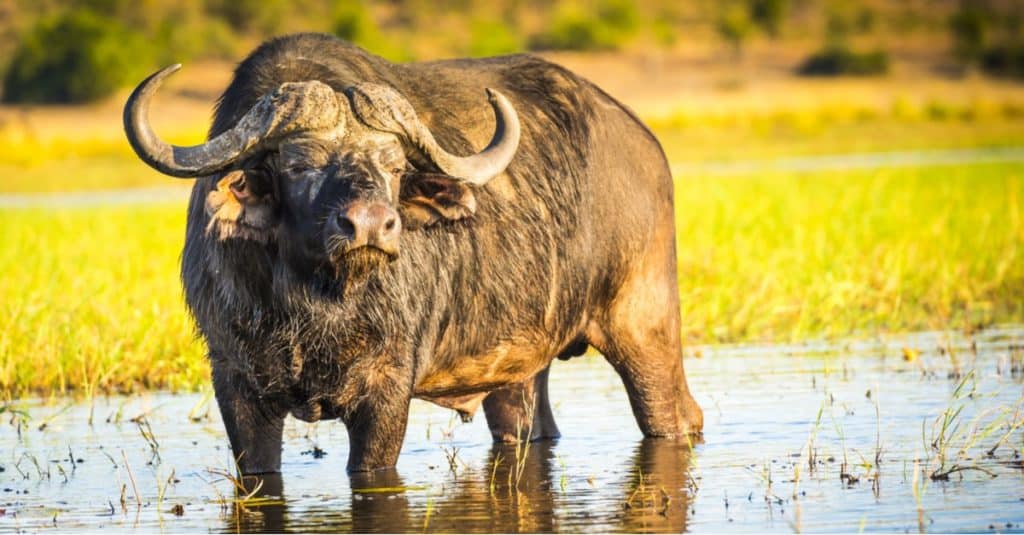
Buffalo, like this cape buffalo, have a more cow-like appearance than bison.
©THP Creative/Shutterstock.com
When comparing commonly confused animals, it’s important to make sure you are referring to the same animal. Always look at the scientific name to ensure it’s not just a case where the same animal is being called different common names in other parts of the world, or that different species have the same name depending on where you live. It can be confusing, but once you know what to look for, you can tell these commonly confused animals apart.