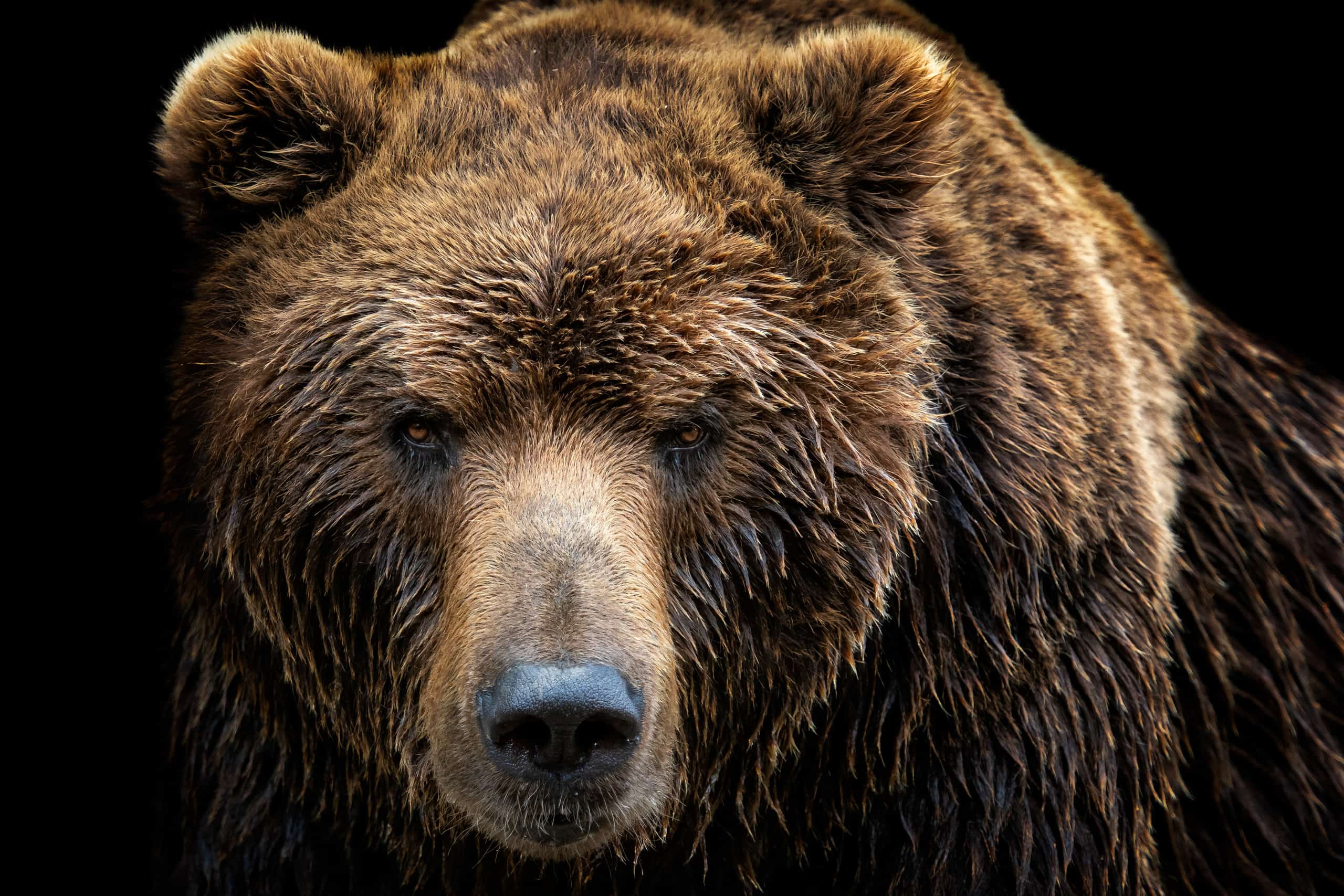

Quick Take
- A grizzly bear targets vulnerable caribou calves while a herd moves across Alaska’s tundra, showing how predators exploit moments when young animals lag behind.
- Caribou rely on speed, herd behavior, and protective mothers to defend calves from predators like grizzly bears and wolves.
- Grizzly bears are opportunistic omnivores that eat everything from berries and sedges to salmon and small mammals, which helps explain their adaptability in the wild.
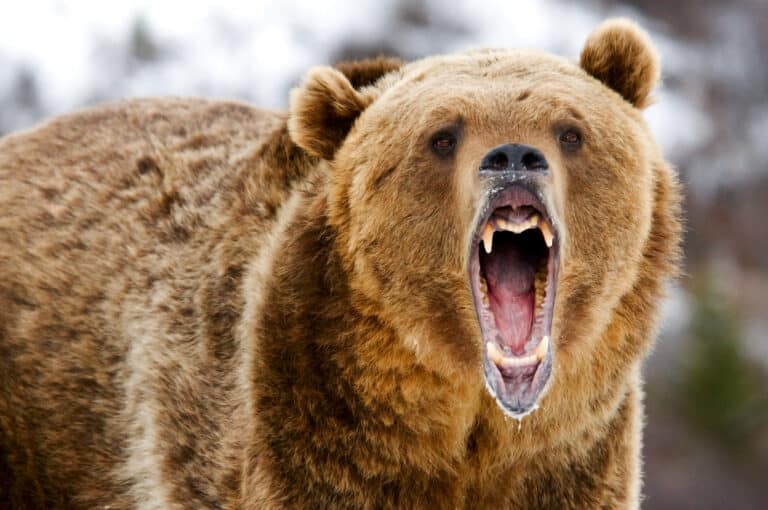
Many animals avoid grizzly bears when possible, but their reactions depend on the species and the situation. Grizzly bears are omnivores that eat a wide variety of foods, including grasses, sedges, roots, berries, insects, and, in some areas, fish such as salmon. However, this doesn’t mean they won’t charge at other animals.
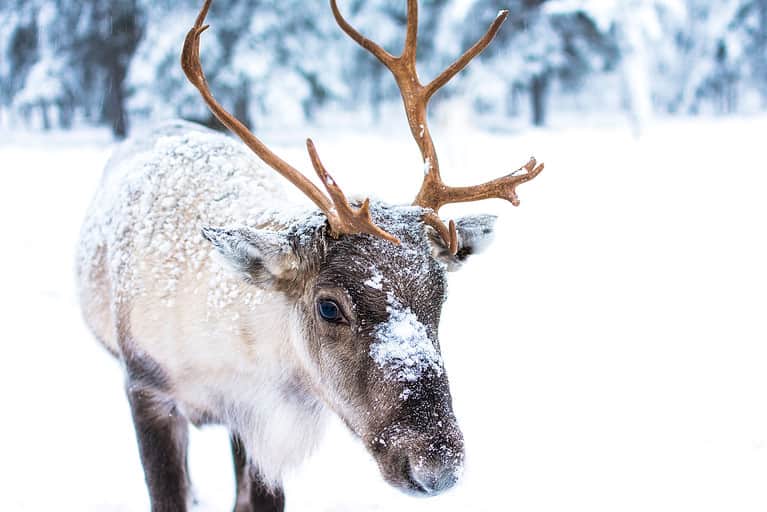
A PBS special features a herd of massive caribou enjoying a wide-open prairie. The Porcupine Caribou Herd typically spends winter in and south of the Brooks Range, then moves north in spring toward its calving grounds on the Arctic coastal plain. The caribou regroup after crossing the water.
Suddenly, a giant grizzly bear appears. Adult caribou can often outrun a grizzly bear, but calves are more vulnerable during a chase. In the clip, the bear targets the herd’s most vulnerable members, including the calves.
The bear appears to separate vulnerable calves from the adults as it searches for an opening. He briefly closes in on two calves, but both escape when their mother rushes back toward them. The mother of the calves runs over to his side.
Following so much adversity, it’s a big triumph for the caribou.
What Do Grizzly Bears Eat?
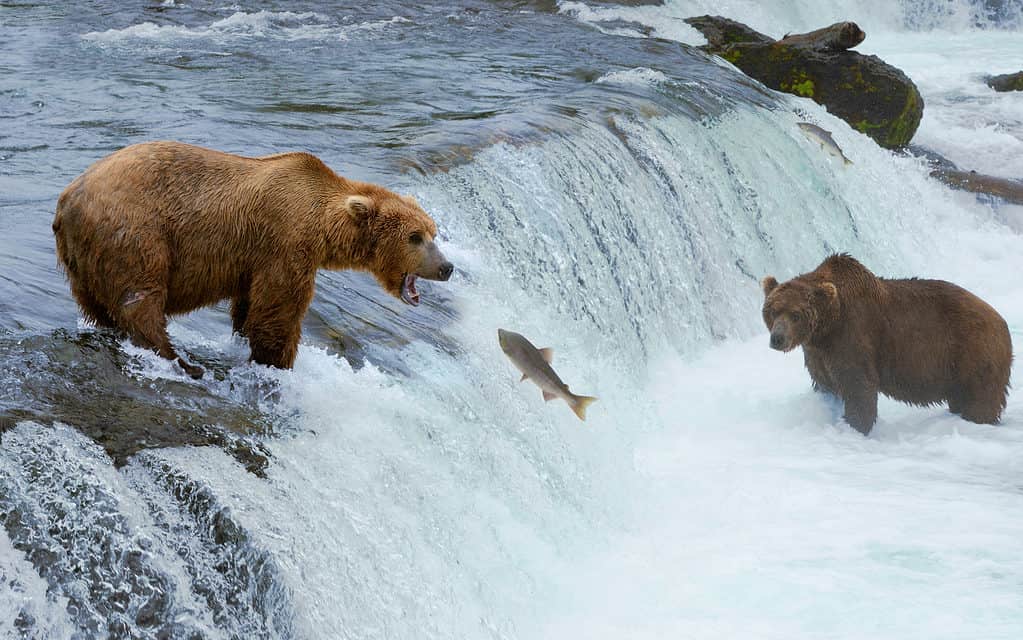
Grizzly bears love to catch fresh salmon.
©Michal_K/Shutterstock.com
Grizzly bears eat a wide range of plant and animal foods and spend much of their time foraging. They may also be attracted to human food or garbage when it is available, which can create dangerous conflicts.
Grizzly bears have enormous bodies, which makes them big eaters. Grasses, sedges, roots, berries, and insects make up much of a grizzly bear’s diet, depending on the season and location. These substances form the basis of a grizzly bear’s everyday sustenance.
They also eat higher-protein foods when available, including salmon, ground squirrels, carrion, and sometimes young ungulates such as moose or caribou calves.
How Do Caribou Protect Themselves?
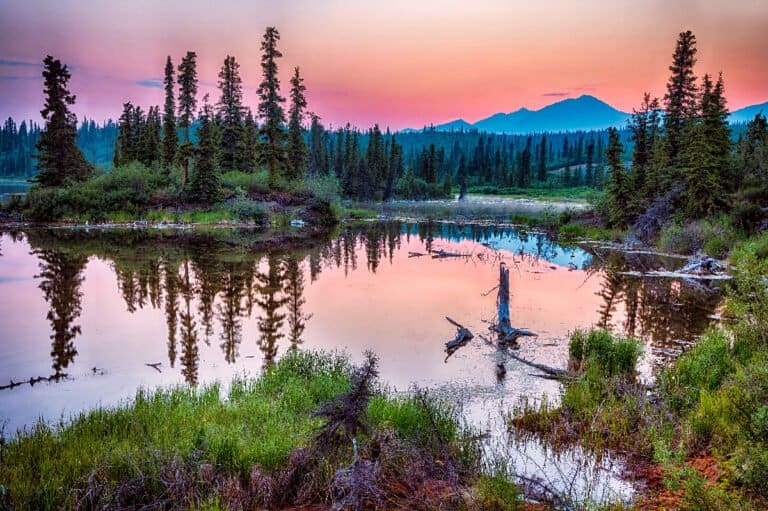
In Alaska, caribou use tundra, mountains, and foothills for much of the year, while some herds winter in taiga or boreal forest habitats. Calving zones are typically found in coastal tundra or in highlands.
Caribou herds often return to traditional calving areas year after year, although migration routes and timing can shift with weather, snow conditions, and forage availability.
Caribou are an important prey species in northern ecosystems. Calves, and sometimes weakened adults, may be taken by predators such as gray wolves and grizzly bears, and in some areas black bears also prey on calves.
Healthy adult caribou are less vulnerable to predators than calves because of their speed, size, and the protection that comes from staying with the herd.