
Quick Take
- Reindeer and caribou are the only deer species on Earth in which females grow antlers.
- Instead of using antlers for combat, female caribou use them as a portable mineral storage system.
- Female caribou shed their antlers in the spring specifically to consume them, reclaiming vital nutrients needed to produce milk for their newborns.
- Shed antlers can persist on the tundra for centuries, gradually releasing minerals into the soil for future generations.
In the harsh Arctic tundra, survival runs on a strict budget of calories and minerals, and every nutrient matters. Yet female reindeer and caribou invest precious energy into growing something that seems unnecessary: a full set of antlers.
In deer species, antlers are almost always a male trait used for battles and courtship displays. So why do female caribou and reindeer grow them, too? Scientists now think the answer reveals a clever survival strategy hidden in the frozen tundra.
The Long-Standing Mystery Scientists Couldn’t Explain
For years, researchers proposed simple explanations for why female caribou grew antlers. Some believed females used antlers to defend themselves or their calves. Others suggested the antlers functioned like snow shovels, helping them dig through drifts to reach buried plants.
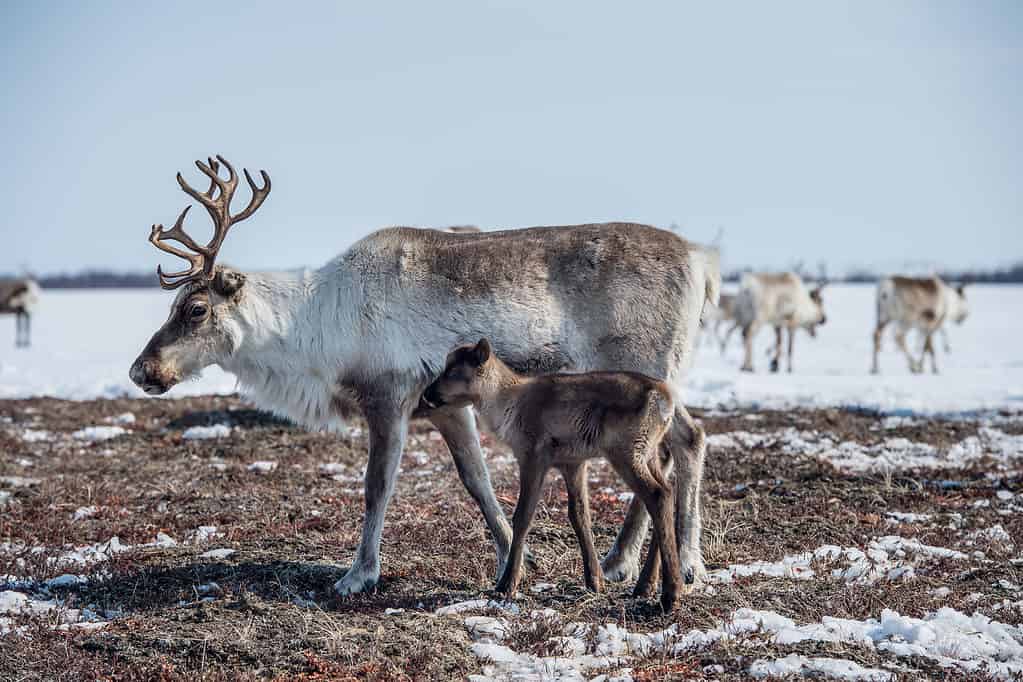
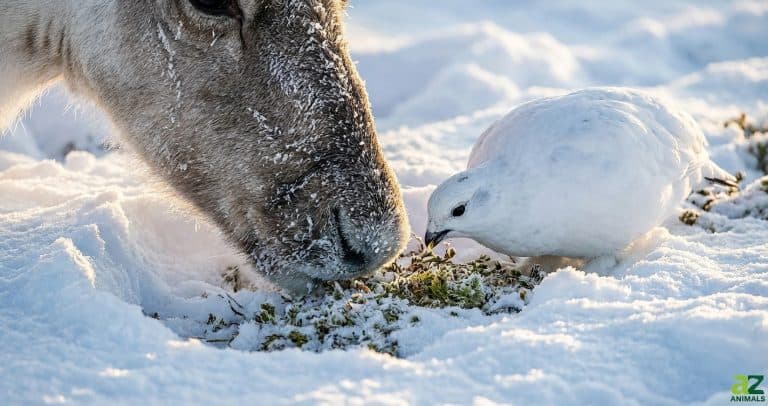
Caribou have a low reproductive rate, so it can take many years to rebuild a herd.
©den-sau-pin/Shutterstock.com
But those ideas contain a major contradiction: female caribou shed their antlers in the spring — exactly when newborn calves are most vulnerable to predators. If antlers were primarily for protection, why discard them at the moment when they are needed most?
New Research Reveals a Hidden Survival Strategy
New research published in Ecology and Evolution offers a surprising answer. Female caribou antlers appear to function as a sophisticated biological storage system. Essentially, they serve as portable reserves, allowing females to store and carry vital minerals across vast distances.
During winter, as caribou graze on mineral-rich feeding grounds, females store high concentrations of calcium and phosphorus in the porous bone of their antlers. These minerals become critical months later, helping mothers meet the nutritional demands of reproduction.
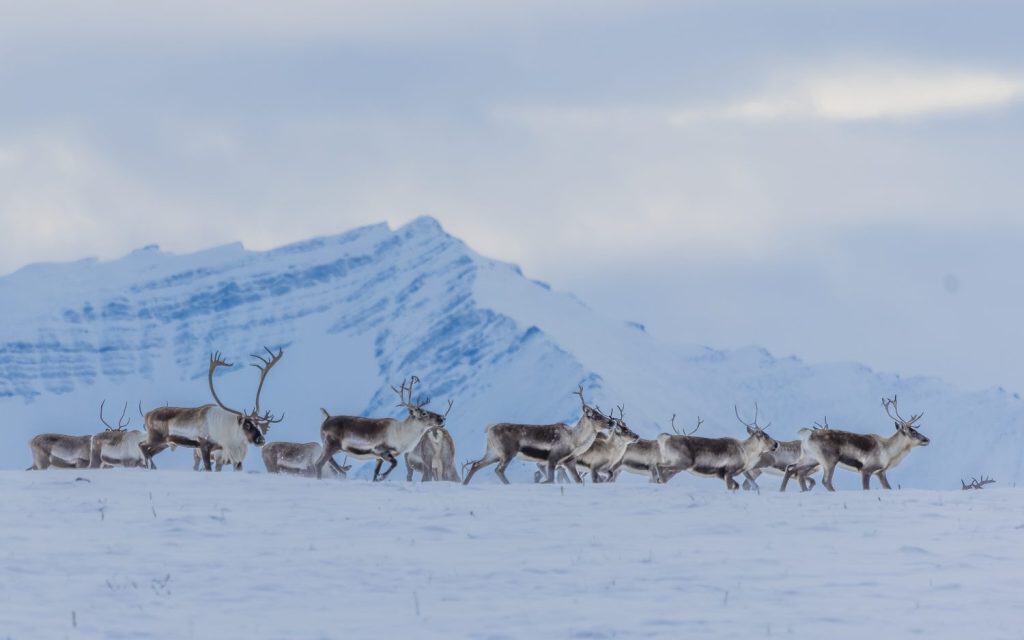
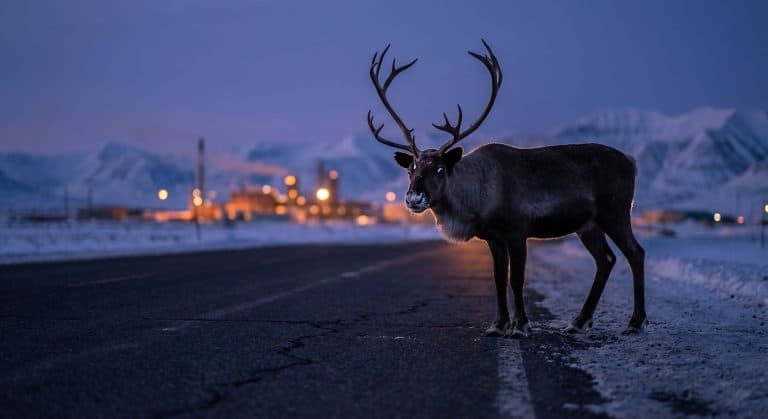
Each year, caribou herds migrate around 1,000 to 2,000 miles.
©Mark Lindberg/Shutterstock.com
Soon after, caribou herds migrate across the Arctic tundra, traveling hundreds of miles to reach their traditional calving grounds. When the herd reaches the nutrient-poor calving grounds in the spring, mothers face an enormous physiological challenge: producing milk for their newborn calves. This is precisely when female caribou shed their antlers, which contain vital reserves of calcium and phosphorus needed for lactation.
The Secret “Mineral Bank” Built Into Caribou Antlers
Producing milk for a newborn calf is extremely demanding and requires a surge of minerals that are nearly impossible to find in the frozen landscape. However, female caribou shed their antlers within days of giving birth, providing a ready source of nutrients exactly when and where they need them most.
This behavior is part of a biological phenomenon known as osteophagy, or the consumption of bone. In a study analyzing more than 1,500 shed antlers, scientists found that 86% showed chewing damage, and an astonishing 99% of those marks were made by caribou themselves.
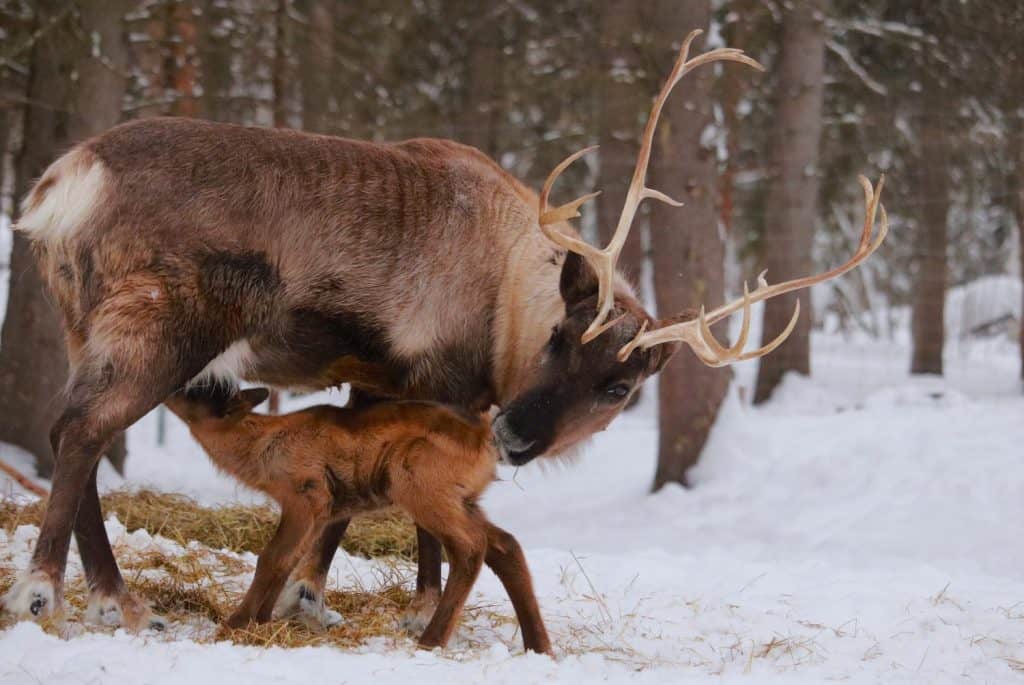
Female caribou typically give birth to a single calf in May or June.
©AKDogtor/Shutterstock.com
Unlike dense skeletal bone, which caribou largely ignore, antlers are porous and mineral-rich, making them much easier to digest. In essence, female caribou spend the winter storing nutrients in their antlers and then retrieve those nutrients when their bodies need them most.
How Caribou Antlers Shape the Arctic Ecosystem
What appears to be simple bone debris scattered across the tundra is actually part of a carefully timed nutritional strategy. The discarded antlers serve as a mineral buffet. Caribou return to chew on the shed racks, reclaiming the calcium and phosphorus stored inside them. Other animals also benefit from this windfall, but researchers have found that caribou themselves do most of the harvesting, helping them survive in a harsh environment where food is scarce.
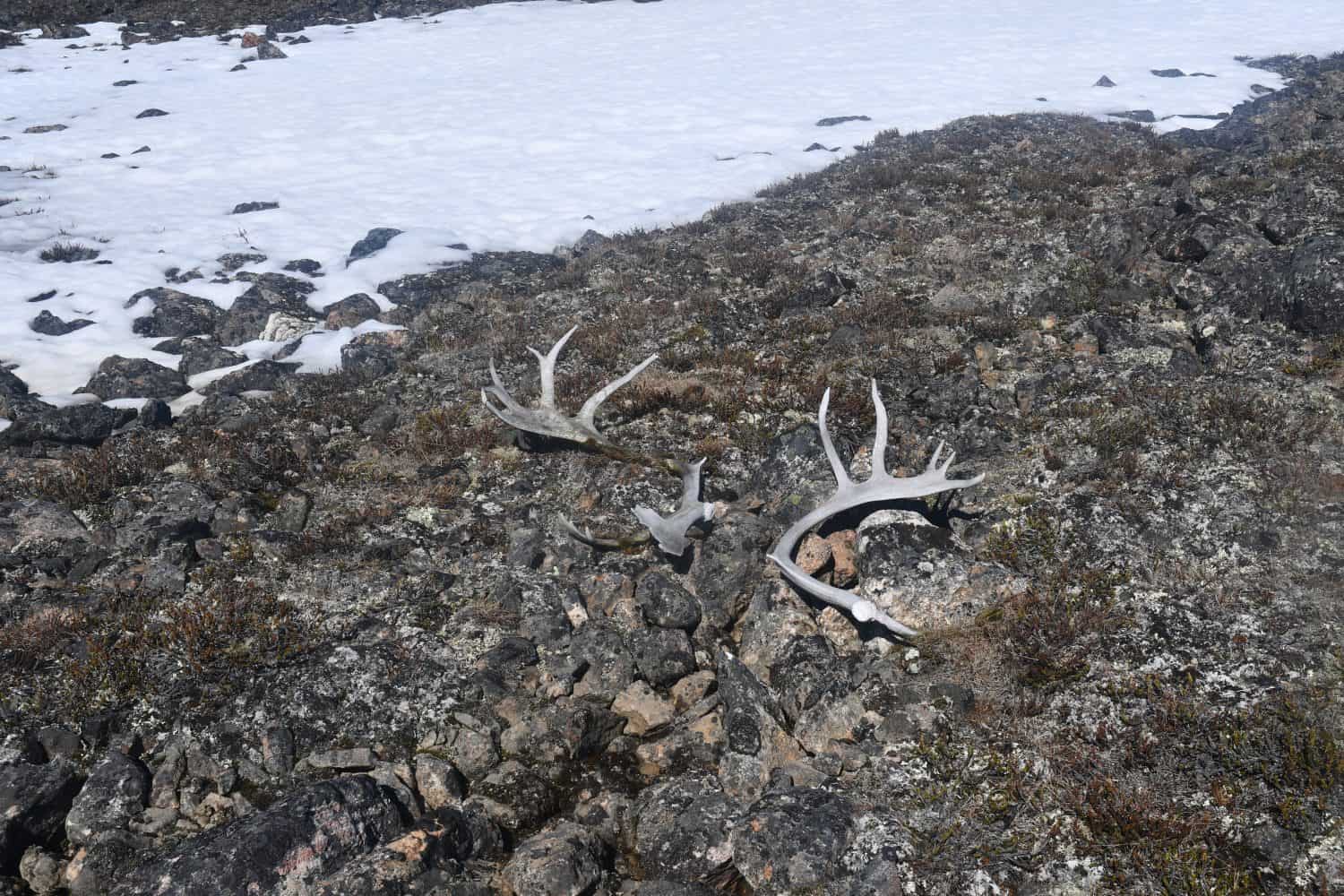
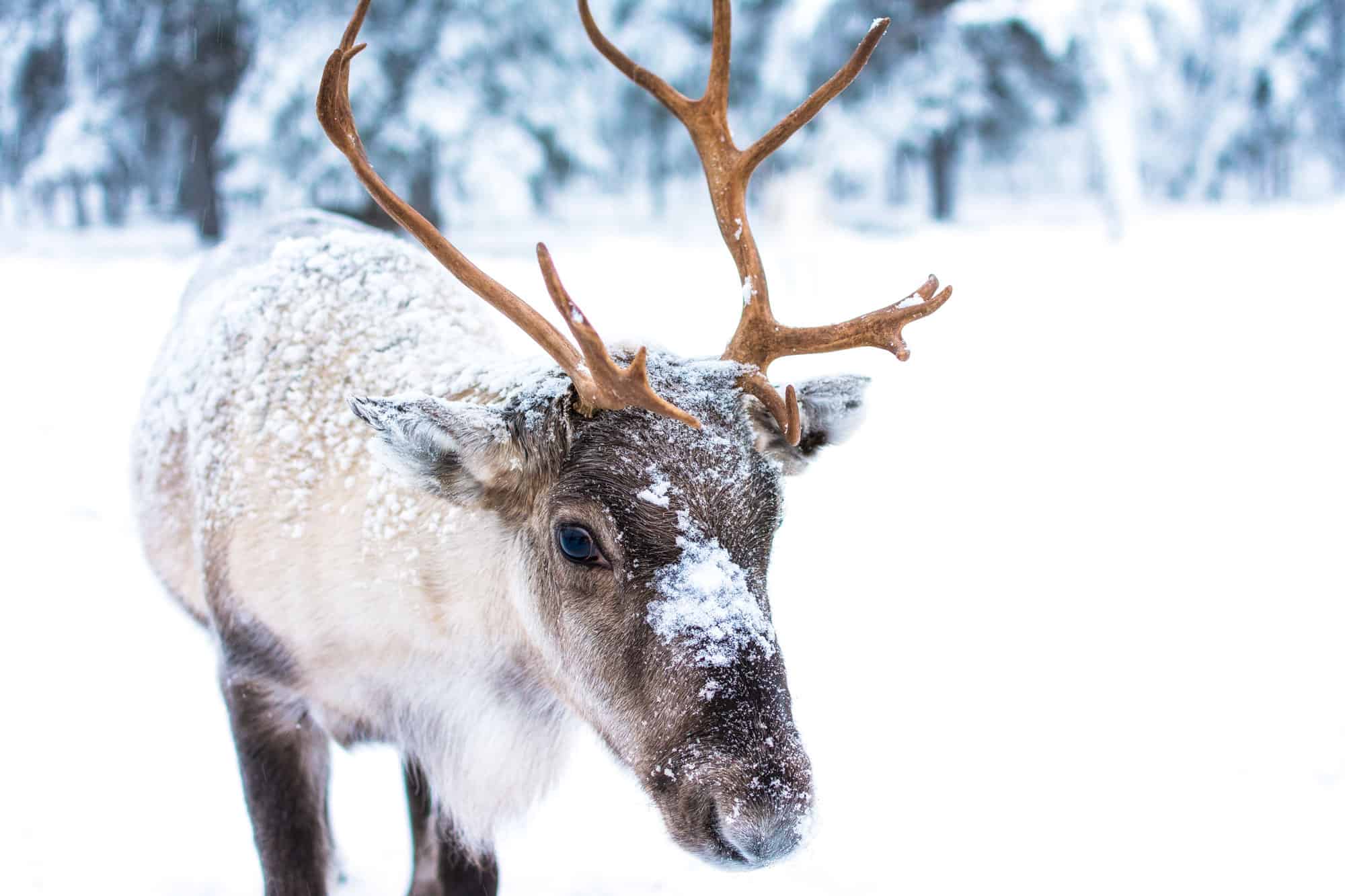
Caribou antlers contain important minerals like phosphorus, calcium, and protein.
©David Shorto/Shutterstock.com
Because the Arctic is cold and dry, shed antlers decay slowly. Instead, they can remain on the tundra surface for hundreds or even thousands of years. As they slowly break down, they release nutrients into the soil, fertilizing the grasses and lichens that caribou depend on.
Over generations, this process creates a kind of mineral bank embedded in the landscape. Caribou returning to the same calving grounds are not simply following instinct; they are returning to places enriched by centuries of antler deposits left by their ancestors.
Nature’s Portable Insurance Policy
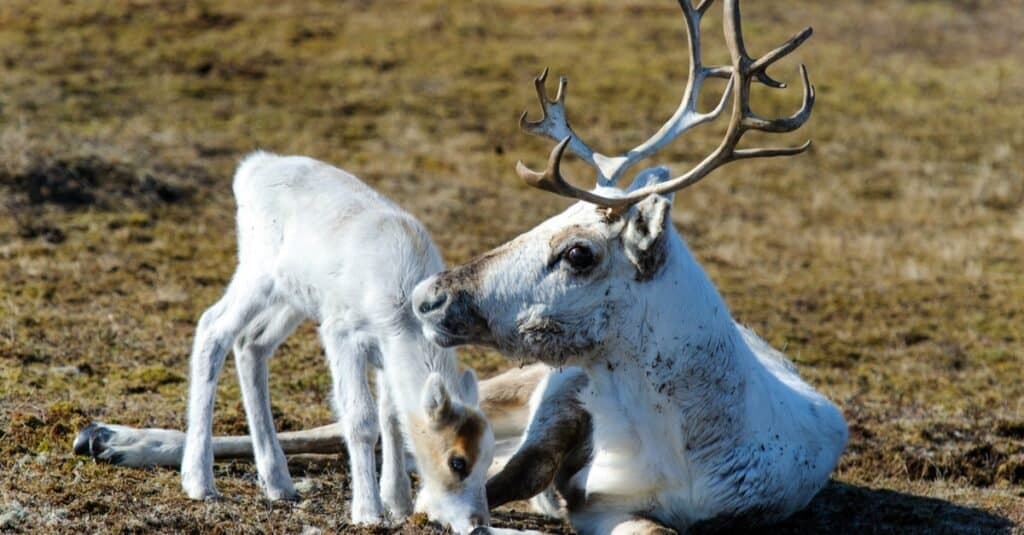
Pregnant female caribou may walk thousands of miles before giving birth.
©V. Belov/Shutterstock.com
The image of a caribou chewing on its own antlers may seem strange at first glance. But it represents a masterpiece of evolutionary efficiency. For female caribou, antlers are not weapons of war or ornaments of display. They are a mobile insurance policy — allowing mothers to transport vital nutrients across vast distances and deposit them exactly where the next generation needs them most.
In a warming Arctic, this system may provide a much-needed safety net. If climate change disrupts plant growth or delays spring green-up, the stored nutrients in shed antlers offer nursing mothers a reliable backup source of essential minerals.