
Quick Take
- These Bali monkeys don't steal randomly. They've figured out exactly which of your belongings are worth the most to you. See how they choose targets →
- Age beats size when it comes to monkey negotiating power, a finding whose underlying reason is changing how researchers think about animal intelligence. Discover why older monkeys win →
- Monkeys worldwide clash with humans for reasons that almost always trace back to one surprising common factor. Explore the common cause →
- There's a smarter way to reclaim your stolen phone from a Bali macaque, and most tourists get it completely wrong. Learn the right approach →
Bali’s Bartering Monkeys Know What Your Stuff Is Worth
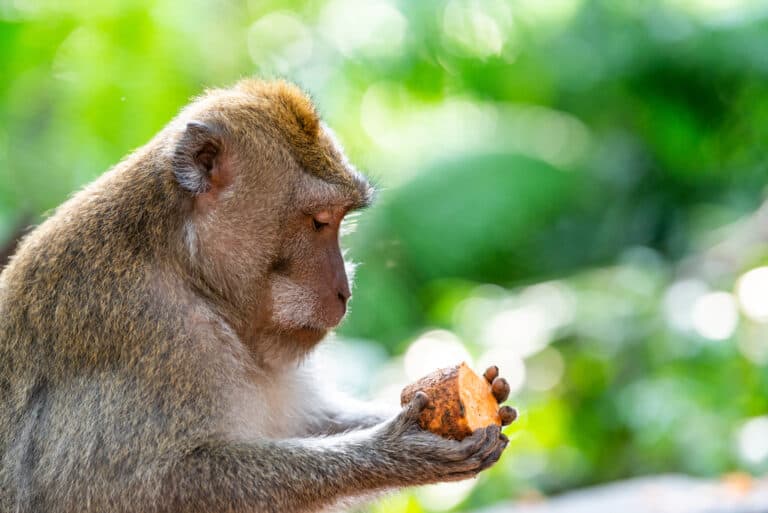
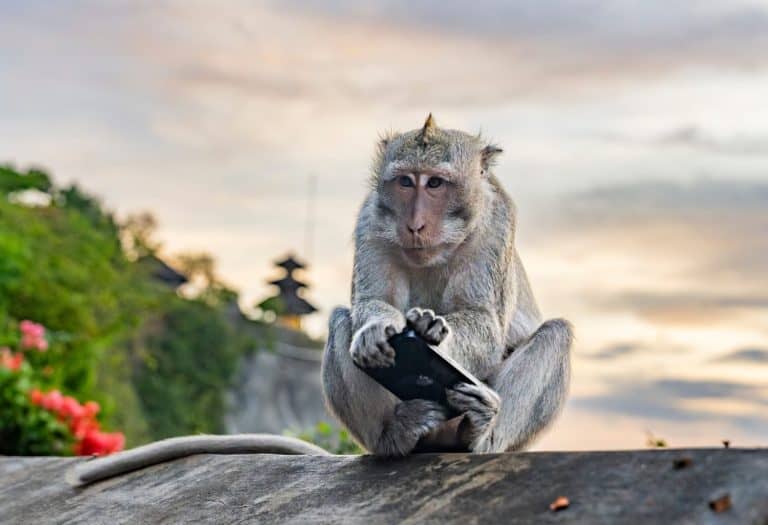
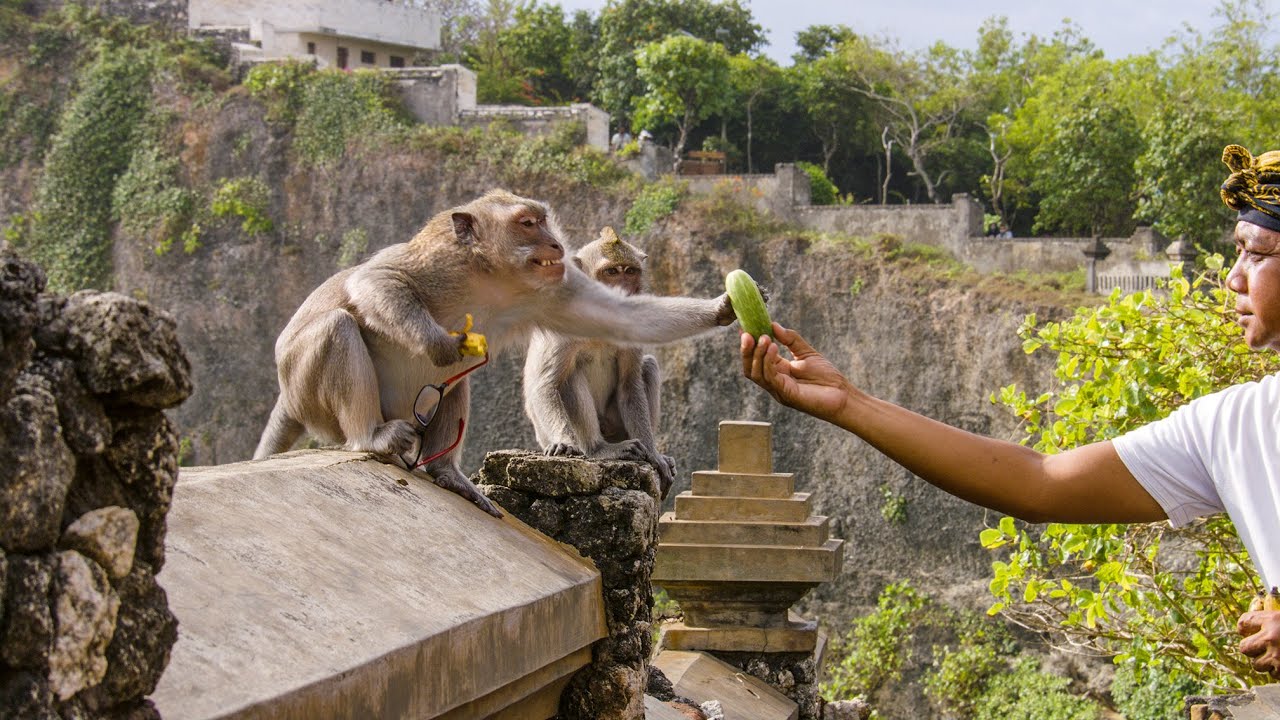
This video captures a remarkable bit of monkey business. Long-tailed macaques, also known as crab-eating macaques, live around Uluwatu Temple in Bali, Indonesia. Some have developed a well-documented routine: take an inedible object from a visitor, move out of reach, and wait for someone to offer food in exchange. Hats and sunglasses are common targets, but the macaques also take shoes, phones, cameras, wallets, and other belongings.
Researchers call the behavior “robbing and bartering.” The macaques are not mistaking a pair of glasses for lunch. Instead, the stolen object effectively becomes a token that can be returned to its owner or temple staff for food. Studies at Uluwatu found that the behavior is learned over time and that older macaques are more successful at both taking objects and negotiating their return.
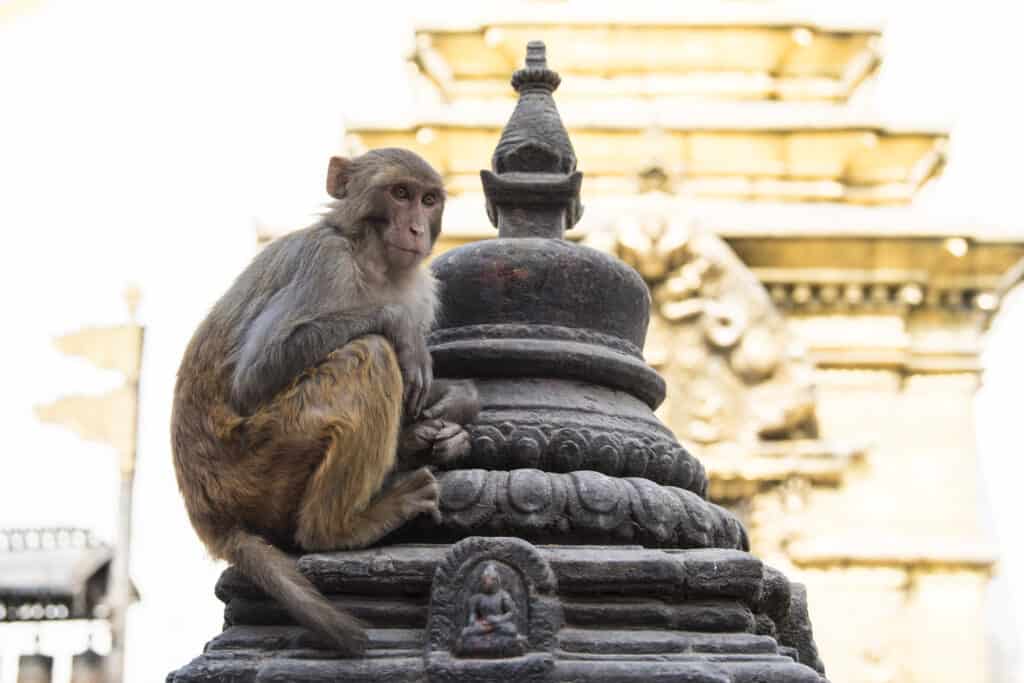
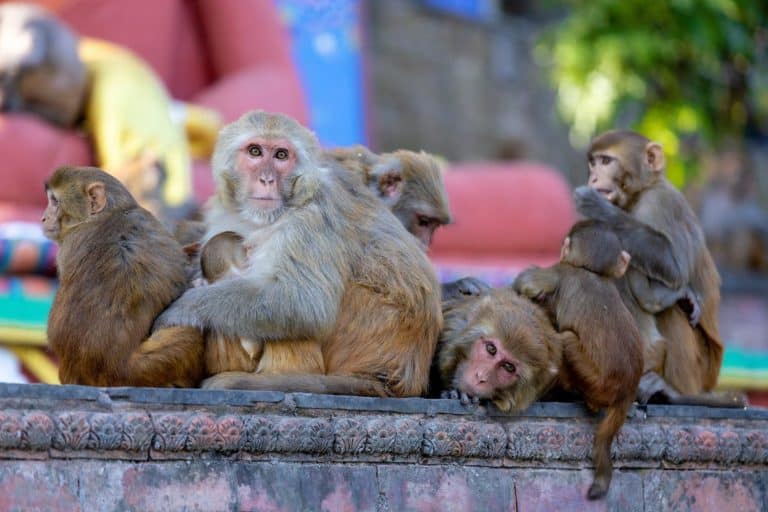
Rhesus macaques gather among the stupas and shrines of Swayambhunath in Kathmandu, Nepal. They are close relatives of the long-tailed macaques found at Uluwatu Temple.
©iStock.com/3yephotography
Age and experience appear to matter more than sheer size. Researchers found that success generally increased from juveniles to subadults and adults. Mature macaques were also more likely to target objects that people valued highly, especially glasses, electronic devices, and wallets. When holding a more valuable item, they tended to reject more offers or wait for a larger quantity or preferred type of food. A phone, it turns out, may command a better price than an empty camera bag. Even monkeys understand leverage.
Why Do Monkeys Clash With People?
Calling these monkeys criminals makes for a fun headline, but they do not understand theft or property law in the human sense. They learn that certain actions produce food, access to resources, or another useful result. Human-primate conflicts are common in places where monkeys have regular access to crops, unsecured garbage, food offered by people, or belongings that can be exchanged.
In northern India, conflicts involving rhesus macaques include crop raiding, entering homes and kitchens, property damage, and aggressive encounters. Wildlife managers have identified human feeding and poorly secured food waste as major drivers of urban conflict. Farmers in Thailand also contend with crop-raiding macaques, including animals entering corn and pineapple fields. In Japan, expanding macaque populations and crop damage have created their own long-running conflicts between monkeys and people. These situations are not identical to Uluwatu’s bartering system, but food is usually somewhere near the center of the problem.
The capuchin monkeys of South America offer another variation. A study of bearded capuchins and visitors at Brasília National Park in Brazil found that the monkeys accepted food from people, searched garbage, and stole food directly from visitors. Nearly four-fifths of the observed interactions involved food. Unlike the macaques at Uluwatu, however, the capuchins were not documented holding personal belongings for a negotiated exchange.
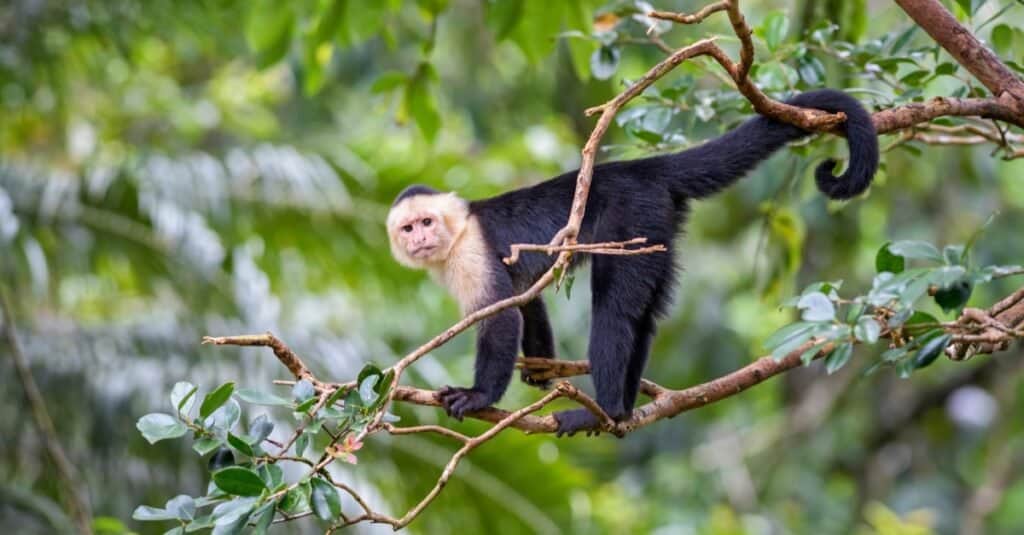
Capuchin monkeys in Brazil have been observed taking food from visitors, although they do not use the same bartering system documented among Bali’s macaques.
©David Havel/Shutterstock.com
The criminal framing is entertaining, but the behavior is really a lesson in animal intelligence and adaptation. Primates are quick to notice which human actions lead to food, and they can become persistent once the strategy works. Securing food and garbage, avoiding deliberate feeding, protecting loose belongings, and following local wildlife guidance can reduce these encounters. At Uluwatu, temple staff may help negotiate the return of an item. Ideally, though, your phone never enters the monkey economy in the first place.