
N S W E
Wildlife Expeditions

Wildlife of
India

India is famed for some of Earth's most iconic and elusive wildlife-especially Bengal tigers and Asian elephants-set against a spectacular backdrop that ranges from Himalayan peaks to lush rainforests and tropical coasts.
526 Species
36 Regions
3,287,263 km² Land Area
Overview

About India

India's wildlife character is defined by extraordinary ecological variety packed into one vast country, where ancient cultural traditions of reverence for nature intersect with world-class biodiversity. From the roar of a tiger in sal forests to elephant herds moving through monsoon forests and tea estates, India offers a rare blend of flagship megafauna, endemic species, and living landscapes shaped by people and wildlife coexisting side by side. This long history of protected areas-paired with modern scientific management-has made India one of Asia's most important refuges for large mammals.

Key ecosystems span the Himalayan alpine zones and high-altitude deserts (home to snow leopard and Himalayan ungulates), the Terai-Duar grasslands and riverine forests (among the best habitats for tiger, rhino, and swamp deer), and the central Indian dry deciduous forests (the classic "tiger country" mosaic of teak, bamboo, and grassland). The Western Ghats and Northeast India are global biodiversity hotspots with exceptional endemism-frog-rich rainforests, cloud forests, and some of Asia's highest bird diversity-while wetlands like Bharatpur and coastal systems such as the Sundarbans mangroves and Odisha beaches support migratory birds, estuarine predators, and nesting sea turtles.

Globally, India is a conservation heavyweight: it holds a major share of the world's remaining wild tigers and supports one of the largest Asian elephant populations, with long-running efforts such as Project Tiger and landscape-scale corridor protection. Its conservation story is also defined by the intensity of the wildlife experience-safari drives through varied habitats, tracking big cats in daylight, elephant encounters in the wild, and specialized journeys for snow leopard, hornbills, or rhinos-often within a day's travel of vibrant cities, cultural sites, and communities whose livelihoods are intertwined with these ecosystems.

Physical Features

Geography

India's wildlife distribution is strongly shaped by steep gradients in altitude, rainfall, temperature, and seasonality-from the high, cold Himalayas to humid tropical coasts and arid deserts. The Himalayas and associated river systems create diverse mountain forests, alpine habitats, and floodplains; the Indo-Gangetic plains and major wetlands support migratory birds and riverine fauna; the monsoon-driven peninsular plateaus hold large tracts of dry and moist deciduous forests critical for tigers, leopards, gaur, and elephants; the Thar Desert and semi-arid scrublands support specialized desert species; and long coastlines plus island systems (Andaman-Nicobar, Lakshadweep) add mangroves, coral reefs, and seagrass habitats important for crocodilians, shorebirds, dugongs, and marine turtles. Fragmentation, elevational corridors, and river connectivity are key geographic determinants of population isolation or movement for wide-ranging species (e.g., tigers, elephants, snow leopards).

3,287,263 km² Land Area
7th largest country (by total area); roughly about the size of Western Europe Size Rank

Key Landscapes

  • Himalayan mountain arc (Kashmir-Ladakh to Arunachal): alpine meadows, subalpine forests, high-altitude deserts; key for snow leopard, bharal, Himalayan ungulates
  • Indo-Gangetic-Brahmaputra plains: extensive alluvial plains and grasslands; historically major megafauna range; critical for riverine and floodplain ecosystems
  • Ganga, Brahmaputra, and Indus river basins: large river corridors with sandbars, oxbows, and wetlands; important for gharial (localized), river dolphins, waterbirds
  • Terai-Duar savanna/grasslands and sal (Shorea) forests along Himalayan foothills: one of India's most important tiger, rhino (NE), and elephant landscapes
  • Central Indian highlands and peninsular plateaus (Vindhya-Satpura-Chota Nagpur-Deccan): mosaic of moist/dry deciduous forests and scrub; major tiger source landscapes and connectivity zones
  • Western Ghats mountain chain: steep rainfall gradient and high endemism; evergreen forests, shola-grassland mosaics; stronghold for endemic amphibians, mammals, and Asian elephants
  • Eastern Ghats and coastal hill complexes: patchy forests linking inland to coasts; important for endemic flora/fauna and elephant ranges in parts
  • Thar Desert and semi-arid Kutch/Saurashtra: dunes, saline flats (Rann of Kutch), thorn scrub; habitat for desert-adapted mammals and bustards
  • Major wetlands and lake systems (e.g., Chilika Lagoon, Keoladeo, Wular/Dal, Sambhar): key staging and wintering areas for migratory waterbirds
  • Sundarbans delta (Ganga-Brahmaputra-Meghna): vast mangrove tidal forests; unique tiger-estuary system and critical coastal protection
  • Long coastline (Arabian Sea and Bay of Bengal): estuaries, beaches, and coastal wetlands supporting shorebirds, turtles, dolphins, and fisheries-linked food webs
  • Islands-Andaman & Nicobar (tropical rainforests, mangroves, reefs) and Lakshadweep (atolls, lagoons): high endemism and important marine habitats including seagrass

Ecoregions

  • Himalayan subtropical broadleaf forests
  • Himalayan subtropical pine forests
  • Eastern Himalayan broadleaf forests
  • Eastern Himalayan subalpine conifer forests
  • Western Himalayan broadleaf forests
  • Western Himalayan subalpine conifer forests
  • Alpine shrub and meadows (Himalaya)
  • Karakoram-Tibetan Plateau high-altitude steppe/desert (Trans-Himalaya)
  • Terai-Duar savanna and grasslands
  • Upper Gangetic Plains moist deciduous forests
  • Lower Gangetic Plains moist deciduous forests
  • Sundarbans mangroves
  • Brahmaputra Valley semi-evergreen forests
  • Northeast India subtropical/temperate broadleaf forests (Indo-Burma interface)
  • Central Deccan Plateau dry deciduous forests
  • Eastern Deccan Plateau moist deciduous forests
  • South Deccan Plateau dry deciduous forests
  • Narmada Valley dry deciduous forests
  • Kathiarbar-Gir dry deciduous forests (western India)
  • Thar Desert
  • Northwestern thorn scrub forests
  • Rann of Kutch seasonal salt marsh
  • Western Ghats montane rain forests
  • North Western Ghats moist deciduous forests
  • South Western Ghats moist deciduous forests
  • Andaman Islands rain forests
  • Nicobar Islands rain forests
  • Mangroves of the west and east coasts (regional mangrove ecoregions including deltas and estuaries)
Parks & Reserves

Protected Areas

India's protected area system is built around a large network of National Parks and Wildlife Sanctuaries, supplemented by Conservation Reserves and Community Reserves (often used for corridor and buffer protection). Flagship landscape programs include Tiger Reserves (Project Tiger, typically a core-buffer model), Elephant Reserves, and a growing set of marine/coastal protected areas. In addition, India has extensive reserved/protected forest land under state forest departments, but those categories are broader than formally notified protected areas like National Parks and Wildlife Sanctuaries.

Protected Coverage

Approximately ~5-6% of India's land area is under formal protected areas (National Parks, Wildlife Sanctuaries, Conservation Reserves, and Community Reserves), with additional habitat secured via Tiger Reserve core-buffer management, reserved forests, and other designations outside the strict PA network.

Notable Parks & Reserves

Kaziranga National Park, Assam

National Park; UNESCO World Heritage (Natural)

One of the world's strongestholds for the greater one-horned rhinoceros, with exceptionally high large-mammal densities in tall alluvial grasslands and floodplain forests. It is also a key landscape for tigers and Asian elephants.

Greater one-horned rhinoceros
Bengal tiger
Bengal tiger
Asian elephant
Asian elephant
Wild water buffalo
Swamp deer (barasingha)
Hog deer

Corbett Tiger Reserve (Jim Corbett National Park), Uttarakhand

Tiger Reserve; National Park

India's oldest national park and a premier tiger landscape, combining sal forests, riverine belts, and grasslands that support diverse prey and excellent wildlife viewing. It is also important for elephants and otters along the Ramganga system.

Ranthambore National Park (Ranthambore Tiger Reserve), Rajasthan

National Park; Tiger Reserve

A flagship tiger-watching destination where tigers are often seen in open dry deciduous forest and around lakes. The park's mosaic of scrub, woodland, and wetlands also supports a rich community of carnivores and raptors.

Bengal tiger
Bengal tiger
Leopard
Leopard
Sloth bear
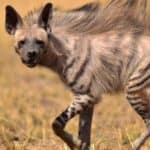
Striped hyena
Striped hyena
Sambar deer
Chital (spotted deer)

Gir National Park and Wildlife Sanctuary, Gujarat

National Park; Wildlife Sanctuary

The last wild home of the Asiatic lion, with globally significant conservation value and high chances of seeing lions in a dry forest-savanna landscape. It also supports a strong leopard population and diverse ungulates.

Asiatic lion
Leopard
Leopard
Sambar deer
Chital (spotted deer)
Nilgai (blue bull)
Marsh crocodile (mugger)

Sundarbans National Park, West Bengal

National Park; UNESCO World Heritage (Natural)

The world's largest mangrove ecosystem, famed for its uniquely adapted tigers and rich estuarine biodiversity. It is a critical coastal buffer and nursery habitat for fish and crustaceans, supporting both wildlife and livelihoods.

Bengal tiger
Bengal tiger
Saltwater crocodile
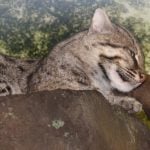
Fishing cat
Fishing cat
Spotted deer (chital)
Irrawaddy dolphin
Water monitor lizard

Periyar Tiger Reserve (Periyar National Park), Kerala

Tiger Reserve; National Park

A major stronghold for Asian elephants in the Western Ghats, with evergreen forests and a large reservoir-edge mosaic that concentrates wildlife. It is also important for endemic Western Ghats biodiversity and tiger conservation.

Asian elephant
Asian elephant
Bengal tiger
Bengal tiger
Gaur (Indian bison)
Sambar deer
Dhole (Indian wild dog)
Lion-tailed macaque

Hemis National Park, Ladakh

National Park

A high-altitude Himalayan protected area best known for snow leopard conservation, with vast cold-desert valleys supporting specialized mountain fauna. Winter tracking and camera-trap research have made it a focal site for long-term monitoring.

Snow leopard
Snow leopard
Himalayan blue sheep (bharal)
Himalayan ibex
Eurasian lynx
Eurasian lynx
Himalayan wolf
Lammergeier (bearded vulture)

Keoladeo National Park (Bharatpur Bird Sanctuary), Rajasthan

National Park; UNESCO World Heritage (Natural); Ramsar Wetland

A globally important wetland for waterbirds and migratory species in a human-managed marsh ecosystem. It is renowned for dense winter birdlife and its role in wetland conservation in the Indo-Gangetic plains.

Painted stork
Sarus crane
Sarus crane
Bar-headed goose
Black-headed ibis
Eurasian spoonbill
Marsh harrier

UNESCO World Heritage Sites

  • Great Himalayan National Park Conservation Area
  • Kaziranga National Park
  • Keoladeo National Park
  • Manas Wildlife Sanctuary
  • Nanda Devi and Valley of Flowers National Parks
  • Sundarbans National Park
  • Western Ghats
  • Khangchendzonga National Park (Mixed: cultural & natural)
Animals

Wildlife

India is one of the world's most wildlife-diverse countries, spanning extreme ecosystems-from high-altitude Himalayas and Trans-Himalayan cold deserts to Indo-Gangetic floodplains, arid Thar landscapes, central Indian teak forests, Western Ghats rainforests, and mangroves like the Sundarbans. This breadth supports a classic "big mammal" safari experience (tigers, elephants, rhinos, lions, leopards, bears), globally important wetlands and migratory bird routes, and high endemism in biodiversity hotspots (especially the Western Ghats and island groups such as the Andaman & Nicobar).

~430-450 species Mammals
~1,300-1,350 species Birds
~550-600 species Reptiles
~430-450 species (many Western Ghats endemics) Amphibians

Iconic Species

Bengal Tiger
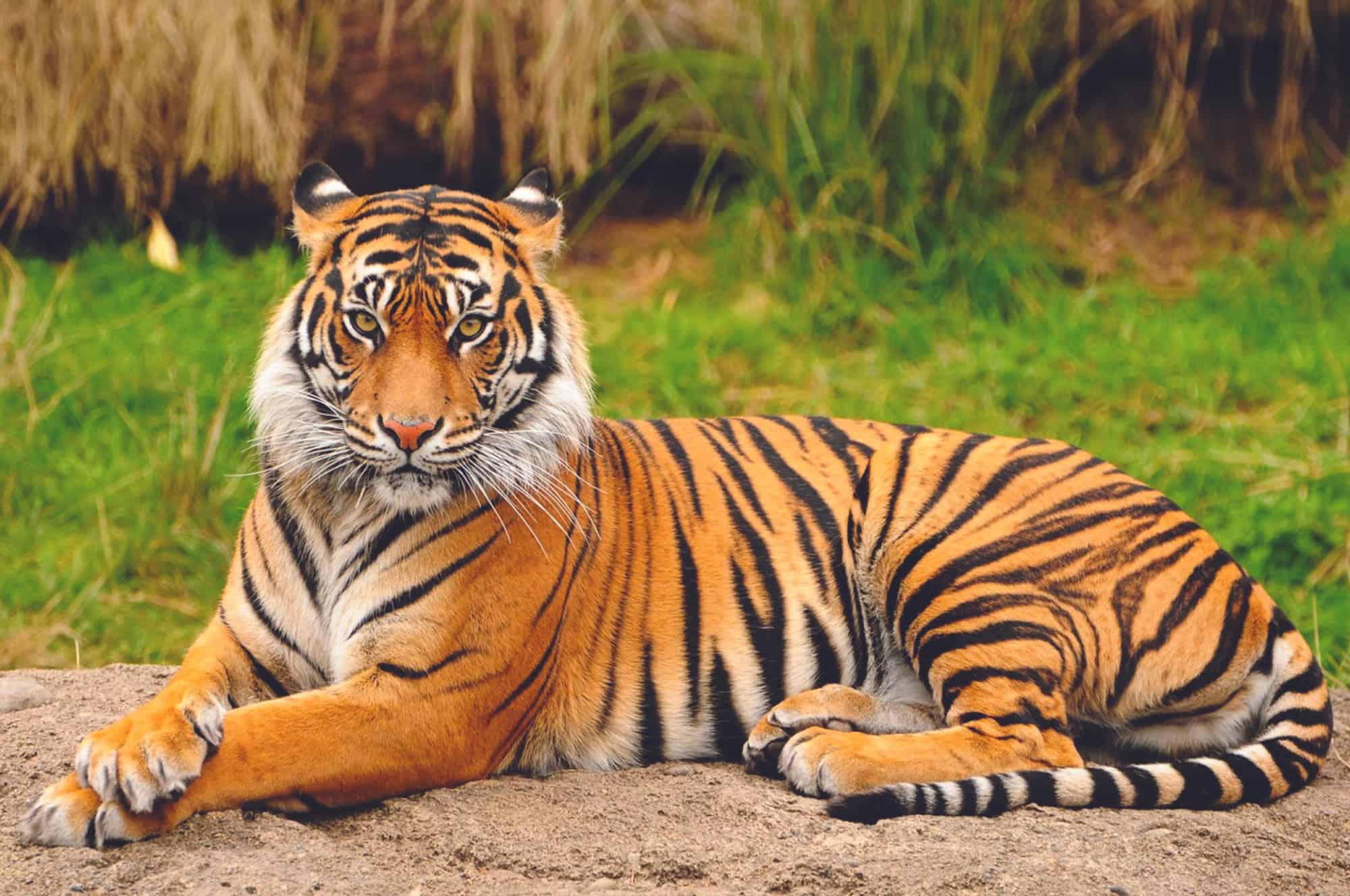
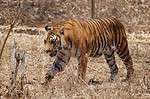
Bengal Tiger India is the global stronghold for wild tigers, with many of the best-known reserves for sightings (e.g., Ranthambore, Bandhavgarh, Kanha, Corbett, Tadoba). Tiger tourism and conservation shape much of India's flagship wildlife experience.
Asian Elephant
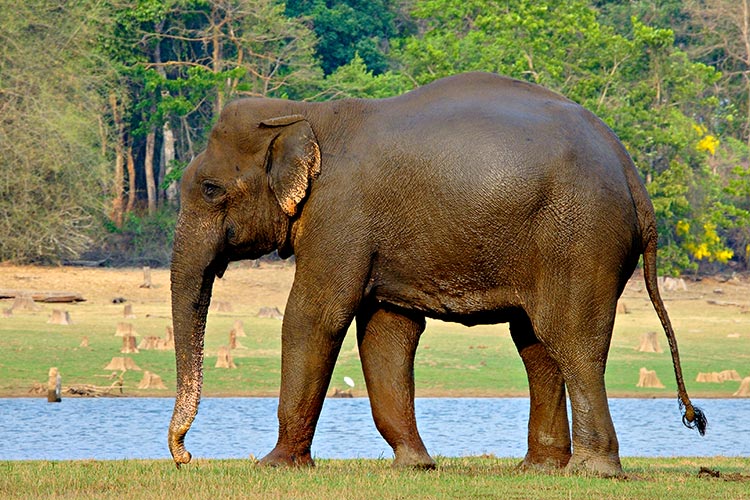
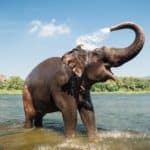
Asian Elephant Large, culturally iconic populations occur across the northeast, the Himalayan foothills, central/eastern forests, and the Western Ghats (e.g., Kaziranga landscape, Nilgiri-Bandipur-Nagarahole complex, Periyar). India is among the world's most important range states for Asian elephant conservation.
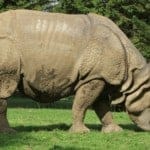
Indian Rhinoceros (Greater One-horned Rhinoceros) India hosts the majority of this species' global population, with world-famous viewing in Assam and West Bengal-especially Kaziranga National Park, Orang, Pobitora, and Jaldapara-often alongside elephants and abundant waterbirds.
Asiatic Lion The only wild population of Asiatic lions survives in India, centered on the Gir landscape in Gujarat. This makes India uniquely important for the species and a major draw for visitors.
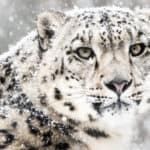
Snow Leopard
Snow Leopard India's high Himalayas and Trans-Himalayan regions (notably Ladakh and parts of Himachal Pradesh and Uttarakhand) offer some of the world's best chances to see snow leopards in dramatic mountain scenery.
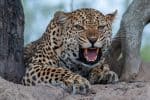
Indian Leopard Leopards are widespread and adaptable across India, from scrub and agricultural mosaics to forests. Well-known viewing areas include parts of Rajasthan (e.g., Jawai), central India, and Western Ghats edges, making leopard encounters a hallmark of Indian wildlife travel.
Sloth Bear A distinctive Indian specialty of dry forests and rocky hills, regularly seen in central India (e.g., Satpura, Kanha region landscapes) and parts of Karnataka. Its unique insectivorous lifestyle and daytime activity in some areas make it a notable safari target.
Gaur (Indian Bison) The world's largest wild bovine is a signature species of Indian forests, especially prominent in the Western Ghats (Bandipur-Nagarahole-Mudumalai-Wayanad) and central India. Large herds are often seen at forest edges and grassland openings.
Dhole (Asiatic Wild Dog) India remains one of the best places globally to see this endangered pack-hunting canid, particularly in well-protected tiger landscapes such as Bandipur-Nagarahole, Kanha, Tadoba, and Periyar.
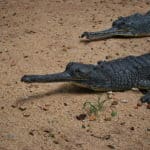
Gharial
Gharial A highly specialized, fish-eating crocodilian of northern river systems; India contains key remaining strongholds and reintroduction sites, with notable viewing along the Chambal River (National Chambal Sanctuary).

Endemic Species

Lion-tailed Macaque Endemic to the rainforests of India's Western Ghats; a flagship of threatened evergreen forest habitats, best searched for in Karnataka and Kerala's protected forest landscapes. Endemic
Nilgiri Tahr Endemic mountain ungulate of the high-elevation grassland-shola mosaic of the Western Ghats (notably Eravikulam and surrounding high ranges), representing one of India's most range-restricted large mammals. Endemic
Indian Giant Squirrel (Malabar Giant Squirrel) Endemic to India's forests (especially the Western Ghats and central India); famous for its large size and striking coloration, often seen in well-wooded parks and reserves. Endemic
Purple Frog A Western Ghats endemic with an unusual burrowing lifestyle; emblematic of India's exceptionally high amphibian endemism and monsoon-driven ecology. Endemic
Jerdon's Courser Critically endangered and extremely localized in India's dry scrub/forest-edge habitats (historically Andhra Pradesh region); a symbol of how unique and vulnerable India's lesser-known ecosystems can be. Endemic
Nicobar Megapode Endemic to India's Nicobar Islands; notable for mound-nesting behavior and dependence on intact island coastal forests. Endemic
Sangai (Brow-antlered Deer, Manipur subspecies) A highly localized, culturally iconic deer of Manipur's floating meadow ecosystem (Keibul Lamjao National Park), often cited as one of India's most distinctive conservation stories. Endemic
Nilgiri Marten A rare mustelid endemic to the Western Ghats' higher-elevation forests, rarely seen and highly prized by wildlife watchers in rainforest-montane mosaics. Endemic

Notable Populations

  • India supports the largest share of the world's wild tigers (often cited as roughly ~70% of the global total), making it the key country for tiger conservation.
  • The world's only wild Asiatic lion population occurs in India (Gir and the wider Gir landscape in Gujarat).
  • India holds the majority of the world's greater one-horned rhinoceroses, with Kaziranga and adjacent Assam floodplain reserves forming a globally significant stronghold.
  • India is among the top global strongholds for Asian elephants, with major populations in the northeast and the Western Ghats.
  • Key remaining breeding populations of the gharial persist in India, with the Chambal River system being one of the most important refuges.
  • The Sundarbans (India-Bangladesh) is the world's largest mangrove ecosystem and a globally important tiger landscape, with India containing a significant portion of this unique habitat.
Protection

Conservation

Primary Threats

  • Conversion and degradation of forests, grasslands, wetlands, and coastal habitats due to agricultural expansion, settlement growth, and industrial land use. High-biodiversity mosaics such as the Western Ghats, Northeast India, and the Terai-Arc face fragmentation, while native grasslands in central and western India are often misclassified as 'wastelands' and converted or planted, impacting species like the Great Indian Bustard and blackbuck.
  • Linear infrastructure (roads, railways, canals, power lines, pipelines) slices through wildlife corridors, raising mortality and barrier effects. Rail strikes on elephants in Northeast India and tigers/leopards on highways, collision/electrocution risk for Great Indian Bustard from transmission lines in Rajasthan/Gujarat, and fragmentation of tiger/elephant corridors in central India are prominent issues; mitigation (overpasses/underpasses, fencing, line marking/burying in critical sites) is expanding but not yet comprehensive.
  • Frequent conflict driven by dense human populations adjacent to protected areas and corridors. Elephants raid crops and damage property across eastern, southern, and northeastern states; leopards and tigers depredate livestock and occasionally cause human injury/death near forest edges; compensation delays, retaliatory poisoning/snaring, and social tensions persist despite improvements in rapid-response teams and insurance/compensation mechanisms in some states.
  • Illegal trade and trafficking affect tigers (skins, bones), pangolins (scales), reptiles, songbirds, and marine species. India is both a source and transit region due to porous borders and high demand across Asia; enforcement successes occur through WCCB-led operations, but online trade, courier routes, and cross-border networks continue to evolve.
  • Local hunting persists in parts of Northeast India and some forested landscapes for subsistence, cultural practices, or opportunistic take, affecting birds and small to medium mammals. While large-scale commercial hunting is illegal, snaring and poisoning for bushmeat or conflict retaliation can seriously impact localized wildlife populations.
  • River and wetland pollution from untreated sewage, industrial effluents, agricultural runoff, and plastic waste degrades freshwater biodiversity (e.g., Ganges river dolphin habitat) and coastal systems. Air and water pollution also affect human health and indirectly conservation capacity; eutrophication and toxic contamination are recurring issues in urban-adjacent lakes and rivers.
  • Warming, shifting monsoon patterns, intensifying heatwaves, and glacial retreat affect Himalayan ecosystems and downstream rivers; sea-level rise and cyclones threaten coastal mangroves and islands (e.g., Sundarbans). Climate stress compounds wildfire risk in some regions, alters phenology and water availability, and can push montane species (including Himalayan endemics and snow leopard prey bases) into shrinking climatic niches.
  • High fishing pressure along India's coasts and in inland waters, including bycatch impacts on turtles, sharks, rays, and marine mammals. Mechanized trawling, illegal/unregulated fishing in some areas, and habitat damage to seagrass/coral-associated fisheries reduce resilience; seasonal bans and gear rules exist but enforcement varies by state and fishery.
  • While large-scale clear-felling is regulated, illegal felling and unsustainable extraction occur in some regions, and forest degradation from fuelwood and small timber demand is widespread near settlements. Selective removal and associated road building reduce canopy quality and disturb sensitive habitats, particularly in biodiverse hill regions and around protected-area buffers.
  • Coal, iron ore, bauxite, limestone, and sand mining cause direct habitat loss, pollution, and increased access/settlement pressure-especially in central India's forested belts and parts of the Eastern Ghats. River sand mining alters channel morphology and harms aquatic habitats; mining-related infrastructure and human influx further fragment landscapes.
  • Expansion and intensification (including irrigation, monocultures, and pesticide use) convert natural habitats and simplify surrounding matrices. In the Indo-Gangetic plains and semi-arid zones, agriculture replaces grasslands/wetlands and increases human-wildlife conflict; pesticide exposure can affect raptors and scavengers, and irrigation reshapes river hydrology.
  • Rapid growth of cities and peri-urban sprawl consumes wetlands, urban forests, and coastal commons, increasing light/noise pollution and fragmenting remaining habitat. Urban edges create conflict hotspots with leopards (e.g., around some forest parks and sugarcane belts) and degrade critical urban wetlands used by migratory birds.
  • Dams, embankments, river interlinking proposals, wetland drainage, and floodplain alteration modify hydrology and sediment regimes, affecting riverine species (e.g., dolphins, gharial), fisheries, and wetland-dependent birds. Fire suppression or inappropriate afforestation can also shift grassland-forest dynamics, degrading native open ecosystems.
  • Overuse of fuelwood, fodder, groundwater, and non-timber forest products near densely populated forest fringes degrades habitats and reduces regeneration. Water scarcity and declining groundwater in many regions intensify pressure on wetlands and riparian zones, with cascading effects on wildlife and human livelihoods.
  • High visitor pressure in popular parks, pilgrimage routes through sensitive areas, unregulated tourism infrastructure, and off-road traffic disturb wildlife and increase waste. In the Himalayas and desert protected areas, disturbance can disrupt breeding and movement, while in tiger reserves excessive vehicle density can affect animal behavior if not managed carefully.
  • Spillover between domestic animals and wildlife occurs where grazing and free-ranging dogs overlap with protected areas. Risks include canine distemper and rabies affecting carnivores, bovine diseases affecting wild ungulates, and localized outbreaks (e.g., elephant health issues) that are harder to monitor across wide-ranging populations.
  • Invasive plants such as Lantana camara, Prosopis juliflora, Parthenium, and water hyacinth transform forest understories, grasslands, and wetlands, reducing forage and altering fire regimes. Invasives are a major management burden in many tiger reserves, dry forests, and urban-adjacent wetlands.
  • Small or isolated populations face reduced gene flow where corridors are severed-relevant for tigers in fragmented central Indian landscapes, Asiatic lions concentrated in and around Gir, and some high-altitude or island populations. Connectivity projects exist, but ongoing fragmentation elevates inbreeding and demographic vulnerability in certain subpopulations.
Visit

Wildlife Tourism

India is one of the world's most diverse wildlife destinations, where tiger reserves, elephant landscapes, Himalayan high-altitude habitats, and vast wetlands sit alongside rich culture and strong conservation institutions. Wildlife tourism is economically important: it sustains thousands of local jobs (guides, drivers, lodge staff, naturalists), funds park management through entry/jeep fees, and supports community enterprises around reserves; flagship species like the Bengal tiger, Asian elephant, one-horned rhinoceros, Asiatic lion, snow leopard, and abundant birdlife drive year-round demand. Modern wildlife tourism grew alongside India's protected-area expansion and conservation milestones-most famously Project Tiger (launched 1973), which helped stabilize and recover tiger populations in multiple landscapes. Accessibility is generally good: many key parks are reachable by short flights or overnight trains from major cities (Delhi, Mumbai, Bengaluru, Kolkata, Chennai), with a wide range of stays from budget forest rest houses to high-end eco-lodges. Practical notes for planning: many parks close during the monsoon (roughly July-Sept, varying by state/park); vehicle entry is often permit-based with limited quotas; and wildlife viewing is best with early starts and a naturalist/guide, especially in tiger reserves and birding hotspots.

Best Time to Visit
  • General rule: the dry season (Oct-Jun) offers the best visibility; peak mammal viewing is often Mar-May near water.
  • Oct-Nov (post-monsoon freshness): Lush landscapes, pleasant temperatures, strong bird activity. Great for wetlands (migratory arrivals begin), forest mammals active in cooler weather, and photography with greener backdrops. - See: early winter migrants at Bharatpur/Keoladeo & Chilika; elephants and gaur active in South India; good general tiger chances where roads reopen.
  • Dec-Feb (cool, prime birding & comfortable travel): Best months for migratory waterfowl and raptors; comfortable jeep safaris in central India; clearer skies for Himalayan views. - See: thousands of wintering birds (geese, ducks, waders) in north Indian wetlands; bar-headed geese, cranes, storks; good tiger/leopard sightings with longer daytime activity.
  • Mar-Apr (rising heat, excellent big-cat viewing begins): Water sources shrink and animal movement concentrates; vegetation thins. - See: strong tiger/leopard probabilities in central Indian forests; dhole (wild dogs) in some reserves; increased chances of sloth bear in dry deciduous habitats.
  • May-Jun (hottest, often the best for tigers-plan carefully): Peak big-cat viewing in many tiger reserves due to heat-driven water dependency; fewer tourists in some areas but conditions can be intense. - See: high tiger activity around waterholes; elephant herds and gaur at forest edges; dramatic dry-season behavior. (Plan midday rest and early/late drives.)
  • Jul-Sept (monsoon; many parks closed): Some wildlife experiences shift rather than stop-focus on open parks/regions, rainforests, and marine wildlife. - See: lush Western Ghats biodiversity where access is possible, peak amphibian/reptile activity; whale shark season off parts of Gujarat (timing varies); some birding can be superb between showers. Targeted highlights by region:
  • Himalayas (Ladakh/Himachal/Uttarakhand): Snow leopard trips are typically best in winter (Jan-Mar) when cats descend to lower valleys; high-altitude birding and general trekking wildlife improve in summer (May-Sept) once passes open.
  • Northeast (Assam/Arunachal): Nov-Apr is generally best for rhino/elephant and river safaris; monsoon floods can disrupt access mid-year.
  • Coasts (Goa/Karnataka/Tamil Nadu/Kerala): Oct-Mar is best for comfortable boat/estuary wildlife; some turtle nesting/sea bird opportunities vary locally.

Top Wildlife Experiences

  • Track Bengal tigers on dawn and dusk jeep safaris with a trained naturalist in central India-focus on alarm calls, fresh pugmarks, and waterhole 'stakeouts' during the hotter months.
  • Do an elephant-and-rhino-focused safari in Assam's floodplain grasslands: combine early-morning drives with a river/boat segment to spot riverine birds, otters, and (in some stretches) river dolphins.
  • Join a specialist birding circuit in winter (Dec-Feb): spend sunrise to mid-morning in a major wetland photographing cranes, storks, ducks, and raptors; add an afternoon hide session for close, low-angle shots.
  • Search for Asiatic lions on open-gypsy drives, then stay out for a late-afternoon golden-hour session focused on pride behavior, cubs at play, and hyena/jackal activity around the periphery.
  • Take a high-altitude winter expedition to look for snow leopards: scan cliff lines with spotting scopes, track signs in snow, and learn mountain ecology and local culture in remote valleys.
  • Try a night wildlife experience where permitted (buffer zones/private reserves): spotlight for small cats (jungle cat, leopard cat in some regions), civets, porcupines, owls, and nocturnal herps with an expert spotter.
  • Combine a walking/nature trail (in designated zones) with a canopy or river-edge viewpoint: focus on tracks, scat, insects, and plant ecology-excellent for photographers and families wanting more than big-cat chasing.
  • Go on a Western Ghats rainforest trek and canopy/bird walk to find endemics: hornbills, laughingthrushes, Nilgiri tahr (in high grasslands), plus frogs and butterflies after rains.
  • Plan a marine wildlife day: a guided boat trip for dolphins (species vary by coast), pelagic birding, and (season/location dependent) opportunities like whale shark viewing or sea turtle nesting watches with responsible operators.
  • Add a conservation/tribal-community experience: visit a rescue/interpretation center or community-run eco-tourism initiative, learn about human-wildlife coexistence, and support locally guided safaris and handicrafts.

Safari Types Available

  • 4x4 jeep/gypsy game drives (most common in tiger reserves; typically morning and afternoon slots)
  • Canter/bus safaris (shared larger vehicles in some parks; good for budget and high-demand seasons)
  • Boat safaris (rivers, reservoirs, mangroves, lakes-ideal for birds, crocodiles, otters, riverine wildlife)
  • Walking safaris/nature walks (in permitted zones/buffer areas with armed/authorized guides; excellent for tracking and ecology)
  • Elephant-back patrolling/viewing (limited/regulated; availability and ethics vary by park-choose operators aligned with animal welfare standards)
  • Hides/photography blinds at waterholes or salt licks (controlled setups for low-impact viewing and photography)
  • Night safaris in buffer zones/private reserves (where legal; focused on nocturnal mammals, owls, reptiles)
  • Birding-focused safaris (specialist-guided, often with dedicated vehicles/boats and flexible timing)
  • High-altitude wildlife expeditions (snow leopard, Himalayan fauna; usually on foot with local trackers and spotting scopes)
  • Marine/estuary wildlife cruises (dolphin watching, pelagic birding, mangrove exploration; seasonally variable)
Fun Facts

Did You Know?

India is the only country with wild populations of both lions and tigers today (Asiatic lions in Gir; Bengal tigers across multiple landscapes).

One of India's biggest leopards hot spots sits beside a megacity: Sanjay Gandhi National Park lies within Mumbai's urban area and is widely cited as having one of the highest leopard densities recorded near a major city.

A "new" frog made global headlines in modern times: the Purple Frog (Nasikabatrachus sahyadrensis), described in 2003 from the Western Ghats, spends most of its life underground and surfaces briefly to breed during monsoon rains.

India's only wild equid lives in a salt desert: the Indian wild ass (khur) survives in the Little Rann of Kutch, an extreme landscape of seasonal saline flats and scrub.

India has apes-but only in the far northeast: hoolock gibbons are India's only apes, represented by two species (Western hoolock gibbon and Eastern hoolock gibbon) found in forests of states such as Assam and Arunachal Pradesh.

Home to the world's largest wild tiger population: India's 2022 national estimate reported 3,167 tigers (more than any other country).

The only place on Earth where Asiatic lions live in the wild: all wild Asiatic lions occur in and around Gir, Gujarat (a single global wild population).

Kaziranga (Assam) is the single most important stronghold for the greater one-horned rhinoceros: it holds roughly two-thirds of the world's population, and the species reaches some of its highest recorded densities there.

India has the world's largest Asian elephant population: the 2017 "Elephant Census" estimated about 27,312 elephants nationwide (the biggest total for the species).

The Sundarbans (India + Bangladesh) is the world's largest mangrove forest system-and it supports the best-known "mangrove tigers," a rare case of tigers living in tidal mangrove habitat.

In terms of its size, population, and even wildlife, India is a land of incredible extremes. Some of the largest (and even some of the smallest) wildlife on the planet can be found across India’s vast array of rich mountains, verdant grasslands, luscious tropical jungles and forests, dense wetlands, and arid deserts.

The country’s most prominent regions include the Himalayas, the Indo-Gangetic plain (named after the two northern rivers against which it’s bound), the Western Ghats mountain range, and the Deccan Plateau toward the south.

Watch on YouTube

The Official National (State) Animals in India

As a symbol of strength and power, the Bengal tiger is the official national animal of India. Other important symbols include the Indian elephant and the Indian peacock, which is the national bird of India, symbolizing royalty and good luck.

The Bengal Tiger was not always the national animal of India. In fact, prior to 1973, it was the lion. Why did it change? Bengal tigers had large populations in India prior to 1900. But between 1900-1973, their numbers fell drastically due to poaching. In an effort to bring its numbers back, Project Tiger was launched in April 1973, and as a springboard, the Bengal Tiger was declared the national animal of India.
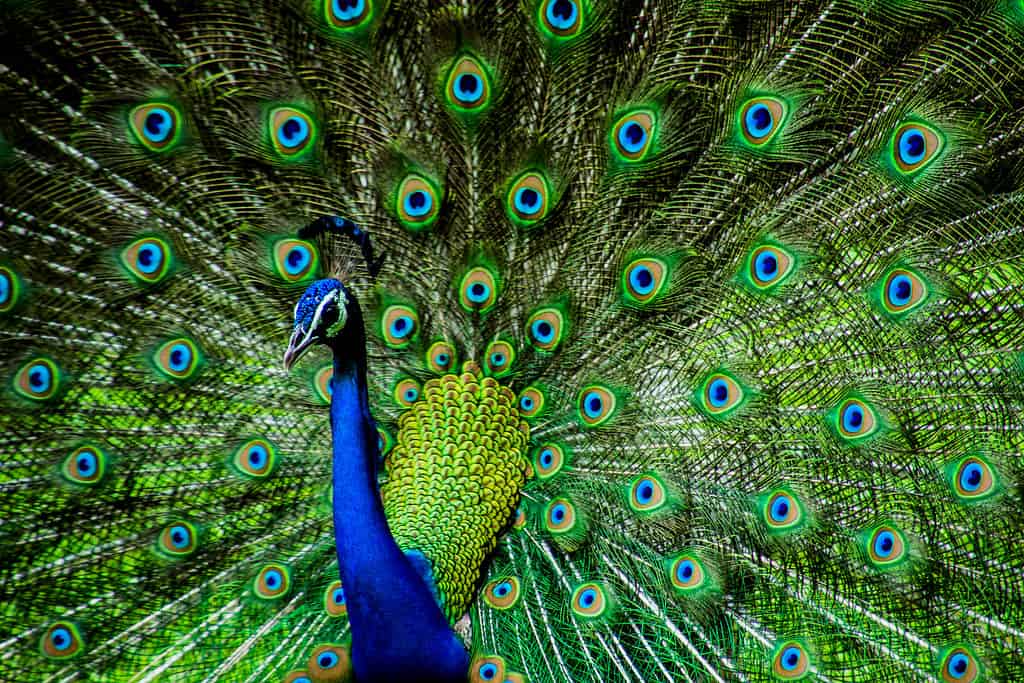
Indian Male Peacock

The Indian Peacock is the national bird of India, symbolizing royalty and luck.

Where to Find the Top Wild Animals

Many people automatically think of the continent of Africa as the go-to place for safaris. But the country of India features a rich habitat for wild animals to thrive, and since 1972, efforts have been made not only in the area of conservation but also to build on India’s reputation as a great wildlife safari destination.

The state of India has set aside 500+ wildlife sanctuaries which cover over 74,425 square miles and a hundred national parks to protect its wildlife. The largest and most popular parks are listed below:

The Most Dangerous Animals in India Today

India is home to a number of dangerous animals. While some wild animals are dangerous by sheer size, strength, predatory skills, or deadly venom, others are dangerous for different reasons. Unfortunately, India is a place where its inhabitants can become victims of wild animal attacks on a daily basis. Surprisingly, one study conducted between April 2016 – March 2017 revealed that of a total of 7,556 deaths due to animal attacks, 80% of those deaths were attributed to dog bites (whether the deaths were because of the attacks or as a result of contracting rabies from the dogs is not clear). 5% of the deaths came from snake bites, 3% from monkey attacks and the rest included attacks from wild boars, tigers, leopards, jackals, elephants, etc. There were even cases of deaths from domestic bull or cattle attacks and rat bites.

In general, these animal species are highly dangerous and responsible for many of the deaths of humans in India:

  • King Cobra – Native to the forests and jungles of eastern India, the king cobra can deliver a powerful toxin that affects the victim’s central nervous system. Symptoms include pain, vertigo, and even paralysis. Death can sometimes occur in as little as 30 minutes.
  • Saltwater Crocodile – As the largest living reptile in the world, the saltwater crocodile can grow up to 20 feet long. Its world-class bite and tendency to treat humans as prey mean that this crocodile should be avoided at all costs. Unfortunately, many people who wander into their territory every year are vulnerable to attack.
  • Russell’s Viper – As one of the most dangerous and fearsome snakes in the world, Russell’s viper causes thousands of death every year. Symptoms of its bite include pain, swelling, dizziness, vomiting, and even kidney failure. Since it feeds on rodents and lizards, this snake will often wander into human territory.
  • Indian Red Scorpion – The toxin of this scorpion will attack the cardiovascular and pulmonary systems, causing a surprisingly high incidence of death. Symptoms can include vomiting, sweating, pain, convulsions, breathlessness, and an abnormal heart rate.
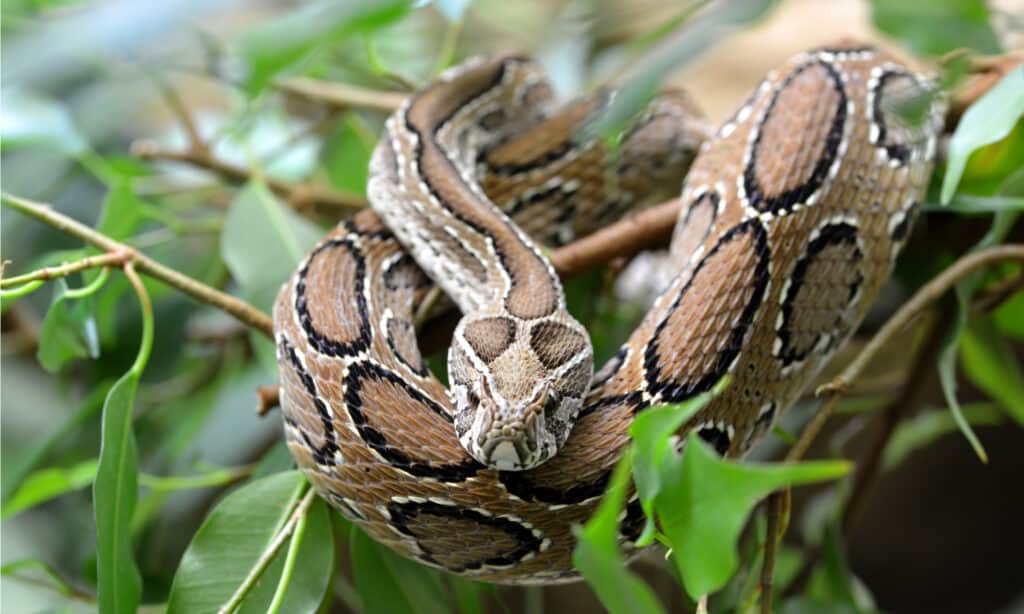
Deadliest Snakes - Russell's Viper

Rusell’s vipers have a mortality rate of around 2.6% in India.

Endangered Animals in India

India contains some of the largest and most unique wildlife on the planet, but a lot of this diversity is now in danger of becoming extinct from human activity. There are multiple animals that are endangered, some being the snow leopard, the Nilgiri tahr, the Kashmiri red stag, the blackbuck, and the one-horned rhino.

Below is a list of other endangered Indian animals with greater details of their plight:

  • Indian Elephant – This subspecies of the Asian elephant is endemic to grasslands and forests throughout South Asia. But as habitat loss has gnawed away at the elephant’s natural territory, the numbers have fallen precipitously. Only about 30,000 of them still remain in India.
  • Bengal Tiger – This subspecies of the tiger once roamed the forests, grasslands, and mangroves of India in much larger numbers. But poaching and habitat loss have caused numbers to decline, so it’s now classified as endangered. Only about 2,000 of them remain in India out of a total population of about 3,000 throughout the larger region.
  • Dhole – Also known as the Asian wild dog, this close relative of the wolf is endemic to mountains and alpine forests, and meadows. Like the wolf, it was deliberately persecuted by humans both for sport and to prevent them from killing livestock. It’s now extinct from large parts of its former territory.
  • Asiatic Lion – This subspecies of the lion are less well-known than its African brethren. It once inhabited a huge swath of territory across Western Asia, but as a result of deliberate hunting and some habitat loss, this species is now restricted to the Indian state of Gujarat in the western part of the country.
  • Indian Vulture – The Indian vulture experienced a sharp and sudden decline between 2000 and 2007 due to kidney failure from the accidental ingestion of pharmacological drugs that are usually administered to livestock. Because vultures help keep the environment free of carcasses, their decline has caused disease to spread more rapidly. Conservationists are attempting to breed them in captivity, but their slow reproduction is a hindrance to their rehabilitation. It’s now in danger of becoming extinct.
  • Lion-tailed Macaque – This endangered Old World monkey, which sports an elegant silver-white mane and long tufted tail, is endemic to the Western Ghats mountain range of South India. Only a few thousand remain in the wild.
  • South Asian River Dolphin – This freshwater dolphin species is endemic to the Indus River of Pakistan and the Ganges River of India, Nepal, and Bangladesh. It is estimated that less than 5,000 remain, possibly due to pollution, dam construction, and other habitat changes.
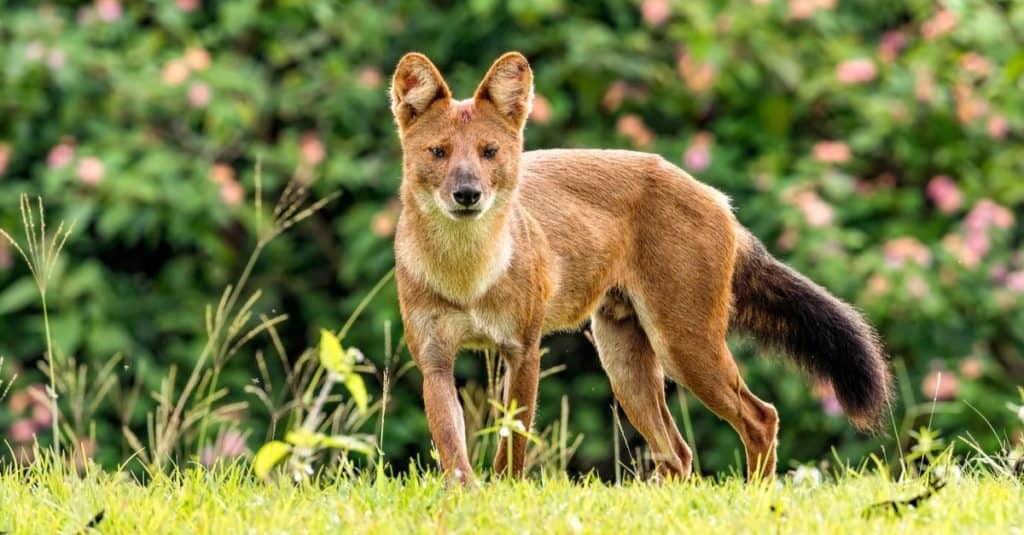
Wild Dog Breeds: Dhole

The dhole, persecuted by humans both for sport and to prevent them from killing livestock, is now extinct from much of its former Indian territory.

Types of Birds in India

Around 1,300 species of birds are native to India, 80 of which are endemic. The Ranganathittu Bird Sanctuary is the largest bird sanctuary in the state of Karnataka, and one of India’s best birding locations.

You’ll find a wide variety of birds including pied kingfishers, long-legged spoonbills, spotted owls, and painted storks. You can see resident birds year-round, or many species of migratory birds utilizing the sanctuary. The best time to see both resident and migratory birds are November to February.

The Bharatpur bird sanctuary, also known as Keoladeo National park, is famous for bird watching. Over 360 species of birds inhabit this sanctuary’s woodlands, grasslands, swamps, and wetlands. It is famous for critically endangered Siberian cranes. You can also find Indian peafowls, flamingos, pelicans, vultures, Indian grey hornbills, and so much more.

The best time to see resident and migratory birds is between October to March.
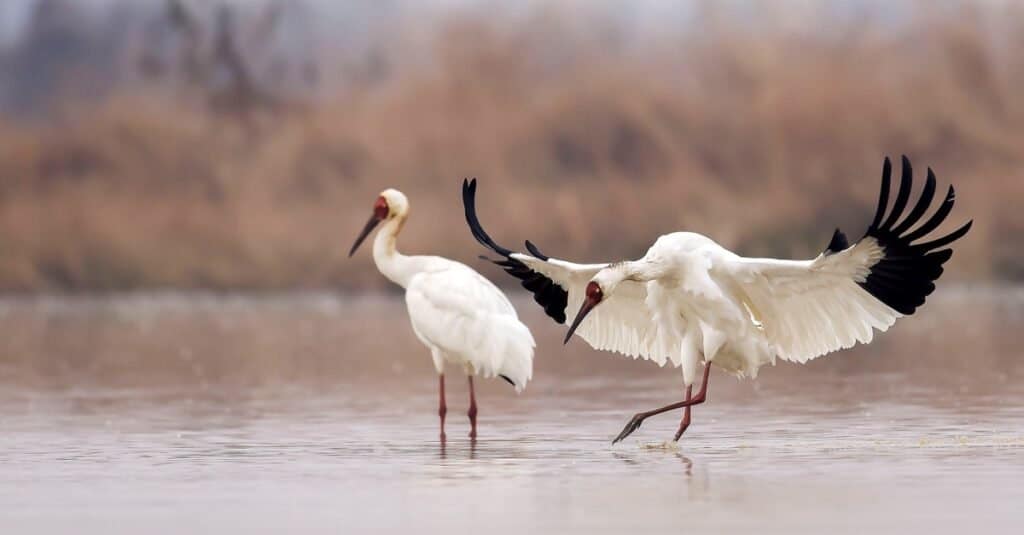
Types of Crane birds - Siberian Crane

The Bharatpur bird sanctuary, also known as Keoladeo National Park, is home to many endangered bird species like Siberian Cranes.

Snakes Native to India

There are 60 species of venomous snakes in India. It is famously home to a group of venomous snakes known as “The Big Four”. The Indian cobra, Russell’s viper, common krait, and saw-scaled viper are responsible for the deadliest snake bites in the country. Experts have recently included a fifth venomous snake that contributes to the most mortality rates, the hump-nosed pit viper.

There are many types of snakes in India’s diverse habitats other than The Big Four. Other popular animals in India include:

  • Indian Rat Snake: Also known as the Oriental rat snake, they are common in a wide range of habitats throughout India. These semiarboreal snakes are long and slender.
  • King Cobra: The longest venomous snake in the world, reaching lengths of up to 18 feet long. They are found in Northern India in forests and agricultural areas.
  • Indian Python: They go by several common names, including black-tailed python, Indian rock python, and Asian rock python. These non-venomous snakes live in a variety of tropical habitats in India.
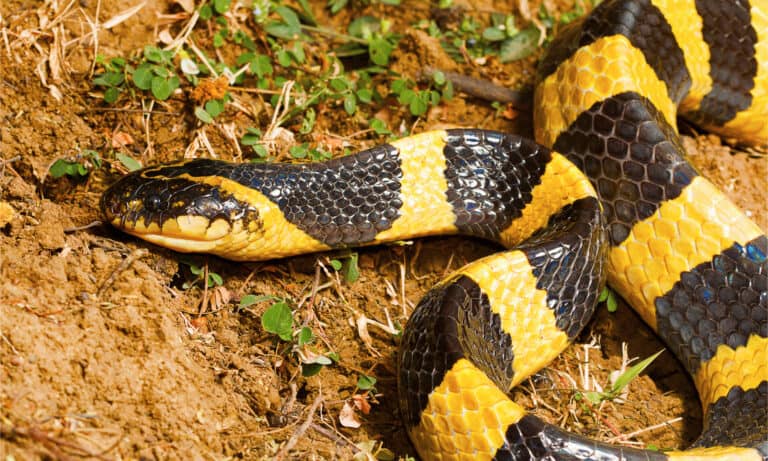
  • Checkered Keelback: Aggressive semi-aquatic snakes found near freshwater sources.
  • Brahminy Blind Snake: The smallest snake in India, and one of the smallest in the world. They live underground and are similar in appearance to earthworms.
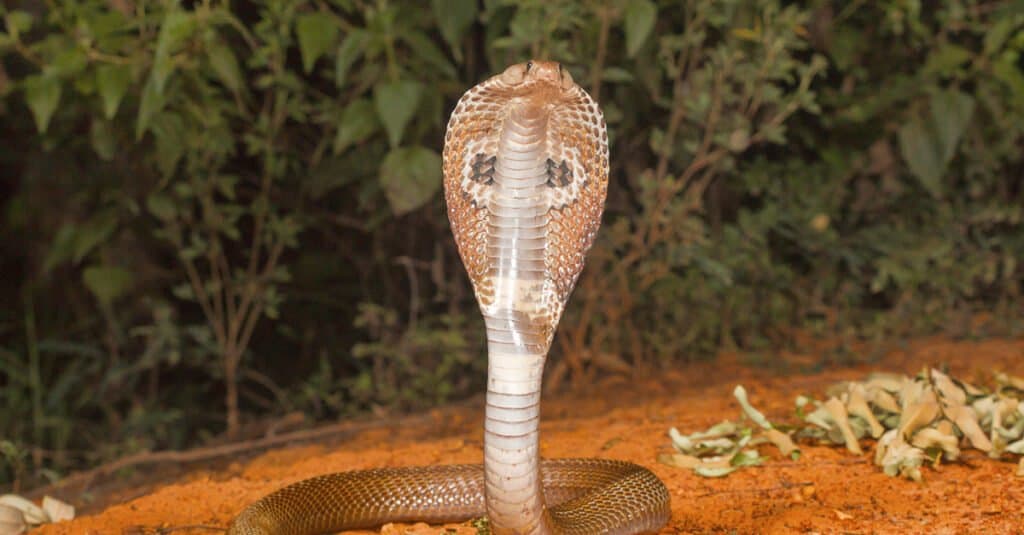
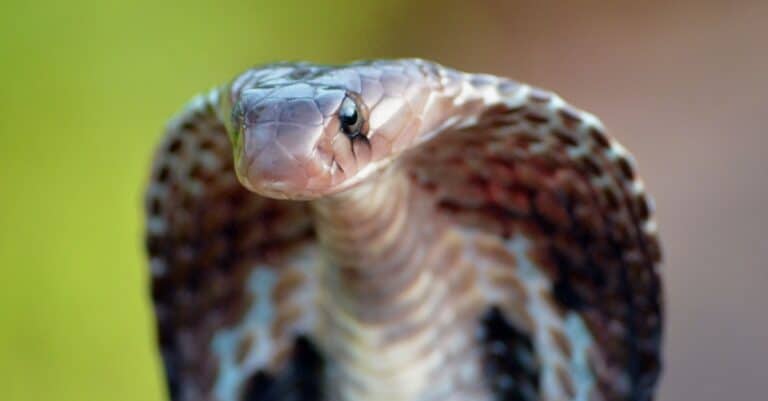
The Spectacled cobra is one the big four venomous species that inflict the most snakebites on humans in India. Many specimens exhibit a hood mark with two circular patterns connected by a curved line, evoking the image of spectacles.

The venomous King Cobra is a native snake species of India.

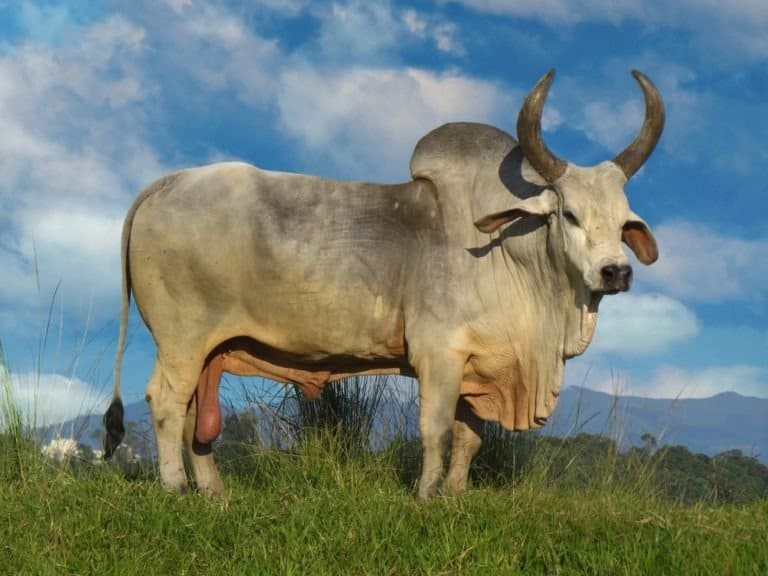
The 6 Largest Animals Indian Animals

India is home to some truly large animals. Below is a list of the largest land animals you’ll find in India.

The 6 Rarest Indian Animals

If you were to travel to India, you may want to put these rare animals on your bucket list to seek out at a wildlife sanctuary or on a safari.

  • Red Panda: This bamboo-loving animal inhabits temperate forests in the Himalayas at altitudes between 1,800 and 4,000 meters. It has fiery red fur and resembles a raccoon more than a panda in its features.
  • Asiatic Lion: This species of lion only numbers 600 in the wild, isolated in the Gir Forest of Western India, their last remaining natural habitat.
  • Nilgiri Tahr: This goat species is not only rare to see in the wild–it’s also the state animal in the Indian state of Tamil Nadu.
  • Snow Leopard: The snow leopard sports one of the most beautiful coats of any member of the cat family, and well worth viewing. A couple of places for viewing are Dibang Wildlife Sanctuary (Arunachal Pradesh), Himalayan National Park (Himachal Pradesh), and Nanda Devi National Park (Uttarakhand).
  • Black Buck: Another state animal (of Punjab, Haryana and Andhra Pradesh) is the Black Buck, also known as the Indian antelope. It sports spiraling horns and unique colorations–a site to behold.
  • Great Indian Bustard: This would be one of the rarest birds to see in India, as there’s only 150 recorded left in the wild there. They prefer a dry, grassland habitat, and are endangered due to that habitat loss.
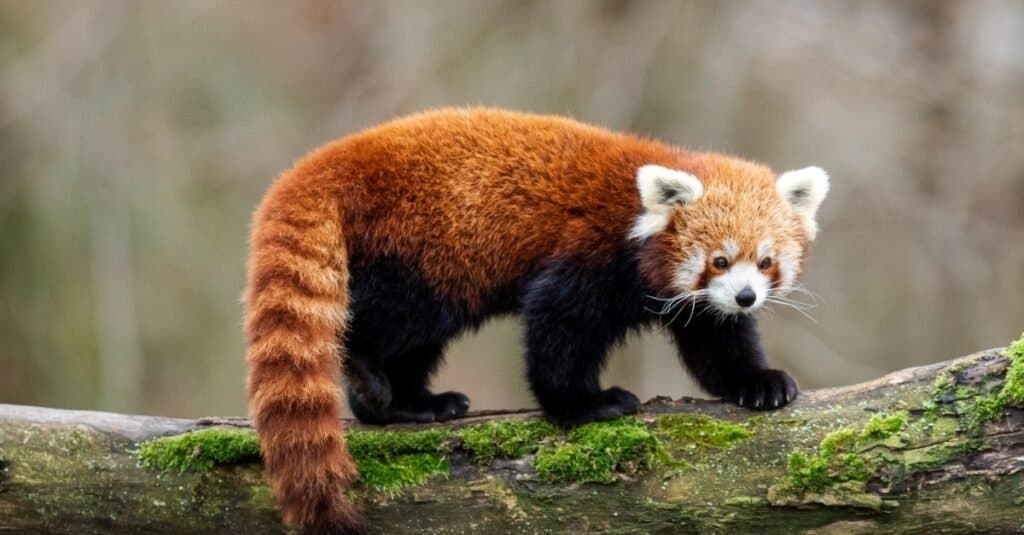
Red Animals - Red Panda

The red panda is a rare Indian animal native to the Himalayas.

National Parks in India

Are you looking for an adventurous way to explore the country? Check out the many beautiful national parks in India! Discover dozens of Bengal tiger reserves, traverse areas that inspired The Jungle Book, and relax at luxury resorts near lush jungles.

More on Animals in India

  • India’s Largest Butterfly
  • 6 Extinct Species in India
  • Discover the Most Populated Cities In India

Animals Found in India

526 species documented in our encyclopedia

Thank you for reading! Have some feedback for us?