
Quick Take
- The dog in the 1983 Cujo film wasn't always a dog, and the reason why reveals just how uncontrollable Saint Bernards can be on set. See how Cujo was filmed →
- Saint Bernards were never actually used the way their most iconic image suggests, and the truth behind the legend is surprisingly mundane. Explore the real breed history →
- Cujo's breed choice wasn't random. There's a specific physical reason this dog becomes something no average person could survive. See why size matters →
- Saint Bernards make devoted family pets, but there's one dealbreaker trait that catches most owners completely off guard. Meet the dealbreaker trait →
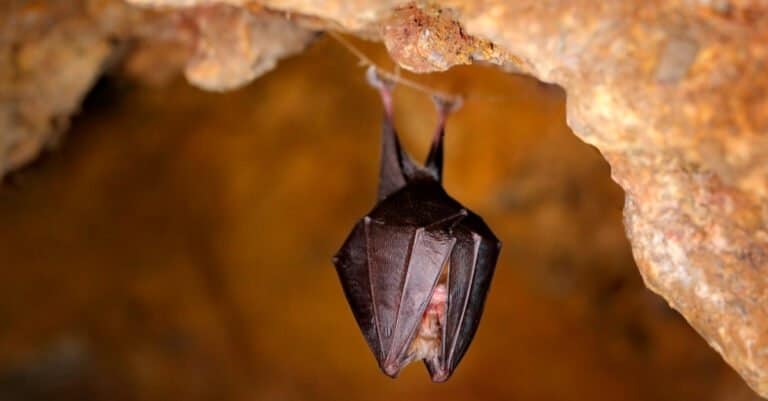
Stephen King’s 1981 novel Cujo, adapted to film in 1983, is the story of Cujo, a sweet-tempered family dog that contracts rabies after being bitten by a bat. Rabies turns Cujo into a monster that terrorizes a small Maine town. In both the book and the movie, Cujo is a Saint Bernard. Saint Bernards are typically gentle, playful, and protective. Although any dog can become aggressive after contracting rabies, one of the reasons Cujo is so terrifying is because of his size. Continue reading to learn more about Saint Bernards, including their origins, size, and Hollywood presence.
What is a Saint Bernard?
The Saint Bernard originated in the Western Alps along the Italian-Swiss border, from ancient mastiff-type dogs brought to the region by Roman armies. Monks initially kept them as watchdogs and companions.
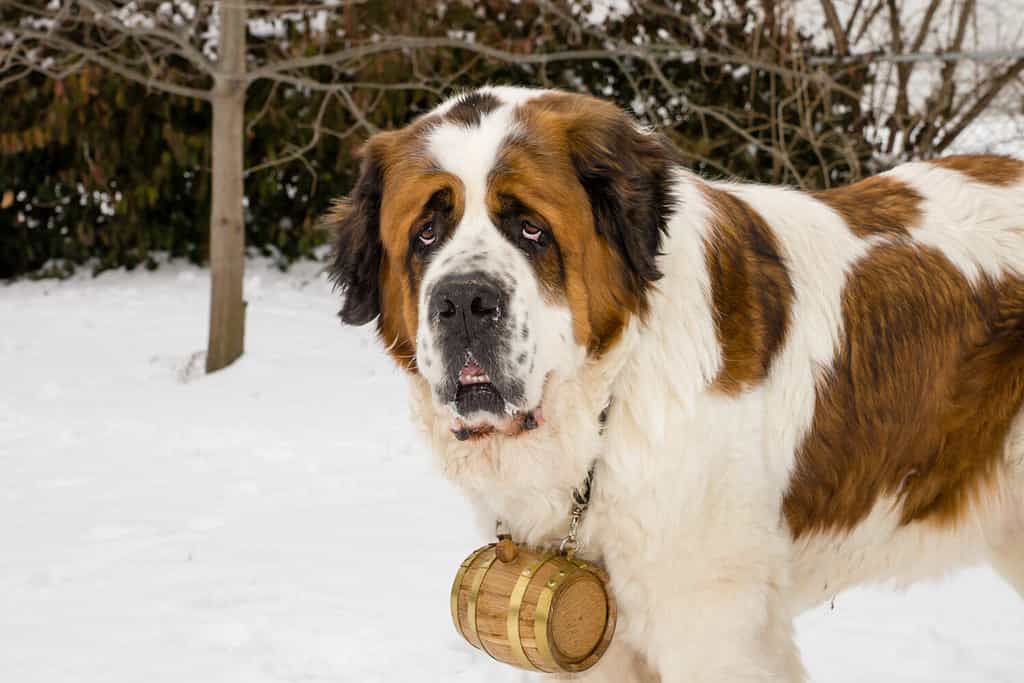
The legend of the brandy cask stems from an 1820 painting. While Saint Bernards were used as search-and-rescue dogs starting in the 17th century, they never actually carried casks of brandy. The last recorded instance of a Saint Bernard being used in an alpine rescue operation was in 1955.
©Becky Swora/Shutterstock.com
However, the dogs soon transitioned into their most famous job as search and rescue animals, using their acute sense of smell and broad chests to locate travelers buried under avalanches and to clear pathways through deep snow. Beyond their legendary lifesaving work, people in the Swiss countryside also used these massive, powerful dogs to pull small carts and herd cattle.
Why Is Cujo So Terrifying?
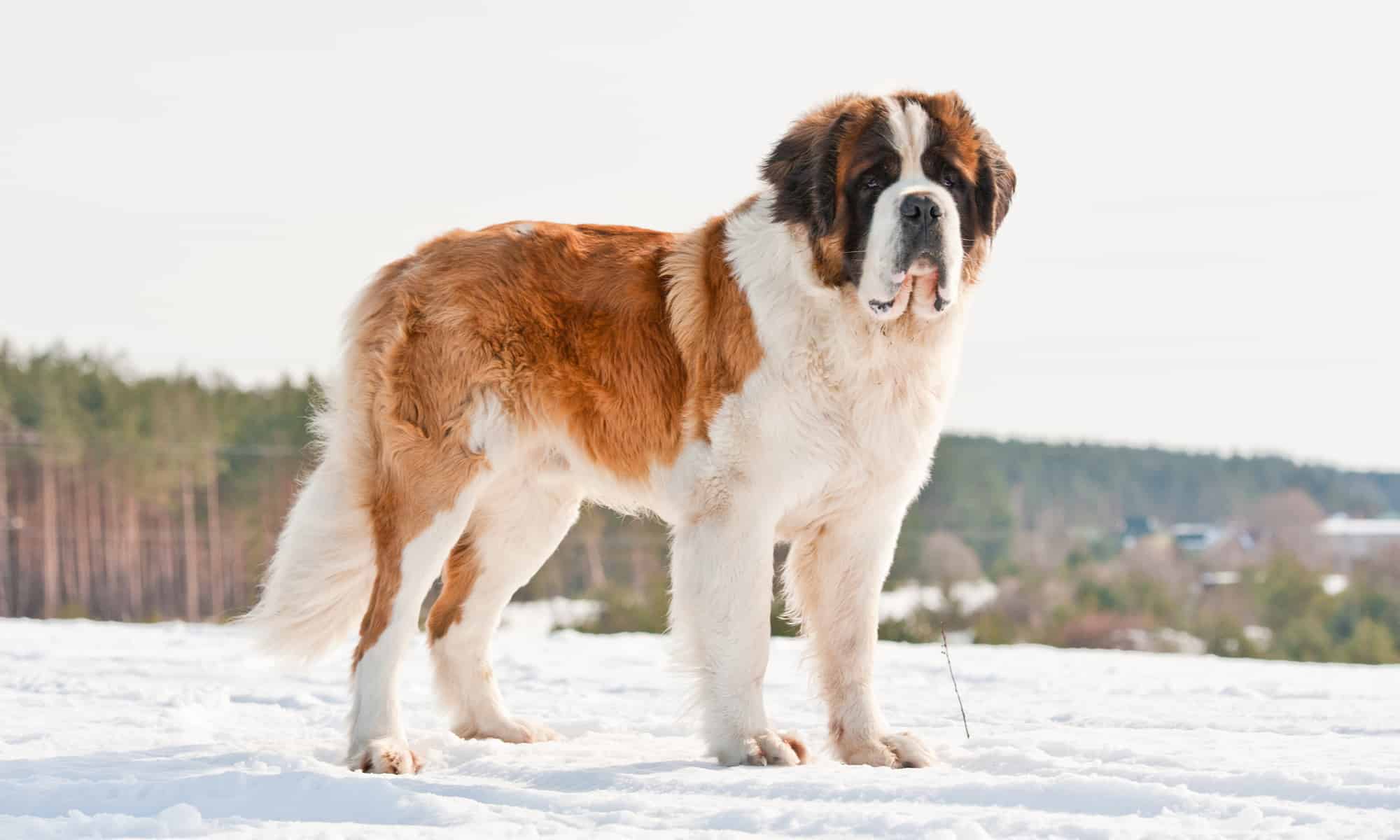
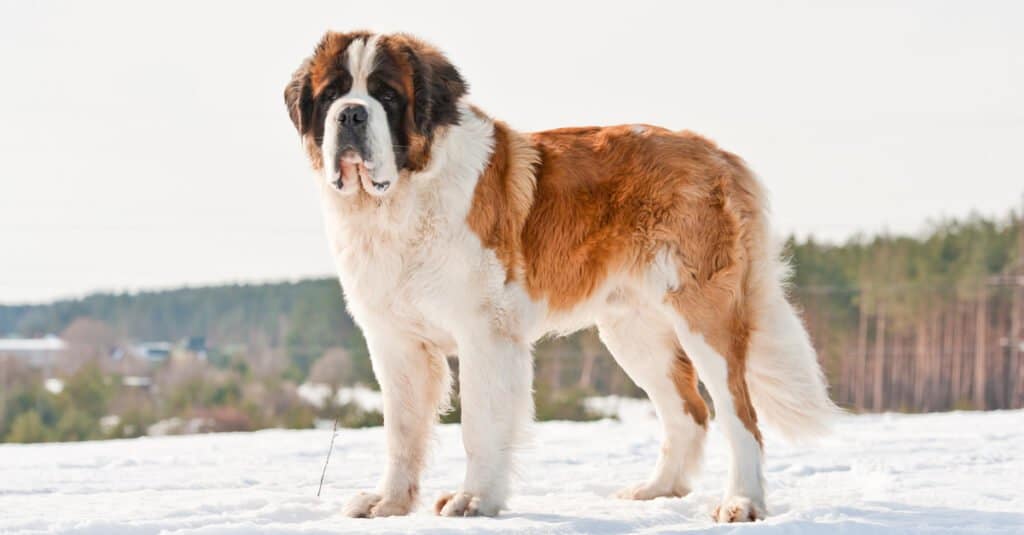
The sheer size and physical power of a Saint Bernard can transform an affectionate companion into a nightmarish, insurmountable obstacle. The average male Saint Bernard weighs 140 to 180 pounds and stands 28 to 30 inches tall at the shoulder. Females are slightly smaller, with an average weight of 120 to 140 pounds and a height of 26 to 28 inches. When healthy, this massive frame makes them gentle giants. But when a Saint Bernard is infected with rabies, it possesses far more mass and brute strength than the average person can fight off.

The Saint Bernard is among the largest dog breeds in the world, with only a few breeds, such as the English mastiff (heaviest) and Great Dane (tallest), rivaling or exceeding its size.
©Aneta Jungerova/Shutterstock.com
Was the Dog in Cujo a Real Dog?
Because Saint Bernards can be difficult to train, the filmmakers used several methods and multiple animals to bring Cujo to life. The role of Cujo in the film was played by several Saint Bernards and, for some scenes, by a human in a dog costume. The core dogs were highly trained for specific tasks: one would bark on command, another was trained to lurch, and another ran predetermined routes.Stuntman Gary Morgan wore a dog costume to safely film some of the movie’s most aggressive and complex attack scenes. Mechanical dogs designed to look like Saint Bernards were also used.
How Do Dogs Get Rabies?
Before a rabies vaccine was available (circa 1920s), dogs typically became infected with rabies from other dogs. Rabies is a virus, and once symptoms are present, there is no cure.
Through the mid-20th century, pet dogs accounted for the majority of rabies cases in the U.S. The story of Cujo is set in 1980. While highly effective rabies vaccines were standard practice, some pet owners in rural areas still skipped routine veterinary care, which set up the tragic chain of events after Cujo is bitten by a rabid bat.
Vaccinated dogs are extremely unlikely to contract rabies.
Thanks to widespread vaccination, the CDC Rabies Status Registry recognizes the U.S. as free of dog-to-dog rabies transmission, officially declaring in 2007 that dog-to-dog transmission of the canine rabies variant had been eliminated nationwide.
©Rita_Kochmarjova/Shutterstock.com
Are Saint Bernards Good Family Dogs?
Generally, Saint Bernards are gentle giants that possess a remarkably patient, affectionate, and loyal temperament. They combine an imposing stature with a deeply loving nature, making them devoted companions who bond closely with their families.
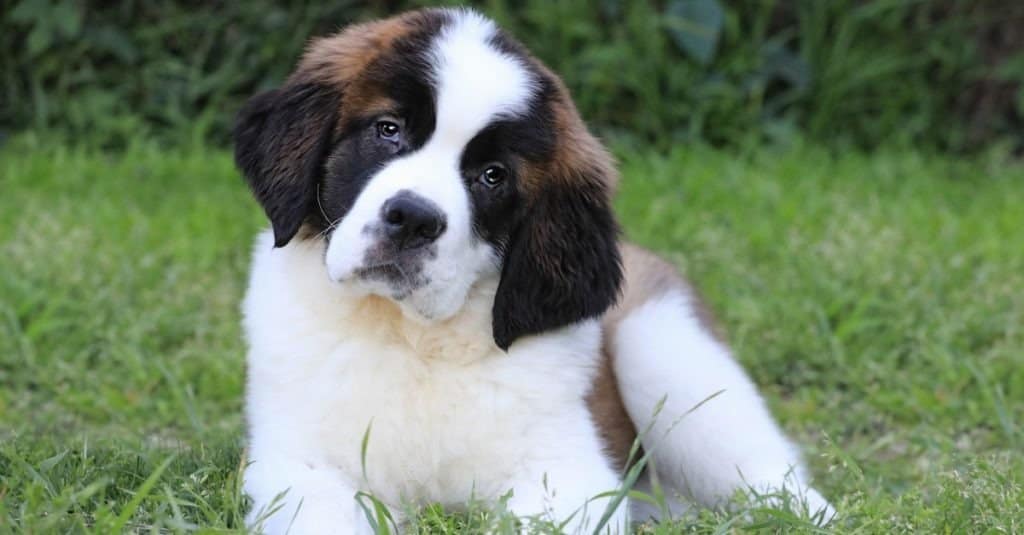
Saint Bernards are known as gentle giants.
©Katrina Brown/Shutterstock.com
However, Saint Bernards aren’t for everyone. Although they only require moderate exercise, they’re not suited for small living spaces. Saint Bernards can also be quite clingy and are prone to separation anxiety. They must be taught to be alone for short periods but shouldn’t be left alone regularly for long stretches of time. They do best in households where someone is home most of the day.
For an active family with a large, fenced-in backyard, Saint Bernards can make great pets.