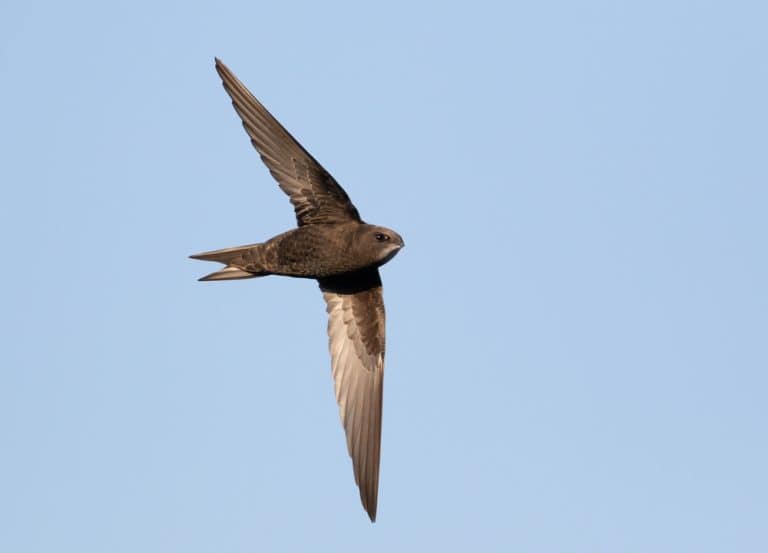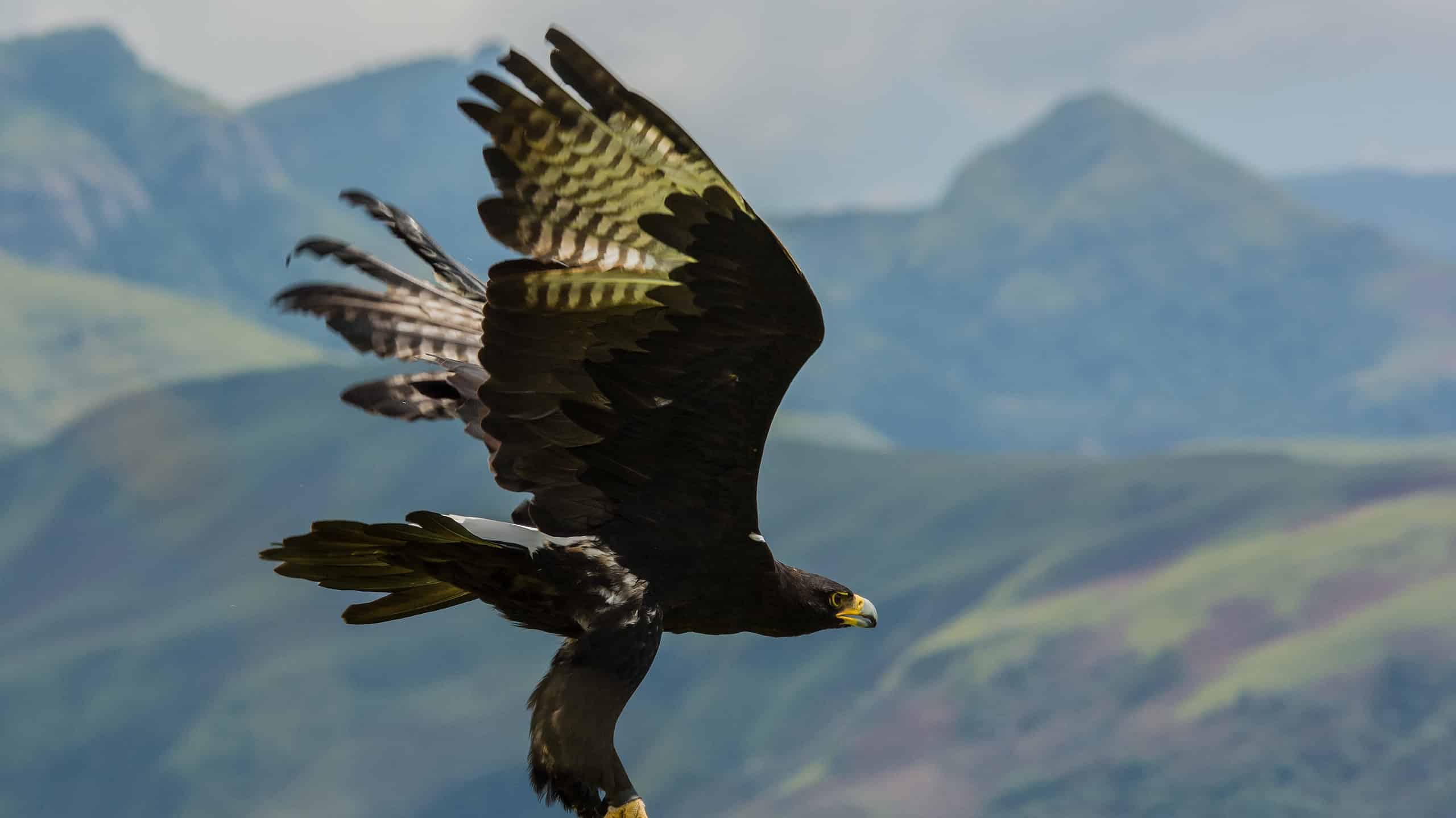

Raptors, or birds of prey, are carnivorous birds renowned for their exceptional hunting skills, facilitated by key physical adaptations. The term raptor derives from the Latin word rapere, meaning to seize or grasp. This group includes a diverse range of species such as hawks, eagles, falcons, owls, kites, harriers, and vultures. Raptors have excellent vision that allows them to locate prey from high altitudes, as well as hooked, sharp beaks. They also have long, strong claws called talons, which they use to catch prey. Continue reading to learn about seven raptors with the longest talons.
7. Osprey

An osprey can see prey from 100 feet above the water.
©LMIMAGES/Shutterstock.com
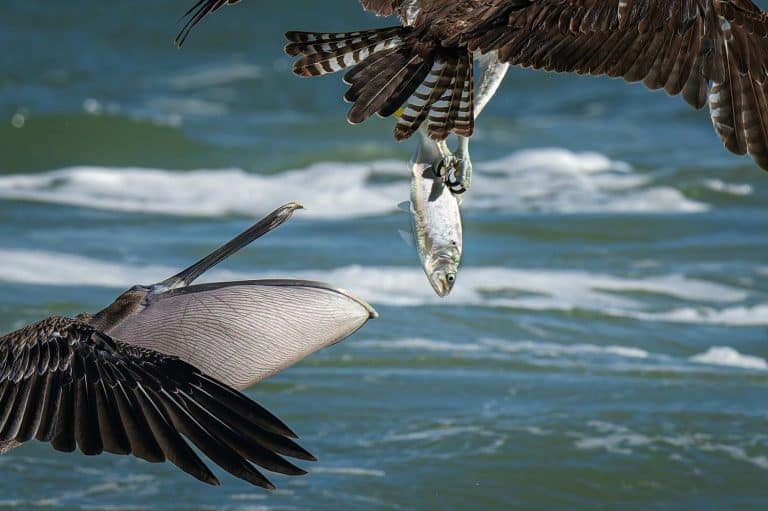
Ospreys (Pandion haliaetus) measure 20 to 26 inches long, have a wingspan of 50 to 71 inches, and weigh between 2 and 4.6 pounds. Males have slimmer bodies and narrower wings than females. They are found on all continents except Antarctica, and are present in South America only during seasonal migrations. Ospreys use their 1.2-inch-long talons and keen vision to prey on fish. They can spot prey from heights up to 130 feet above the water and then adjust the angle of their dives to account for refraction. Ospreys are considered Least Concern by the IUCN.
6. Peregrine Falcon

The peregrine falcon is considered the fastest animal on the planet.
©Harry Collins Photography/Shutterstock.com
Peregrine falcons (Falco peregrinus) measure 13 to 23 inches long, have a wingspan of 29 to 47 inches, and weigh 12 to 53 ounces, with females being larger than males. They use their 1.25-inch-long talons to prey on other birds, such as ducks, shorebirds, pigeons, gulls, and songbirds. They sometimes prey on bats, fish, and rodents. Peregrine falcons have been recorded diving at speeds of up to 240 to 250 miles per hour, making them the fastest animal in the world.
5. Bald Eagle
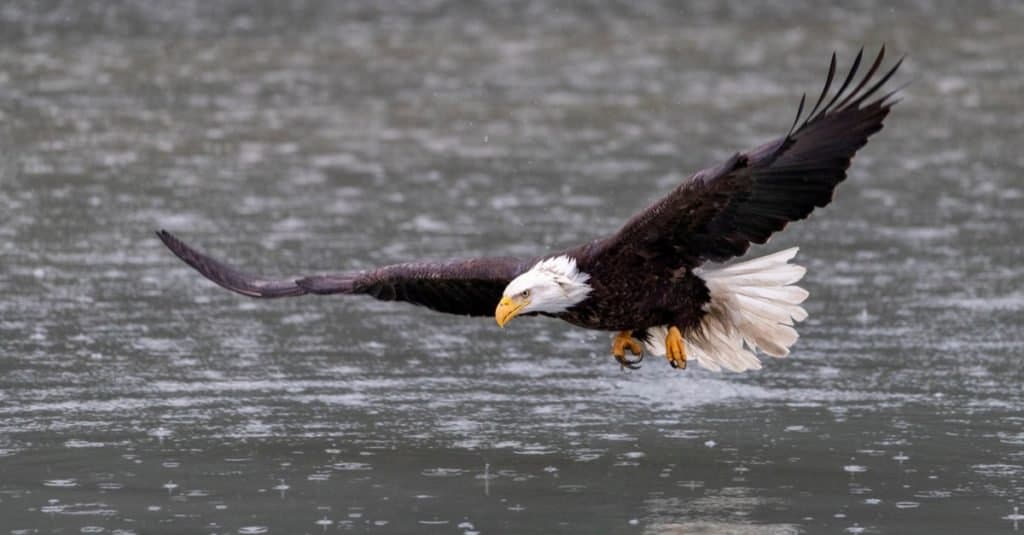
The bald eagle’s hallux talon can puncture prey in a manner that causes paralysis.
©Dennis W Donohue/Shutterstock.com
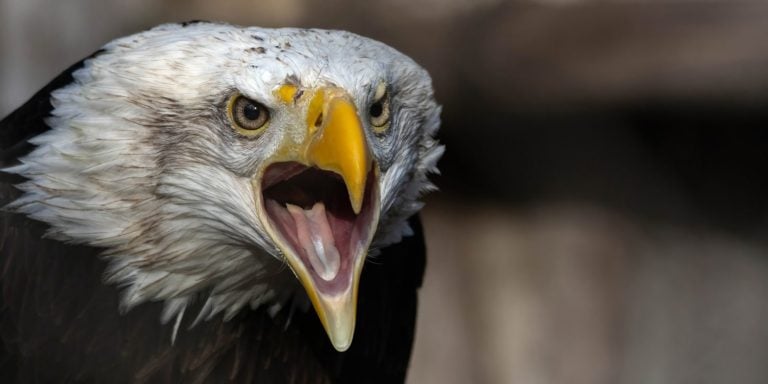
Bald eagles (Haliaeetus leucocephalus) measure 28 to 40 inches long, have a wingspan of 5 feet 11 inches to 7 feet 7 inches, and weigh 6.6 to 13.9 pounds. Females are approximately 25 percent larger than males, averaging 12 pounds, while males average 9 pounds. Their range includes most of Canada and Alaska, Northern Mexico, and all of the contiguous United States, where it is the national bird. Bald eagles use their 1.5 to 2-inch-long talons to prey on 400 species, primarily fish, but also mammals and other birds.
4. Martial Eagle
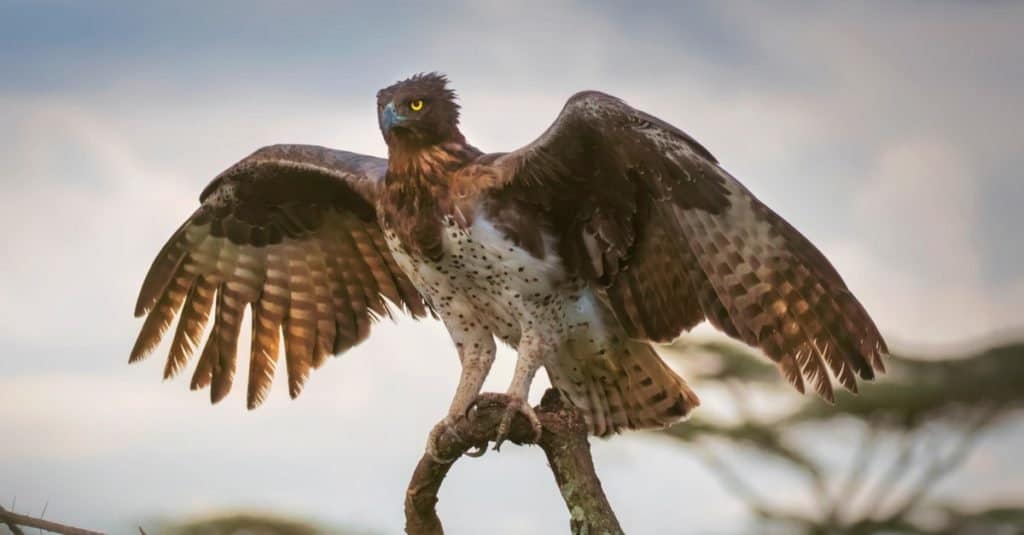
The martial eagle has 3 to 3.6 times human visual acuity.
©Theodore Mattas/Shutterstock.com
Martial eagles (Polemaetus bellicosus) measure 31 to 38 inches long, have a wingspan of 6 feet 2 inches to 7 feet 10 inches, and weigh 11 to 13.7 pounds. Their talons can measure up to 2.21 inches long, with the hallux claw being the longest. Similar to ospreys, martial eagles are noted for their keen eyesight, which is 3 to 3.6 times human visual acuity. Martial eagles are native to sub-Saharan Africa, where they prey on a wide variety of animals, including other predators such as monitor lizards, wild cats, jackals, and venomous snakes. The martial eagle is listed as Endangered by the IUCN.
3. Philippine Eagle
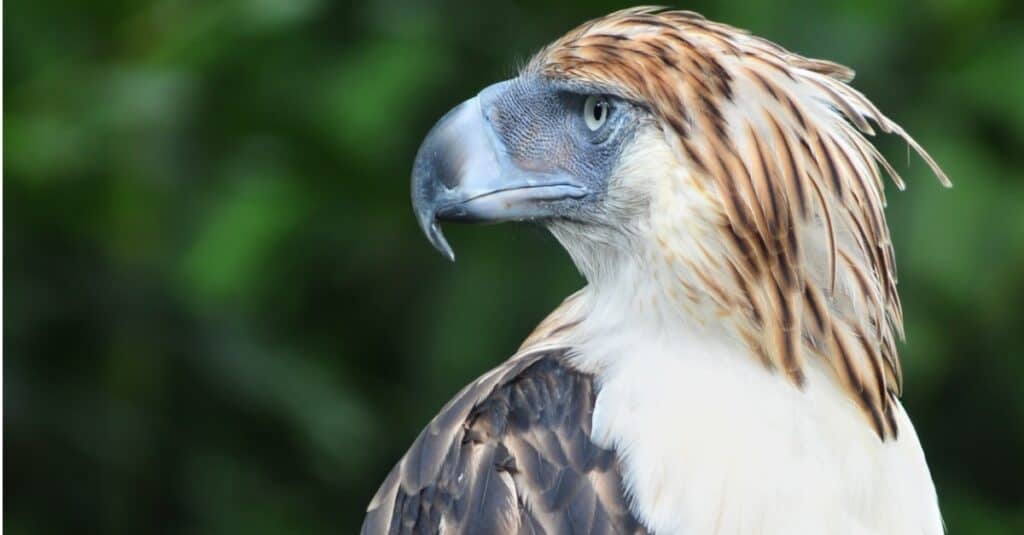
The Philippine eagle is endemic to the Philippines.
©iStock.com/LaserLens
The Philippine eagle (Pithecophaga jefferyi) measures 2 feet 10 inches to 3 feet 5 inches long and has a wingspan of 6 to 7 feet 3 inches. Their weight ranges from 8.9 to 17.6 pounds, with females being 10 to 20 percent larger than males. Philippine eagles are opportunistic apex predators, with talons up to 4 inches long. Their prey includes monkeys, flying squirrels, flying foxes, Philippine flying lemurs, Philippine deer, snakes, and domestic pets. The IUCN has listed the Philippine eagle as Critically Endangered since 1994. Deforestation and poaching are the main threats to the species’ survival, and killing a Philippine eagle is punishable by up to 12 years in prison.
2. Steller’s Sea Eagle
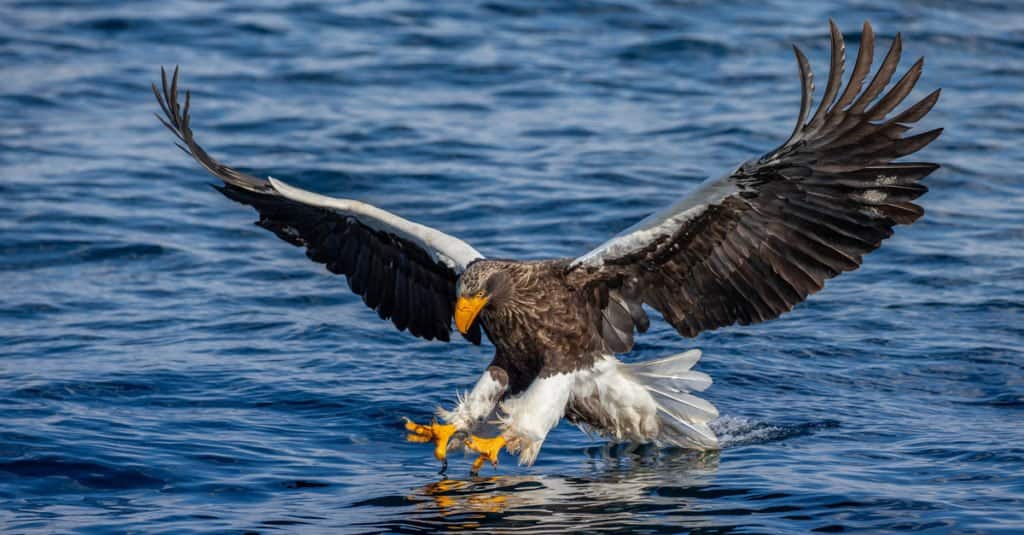
Weighing up to 22 pounds, the Steller’s sea eagle is the heaviest eagle species.
©GUDKOV ANDREY/Shutterstock.com
The Steller’s sea eagle (Haliaeetus pelagicus) is the heaviest eagle species, weighing 11 to 20 pounds, with rare individuals weighing up to 22 pounds. They measure 2 feet 9 inches to 3 feet 5 inches long and have a wingspan of 6 feet 5 inches to 8 feet 2 inches. Females are larger than males. Steller’s sea eagles are endemic to coastal Northeastern Asia, with a large population on the Kamchatka Peninsula. These apex predators primarily prey on fish, but also hunt water birds such as ducks and geese, or any creature they can catch with their up to 4-inch-long talons. As of 2021, they are listed as Vulnerable by the IUCN.
1. Harpy Eagle
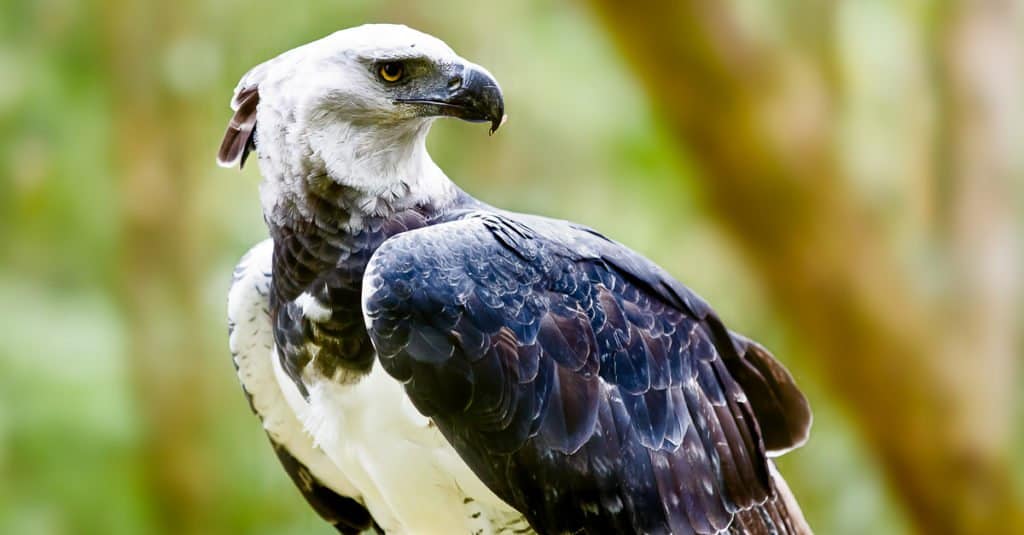
The harpy eagle has the capacity to lift monkeys and inflict serious injury to a human with its powerful talons.
©MarcusVDT/Shutterstock.com
The harpy eagle (Harpia harpyja) is a black, white, and gray-feathered neotropical bird of prey. Its talons measure up to 5 inches long, the largest of any living eagle species. They are perch hunters that can carry up to half of their body weight and prey on 116 species, primarily sloths and monkeys. Females are larger than males, typically weighing 13 to 20 pounds, while males average 8.8 to 13.2 pounds. These birds measure 34.1 to 42.1 inches in total length and have a wingspan of 69 to 88 inches. Harpy eagles are found throughout Central and South America from Mexico to Brazil. They are listed as Vulnerable by the IUCN.