
Quick Take
- Most people see great blue herons standing still, and that is exactly why almost everyone underestimates how massive these birds actually are. See the actual size →
- The great blue heron's wingspan isn't just impressive to look at. It's also the reason the bird can hunt with startling efficiency, though the connection isn't obvious. Explore the hunting connection →
- Great blue herons migrate thousands of miles, and researchers have found that their ability to do so without burning out comes down to a single physical advantage. Discover the migration advantage →
Great blue herons are tall, lanky birds often seen walking slowly across wetlands while hunting. However, it is not until they take flight that the true size of the birds can be appreciated. The wingspan of a great blue heron is especially striking in flight, as it gracefully glides across the sky. So, how wide is this bird’s impressive wingspan?
How Large is the Great Blue Heron Wingspan?
Great blue herons are known for their height. Reaching up to four feet tall, the slender birds are often spotted slowly and methodically wading through water in search of prey. When this species opens its wings for lift off, its majestic wingspan becomes evident.

Great blue herons have an extremely impressive wingspan.
©Michael Munster/Shutterstock.com
These tall birds have a wingspan that ranges between 5.5 feet and 6.6 feet in length, with males sporting the larger wingspan. Males also tend to weigh more than females; 5.5 pounds and 4.6 pounds, respectively. Their wide wingspan helps them take off with ease, remain balanced as they fly and soar, and land with precision.
How the Great Blue Heron Wingspan Aids in Hunting
Their preferred hunting grounds are wetlands, which can be vast. While moving between feeding areas, great blue herons fly low and slow, a feat easily accomplished thanks to their massive wingspan.
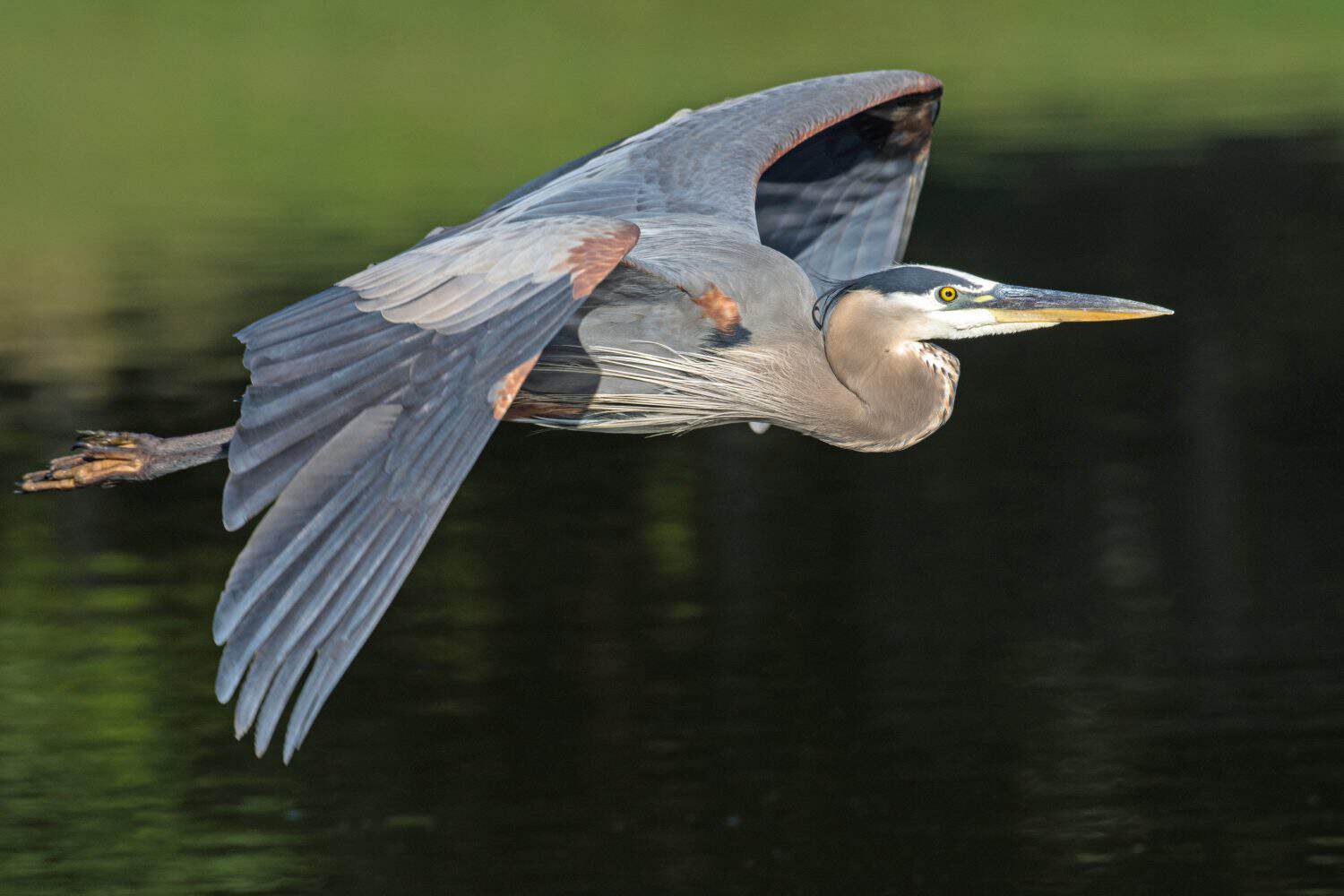
Great blue herons’ large wingspan allows them to focus less on flapping and more on scanning wetlands for prey.
©Tom Franks/Shutterstock.com
The wetland areas that great blue herons tend to frequent include:
- Marshes
- Swamps
- Estuaries
- Riverbanks
- Ponds
- Bays
This beautiful bird does not need to flap its wings constantly while flying over the water. Instead, it just glides. By not having to focus on lift, the birds can save their efforts for hunting.
Why the Great Blue Heron Wingspan is Necessary for Migration
Great blue herons are partially migratory birds. Those who live in the northern United States or Canada migrate south to Central America or the Caribbean, a long journey that is made easier by their impressive wingspan.

Some great blue herons will migrate up to 3,000 miles.
©Gregory Johnston/Shutterstock.com
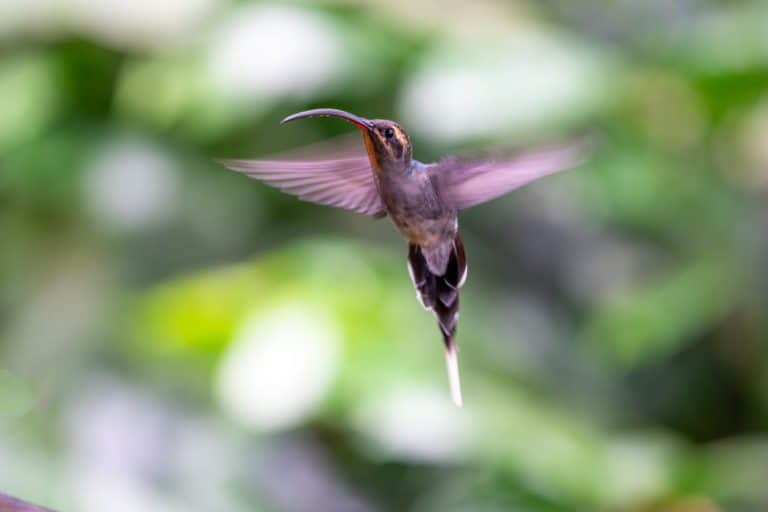
Some great blue herons migrate an incredible 3,000 miles. This long venture takes place between mid-September and December. To conserve energy, they use a rhythmic flight pattern, flapping their wings 60 times per minute. This is significantly less movement than other birds, such as the hummingbird, which flaps its wings 80 times per second.
Despite flapping their wings less, great blue herons are capable of flying between 20 and 30 miles per hour. This speed, combined with energy conservation, helps the large birds reach their final destinations with as few stops as possible.