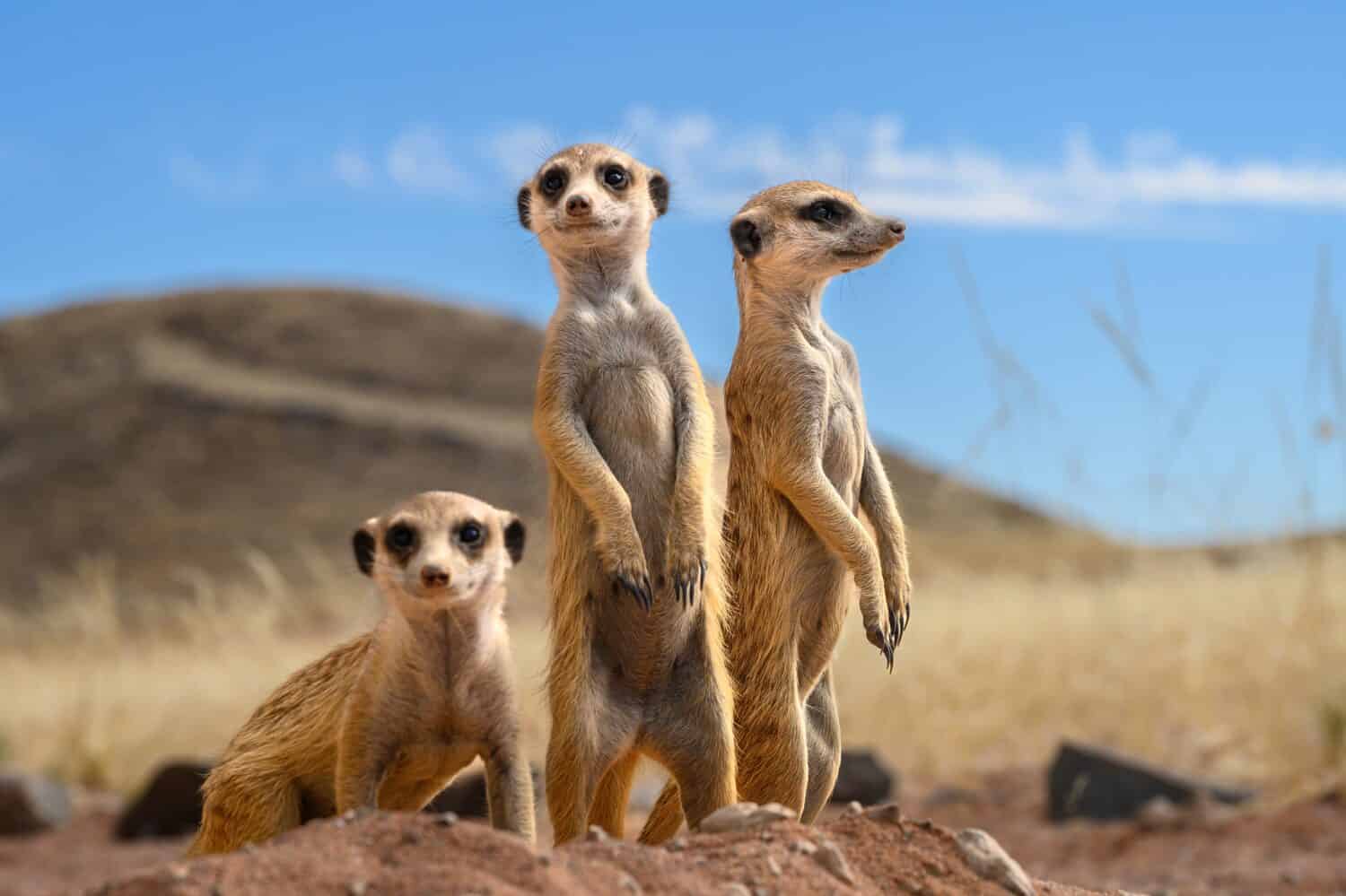

Meerkats are adorable members of the mongoose family, inhabiting deserts and grasslands of southern Africa. They are known for their expressive faces and tendency to stand straight up on their hind legs. But what accounts for this perfect posture? It certainly adds to their undeniable cuteness, but this iconic meerkat stance also plays a critical role in their survival. Their upright stature is part of a strategy built around teamwork and vigilance.
Meerkat mobs are extremely coordinated, and researchers are only just beginning to understand how extensive their social networks are. Scientists have discovered these tiny mammals take turns guarding groups of meerkats while other individuals find food. They use a vast array of vocal calls to communicate and enhance social cohesion.
In this slideshow, we explore the reasons behind the famous meerkat posture. We cover how their advanced social structures, how their behavior ensures the safety of the group, and just how intelligent these animals truly are. Take a moment to learn about the survival strategy of one of nature’s most fascinating creatures.
Meet the Meerkat

- Meerkats belong to the mongoose family and inhabit southern Africa.
- They have brown-striped fur, large eyes, and pointed faces.
- Meerkats are social animals that live in large matriarchal groups.
Why Do Meerkats Stand Up?
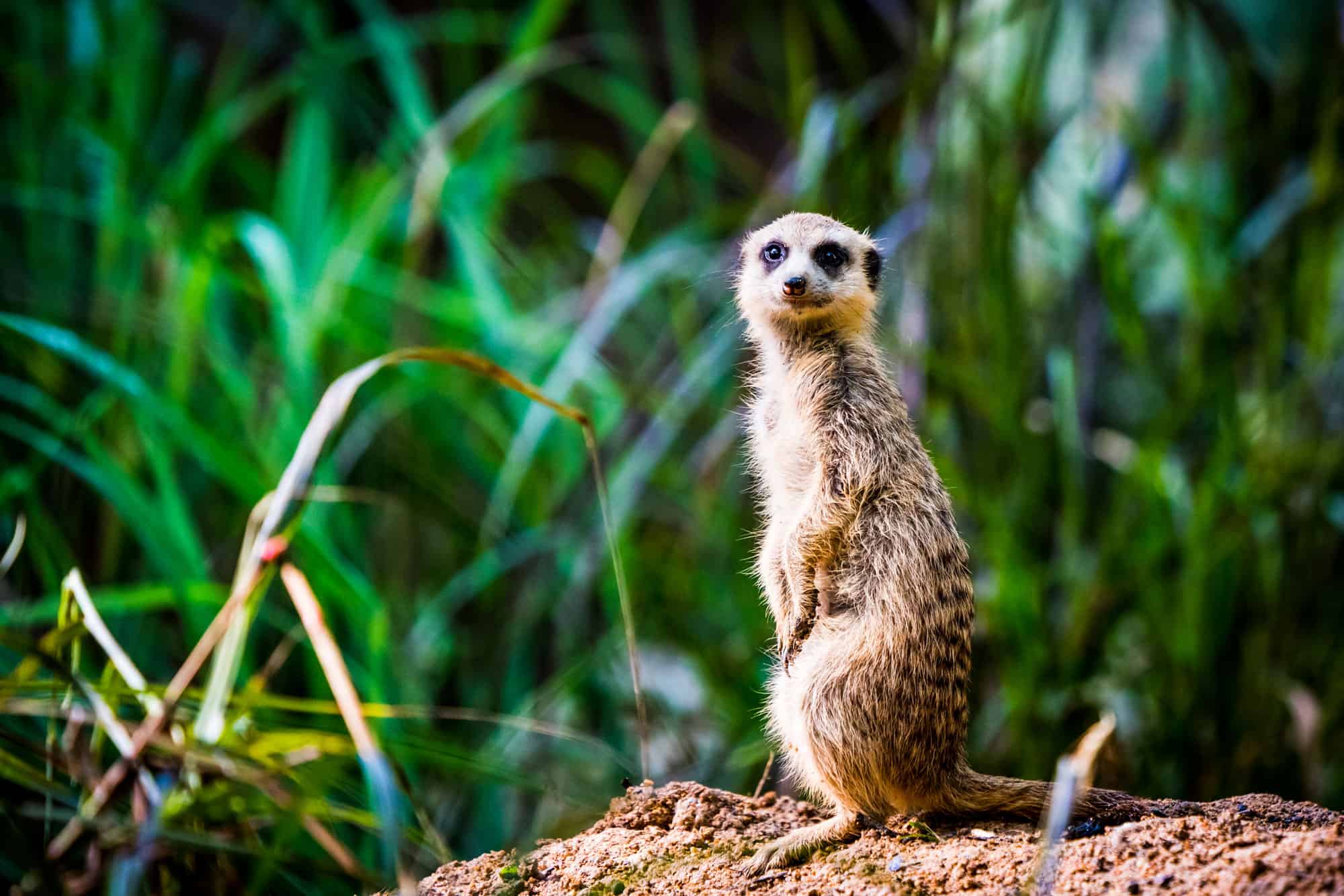
©iStock.com/Augustine Fernandes - Original
- Meerkats stand on their hind legs to spot predators more easily.
- This tripod stance provides better visibility and a quick response to threats.
- The behavior is especially important during foraging.
The Power of the Mob
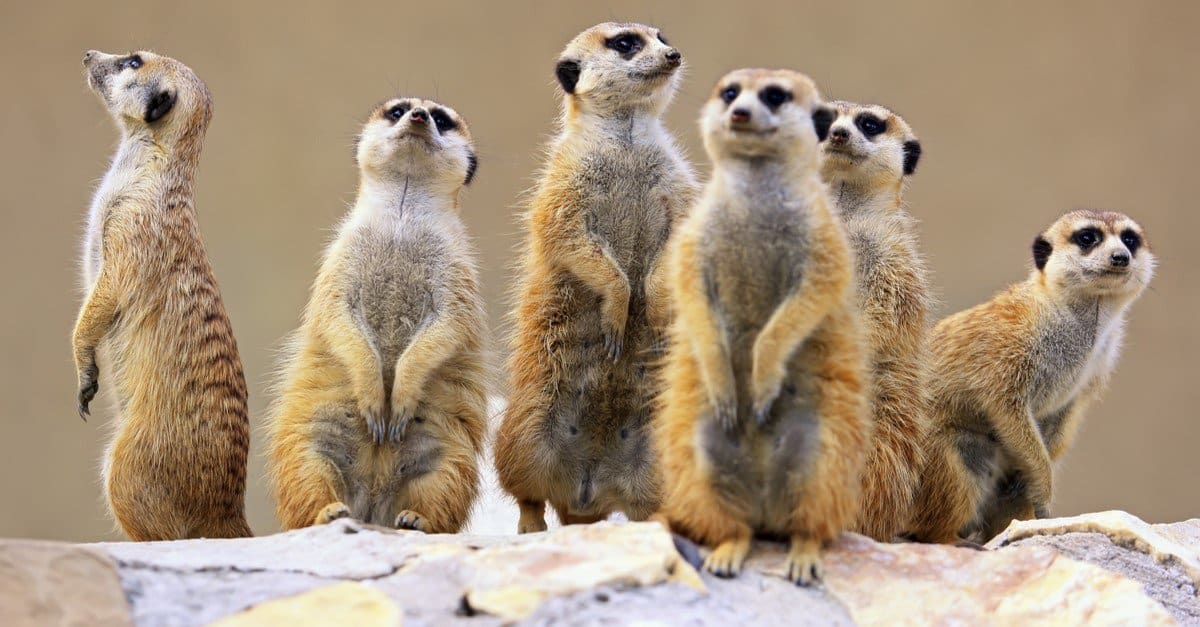
©Zsolt Biczo/Shutterstock.com
- A group of meerkats is called a mob.
- Mobs work together to raise pups and watch for danger.
- Some members stay behind to babysit while others forage.
The Role of the Sentry
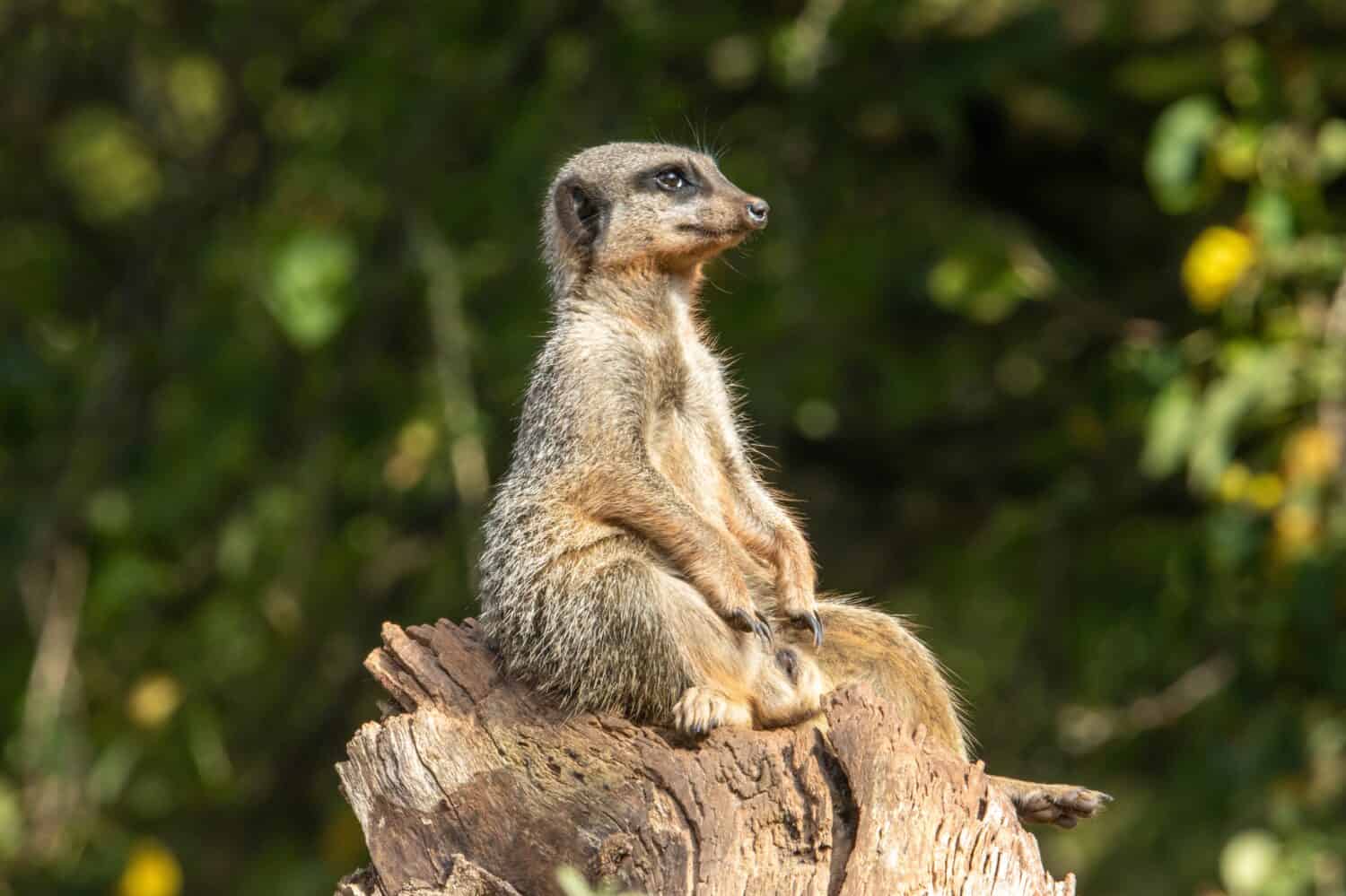
©Ian Peter Morton/Shutterstock.com
- Sentry meerkats stand guard while others forage.
- They perch on high points and emit warning calls when danger is near.
- Their calls vary based on the type of predator.
Watchman’s Song
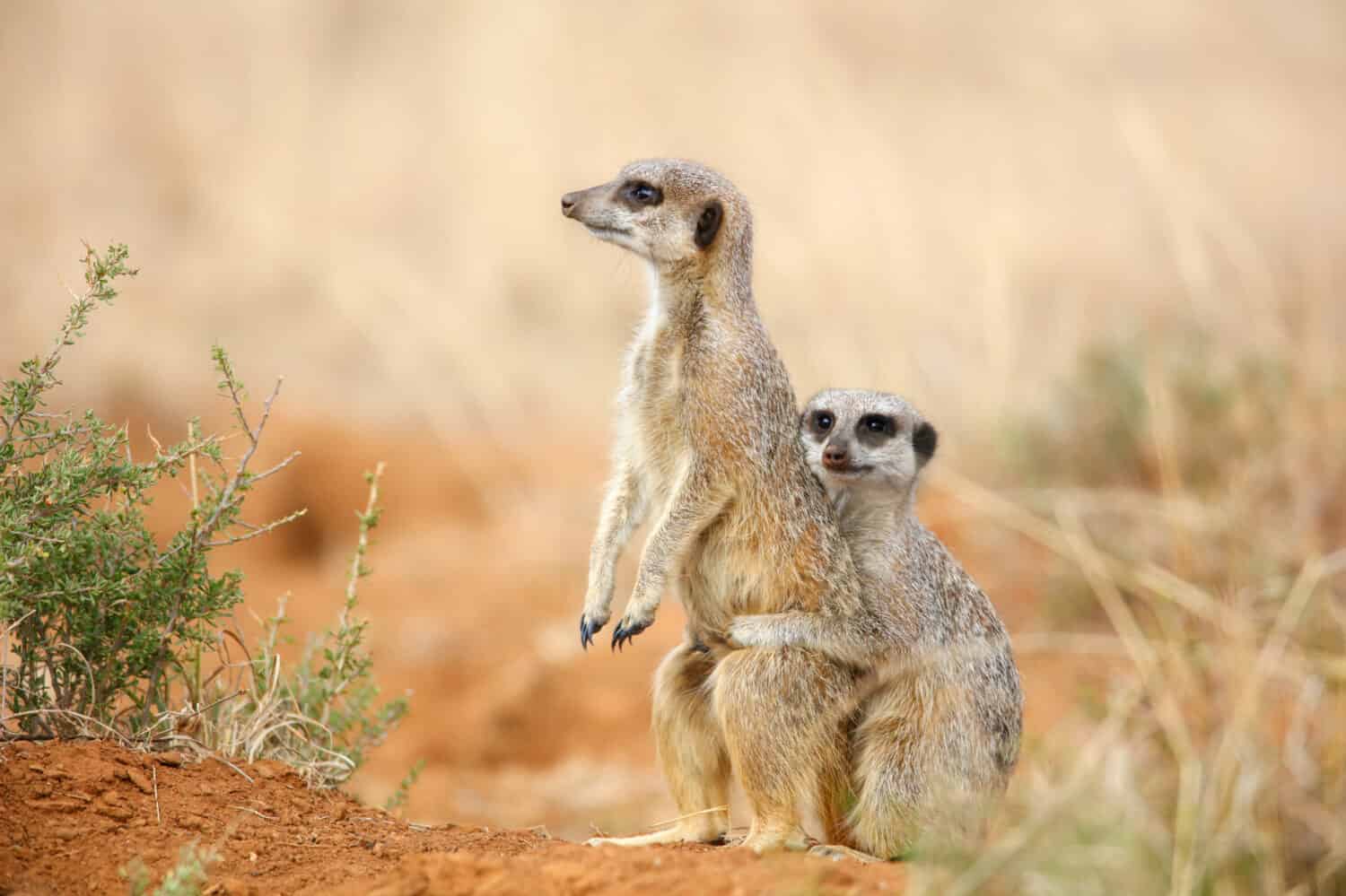
©JMx Images/Shutterstock.com
- Sentry meerkats emit a constant peeping noise known as the watchman’s song.
- This reassures the group that the area is safe.
- The song helps maintain order and safety during daily routines.
Escape Plans in Place
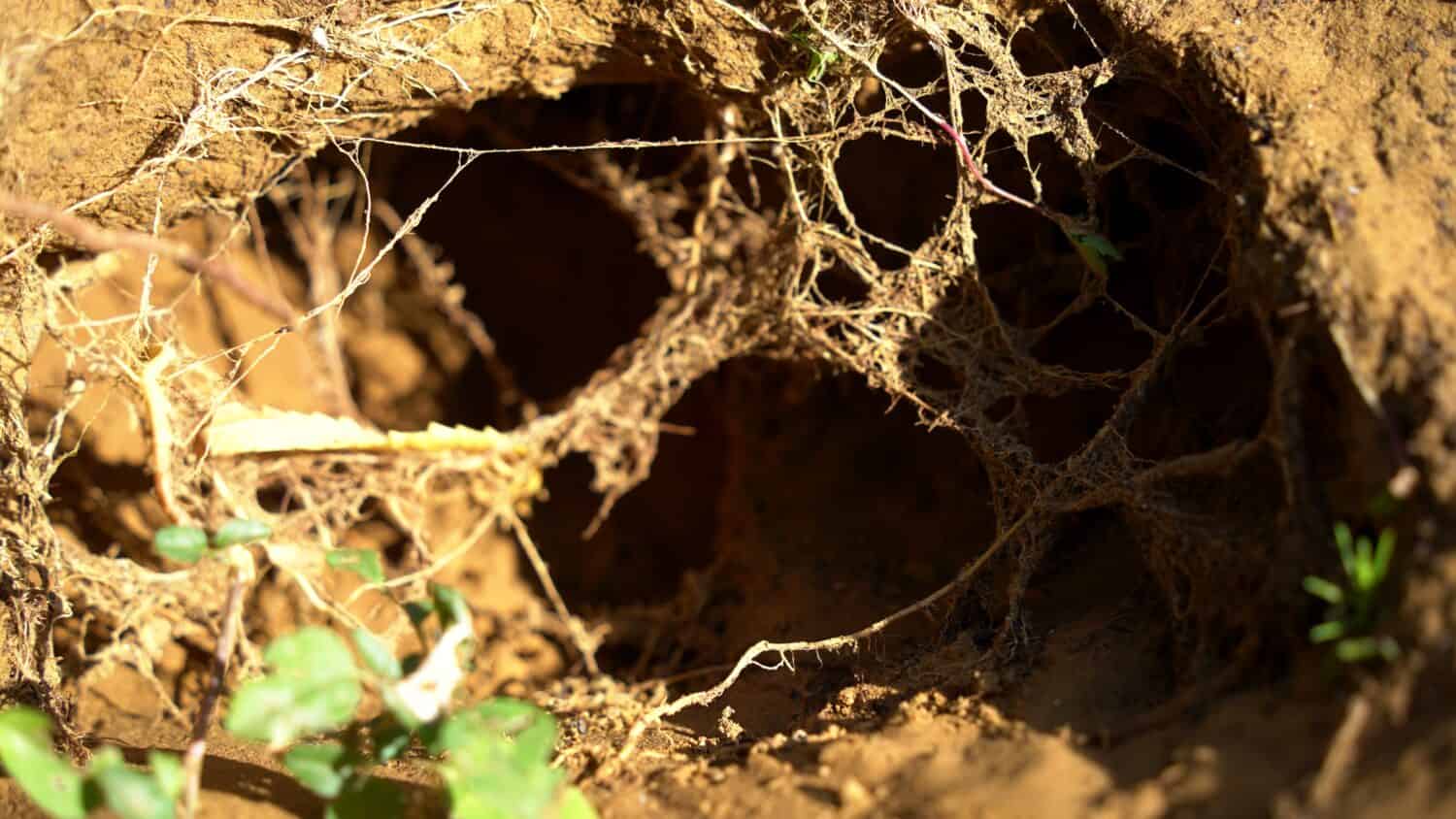
©Chanchal Creative/Shutterstock.com
- Bolt holes are emergency shelters used when a predator is near.
- Meerkats memorize the locations of thousands of bolt holes.
- This behavior allows quick escapes and enhances survival.
Strength in Numbers
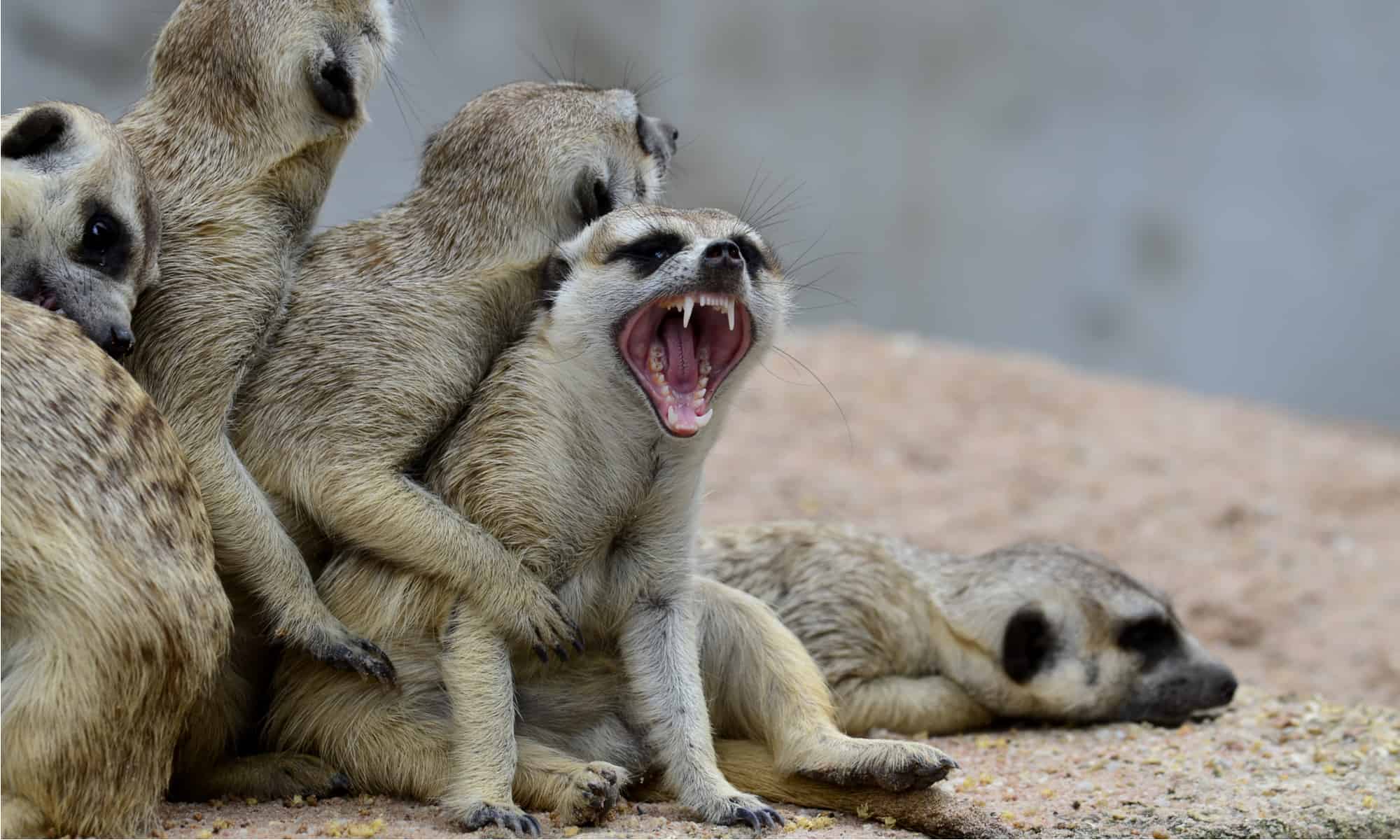
©Super Prin/Shutterstock.com
- Standing together makes meerkats appear more formidable.
- Multiple individuals banding together can deter predators from attacking.
- Meerkats may kick up dust to create a visual barrier when threatened.
Fighting Among Meerkats

©MartinJGruber/Shutterstock.com
- Meerkat mobs can clash over territory.
- These fights involve aggressive posturing and tail displays.
- Conflicts can be intense and sometimes deadly.
Territory Marking
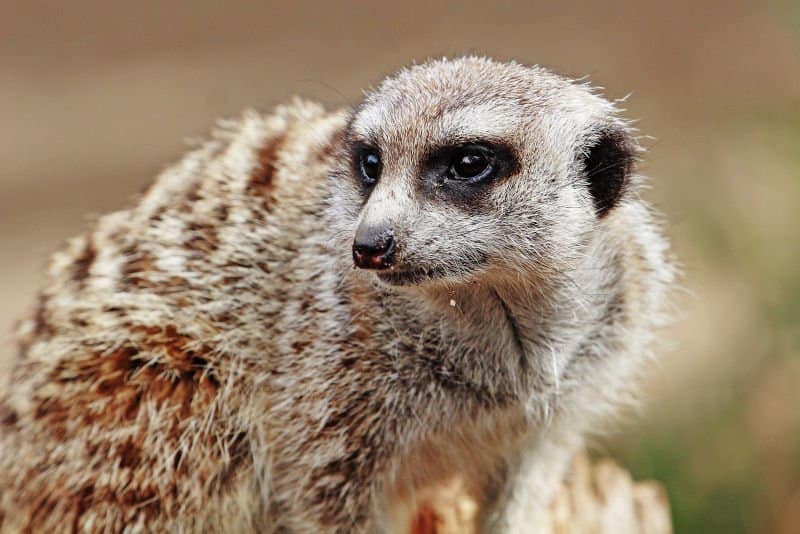
©Fir0002/Flagstaffotos / Creative Commons - Original
- Meerkats have scent pouches under their tails.
- They use these to mark territory and communicate boundaries.
- Scent marking is key to defending their home turf.
Survival Strategy
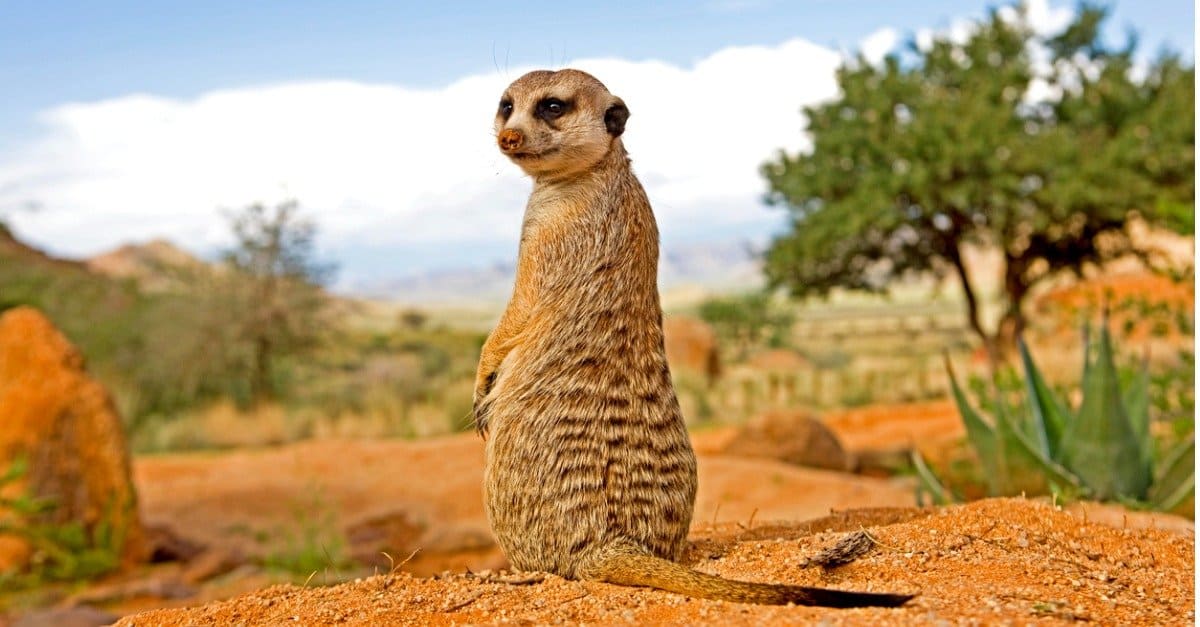
©iStock.com/slowmotiongli
- The tripod stance helps meerkats monitor their surroundings.
- It’s a versatile tool for defense, communication, and control.
- This behavior showcases their adaptability and intelligence.