
Quick Take
- Hummingbirds nest somewhere in your backyard you'd never think to look, and one manmade object turns out to make a surprisingly ideal anchor point. See nesting locations →
- One of the key building materials in a hummingbird nest sounds more like a superpower than a construction supply. Explore nest materials →
- Getting too close to a hummingbird nest you stumble upon carries a legal consequence most people have no idea exists. See the legal warning →
- One North American hummingbird species breaks every rule of how birds are supposed to nest, and its method is genuinely bizarre. See the bizarre nester →
There are over 360 hummingbird species in the family Trochilidae distributed exclusively throughout the Americas. The vast majority of hummingbird species are concentrated near the equator, while approximately 15 to 20 species regularly breed or venture into North America. Ever wondered what a hummingbird nest looks like? These tiny, iridescent birds make equally tiny nests in some of the most unusual places. The following guide will help you identify the nests, where you could go to spot them, and what hummingbird nests are made of.
Where do Hummingbirds Build Nests?
A hummingbird may build its nest just about anywhere. However, the spot must offer certain features, such as tiny forked branches, wires, or solid resting places with shelter, like backyard cameras. Cameras offer a sturdy, flat base to anchor a nest, wires to weave materials into, and protective overhanging shelter from rain and harsh summer sun
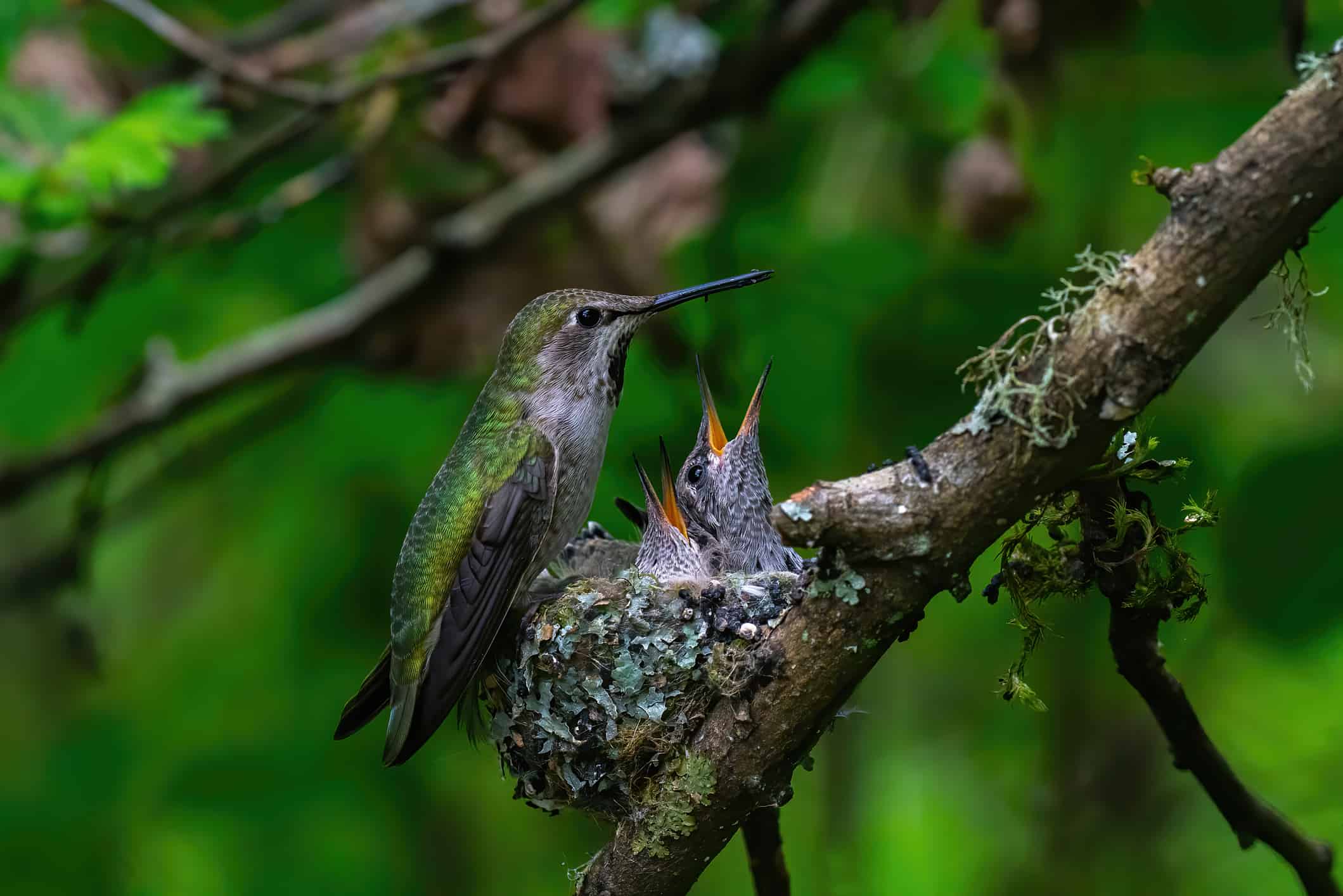
Hummingbirds, unsurprisingly, build tiny nests.
©Daniel Lamborn/Shutterstock.com
Hummingbirds are incredibly selective about their nesting sites to keep their young safe. While species like the Ruby-throated hummingbird are increasingly adapting to suburban areas, the majority still seek the secure shelter of rural habitats.
Most hummingbirds build nests in deciduous trees near water sources. Female hummingbirds strongly prefer trees such as poplar, hackberry, and oak, typically building on small, downward-sloping branches or solid branch forks.
In human-occupied areas, hummingbirds construct their nests in a variety of manmade objects, including plant hangers, porch wires, and ropes.
You may also find hummingbirds nesting on or in:
- Clotheslines
- Slender cables
- Tops of porch lamps
- Inside porch lamps or lamppost boxes
- Atop garden decorations
- Atop or inside windchimes
- On ceiling sprinklers
- Atop small pipes
- On security cameras
- Atop cacti
What are Hummingbird Nests Made Of?
Hummingbirds require soft, flexible nests for their eggs and hatchlings, and they use a wide range of materials to construct them. Females of most hummingbird species spend up to a week building their nests.
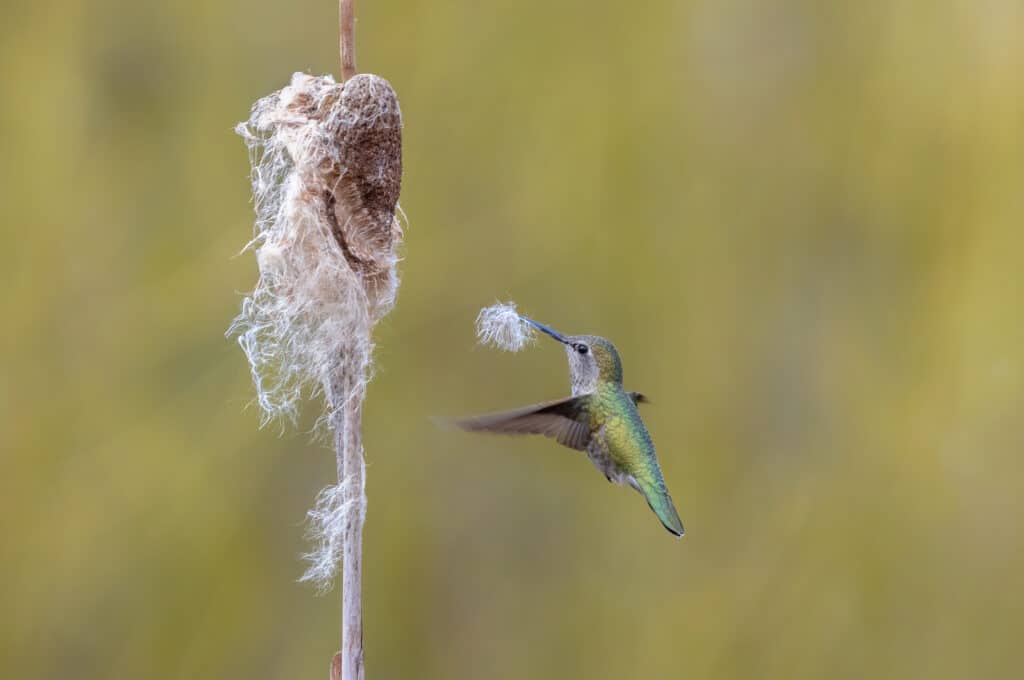
Hummingbirds use soft, fluffy materials for the lining of their nests.
©Devonyu /Shutterstock.com
They start the nests by tucking in the foundational materials in spots like crevices and cracks, branch forks, and on hanging wires with solid backs (like house walls). They use leaves, twigs, clay, and dirt for a firm foundation and then line the nest with softer materials, including ultra-soft plant down (like dandelion, milkweed, or cattail fluff), animal fur, and spider silk.
How Big Are Hummingbird Nests?
Most hummingbird nests only measure about one inch in diameter. However, the species of each bird could determine slight size variations, with some building deeper, longer, or wider nests than others. The materials they find for making their nests also determine the overall size.
How to Attract Hummingbirds to Your Backyard
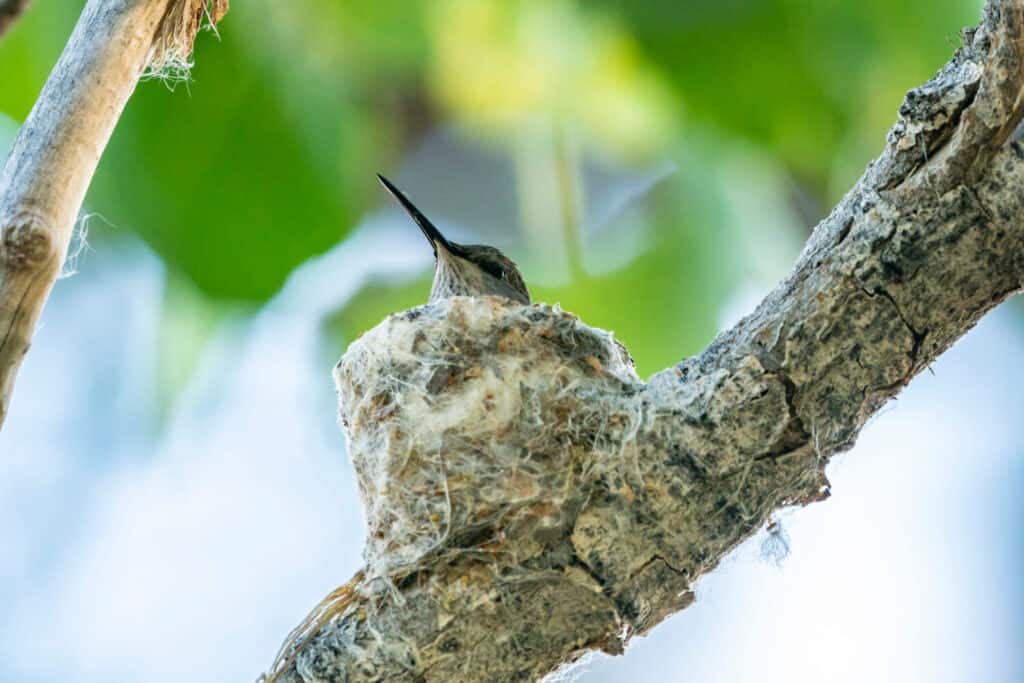
Providing food (nectar) year-round helps attract hummingbirds to your yard.
©Danita Delimont/Shutterstock.com
While you can attract many other birds with nesting boxes, most hummingbirds don’t use these human-made options. Instead, you can:
- Maintain clean, sanitary hummingbird feeders. Dirty feeders attract pests and bacteria, which drive hummingbirds away.
- Provide hummingbirds with a water source they can easily access.
- Skip the red dye in your hummingbird food. Instead, make a clear nectar solution and provide it in brightly colored feeders.
- Maintain healthy, native flowering plants that produce nectar.
- Avoid using chemicals like fungicides and pesticides, which can harm hummingbirds.
- Provide hummingbirds with forked branches, whether real or artificial, where they can safely build their nests.
- Add soft plants that produce fuzzy textures in their flowers and foliage, such as lamb’s ear and ornamental grasses, to your landscape. Hummingbirds love these for building their nests.
- Eliminate loud noises and activities.
- Provide as natural a yard as possible, with native plants.
What Do the Nests Look Like?
Nests vary in appearance based on the species. The most common species in the Eastern United States, the ruby-throated hummingbird, for example, builds a lichen-covered, downward-slanting nest. The Black-chinned hummingbird, however, builds a cup-shaped nest with inward-curving rims.
Different Hummingbird Nest Types
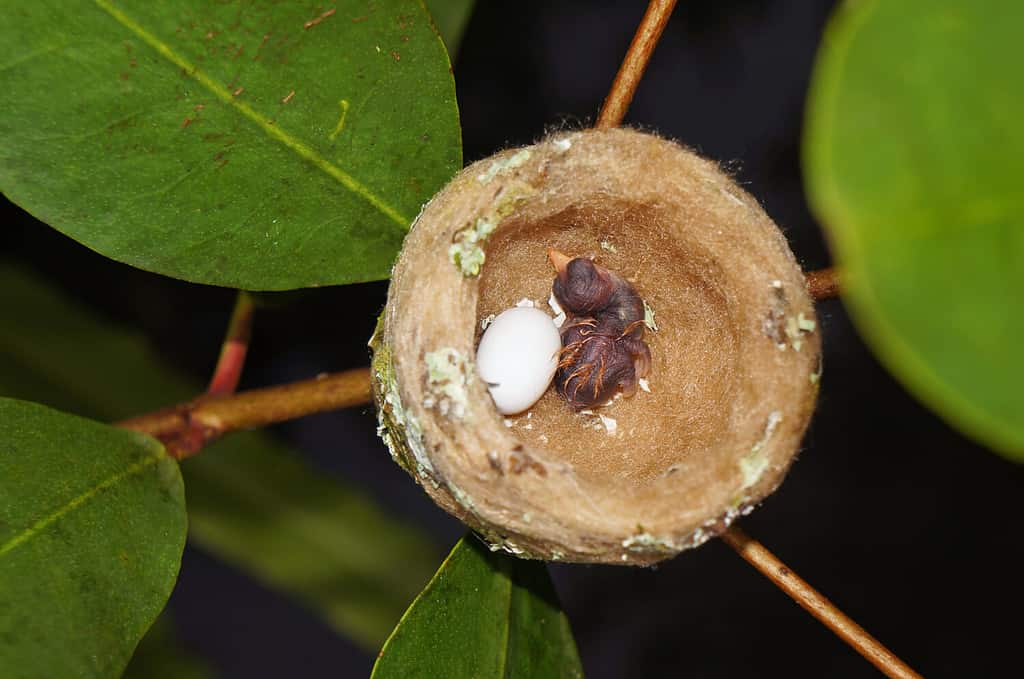
Every hummingbird nest is unique.
©Damsea/Shutterstock.com
Different species of hummingbirds build different types of nests and have different nesting habits. To most easily identify the species of nest you spot, knowing the species in your area is helpful. But you can use the following criteria to help:
- Black-chinned hummingbirds make deep cup-shaped nests with rims that often curve inward.
- Female Anna’s hummingbirds build a platform as early as December, then build up the nest around the eggs as they incubate.
- Broad-tailed hummingbirds are one of the rare exceptions, sometimes returning to the same nest year after year.
- Blue-throated hummingbirds often build their nests in or around cabins and on electrical wires.
- Broad-billed hummingbirds build loosely constructed nests on clotheslines and wires.
- Costa’s hummingbirds build as many as six nests in a 100-foot radius.
- Calliope hummingbirds build two, three, or four nests on top of each other, often attaching them to pinecones.
- Rufous hummingbirds are fierce around their nests, driving away larger birds from the areas where they build.
- Rivoli’s hummingbirds build the largest and highest nests of all North American hummingbird species.
- Female ruby-throated hummingbirds build the nests, often attaching them with spider silk to small branches or twigs. The nests typically slant downward, and the outside is covered in green-gray lichen. They often feed one clutch in a nest while caring for eggs in a second nest
Do Hummingbirds Reuse Nests?
Most hummingbird species do not reuse their nests, as the nests stretch out and become unusable after the young fledge. However, some species, such as the Broad-tailed Hummingbird, have been observed reusing nests by adding fresh material to old ones.
When Do Hummingbirds Build Their Nests?
Both the location and species of hummingbird determine when and where they build their nests. Most migratory species build their nests in springtime once they’ve reached their breeding grounds. Once they move southward again, new nests are built in their wintering grounds.
How Do You Find a Hummingbird Nest?
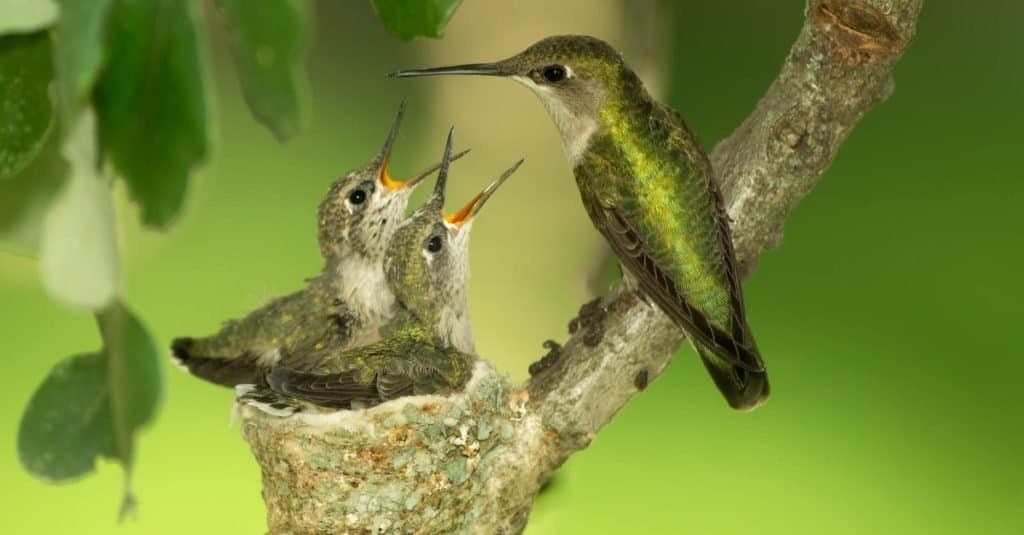
Most hummingbirds can be found nesting in spots like tiny forked branches and clotheslines or wires when in urban areas.
©Agnieszka Bacal/Shutterstock.com
Being so tiny, these nests are fairly difficult to spot. They’re well-hidden and intentionally camouflaged to keep the babies safe within. If you want to spot one, though, you’ll want to look for thin, forked branches in short trees and dense shrubs. A few species also build their nests high in trees, well out of reach.
If you spot an oddly shaped knot between small branches, you may be looking at a hummingbird nest. If you look closer, you may see an adult hummingbird nearby
You may also be able to find a nest by following a female hummingbird’s flight path. Be sure to keep your distance, as it is illegal to disturb a hummingbird nest.
How Many Eggs Do Hummingbirds Lay?
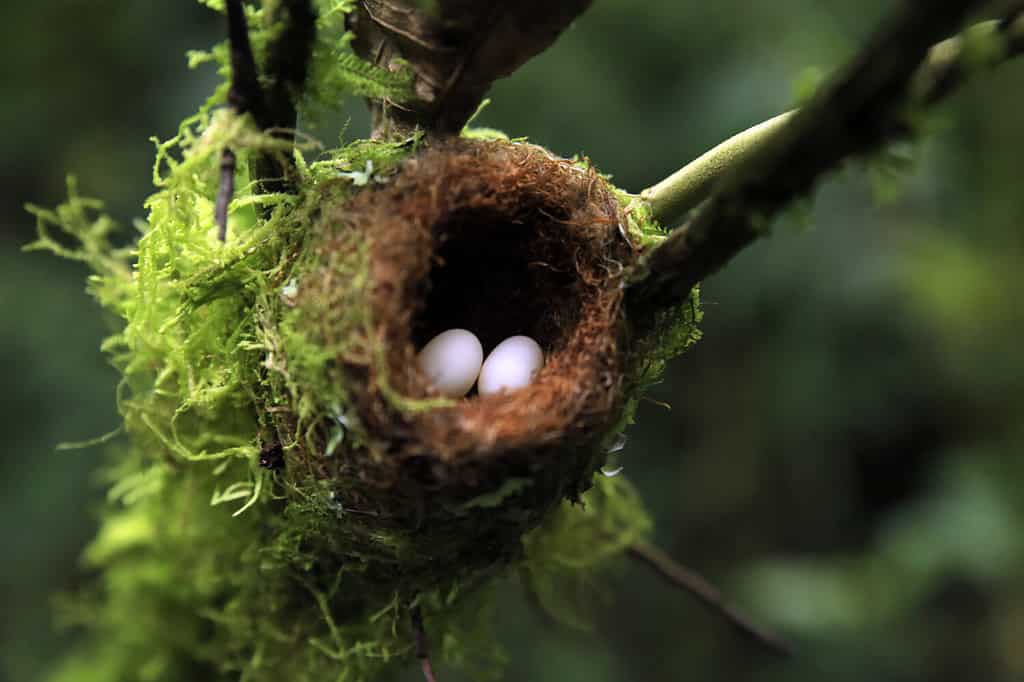
Tucked into these tiny nests, you may spot one or two hummingbird eggs about the size of jelly beans. Depending on the species, these eggs may be laid once or twice per year. Most females lay two eggs each year, incubating them for between 15 and 18 days across most species. After the babies hatch, they fledge anywhere from 18 to 28 days later.
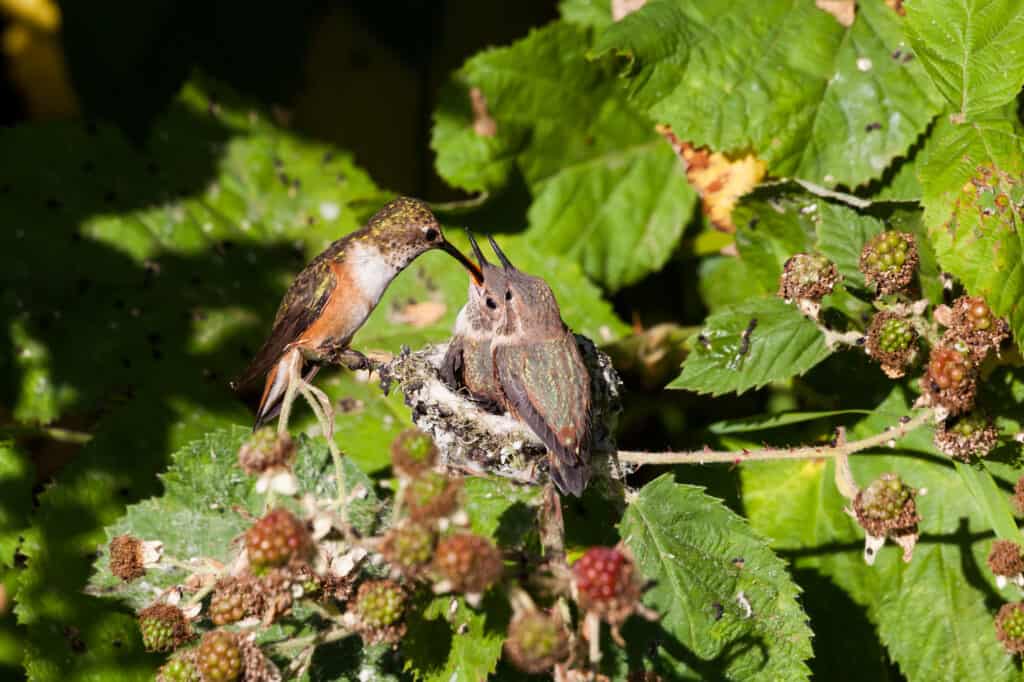
Some species lay one clutch while another is still feeding. Others lay only one clutch each year.
©Feng Yu/Shutterstock.com